
If the previous issue could be considered a watershed moment for the series, then Absolute Green Lantern #10 is the decisive moment where that shift pays off for readers. Up until this arc, readers have already been exposed to a new Green Lantern universe that is far darker and more horror-coded. This version focuses more on eldritch terrors rather than cosmic pageantry. It explores how individuals caught up in this new status quo must be willing to wield power in a universe that is both hostile and morally compromised to its core. As the series has now moved to a tighter and more focused thriller narrative rather than a more sprawling cosmic setting, issue ten takes this grittier viewpoint and sharpens it to a knife edge.
Despite my previous misgivings when reading the preceding issue, this chapter in particular manages to expertly combine aspects of the cosmic horror that the series started with and weaves them into a tighter narrative that is both brutal and intimate. Rather than escalating the scope outward, it reflects inward. The story centers on the fight of Jo Mullein for survival in a raw, immediate, and character-driven struggle that firmly drives home the point that even heroes in this world can be put down far too easily. With Hector Hammond conducting more vile experiments in the background, a fan-favorite character appearing under far from ideal circumstances, and both emotional and physical personal stakes being the highest they have ever been in the moment, Absolute Green Lantern #10 is far more than a violent interlude. It is exactly the shot in the arm the series needs at this pivotal juncture.
The Twisted Games of Mad Men
The issue picks up exactly where things left off in the previous chapter. Jo Mullein is bleeding out from a gunshot wound in the apartment of Cameron. Goldface is gloating over his actions and leveraging the one weakness that the Lantern powers of Jo cannot overcome. He thinks he has the upper hand. However, our plucky sojourner more than proves that even when she is down, she is far from out of the fight. She fights back tooth and nail against her assailant.
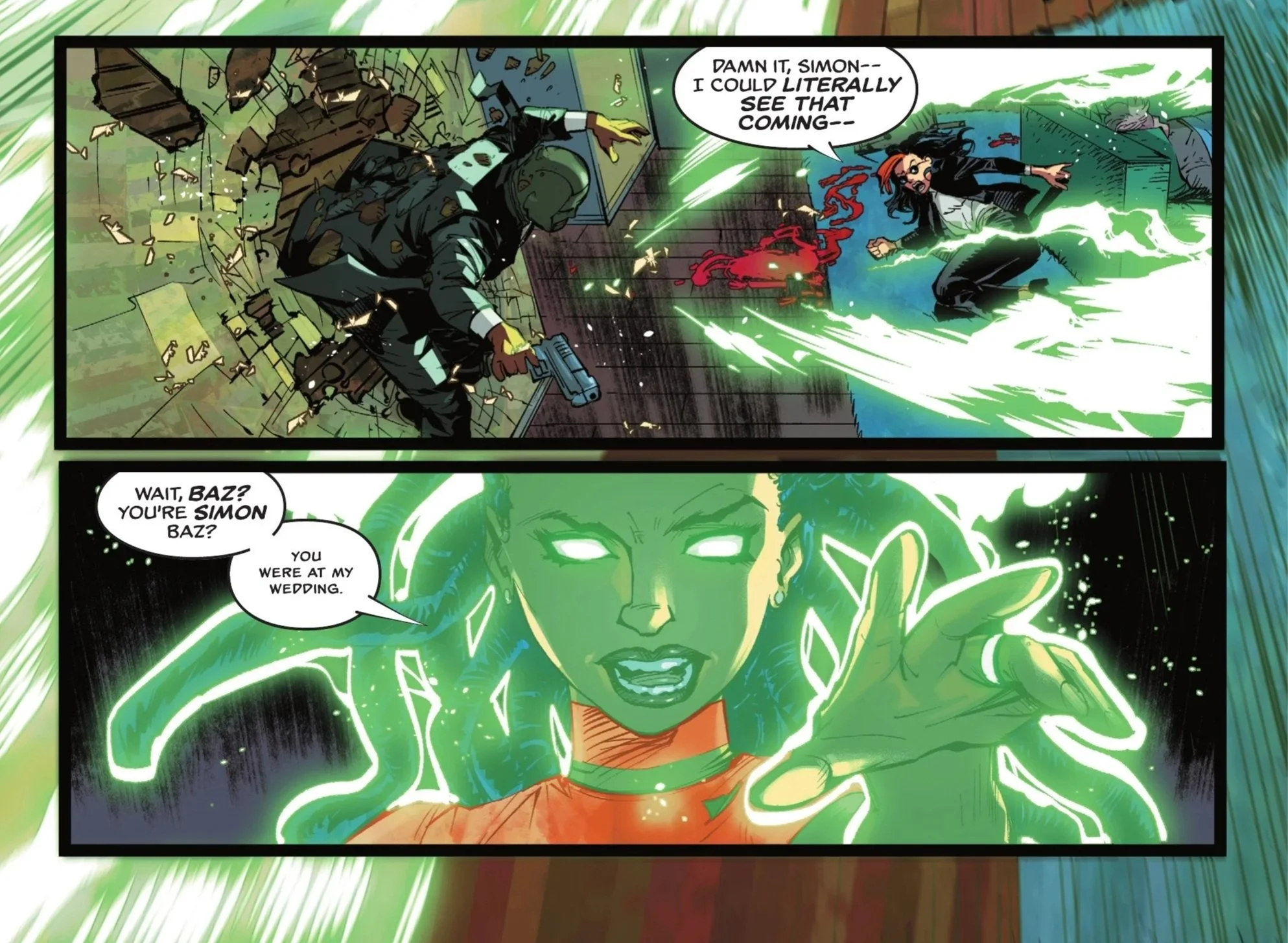
Throughout this bloody and gritty conflict, Jo is still plagued by memories of her past sins. That rage and guilt finally drive her to fight back and take Goldface down permanently. Between the revelations of Goldface regarding his original purpose and the arrival of Simon Baz and Carol Ferris to offer help, Jo quickly learns that there is a far bigger threat than just the unknown alien forces at play.
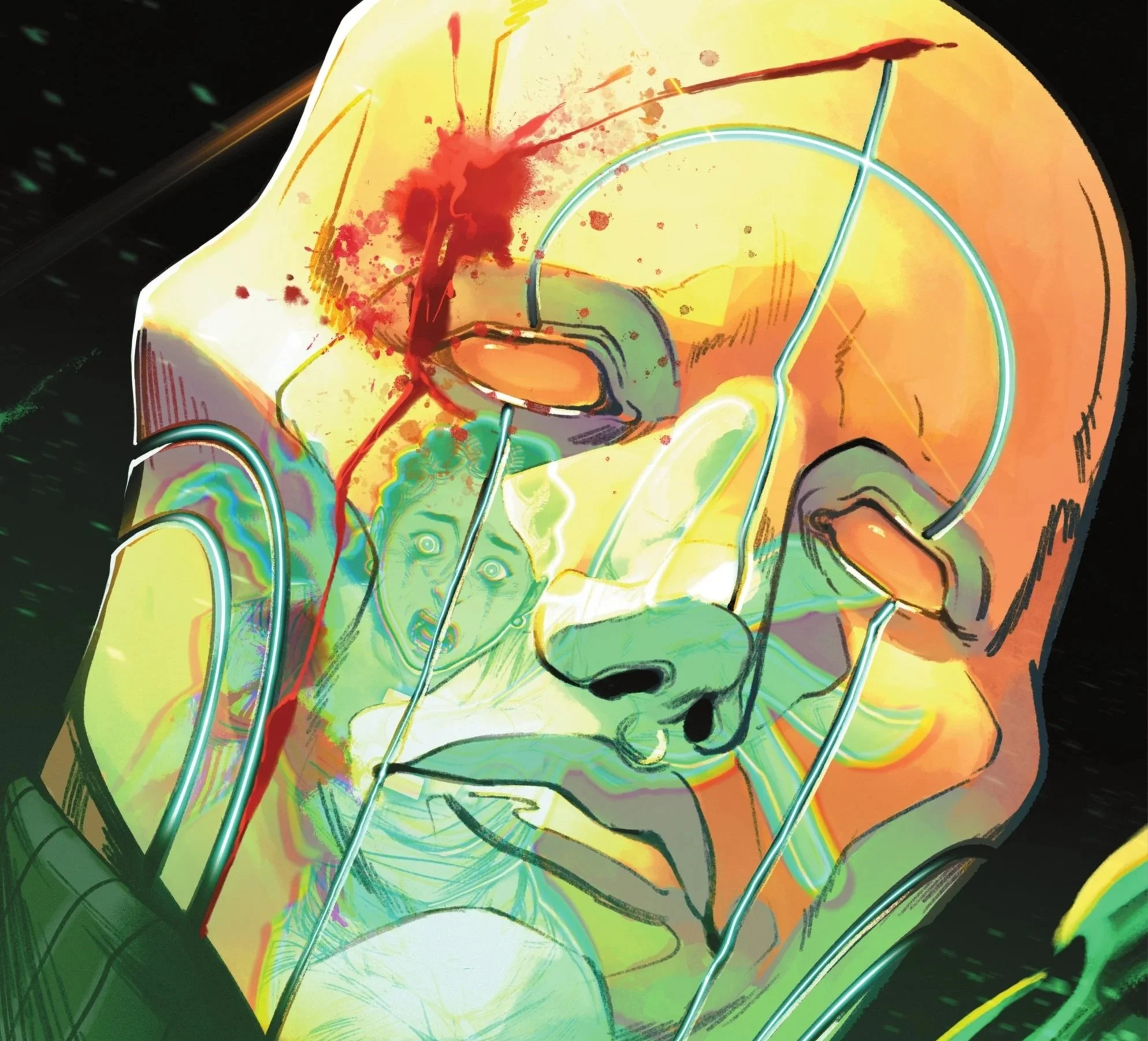
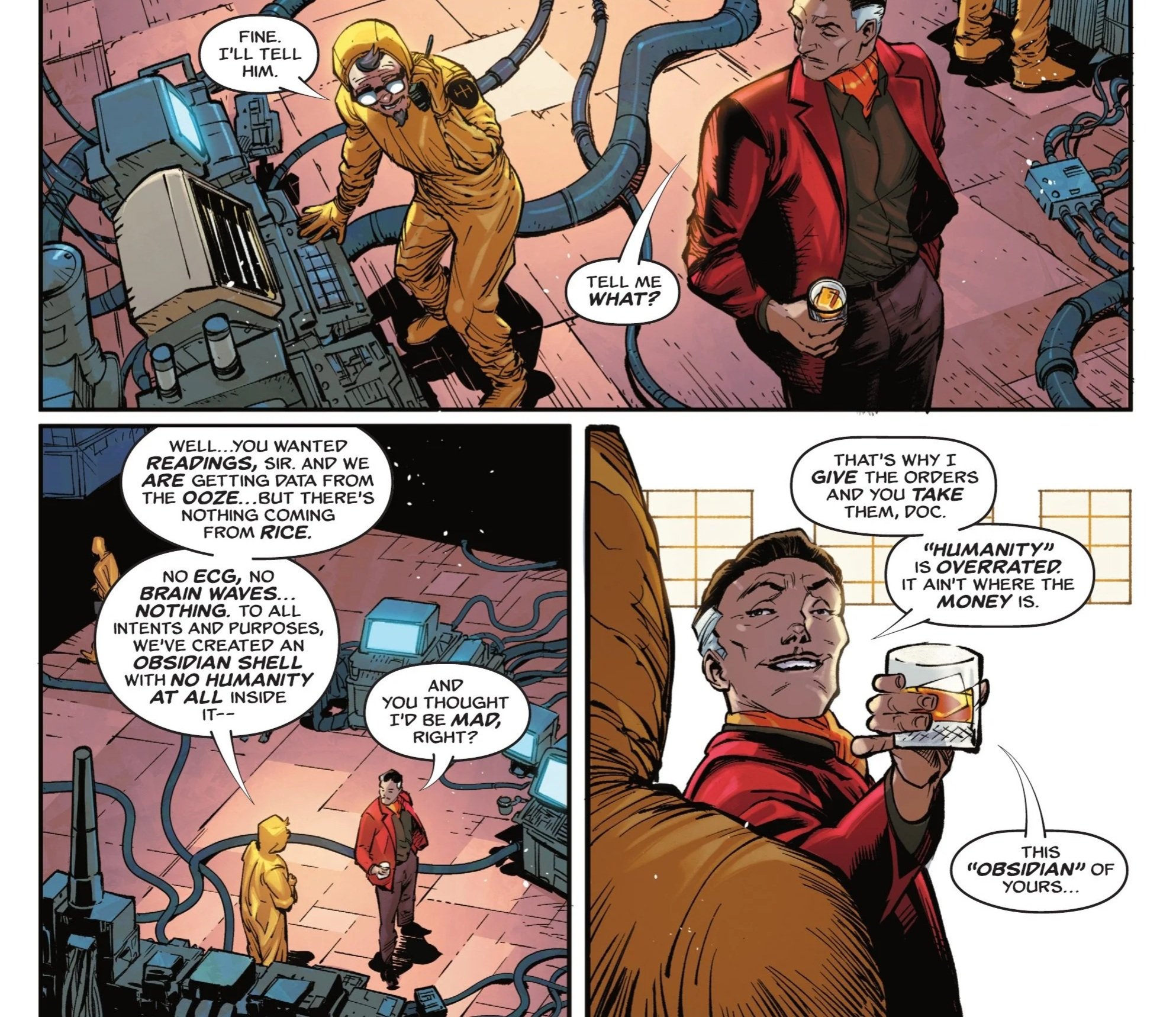
Regarding that larger threat, Hector Hammond is fully set in his ways to exploit the Evergreen incident. He has somehow acquired the same black substance that transformed Hal Jordan into the Black Hand. Not content with simply studying it passively, Hector gleefully insists on human test subjects. One of the first he is choosing for that task is the version of a fan favorite in this universe, Todd Rice. While everyone knows him best as the legendary Obsidian and the son of the original Green Lantern, Alan Scott, the final result of the twisted experiments of Hammond makes that moniker far too literal and grotesque for readers to comprehend.
When Survival Is Its Own Reward
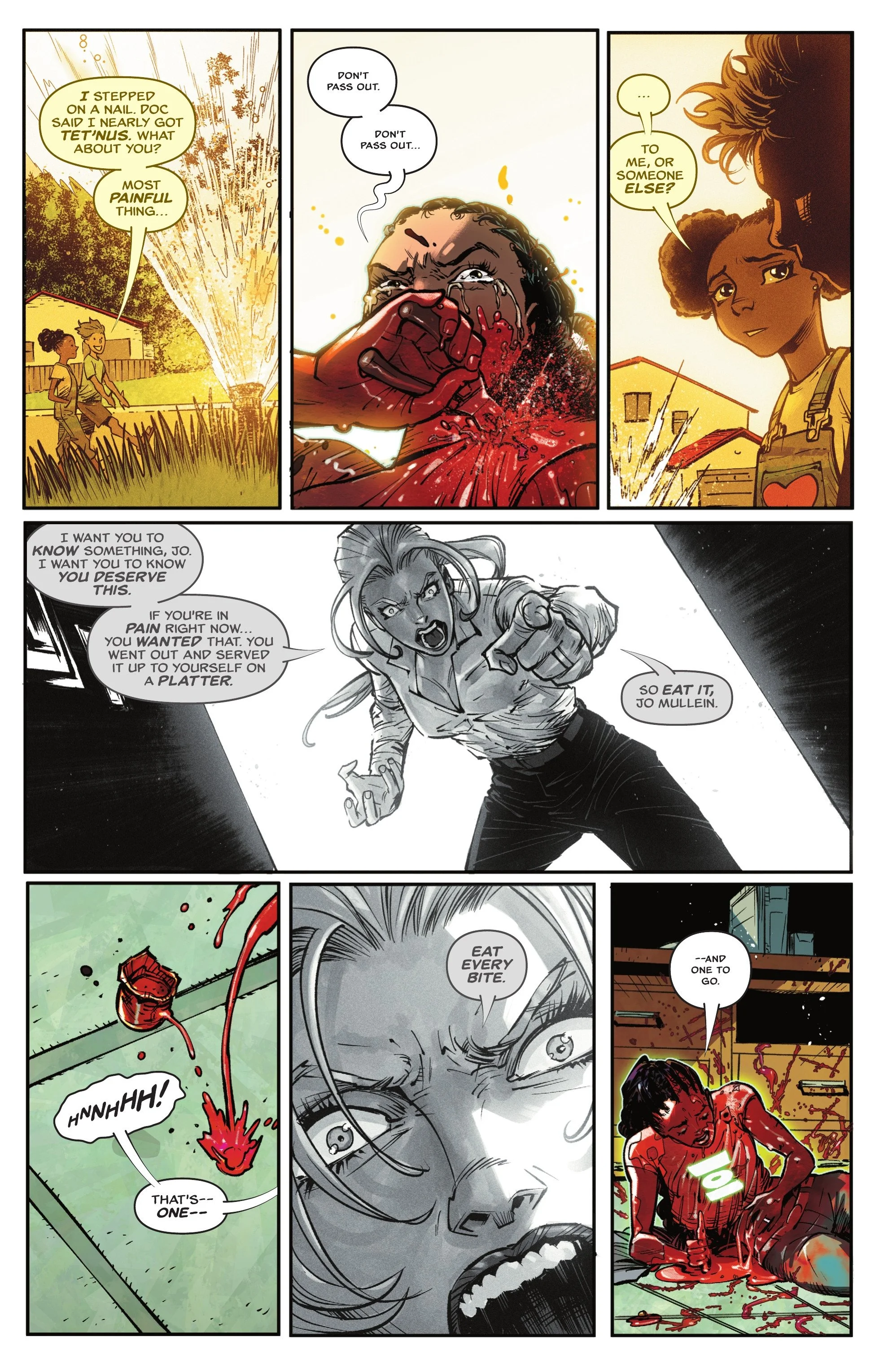
The plot of this issue is deceptively simple in structure, but Al Ewing uses that simplicity to richly execute the real high-stakes nature of this fast and furious story. I genuinely appreciate the more focused nature of this issue. It keeps attention laser-focused on stripping Jo of her advantages so as to test her character through raw adversity. This is an honest and decisive narrative choice. It is one that pays great dividends because it does a great job of centering Jo as a compelling Lantern and an emotional anchor for the series as a whole. She adapts, improvises, and endures in a truly harrowing situation. She does this not out of a need to win, but because stopping is simply not an option. Ewing manages to capture her implacable spirit while putting Jo at her lowest and most vulnerable point, all without romanticizing her misery or undermining her agency in any way.
All in all, it is a great establishing point for the character. It should go a long way in putting at ease any earlier concerns regarding shallow character work. If there is a critique to be made, it is that the relentless pacing of the issue leaves little room to breathe. Readers hoping for broader plot movement may find the focus narrow, and some supporting characters necessarily fade into the background. However, this feels less like a flaw and more like a calculated choice. This is the issue of Jo Mullein, and it never pretends to be otherwise.
Goldface is also reestablished as a terrifyingly human threat. He plays counter to the misconception that Jo and her friends were only truly at risk from the cosmic. Gold, which has been a classic Lantern vulnerability since the inception of the character, was always played off as a gag weakness in the past. Here, it is a terrifyingly thematic weapon. It shows that the power which was the salvation of Jo back in Evergreen is now the thing that will bring her the closest to death she has ever been. This helps set the stakes in a narrative where the final outcome of the battle between Goldface and Jo is significant. There is a bit of levity even in this fight, and one could argue that Jo kicking Goldface to escape was either unnecessarily comical or a sign of understandable desperation. For the most part, Goldface played his part as an adversary to terrifying fruition during his short tenure.
There are other aspects of the narrative that also stand out very well. The flashbacks this time around do not feel out of place. Instead, they are far more precise and hammer home just how dire the circumstances are. Each memory offers emotional texture that merely amplifies the bloody situation happening in real time. They honestly do a good job of not making excuses for the past mistakes of Jo. While her personal failures may be driving her to do better in the current timeline, they are never explained away or used to soften her character. Instead, those failures go toward sharpening her resolve.
I am still personally a little hesitant regarding the overall handling of the relationship between Jo and Cameron for the audience. However, that seems to be built up far more considerately after the last couple of issues. Issue ten is a good indication of that progress. Add to this the drama of Simon Baz, who offers mysterious circumstances of his own origin story. He is a supporting character who serves to remind Jo of her failures toward Cameron, given that Baz is her best friend. You have a recipe for some great interpersonal conflict that hopefully will not become too much like a soap opera at the expense of the killer narrative at play.
By the end of the issue, even with Goldface being put in the dirt, victory feels hollow. This is by design. Jo may have survived, bloodied and exhausted and scarred in both body and psyche, but the larger threat of Hector Hammond remains unresolved. This moment of survival feels like it came at a high cost. While the machinations of Hammond are quite evil on the surface, there is a truly malevolent streak that readers can feel as he makes his first steps toward establishing his power. The pitiful transformation of Todd Rice into Obsidian is handled in a restrained manner. Instead of positioning the character as an immediate threat or spectacle, the issue treats Obsidian as an unsettling presence. He is something wrong rather than something loud. This subtlety allows the story to expand its mythological scope without fracturing its emotional focus. It successfully ties the new thriller-based shift to the earlier cosmic horror themes upon which the series was originally grounded.
A Visually Visceral Spectacle
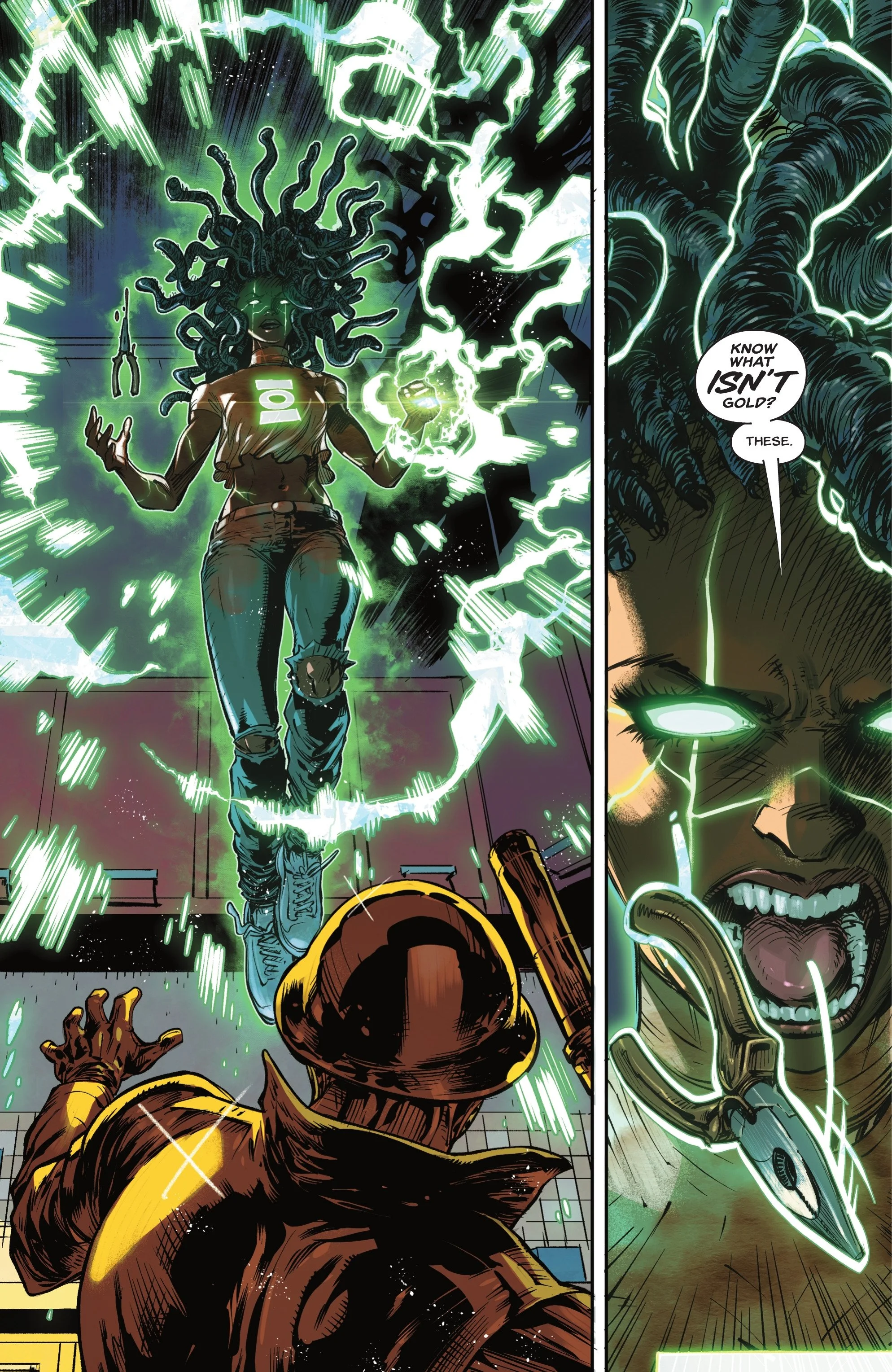
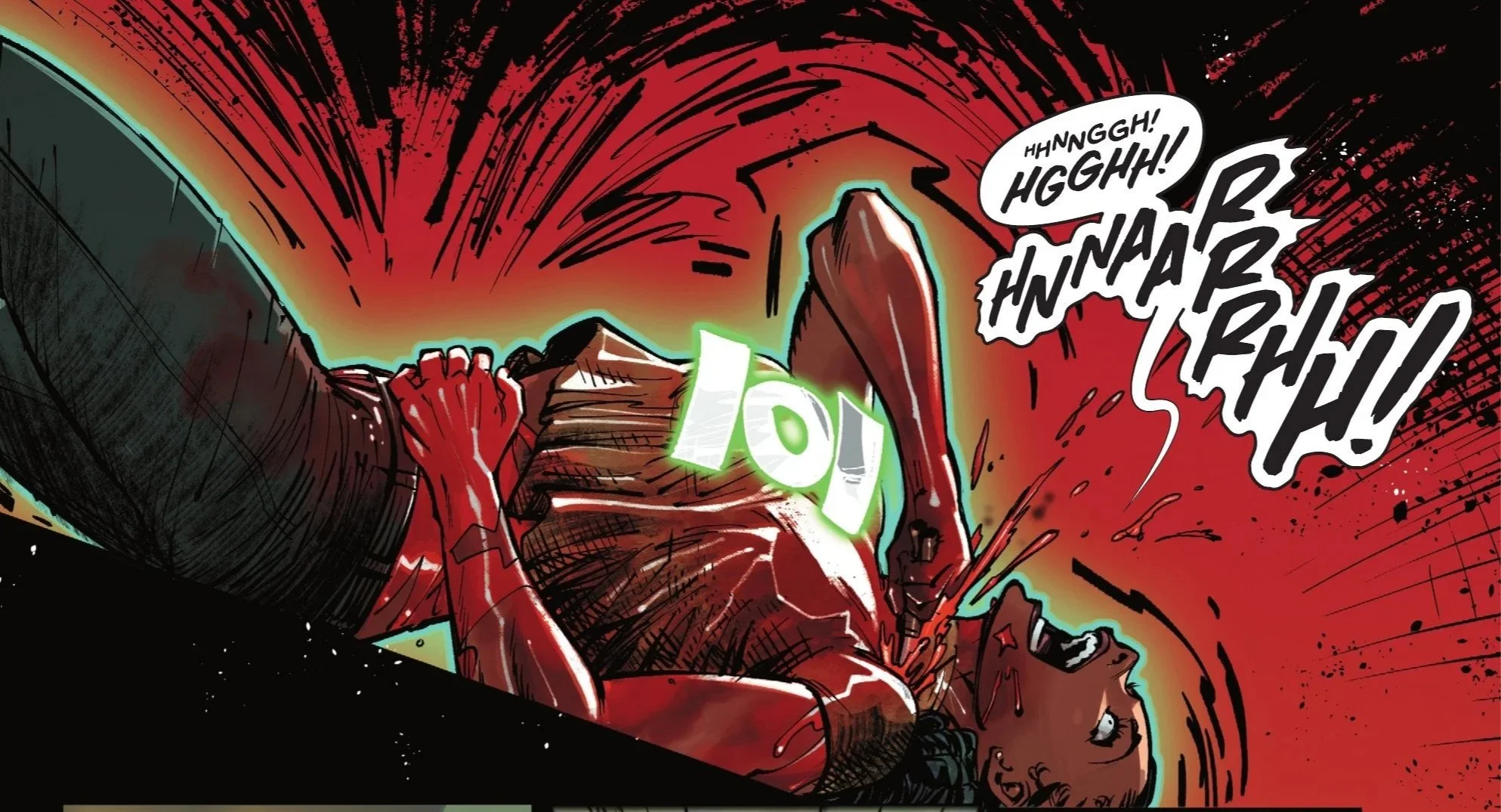
The artwork of Sid Kotian is instrumental in making Absolute Green Lantern #10 work as powerfully as it does. The visual storytelling is tight, controlled, and intensely physical. Every panel reinforces the immediacy of the situation of Jo Mullein. This includes the proximity of danger, the weight of her injuries, and the exhaustion etched into her posture. Kotian excels at body language. The movements of Jo become increasingly labored as the issue progresses. That physical deterioration is communicated expertly in a visual manner without the need for excessive dialogue.
Jo having to remove bullets from her body while avoiding her attacker is a particularly harrowing piece of illustration. Similarly, the intermittent flashbacks visually look as though they are hammering into Jo as hard as any bullets ever could. The design of Goldface, while exaggerated, works within the heightened brutality of the issue. He feels grotesque and dangerous in motion. His visual excess contrasts with the increasingly stripped-down appearance of Jo, which reinforces the imbalance of the fight.
The fight choreography is clear and brutal, favoring impact and consequence over flashy motion. Finally, the claustrophobic panel layouts enhance the sense of entrapment. Tight framing and limited negative space make the reader feel boxed in alongside Jo. This approach heightens tension without resorting to visual gimmicks. When the energy of the ring does appear, it feels precious. It is a fleeting advantage rather than an all-purpose solution.
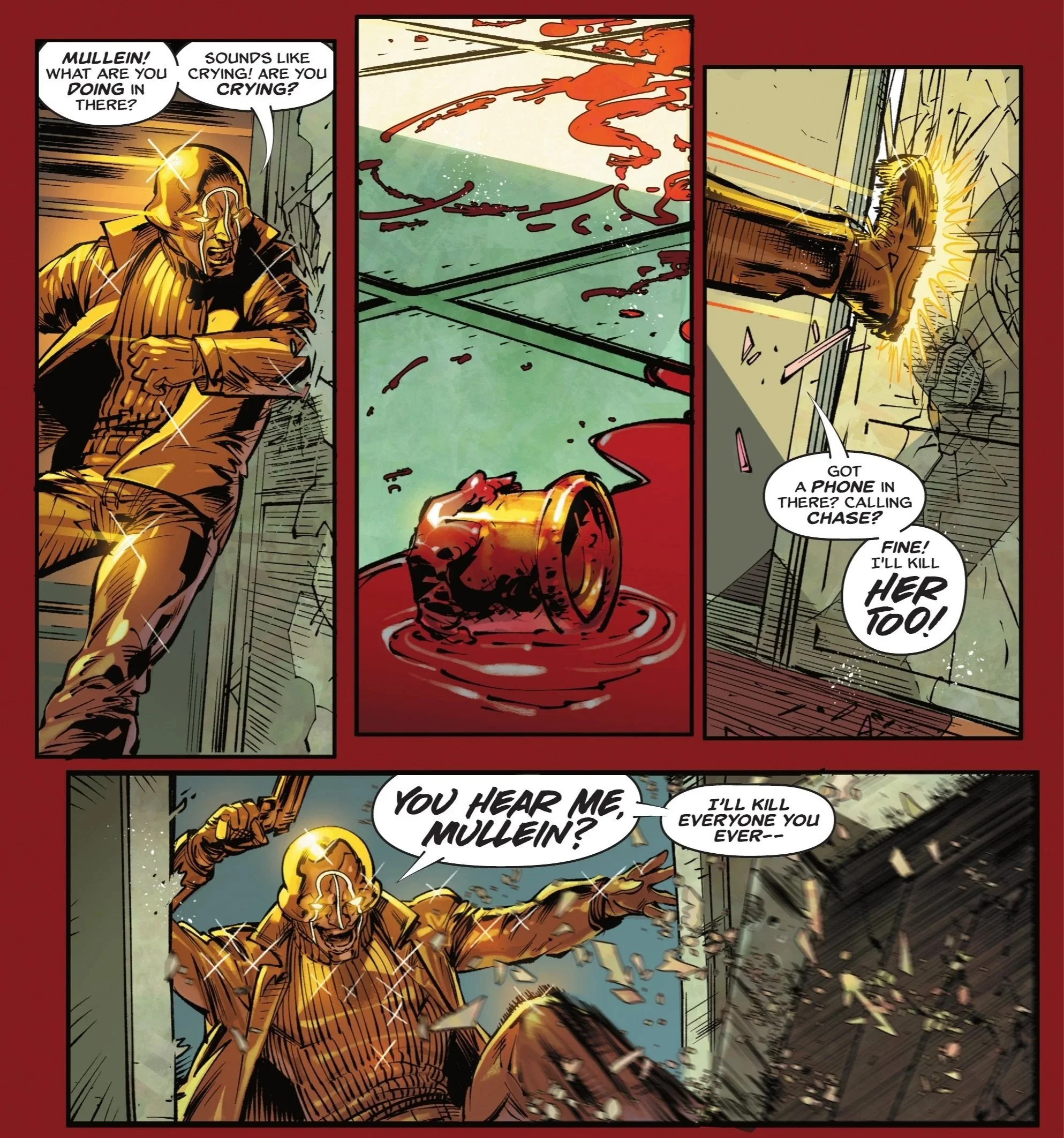
The color work of Pressy is also equally vital. The contrast between the cold gold of the ammunition of Goldface, the deep reds of blood, and the muted greens of Lantern energy creates a striking visual hierarchy. There is a great deal of blood in this issue. Green is no longer dominant. Instead, it is fragile and even appears anemic. Gold, which is traditionally a symbol of value and power, becomes something lethal and corrupting as it dominates the panels. Blood, which symbolizes suffering, stakes, and struggle, overwhelms the pages just as its loss overwhelms Jo Mullein.
Overall, the art and colors function to reinforce the narrative perfectly. This remains true even if there are moments where the facial expressions of Cameron look comically distorted and poorly drawn. While this is a small and noticeable blemish, it does not ruin an otherwise exceptionally compelling visual showcase.
The Dying Light…A Lantern’s Fight
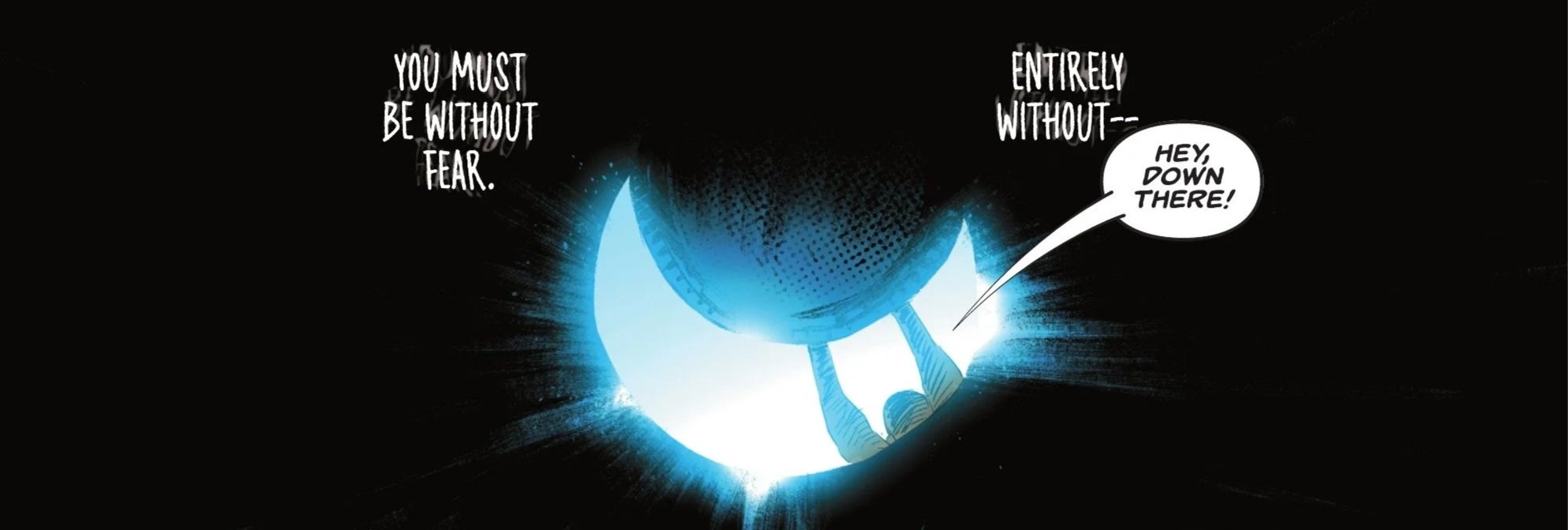
Absolute Green Lantern #10 is an issue that is utterly confident in the story it wants to tell across its twenty or more pages. It commits to that vision without compromise. By effectively centering Jo Mullein with laser precision and forcing her into one of the most high-strung situations where her powers cannot protect her, the issue delivers emotional resonance through cold and bloody action. It is a great sign that the series is still retaining its grander mythology while also having enough restraint to not shove that sense of scale where it is not needed. The issue chooses instead to move the plot and story through purposeful violence, character integrity, and sheer visual craftsmanship.
While some readers may wish for more overt progression of the grand narrative of the Absolute Universe, this issue proves that emotional groundwork is just as essential as cosmic escalation. By the time the larger conflicts return to the forefront, they will matter more because this issue took the time to remind readers what was truly at stake. As someone who had doubts about the direction in which things were headed, Absolute Green Lantern #10 went a long way in being one of the strongest entries of the series since its inception. It achieved this by choosing to deepen this universe instead of merely expanding it.
Final Verdict: A confident and bloody story that is uncompromising in its vision of proving that power can be easily stripped away by the simplest of means but can be regained through sheer force of will.