
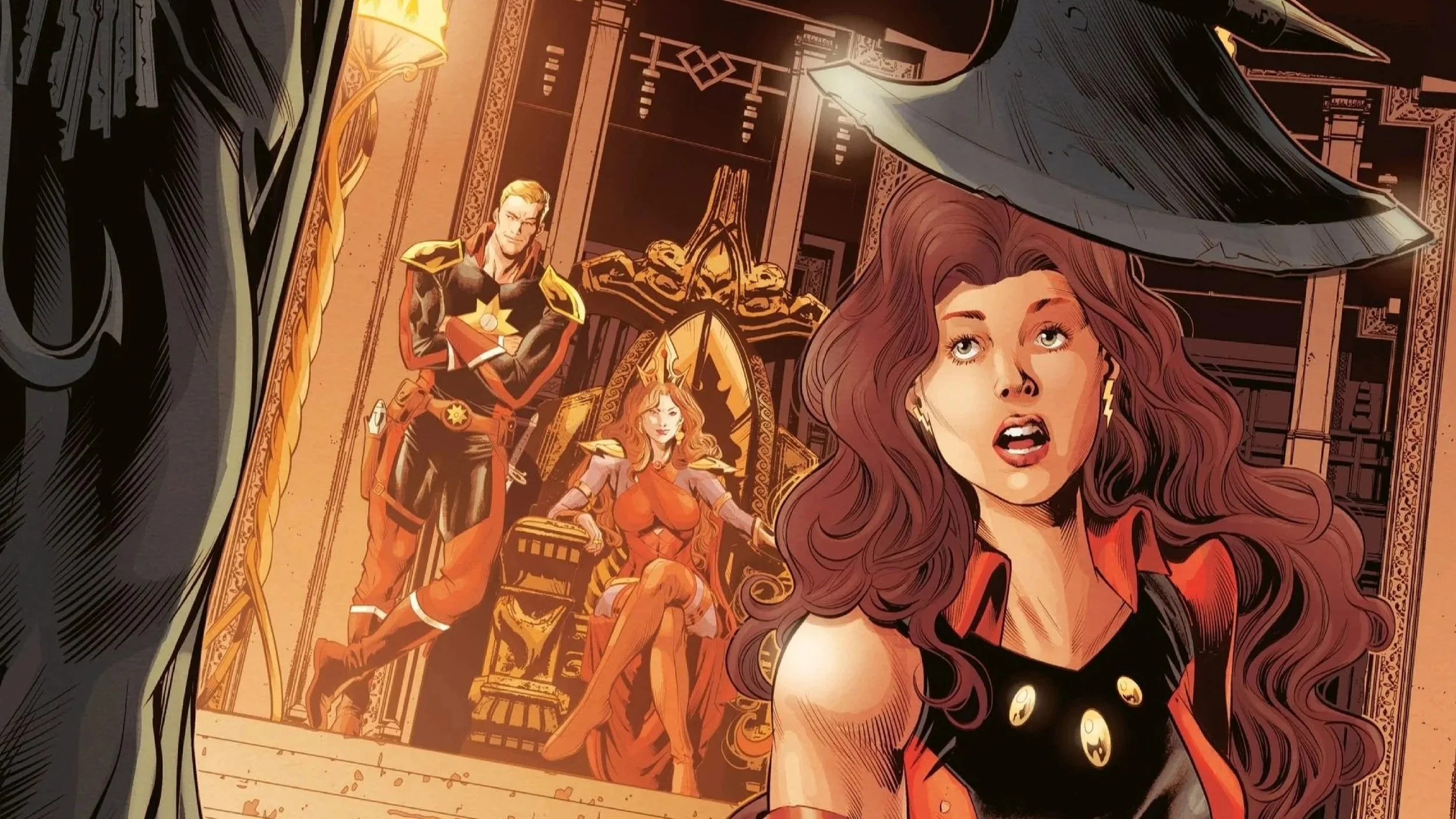
Flash Gordon #14
Writer: Jeremy Adams
Artists: Eder Messias & Tom Derenick
Colorist: Lee Loughridge
Cover Artists: Will Conrad & Lee Loughridge
Flash Gordon #14 is a curious but compelling chapter in the ongoing revival from Mad Cave. It is not a quiet issue by any means, and it arguably features more outright action than the previous installment, but it is an issue defined less by revelation than by alignment. Pieces move into place. Momentum shifts. The story does not surge forward so much as it tightens, drawing everything closer to the inevitable Flash versus Flash confrontation that has been looming for several issues now.
If issue #13 was about deception and infiltration, issue #14 is about commitment. Flash makes his choice here, and everything else unfolds as a consequence of that decision.
A Quick Summary of the Series So Far
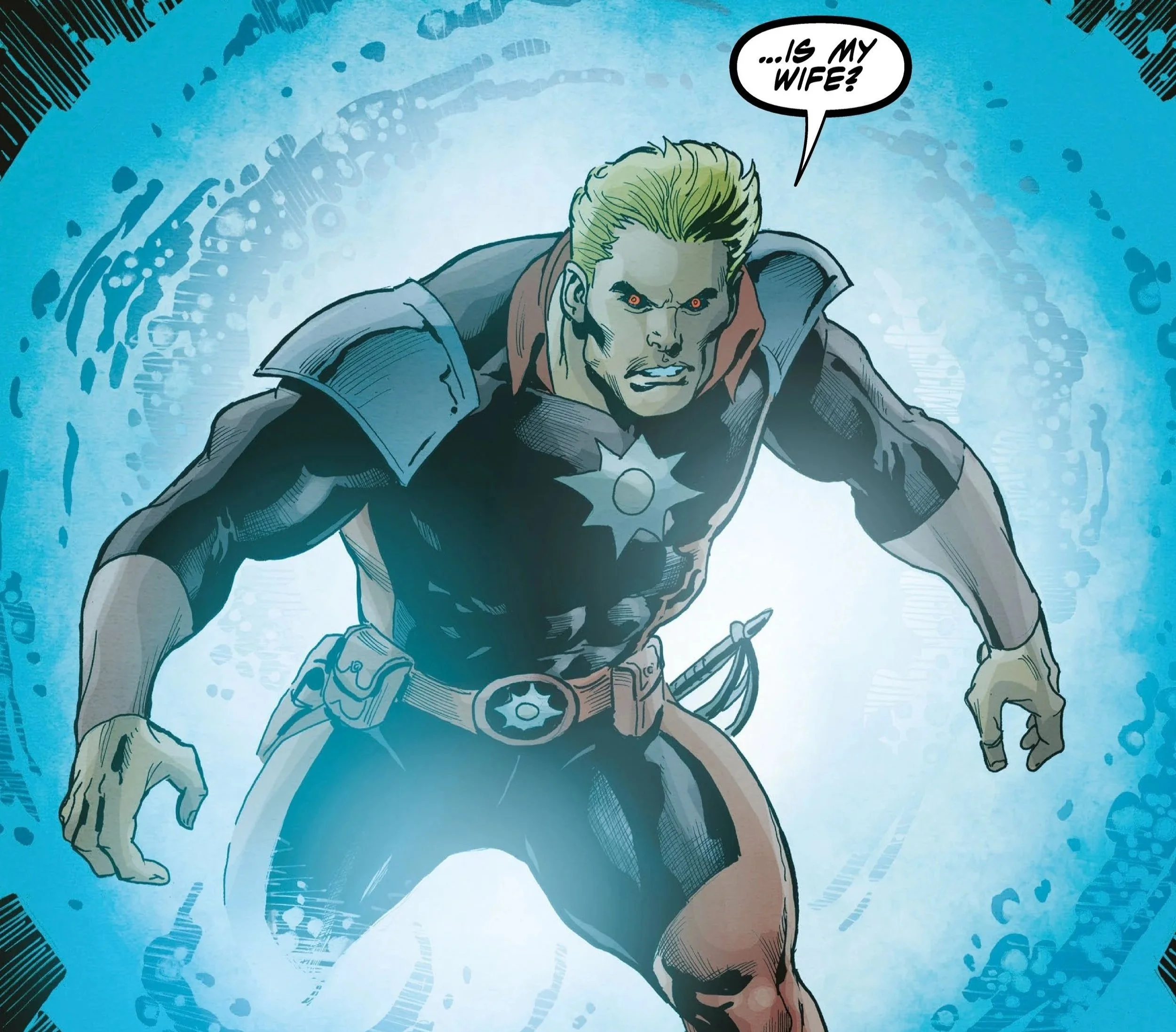
Alternate Flash shows up for the first time in Issue #10.
Mad Cave’s Flash Gordon has taken the familiar pulp framework and expanded it into a dense, interdimensional epic. The series began with Flash accidentally destroying Mongo when Ming aimed the Unraveller at Earth, shattering the planet and scattering its people across the galaxy. Flash was captured and imprisoned on Planet Death, waking with fragmented memories and no clear sense of how everything went so wrong.
From there, the book became a story of uneasy alliances and shifting power. Flash escaped alongside Ming himself, encountered a robot housing the consciousness of Dr. Hans Zarkov, and slowly pieced together the scope of the damage he had caused. Mongo’s former rulers and factions regrouped, including Vultan and his son Talon, while Ming exploited the chaos to maneuver his way back toward authority.
The series then widened its scope with the introduction of alternate universes. An evil version of Dale Arden emerged as Empress of Mongo, followed by the reveal of an alternate Flash who had conquered his own reality. Flash ultimately chose to impersonate this tyrannical counterpart, taking control of his army in order to bring the fight back to his home universe and confront both Ming and his darker reflection.
By the end of issue #13, Flash was deep undercover, playing a dangerous game of misdirection with the fate of multiple worlds hanging in the balance.
The Battle for Mongo as Distraction
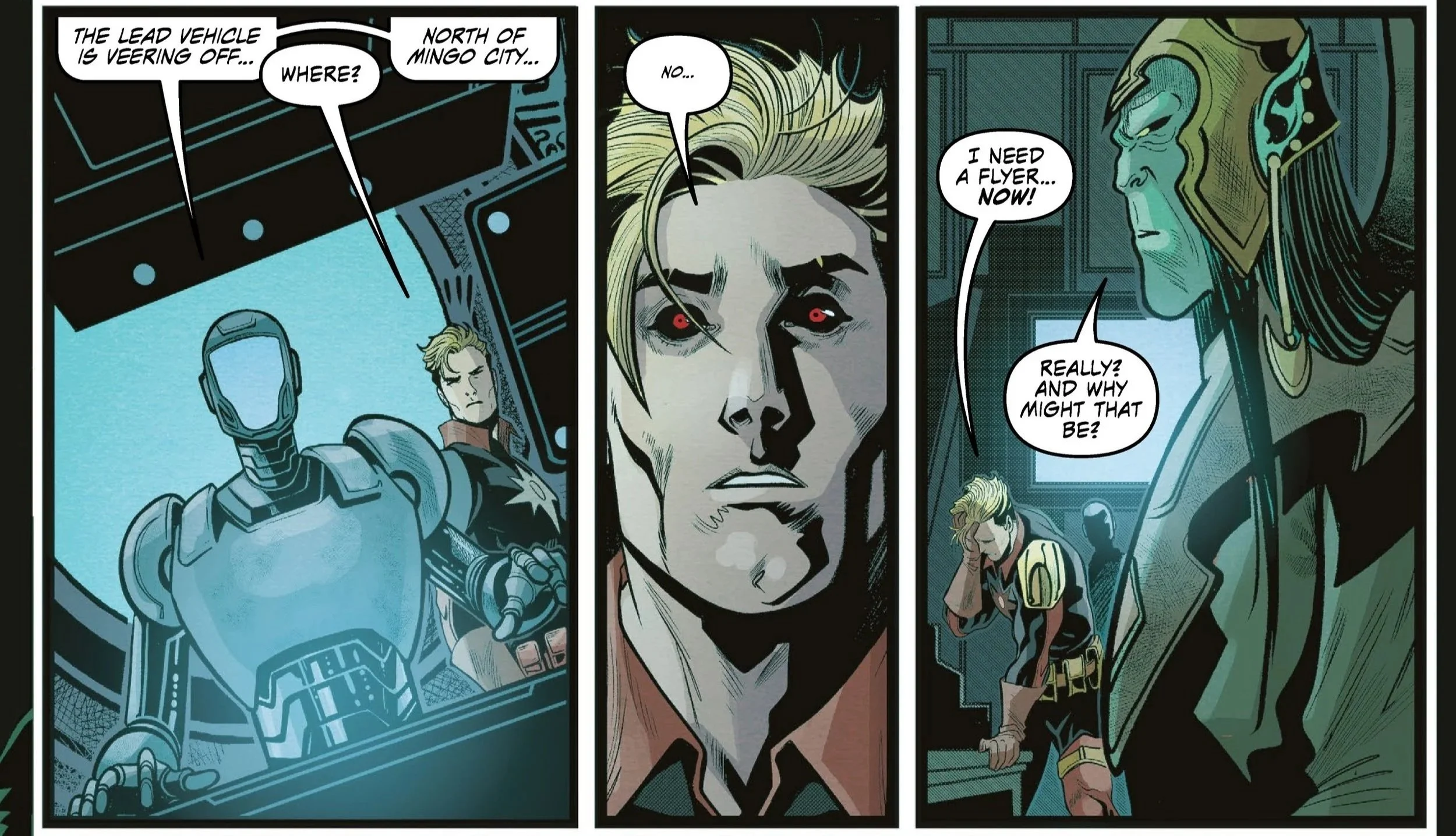
Alternate Flash realizes something isn’t right.
Flash Gordon #14 opens with chaos erupting across Mongo. The stolen army of Flash descends on Mingo City in a full-scale assault, and for a brief moment, it looks as though the war has finally tipped into outright devastation. The key word here, however, is "diversion." This attack is never meant to succeed. It is designed to keep Ming occupied, reactive, and furious.
The alternate Flash quickly deduces that the battle is nothing more than a diversion. He informs Ming that Flash is after something that can turn the tide of this whole battle and ruin everything they have been planning. They then quickly go after Flash in a flyer.
Flash, meanwhile, abandons the assault just as suddenly as it began. Veering north, he directs Vultan to keep the defenses of Ming pinned while he searches for something that might finally tilt the war in their favor. The enthusiasm of Vultan is immediate and endearing. He frames the mission as an "insurance policy" against Ming and the alternate Flash, and the moment reinforces how much this series understands its supporting cast. Vultan is not just muscle or comic relief. He is a believer, and his loyalty matters.
Motion Without Arrival
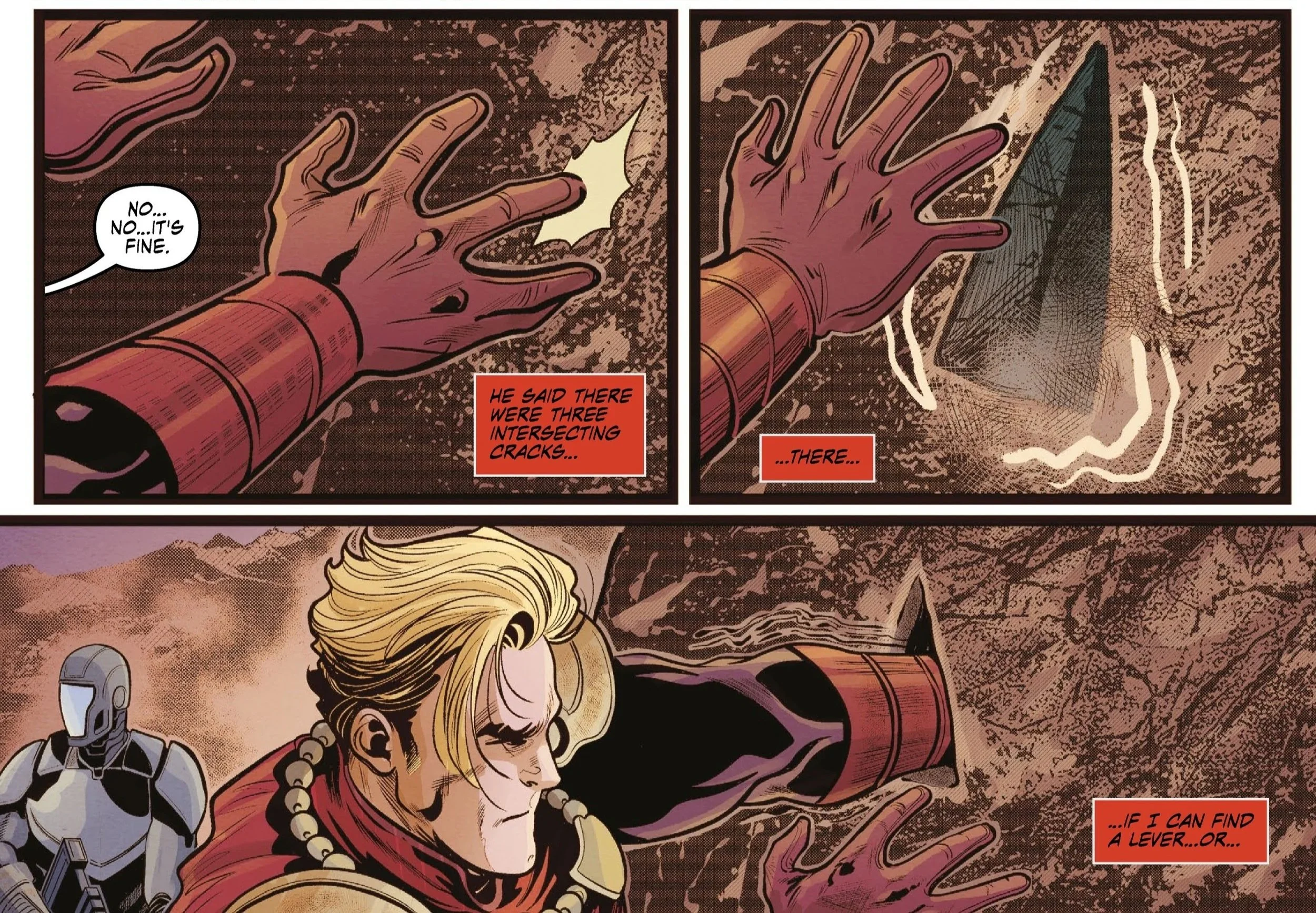
Flash discovers the entrance to the Cave of Ancients.
Much of the issue follows Flash as he races toward the fabled Cave of the Ancients, guided by coordinates supplied by the alternate Ming. He identifies the entrance by three intersecting cracks on a rock face and descends into a chasm filled with ancient defenses and decaying technology. Importantly, Flash does not reach his goal here. He confirms proximity, not possession.
This choice defines the pacing of the issue. Flash Gordon #14 is active, kinetic, and frequently dangerous, but it is also withholding. Every step forward comes with resistance, delay, or complication. Flash pushes deeper into ruins tied to the legacy of Zarkov, confirming that something powerful still lies ahead, but the issue ends before that promise is fulfilled.
Above ground, the aerial conflict continues to rage. The flyer of Vultan clashes violently with the forces of Ming, and the action is chaotic without feeling gratuitous. The alternate Flash even kills his pilot to be sure he gets to Flash. Talon becomes a focal point here, engaging the ship of Ming in a high-speed dogfight that reinforces his competence and resolve. There is no dramatic duel and no grand victory. There is only survival, pressure, and attrition.
This mirrors the issue as a whole. The war for Mongo shifts in tone and momentum, but not yet in outcome.
Character First, Always
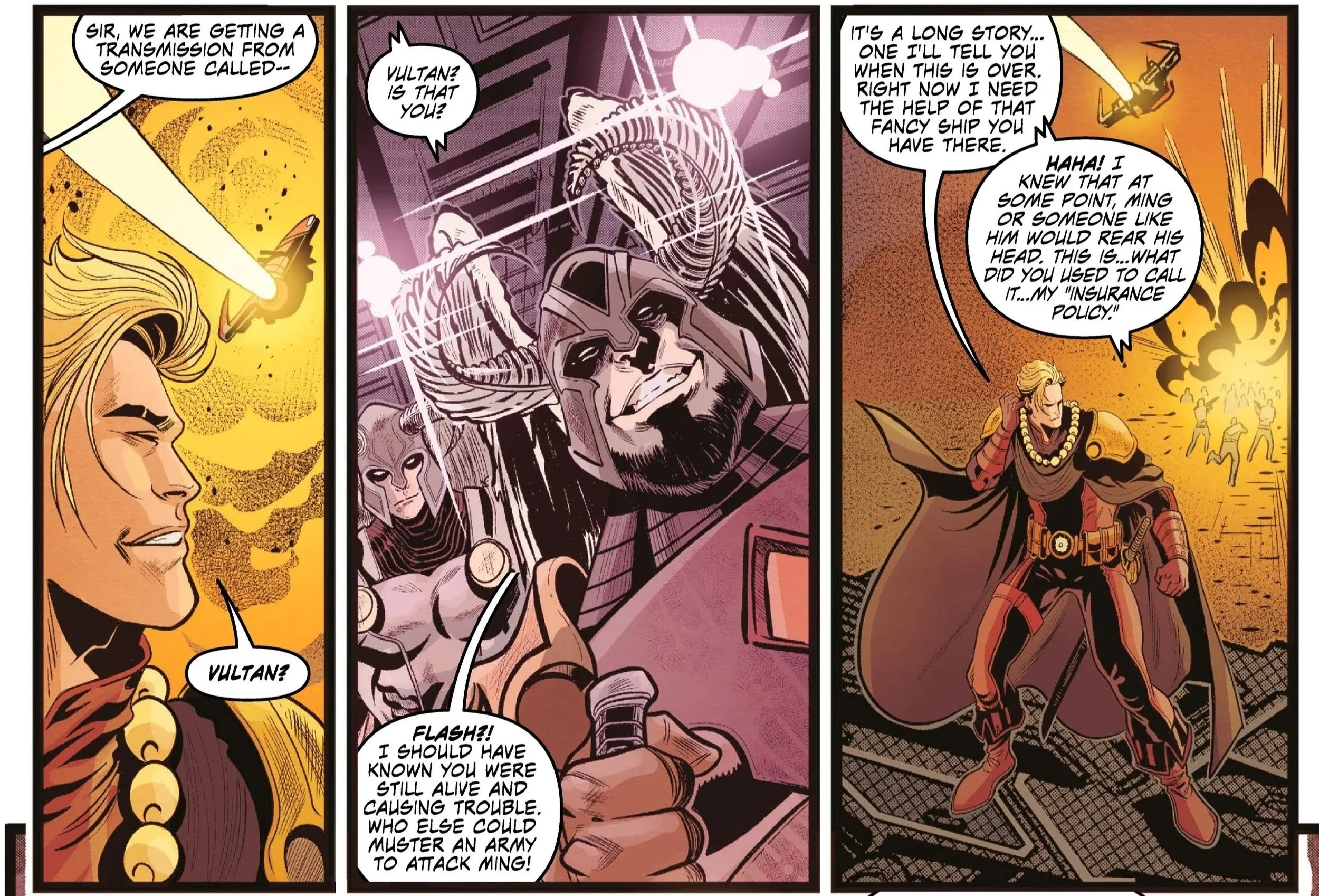
Vultan’s jovial personality shines through.
What keeps Flash Gordon #14 engaging, despite its limited plot advancement, is its commitment to characterization. Flash remains recognizably himself even while playing a role that demands deception and moral compromise. He does not revel in power or cruelty. Every command feels like a necessary lie, and every victory feels temporary.
The alternate Flash, by contrast, feels increasingly like the true threat looming over the story. His presence hangs over the issue even when he is not directly on the page. He is framed less as a mirror image and more as a distorted endpoint. Where our Flash improvises and adapts, this version is rigid, absolute, and merciless in his purpose. The closer the two move toward their inevitable collision, the more unsettling it becomes to realize that they share the same instincts, just sharpened toward very different ends.
Dale and Zarkov also seize moments amid the chaos to reassert their agency. Their escape is not treated as a triumphant beat, but rather as a pragmatic one. They are not safe, but they are free enough to help, and that distinction matters. The series continues to treat intelligence and resolve as being just as valuable as brute force.
Art That Sustains the Tension
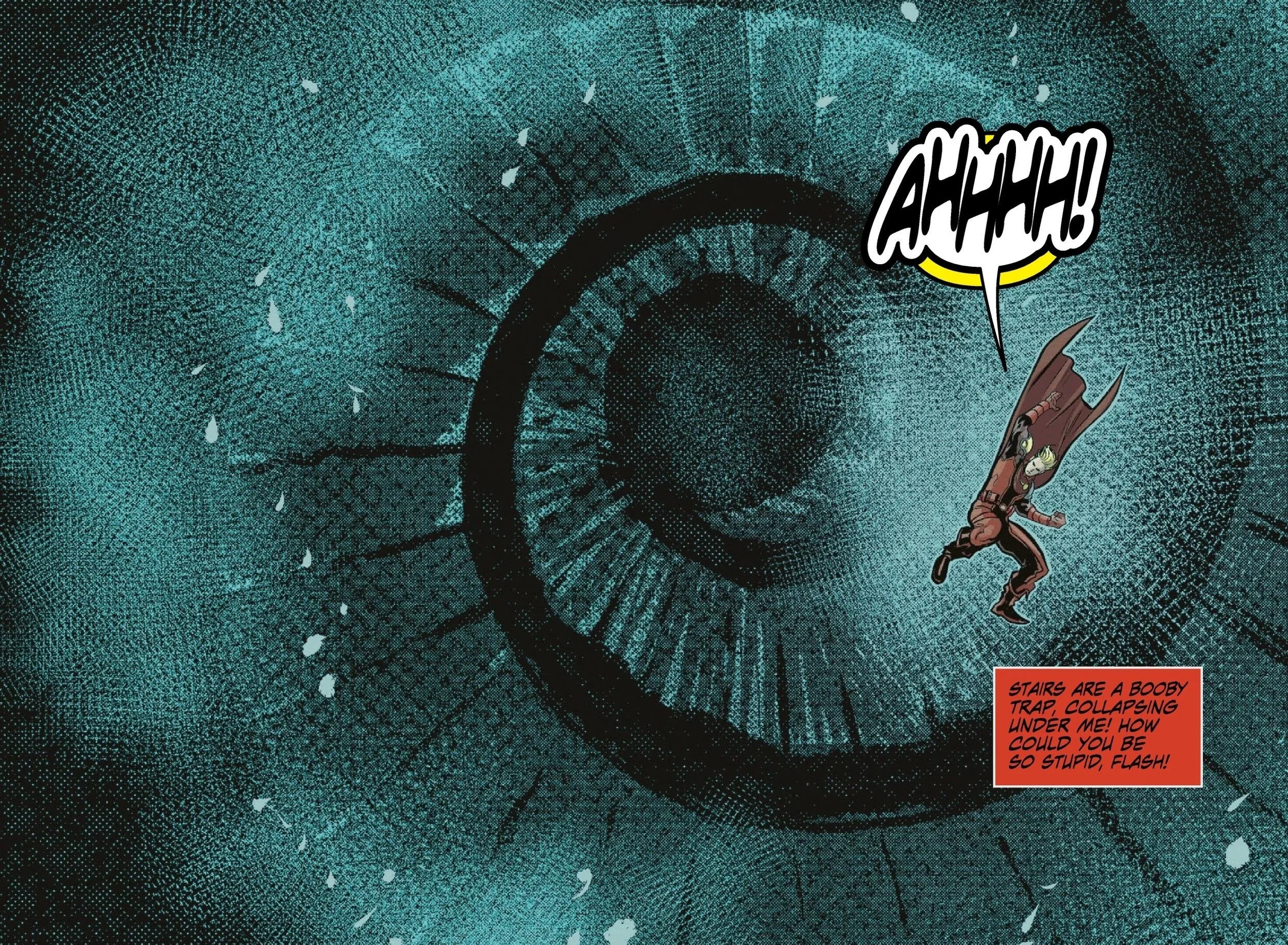
Flash falls deep into the Cave of Ancients after stepping on a trapped stair.
Visually, the issue maintains the high standard of the series. The art team excels at conveying scale without losing clarity. Aerial battles feel expansive but readable, and underground sequences lean into shadow, decay, and a sense of looming threat. There is a constant sense of movement, even in scenes that are primarily transitional.
What stands out most is the restraint. The visuals support the refusal of the story to overdeliver. There are no wasted splashes and no indulgent climaxes. Everything is aimed forward.
Final Verdict and Rating
Flash Gordon #14 is a positioning issue, but it is a confident one. It delivers action, atmosphere, and character without rushing toward resolution. The story does not advance dramatically, but it advances deliberately. It tightens the distance between Flash and the confrontation that has been looming since the introduction of his alternate self.
This is an issue about approach rather than arrival. It keeps the war for Mongo in motion, sharpens the emotional stakes, and makes it clear that Flash versus Flash is no longer a question of if, but a question of when. Not every chapter needs to detonate; some are meant to accelerate.
Rating: 7.5/10
Flash Gordon #14 may not redefine the series, but it strengthens its spine, keeping the tension taut and the momentum intact as the collision ahead draws ever closer.