
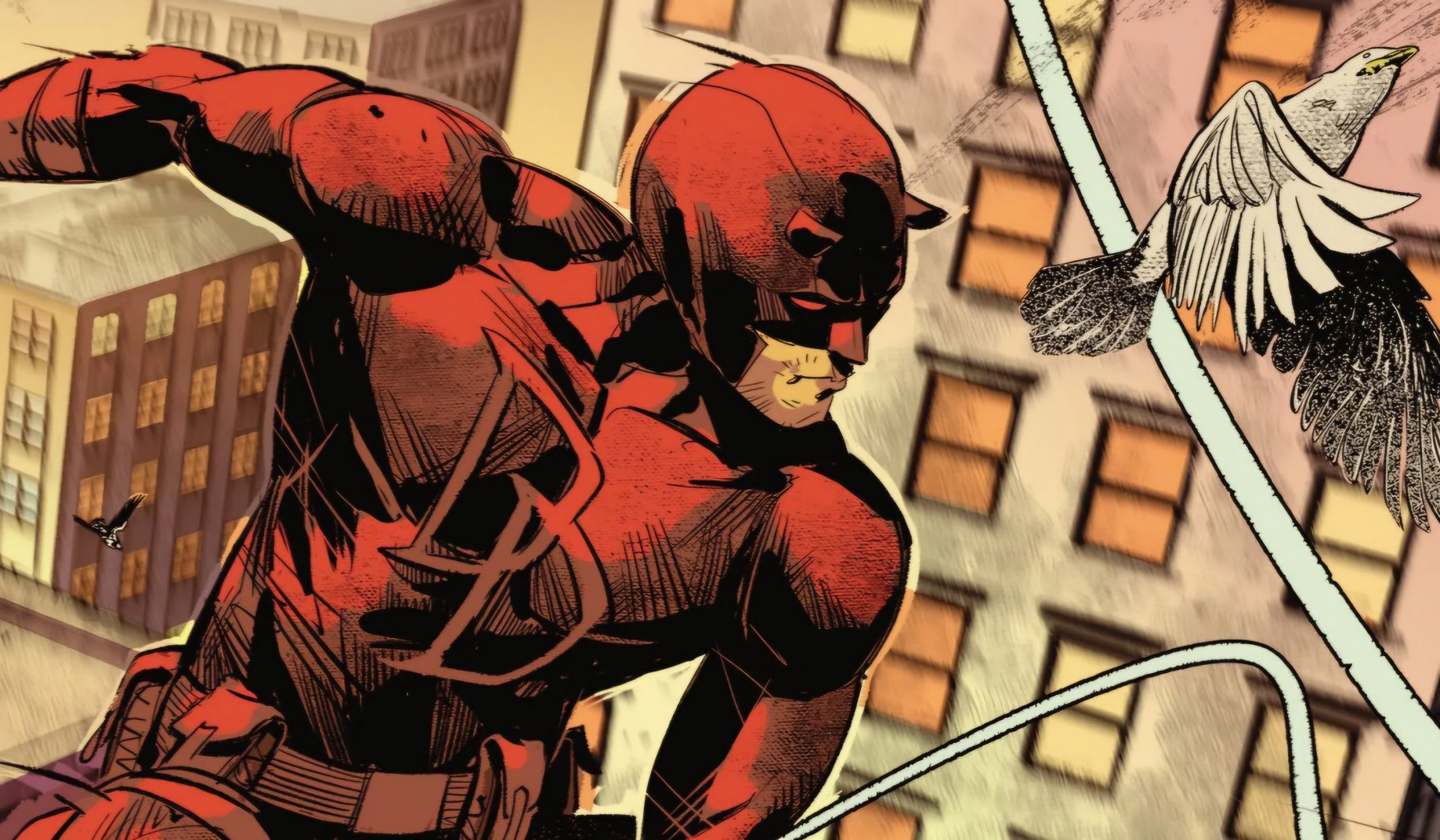
Daredevil and I are old friends. I’ve read basically everything with the character since the (too short) Karl Kesel and Cary Nord run in I think 1996 up through the just-ended Saladin Ahmed run (which I was not a fan of). For me, the runs of Bendis, then Brubaker, are a high-water mark for crime comics and the darker take on Daredevil. I also think that Mark Waid’s run, along with the previously-mentioned Kesel/Nord run, show his more swashbuckling “fun” side. So regardless of the take, I’m generally up to try anything with ol’ Hornhead in it.
On the flipside, I was never the biggest Punisher fan. I’ve read some of his books over the years, but usually just a storyline here and there - never a lengthy run. He just doesn’t grab me when he’s the main character. Not that I dislike the character, but I always felt like he worked better as an antagonist, rather than as a lead.
So in a way, this book is right up my alley. Does it deliver? Well……
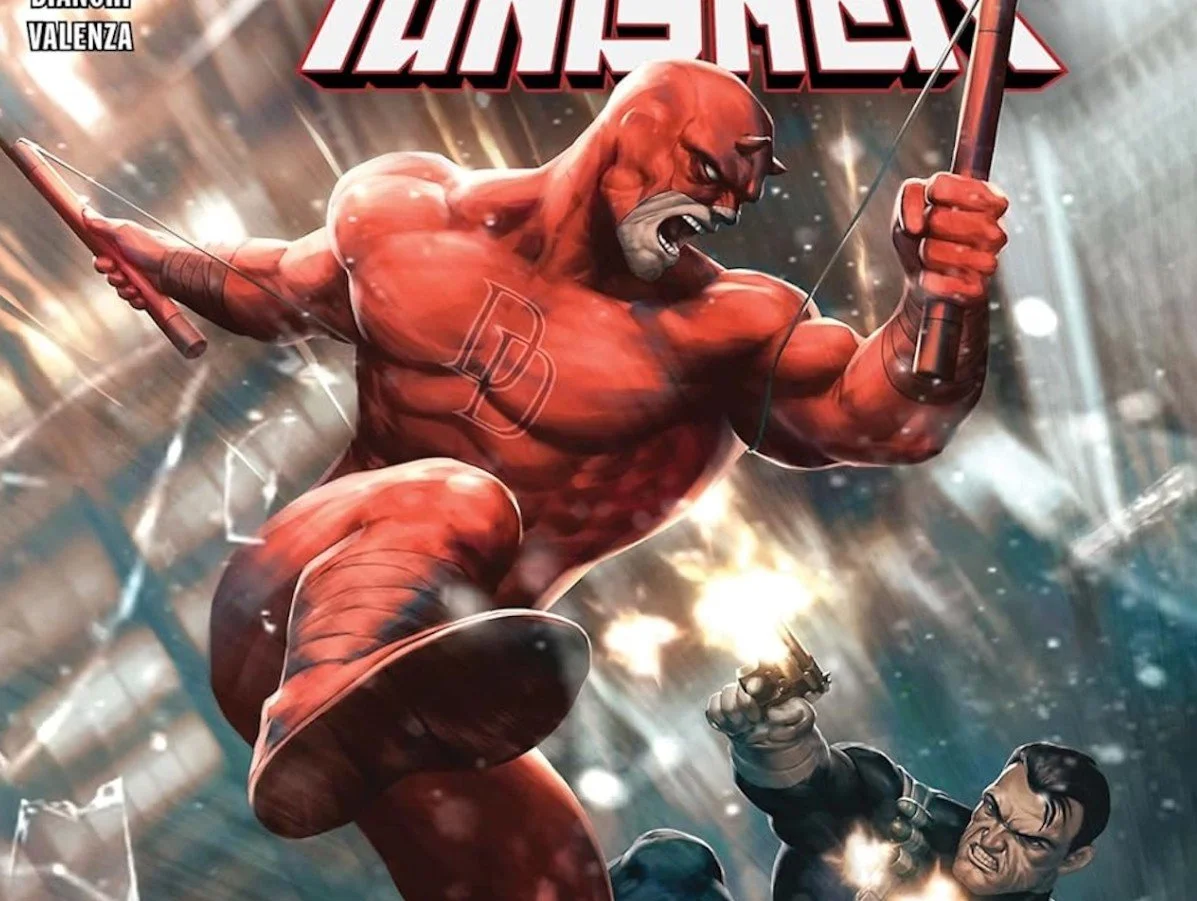
Matt & Frank In Familiar Territory
Back in the early 2000’s, the Punisher was in need of a refresh. He’d just spent some time as angel (no, really), and he needed a change. That change came in the form of Garth Ennis and Steve Dillon, here to give Mr. Castle a fresh coat of paint. The book was violent, bloody, and darkly humorous, the latter being something that really hadn’t been done with the character before (at least not intentionally. Again, he was an angel.) During their 12-issue run, the Punisher waged war against the Gnucci crime family, taking them down one by one. Those looking to go back to those gritty days of Frank Castle are in luck when it comes to Devil's Trigger.
Written by Jimmy Palmiotti, one of the key architects behind the Marvel Knights imprint alongside Joe Quesada, and featuring solid art from Tomasso Bianchi (whose work was new to me), this book walks a nice line between tying into the “Welcome Back, Frank” era and telling its own story. It drops us back into a time when Matt Murdock’s Daredevil identity wasn’t public and he was still practicing law with Foggy Nelson, which is something I’ve genuinely missed even though I’m all for characters evolving so they don’t stagnate. So far, the story strikes a strong balance between both sides of Matt’s life.
The Devil’s Dilemma
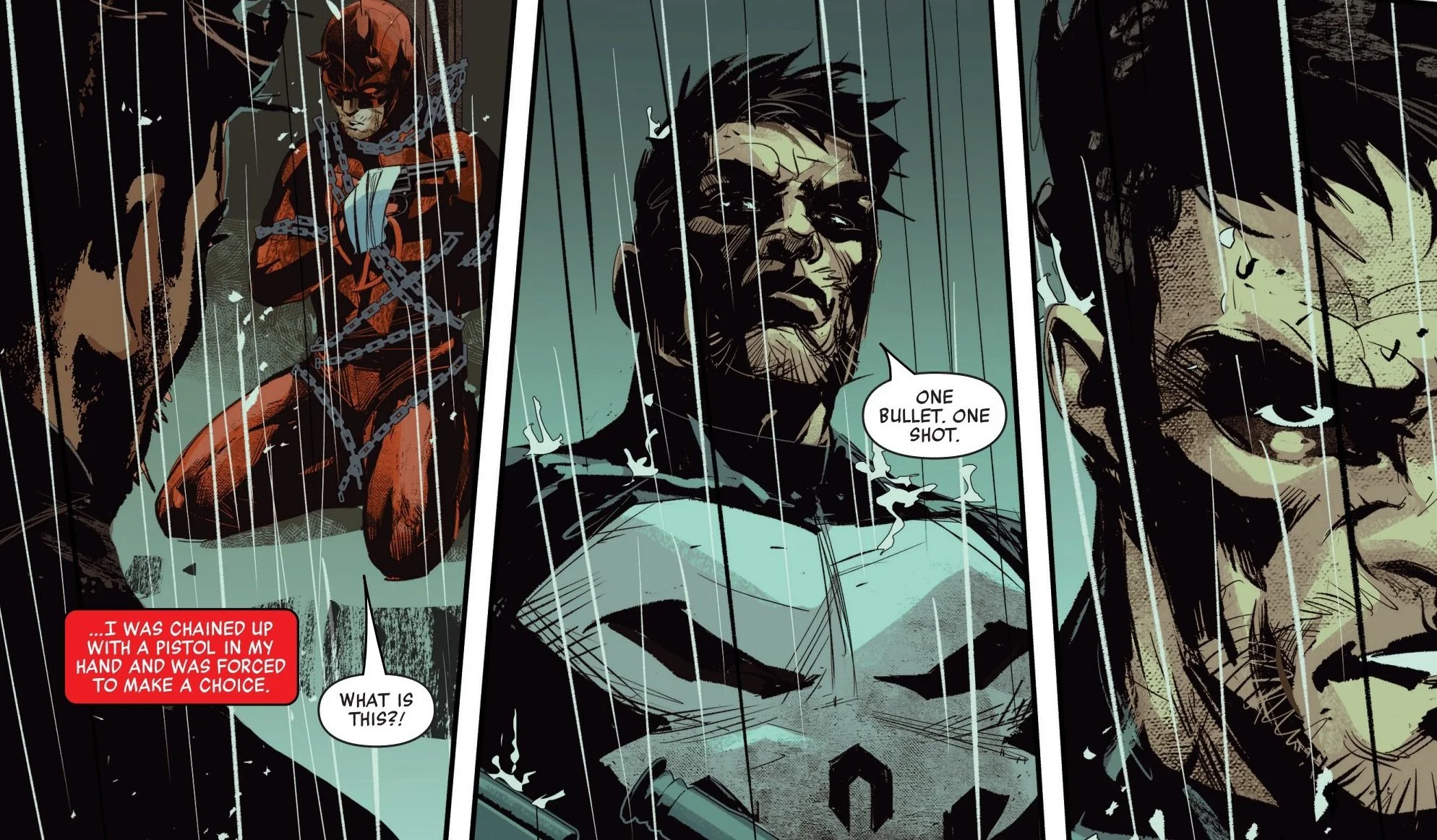
This is much more of a Daredevil story than a Punisher one - in fact, Castle is almost like a boogeyman figure in the early stages of the book, talked about and looming in the background but not being seen until it’s time to strike. And when he and Daredevil finally meet, we get to see a familiar scene from over 20 years ago, but this time from the other side’s perspective.
It’s an iconic scene, re-enacted in the second season of the Netflix Daredevil series. Daredevil, having walked into a trap set by Punisher, finds himself chained up, his hands taped together with a gun in his grip. The Punisher waits with a sniper rifle, ready to take out another member of the Gnucci family. In order to stop him, Daredevil must pull the trigger and shoot Castle. A terrible choice.
Blood & Water
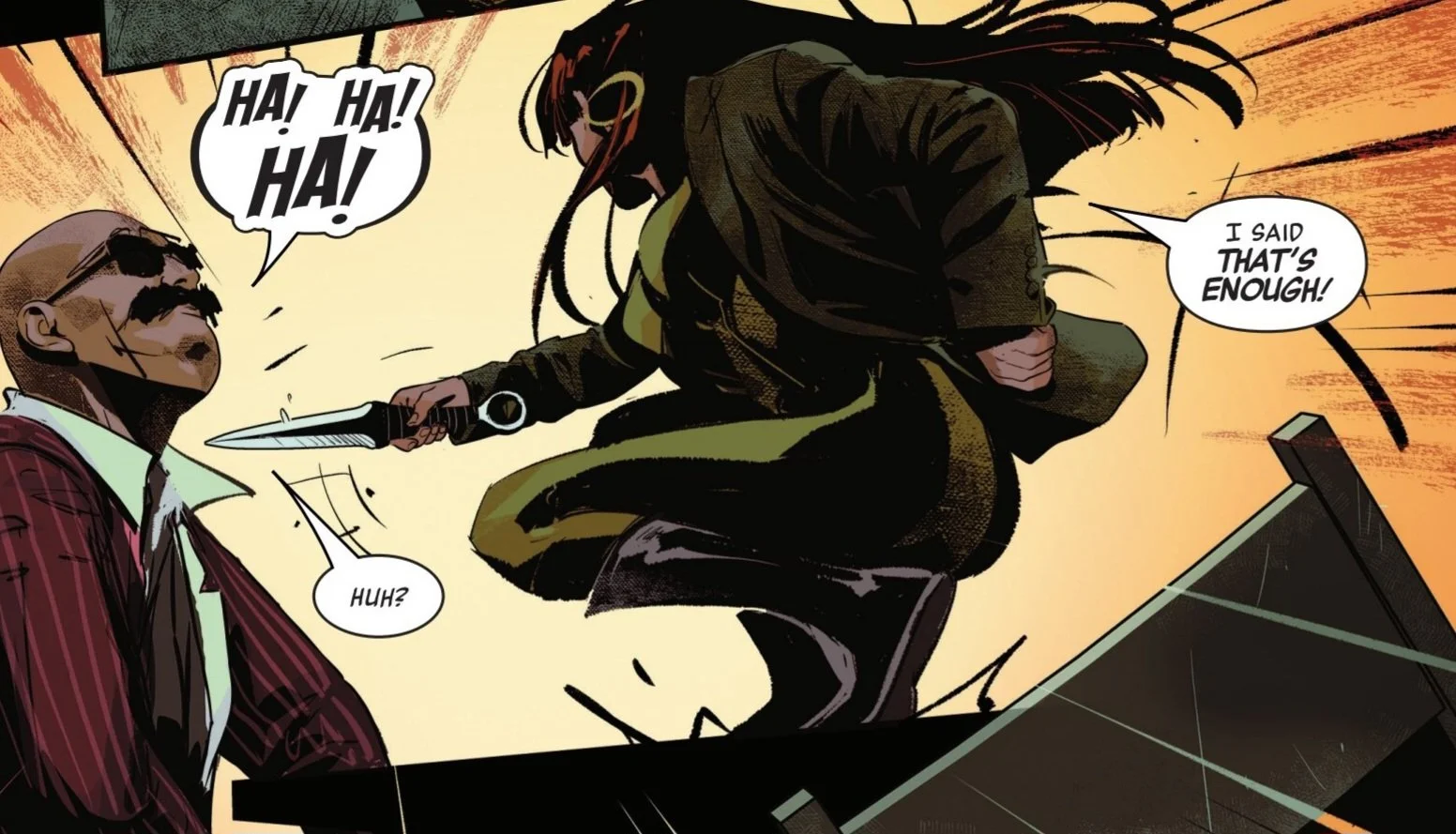
Toward the end of the issue, it becomes clear that this is the point where events will branch away from what we’ve seen before and start charting a new path, using the earlier scenes as groundwork. With the Gnucci family dropping like flies thanks to the Punisher, the power vacuum is already starting to pull in the other crime families. They can smell opportunity, and anyone who’s ever read a story involving organized crime knows exactly what that leads to: a full-blown gang war.
What makes it even more compelling is how squarely this puts Daredevil in the middle. Matt isn’t just cleaning up the streets or getting pulled into someone else’s feud. He’s standing on the front lines, straining to keep Hell’s Kitchen from going up in flames as every mobster with ambition starts grabbing for territory. And lurking in the background is Frank Castle, unbothered by alliances or fallout, quietly preparing to pick off his chosen targets one by one. It sets up a tense, almost domino-like escalation where Daredevil is trying to prevent total collapse while the Punisher is accelerating it in his own way.
The stage feels set for a story that blends the grounded grit of Marvel Knights with a sense of looming, inevitable chaos.
The Art of Devil's Trigger
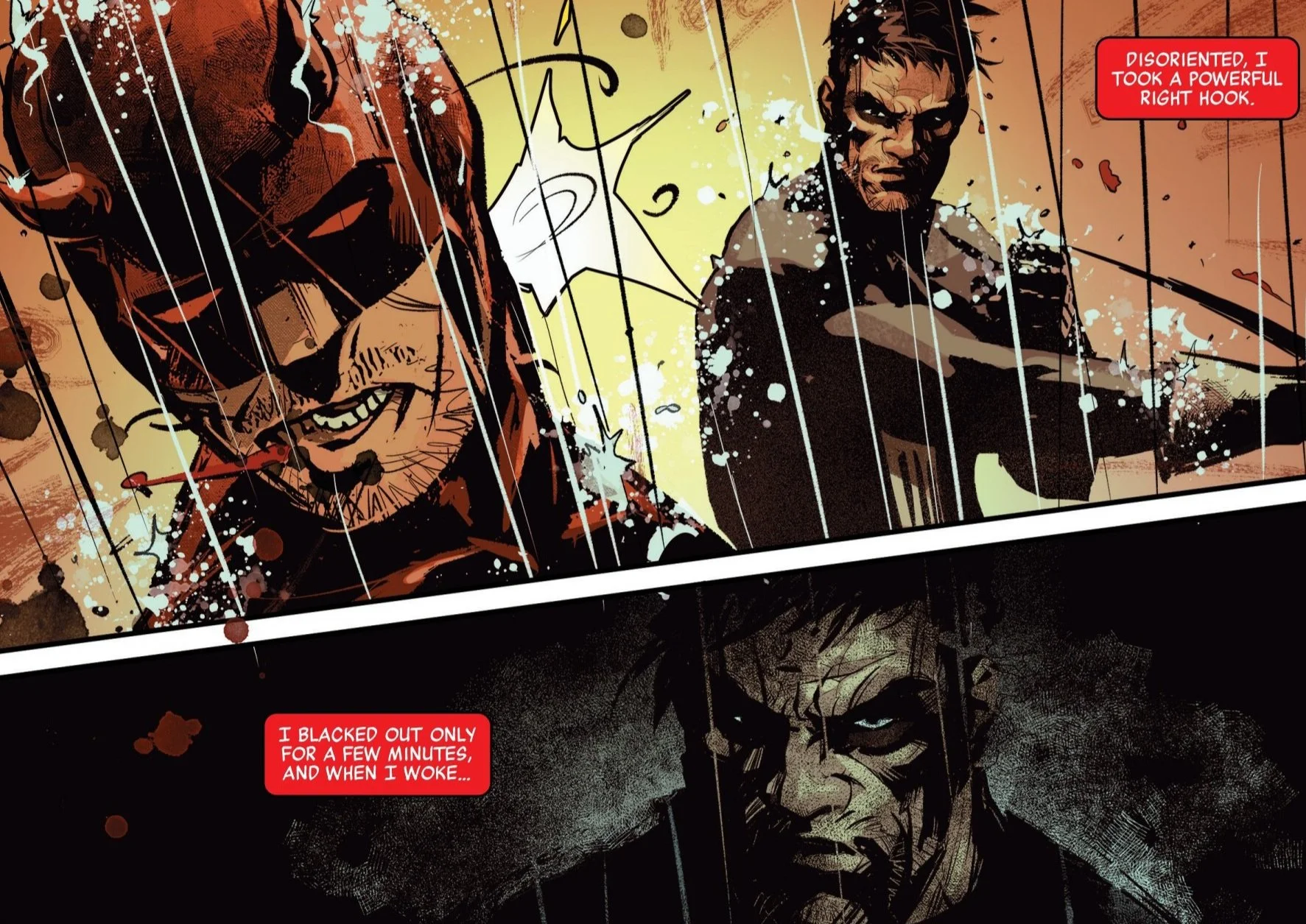
The art and narration work together nicely to give the issue a classic Daredevil vibe, noir-ish without leaning too hard into it. Jimmy Palmiotti knows how to tell this kind of grounded, street-level story, but Bianchi really holds his own.
His Daredevil feels fast and fluid, always in motion, while his Punisher has this unsettling presence that hangs over every scene. Castle looks like a nightmare creeping in from the edges until he’s suddenly right on top of you, and by the time you realize he’s just a man, it’s already too late.
Conclusion & Verdict
Revisiting the Marvel Knights days for both of of these characters gives the story a feel that it “matters,” while not burying it in modern continuity. It’s not going to take a place on the shelf of great DD runs next to Miller, Bendis, Brubaker, and the like, but it’s a damn sight better than the recent Saladin Ahmed run.
The Punisher as the villain in a horror movie is a great take on him. It’s reminiscent of how Jason Statham was portrayed in the movie “The Beekeeper,” and Daredevil is the perfect person to put in the protagonist role, given their long history. His code and his need for justice, both within and without the legal system, makes him a great Yin to the Punisher’s judge, jury, and executioner Yang.
If you like an old-fashioned organized crime story, or if you’re a fan of either of the two leads (or better yet, both of them), give this one a shot. I think you’ll enjoy it. I know I did.