
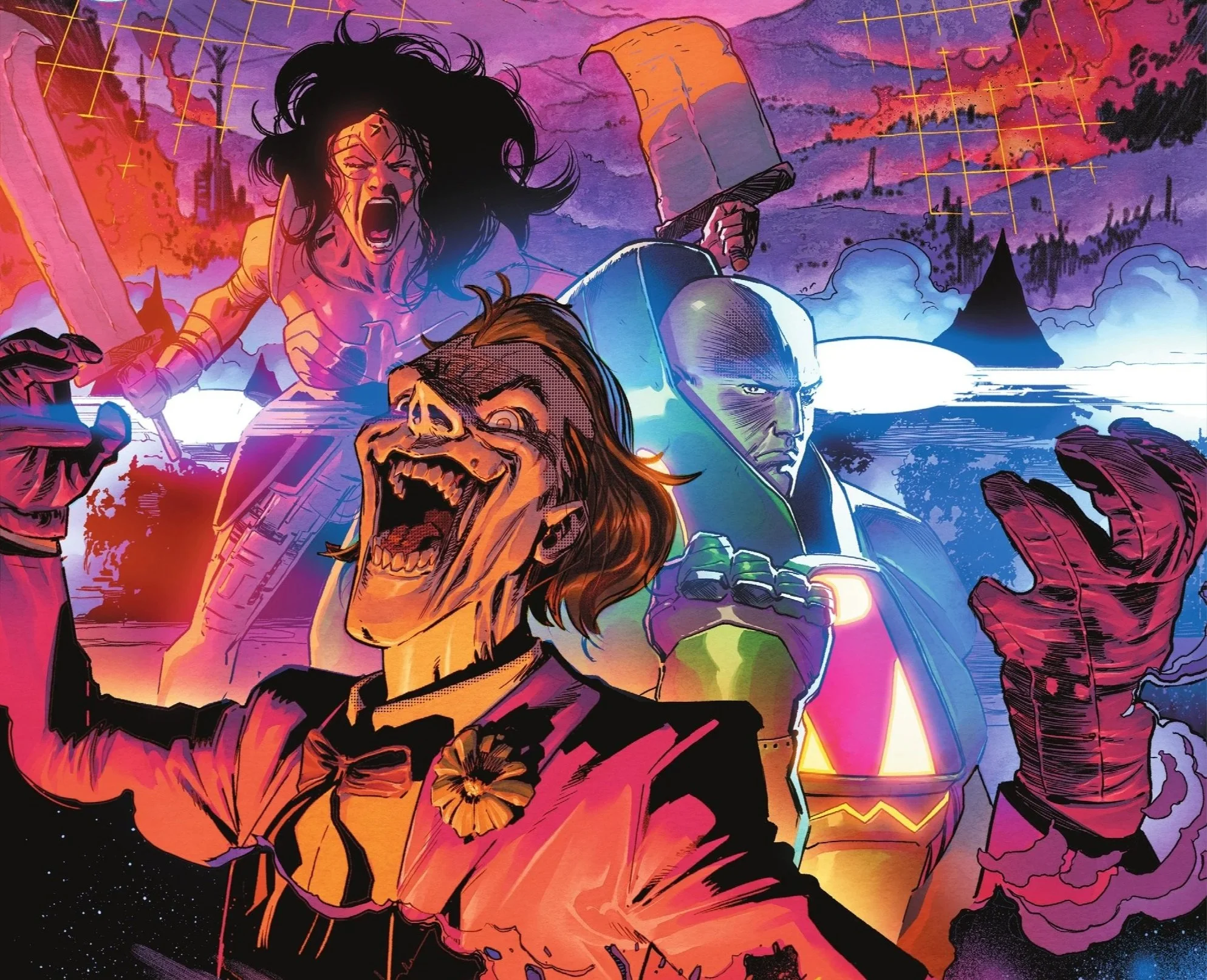
As the race to the throne of King Omega intensifies, the ambitious tournament of champions from DC keeps the momentum going with its latest issue of D.C. K.O. — where the stakes take on a more tag team twist! For a relatively straightforward concept, it is quite interesting to see how Scott Snyder has used that framework to redefine certain dynamics and even deepen character motivations. I suppose that comes with the territory when, after all the mad scrambles and single matches, you finally get heroes and villains teaming up with their partners of choice: to absolutely apocalyptic results (pun intended).
It is a wildly fun romp that pushes the narrative arc further while also keeping the action and fun moving at a breakneck pace — despite the more than flexible rules of this tournament pushing things in unexpected directions. This level of flexibility would certainly put Plastic Man to shame. Readers might feel a little worn out with the looser nature of the logic and pacing with this series so far, but it still has not moved so far out of the "it is a comic book" realm of thinking to be obnoxious quite yet. For the time being, D.C. K.O. #3 brings more of the spectacle and less of the substance, though this is not a bad thing quite yet.
One is Fun But Two is Turbulent
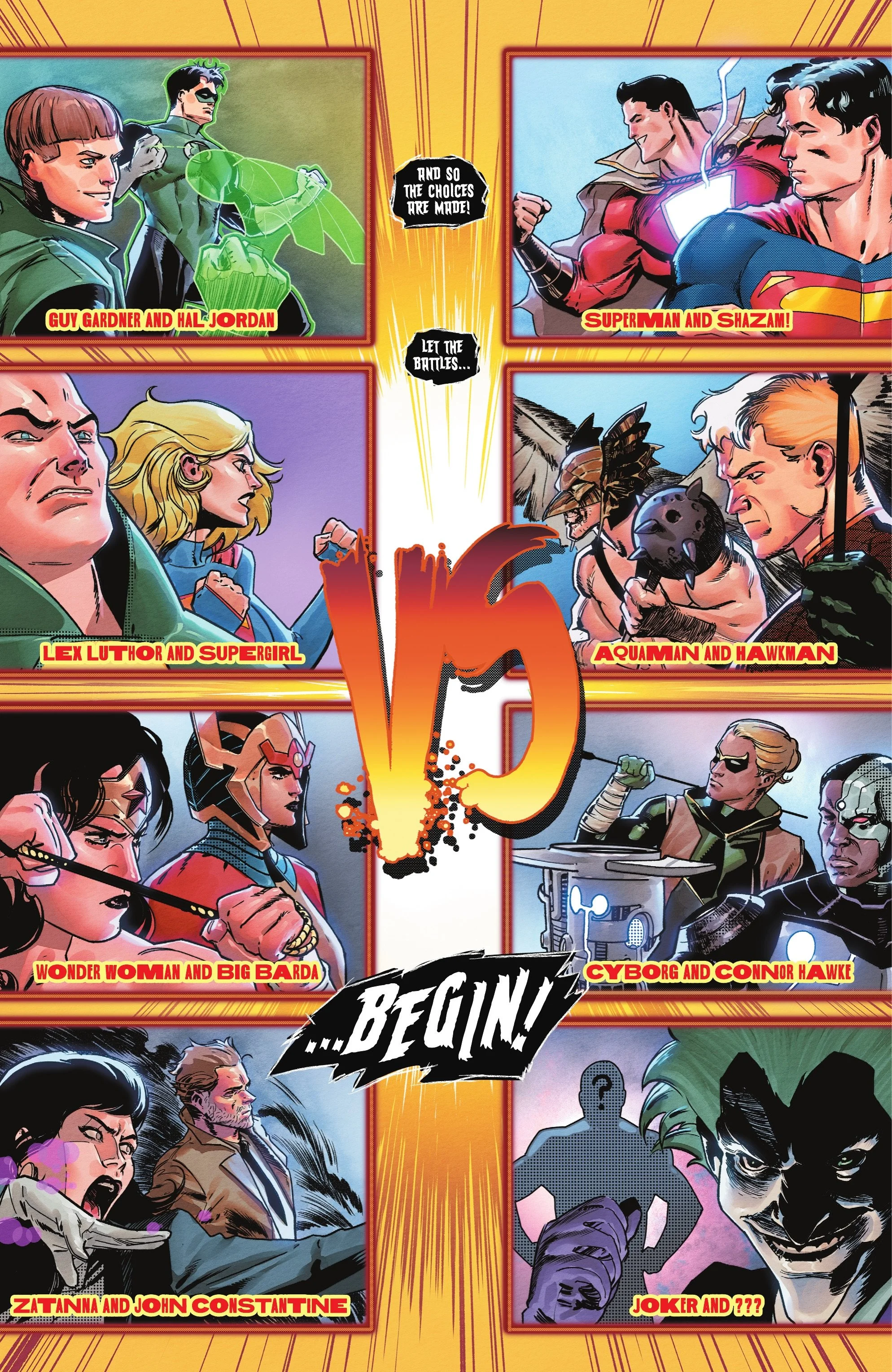
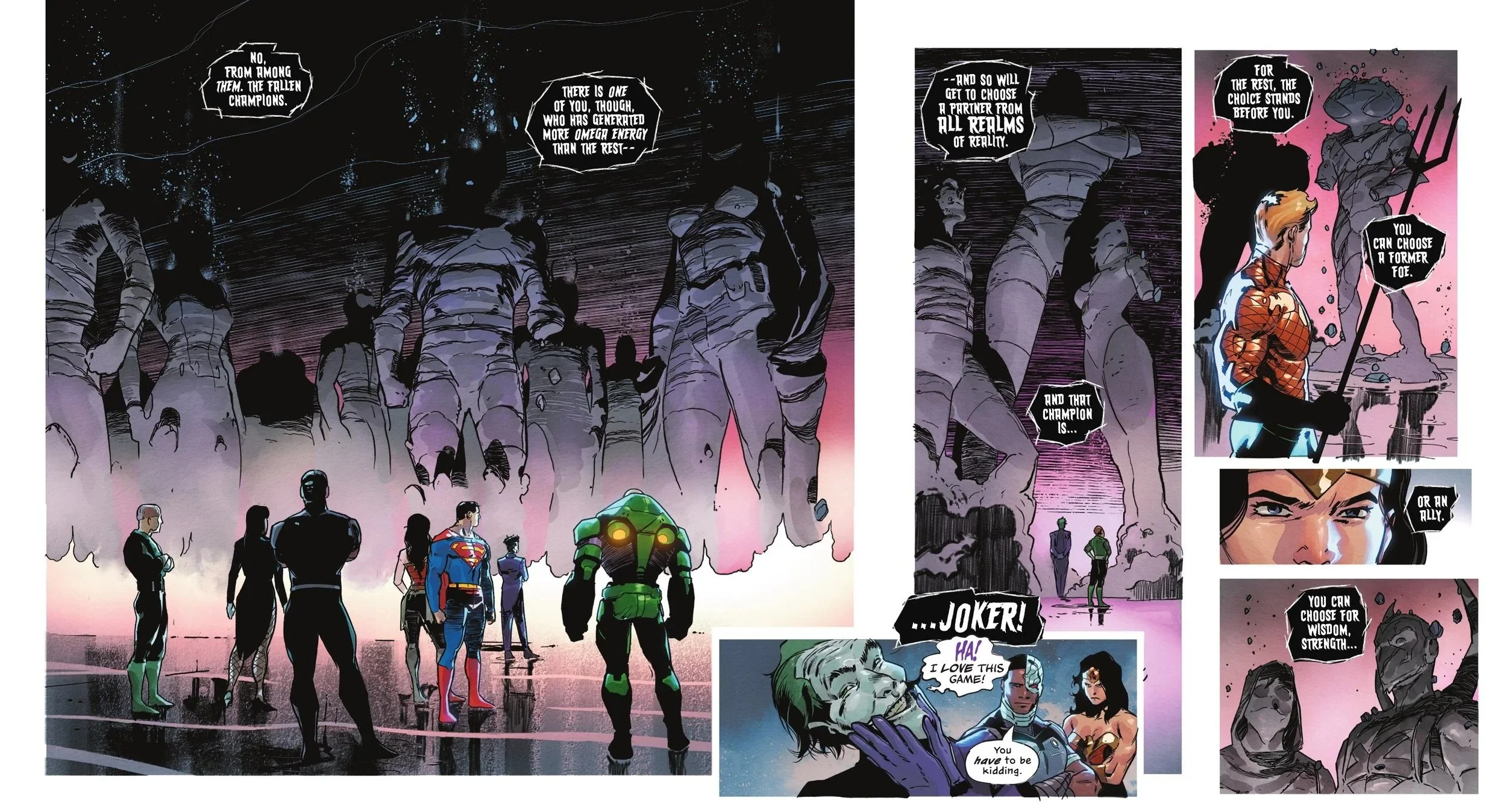
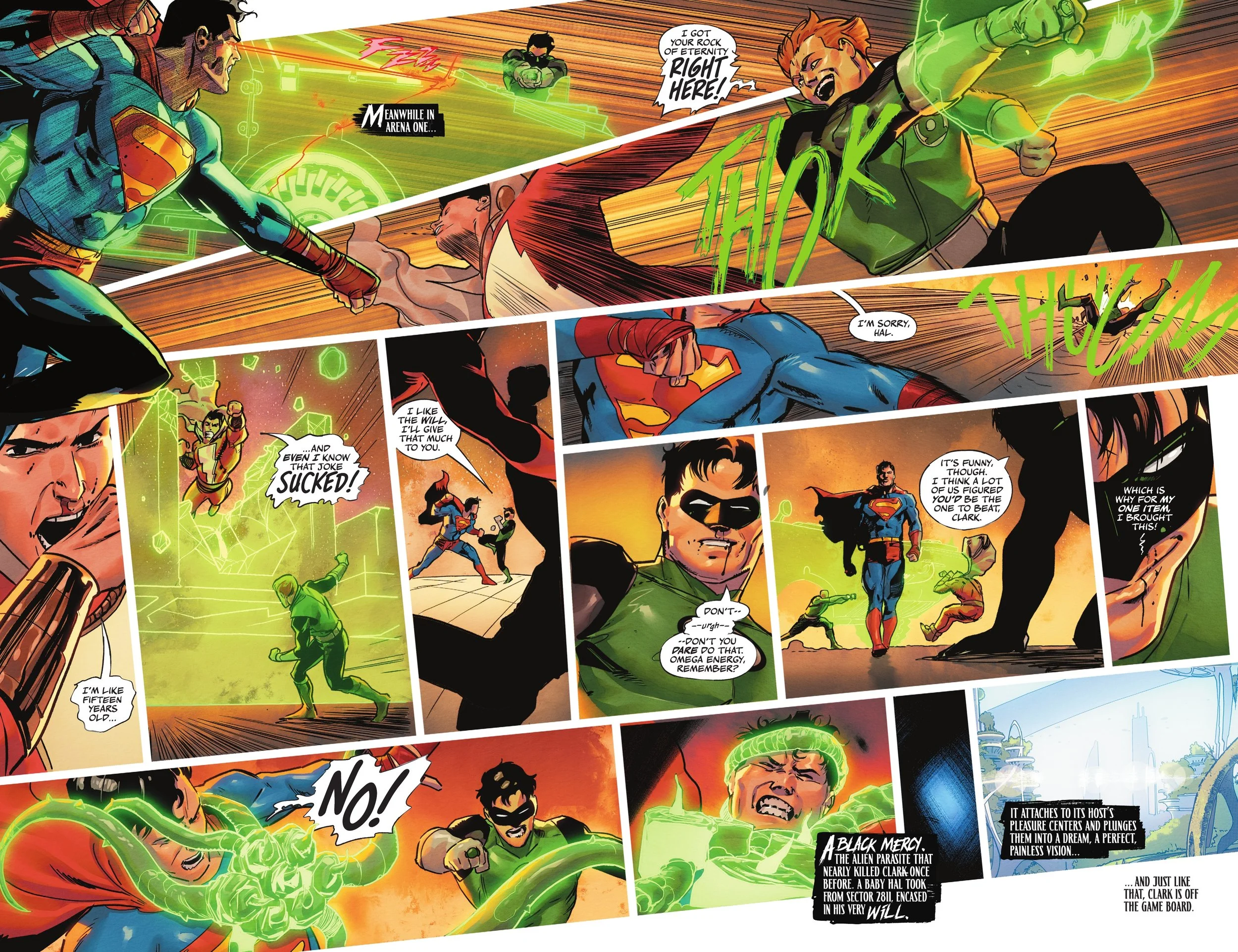
The issue opens with the eight remaining combatants brought before the enigmatic Heart of Apokolips. Our current roster is down to Superman, Wonder Woman, Lex Luthor, Zatanna, Guy Gardner, Cyborg, Aquaman, and Joker — quite the eclectic bunch! With this motley, chaotic crew ready, the Heart urges each fighter to select a partner from any era, world, or timeline to join them in a two-on-two bout.
Everyone makes their picks. Some are predictable, while others are not. Superman picks Shazam — merging the mystical and the mighty in a dazzling combination of hope. Wonder Woman picks fellow warrior Big Barda. Zatanna calls on the support of magic maestro John Constantine. While the rest of the heroes pick equally heroic partners, Joker and Lex Luthor go for a different approach. Lex Luthor deploys a cold and calculated scheme by selecting Supergirl as his partner. Rather than a heroic pairing, Lex weaponizes the emotional turmoil and vulnerability of Supergirl by exposing her to a variety of colorful kryptonite energies, transforming her into a raging Kryptonian hulk that smashes his foes. Meanwhile, the Joker, who had kept his choice closer to his chest, unleashes a special interdimensional impish trickster, much to the horror of the heroes facing him. Emperor Joker is back, and this time he is taking even fewer prisoners!
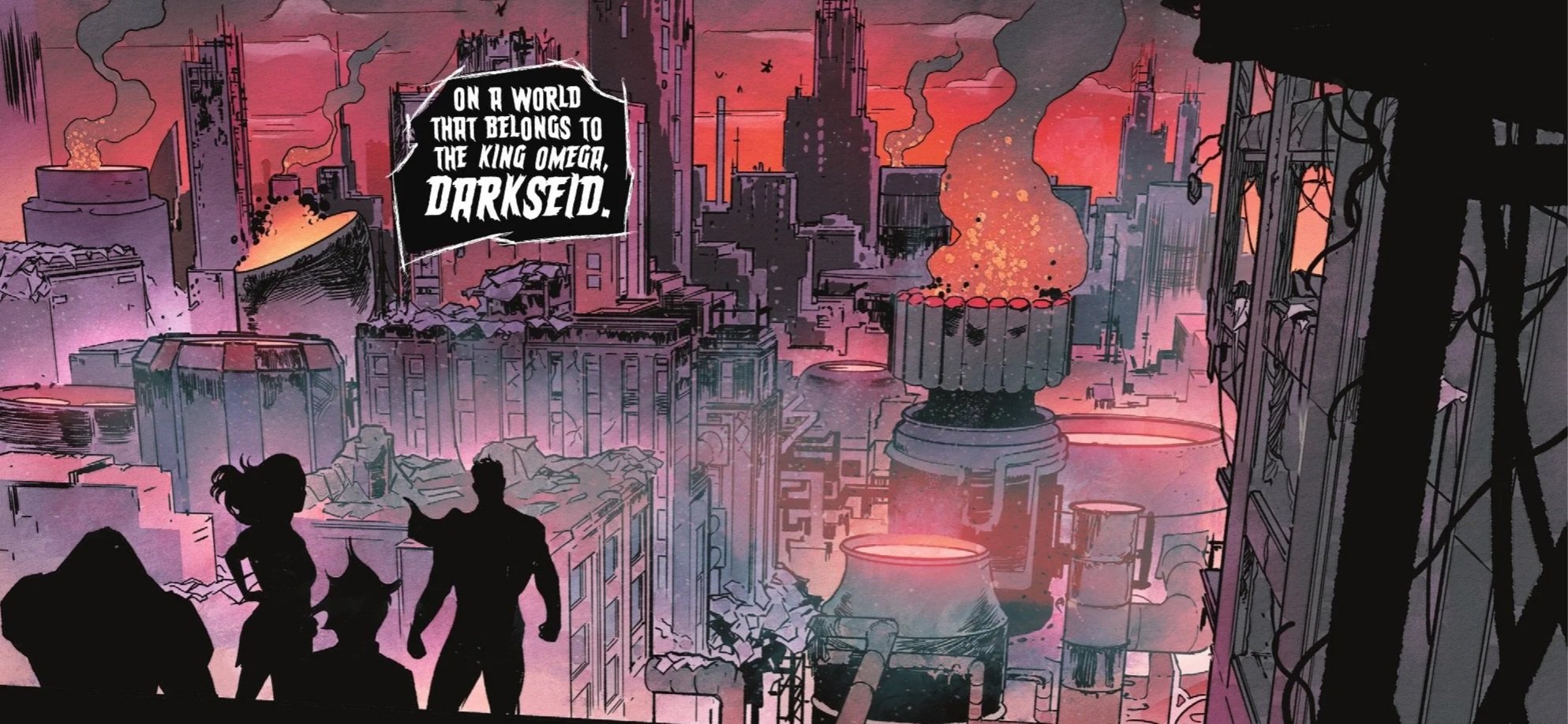
By the end of the book, however, the winners of these tag team bouts advance toward the Final Four. But rather than elation, our heroes are horrified by the latest battlefield — a world conquered by Darkseid — the inevitable King Omega as per the predictions of the Heart. And if that was not bad enough, the latest adversaries the final four must face are nothing less than ABSOLUTELY apocalyptic — with that terrifying encounter being saved for the next issue.
Far From Being Just Cheap Thrills
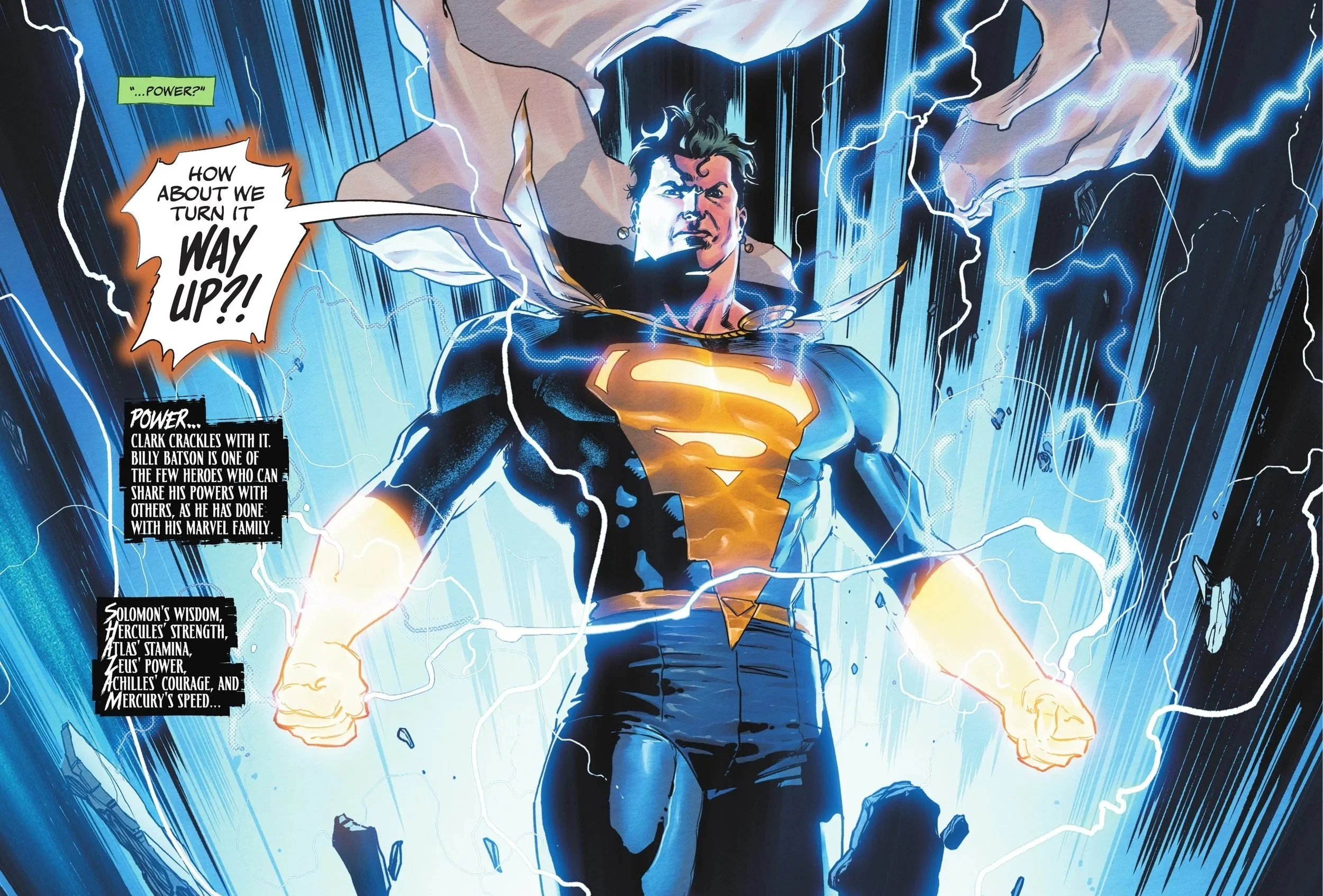
One of the greatest strengths of Scott Snyder for books like these is his ability to synergize bombastically unpredictable spectacle with major character motivation. The tag team concept of this issue shows that in spades. It could have easily been a mere excuse for the most random or arbitrary pairings, but Snyder instead uses it to reveal deeper truths about the psychology of each combatant. The choice of Shazam by Superman exemplifies his eternal optimism: he does not just pick the strongest ally available, but one that symbolizes hope and legacy alongside him. This decision aligns with the ethos of Superman and reinforces why he remains at the center of the narrative of the event. And in terms of eventual spectacle, you get one of the craziest Dragon Ball Z references in a way that makes perfect sense in the moment. You will definitely know it when you see it, especially if you catch the little visual Easter egg as well.
Conversely, the pairing of Lex Luthor with Supergirl conveys strategic brutality. This is a balding madman who sees opportunity in emotional wounds and weaponizes them without hesitation. While readers are initially taken aback by the choice made by Lex, you perfectly understand that he is working an angle — and you are rewarded for having those suspicions when the designer Kryptonite comes into play. With a weaponized Supergirl at his beck and call, there are very clear themes of manipulation, consequence, and control that elevate Lex beyond a typical antagonist into a force of psychological and ethical provocation — the antithesis to the narrative arc of Superman. It honestly makes more narrative sense than the motivations he claimed for being in the tournament in the previous issue, which just felt very out of place.
Similarly, while other heroes chose to keep their trusted mentors or respected comrades as partners, the Joker goes the extra mile — harkening back to two of his most powerful versions yet as support. However, while the Batman Who Laughs was a quick misdirection for the real gambit — the actual reveal proves disastrous for our heroes, blending real menace with chaotic energy in a way that feels irreverent but earned in a weird way. Their chaotic synergy is less about brute force and more about unsettling, unpredictable momentum — a sharp contrast to the more traditional heroism of all the other pages.
The pacing here is one of the best achievements of the issue. Each fight segment is succinct but rich in character and energy, building momentum without dragging or feeling repetitive. The story does not stall for exposition; instead, it trusts readers to piece together character motivations through action and symbolic choices. The interludes by Joshua Williamson of worlds that could have been also maintain the tension and pathos, even when outcomes are predictable. Furthermore, the final surprise introduction of the deadly new champions of Darkseid at the end expands the scope of the narrative without derailing the current arc. It suggests that the tournament will not just determine a winner but also bring disparate mythologies into collision. What this means for the future of the multiverse of DC and if or when certain characters meet again in the future will truly be anyone’s guess.
However, readers are more than likely to have misgivings about tournament logic — feeling that it is inconsistent at times — for example, why particular characters survive or how freely pairings can be manipulated. This flexibility, while great for creating spectacular moments, really does undermine the "anyone can win" premise by prioritizing dramatic moments over consistent rules. This is especially cogent if you consider the own biases of Scott Snyder for his favorite characters — looking at you, Joker — and you are quite certain as to where things are going despite all the talk about the high stakes of it all. For some readers, however, this narrative elasticity can also be seen as a feature rather than a flaw, reinforcing the tone of D.C. K.O. as a mythic spectacle rather than a rigid competition. In a story about cosmic stakes and reality-decimating power, a little narrative elasticity can bring a bit of spice to the game, despite the occasional risk of frustrating logic purists just a tad.
Apocalyptic Art
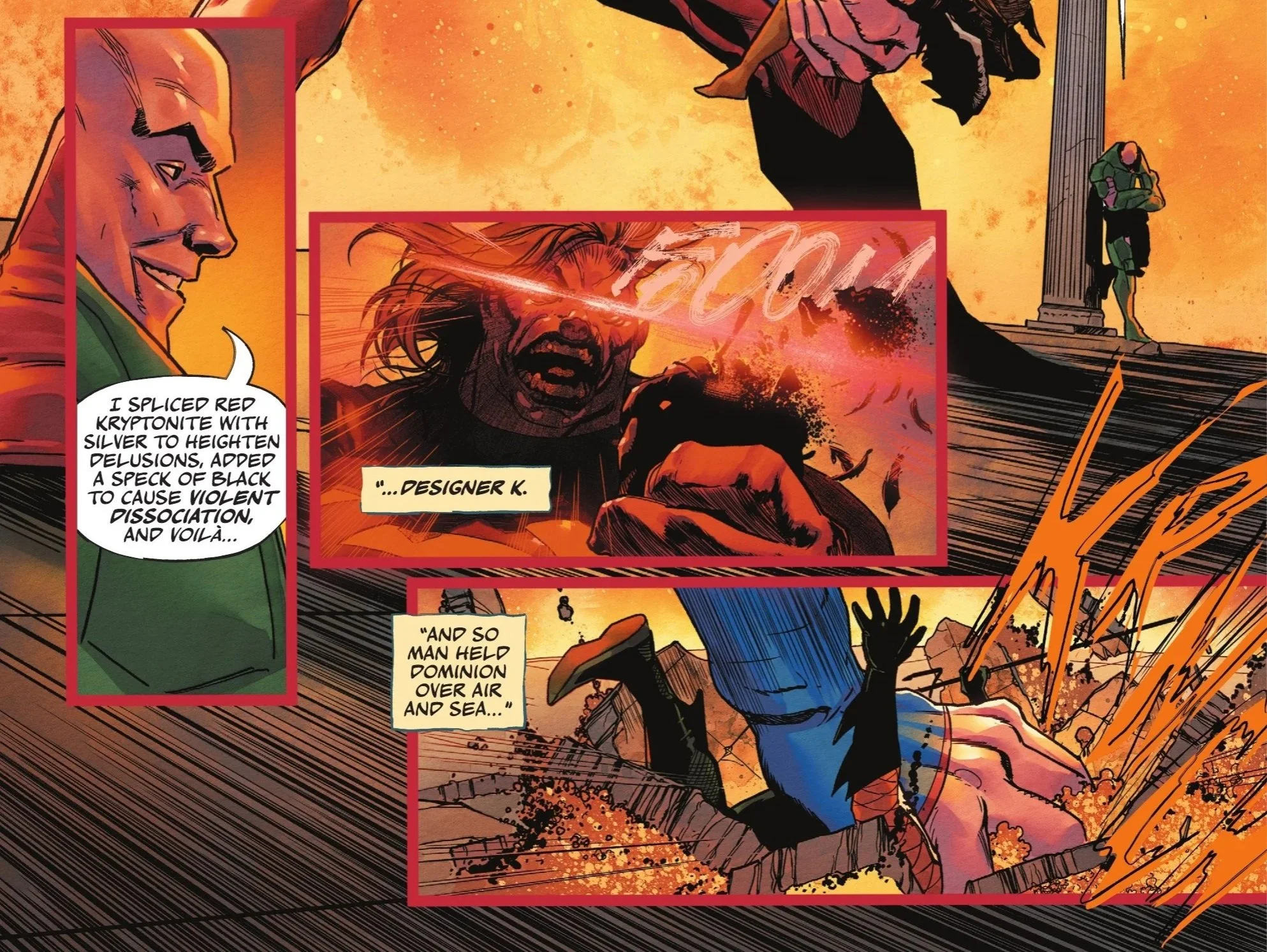
Javi Fernandez continues to deliver wildly action-packed layouts that still manage to effortlessly convey both the breadth and focus of the fights — without sacrificing clarity or emotional depth. Each tag team fight unfolds with unique visual flare. The sequences for Superman and Shazam pulse with radiant energy and iconic imagery, while the fight between Aquaman and Hawkman brims with raw warrior energy. The moment Luthor turns Supergirl to his side has the expected emotional and physical impact for both her and her hapless victims.
But a real highlight is the Joker unleashing the unmatched madness that comes with his special team-up ability. This is like a Marvel Rivals ultimate ability dialed up to a thousand — complete with psychotic visuals, reality-warping perspectives, and truly insane energy. And when we get to the final panel that reveals the latest challenge the remaining four have to face, it is like a mic-drop moment. The sheer aura in that one final page makes this issue and is a great continuation of the tease we received at the end of the previous one. These may be familiar, beloved faces for many, but in that moment — they are the deadliest beings in all of creation.
Meanwhile, the darker and more somber moments of the interludes are given the necessary weight by Xermanico, who brings a more restrained, emotional focus to the characters that Joshua Williamson writes in these scenarios. From Superman reminiscing against his will about the world that could be, to potential futures full of hope and fear — these sections are drawn beautifully while still highlighting the general sense of dread.
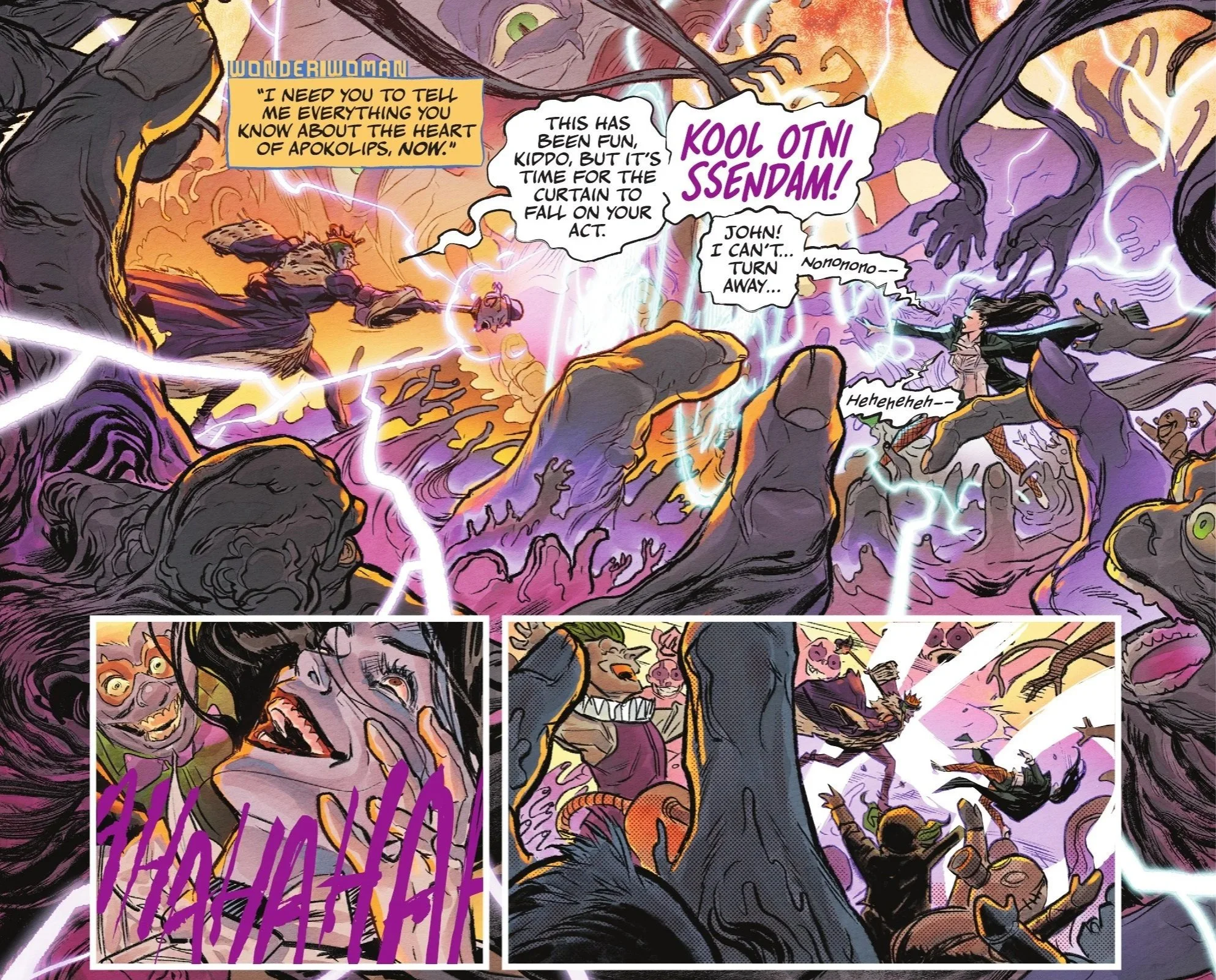
Finally, the color work by Alejandro Sanchez elevates every scene. Radiant reds, electric blues, and deep shadows contrast to create mood and momentum. The colors help differentiate the tone of each fight while also unifying the issue visually, which is no small feat given the eclectic array of characters and powers on display.
The way the dark majesty of the Heart and the tournament arenas are depicted lends a mythic, larger-than-life feel to the event. From the emerald light of lantern rings to the purple madness of the attacks of the Joker — it is a colorful flurry that is full of, well, fury. But it also contains a whole lot of heart, which is appropriate considering who the tournament organizer is.
What’s at the End of Everything?
D.C. K.O. #3 might not bring us any closer to crowning King Omega, but it does raise the bar once again for what a fun action event can be — one where the action is rooted in and enriched by the characters in truly unexpected ways. While some rules and logic around the tournament feel inconsistent, this issue uses that flexibility to deliver character-defining moments and unexpected pairings that feel narratively meaningful. The art and color work sustain that same energy and clarity throughout, and the surprise introduction of some absolutely lethal champions sets the tempo for the next issue perfectly as well.
Ultimately, whether you are here for the action, the character beats, or the sheer imaginative spectacle of the multiverse of DC, D.C. K.O. #3 delivers for the most part. As heroes and villains reach a true point of no return, what that eventually translates into in terms of a finale remains to be seen. Scott Snyder has cut his teeth on wild and wicked events like this for the past decade or so — to mixed results — so it is anyone’s ball game as to how this could go. Though, I suppose that could very well be the intent to keep readers guessing.
Final Verdict: D.C. K.O. #3 offers spectacle with a dash of substance as tag teams create physical and emotional turmoil – both for each other and the readers!