
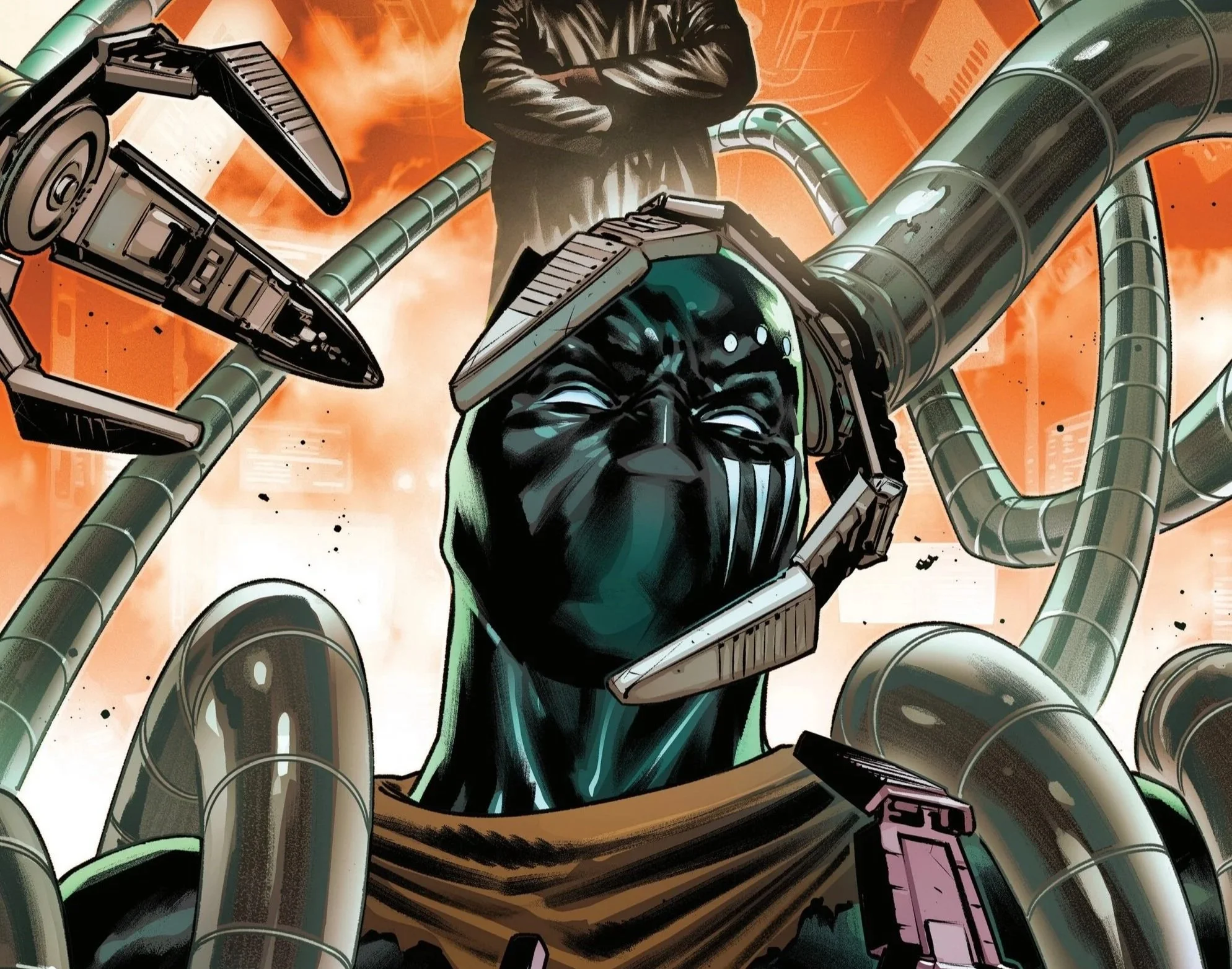
Fair warning, this issue is going to feel like a bit of an exercise in repetition, so bear with me while I drag myself (and you, the reader) through this mess. With a pretty rough debut issue to kick things off, Black Panther - Intergalactic #2 continues this ambitious attempt to further transplant T’Challa from terrestrial geopolitics into sweeping cosmic adventure once more.
This is a premise that, while novel a few years back, is now considerably less exciting, especially following the messy nature of the first issue. Unfortunately, while issue #2 builds on the world laid out in the debut and offers some genuinely cool concepts, it also exposes and even entrenches several structural weaknesses that seem to glare out of this run: excessive exposition, scattered pacing, and a narrative that sometimes tells more than it shows.
There are moments of genuine intrigue and compelling world-building, yes, but the issue struggles to implement these lofty concepts into an emotionally satisfying chapter. In many ways, this issue feels almost transitional in a lot of painfully negative ways. This feels egregious in a series that is only two issues deep. Once again, there is a lot of effort to provide more depth to the mystery of the artificial world that T’Challa finds himself on. There are whispers of a commentary regarding artificial intelligence and its capacity for ruin, but the mishandling of these themes only further highlights both the promise and the pitfalls of the grander conceptual ambitions of the series.
A Truly Planetary Problem
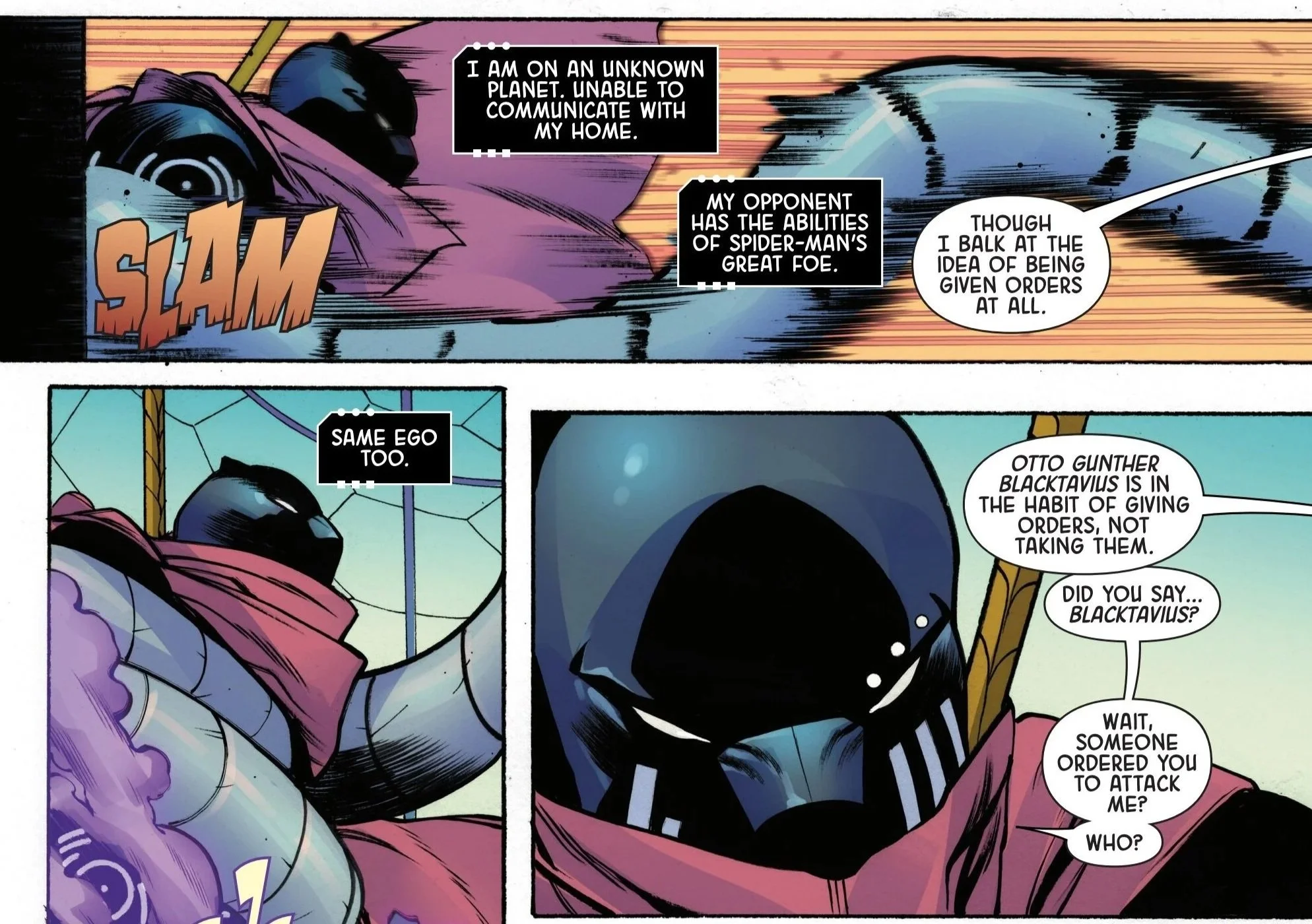
The issue opens with T’Challa still navigating the strange alien terrain introduced in the previous issue. Having confronted proto-forms of hostile wildlife and familiar faces, and barely escaping them, he begins to encounter more unnatural phenomena. These suggest the planet, or some intelligence controlling it, is testing or manipulating him. He then summarily finds himself captured by a familiar tentacular menace: Doctor Octopus. Actually, it is Doctor Octopus, but with the face and appearance of T’Challa: Otto Gunther Blacktavius. Yes, I did not stutter. You heard right.
Meanwhile, back on Wakanda Prime, Shuri and Femi continue their investigation into the last breadcrumbs of the disappearance of T’Challa. Their hunt leads them deeper into the legacy of the late father of Femi, B’Wete. His experiments with artificial intelligence and Wakandan technology may hold clues to the overarching mystery, and potentially to the strange world T’Challa is traversing. Alongside this, an imposter T’Challa attempts to make grand plays of his own, much to the chagrin of M’Baku.
The plot becomes bifurcated: the immediate survival ordeal of T’Challa on the alien world, and the unraveling by Shuri and Femi of the threads that connect the past of Wakanda to a cosmic unknown. Both threads converge toward the climax of the issue, which hints that the artificial alien world was poised to do more than just create facsimiles. It is far more than it appears to be.
When Flavor Gets Lost in the Sauce
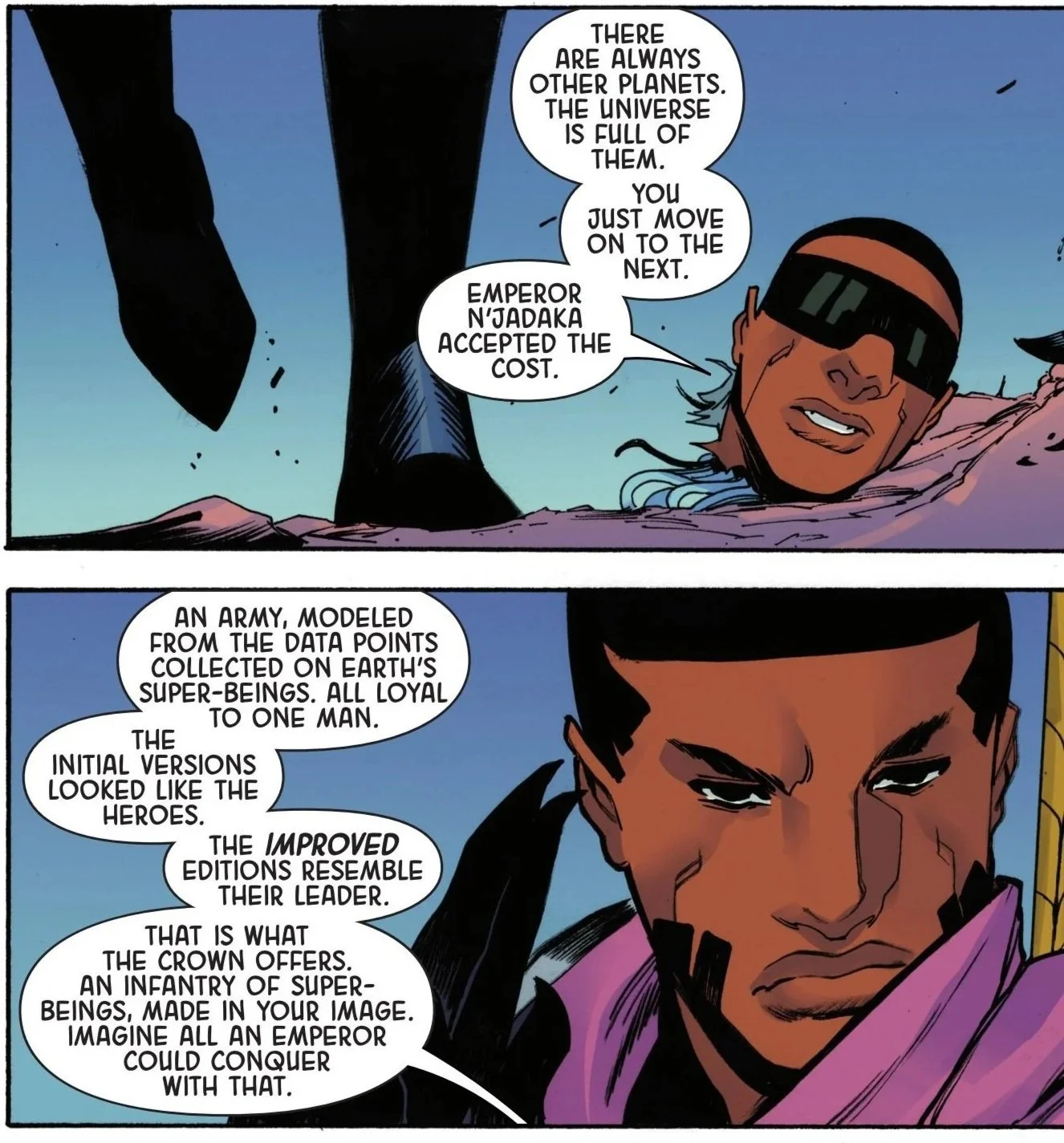
It is clear that Victor LaVelle has no shortage of ambition or ideas for this series. The issue does not merely continue the forced survival narrative of T’Challa; it attempts to expand the universe by tying the cutting-edge science of Wakanda to something far bigger and potentially far more consequential in terms of an empire-expanding force.
This linkage between the technological excellence of Wakanda and a rapidly growing colonial cosmic architecture is intriguing. This is especially true when filtered through the inquisitive genius of Shuri and the personal stake of Femi in understanding the legacy of her father. In theory, this feels exactly like a story that could answer bigger questions about the place of Wakanda in the wider cosmos. The machines, the artificial replicants that mirror T’Challa, and the creeping sense of observation all suggest an intelligence or system far beyond ordinary alien threats. That sense of scale, the feeling that Wakanda might have inadvertently touched and been touched by a force or structure far greater than itself, is legitimately one of the strong conceptual hooks of the issue. It is the only reason I am still reading this, beyond my love for Black Panther as a whole.
But despite all this potential, the issue falters where it matters the most: in execution. In particular, the exposition-heavy dialogue and a tendency to explain rather than explore are some of the worst in any book by Marvel at the moment. Characters spend much of the narrative discussing possibilities, theories, and technological mechanics instead of acting on them or uncovering them in ways that visually or emotionally engage the reader. High-handed panels become rooms for overlong scientific exposition, which leaves less space for cinematic tension or visceral character engagement.
This reliance on dialogue as the primary vector for explanation weakens the sense of discovery. Instead of feeling alongside the characters as mysteries unfold, readers are often told what to think before there is a dramatic beat that earns that explanation. As one community reviewer observed, the issue tends to tell more than show. This undermines the impact of the unfolding mystery to a significant degree, especially when you consider the genuinely gripping potential for the "imposter" T'Challa now trying to assert its presence as a "real" ruler. This sort of Blade Runner type aspect just has so much actually going for it. Once again, the book has the hook and the potential to be something more meaningful than it currently is.
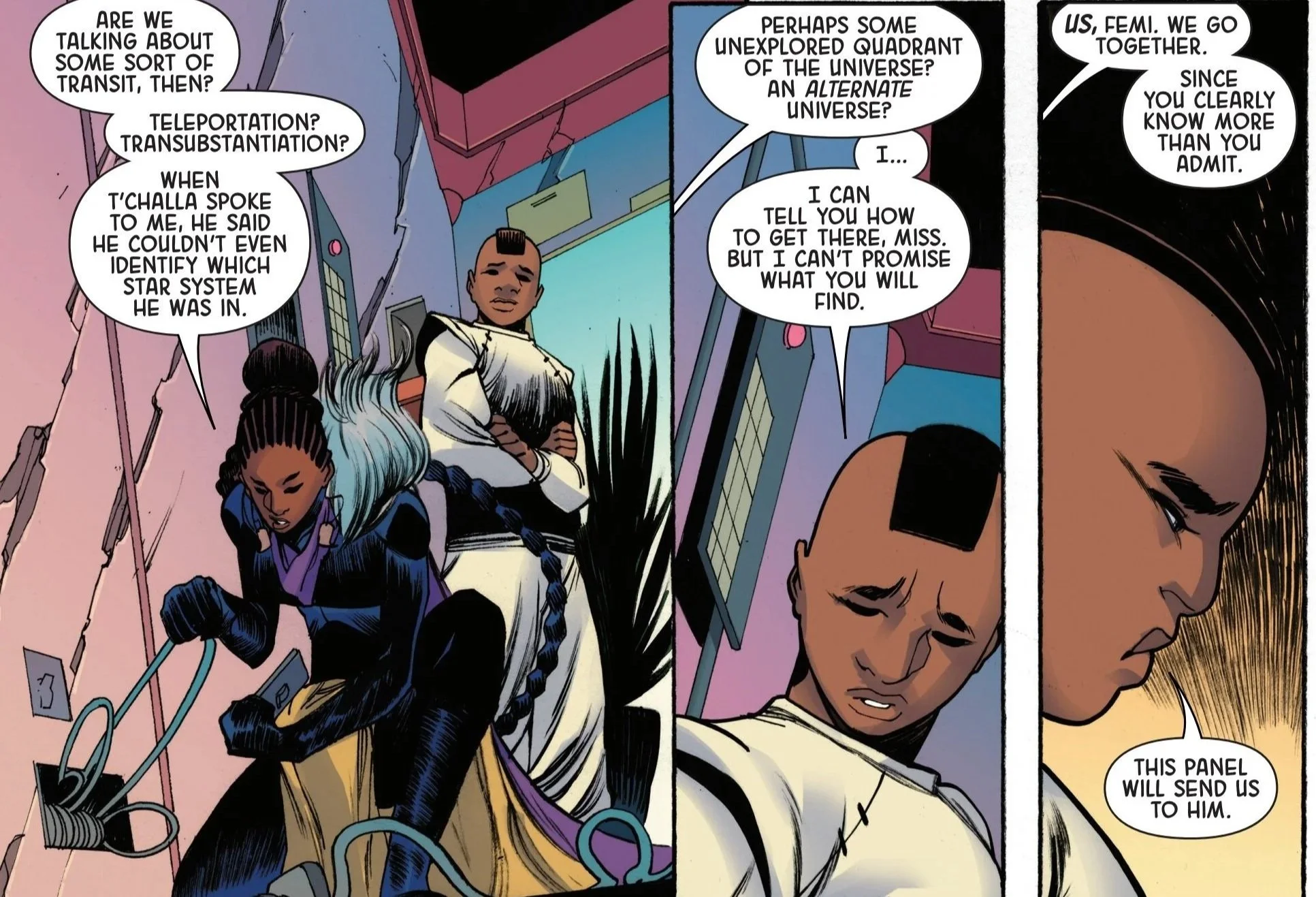
Shuri and Femi represent one of the most reliable anchor points of the issue, grounding the cosmic narrative with emotional and intellectual agency. The methodical analytic mind of Shuri and her personal concern for her brother provide a human counterbalance to the lonely survival of T’Challa. Femi, meanwhile, enriches the arc with personal stakes and legacy. She serves not merely as a sidekick but as someone grappling with the unfinished work of her father and its unforeseen repercussions.
However, even these character beats feel underdeveloped within the structure of the issue. The insights of Shuri sometimes emerge from exposition dumps rather than interactive investigation or conflict. The emotional resonance of Femi is hinted at rather than fully dramatized. The result is a story that in theory, values the emotional journeys of its characters, but in practice sidelines those journeys in favor of plot mechanics.
The arc of T’Challa suffers the most from this imbalance. Stranded on the alien world, his trial is largely reactive. He encounters threats and puzzles that demand immediate physical or intellectual response, both of which are far too quickly provided to him through contrived plot solutions. While LaVelle seems to have a good grasp on the voice of T’Challa as a character, the overall story he has placed the man in feels relatively flat and somewhat repetitive. This is especially true when it is so obvious that LaVelle is so intent on exploring psychological and existential terrain alongside the physical ones of this new world.
To be very clear: the artificial planet and its mechanized manifestations are visually intriguing and conceptually unsettling. There is a sense that the world itself, or the system controlling it, is an antagonist with inscrutable motives. We are introduced to the idea of an artificial intelligence that is modeled on data points from the mightiest heroes of Earth, yet they are all modified to represent the ambitions of one man. This results in these chimeric robotic abominations wearing the face of T’Challa.
It is a cool concept, a very cool concept on the surface, even if the introduction of Otto Gunther Blacktavius is so utterly absurd that you cannot help but cringe and stifle an undeserved laugh at the same time. Alas, amidst even this bit of goofy setup, the issue unfortunately never truly clarifies why T’Challa is being tested or what the broader implications are beyond survival and mystery. This vagueness can be engaging when used sparingly, but here it becomes a matter of narrative inertia. With each page turning into another question rather than an answer, the suspense can feel like stalling rather than escalation. This contributes to the sense that the issue is setting up too much rather than delivering enough in the here and now. This is a problem that has severely hampered the book since the first issue.
Drawing Out the Best of This Mess
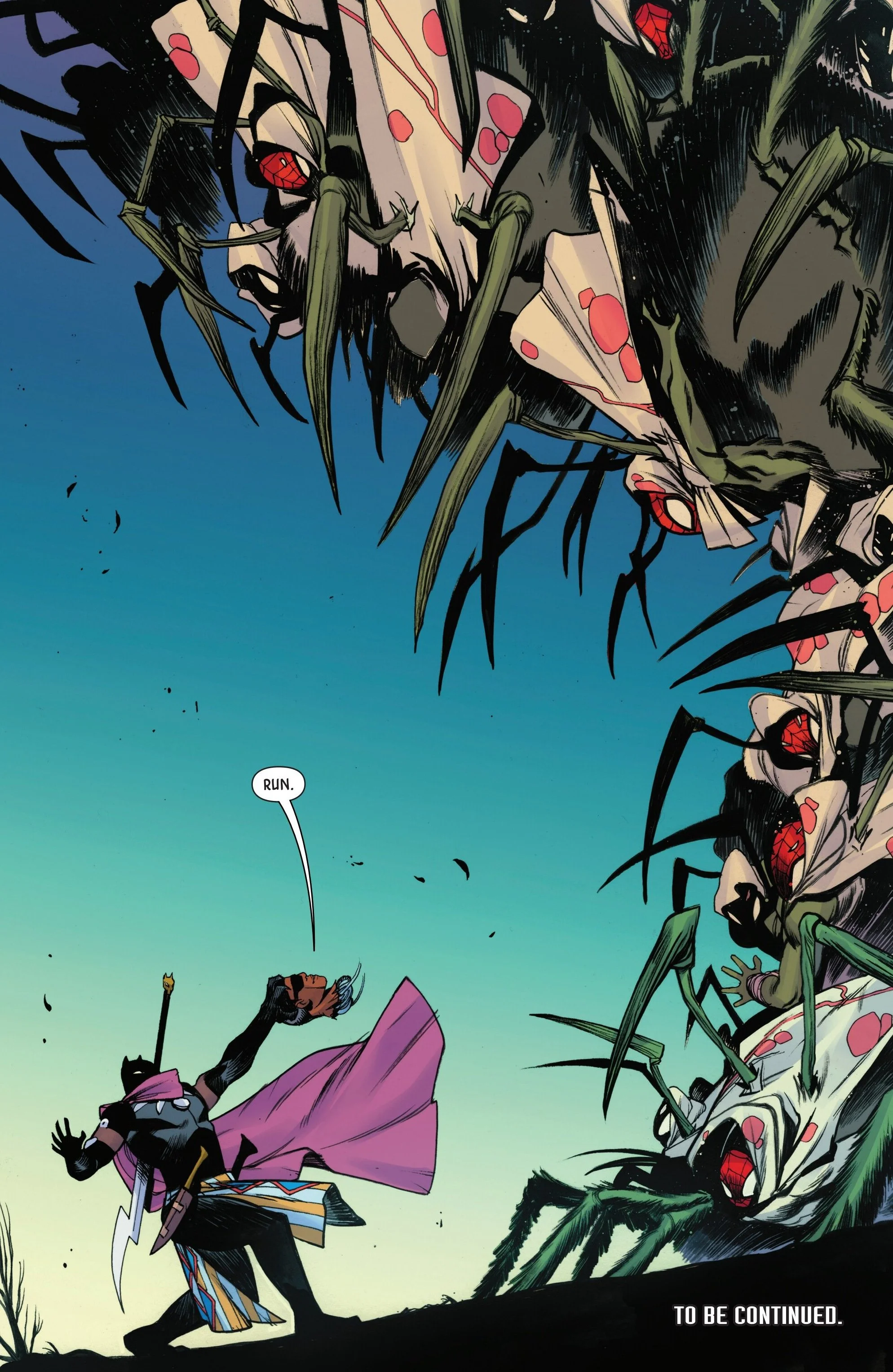
Visually, the issue still maintains some compelling aspects. The line work of Stefano Nesi gives the issue an otherworldly texture that suits its alien nature. The galactic landscapes are rendered with both beauty and menace, blending organic shapes with unsettling artificiality befitting the robotic nature of the planet. This sense of aesthetic contradiction, natural yet constructed, reinforces the thematic focus of the issue on environments that are both alive and engineered.
T’Challa still looks regal and lethal as always, which is great. The arrival of a dapper Doctor Octopus clone mixes some of the whackiest design elements with the familiar tentacled menace we all know. However, when another "Tchalla-fied" android villain shows up, that one was enough from a visual standpoint to really take me out of the story. That just felt like a step too far down the goofy train for what this book seems to be trying to achieve.
The visual design of alien fauna and terrain evokes a sense of disorientation that aligns with the experience of T’Challa. Panels that emphasize scale, such as distant vistas, towering structures, and unnatural horizons, work well to communicate cosmic mystery. The use of color work by Bryan Valenza further enhances this mood, especially in sequences where danger lurks in strange hues or shifting contrasts.
This is especially true in the last few pages when T'Challa and the severed head of Blacktavius (reminiscent of the synthetics from the Aliens franchise) face a swarm of "hive crawlers." These look distinctly familiar yet are also far from being "friendly neighborhood" helpers. This is just one of the many times where the book does actually succeed in creating a very unique, very unsettling, and very recognizable visual aesthetic that sets it apart from the pack.
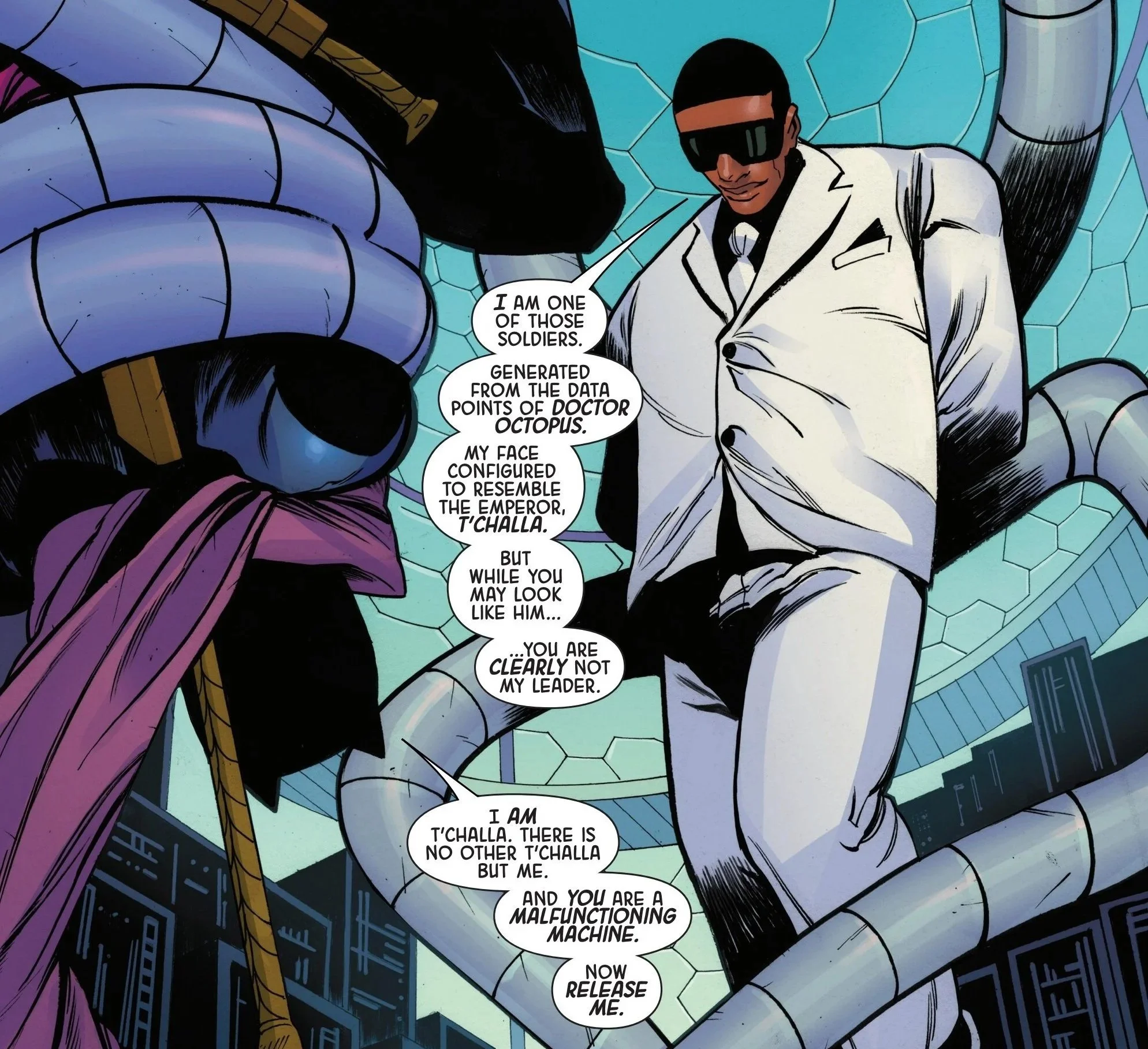
However, there are far too many moments where the art struggles to ground more cerebral scenes. This is more of a failure of the script rather than the art itself. Exposition-heavy panels often resort to static compositions, such as characters standing or sitting while blocks of dialogue overlay the artwork.
When visual complexity is expected to carry narrative weight, these static scenes can feel inert or even monotonous. This is especially true when character emotions are not conveyed well in the line work for many of these scenes. In other words, great environments are sometimes paired with lethargic staging. This reduces the impact of key narrative beats, which is a genuine shame considering how stellar (pun intended) the art otherwise succeeds in being.
Do Androids Dream of Electric Empires?
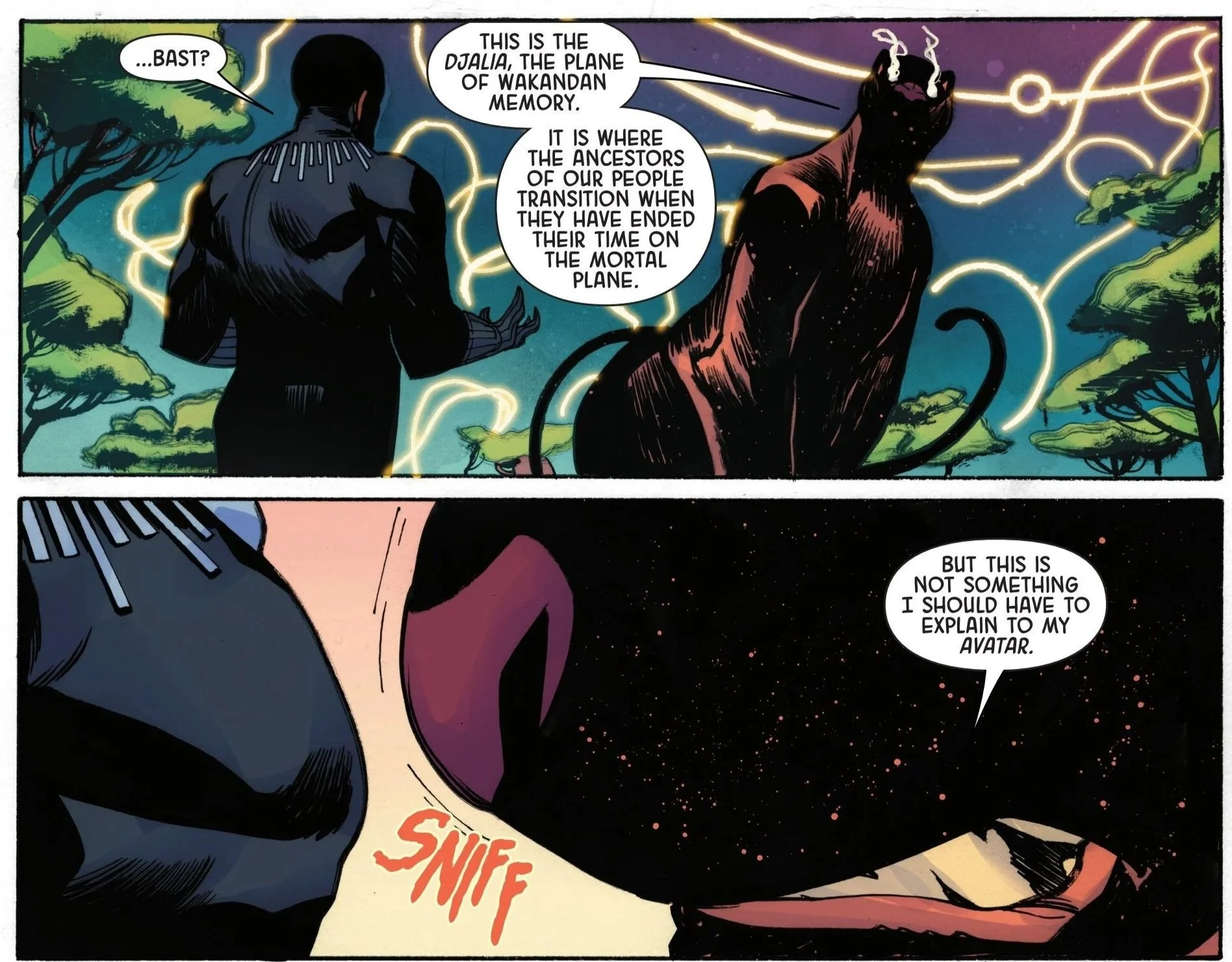
Black Panther: Intergalactic #2 is an ambitious comic with notably high concepts that quickly fall into abysmal lows. On the rare positive side, the genuinely beautiful art goes some way in trying to expand the cosmic canvas of the series and deepens the mystery introduced in the first issue. It gives readers visually arresting sequences even if the overall narrative painfully underscores the unwillingness of Marvel to push T’Challa into any truly fresh narrative territory. More importantly, the issue also suffers from the very traits that often afflict mid-series arcs, and are positively catastrophic this early on for a new book. These include an overreliance on exposition, underdeveloped character arcs, and a sense that the story is obsessing with future payoffs without delivering enough of its own merit.
Two issues in and it is still disappointing when you consider that the art is strong enough, the conceptual world is compelling on paper, and the stakes could be formidable. Yet the narrative pacing and emotional engagement remain sorely lacking for a series that is trying so hard to be a Ridley Scott homage in so many shallow ways. The plight of T’Challa, despite its dangers, does not quite cohere into a compelling emotional throughline. The Wakandan subplot, while promising, never fully props up the weight of the story. Hardcore fans of cosmic Marvel and Wakandan science fiction lore may find enough here to stay invested, but readers looking for a tightly woven narrative with clear thematic payoff may feel short-changed.
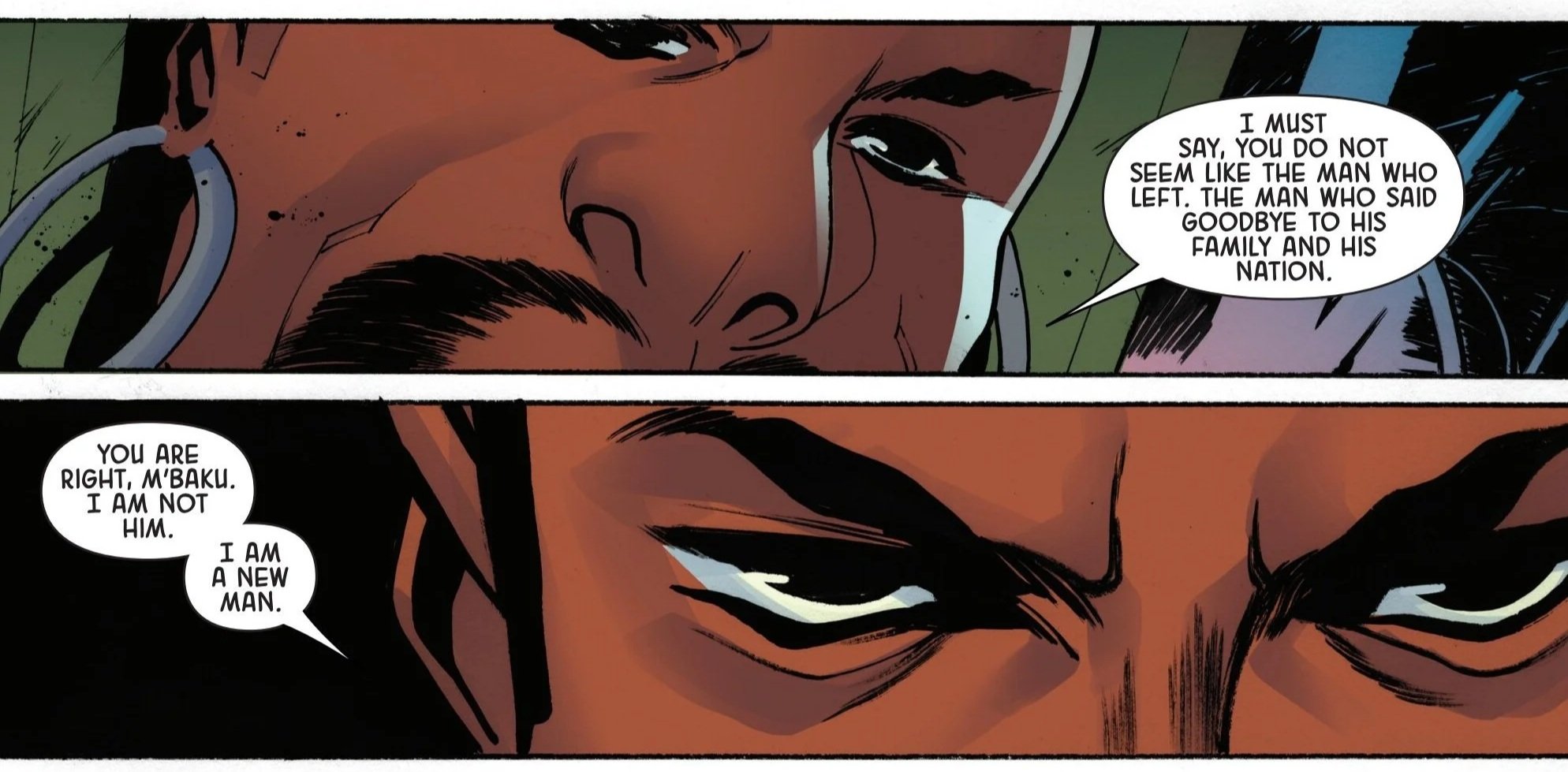
Final Verdict: Black Panther - Intergalactic #2 thinks it strives for greatness, but its arms are still far too short to box with God, with any of chance of short-term interest still remaining disappointingly out of grasp.