

Batman #4 rips the focus away from street-level politics and plunges the narrative into the terrifyingly organized deep state of Gotham's underworld. Writer Matt Fraction and artist Jorge Jimenez pivot to reveal a far more insidious threat: a global crime syndicate that operates not as a gang, but as a "living algorithm."
This issue dramatically escalates the stakes, trading simple corruption for a chilling plot involving corporate espionage, mythological terror, and the shocking desecration of the Wayne legacy. Bruce must now fight enemies who have infiltrated the top levels of both his city and his company.
Bruce Sweeps Dr. Zeller Off Her Feet (Literally)
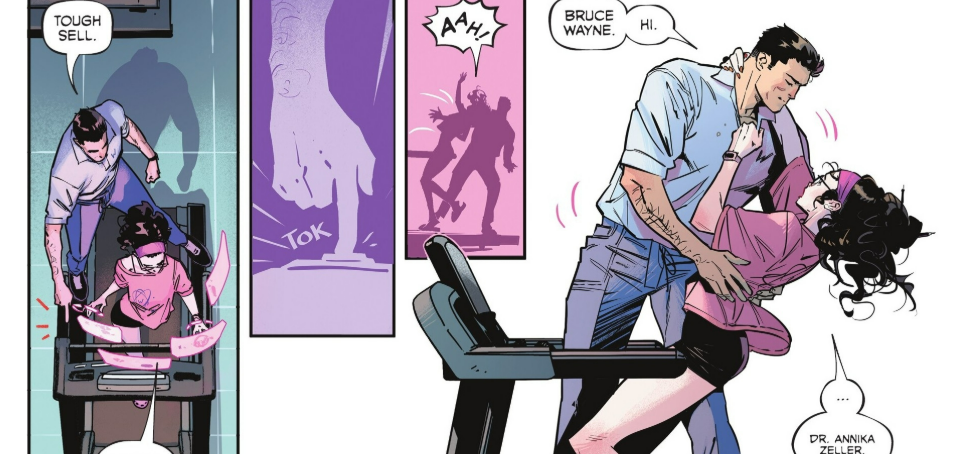
This issue reinforces how effective Bruce Wayne is outside of the Batsuit. We see him refuse lucrative government contracts that involve building weapons and ammunition, confirming his hardline stance against profiting from destruction, which contrasts sharply with the militarism of Savage's GCPD.
The investigation immediately converges on the new scientific threat. The Crown of Storms plot is rapidly moving toward human trials. Bruce confronts Dr. Zeller to grill her about the Crown of Storms and her supposedly altruistic motives, but the tense interrogation turns into a surprising "meet-cute" when he asks her out on a date. This encounter humanizes the new threat and complicates Bruce's investigation. The warning received in the previous issue about unethical experiments still rings true, planting the seed of doubt that Zeller is performing unethical human trials, setting her up as either an unknowing participant in the matter or someone who embodies the corporate exploitation of the mentally ill. Time will tell
Anarky In The (Criminal) Arena
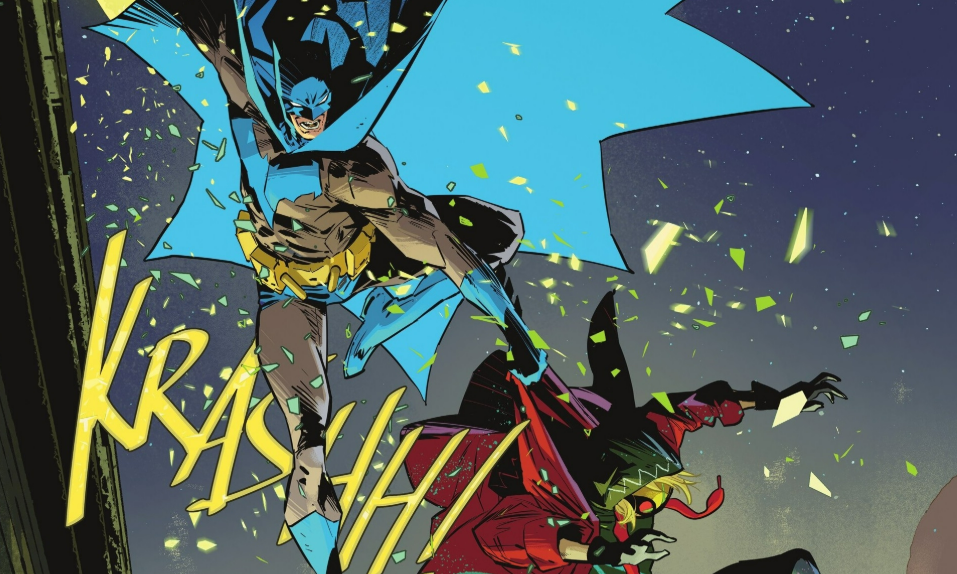
As a detective investigating the recent truck heist, Batman tracks down Lonnie Maclin, aka Anarky. Lonnie was paid a minimal fee to execute the truck heist and ambush that set three of the Toros' sectors against one another. This act of petty chaos suddenly placed him in the crosshairs of global organized crime. Anarky, facing immense and lethal gang retaliation for the massive disruption he caused, is desperate and is the first to tell Bruce about the Toros and their terrifying leader, the Minotaur.
This encounter signifies a major evolution in Bruce's methods. Batman captures Anarky, not as a permanent enemy, but as a cooperating witness, utilizing a more legal and investigative approach rather than simply delivering a punch. The complexity of the Minotaur threat forces Batman to embrace new, riskier alliances to gather information. Anarky, who typically fights against authority, seeks protection from the ultimate authority figure, validating Batman's belief that some small-scale criminals will always align with the law when faced with a true, organized evil.
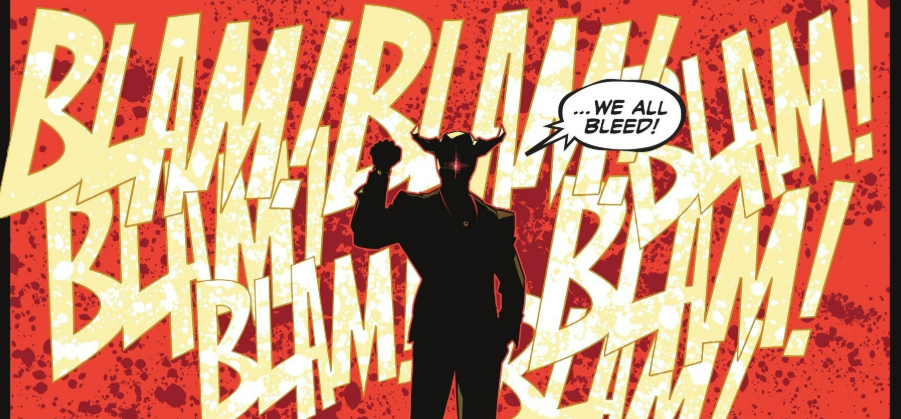
Minotaur Sees Red
We finally get the formal introduction of The Minotaur and his syndicate, The Toros, and the story instantly feels larger, colder, and far more dangerous. The meeting happens because Lonnie’s ambush did more than spark tension. It caused outright infighting among the seven corporate sectors that quietly run Gotham. That reaction alone tells you how precise the Minotaur’s system is. The Toros are not a gang or even a cartel. They are a living algorithm, a criminal network built to predict, redirect, and weaponize the flow of chaos. Every decision comes from cold calculation. Every player is already factored into the math. Then the story hits with its biggest reveal.
The Toros are meeting inside Old Wayne Manor. The home that represents the soul of Bruce’s family history is now a boardroom for Gotham’s elite criminals. It feels like a spiritual violation. It lands with the weight of something sacred being spoiled. And the person responsible for making this possible is Vandal Savage. He watches the gathering with a kind of delighted patience, fully embracing his new position as Commissioner. In practice, he is no longer enforcing anything. He is brokering real estate, offering sanctuary, and turning Gotham into a haven for the most powerful criminals on the planet.
The Minotaur shows everyone in the room who really holds control. He reveals that he has kidnapped a loved one from each corporate leader. Then he executes them in front of the assembled sectors. The act is not theatrical. It is not emotional. It is direct and brutal, designed to send one message. The Minotaur operates through fear, precision, and the complete removal of choice. He does not lead through loyalty. He leads through inevitability. By the end of the issue, it becomes clear that the Minotaur is not just another villain circling Gotham. He represents a new kind of underworld. He is a calculating organism reshaping the city’s power structure from inside the ruins of Bruce Wayne’s life. Everyone who steps into this arena, whether hero or villain, is going to feel the shockwave of what he has just set in motion.
The Soul Crushing Status Quo
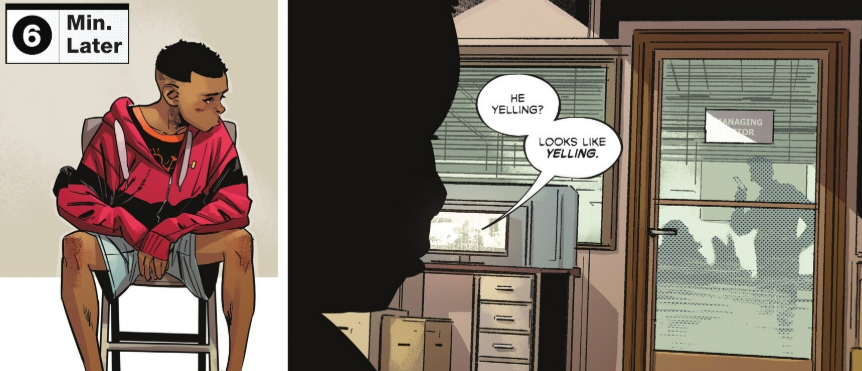
This issue drives home one of the bleakest truths in Gotham. The status quo is a fortress, and it crushes anyone who tries to push against it. We see this through Huston, the young witness who refuses to let Savage rewrite reality. He tries to challenge the Commissioner’s propaganda the only way an ordinary citizen can. He takes his story to the press. He reaches out to Jack Dean, a retired reporter who still remembers what journalism is supposed to look like. Together, they put together a pitch that should shake the city awake. Instead, they get the door slammed in their faces.
When they bring their story to the Gotham Eye, the editors shut them down immediately. It is not because the evidence is weak. It is because the truth is explosive. The paper wants nothing to do with it. Their refusal makes the real problem painfully clear. Media silence becomes another layer of Gotham’s corruption. Institutions that should protect the public end up protecting their own comfort. The safest choice is to avoid anything that might upset the balance of power.
The issue uses this moment to underline something Gotham has always struggled with. The truth often loses not because it is wrong, but because it is inconvenient. Huston and Dean walk away with the weight of that realization. In a city shaped by fear and influence, even the truth needs a miracle to survive.
The Visuals of Batman #4
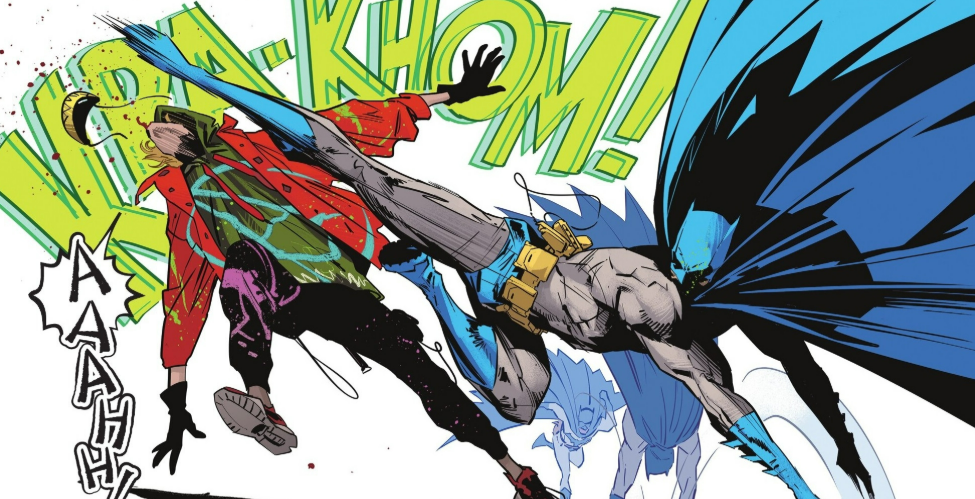
Jorge Jimenez delivers a stellar visual experience, particularly in the introduction of the new villain. The action scenes are top-tier, but the depiction of Minotaur is what truly stands out. Jimenez renders him as a chilling, modern corporate horror, ensuring his custom suit, seven-fingered hand, and eerie red-lit helmet instantly cement him as a memorable, highly stylized foe.
The chilling visual of powerful crime lords being forced to watch the murder of their loved ones by Minotaur is a devastating sequence that defines the brute force and terror behind the Toros' "algorithm."
Conclusion & Verdict
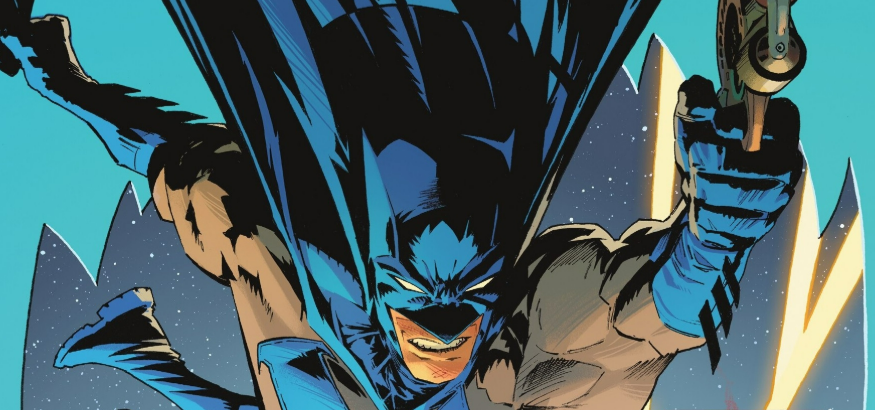
Batman #1-3 were fine introductions to Matt Fraction’s take on the character, but Batman #4 masterfully expands the scope of the entire series. Fraction and Jimenez move beyond the single political plot to reveal a deep, multilayered web of organized crime, corporate conspiracy, and scientific exploitation. The revelations involving Minotaur, Old Wayne Manor, and Dr. Zeller establish that the stakes are higher than ever. Batman is no longer fighting street thugs or a corrupt cop; he's fighting a terrifying systemic algorithm that has corrupted his family's legacy and is poised to exploit the minds of Gotham's most vulnerable.
Verdict: 8/10