Comic Book Clique

captainamerica

From Punching Hitler to Protecting Him: How Superhero Morality Got Lost

George SerranoComment

How far have we fallen as a culture when we are debating whether Adolf Hitler should have been spared? This question is not hypothetical. It is playing out in a comic book preview and reflects how confused our sense of right and wrong has become in stories that have long shaped moral understanding.

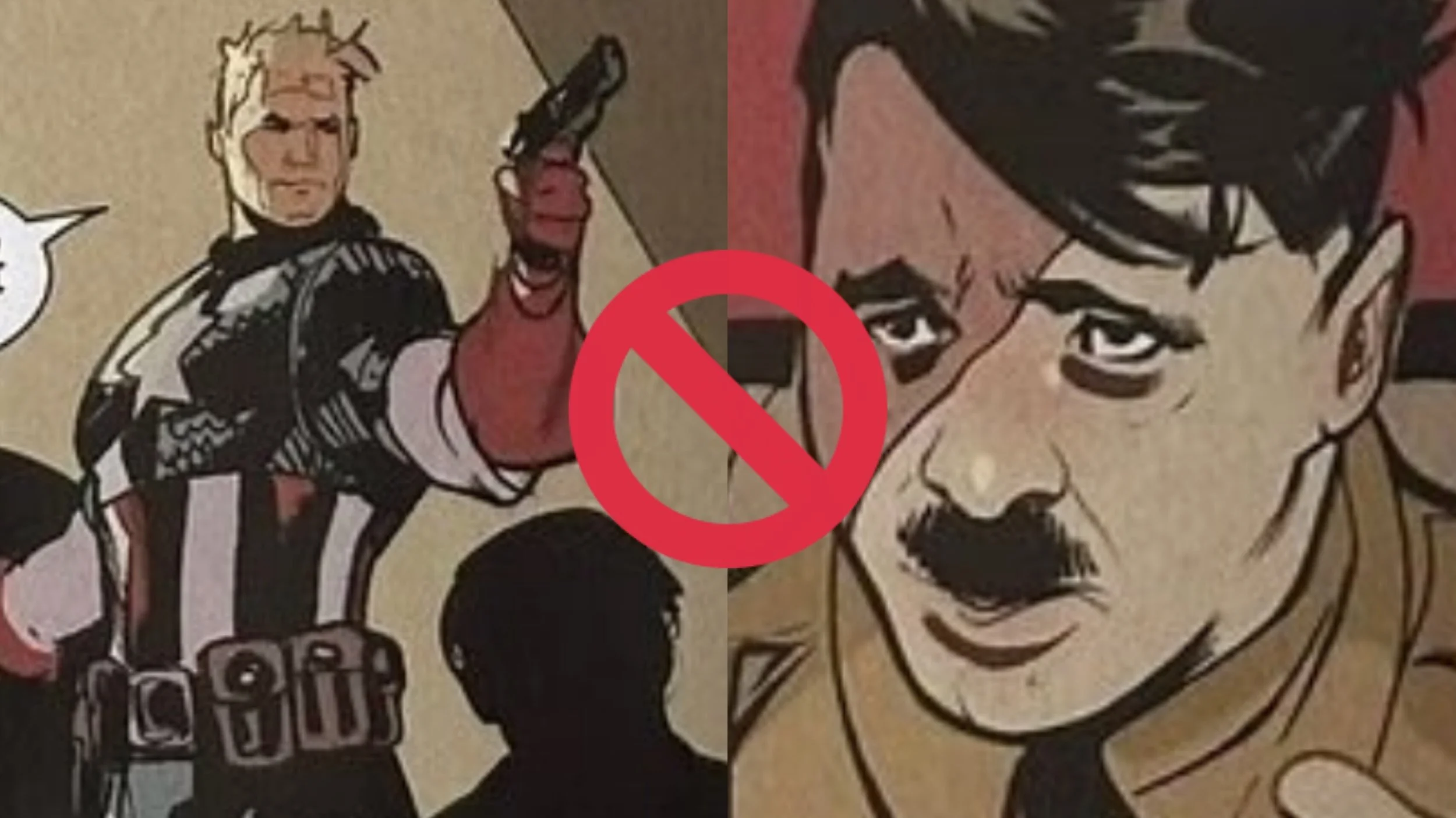
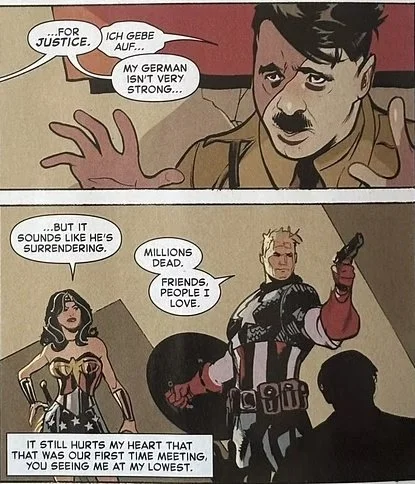
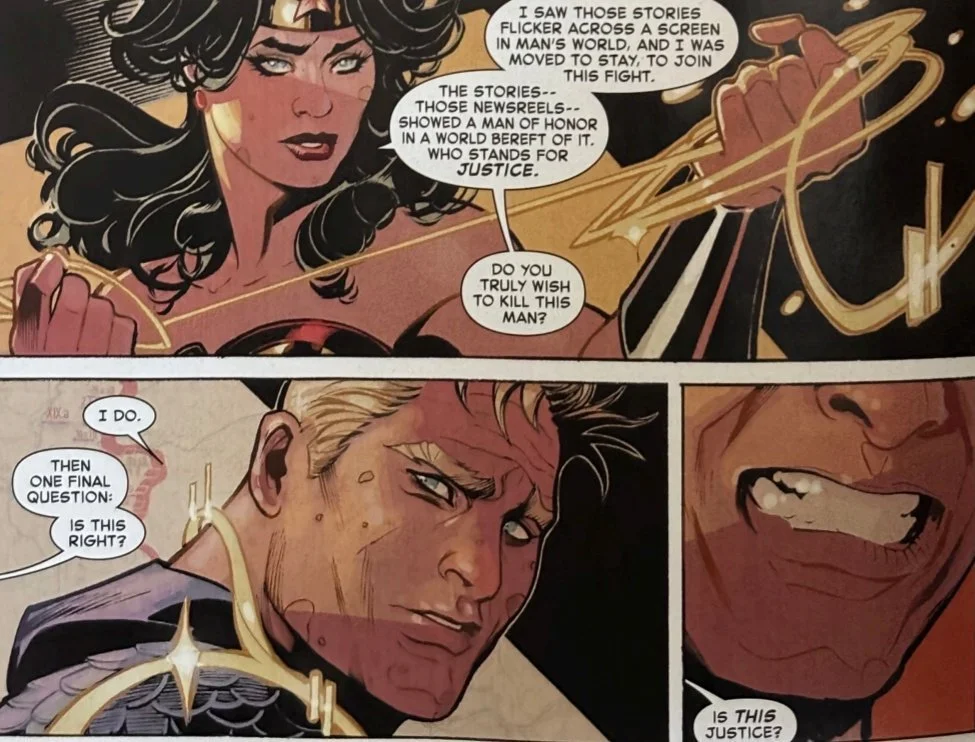
In the upcoming Batman/Deadpool crossover, Captain America stands over a surrendering Hitler, pistol raised. Hitler lifts his hands and mutters, “Ich gebe auf”—“I surrender.” Cap’s face is twisted with grief and rage as he says, “Millions dead. Friends, people I love.” Before he can act, Wonder Woman intervenes: “Do you truly wish to kill this man? Is this right? Is this justice?”

The moral clarity of Captain America punching Hitler, established in 1941, has now been replaced with hesitation. A hero who once acted decisively in the face of the most obvious evil in history is now shown questioning whether even Hitler deserves death. Yes, in 2025.


How Comics Historically Confronted Nazis

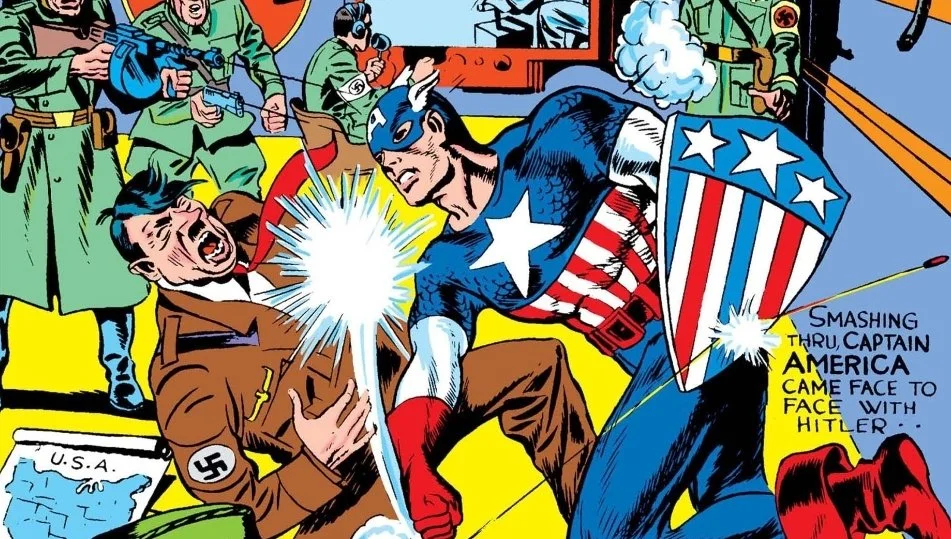
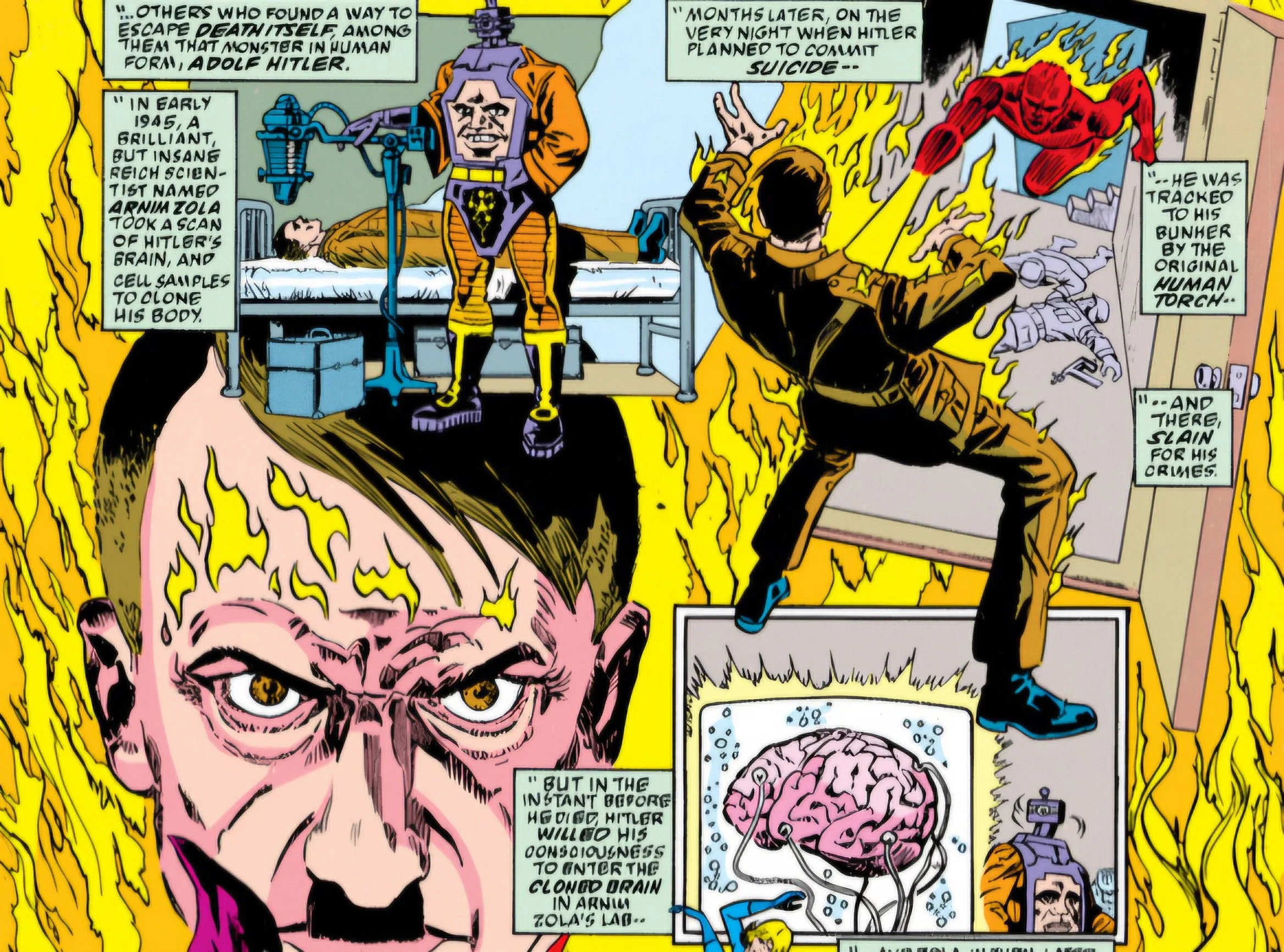
From the Golden Age of comics, superheroes confronted Nazis with no hesitation. Captain America’s debut cover, first issue in 1941, depicted him delivering a decisive punch to Hitler. Villains were villains. Evil was clearly defined. There was no moral gray area.

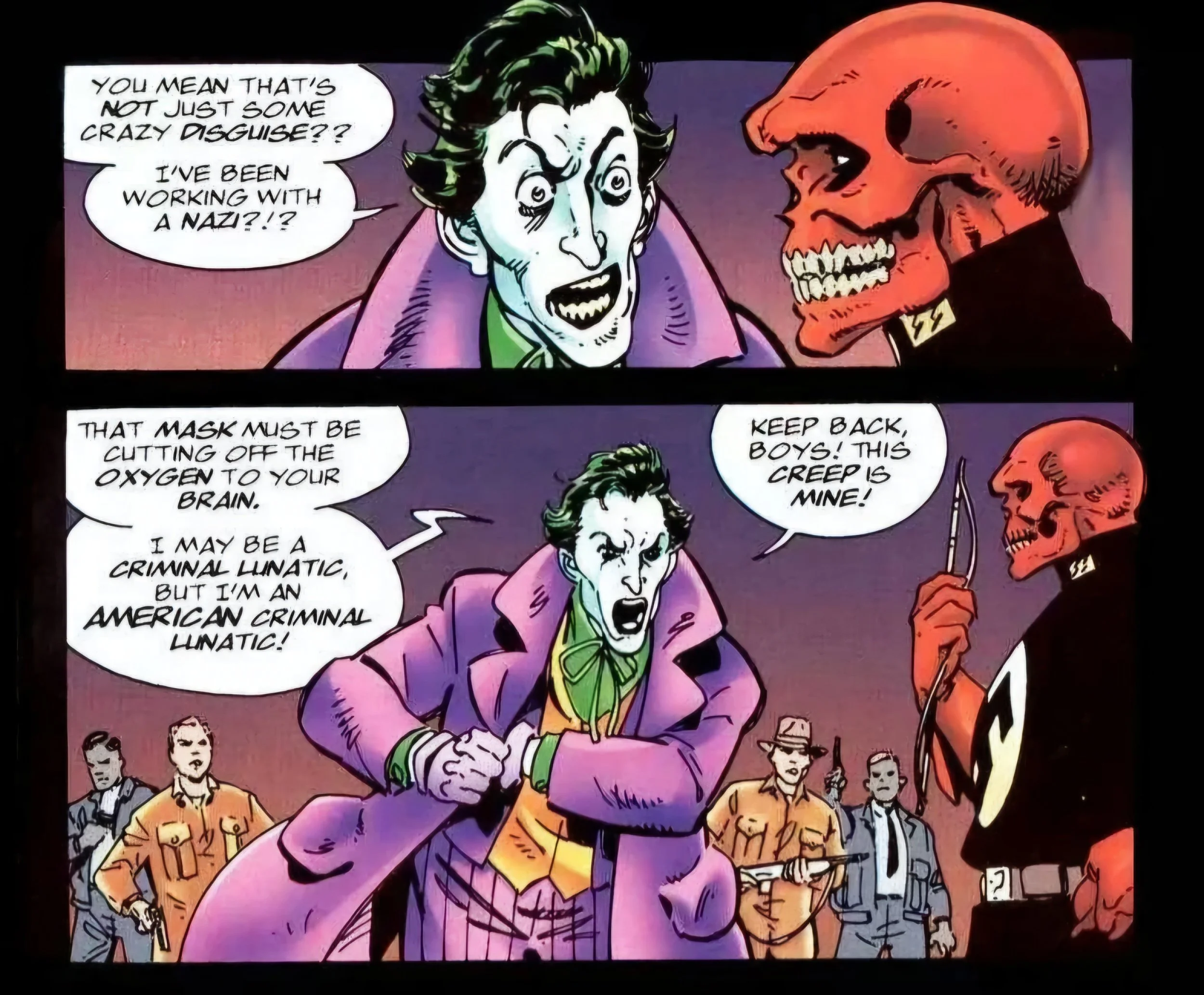
Other heroes followed suit. The Human Torch, Bucky, and even Wonder Woman in early stories fought Nazi agents and stopped sabotage plots with direct, unambiguous action. Red Skull, Baron Zemo, and other recurring villains embodied threats to freedom and marginalized communities, and heroes did not pause to debate whether justice should be tempered by hesitation.

This clarity helped establish a moral baseline in comics: evil must be confronted, and those who perpetrate mass harm deserve to be stopped. These stories were both propaganda and moral instruction. They drew lines between right and wrong that readers of all ages could understand and internalize.


A Questionable Benefit of the Doubt

Some argue that Chip Zdarsky’s scene may include nuance not visible in the preview. It is possible. Full context could show a resolution that preserves Captain America’s heroism while exploring moral dilemmas.

Even with that possibility, skepticism is warranted. The preview explicitly frames Hitler’s surrender, Cap’s grief, and Wonder Woman’s moral questioning. It signals a deliberate exploration of hesitation in the face of evil. While nuanced storytelling can add depth to characters, framing Hitler as a potential candidate for mercy is a dramatic shift from the historical treatment of Nazis in comics.

The concern is not the story itself. The concern is what this shift represents: a cultural willingness to debate whether someone responsible for mass genocide should be spared, even in fiction. That hesitation has consequences for how we perceive moral certainty in real life.


Fiction Hesitates, Reality Punishes

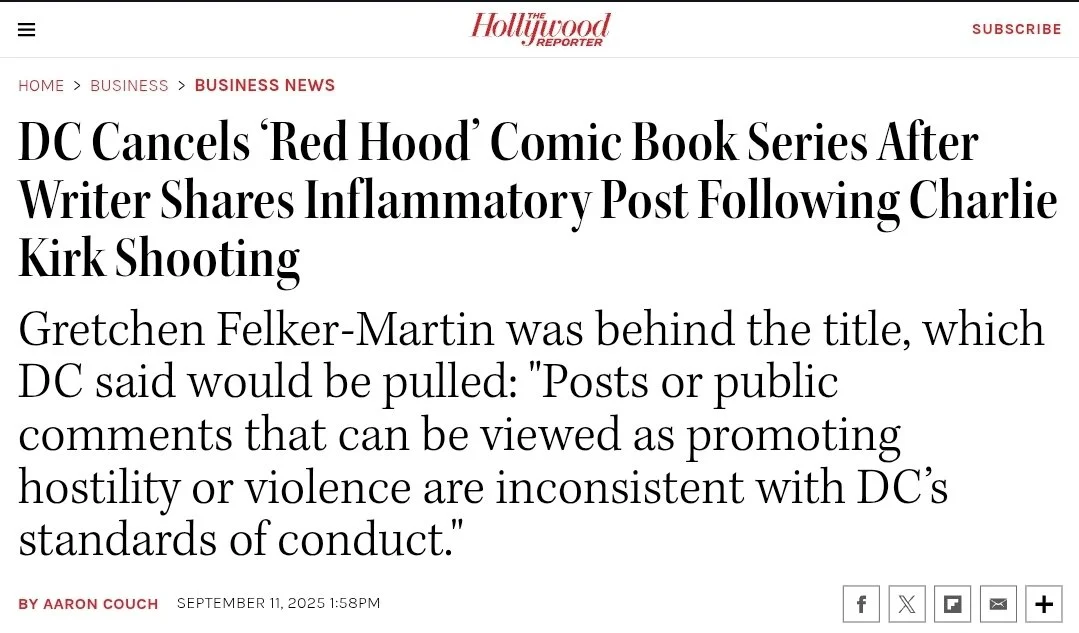
Meanwhile, reality treats moral clarity differently. Around the same time this comic preview circulated, DC Comics fired Gretchen Felker-Martin and canceled her Red Hood series after she labeled conservative activist Charlie Kirk a “Nazi” on social media shortly after his death. The company cited violations of “standards of conduct” against promoting hostility or violence.

This contrast is stark. Fiction can explore whether Captain America should spare Hitler. A real-world creator is punished for speaking plainly about a contemporary political figure whose rhetoric many argue aligns with dangerous ideologies. Kirk’s defenders sanitized his image, calling him a “father” and a “free-thinker,” while celebrating the silencing of a professional who addressed the dangers she saw.

This juxtaposition exposes a cultural double standard. We are comfortable debating the morality of sparing the most notorious villain in history but hesitant to name contemporary threats for what they are. That hesitation sends a dangerous message.


The Broader Cultural Implications

Superhero stories have always reflected cultural values. When comics portrayed Nazis unambiguously as evil, they reinforced the idea that some actions and some people are clearly wrong. When stories introduce hesitation or moral ambiguity in the face of clear evil, they blur those lines.

The implications extend beyond fiction. Extremist movements have gained traction by normalizing moral ambiguity, and hesitation in cultural storytelling can subtly legitimize those movements. If even Hitler becomes a question in popular media, audiences may start to see other dangerous ideologies as debatable rather than condemnable.

Moreover, younger readers who look to superheroes for moral guidance may be exposed to the idea that hesitation is not only acceptable but expected, even against those whose crimes are indisputable. This is a sharp contrast to the moral clarity of earlier comics and represents a profound cultural shift.


Why Moral Clarity Still Matters

The lesson of the first Captain America cover remains: when evil shows its face, heroes act decisively. Hesitation costs lives. Fiction might explore nuance, but reality demands conviction. If we start treating even Hitler as a question mark, what modern villains or extremists will slip by under the guise of “complexity” or “forgiveness”?

The world does not need more hypotheticals about whether the worst people in history deserved mercy. It needs more heroes willing to act, and more creators willing to call out real-world threats without fear of professional punishment.

Superheroes teach lessons about courage, justice, and moral clarity. If they hesitate against the worst, we risk teaching hesitation as a virtue when confronting evil in real life. The first Captain America cover delivered a message that was simple and uncompromising: evil must be stopped. That message is more relevant than ever. Neither heroes nor society should flinch.

But what do you think? Tell us more below!

REVIEW: Daredevil: Cold Day In Hell #1 - Old Man Murdock aka The Dark Matt Returns

George SerranoComment

Marvel’s newest limited series throws Daredevil into a world that's barely holding together — and shows us a Matt Murdock who might not be either. Cold Day in Hell #1 is grim, heavy, and honestly, exactly the kind of Daredevil story I love. Here’s how the Devil found his way back… and why it might break him all over again.
SPOILERS

Ashes of a Fallen City

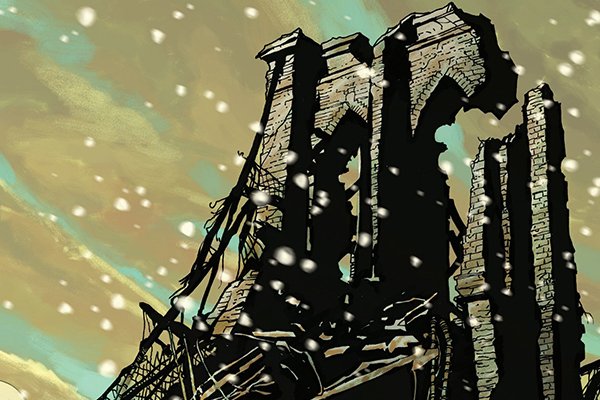
Daredevil: Cold Day in Hell wastes no time showing us that this isn’t the Marvel Universe we’re used to. New York is wrecked, divided, and rotting away after some world-breaking event that’s left society in shambles.

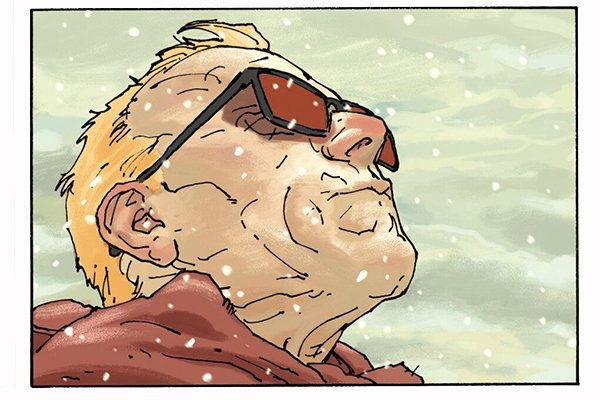
At the center of it all is Matt Murdock — older, weaker, and long since retired from being Daredevil. We first catch up with him visiting Wilson Fisk’s grave, casually mentioning a run-in with Jessica Jones. Nowadays, Matt’s way of helping is running a soup kitchen called Battlin’ Jack’s — a small light in a world that's mostly darkness.

The Man Without Hope

The creative team of Charles Soule and Steve McNiven does a killer job showing just how far Matt has fallen. He’s not a fighter anymore. He’s just a man trying to be kind — and even that doesn’t get him very far.

In one of the book’s rougher moments, Matt tries to help a homeless man only to get mugged and shoved down a flight of subway stairs for his trouble. Even after that, Matt still offers the guy a free meal at Battlin’ Jack’s. It’s a heartbreaking beat that reminds you: Matt Murdock might be broken, but he’s still Matt Murdock.

The Blast That Brought the Devil Back

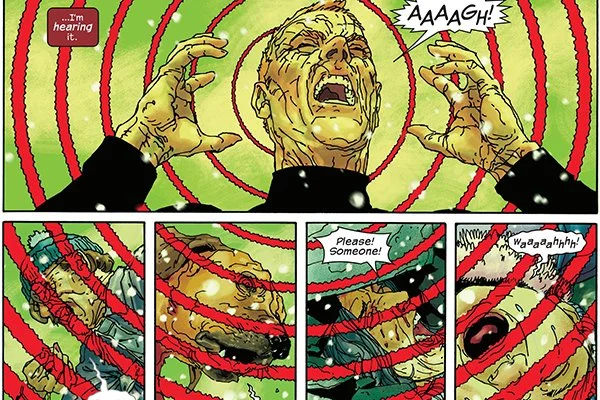
Everything changes after a dirty bomb rips through a subway station, filling it with some weird radioactive gas. Matt breathes it in — and in a brutal sensory overload, his superpowers come roaring back.

The creative team makes you feel it — the pain, the confusion, the flood of information. But once Matt gets a grip, the old instincts kick in. Even half-dead, Matt dives right back into saving people trapped in the wreckage. Because that’s just who he is.


A Soldier’s Last Stand

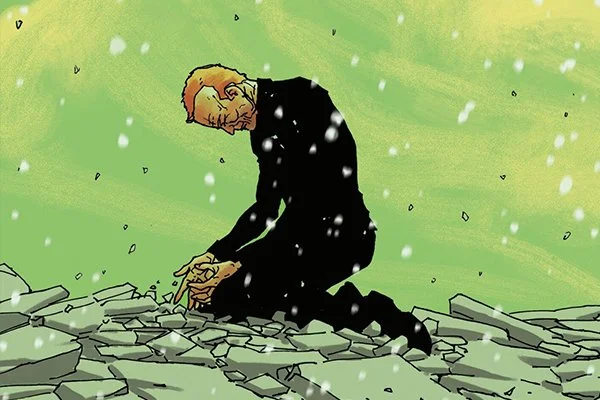
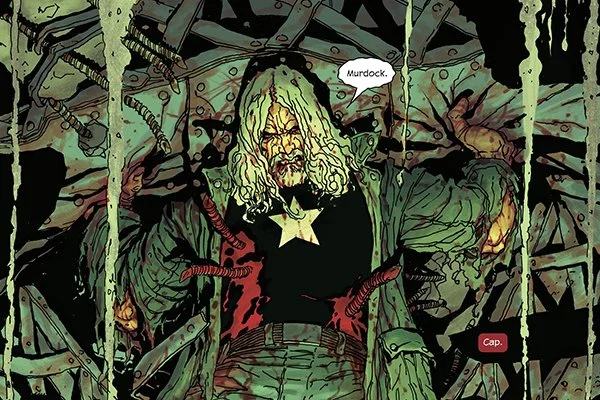
While pulling people from the rubble, Matt stumbles on a brutal sight: a battered, grizzled Captain America holding up a mountain of debris to protect a passed-out kid.

Cap’s dying, and he knows it. With what little strength he has left, he begs Matt to save the girl — calling her “the key to all this” — before finally succumbing to his injuries. It’s a gut punch. Even legends die in this world.

Blood in the Shadows

Later on, Matt spots a crew of hazmat-suited thugs trying to steal Cap’s shield for their mysterious boss. Despite being older and battered, Matt’s reflexes are back — and they’re deadly.

Tracking their scent, he tails them to a hideout straight out of a nightmare: a radiation-poisoned madman holding a limbless Frank Castle (yeah, the Punisher) hostage.

When the thugs mention their assailant was a redheaded blind man, the boss immediately figures it out: Daredevil is back.

And that boss?

Bullseye.

Still one of Matt’s most brutal, twisted enemies — and somehow even worse in this new world.

The Last Temptation of Matt Murdock

Meanwhile, Matt finds what’s left of his old Daredevil costume. It’s tattered. It’s dusty. And it’s exactly what he needs. The Devil of Hell’s Kitchen might be older, slower, and beat to hell — but he’s not done yet.


Verdict:

Daredevil: Cold Day in Hell #1 feels like a brutal mix of Old Man Logan and The Dark Knight Returns, but it still feels completely Daredevil at its heart. It is everything I love in an end-times story and there’s no getting around it — Daredevil: Cold Day in Hell wears its inspirations proudly on its sleeve. If you’re a fan of books like Old Man Logan or The Dark Knight Returns, you’ll feel right at home here.

But what makes this story stand out is that Matt Murdock isn’t just fighting against a broken world — he’s fighting against himself. Unlike Logan or Bruce, who come back because they’re angry, Matt comes back because he can’t refuse the call. Even when it gets him hurt. Even when it’s hopeless. It’s a quieter, sadder kind of return. And honestly? That makes it hit way harder.

The art carries so much of the heavy lifting, painting New York like a rotting fruit eaten away by war and violence. And through it all, Matt wrestles with the idea that maybe — just maybe — all of this is part of God’s plan. Maybe it is. Maybe it isn’t. But whether it’s faith or just stubbornness, Matt chooses to believe it. And that's enough to put the Devil back in the fight one last time. I can’t wait for Issue #2.