
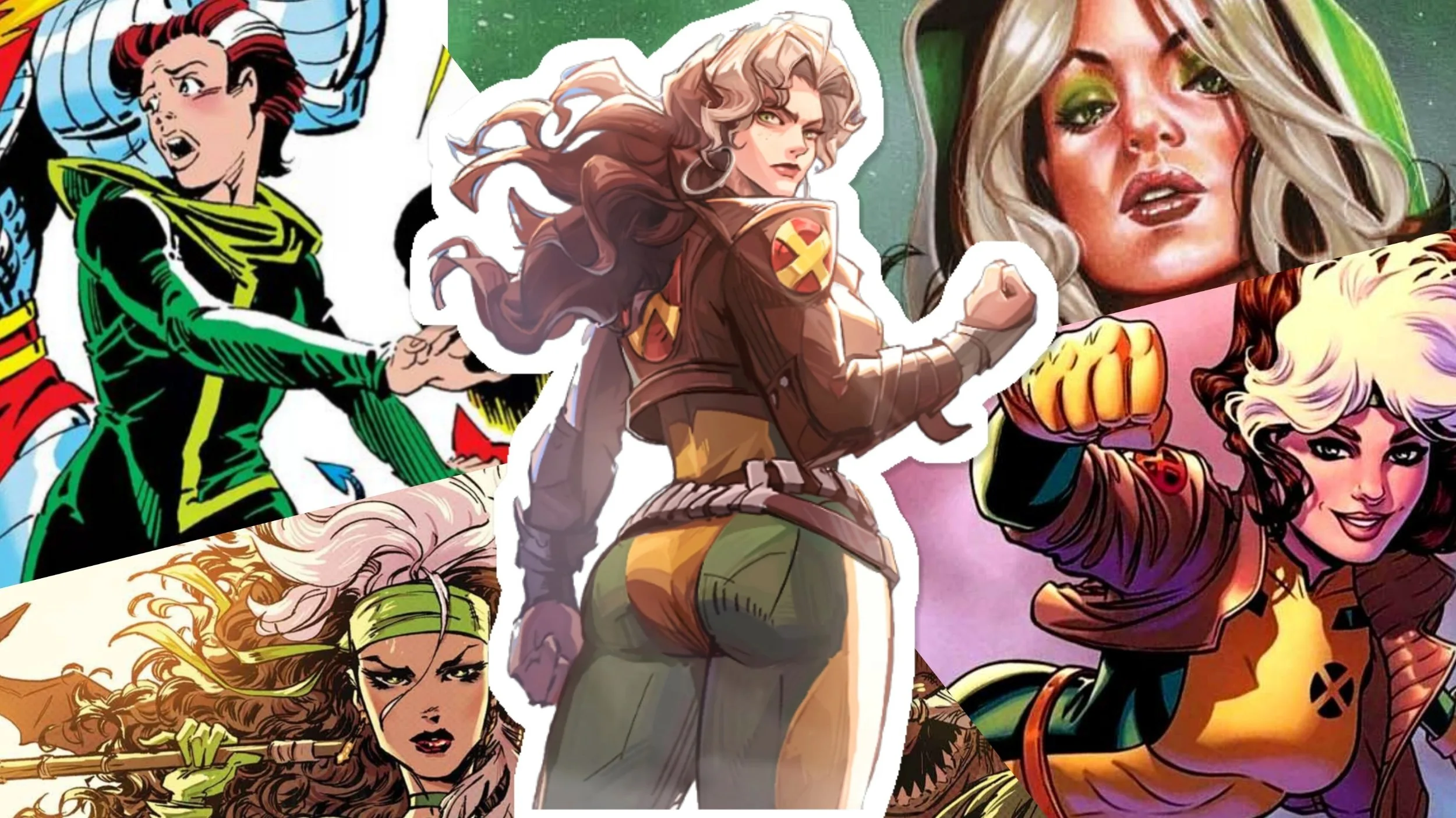
Rogue has been many things across her decades in comics: a villain, a hero, an Avenger, and one of the X-Men’s emotional anchors. But her signature struggle has always been the same — the inability to touch another person without absorbing their powers, memories, and even parts of their personality. It is a power that made her one of the most tragic figures in Marvel’s mutant lineup, a character whose strength is inseparable from her loneliness.
With her addition to Marvel Rivals, fans are once again asking the question: is Rogue cured? Can she finally touch again? Let’s break down how her powers have evolved, the creative minds who shaped those changes, and what her modern portrayal says about who Anna Marie really is.
Origins: A Power and a Curse
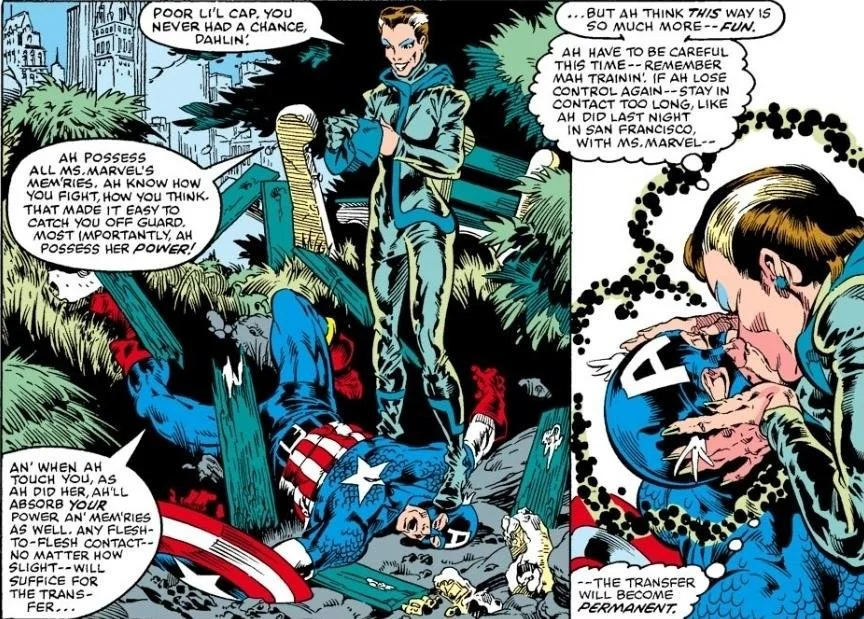
Created by Chris Claremont and Michael Golden, Rogue made her first appearance in Avengers Annual #10 (1981) as a member of Mystique’s Brotherhood of Evil Mutants. From the start, her powers set her apart: the ability to absorb another person’s energy, memories, and abilities through skin contact.
What made Rogue compelling wasn’t just what she could do, but what she could not. Her inability to physically touch others became both her greatest vulnerability and her emotional anchor. Claremont used her to explore themes of intimacy, identity, and control — ideas that resonated with readers far beyond the typical mutant metaphor.
The Cured Years: Temporary Relief, Lasting Consequences
Throughout her publication history, Rogue’s “cure” has been more of a recurring storyline than a permanent solution. Each version reflects the era it came from and the creative team behind it.
The first major turning point came in the early 2000s under Mike Carey during his run on X-Men: Legacy. Carey explored Rogue’s fractured psyche, suggesting that her powers were less about biology and more about emotional control. By X-Men: Legacy #224, Rogue had gained a degree of mastery, finally able to touch others — including Gambit — without immediate danger. Carey described her arc as “a journey toward self-integration,” where control over her power symbolized her coming to peace with herself rather than being “cured” by science or magic.
Later, during Rick Remender’s Uncanny Avengers run, Rogue’s control took on a more thematic tone. Remender portrayed her as a moral compass in a world where power often corrupts. While she could physically touch people, she still wrestled with the emotional consequences of her past — a reminder that her mutation was never just physical. In interviews, Remender said Rogue’s powers were “a metaphor for empathy taken to its most painful extreme.”
Even the films flirted with this idea. In X-Men: The Last Stand (2006), Rogue famously takes the mutant cure, a choice that divided fans. Director Brett Ratner claimed it symbolized the right to choose one’s own identity, but many fans and creators disagreed, feeling it missed the point of Rogue’s arc — that her struggle was about acceptance, not erasure.
Modern Day Anna Marie
In recent years, writers like Gail Simone have given Rogue new dimensions. Simone’s take focuses less on whether Rogue’s powers are “fixed” and more on how she has learned to live with them. Simone has called Rogue “one of the most emotionally intelligent X-Men,” pointing out how her powers make her uniquely empathetic toward others’ pain
Simone’s Rogue is no longer defined by her inability to touch. She has control and confidence, using her powers deliberately instead of fearfully. In stories that blend humor, heart, and heroism, Rogue has matured into a leader who knows herself. Whether mentoring younger mutants or teaming up with the Avengers, she embodies acceptance and resilience. The question of whether she is “cured” feels almost outdated. Her touch now represents choice, growth, and a deep understanding of connection.
So, Is She Cured?
In short, not exactly. Rogue has achieved control over her powers multiple times, but Marvel has often treated it as fluid rather than final. What is constant is the symbolism. Whether she struggles with her touch or embraces it, Rogue remains a metaphor for personal boundaries, consent, and emotional vulnerability. Her journey has never been about erasing her mutation, but about learning to live fully with it.
Conclusion: The Touch of Evolution
Rogue’s inclusion in Marvel Rivals marks more than just another playable mutant. It represents the evolution of a character who has spent her life at war with her own skin. What once isolated her now empowers her, and her ability to touch without fear stands as proof of how far she has come. Marvel Rivals doesn’t just showcase Rogue’s strength, it celebrates her freedom.