
The Wild Card series is wrapped up, each series was decided in two games except for the NL East rivalry series between the Braves and Phillies. Our Division Series are set and begin this Saturday! Friends of the Comic Book Clique, it’s the MLB Weekly Report!
I’ve gotta say, I’m on quite the roll of late! If I can be real with you for a moment, dear reader, I am guilty of always picking my best grid of the week. When I say “I’m on quite the roll of late!”, it’s really “One day a week, I own this grid! The other days, I’m just as capable of rolling out a rarity score of 334 as I am <10.”
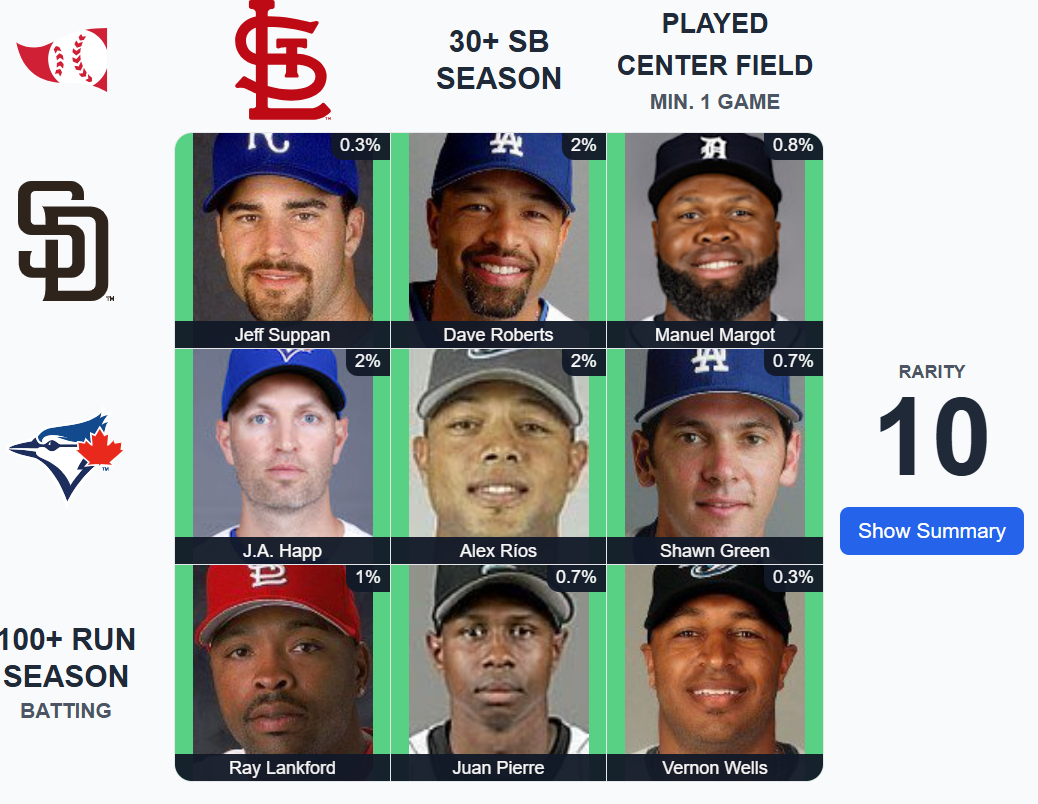
Before we dive into playoff baseball, I must remark on how we got here; Specifically, Game 162. We’ve passed the 15 year anniversary of what many, including myself, consider to be the greatest set of Game 162s on September 28 2011. I even watched this video from the MLB Vault YouTube Channel to get myself hyped. What happened next is probably my fault for hyping myself so much.
Our Game 162 was drab and uneventful. Not even just by comparison to 2011 but in general, as baseball games. Teams that had the advantage going into the final game of the season, the Astros & the Phillies, won and did so in decisive fashion. Those who didn’t, the Rangers & the Diamondbacks, were dead in the water early in their games, seemingly with nothing left in the tank to mount a fight, and lost. How disappointing. Maybe not more disappointing than this next question and subsequent answer.
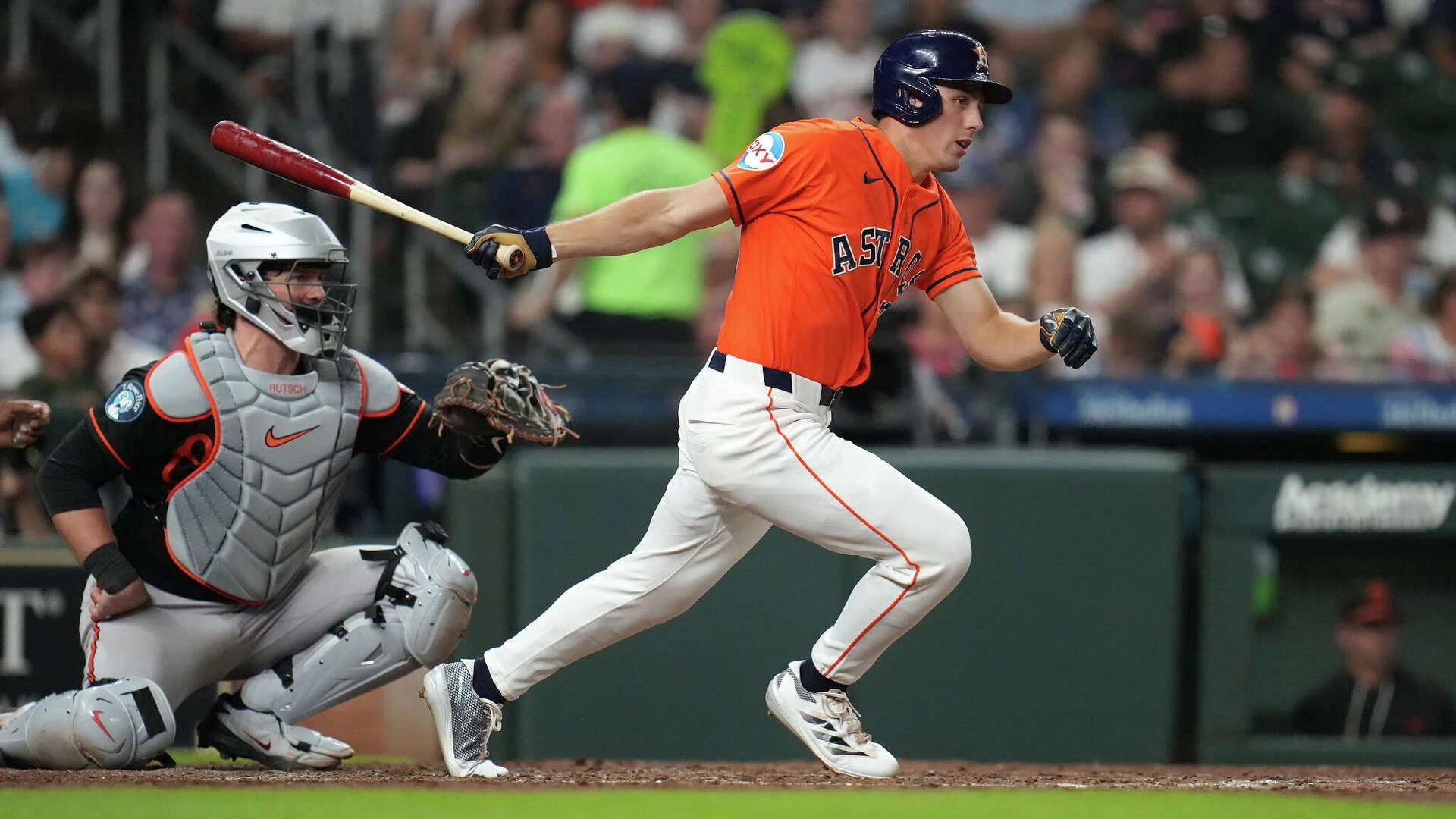
Lucas Spence (Photo credit: Karen Warren/AP).
Q: What can a .500 record in the American League get you in the year 2026?
A: For the Astros, winning game 162 against the cityless Athletics came easy. A rout, a shelacking, absolute destruction. Nine to zero. In winning the division they earned themselves not just a spot in the playoffs but a piece of history. They became the worst division winner of all-time. 81 wins, 81 losses and the NUMBER THREE SEED IN THE AL.
We’re going to talk about just how abysmal the American League was this year at some point during the offseason and I’m sure it’ll continue to be pertinent throughout the postseason. It’s too juicy not to dive into. Here’s another question:
Q: What can a .500 record get you as a playoff team in the year 2026?
A: The most logical answer yet. A first round sweep and exit, courtesy of the upstart Chicago White Sox.
If you followed the White Sox this season, you saw an offense that scored the fourth most runs in all of baseball. The Wild Card series proved, so far, that their ability to produce runs has not been a fluke. The youth and playoff inexperience that I thought would work against them hasn’t quite kicked in and in fact may be working for them. They didn’t need to rely on the big bats of Murakami or Vargas to get them into the ALDS - neither recorded a hit in game 2. Instead, Chase Meidroth and Colson Montgomery, batting in the bottom of the order, as well as Kyle Teel and Sam Antonacci, provided the spark the offense needed.
The offense did what it has done for most of the season: score runs and get production from many different players. They took advantage of an Astros pitching staff that couldn’t keep the opposing batters off base, walking three in the first inning that eventually led to a run and giving up four hits the following inning, leading to two more runs. All but two in the White Sox starting lineup got on base and four players provided the six runs they needed to take game 1. The offense in game 2 wasn’t as spread out but still just as effective.
It didn’t get any better for the Astros in game 2. They sent their ace, Hunter Brown, out to try and even the series. Brown didn’t make it out of the first inning, giving up four runs over five hits and a walk. There’s no way to look at that as a recipe for success, a demoralizing blow even in a game that still had eight more innings to go. And sure, the pitching didn’t show up but this was a complete breakdown from the entire roster.
With runners in scoring position, the Astros did not have a single hit in nine chances. Yordan Alvarez, Isaac Paredes and Christian Walker went a combined 2 for 20 at the plate and that’s just not going to cut it. One starts to wonder with how lackluster the team played this year, squeaking into the playoffs and fully face planting their way out, if the window for contention is just about closed.
If it makes Astros fans feel even remotely better, and it won't, they weren't the only ones swept out of the postseason.
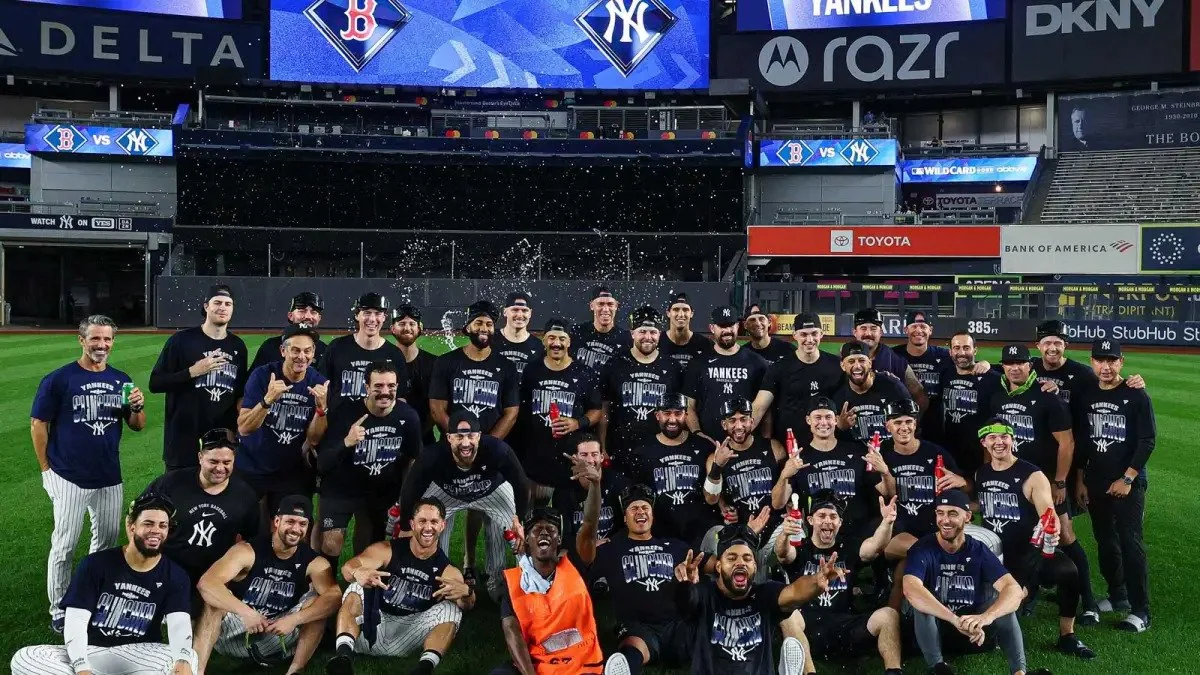
Photo credit: Vince Carchietta.
Personally and ‘professionally,’ the Red Sox falling to the Yankees, at Yankee Stadium, not winning a single game, feels like a much bigger failure than any of the other teams swept..
Back to back games where the Red Sox pitching staff, primarily the bullpen, gave up nine runs, albeit with a large chunk of those runs coming later in the games, is never going to be a statistic that screams winner. Both starters, Payton Tolle and Sonny Gray, went four and two-thirds, giving up a combined three runs. Those other 15 runs, plus 15 hits and eight walks, were given up in the six and two-thirds innings pitched by the bullpen. The old adage strikes again; Pitching and defense win championships and The BoSox did not have enough of the former.
It’s a scenario the Red Sox may not have been prepared for. Their starters pitched well enough, managers in the playoffs are known to have quick triggers at the slightest sense of danger, so I’m not put off by the fact that neither starter completed five innings. It’s what happened after manager, Chad Tracy, handed the ball off to the bullpen. In the month of September, the Red Sox bullpen had the lowest ERA in all of baseball while being in the bottom five in innings pitched. This isn’t a matter of an overtaxed bullpen, it’s a matter of not rising to the occasion.
On the flip side, combining that failing pitching staff with their offense's inability to not just score runs but to even get runners into scoring position did not give the Red Sox any fighting chance. Just three squandered opportunities will and did lead to two embarrassing losses. If not for Willson Contreras & Nick Sogard, it would’ve been shutouts in back to back games and the ultimate humiliation - and to be clear, this isn't far off from that.
There is not much I can negatively say about the Bronx Bombers regarding their play in this Wild Card series. They lived up to the moniker, their ace and the unequivocal AL Cy Young award winner, Cam Schlittler, continuing his star rising year and Max Fried followed suit in game 2. It’s now the second year in a row where Schlittler faces the Red Sox, in the postseason, and strikes out 10 hitters, putting him rarefied air. The only other pitcher to accomplish that feat is Bob Gibson.
This will come as no surprise but the lefties in the Yankees lineup were mashing. Ben Rice, Cody Bellinger, Austin Wells, Luis Garcia Jr. and Ryan McMahon accounted for 16 of the 18 runs the Yankees scored. It’s no secret that Yankee Stadium favors those bats, the memes exist for a reason but it’s downright laughable to see it work to this effect. An Aaron Judge-less lineup, potentially for the entire postseason, isn’t a thought the Yankees or their fans would call are fond of but performances like the ones we got this week may still leave hope for a Yankees championship.
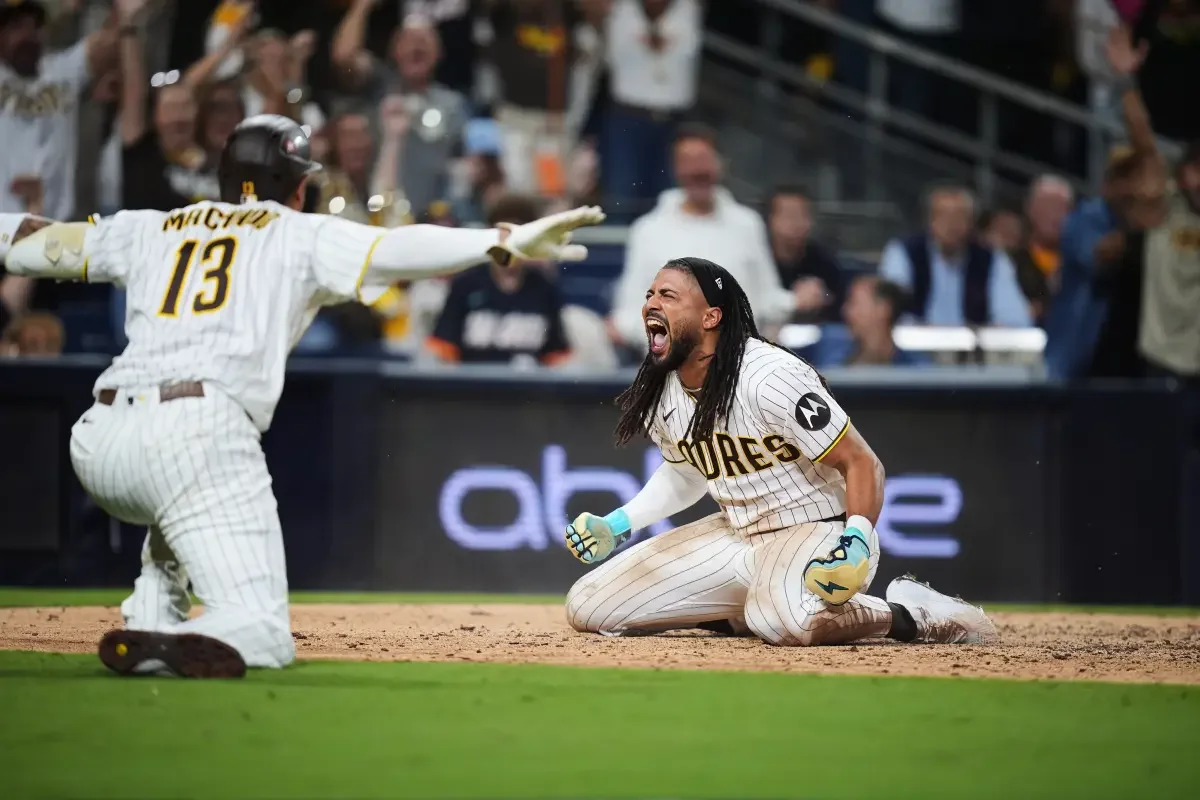
Padres superstar infielders Manny Machado and Fernando Tatis. (Photo credit: Gregory Bull/AP)
The last of the teams to be swept out of the playoffs were, to me, the least surprising. The Cubs went to PetCo Park in San Diego and lost both games, one brutally and the other less brutally but still deflatingly.
At home, the Padres had the fourth best record in baseball this season with the second highest attendance numbers. PetCo is home to one of the best playoff atmospheres in the league and cannot be understated how much of an advantage this gives the Friars. As for momentum, very important as you enter the playoffs, the Padres had the best record in September, once again, in all of baseball.
Michael King took the hill for the Padres in game 1 and provided an ace level performance. Seven innings, tied for the longest a starting pitcher has gone thus far in the postseason with Tyler Mahle of the Braves, eight strike outs and, most importantly, no runs given up. King was more than just effective, he was neutralizing. Coupled with the eight strikeouts, of the 21 outs King recorded, 15 of them were either a strikeout or a ground ball, the Cubs were unable to get anything going and squeaked out three hits total for the game.
On top of that strong outing, the Padres offense had this game wrapped up and out of reach by the fifth, scoring seven runs by then. Ignited by a leadoff homerun from Fernando Tatis Jr, shortly followed up by a solo shot of Manny Machado’s own, they never looked back. Four Padres hitters recorded two hits, totaling 13 for the game and they seized every opportunity, or mistake, the Cubs gave them to get on base and score.
As effective as Michael King was for the Padres is just about as ineffective as Matthew Boyd was for the Cubs in game 1. Having only thrown 58 pitches, 42 of those were strikes, to a team that scored the most runs in September and was more than pleased to swing early in counts to disrupt any rhythm Boyd thought of obtaining. The home run to Tatis was on the first pitch of the game. The home run to Machado was on the second pitch of the at bat and his RBI double two innings later, off the third pitch in the at bat.
Game 2 was at least more competitive, in the sense that the Cubs actually scored, albeit one run, and the Padres offense didn’t entirely wipe the floor with Cub pitching.
It came down to the Padres bullpen, spearheaded by the three headed monster of Yuki Matsui (pitched in game 1 but not game 2), soon to be coveted free agent Adrian Morejon and lights out, door slamming closer, Mason Miller. Each had a chance to shine in this quick series and in game 2, Morejon and Miller combined for three innings, giving up two hits and no runs. Add Matsui’s performance from game 1, a hitless eighth inning, and they’re firing on all fronts. Starter for game 2, Nick Pivetta, may not have been nearly as electric as King was in game 1, getting pulled in the fourth inning but with the shutdown bullpen he has coming in behind him, they stifled Cubs hitting. The Cubs just went 4 for 44 against the Padres bullpen, an atrocious number to look at if you’re a fan of the North Siders or sitting in that Cubs dugout.
There will be much conversation coming out of this for the Cubs. Pete Crow-Armstrong has already gone on record to take the blame offensively. It’s what a good leader does but not getting a single hit in the two most crucial games of their season is counterintuitive to good leadership. This was a Cubs team that was built for a deeper postseason run and a team that was active at the trade deadline to try and push themselves over the edge, only to come up shockingly short.
It’s debatable whether or not this is as embarrassing as the Red Sox early exit. The Red Sox scored one more run than the Cubs but the absolute obliteration they received from their most bitter rival will likely leave that same bitter taste much longer than the Cubs will have in theirs for losing to the hottest team in baseball over the last month or so. Not a consolation prize by any means.
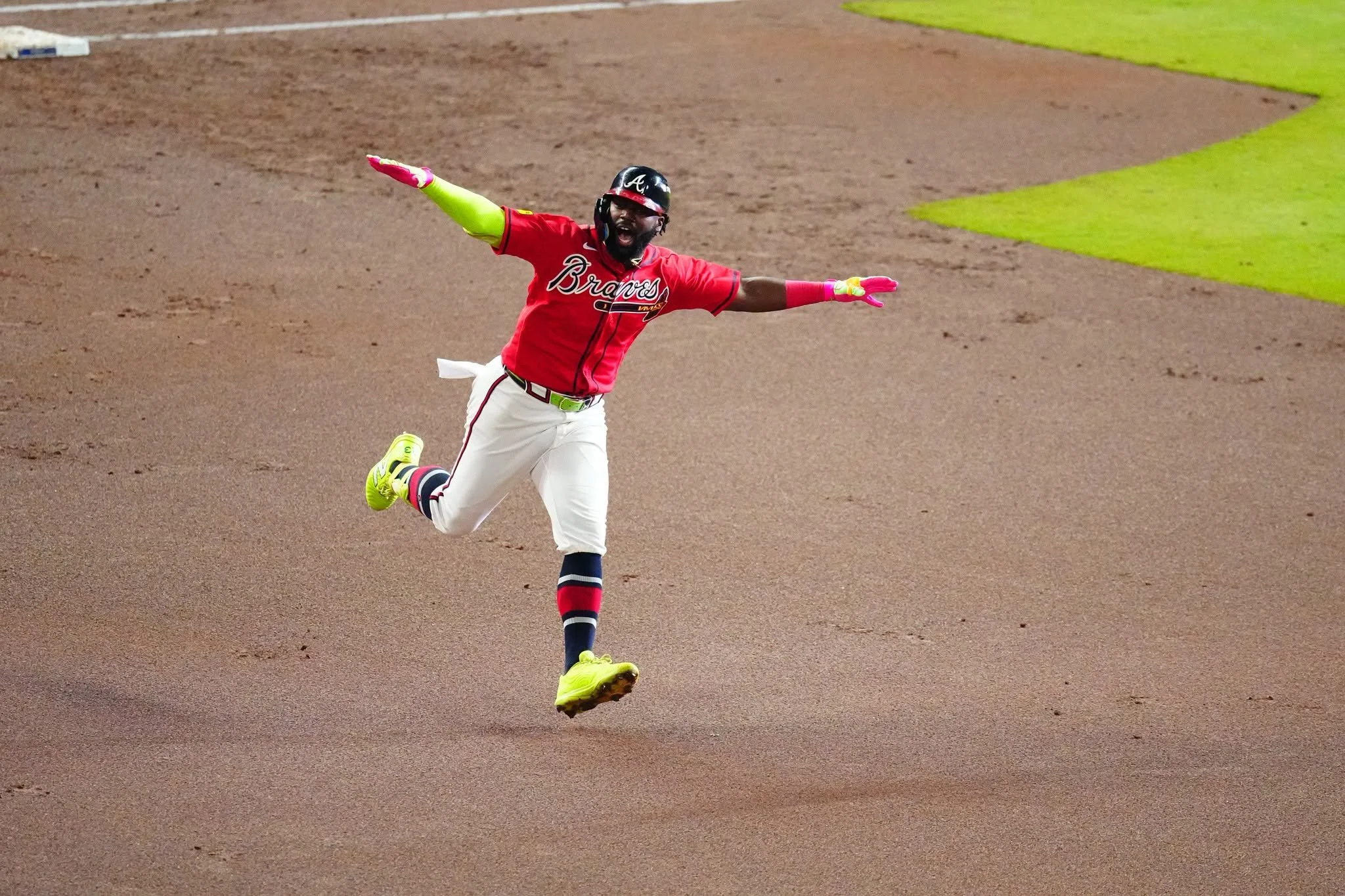
Michael Harris celebrating his three-run homerun off of a Nola sinker out of the zone. (Photo credit: Braves social media).
We make our last stop at the only series that went the distance. Another bitter division rivalry between the Atlanta Braves and the Philadelphia Phillies. My inner Mets fan asks if both teams can lose but I’ve got my unbiased writing hat on so we’ll ignore him for now.
This series turned out to be actually competitive and fun to watch. Game 1 felt like a chess match. The Phillies struck first in the first with two outs and the Braves didn’t wait too long to answer back, tying it up in the bottom of the second, also with two outs. Both starters, Chris Sale for the Braves and Jesus Luzardo for the Phillies, would settle in and produce one-two-three innings in the middle of the game. The tie was broken in the bottom of the sixth by Ozzie Albies just for the Phillies to take the lead right back in the top of the seventh.
THIS is the playoff baseball I was looking for! The Phillies were in reach of taking game 1 on the road when Jhoan Duran gave up a go-ahead three run home run and I can’t help but ask, where have I seen this before? With two runners on and one swing, Austin Riley put the game away in the bottom of the eighth. Riley has statistically been one of the worst offensive players this year so it had to feel earth-shattering to be able to give his team the lead, at home, when it mattered most.
Game 2 was more of the same chess match, even inducing the only game in the Wild Card series to go into extra innings. Another back and forth affair that started with early runs traded. The first coming from Bryce Harper in the top half of the first with an equal response from Matt Olson in the bottom half. Things went quiet again from there with both starters, Cristopher Sanchez for the Phillies and Tyler “he’s not Jacob deGrom but he thinks he is” Mahle for the Braves, settled in and kept the game even going into the seventh. Sanchez wasn’t as sharp, surrendering five walks but gritting his way through the first six innings. Aided by a bases loaded double play to end the sixth, you could still see Atlanta was starting to get the wheels turning on offense and it wouldn’t be long until they’d strike.
Sean Murphy would get on base to start the bottom of the seventh, Ha-Seong Kim would follow with a bunt that would give the Braves two runners on. Drake Baldwin struck with an entirely catchable double to right field, over Bryce Harper’s head and Matt Olson would tack on another run.
This is where we take a turn. As one Atlanta Braves pundit told me, “Walt Weiss couldn’t manage a Radio Shack, and their management was so poor they’re no longer in business.” Weiss turned to the same relief core he went with in game 1: Dylan Lee, Raisel Iglesias and Didier Fuentes. Lee came on with a two run lead and gave the Fighting Phils the opportunity to come right back into this game. Lee, who has been wildly ineffective in the second half of the year, to the tune of a 6.00 ERA, gave up back-to-back home runs to Kyle Schwarber and Bryce Harper. With Robert Suarez sitting in the bullpen, Weiss would go to Iglesias for a scoreless ninth inning and Fuentes, the losing pitcher in the game.
Timely hitting for the Phillies and poor managerial decisions from the Braves take us to a deciding game 3. It’s almost like Weiss was purposefully giving away game 2 so he could have more weapons for game 3. And yeah, it technically worked, but managing a bullpen in the postseason is a do-or-die task; Championships are won and lost by these decisions.
Game 3 played a lot like the other postseason games so far. The Braves scored early again, this time with three runs in the first, but were not met with any answers. The pitching staff held up, even going to Fuentes for a third day in a row, and he was effective. Game 3 wasn’t a chess match, it was a statement. The Braves are the better team and had the stamina and perseverance to back it up.
Of all the teams to exit the playoffs thus far, the Phillies may be closest to a rebuild. It’s clear that having big names on paper and having the fourth largest payroll isn’t working anymore. To make matters worse, those big names are showing their age and are still locked in to long contracts - looking at Harper, Turner, Realmuto, Wheeler and Nola. They also don’t have the farm system to help usher in the next generation of stars either, with President Dave Dombrowski and co. focusing on top tier stars of the current over the organizational health of the future. I’m not saying the rebuild is imminent, even less so with where we’ll be come the offseason but we’re getting close. While this is more similar to the Tigers than the Marlins or Red Sox in the sense that they lost their World Series chance unlike the other two, this is the M.O. of the President that has been tabbed ‘Trader Dave’ for a generation because of how aggressive he is spending capital, both fiscally and in prospect value, to mortgage the future in a scenario your ballclub is ready to win now. The writing may be on the wall the way it had been in his other three stops with how much longer Dombrowski is in Philadelphia.
We’ll be previewing the Division Series separately from here and so I will bid you adieu with this week’s "How can you not be romantic about baseball?"