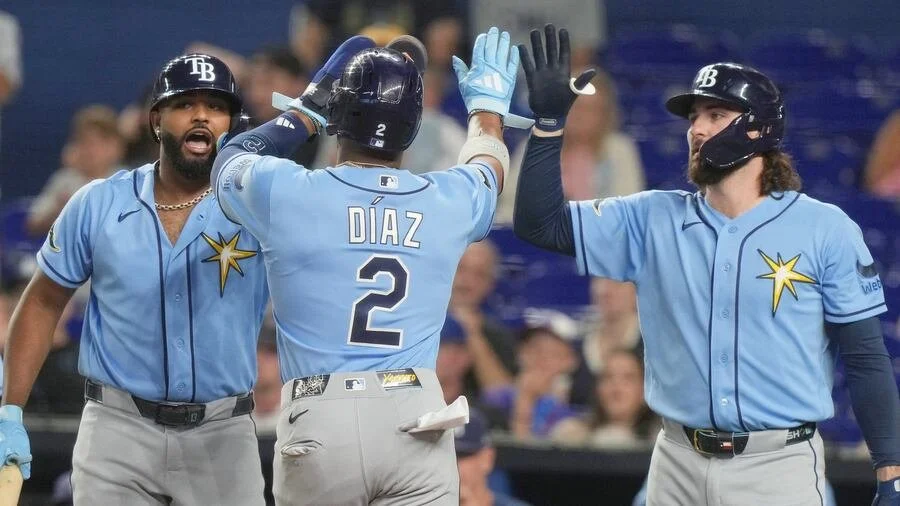
Friends of the Comic Book Clique, today begins a new round of the MLB playoffs and a step closer to crowning the Dodgers again World Champions of the 2026 season. It’s the Division Series preview!
Eight teams are left in the mix and I will be going series by series to see how these teams match up, who and what will be the determining factors going forward, and providing a prediction for each series. We start in Cleveland with the first of two actual division rivalries now going head-to-head with the season on the line.
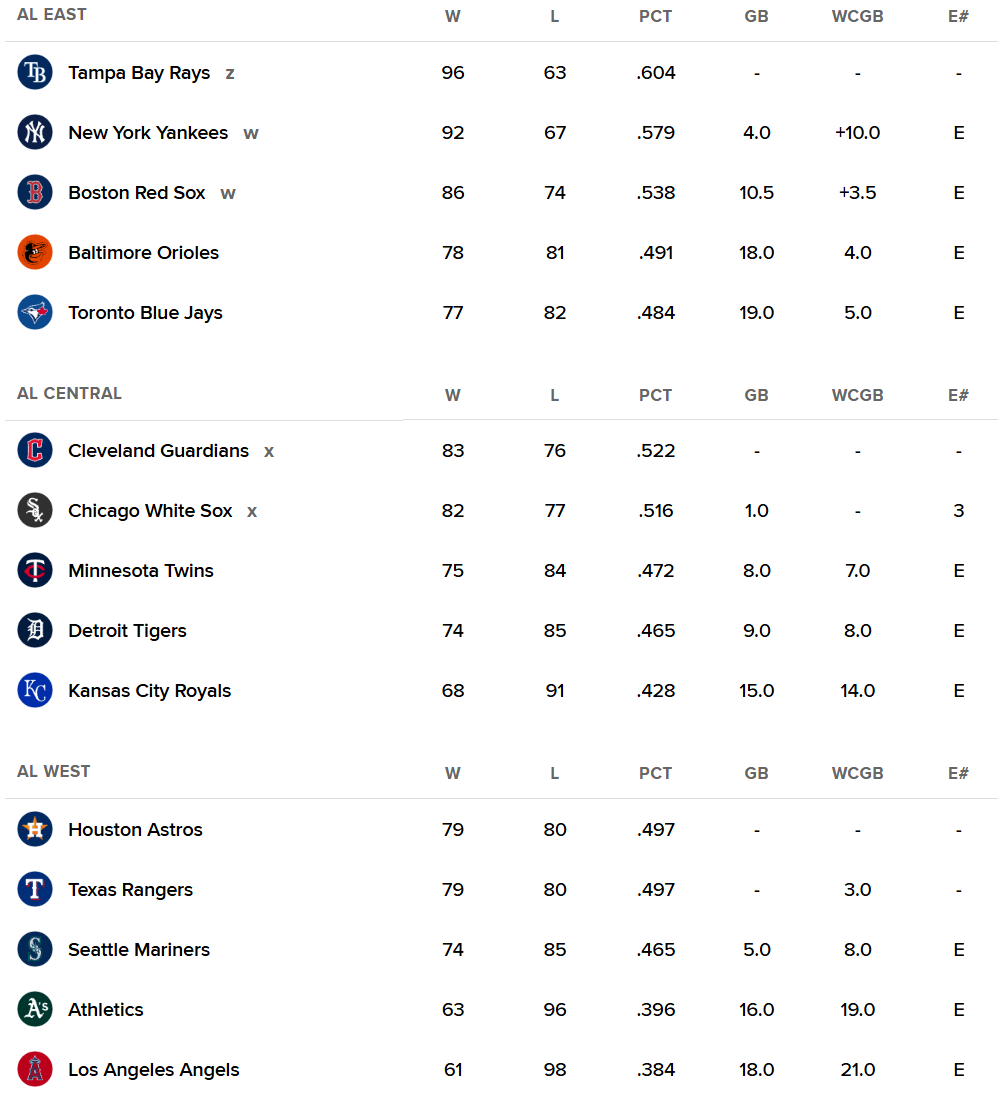
ALDS: No. 2 Cleveland Guardians vs. No. 6 Chicago White Sox
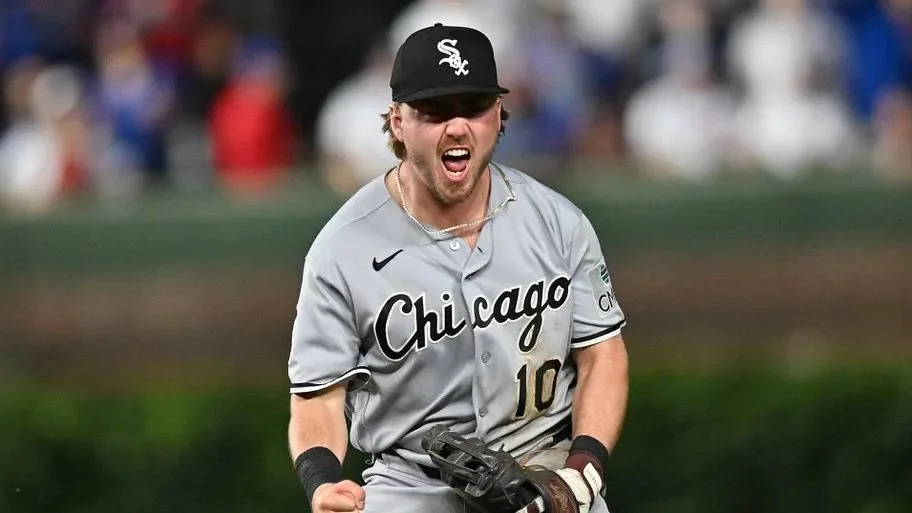
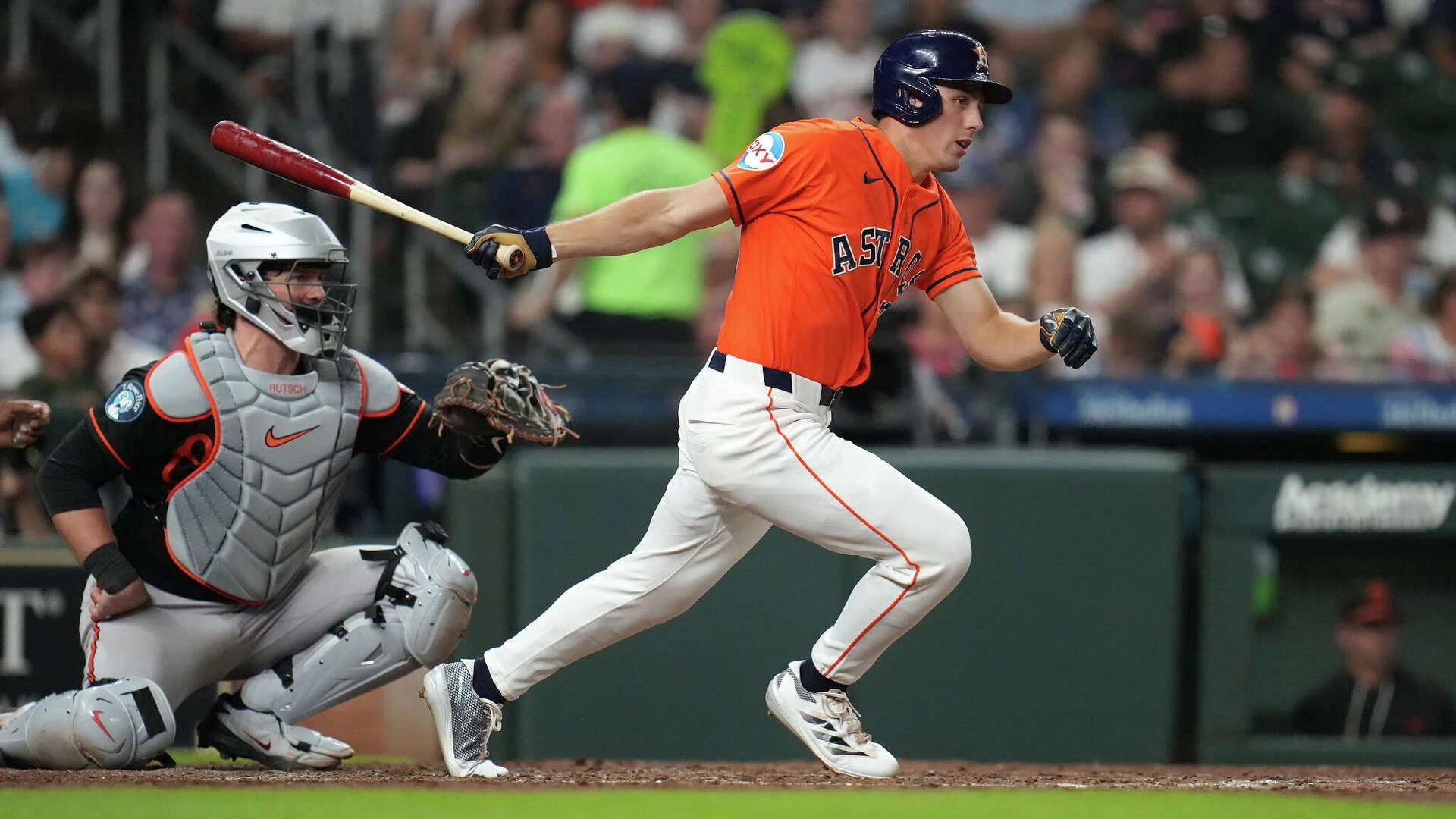
Chase Meidroth (photo credit: Patrick Gorski).
The Chicago White Sox are the feel-good story of these playoffs and I can’t imagine that changing, even if they eventually come up short. How can you not root for a franchise that had lost 100 games three years in a row, just to miraculously make the playoffs with a team, on paper, that doesn’t read much better than the previous three years?
Honestly, I do believe the construction of the White Sox lineup was created with a lot of faith and hope. The development of Chase Meidroth and Colson Montgomery has been an exercise in that, hoping that the raw tools each possesses would translate to production. Gambling where 29 other teams hesitated in signing Munetaka Murakami. Partaking in a three team trade with the Dodgers and Cardinals where they may have actually won, landing their future All-Star, starting third baseman in Miguel Vargas while virtually trading next to nothing. Maybe miracle isn’t the right word. Perhaps serendipity might be more apt.
Meidroth was touted for having plus bat-to-ball control as a prospect and in his second full season, he’s been streaky offensively but really turned it on in the second half, especially since the beginning of September. With an OPS hovering around .900 since September 1st and a hero in game two of the Wild Card series, Meidroth has shown he can anchor an offense full of sluggers by making consistent contact rather than swinging for the fences. Montgomery is definitely the sexier of the two. He has the stats that pop off the page a bit more. Really, Chicago’s 3 Ms, Murakami, Montgomery and…Miguel are collectively the meat of this lineup. And while they each have their flaws, mainly in the swing and miss department, the power this trio displays cannot be overlooked. If they continue to feed off of each other’s energy, I’m curious to see how far they can take this team.
For all I’ve gushed over regarding the White Sox offense, I am not nearly as favorable towards the pitching staff. All season long, two truths have been clear: 1) The starting pitching has been atrocious and one of the worst in all of baseball. 2) The bullpen has been a bright spot but almost too bright and heavily leaned on.
Starters have the fifth highest ERA in all of the Major Leagues while pitching the fewest innings. They have trouble keeping runners off base, giving up the long ball and, outside of Sean Burke, most of them aren’t missing a ton of bats. The bullpen doesn’t face the same issues, they’re better about not walking batters and average at keeping the ball in the yard. Sean Newcomb and Grant Taylor have created an effective enough duo at the back end of games. The argument can be made that they’re overachieving with an Expected ERA of 4.13 while their actual ERA sat at 3.70 for the season. But that’s not what worries me. Having a bullpen that has pitched the most innings a bullpen has ever pitched hasn’t historically gone well for said team. That worries me. The runners-up in this category are the 2012 Colorado Rockies and the 2003 Texas Rangers. These teams didn’t have a winning record, let alone a spot in the playoffs.
The White Sox are playing with fire. They’ll continue to sap the bullpen of their energy but eventually, Davis Martin, Anthony Kay and Erick Fedde will all be handed the ball and they will live and die by those performances.
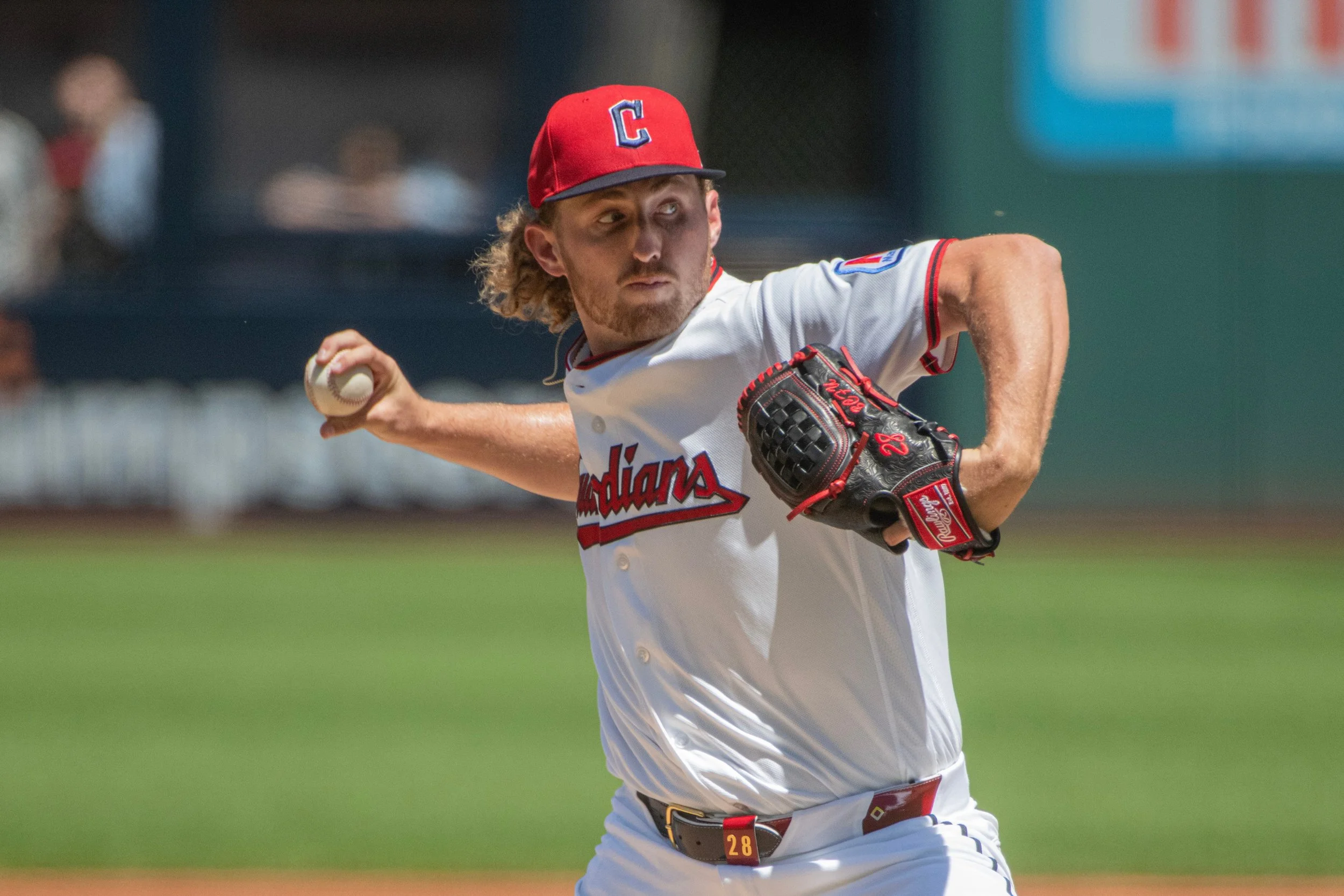
The Cleveland Guardians may be facing the inverse scenario. They have a pitching staff that is healthy and deep, consistently good all the way through. An overall ERA in the top 10 in baseball, a bevy of pitchers with swing and miss stuff that keep batters off base and away from the scoreboard. A starting trio in, sure to be AL Cy Young award finalist, Parker Messick, the AL leader in strikeouts, Gavin Williams, and neutralizing southpaw, Joey Cantillo. If firing on all cylinders, it’s a trio they could ride into the World Series. The weapons don’t stop there.
Cade Smith is as elite a closer there is in baseball. 13 strikeouts per nine innings, an ERA right below 2.00, giving up only five home runs over his 74 innings pitched. He’s got a brigade behind him with Erik Sabrowski (who’s got more strikeouts per nine than Cade), Hunter Gaddis and Tim Herrin. Finding a weak spot in the entire pitching staff is difficult. The weak spot is really when the Guardians are at the plate.
No matter how you slice it, the Guardians offense is not what got them here. A lineup that struggles to get on base and worse, struggles to drive in runs. It’s a team with very little pop that didn’t get some of the expected muscle from their juggernaut, Jose Ramirez. He played in 125 games this season, dealing with a hamate bone injury that required midseason surgery, but was ineffective in the games he did play. Steven Kwan stills gets on base at a great clip, .382 on the season, but with no real threats behind him, he’s often a sitting duck on the basepaths. Rookies Chase DeLauter and Travis Bazzana had serviceable years but shouldn’t be expected to be main contributors on a playoff team. If there’s a bright spot, it’s the month of September where the Guardians were able to crack the top ten in runs scored and third in home runs. How they respond to the extra six days of rest since their last game may dictate how this series goes.
Despite the offensive woes and the White Sox going 7-6 against the Guardians in the regular season, I’m picking the Guardians in four. It’s been a fairytale ride for the White Sox and they should feel good about trouncing the Astros out of the playoffs. But this team is not the Astros, even if the regular season records aren’t too far apart, and the roster constructions couldn’t be more different. I don’t believe the White Sox will have enough youthful energy to overcome that stellar Guardians pitching staff.
NLDS: No. 2 Los Angeles Dodgers vs. No. 3 Atlanta Braves
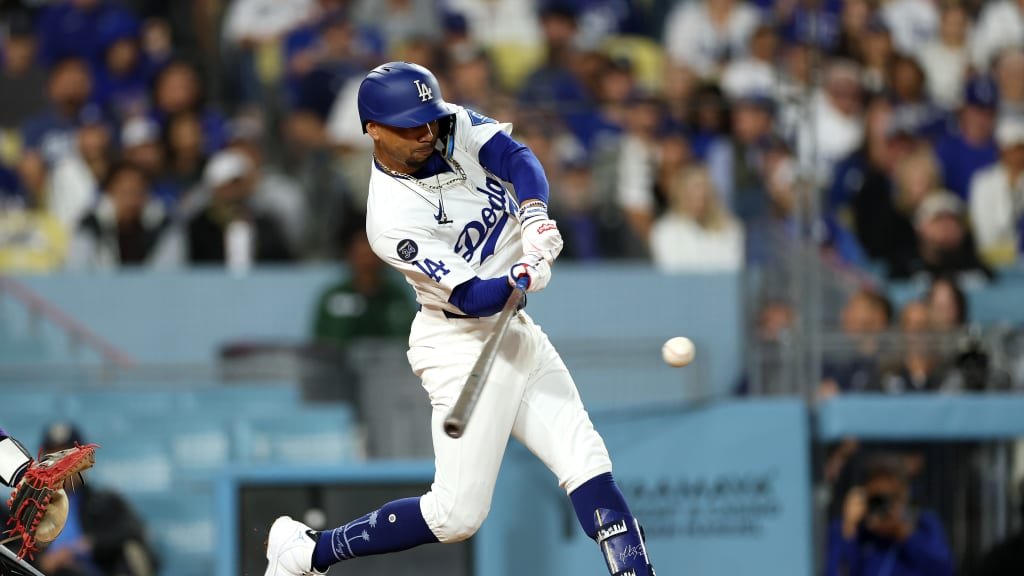
Mookie Betts (photo credit: MLB).
While the White Sox have the feel-good story of this postseason, the Dodgers have the most important one. Can they three-peat? It hasn’t been done since the 1998-2000 Yankees and even just repeating world champions has proven to be difficult but the three-peat would further cement just how dominant this dynasty has been.
It’s rare to see stats go against the Dodgers but I’ve got two topical ones. All time, the Dodgers and Braves have played 24 games against each other in the playoffs. They’ve split them right down the middle, 12 wins each. The last time they met in the 2021 NLCS it was the Braves getting the better of the Dodgers and going on to win the World Series that year. While I may not see that outcome exactly here, I believe the Dodgers will be in for a fight.
Then again, when are the Dodgers not in a fight. Year in and year out of late, teams have been vying for the opportunity to take down the Dodgers, just to have their hopes dashed by otherworldly pitching performances and clutch hitting. At this point, it’s not too dissimilar to watching a Floyd Mayweather fight in the mid to late 2000s. Are we all just tuning in to see if they’re going to lose, actively rooting for their demise?
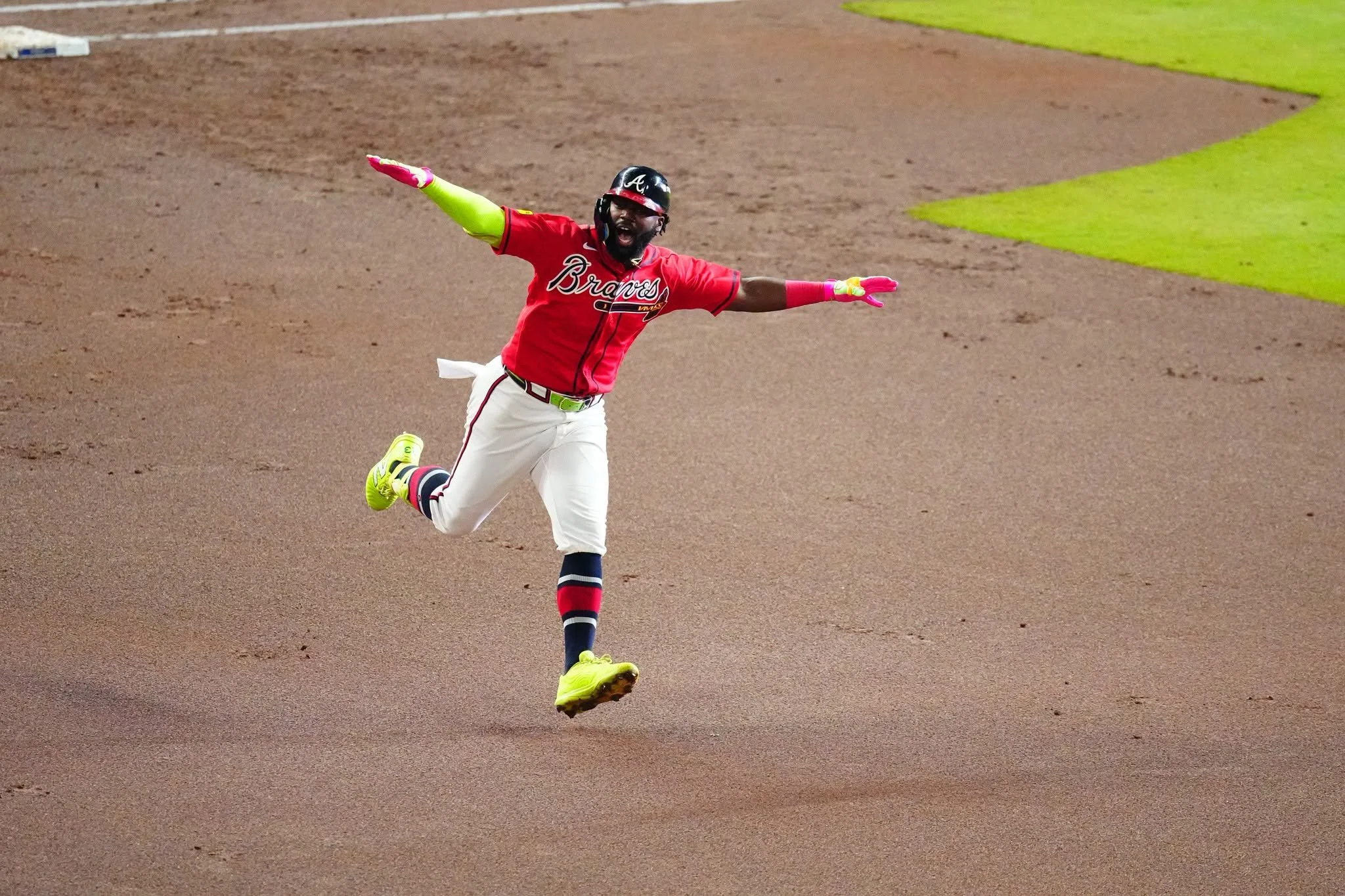
In reality, there aren’t a ton of holes in the Dodgers game. Offensively, they continue to rank in the top five to ten in the major categories. Shohei Ohtani continues to lead the way in home runs for the team but Andy Pages has emerged as their top productive bat, leading in RBIs. An embarrassment of riches to have a compendium of huge contracts but still have your best bat this year be a homegrown talent. Max Muncy and Freddie Freeman continue to be the veteran stalwarts of this lineup, allowing for Kyle Tucker to crack under the bright lights and team go unscathed. Mookie Betts has bounced back with a return-to-form September that has him set up well for more postseason heroics.
The rotation thrown at Atlanta will be Yoshinobu Yamamoto, Tarik Skubal, Blake Snell and Tyler Glasnow. If any of them should falter, the Dodgers top tier bullpen will be the next hurdle to clear and while the talent, stats and the lack of Blake Treinen and Edwin Diaz will tell you the bullpen isn’t as good as the starting core, it is by no means a bad bullpen. Alex Vesia and Evan Phillips had untouchable Septembers, each with the ability to strikeout batters in high leverage situations. Justin Wrobleski, Tanner Scott and Roki Sasaki fill out the rest of the bullpen and may not be nearly as effective as Vesia or Phillips but can still be counted on for quality innings.
With home field advantage, the Dodgers have only thrived at Dodger Stadium this year with the fourth best home record in baseball. But that doesn’t even matter. The Dodgers had the best road record in baseball this season.
So all of that said, what real hope do the Atlanta Braves have to bypass the Dodgers and find themselves in the NLCS?
Yes, I did say the Dodgers have the fourth best home record this year. Right in front of them, you’ll find the Braves with a slightly better record. Head-to-head, the Braves have won the last five regular season games against the Dodgers. They found ways to get to many of the pitching names we talked about above. Tanner Scott took two of those losses, as did Wrobleski. The more intriguing stat? Back on August 27th, Chris Sale outdueled Yamamoto in a 1-0 win. Sale went the distance, striking out 11, allowing just five hits. Yamamoto wasn’t bad either, six and a third innings, eight strikeouts but one single blemish courtesy of a Drake Baldwin home run in the first inning made the difference.
It may not sound like much but spun with the right voices in the Braves locker room and they might be able to rally around those stats. Sale is likely to pitch in two of the five games in the series and if he gets his way, it might be more. He won’t pitch in game one, given the questionable decision to give him the ball to end game three of the Wild Card series, but If Sale can take down Yamamoto, it stands to reason he can outpitch anyone in that rotation.
The Braves ace won’t be able to do it alone, much as he may try. Tyler Mahle, currently day to day with an abdominal injury suffered in game two of the Wild Card series, will need to show up and be the 1B in this rotation. His 2.54 ERA in the second half on top of his ace-like performance in the aforementioned game two of the Wild Card series will be vital to snowballing this into more success. Grant Holmes will also have to continue his impressive second half if the Braves are to have a shot to contend with the Dodgers. He also got the ball in game three, coming in for two innings and being credited with the win.
Bullpen management will prove to be key here for Walt Weiss and company. It may be the one edge the Braves have over the Dodgers. The bridge from Sale, Mahle and Holmes to Dodd, Fuentes, Suarez and Iglesias will be critical in winning what I imagine will be close games throughout. Many of the bullpen arms had great second halves while not putting the innings to tax their arms down the stretch; Fuentes, Iglesias, Dodd and Brent Suter all posted ERAs under 3.00 with a minimum of 20 innings. Game one for the Braves will be a bullpen game, perhaps in hopes of saving the bullets in Sale’s arm for games two and a potential game five. It worked in game three of the Wild Card series, holding the Phillies to two runs but it doesn’t sit right in my soul to have bullpen games in the postseason.
The Braves lineup has also performed well in the second half and so far in this postseason. Michael Harris II was their top slugger in the second half, doing so at a .494 rate but there were many contributors to the Braves 39-28 second half. “Money Mike” was joined by Matt Olson, Ronald Acuna Jr., Austin Riley and Drake Baldwin, who all had 10+ home runs and 30+ RBIs from July 17th on. A consistent output they’ve mostly continued into the postseason with all, including Ozzie Albies, but Baldwin having 3 RBIs each in the Wild Card series.
Having six games in between the final game of the regular season and their first game of this postseason, I can see this affecting the Dodgers both positively and negatively. They have one of the older rosters in baseball that has seen its fair share of injuries this season. And while the Braves also sport a similarly older roster, they’ve been playing competitive baseball this past week. They won’t lose the rhythm, timing and momentum they accrued in the Wild Card series whereas the Dodgers will need to start from zero to find all of that. It’s not unfamiliar territory, they’ve won the NL West five years running now and have had that buffer time in between games each year. But that’s the thing about time and aging. At some point, you just don’t rise to the occasion when you have to do it year after year. The eyes of the baseball world will be watching to see if this is the year they don’t rise to it.
Ultimately, I’m not ready to declare that the Dodgers are going down in a series. It’s entirely possible, the Braves have the weapons to make it happen. A cold game one from the Dodgers, followed by a likely Chris Sale start in game two could have the Dodgers on the ropes before they’d hop on a plane to Atlanta. That’s the best case scenario for the Braves but maybe not the likeliest. I think this will be a fight with close games all throughout but I’ve got the Dodgers surviving the Braves in five.
ALDS: No. 1 Tampa Bay Rays vs. No. 4 New York Yankees
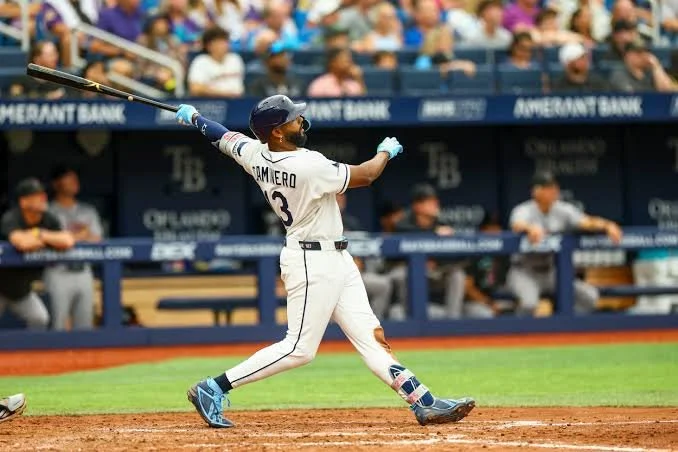
Junior Caminero (photo credit: Reuters).
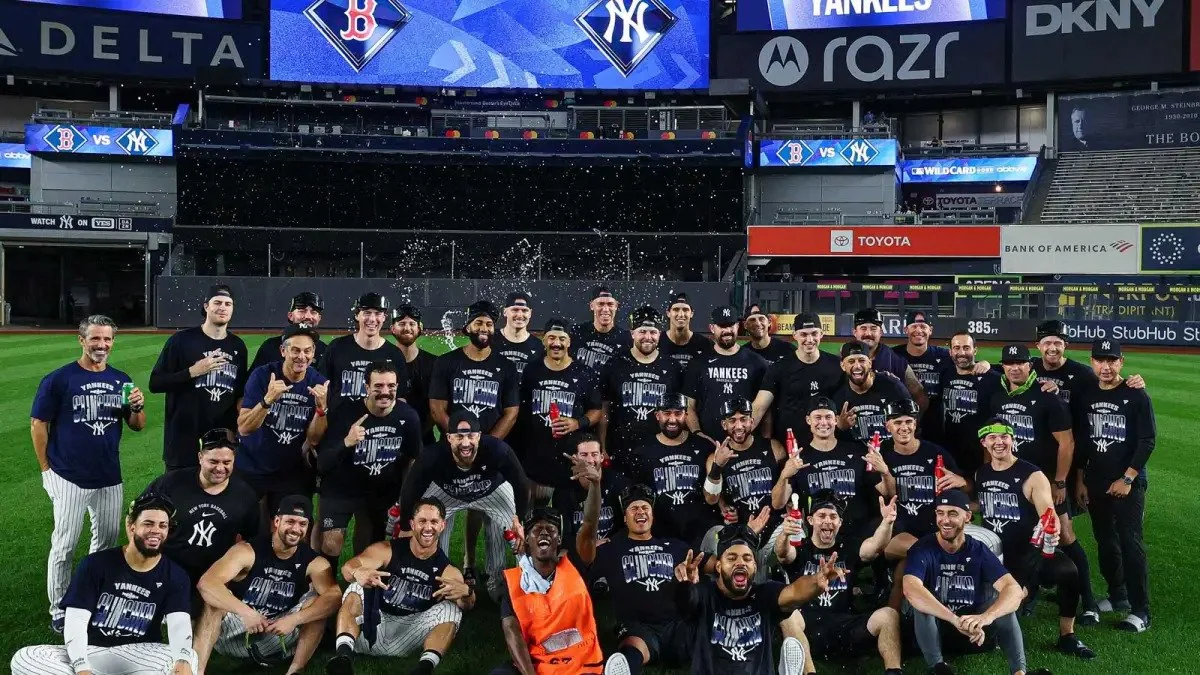
Let’s get this out of the way. Aaron Judge is not on the ALDS roster for the Yankees. They will need to continue this postseason without their franchise player.
It hasn’t been a problem in the two games they’ve played this postseason but maybe it’s better to say it hasn’t been a problem yet. Scoring nine runs in each of their Wild Card series games against a Boston team that, at the very least, had good starting pitching, without Judge, is impressive. However, they did that at home where that short right field porch and their lefty heavy lineup mashed and they’ll now have to contend with the Rays and their best home record in baseball at The Trop. As good as the Yankees have been on the road, somehow better than at Yankee Stadium, they went 2-5 in Tampa this season.
The offense played a pivotal part in getting the Yankees to the ALDS but pitching performances from Cam Schlittler and Max Fried were the most important keys and the rest of the rotation may dictate how this series goes. You can’t put Schlittler on the mound every day, otherwise the Yankees would be World Series favorites. Gerrit Cole and Carlos Rodon will be getting the ball in this series and that doesn’t exactly evoke confidence. They could turn to Ryan Weathers, whose been very good in the second half of the year but It’s odd because both Cole and Rodon also had good to great second halves. With the exception of a September where Cole got batted around to a 5.08 ERA. For Rodon, it’s his playoff history that comes abruptly into the spotlight. In seven postseason starts, he has a 7.53 ERA. Remove the two 2024 ALCS starts he made and he’s been even worse.
Given that giant, Carlos Rodon sized elephant in the room, the Yankees may have to tear at my soul again and perhaps think about a bullpen game. Paul Blackburn has been a top tier reliever, especially in the second half this year and can provide multiple innings as needed. In 36 second half innings, Blackburn has a sub 1.00 ERA, leaving 95% of baserunners he either inherits or obtains, on base. Brent Headrick and Ryan Yarbrough have been effective pieces out of the bullpen as well but neither keep the ball on the ground as often as they’d like. David Bednar rounds out the bullpen as the closer, who quietly had another good season, converting 35 of 39 save chances. His velocity is a touch down, leading to his strikeouts per nine not being as impressive as it was the year before but Bednar is still a top-10 closer.
The lineup without Judge, on paper, does read thin. Ben Rice has been the brightest spot for the pinstripes, leading the way in home runs and RBIs for the team this year. He continued his breakout in the Wild Card series, slamming the door on Boston with two home runs and six RBIs. It’s the pieces behind Rice that need to be more consistent, if the Yankees are going to contend. Fellow lefthanded slugger, Spencer Jones, had a nice second half to the tune of a .763 OPS but continues to strike out at an alarming rate. Trade deadline acquisitions Luis Garcia Jr. and Heliot Ramos haven’t exactly lengthened this lineup as originally though, especially the latter, Garcia Jr. has at least provided some pop and didn’t bat under .200 in the second half. Austin Wells has regressed tremendously at the plate and Jazz Chisholm Jr. was benched for game one of the Wild Card series in favor of Anthony Volpe. The Bronx Bombers may not have the ammunition to keep going.
The Rays on the other hand find themselves in interesting territory. They are far and away the best team in the AL and their toughest test on the road to a World Series is staring them in the face, in their first round. Get past the Yankees and a chance at a championship somehow gets easier, if only for just one round.
Offensively, it’s no secret the Rays can beat their opponents in a plethora of ways. AL MVP candidate and firestarter, Junior Caminero, slugged his way to 42 home runs and 101 RBIs. Yandy Diaz and Jonathan Aranda both provided 20+ home run and 85+ RBI production while getting on base a touch under 36% of the time. Chandler Simpson hit .306, didn’t notch a single home run but was a menace on the basepaths with 46 stolen bases, all while playing a fantastic left field. The Rays sole trade deadline acquisition, catcher Liam Hicks, accrued a .819 OPS in 41 games, providing another solid bat in the mix. When everything is working in harmony, the Rays have the ability to swarm opposing pitching staffs. They may not slug their way through, like the Yankees seemingly depend on for their offense, but the Rays make contact and don’t strikeout often. In fact, the Rays struck out the least in baseball this year. It’s fundamental baseball at its finest, a lost art to have a team so contact heavy while displaying top tier speed and defense.
We haven’t even covered what might be the Rays biggest weapon; Their pitching staff. It’s a trend, having three or more plus arms out of the bullpen seem to get you into the playoffs and it’s no different here. Kevin Kelly, Cam Booser and Bryan Baker make up the 7th-8th-9th inning combo. A trio that saved the most games collectively in baseball, including the individual save leader in Baker. All three produced ERAs under 2.50 in the second half and Kelly’s groundball rate ranks in the top five for relievers. Outside of Baker, they don’t walk a ton of batters and mitigate hard contact and, now adding Baker back in, do a decent job of leaving runners on base. Baker has been doing so at an elite level in the second half at 91%.
The starters paint a similar picture, though there may be some questions here. Drew Rasmussen leads the way and likely induces the least amount of issues. In 12 second half starts, his ERA was 1.86, struck out more than one hitter an inning, kept runners off base with a WHIP under one and left 80% of runners on base. Behind him, the Rays' other big trade deadline acquisition, Freddy Peralta did really well, especially in September, matching Rasmussen’s output and giving the Rays a potential series changing weapon in the postseason. Nick Martinez fell off in the second half but still provides a formidable number three in the rotation alongside the Griffin Jax starter experiment, these two will likely need more help from the bullpen to get them through.
What may hold the Rays back is the lack of playoff experience their rotation has outside of Peralta, which isn’t a positive for him. When the lights are the brightest and it is time to take advantage of an incredibly weak league, can the Rays do what they’ve done for most of the year and outclass their opponents.
The animosity between the division rivals will be there. The Rays held the Yankees back from winning a division title and now stand in the way of the Yankees yearly “World Series or bust” goal. For my money, I think the Rays pull it off. They’ve been too good this season to falter here. A lineup full of table setters and clutch performers, a rotation, at least in part, built for October baseball and a bullpen that feels like a sure thing when handed the ball. The Yankees just have too many questions on both sides of the ball where the answers won’t provide success. I’m taking the Rays in four.
NLDS: No. 1 Milwaukee Brewers vs. No. 4 San Diego Padres
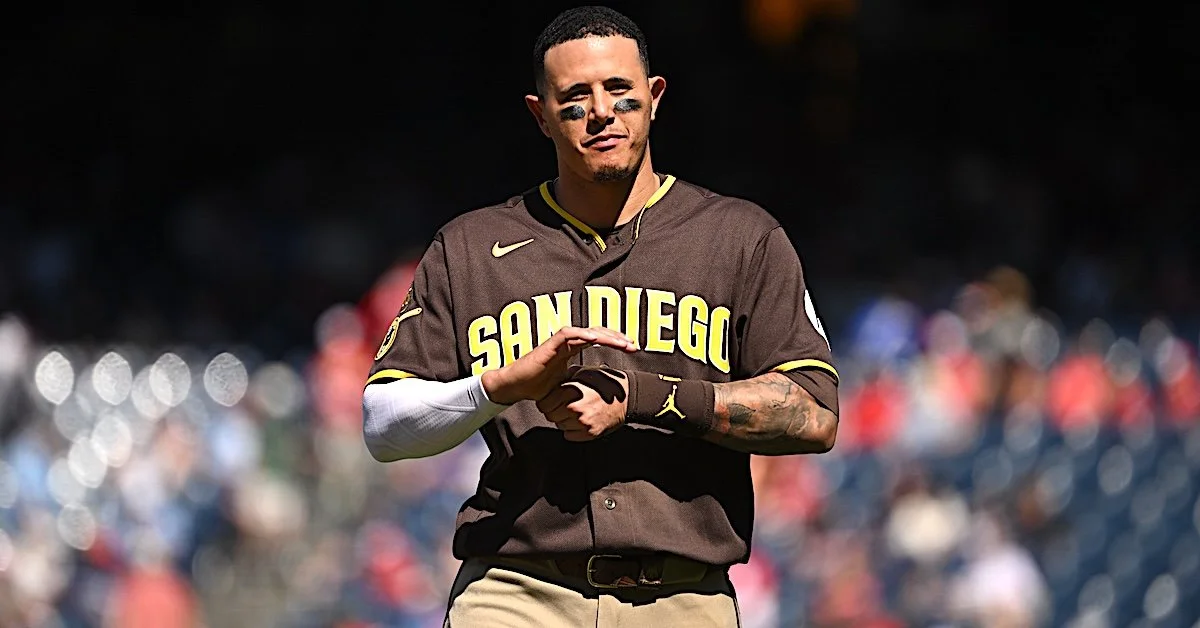
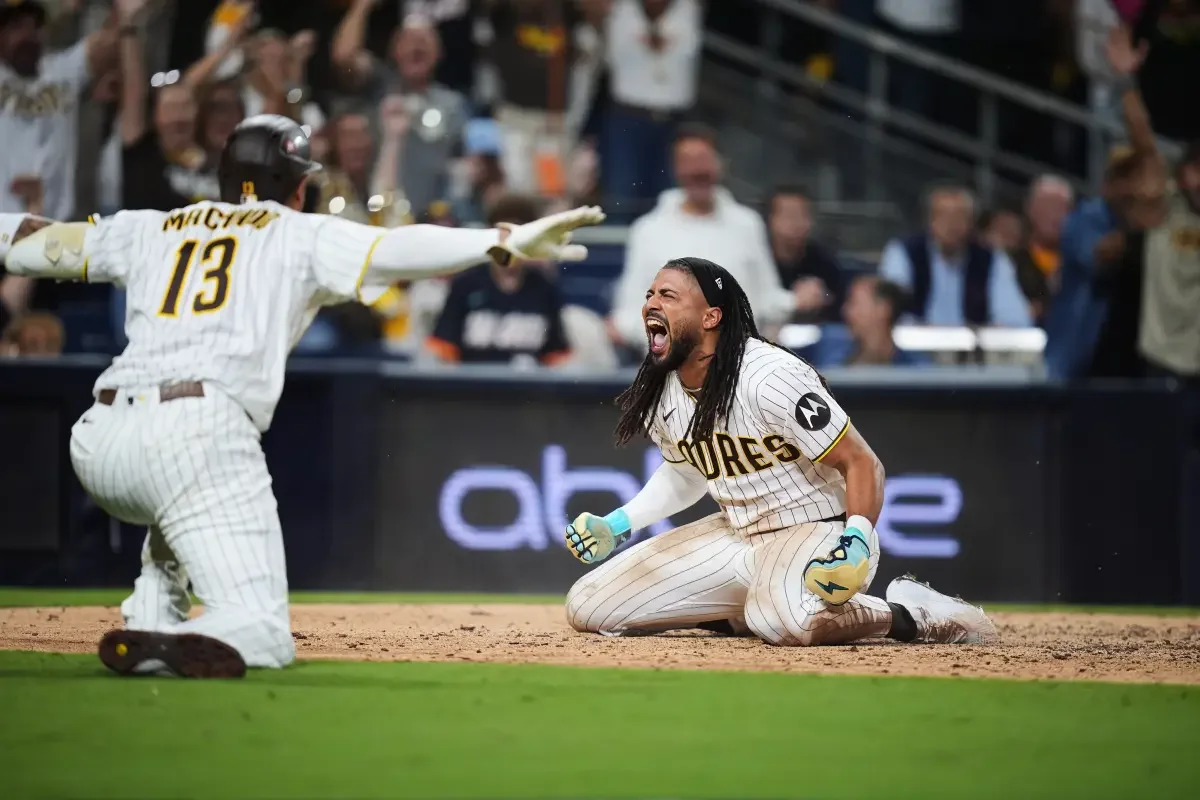
Manny Machado (photo credit: Rafael Suanes).
Another matchup featuring the number one team in the league taking on a team with momentum and some questions. The Brewers have gone about their business very similarly to the Rays, excelling at the fundamentals of the game and shying away from the modern slugfest or strikeout scenarios most other teams face. The Padres on the other hand are the hottest team in baseball, dating back to the beginning of September, they’ve won 22 of their last 28 games. Something’s got to give.
The Padres didn’t always look like a playoff team. They struggled early in the year offensively with their stars, Fernando Tatis Jr. and Manny Machado, getting off to very cold starts. Xander Boegarts continued his year to year slide and Jackson Merrill had an OPS just above .600 in the first half. Something clicked in the second half and while not every one of the names above found something, most of them did and it started with Tatis Jr.
It was public knowledge that Tatis Jr. was struggling at the plate. His first home run didn’t come until the very end of May and he scrapped five total in the first half. Three months of struggling and many adjustments later, Tatis Jr. was finding his swing again. As Boegarts put it in a post game interview earlier this week, “As he goes, we go.” Posting 20 home runs in the second half, his production felt infectious. Machado wasn’t far behind with 19 home runs, Merrill with 16. Tatis led the way with a .995 OPS, Merrill and yes, even Ty France, posted over .900 OPS’ in the second half. PCA will be the NL MVP this year but I’m not sure there’s a player more valuable to his team than Fernando Tatis Jr. is to the Padres and their success.
Where the Padres don’t look as good is in their starting pitching. Sure, Michael King was almost unhittable in his Wild Card game one start against the Cubs but, much like the argument I made for the Yankees and Cam Schlittler, King cannot pitch every game. Casey Mize would’ve been a good number two option behind King, if not for his ankle injury that will keep him out of the NLDS, maybe longer. Nick Pivetta, starter of game two in the Wild Card series, was effective enough to keep the Padres in it and that might be where he caps out. Randy Vasquez had a tremendous second half, pitching to an ERA under 2.00 in seven starts and will certainly be an option for game two or three. My only concern is no playoff experience, so it’ll be hard to gauge what we’re getting. Playoff games for every team in our current era of baseball are very bullpen driven, so maybe these problems won’t be enough to hold the Padres back.
Because once again, successful playoff teams are built on bullpens that can take the brunt of innings and come out on top. The Padres have that too. They might actually have the best bullpen of anyone in the postseason. Trios are nice but they’ve got a quartet worth fearing in Bradgley Rodriguez, Yuki Matsui, Adrian Morejon and, the grim reaper, Mason Miller. All four had ERAs under 2.70 in the second half and all were striking well over a batter per inning. In Miller’s case, he’s closer to striking out two per inning. How can any team even think they’re going to score off of that? In 31 second half innings, Matsui left a staggering 99.2% of runners on base. So, one person scored in the second half on Matsui. One single runner. The starters become less of a problem when you can basically start calling on this squad around the fifth inning.
The Brewers should be the favorites here. They have the best record in all of baseball, a pitching staff that is nothing short of electric and an offense that, again similar to the Rays, is built to swarm opposing pitching, not with power but with speed and contact. I’ll tell you, after watching the Padres this past week and writing the above, I’m not convinced.
The Brew Crew earned six days off between games for winning the division and having the best record in baseball. It’ll pay off initially in the form of a returning Joey Ortiz, missing the final two regular season games with knee and abdominal injuries. Before that, Ortiz was having a killer second half with a .911 OPS to show for it and playing elite defense at short. Jackson Chourio provided the power with 27 home runs, getting close to 100 RBIs and Jake Bauer got on base at a whopping .411 percentage and a walk rate of over 20%. As a team, they got on base more than any other team in baseball for the season. A patient team that makes contact and draws walks while also scoring the second most runs in baseball is a dangerous team.
Then there’s the pitching staff. The starters, Jacob Misiorowski, Logan Henderson, Kyle Harrison and Robert Gasser. All of the eyes and attention have been on The Miz and rightfully so, he’s the likely NL Cy Young award winner. Henderson has, a little more quietly perhaps, matched Misiorowski in the second half, posting a similar 2.19 ERA to Miz’s 2.12 ERA, and just striking out fewer batters. But besides them lies Harrison and Gasser, lefties with two different styles. Harrison, that edges closer towards being a flamethrower with a hook that baffles hitters and Gasser, who is really nothing like his contemporaries, featuring a devastating sweeper and a sinker known to produce outs. In what could be a do-or-die game three for the Brewers, either Harrison or Gasser may be called upon and with no playoff experience, we will see what they’re made of.
I’ve got to play this broken record one more time. The Brewers have a fantastic bullpen that, in this case, is built to take on a Padres team that can boast the same. Again, a quartet: DL Hall, Aaron Ashby, Abner Uribe and Trevor Megill make up a bullpen that was second best at not allowing runs to score and third best at leaving runners stranded in the second half. Outside of Megill, they’re all strikeout heavy pitchers, albeit against a Padres team that does a good job at not striking out too much. The Brewers too have the ability to shorten games for their elite starters.
For the Padres, it’ll be picking their poison. Yes, they took the season series against the Brewers, including a sweep in San Diego back towards the end of August. Yes, they have a ton of momentum going into this series and their MVP is locked in. It could be enough to take this series from the Brewers. It’s just difficult to see how such a well oiled machine like the Brewers could fall in their first round of the playoffs. However, I’m going to go with the underdog here. I’m a sucker for them and I cannot ignore just how good the Padres have been of late. We’ve seen in October that sometimes, just being excruciatingly hot can be enough to make a deep playoff run or more. Padres in five.
I’ll be back with the Weekly Report next week and will look forward to seeing just how offbase I might be on some of these!