
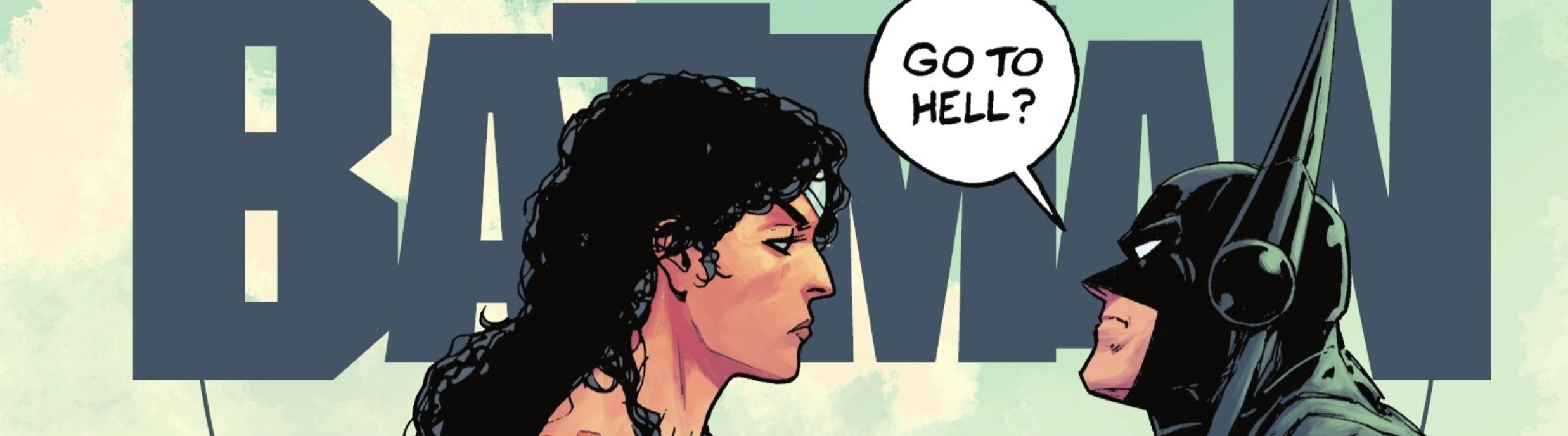
Absolute Batman #16
Author : Scott Snyder
Artist : Nick Dragotta
Colourist : Frank Martin
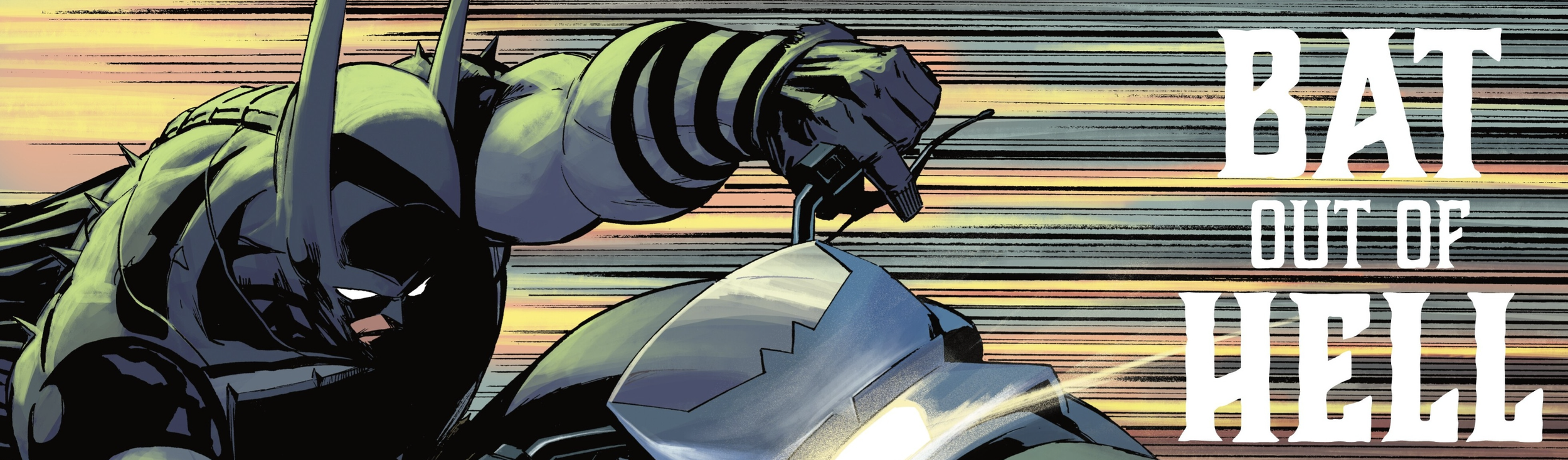
Batman Outta Hell : Issue #16 Summary
Batman, meet Wonder Woman. Diana, meet Bruce. For only the second time in the Absolute universe, we have a crossover between two of the biggest superhero names in the world. After Wonder Woman asked for the help of Batman in Absolute Wonder Woman #15, Bruce asks for the help of Diana in Absolute Batman #16.
Before Bruce was a ginormous "Bat" scaring the villains of Gotham City, he was a major part of a group of childhood friends. Since his friends have been grossly impacted by the experiments of Arm M, Bruce has requested the help of Diana to try and rectify this misdeed
Highway to Hell : Issue #16 Review
WARNING SPOILERS!
Forged In The Dark
After the epic Bane story arc and the highly anticipated Joker introduction into the Absolute universe, I was really looking forward to seeing where Snyder would take us. I wanted the start of a proper story arc again. That is exactly what Snyder has delivered in Absolute Batman #16. We are so used to seeing Batman go at everything alone, but Snyder is really doing his utmost to provide us with a dynamic representation of Absolute Batman and Bruce.
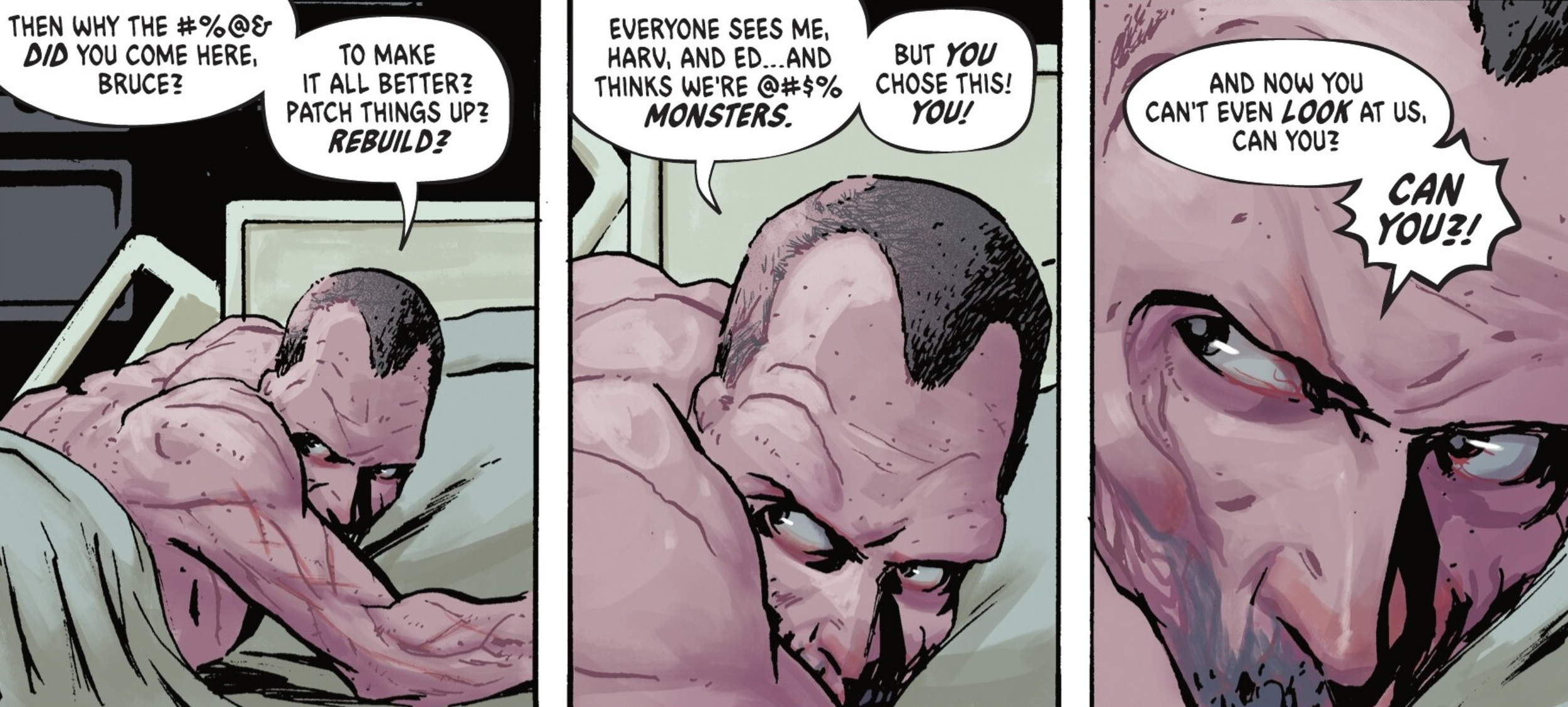
This new arc looks as if Snyder will be taking us on a journey with Batman to try and help the friends who were chewed up and spit out by the devious and dastardly Ark M. The writing of Snyder, mixed with the raw and larger-than-life art style of Nick Dragotta, really helps you, as the reader, feel empathy for Ozzy and Harvey. I like how Snyder is keeping the origin stories in the Absolute universe new and interesting. They started off as happy childhood friends of Bruce; however, through association, they found themselves abducted and gruesomely experimented on.
This has turned them bitter toward Bruce. As a reader, you cannot actually blame them, which is an interesting dynamic that Snyder creates for the reader.
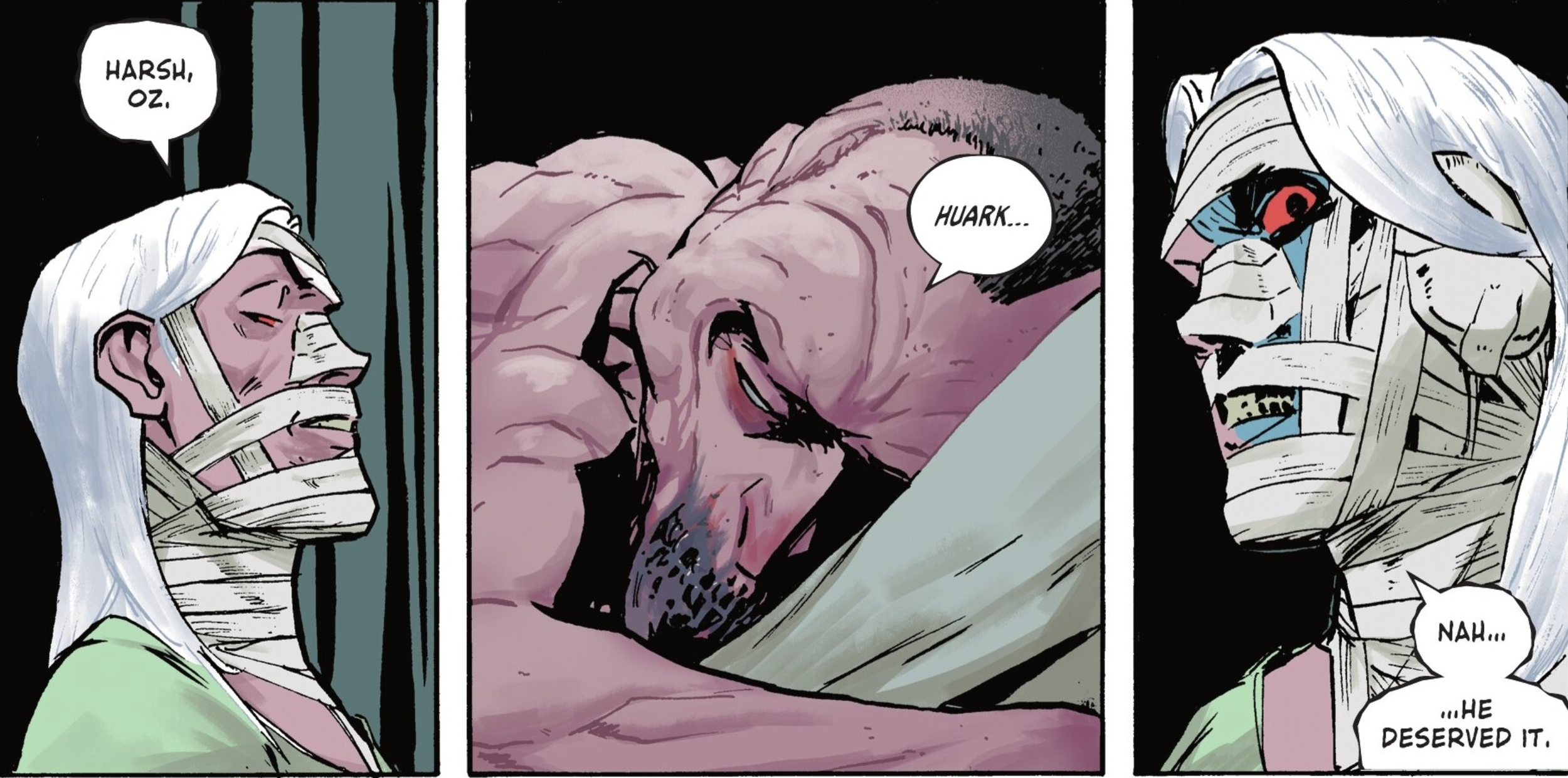
It also highlights one of the major tropes of our superheroes: those closest to them are the most vulnerable and in danger. Snyder shows more human emotions with his depiction of Bruce Wayne as well. He comes to visit his friends Oswald Cobblepot and Harvey Dent in the hospital, but he cannot look at them; this indicates Bruce has taken the blame upon himself.
However, his walking away from them foreshadows their eventual rivalry with him. This is a nice touch because it will serve as the origin for both of them becoming major villains within the world of Absolute Batman.
Animal Planet
The breakdown in the relationship between Bruce and his friends sets up the tone for the remainder of Absolute Batman #16—Bruce, through Batman, wants to redeem himself and help save his friends. I like the continuity that Snyder kept in this issue, bringing in Alfred—although a small part, it’s a major detail in this story, short and long term.
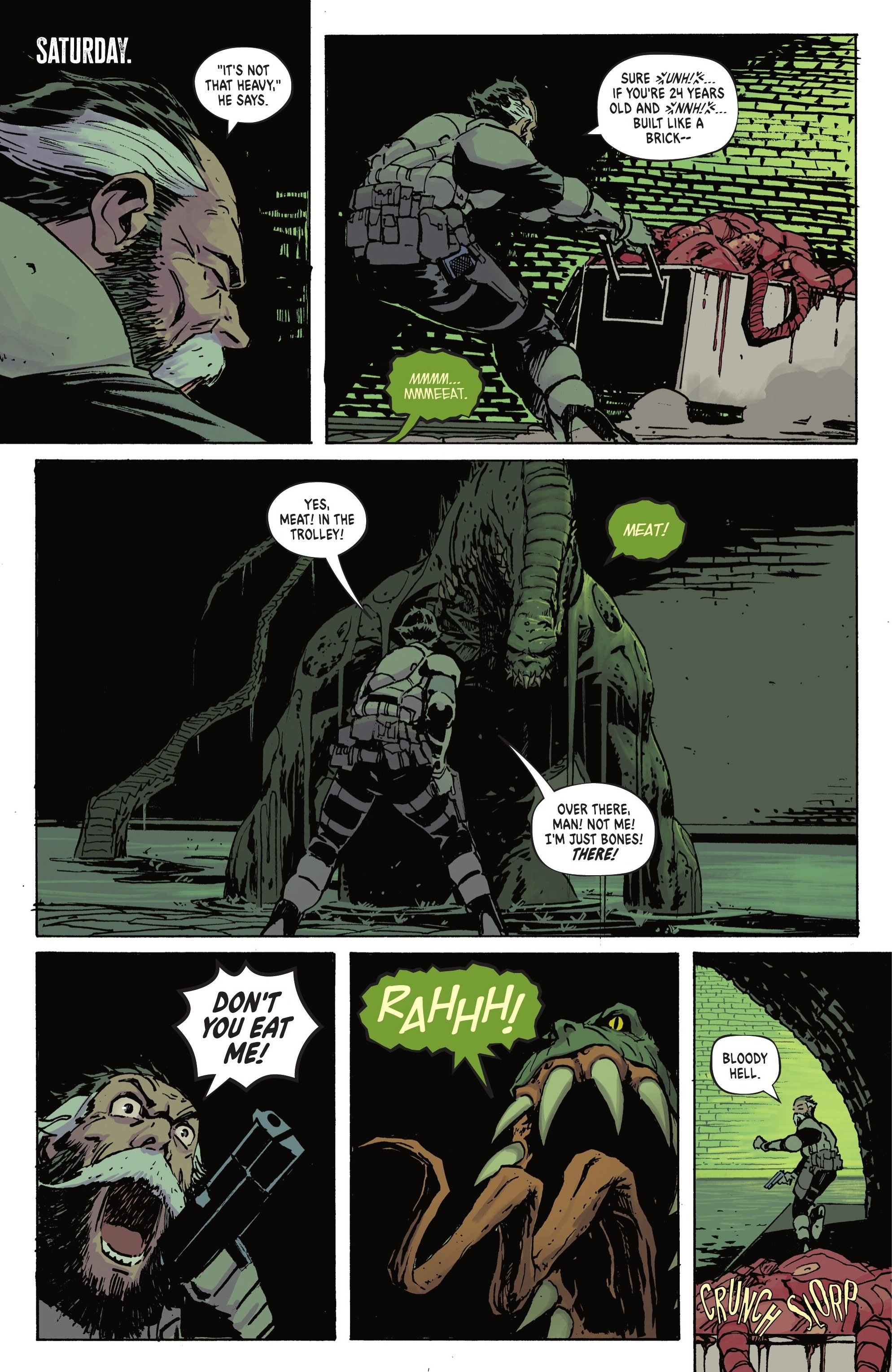
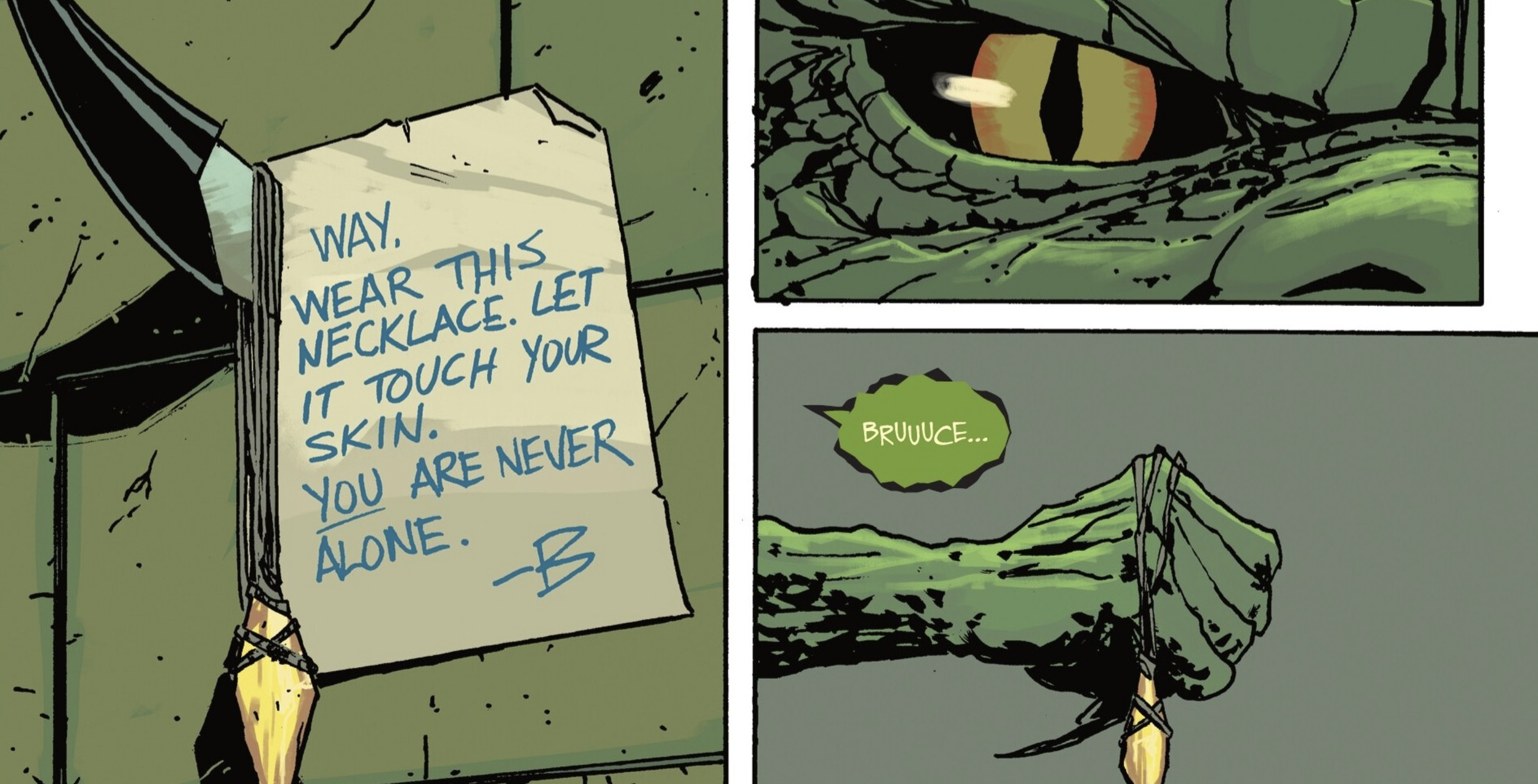
In the short term, Snyder reveals who Bruce intends to save first by introducing Waylon Jones, also known as Killer Croc, in Absolute Batman #16. In a rare humorous scene, Alfred Pennyworth is tasked with feeding this gigantic mutant crocodile. This sequence illustrates two important points. First, it shows that Bruce remembers the immense help that Croc provided him during the battle with Bane. Second, it highlights the strong bond and relationship that has already been forged between this version of Bruce and Alfred.
The most excellent part of Absolute Batman #16 is that Snyder takes us on a ride with Batman and Wonder Woman into hell. The plot for this issue is clean and direct. Bruce needs Diana to help him find a magical method to assist his friend in transforming back into a human from a crocodile.
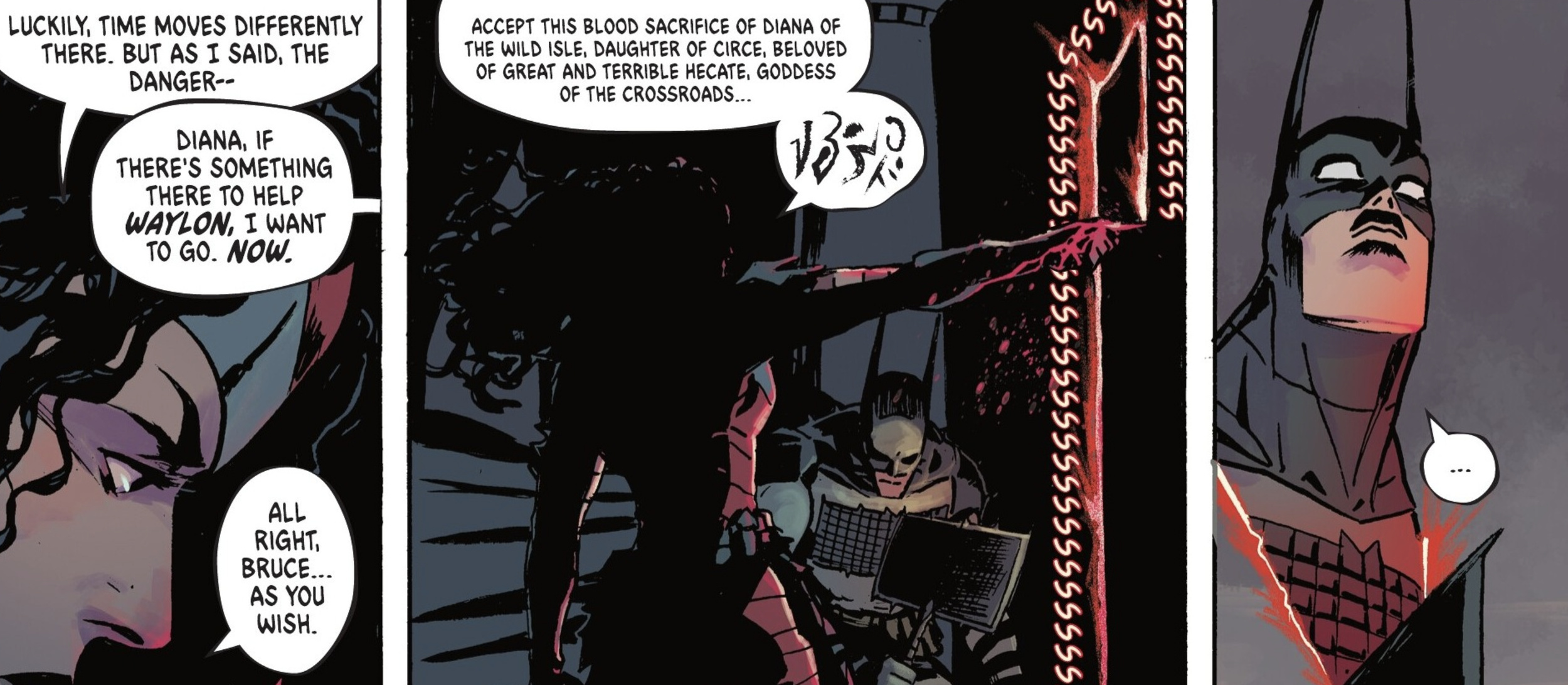
The Absolute Batman run has been spectacular: the story thus far, the battles, the gore, and the ruthless aggression. What I like about Absolute Batman #16 is that Snyder is helping me as a reader understand Bruce Wayne as well. We see how his mind works and his timid side as Bruce compared to the ferocious version of the character as Batman.
The way he turned away in disgust and left the mutilated friends at the hospital made me think about what I would have done. Is Bruce a bad guy for doing that? These are all very cool questions and emotions instigated by the great writing of Snyder.
Horsing Around
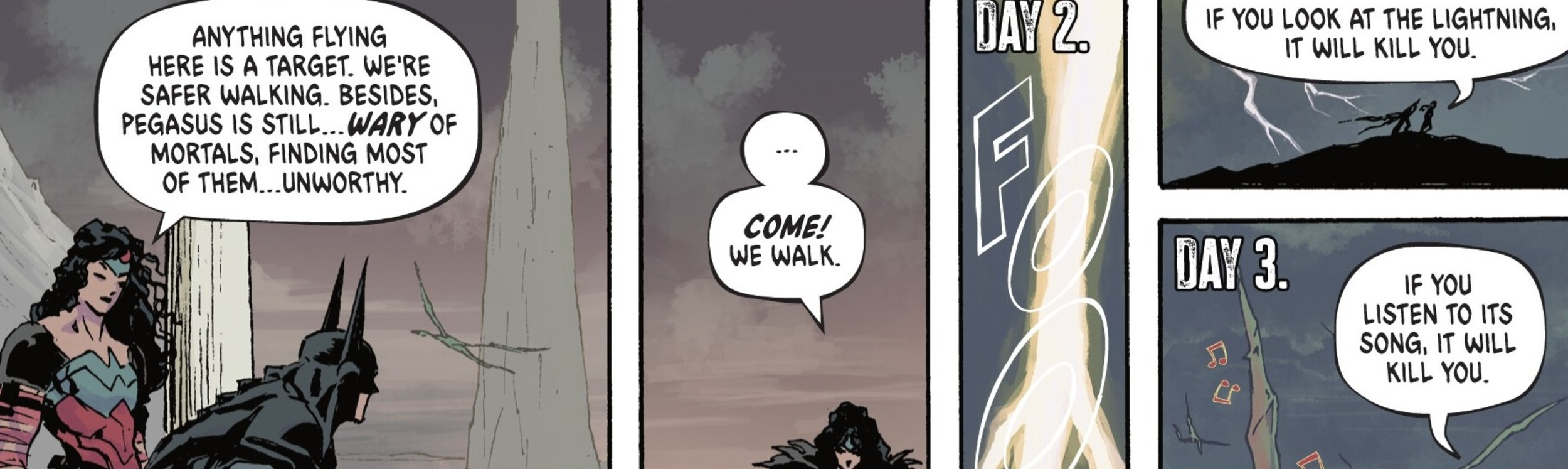
The main part of Absolute Batman #16 is the journey to the underworld to meet a centaur called Akrolis. As a fan of Greek mythology, it was excellent to see the journey in this "buddy cop" type of team-up. Bruce is full of questions, and the answers of Diana usually end with the warning that something will kill him.
There is also a dreamlike scene where the writing of Snyder is brilliant. It is a message that I took to heart and will implement daily. Bruce sees his father, Thomas Wayne, in a dream before the significant fight against Akrolis. Thomas Wayne gives Bruce tremendous advice that I felt Snyder was giving to me and all the other readers: every day is a commitment to making life better—whether it is your own life, or the lives of your family, your friends, and those you may help on the street or in a store. At the beginning of each day, it is your decision who you want to be.
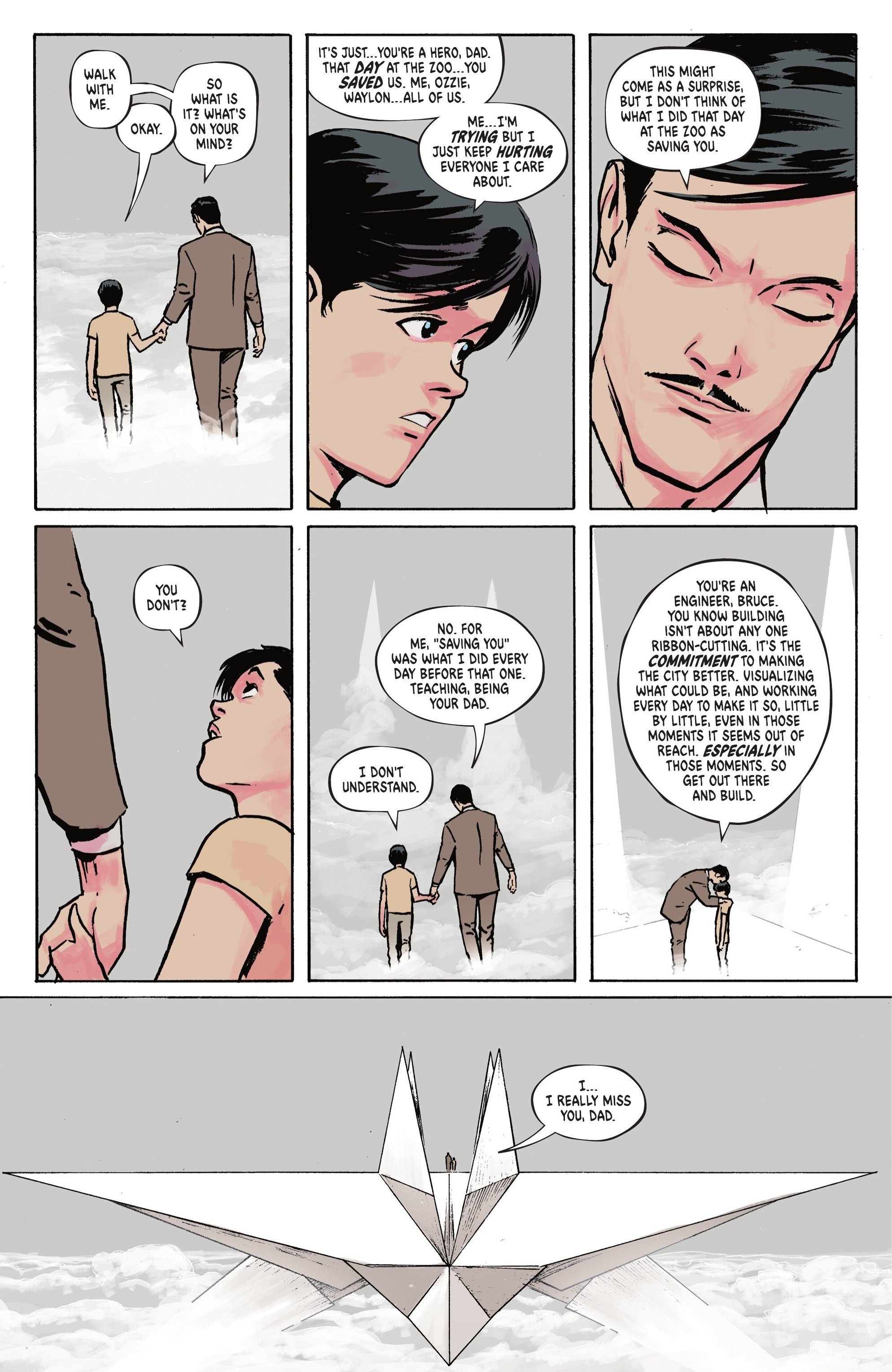
The scene immediately following this deeply emotional moment made me chuckle. We transition from a "heart-to-heart" between father and son—and perhaps between writer and reader—to a two-on-one fight featuring Wonder Woman and Batman versus Akrolis, a magical centaur from hell.
Although I jest, I believe this was purposefully written by Scott Snyder. The first thing Bruce does after waking up from his dream is to prepare to take on a centaur. I suspect many of us feel that way when we go to work or school; the challenges can feel as difficult as taking on a half-man, half-beast. However, if you take a second to think, and realize you are in control of what you do today, you can beat it.
“I got your Bat-Centaur right here”
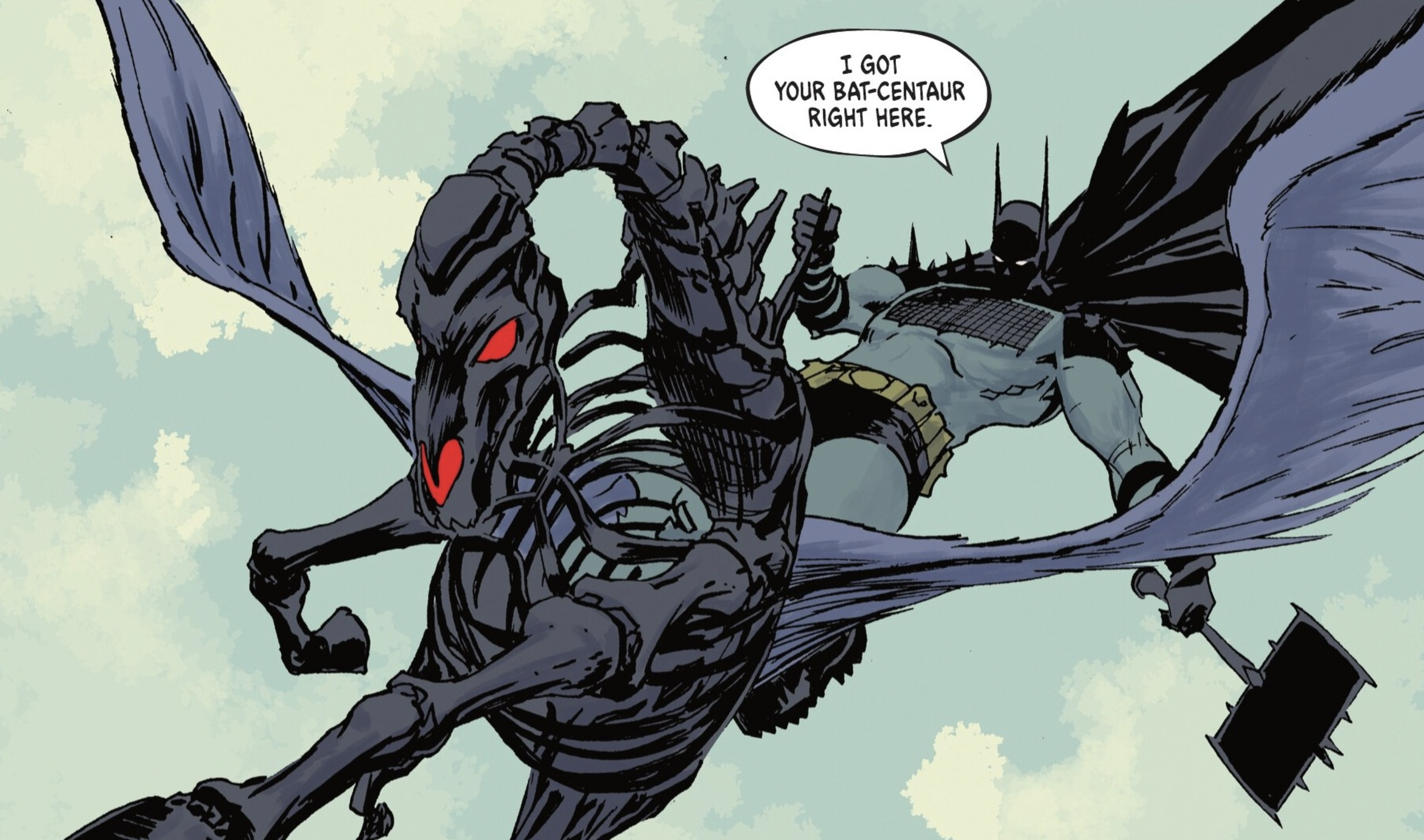
The finale of Absolute Batman #16 was fantastic. Snyder delivered intense action with the fight featuring the tag team of Batman and Wonder Woman versus Akrolis, the magical centaur. We saw a dramatic save involving an undead horse; Batman is literally kicked by the centaur off a cliff, only to be saved by the animal companion of Wonder Woman, Pegasus.
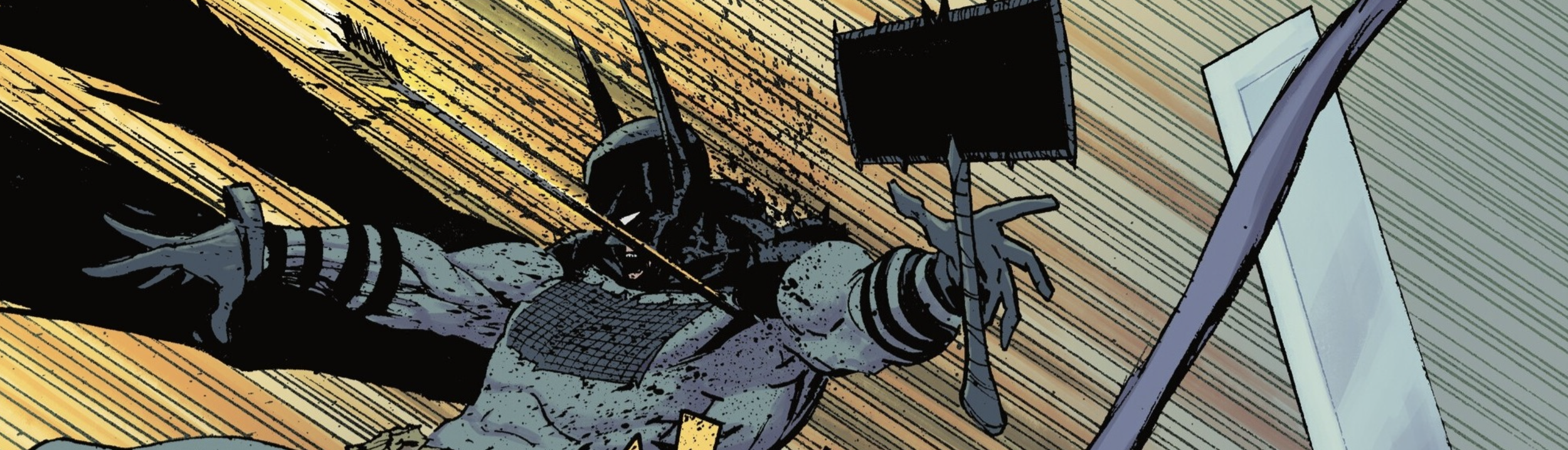
The false finishes did not stop there, because Snyder utilized one of the most undervalued elements of Batman: his willingness to save a life with reckless abandon. As the centaur fires an arrow at Diana—one that would transform her into a half-human, half-animal being—Batman takes the proverbial bullet for her without hesitation. In this instance, he takes the arrow intended for her.
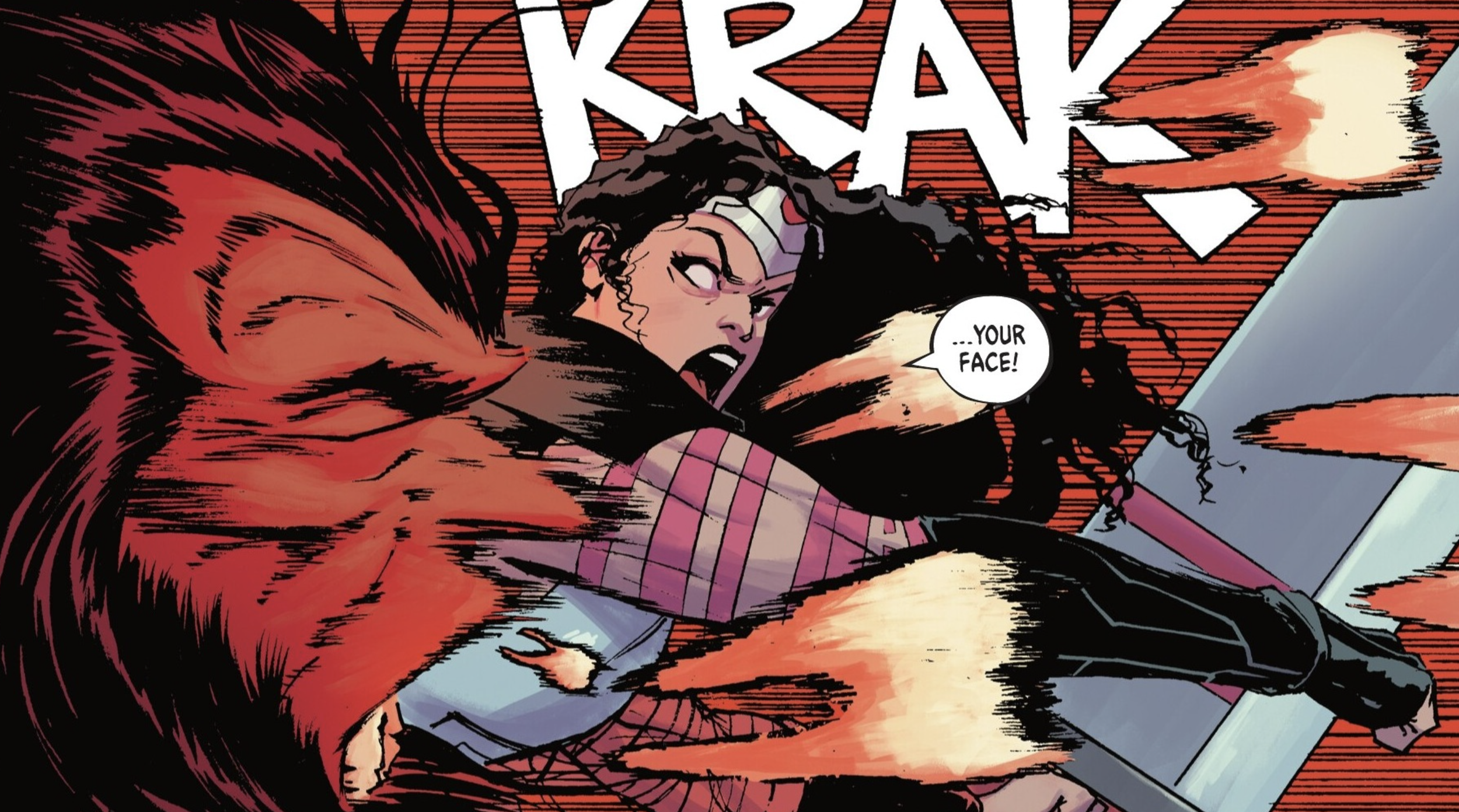
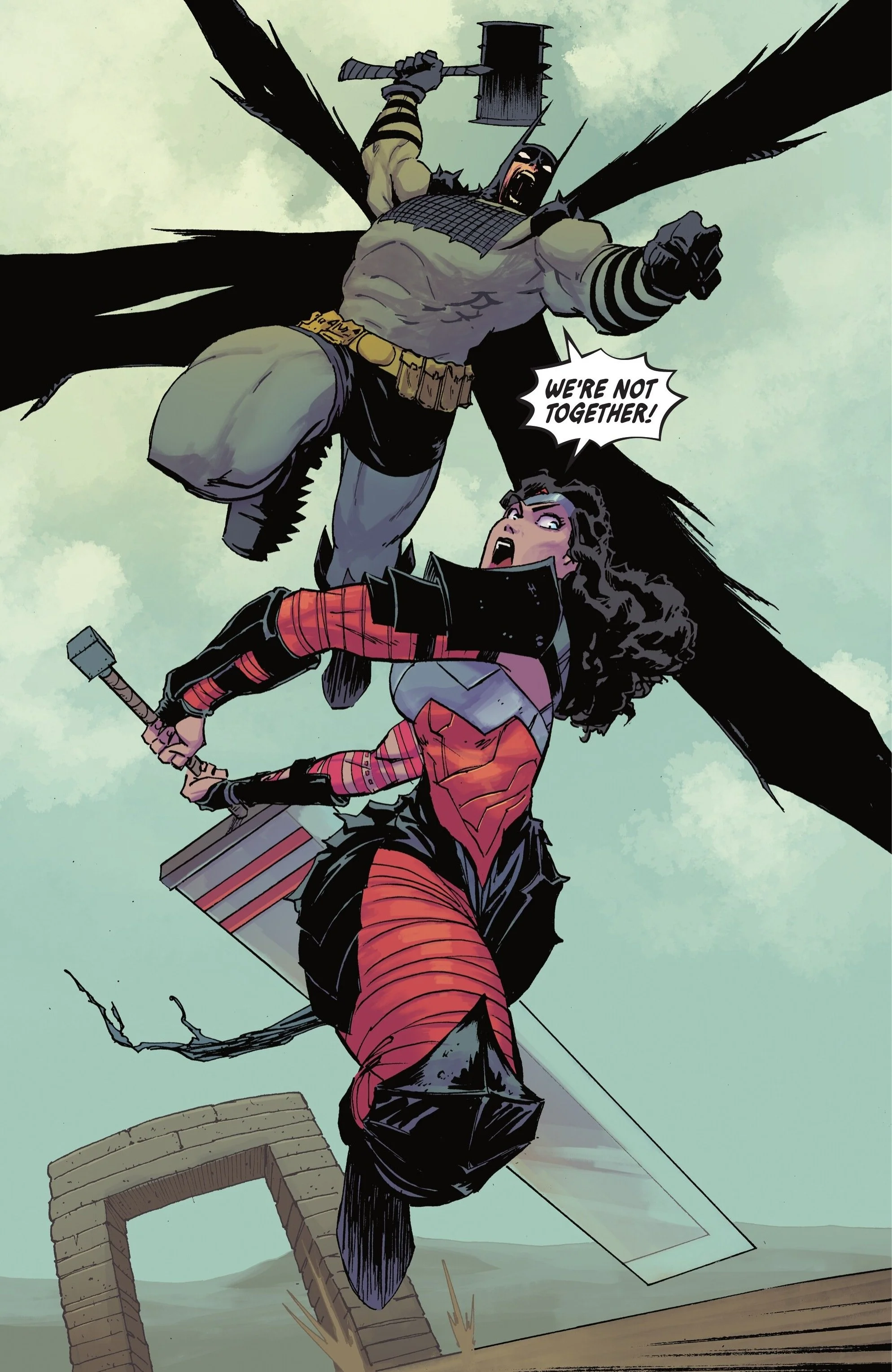
Snyder then reminds us how powerful and impressive Diana is by having her knock out this massive centaur with one swing of her sword, which is reminiscent of the weapons found in Final Fantasy VII. Her strength is further displayed as she carries Batman—all 6 feet 7 inches of him—over her shoulder as if he were nothing.
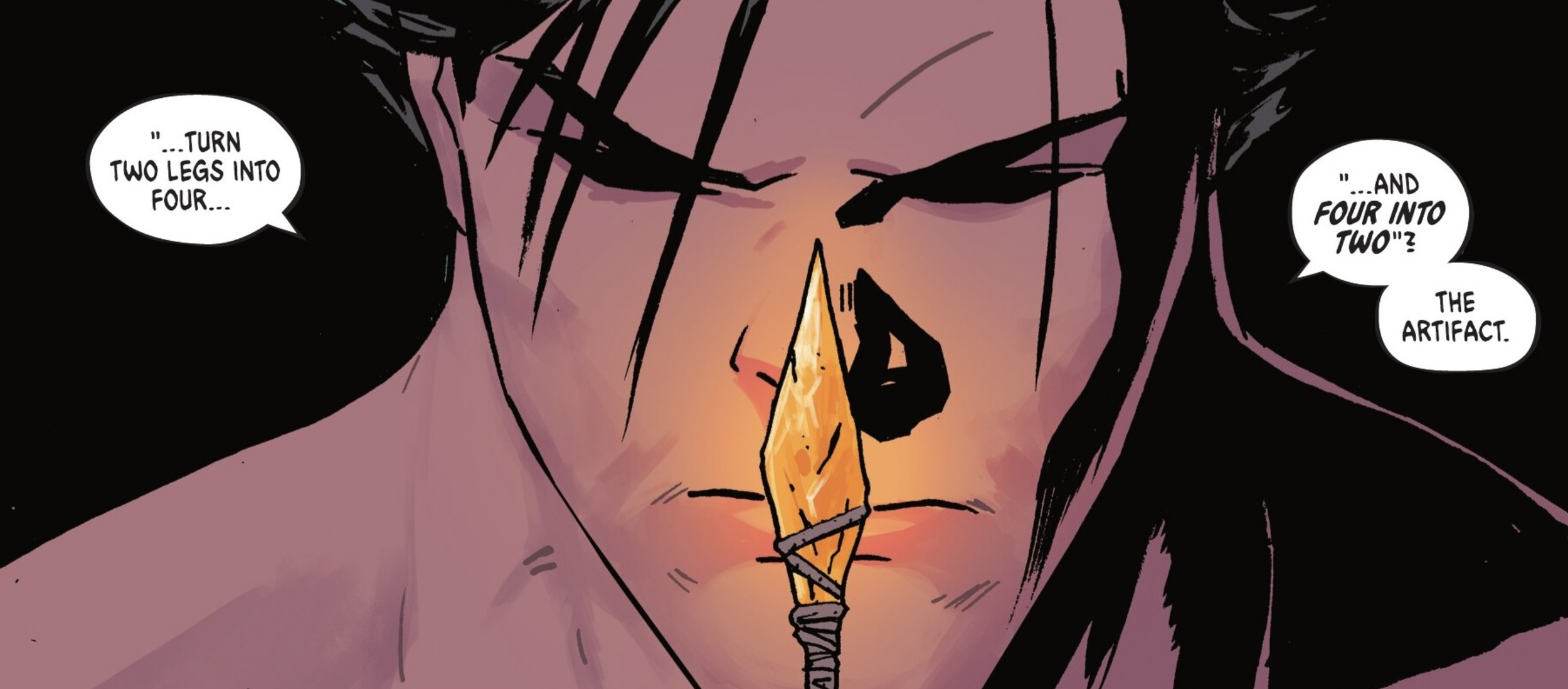
The coolest and most intrinsic part of the story came at the end. If you forgot, we were taken into hell to fight a centaur so that Bruce could retrieve an artifact that would help transform his friend, Waylon Jones, back into a human. Diana had told Bruce, "Everything you need lies inside you."
In hindsight, Snyder was setting us up for this ending. Bruce needed to get shot by the magical arrow of Akrolis so that his raw emotion and will would provide him with the tool to help his friend. Essentially, it was the pure heart of Bruce that forged the artifact to save Killer Croc.
Hell on Art
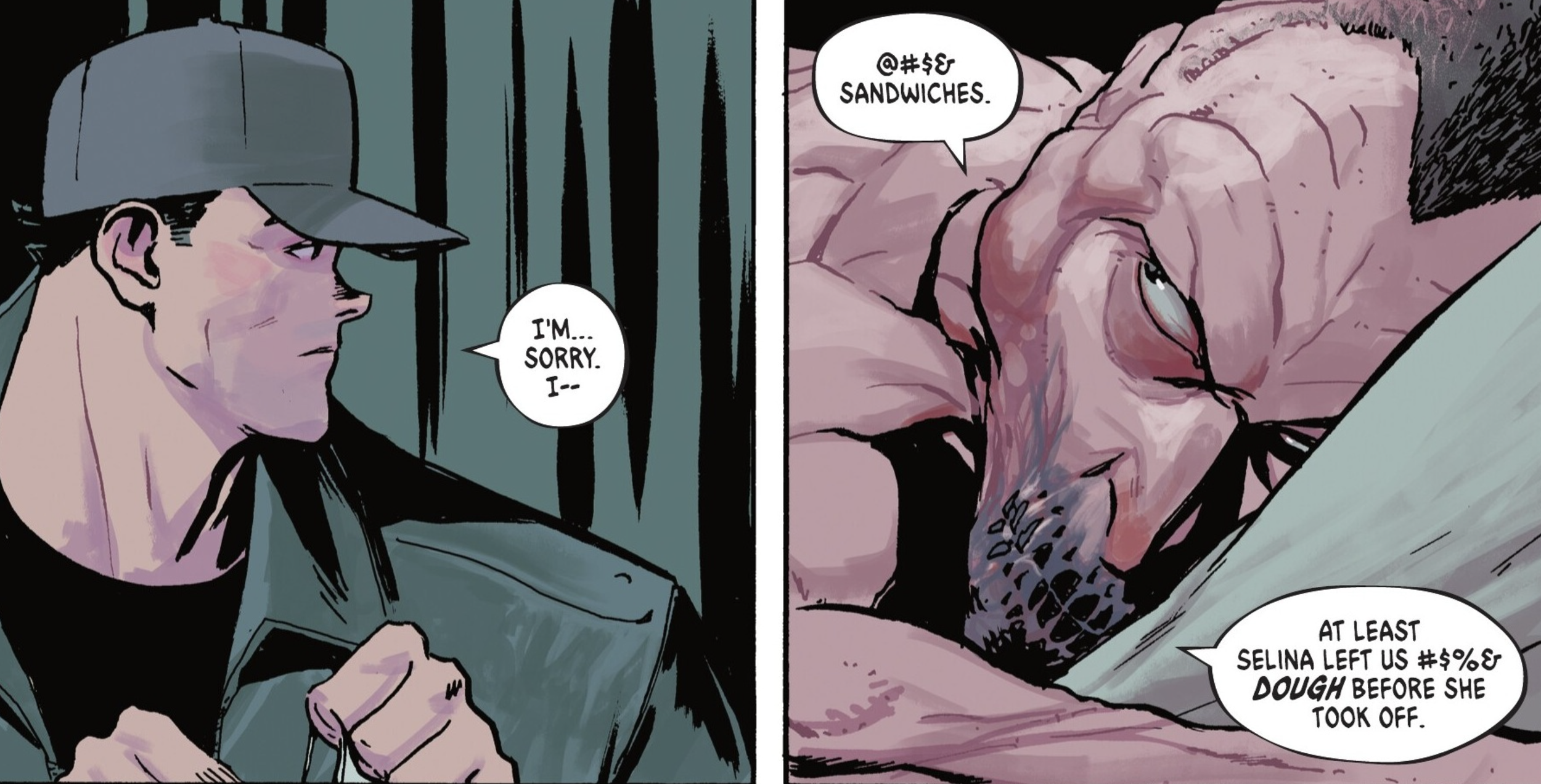
What I have not spoken about enough yet is the amazing contrast Nick Dragotta has created in the auras of Bruce and Batman. When Dragotta draws Bruce, the character is always wearing a hat and shielding his eyes as if he does not want to make eye contact with the reader. Bruce has been drawn mostly in profile, with his head pointed downward and his shoulders drooped. That emanates a feeling of doubt, a lack of self-belief, and almost shame. He still carries the guilt of the death of his father from his childhood trip to the zoo, and now he has seen more of those he loves suffer.
In contrast, when the suit is on, the body language shifts entirely. The "Absolute" version of the Bat is a physical force that demands attention and space, which makes the transition between the two identities even more jarring for the reader.
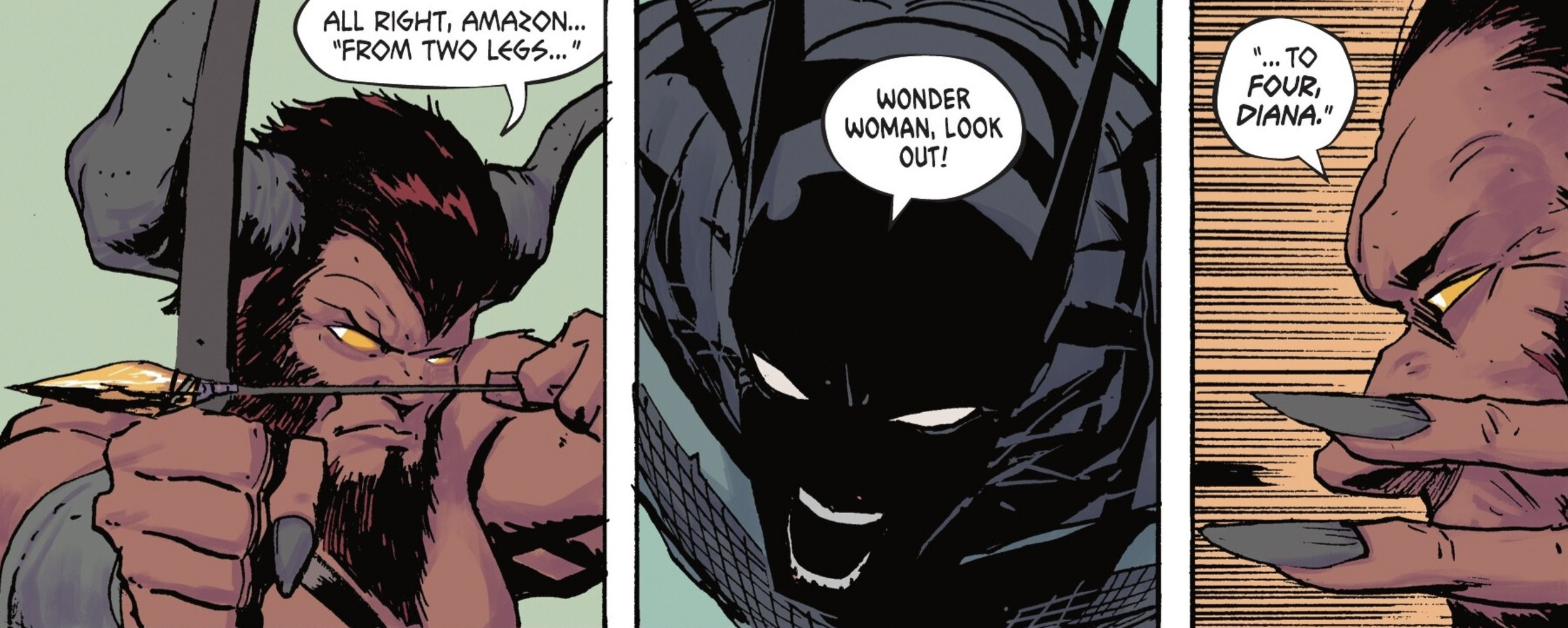
This is the total opposite of when Nick Dragotta draws Batman. I used the word ferocious earlier, and that is what I feel as a reader when I see Absolute Batman on the page. The way Dragotta draws the eyes of Batman is incredible; they are just white on the surface, but the way they are tightened shows focus and determination. They convey Absolute Batman to be the version of John Wick for this universe because he makes you believe that although he is just a man, he can accomplish the impossible task. This is the feeling I get just from a set of white eyes drawn by Nick Dragotta. It is an unreal amplification of emotion through the shape, size, and rendering of the eyes of Absolute Batman.
My favorite panel was, of course, a one-page splash of Absolute Batman and Absolute Wonder Woman leaping into battle against Akrolis the magical centaur. The way Dragotta drew the proportions of both heroes puts them on an equal standing; they both possess strength and power. The raw emotion of these two running headfirst into battle is perfectly captured by them having the weapons of choice in mid-swing, ready to strike. Also, the bland background of the blueish grey sky of hell is a brilliant backdrop for the reader to have all focus on both heroes and nothing else. The added comical side is that they are both screaming "WE ARE NOT TOGETHER!" as their war cry. This is perfectly captured by the gaping mouths drawn by Dragotta, showing that the claim from Akrolis that they are "mates" has only further angered them both.
Conclusion & Rating
I thoroughly enjoyed this issue because Snyder provided a total 180 in terms of pacing compared to Absolute Batman #15. That previous issue was cold, calculated, and slow, matching the maniacal personality of the Joker in the Absolute universe. In contrast, Absolute Batman #16 picks the pace back up and helps the reader look forward to the next story arc in which we are entrenched.
The subtle development of the character of Bruce from Snyder was a nice touch, because it helps further my understanding of what Absolute Batman does—specifically, why he does the things he does and why he makes the decisions he does. Of course, the inclusion of Absolute Wonder Woman was brilliant to further the story of the Absolute universe as a whole. We are over a year into this universal narrative, and it is the right time to have the heroes starting to cross over.
With the introduction of Poison Ivy up next, I am more than excited to see how gory, gruesome, and outlandish her design will be in the hands of Nick Dragotta. Equally, I am curious to see how Snyder reintroduces such a famous Batman villain in this primeval universe filled with significant "Darkseid energy."