
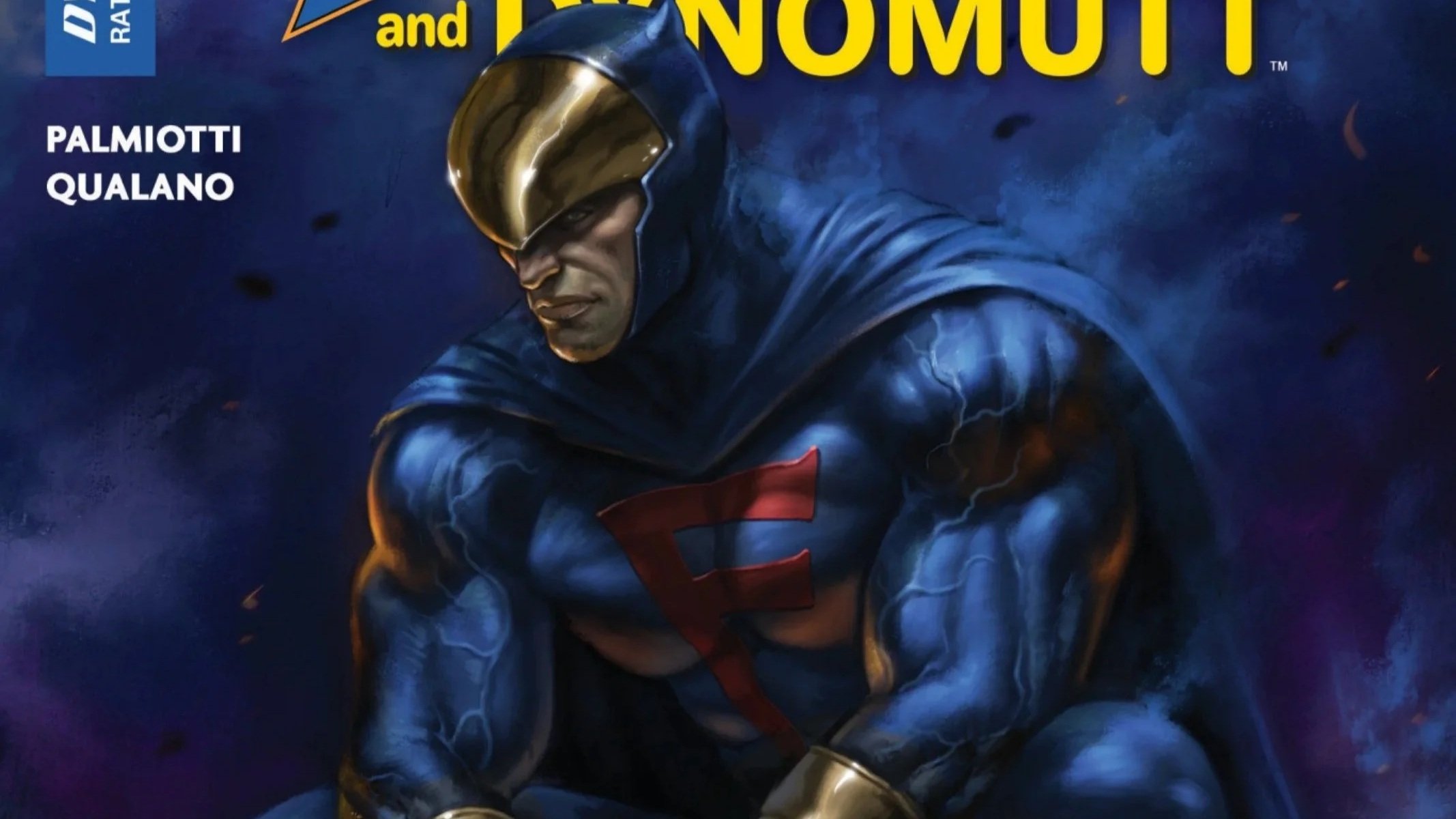
The Blue Falcon and Dynomutt #5 brings this short series to a close with a tense, dialogue-heavy confrontation. This finale reinforces both the strengths and the lingering contradictions of this modern reinterpretation. Where issue four felt like the moment the series found its footing, issue five is about testing whether that footing can support a meaningful ending. For the most part, it succeeds. The issue delivers strong character conflict, sharp reveals, and a sense of finality that feels earned, even if the tonal balancing act still occasionally wobbles under its own weight.
This is not the most explosive chapter in the run, but it is the most personal. It strips away spectacle in favor of betrayal, recognition, and consequences. This shift makes it an appropriate conclusion for a story that has always been more interested in identity than in escalation.
Where We Left Off
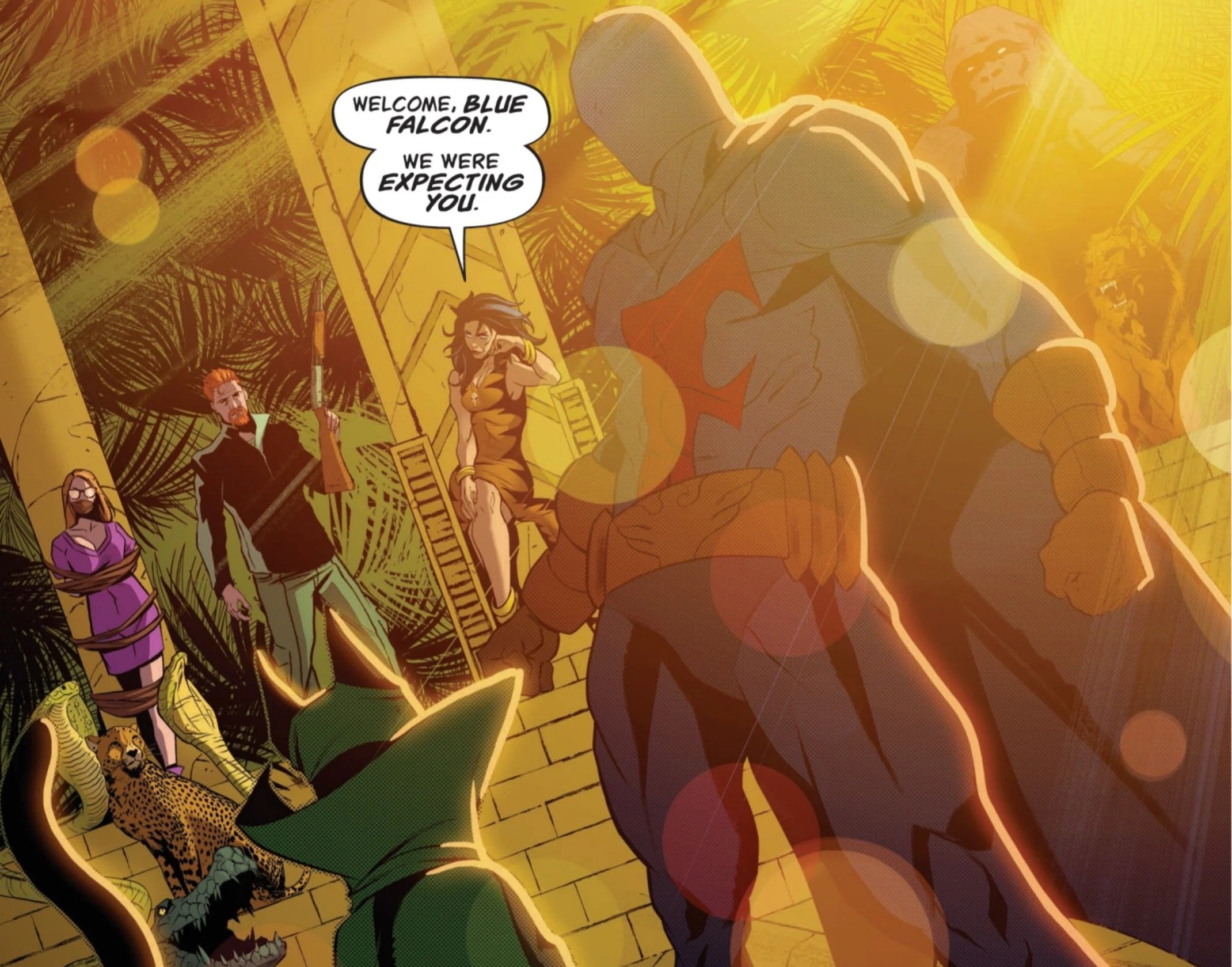
Issue four ended with Blue Falcon and Dynomutt tracking Beastwoman to the Amazon after she abducts Maya Vincent. The story positioned this final chapter as a confrontation rather than a chase. The threat was no longer abstract crime or shadowy organizations. It was someone whom Radley Crown trusted and someone who was embedded in his personal life.
That emotional framing carries directly into issue five. The opening scene is immediately tense, as Beastwoman holds the doctor hostage and makes it clear that she is unimpressed by the presence of the Falcon. The stakes are intimate and brutal. There are no crowds to save or cities at risk. Instead, there is just a small group of people trapped in a moment where violence could erupt at any second.
This narrowing of focus works in the favor of the issue. By removing the larger distractions of the superhero genre, the narrative can focus entirely on the personal betrayal at the heart of the story.
Betrayal as the Core Conflict
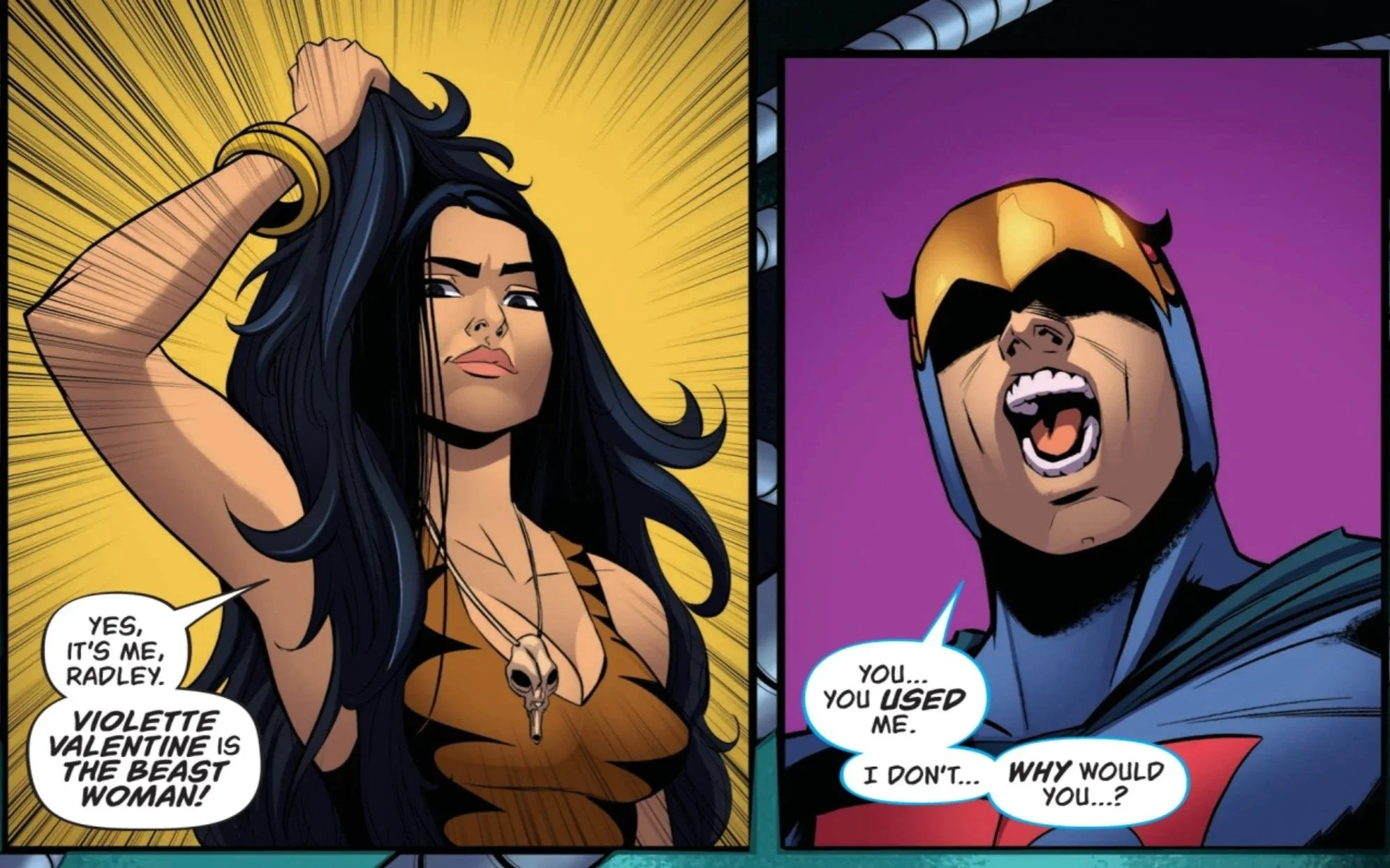
The central reveal of the issue, which is that Violette Valentine and Beastwoman are one and the same, is not surprising, but it is effective. What gives the moment weight is not the twist itself, but rather how calmly the situation is handled. Violette does not rage or grandstand. She mocks the concern of the Falcon, dismisses his trust, and treats his emotional vulnerability as a liability rather than a weapon.
This dynamic reinforces one of the recurring ideas of the series. The optimism and openness of Blue Falcon are both his defining strengths and his greatest weaknesses. Radley Crown is not a paranoid vigilante. He wants to believe in people, and that belief has consequences here.
The parallel realization of Dynomutt regarding the armed man who once killed him deepens this theme. Where Radley is confronting emotional betrayal, Dynomutt is confronting physical trauma. The dog recognizes the threat immediately, and his response is instinctive and protective. The contrast between the hesitation of Radley and the certainty of Dynomutt reinforces how much the roles between them have shifted since the series began.
This is no longer a man and his sidekick. It is a partnership built on complementary instincts.
Tone: Still Strange, But More Controlled
Jimmy Palmiotti continues to operate in a narrow tonal space that blends cartoon iconography with grounded violence. In issue five, that blend feels more deliberate than it did earlier in the series. The dialogue flirts with discomfort, especially in the threats and implications surrounding Beastwoman, but it stops short of feeling gratuitous.
There is still an inherent oddity in seeing these characters navigate such brutality. Blue Falcon and Dynomutt were created as family-friendly reflections of superhero tropes, and that history never fully disappears. However, the series no longer feels confused about what it wants to be. Instead, it feels aware that it is asking the reader to reconcile two versions of the same characters.
That reconciliation will not work for everyone, but by this final issue, it feels intentional rather than accidental.
Visual Storytelling Over Spectacle
The artwork of Pasquale Qualano once again carries much of the emotional weight. The issue relies heavily on close-ups, body language, and facial expressions rather than large-scale action. This approach suits the material. The tension comes from proximity rather than movement.
The linework by Qualano remains clean and expressive, and his framing emphasizes power dynamics within scenes. Characters are often positioned to feel boxed in or watched. This reinforces the sense that there is no easy escape from the moment.
The colors of Jorge Sutil provide texture and mood without overwhelming the art. The Amazon setting feels humid and oppressive, but it is not exaggerated. Shadows and muted tones dominate. This keeps the focus on the characters rather than on the environment.
Together, the art team makes a relatively contained issue feel visually engaging without relying on spectacle.
A Finale That Feels Slightly Rushed
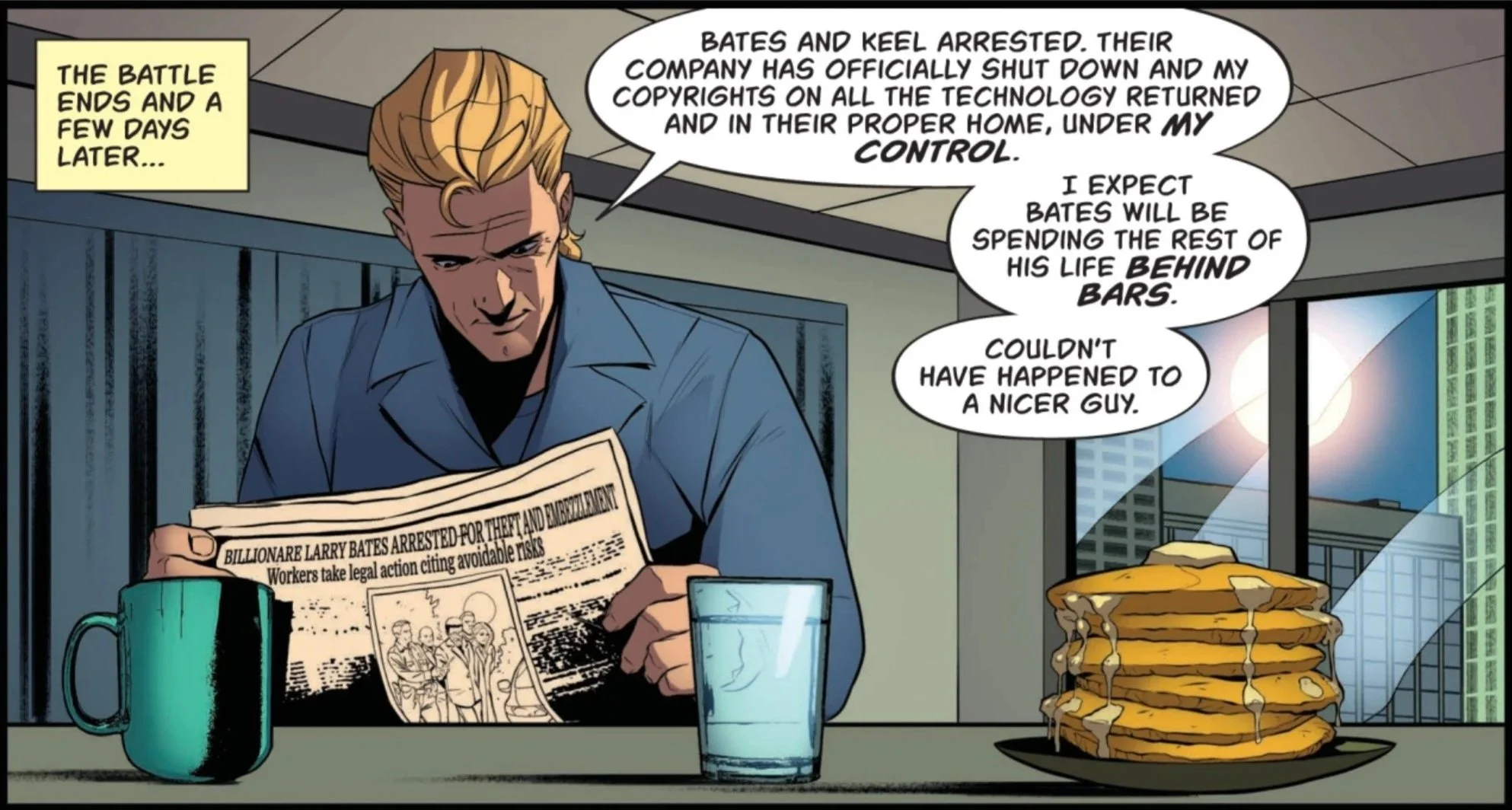
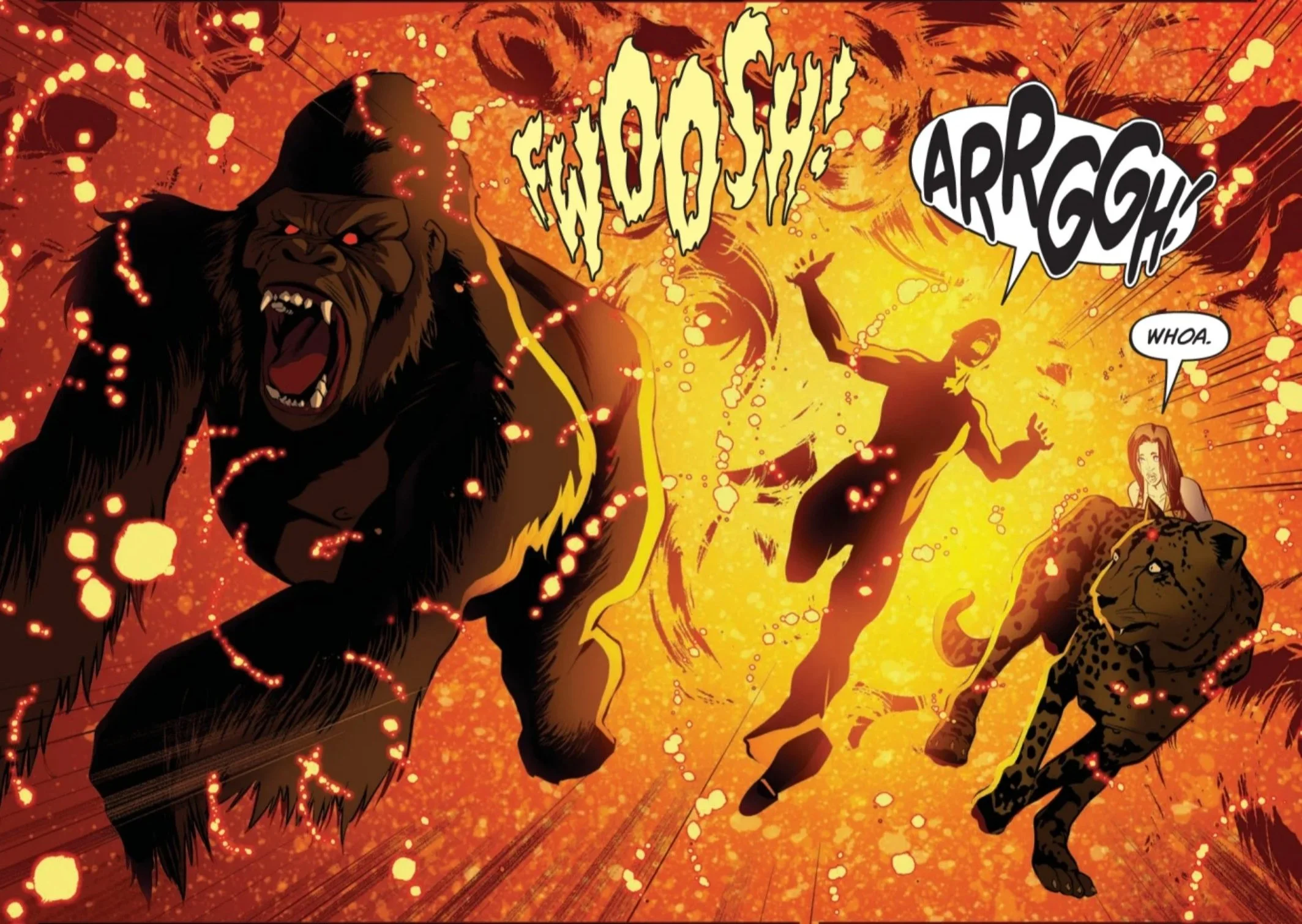
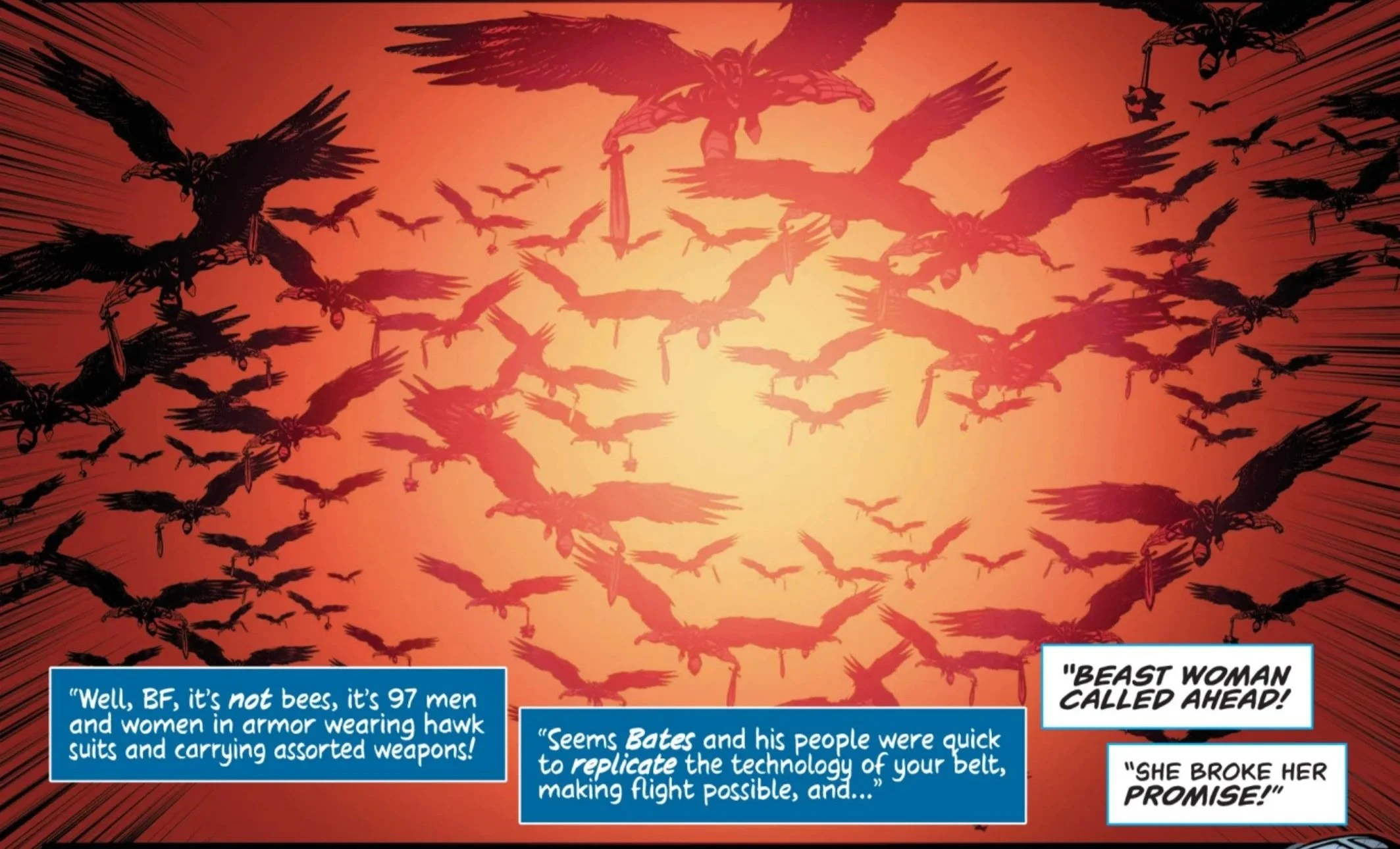
The most noticeable weakness of issue five is not its ideas, but its pacing. For a concluding chapter, the issue moves quickly through material that feels like it deserved more room to breathe. The confrontation with the figures in the Falcon armor and Bates, in particular, feels compressed. These elements are introduced, escalated, and resolved so rapidly that they register more as plot necessities than as fully realized threats.
There is a sense that this final act could have benefited from an additional issue to flesh out the conflict. The armored Falcon adversaries are visually striking and conceptually interesting, but they never fully register as obstacles. Bates himself feels underutilized. He functions more as a narrative tool than as a character whose presence carries lasting tension. The fight has energy, but it lacks the buildup and release that would have given it greater impact.
This rushed feeling does not ruin the ending, but it does limit how satisfying it ultimately is. The emotional beats land more effectively than the physical ones, and the issue prioritizes resolution over escalation. While that choice makes sense structurally, it leaves the impression that the story arrived at its conclusion slightly too quickly. This cut short what could have been the most dynamic confrontation of the series.
Final Thoughts and Rating
Overall, The Blue Falcon and Dynomutt #5 works as a conclusion, but it feels as though it is trying to do too much in too little space. The emotional beats land, and the tonal experiment of the series ultimately pays off. However, the final conflict moves too quickly to have the impact it should. The fight involving the figures in the Falcon armor and Bates feels especially rushed. The issue would have benefited from another chapter to let those confrontations breathe.
Even so, the creative team delivers a respectable ending. The character work remains strong, the visuals are consistently solid, and the book closes the door on its story with clarity, even if it does not achieve maximum effect. It is a satisfying finish that falls just short of being a fully realized one.
Rating: 7/10
A solid finale that brings the series together thematically, but could have been stronger with more room to develop its final act.