
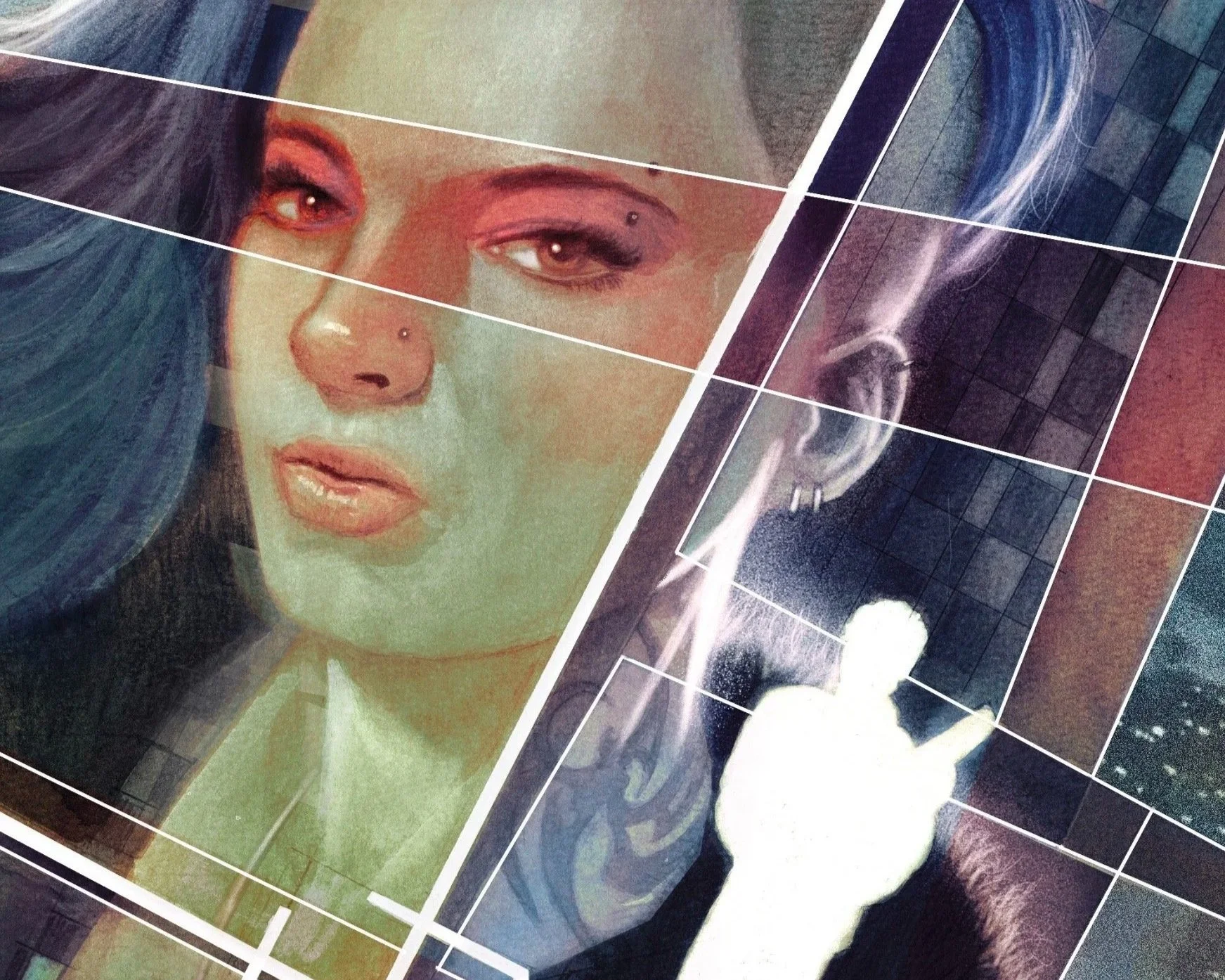
The Smart Division #1
Writer: Zack Kaplan
Artist and Colorist: John J. Pearson
Letterer: Hassan Otsmane-Elhaou
Publisher: Dark Horse Comics
We live in a world where Artificial Intelligence is becoming more and more prevalent. As AI continues to learn and evolve, new ways are found for it to replace humans in jobs or tasks. What happens if it develops an affinity for things like crime or murder? Could anyone stop it?
Pinnacles of Evolution
As an unseen narrator talks about the current state of our world—despite all our technological interconnectedness, we're actually less connected than ever—we meet Will Bailey, who tried to surprise his daughter for her birthday but ended up drowning his sorrows alone in a bar. He doesn't stay alone for long, as we learn he is a veteran FBI agent and he's being assigned a new young partner.
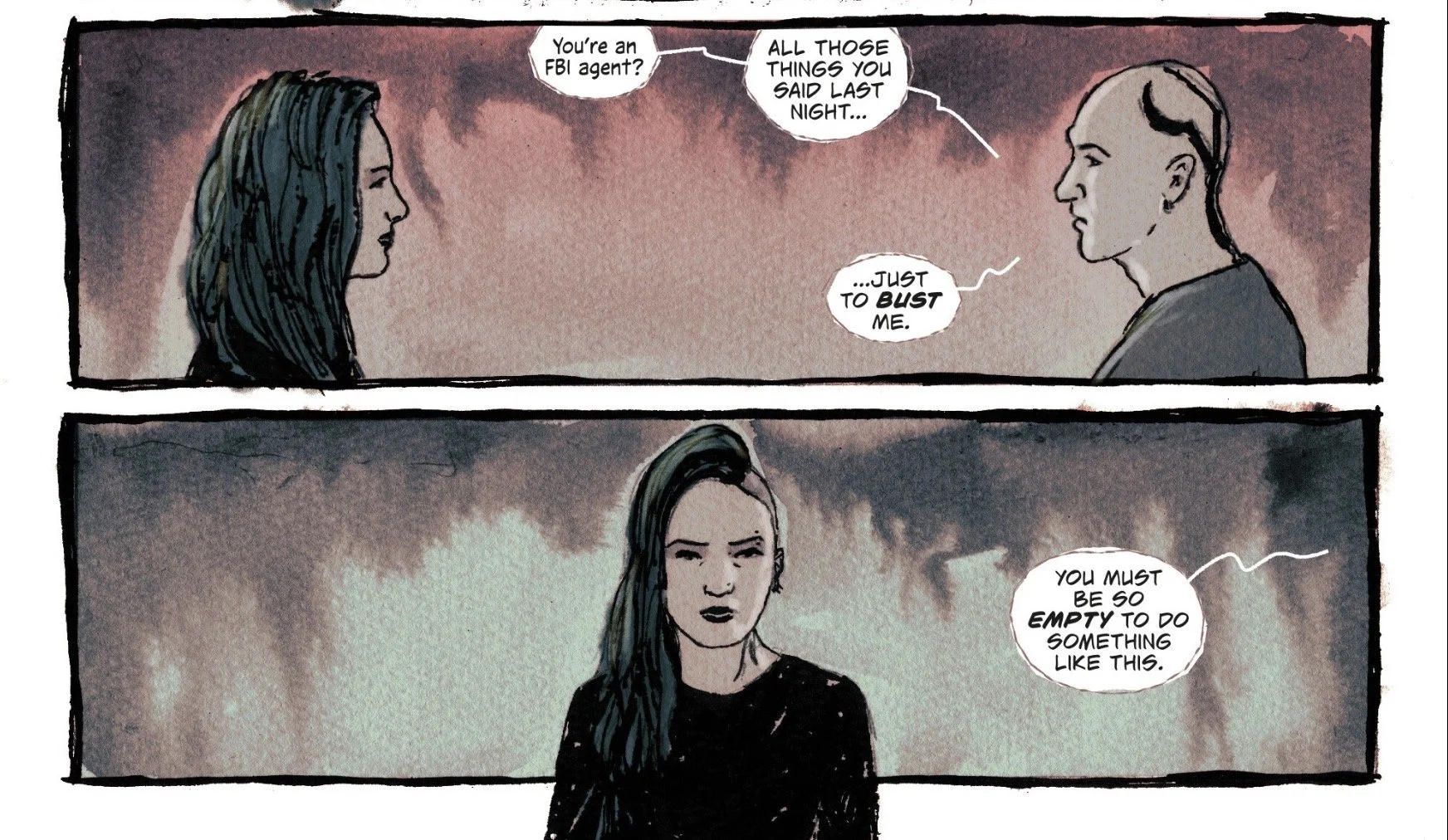
This new partner, Stevie Larque, is much more embracing of modern technology and methods than Will. She's also more of a risk-taker, as we see when she uses rather unconventional means to bring in a suspect.
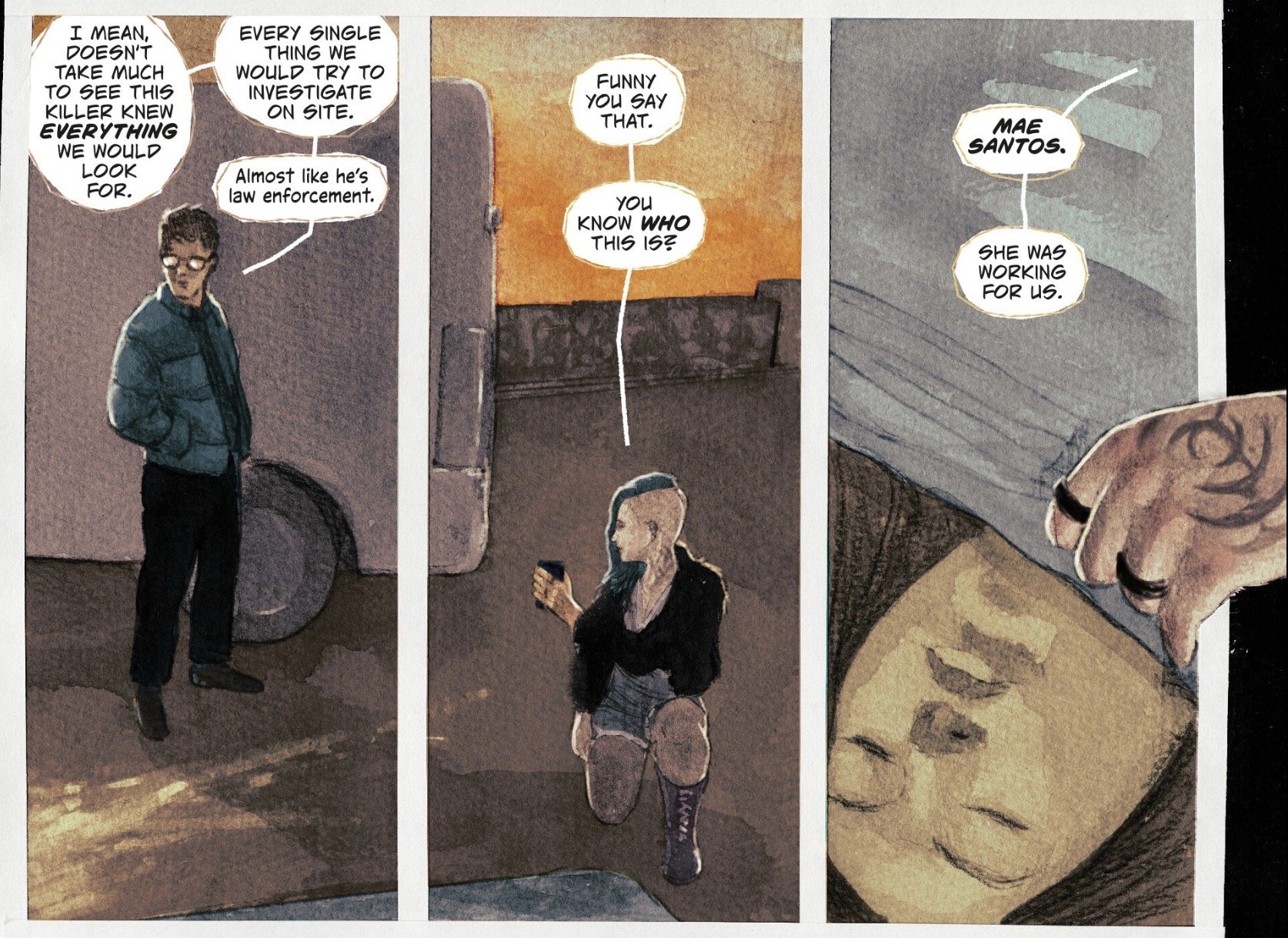
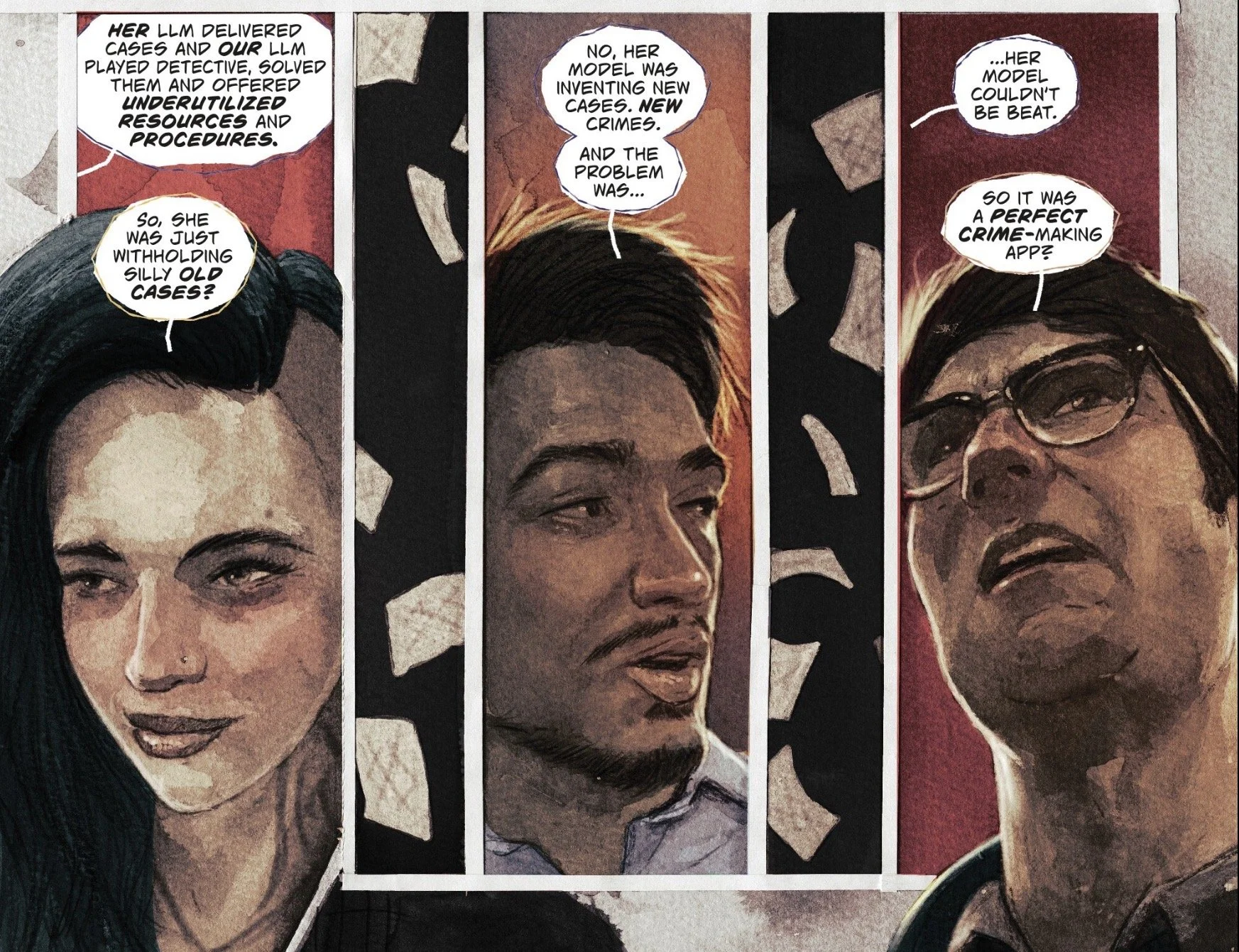
The new partners meet at a crime scene, where they are to investigate the murder of Mae Santos—a major name in the AI space. The new partners immediately butt heads in their approach to the job and their investigating styles, but they head off together to question the man Mae was working with, Yosef Usman. Through Usman, they learn that Mae had been working with him on a project for the FBI that involved two AI agents—one that could create crimes, and one that was learning to help solve them. Apparently, Mae's AI, the one that was creating crimes, got to be too good at its job, and that might be what got her killed…
Elementary, My Dear Watson
The “odd couple investigators” trope is far from a new idea, but it’s effective. That’s why it gets used so much. Here we have the older, weary veteran Will Bailey. He fits the mold so well that I’m impressed Kaplan resisted the urge to have him say “I’m too old for this shit.” On the other side of our lead duo is Stevie Larque. She’s young—around the same age as Bailey’s daughter—and heavily tattooed. Unlike Will, she has embraced this new world of technology and the benefits it can offer an investigator. He, on the other hand, prefers to operate by instinct and experience, even if it leaves him with too narrow a focus.
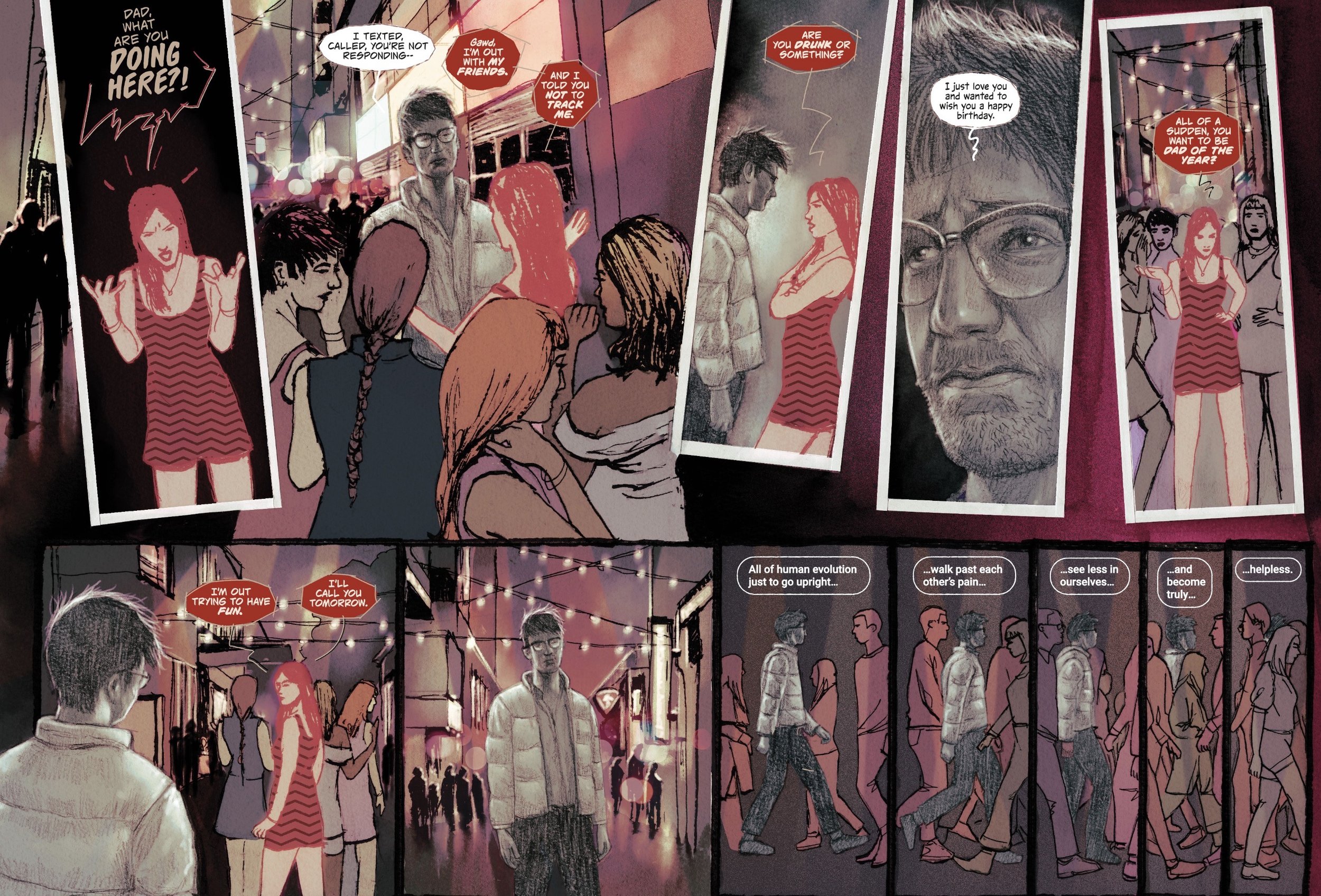
The way the two leads are introduced immediately tells us who they are. When we first see Bailey, he's getting read the riot act by his daughter, who is out celebrating her birthday with her friends and wants nothing to do with him. As he sadly walks away, he appears to literally disappear into a crowd of people. When next we see him, he's drowning his sorrows in a bar and being told he's getting a new partner. When we first meet Larque, she's climbing out a man's bed and trying to sneak out. When he points a gun at her head, she tells him that she's an FBI agent and that he's about to be arrested. Their whole night together was a setup. And it's implied this isn't the first time that she's done something like this.
The framing device of Will on the wrong side of an interrogation room works incredibly well in setting up our story and establishing some stakes right away. By his being questioned, we know that something goes wrong in the course of his and Stevie’s investigation. It also sets him up as our narrator for the issue, which allows his tired and cynical voice to offer a contrast to the overly connected, tech-heavy world we live in. When we’re all connected via various forms of technology, what happens to the human connection? Through Will’s point of view, we see that personal interaction is becoming a bit of a lost art.
The best science fiction has a basis in fact. It uses its lens to offer an alternative viewpoint or commentary on our real world. In the case of The Smart Division, it shows us a world “five minutes from now”—one where our extreme reliance on technology, even to the detriment of interpersonal relationships, has been taken a few steps further. A world where AI has become so advanced that cops and criminals are using it to piece together crimes. The scariest part is, it doesn’t feel like something that is very far away. We’re not talking about contact with alien life forms or faster-than-light travel here—this is something that is a believable evolution of where AI is at right now.
The idea that there were two AIs being developed—one to help the FBI solve crimes, and the other to create the crimes that need to be solved—and the crime-making app became so good at its job that it was making new, unbeatable crimes is, frankly, terrifying. And when you see stories about AI bots deciding to delete a startup's entire database and backups in nine seconds, like there was in the news a few months back, you realize that maybe it's not that far-fetched. And of course, in any story where a master criminal achieved that status with help, that help must be eliminated. Which is exactly what happened to Mae Santos, the creator of the crime app. And that leads to the central mystery of this series: who killed Mae Santos, and why?
I don't think there is such a thing as a "perfect" comic book. That's why I don't think you'll ever see me give out a perfect 10 score. But there are books that come incredibly close—ones that, if I believed in perfection, would meet that definition. The Smart Division #1 is one of those books. It neatly introduces its world, characters, and main plotline without any of it feeling like it was forced or given short shrift. The narration is cynical and world-weary, as befits this type of story, but it's presented in a style that makes it look like AI chat boxes. It's a fascinating visual dichotomy. Speaking of visuals, the art is amazing, but we'll talk more about that in a second.
Master and Servant
A high-concept book like The Smart Division sinks or swims on the strength of its creative team. Fortunately, the team assembled here is more than up to the task.
Zack Kaplan is on a roll right now. If you've seen my reviews of Only the Savage Are Left, you know that book has pulled some emotions out of me that you wouldn't expect from what is essentially a spin on a "zombie" story. Kill All Immortals just recently finished its second violent and bloody volume, with a third and final volume coming this fall. And now this title. As I mentioned earlier, his pacing here is impeccable. Starting with the kind of narration you'd expect from a crime story, he neatly moves to introducing Will Bailey, then hitting us with the interrogation room reveal before our first look at Stevie Larque. As the central mystery takes center stage, we get further insight into our two leads and how they're going to interact as the story progresses. And finally, he hits us with the reveal of our main "villain," the AI crime app, which has an awesome name that I don't want to spoil here (let's just say it's a cool twist on the name of one of the most famous criminal masterminds of them all). There are no wasted words, no scenes that wear out their welcome.
I honestly haven't read anything that John J. Pearson has done the art for before this book. I've had the trade paperback of The Infernals sitting on my shelf for a while, but I haven't gotten to it. And I need to check out Mindset, the other book that he and Kaplan did together. After seeing his work in this issue, I will be moving those titles up on my "to be read" stack. His work here is incredible. He uses a painted style that seems contradictory to the tech-focused themes of the story, but that's exactly why it works. Because the art is painted, he handles the color work as well. This gives us brilliant moments such as Bailey's ambush of his daughter and her friends. To show her anger, she is colored in less realistic and very red tones, while Will and everything around them are rendered in the "normal" style. When he walks away in shame and fades into the crowd, the art shows him literally being swallowed up by the people around him (who are all merely silhouettes because he's so disconnected from them). The page structure and panel layout are creative and varied, with different angles and perspectives being used to literally show who has the upper hand in conversations. The colors shift from darker shades to brighter, almost dream-like tones as the story moves through different scenes and settings. I honestly can't think of another book I've seen recently that looks like this one.
I don't usually talk about lettering, but I do want to bring attention to Hassan Otsmane-Elhaou's work here. The narration boxes are done in a style that makes them look like AI chat boxes, all rounded and with a mechanical-looking font. Human dialogue boxes are all imperfect circles, and the level of imperfection appears to vary based on the mood or tone of the speaker. When Will is getting laid into by his daughter, her speech balloons are incredibly rough-edged and colored red with white text, adding to the changes in how the art depicts her to make it clear just how unhappy she is with her father. In a lot of comics, the lettering is just "there" and doesn't really become part of the story. This is not one of those books.
Too Old for This…
The Smart Division #1 is the best first issue I've read in months, introducing a scary-looking world that isn't too far from our own and an AI "antagonist" that is eerily plausible. It's got two strong leads that fit the classic "odd couple" trope without being cliches, and an intriguing mystery at its core. If the rest of the miniseries can maintain this level of quality, we're looking at a shoo-in for end-of-year "best of" list status.