
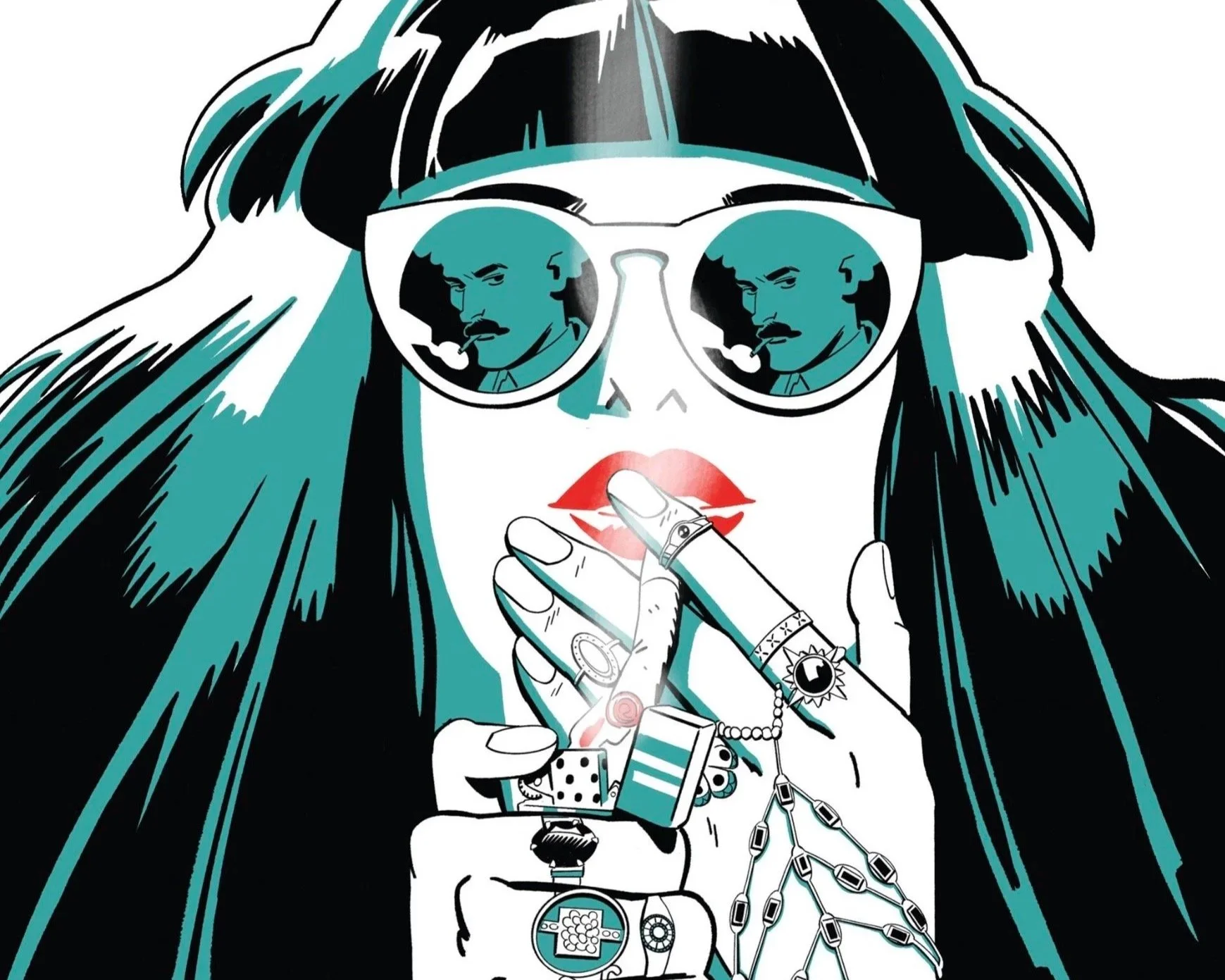
Chachu #1
Writer: Iman Vellani
Artist: Marianna Ignazzi
Colorist: Jordie Bellaire
Letterer: Lucas Gatton
Publisher: Image Comics
Khala - Arabic word for maternal aunt
Dadi - Hindi word for paternal grandmother
Nanu - Hindi word for maternal grandfather
Nani - Hindi word for maternal grandmother
Chachu - Hindi word for paternal uncle
I'm a sucker for a good noir. A movie that I absolutely love is Rian Johnson's Brick, starring Joseph Gordon-Levitt. This movie takes the classic noir tropes and places them in a modern high school setting. It sounds like it shouldn't work, but it absolutely does.
Chachu reminds me a bit of Brick.
The Past is Never Dead
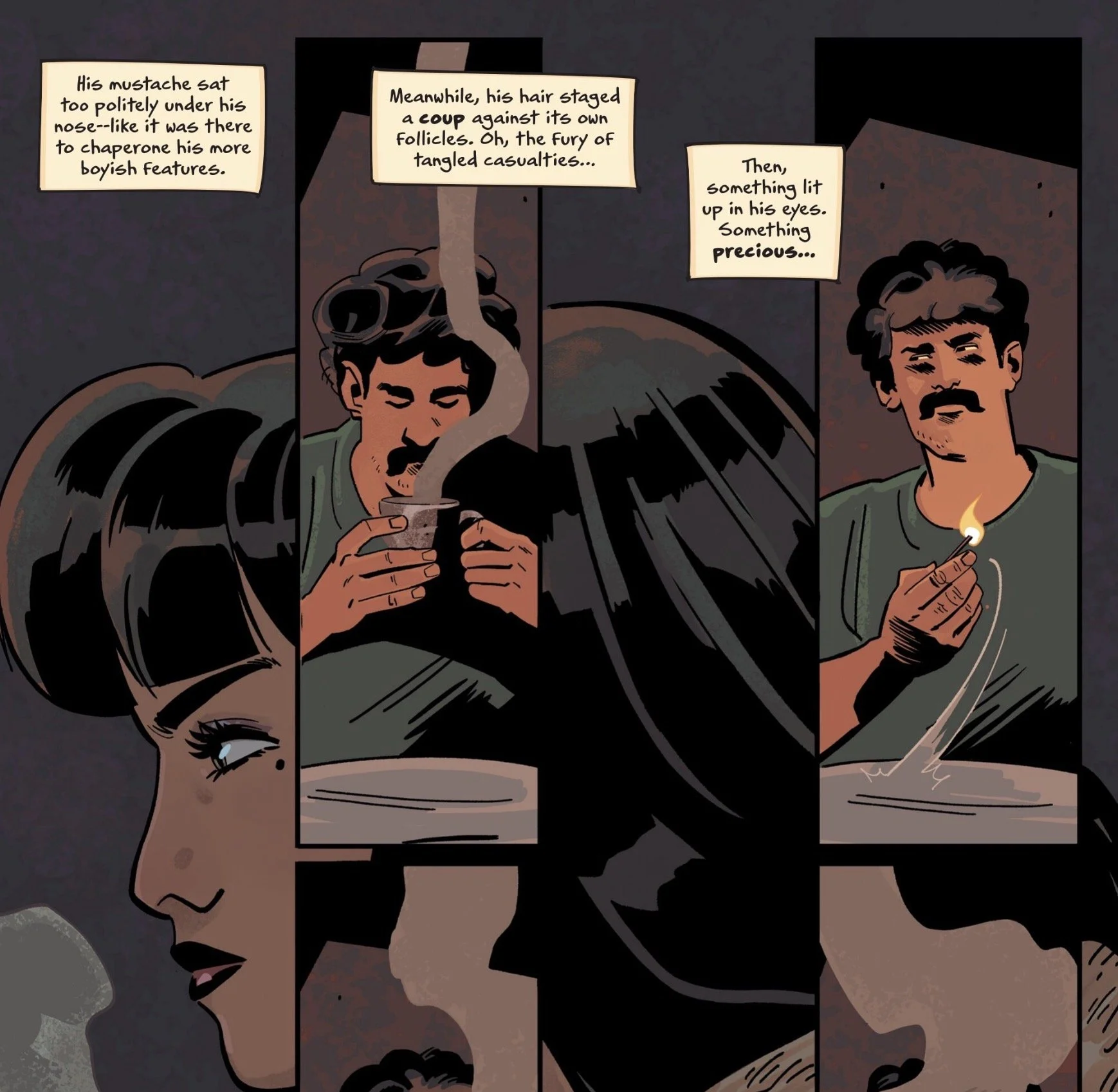
Nineteen-year-old Leila has moved to Los Angeles for school, and has decided to seek out her estranged Chachu, or uncle, who left before she was born. Using some pretty impressive investigative and reasoning skills, she tracks the man down easily. Turns out she's not very good at stakeouts, however, and he quickly spots her!
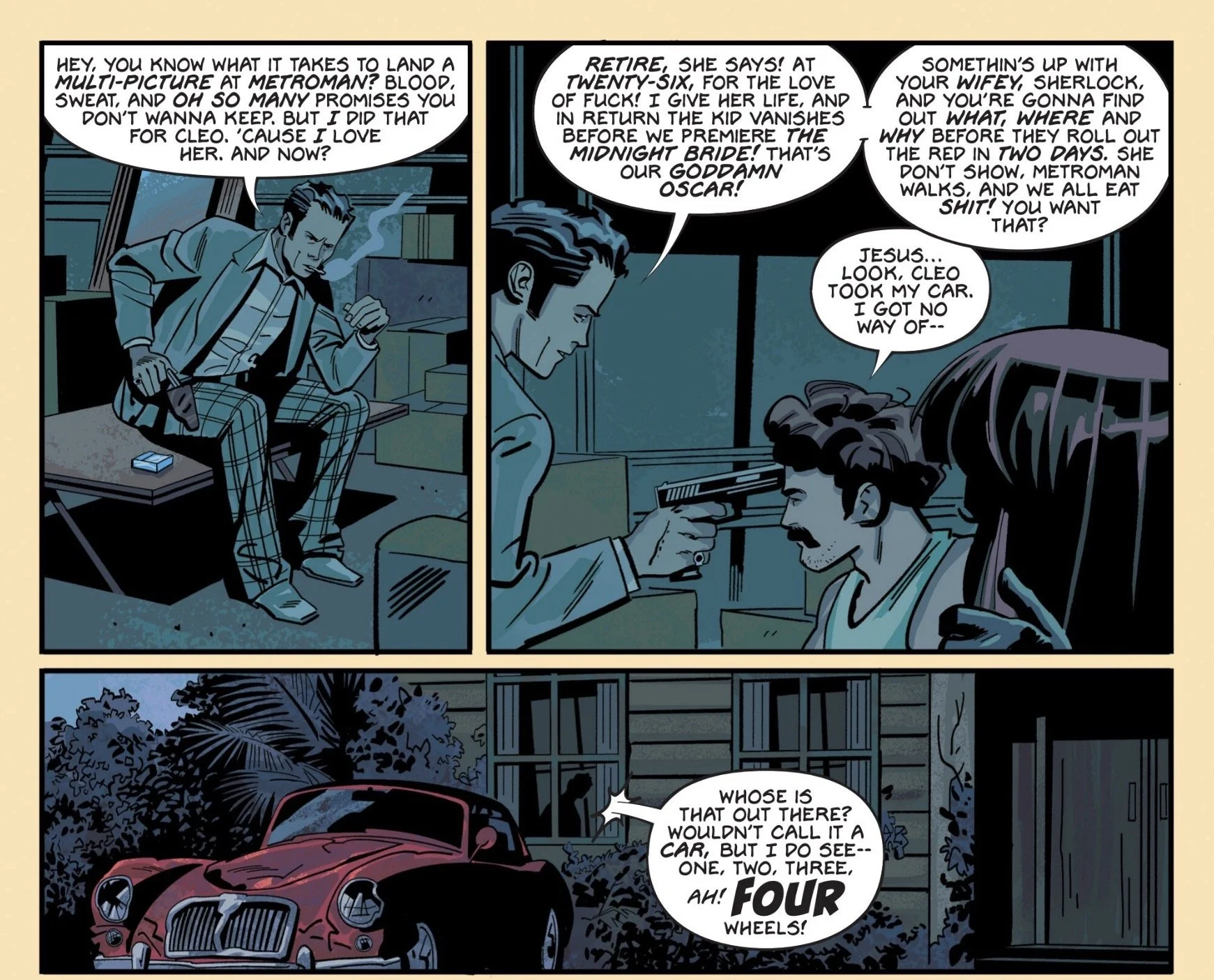
Taking some time to get to know each other, Chachu lets her stay the night until she can move into her dorm. They are confronted in the night by his father-in-law Cyril, who is the manager of Chachu's actress wife Cleo. Cleo has taken off for parts unknown, and her father/manager needs her back. It doesn't seem like he's a very upstanding citizen...
The Small Gaps Between What is Said and What is Meant
Right from the start, we're hit with Leila's internal monologue. And let me tell you, she's like a Bond villain—she monologues a lot. At nineteen years old, she has moved to Los Angeles for school and decided to try finding her uncle—her Chachu—who left the family and moved away before she was born. Even she can't tell you why she's decided that she needs to find him now, which shows us that she's a little bit impulsive.
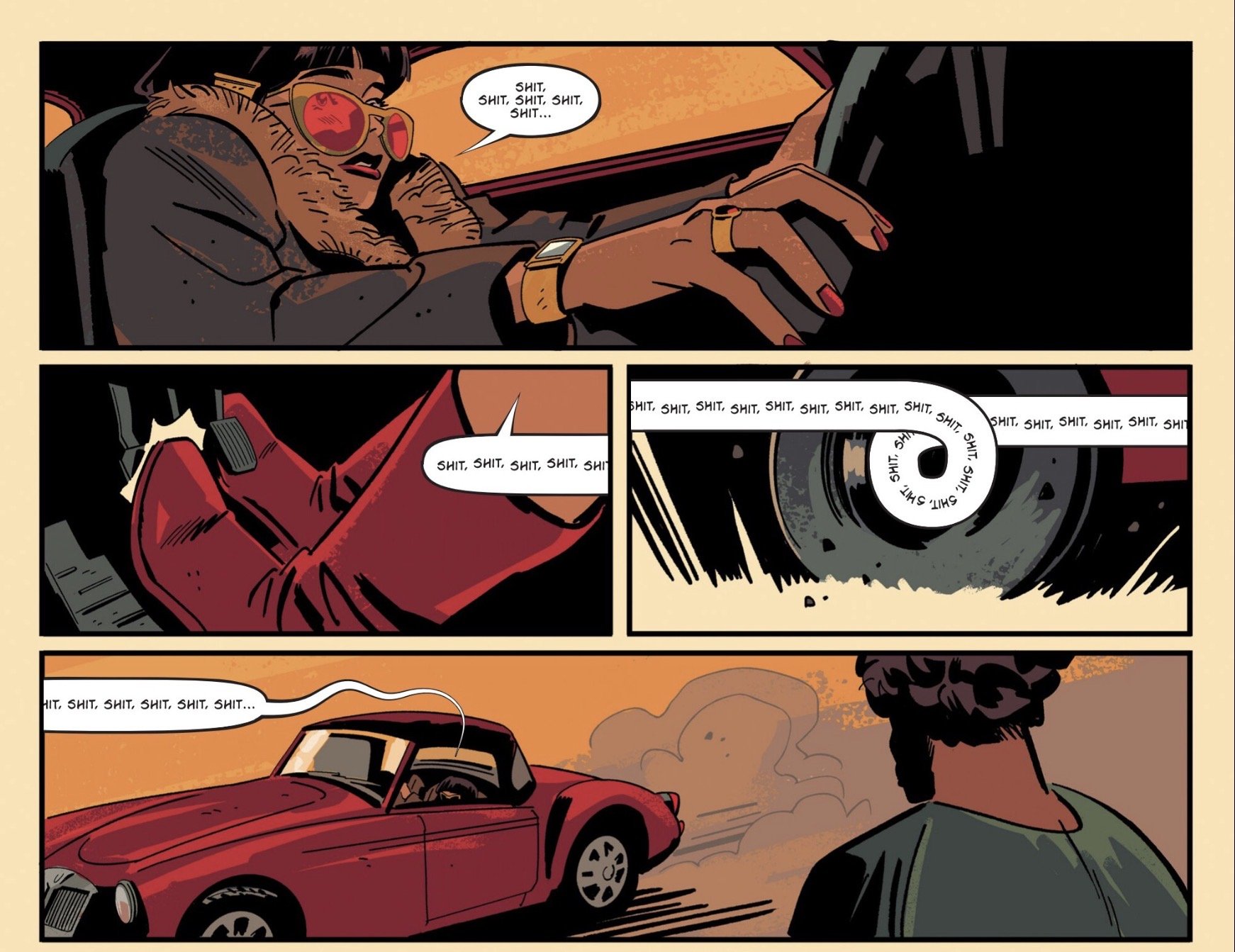
She's staking out her Chachu's house when he spots her after a spat with his wife Cleo. As she freaks out and tries to escape, Leila ends up T-boning Cleo's car, but at such a low speed that there is no real damage. Cleo takes off, leaving Leila shaken. Fumbling for a cigarette, she's startled by the appearance of Chachu, asking if she is okay. This whole scene is played in an amusing manner, showing that although Leila may be smart and resourceful, she's terrible at actual P.I.-style work.
Once he learns who she is, Chachu invites her in for coffee and conversation. The conversation is short and awkward, leaving Leila to fill in many blanks in her own head. Since she can't move into her dorm room until tomorrow, Chachu offers her an air mattress in his spare room. Again, her internal monologue kicks in as she tries to piece together an impression of the uncle she's never known. I think it becomes clear that Leila is the kind of person that can't stand silence, so she'll fill it one way or another—even if it's just in her own head.
She's having trouble sleeping when she's awakened by sounds of a struggle, followed by a hand over her mouth and a gun to her head. Here is where we can find out there's a bit more to her uncle's fairy tale life with his famous actress wife than first appears. She learns that their unwanted visitor is Chachu's father-in-law Cyril, who appears to be Cleo's manager and maybe not exactly an upstanding citizen. It's here where we learn there might have been more to the argument between Chachu and Cleo that Leila witnessed than it first appeared, as Cyril gives them an ultimatum to bring back his daughter in two days for her movie premiere—or else. Classic noir stuff here, with a missing woman and a shady figure willing to use questionable means to find her.
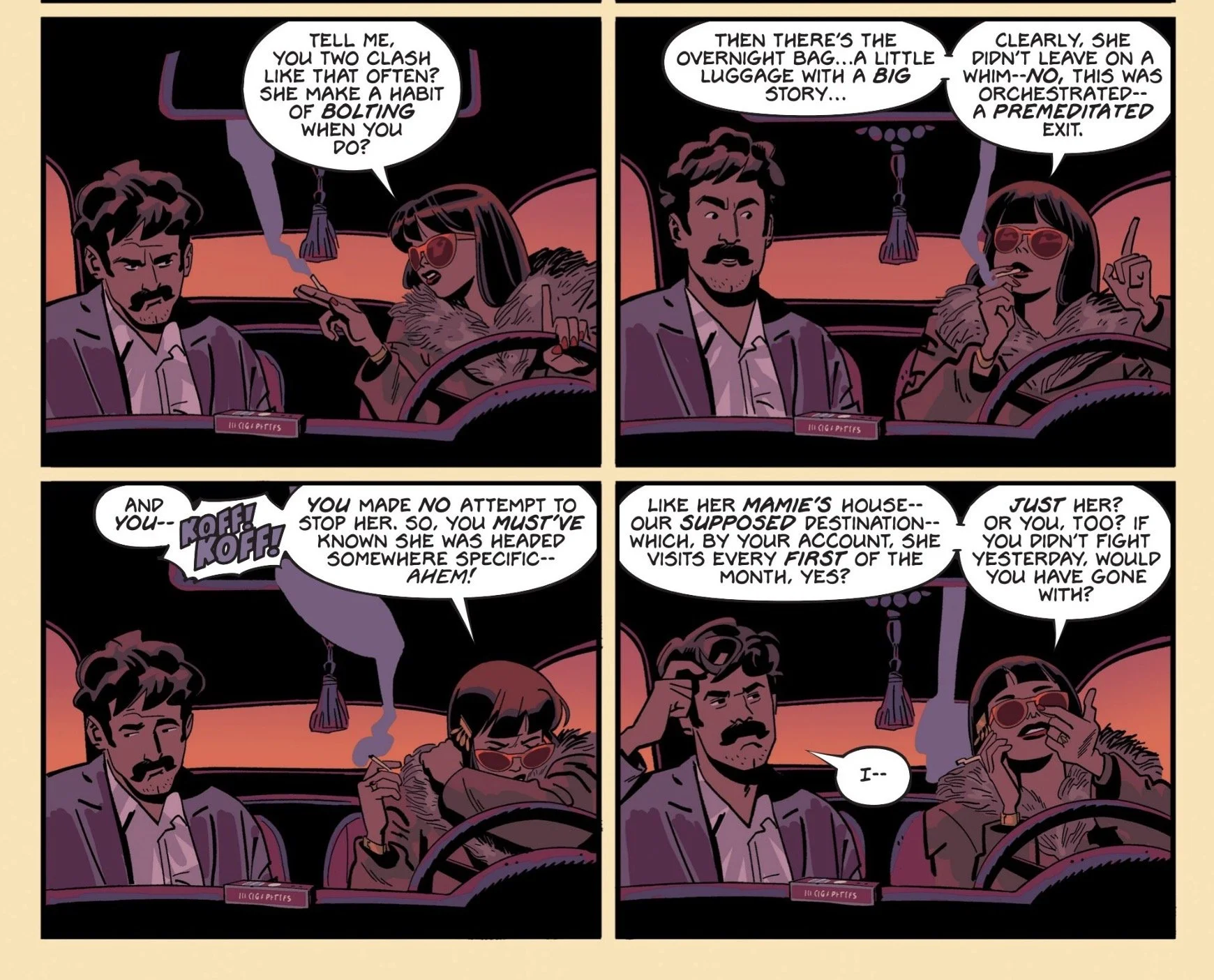
Leila and Chachu climb into her car to head out on their search. Over the course of no less than eleven panels, Leila gives a lengthy deductive explanation that would make Sherlock Holmes or Brian Michael Bendis proud. When she pauses to take a drag of her cigarette, Chachu hilariously asks "Oh, my turn?" He then responds to her theorizing with the facts that she was missing, and in the end they decide they need to head to Las Vegas. As they hit the road, there's really nothing else for them to say, so Leila's internal monologue takes over again. Once again, this scene shows how good she is at piecing together clues, even if she has not yet learned to make sure that she has all of the pieces before trying to put the puzzle together.
Finally we jump backwards in time to the previous night, where we see that Cleo did indeed go to Vegas. Based on what happens to her there, this case is going to get a lot more complicated before it's over.
Drawing Conclusions
If you think the name Iman Vellani seems familiar, but you can't place it—have you seen the Marvel Studios productions Ms. Marvel or The Marvels? She played Kamala Khan, aka Ms. Marvel, in those. Chachu is not her first comics work—she did two Ms. Marvel miniseries with a co-writer—but it is her first solo work. She absolutely nails the neo-noir feel, particularly through Leila's voice and the way every conversation carries as much subtext as text. She has a bit of a heavy hand with the narration, and might get a bit carried away in spots, but that's true to the genre. If I had one complaint, it's that she mixes in a lot of themes and concepts tied to Leila's Hindi heritage but doesn't include any kind of footnotes or Lexicon for the uncultured swine like myself.
The art by Marianna Ignazzi works incredibly well for the story Vellani is telling. Leila dresses to look older than she is, but when she is wearing her oversized sunglasses it actually has the opposite effect. Much of the issue is made up of people talking, smoking, or talking and smoking, which doesn't sound like the most exciting thing visually. But she finds ways to keep things interesting by changing viewing angles and perspective. She also does a lot of work using facial expressions that tell you so much about what the other characters are thinking while Leila just keeps on talking.
Jordie Bellaire's color work is, as you'd imagine, excellent. Los Angeles is a very bright place, and so the color palette reflects that. Many panels are filled with smoke or steam, between ever-present cigarettes and things like cups of hot coffee, and those smoke effects blend interesting shadows into the overly bright proceedings. The last page of Leila and Chachu's portion of the story, a full-page spread of her car driving on the road to Vegas with her face (and Chachu's reflected in her sunglasses) superimposed over the scene is absolutely beautiful stuff.
I also want to mention the lettering by Lucas Gatton. Most of it is your standard "ordinary" comic lettering, clean and wrapped in traditional speech bubbles. There are two notable exceptions, though. First, Leila's narration boxes are in a slightly less precise style, almost like a neat kind of printed handwriting, and the boxes are not perfect squares. The second is also one of the coolest visuals in the whole issue—when Leila is spotted by Chachu on her stakeout and tries to take off, her speech balloon stretches out and actually wraps around her car's spinning tires. It's a very random effect, there is nothing like it anywhere else in the issue, but it's still a very cool and unique one.
This is the City of Angels, and You Haven't Got Any Wings
Chachu #1 is a dense comic book. It's a sun-soaked neo-noir just dripping with style. It's not a short read. It's chock full of text, from dialogue to classic noir-style narration. But if you put in the work, you'll find an impressive read with compelling characters and an intriguing mystery.