
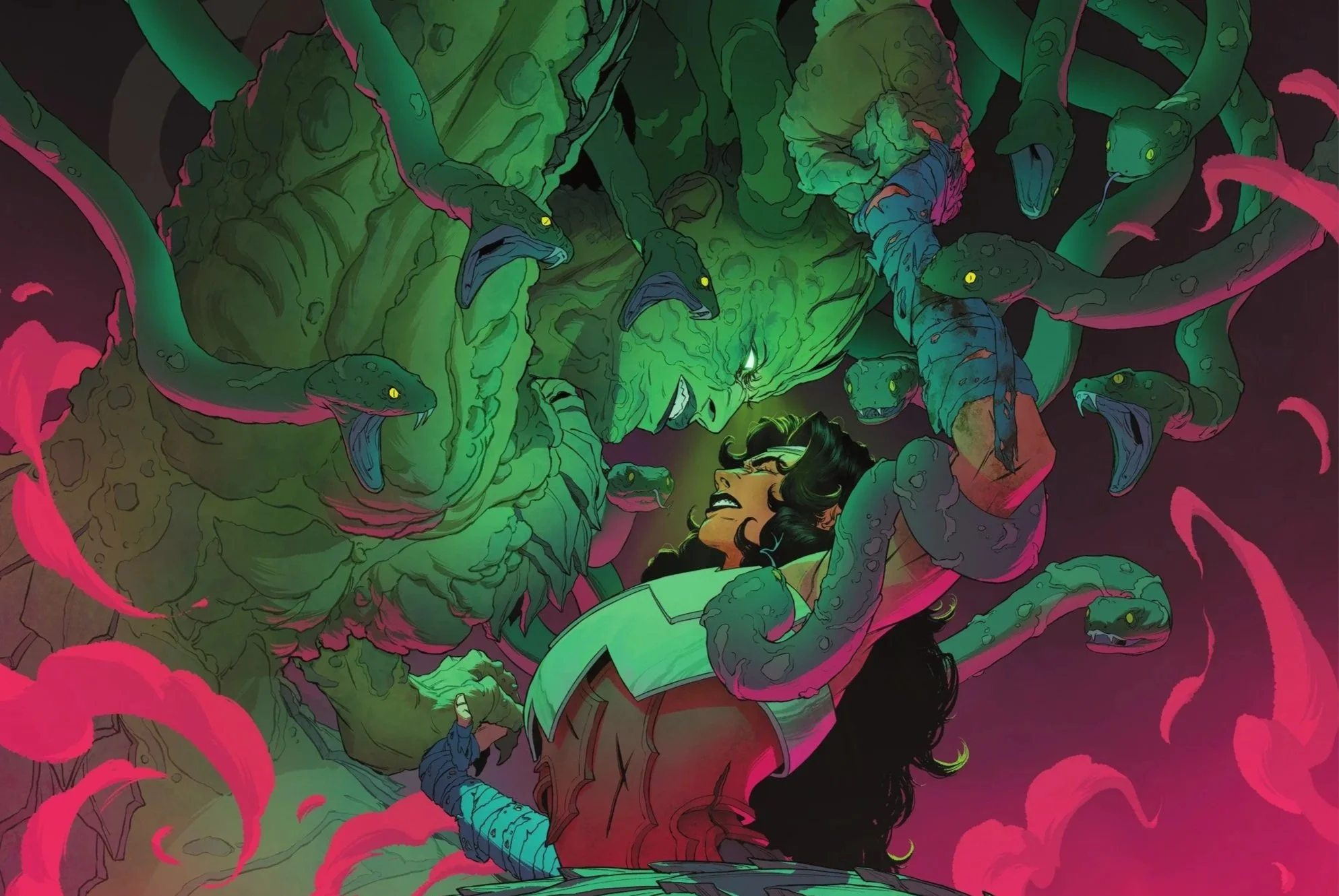
From day one, Absolute Wonder Woman has been a series that’s stood its ground the hardest on its core theme: compassion. Rooted in the very foundation of Kelly Thompson’s mythical Greek epic, Diana has always been an exemplar of love in a world of heartless deities who, more often than not, seem tremendously above it all. Absolute Wonder Woman Annual #1 takes a break from the madness of the mainline series to bring a more focused look at that theme, reminding readers exactly what makes this book so compelling.
It’s a story I didn’t know was coming, but in hindsight, it felt almost inevitable. What better way to explore these themes than to have Diana extend her influence toward Medusa? It’s a myth as old as humanity, with a story that resonates just as much now as it did then. Since Diana’s first usage of her "form" in the earliest pages of this run, there has been a haunting feeling that she must do more. This book is all about doing more in the only way Diana knows how: with a whole lot of heart and a little bit of elbow grease.
A Tale as Old as Time
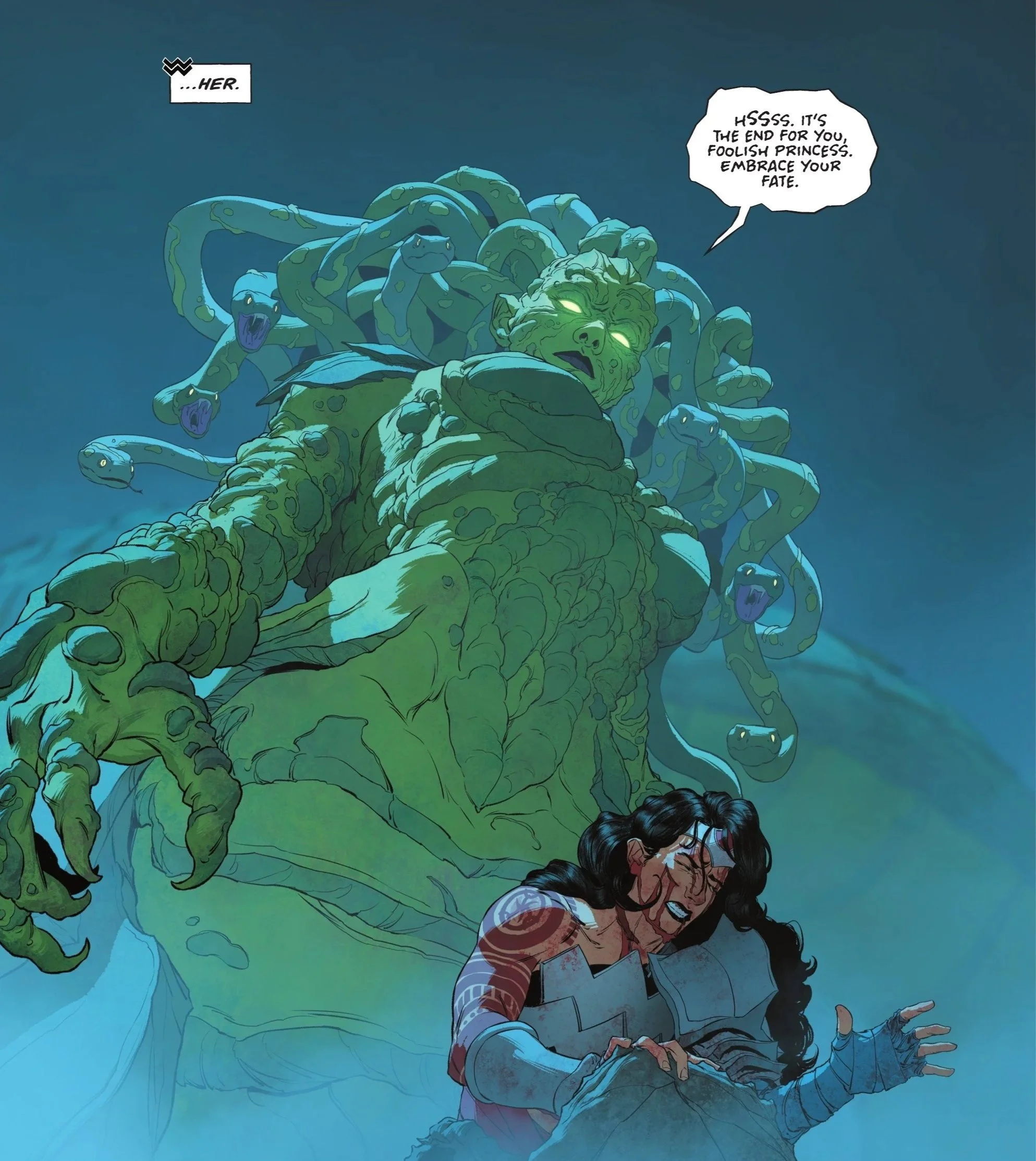
Absolute Wonder Woman Annual #1 delivers a short, focused, and compelling narrative that stands apart from the main series. Ever since Diana took on Medusa’s form to combat the Tetracide in the early issues, she has been haunted by the memories of that transformation. Traumatized by the echo of Medusa’s suffering, Diana spends every possible moment praying to Athena, seeking salvation for the cursed immortal.
Time passes and Diana’s prayers remain unanswered, yet her resolve never wavers. Eventually, Athena’s frustration reaches a breaking point and she acknowledges the request—albeit begrudgingly. She grants Diana one chance to free Medusa, with a significant tradeoff: the mission must be completed without her Olympian gifts. Diana agrees, and the adventure begins.
What follows is a journey to Medusa’s lair, where Diana must first bypass her sisters. When the inevitable face-off occurs, Diana chooses words over fists to make her claim. Medusa, weary from millennia of cursed existence, is initially doubtful but ultimately accepts the help. Using her lasso, Sacrifice, Diana entreats Medusa to choose her desired form. Medusa does so, returning to her original visage from before the Gods cursed her. All’s well that ends well, with the burden lifted and even Athena acknowledging the mission's success.
Hurt vs Heal
Kelly Thompson’s sprawling Greek epic of an "Amazon from Hell" is still firing on all cylinders, leveraging the genuine heart and charm that has made this such a beloved story. I confess, the Medusa myth is such an enduring part of modern retellings that it would’ve been almost absurd not to have it envisioned here in the pages of Absolute Wonder Woman.
For the most part, it’s pitch-perfect. Diana being truly shaken by Medusa’s plight—to the point that she’s moved heaven and earth to get the Gods’ attention—is perfectly in line with her actions throughout the series. She is challenging the idea that the "Greek Monsters" she faces were beings with tragedy at the heart of their transformation. Diana has committed herself to absolve these beings of their burdens in whatever way she can: a better world for mortal and immortal alike. It’s a great throughline, and this issue is where Thompson truly puts a star on this overarching theme.
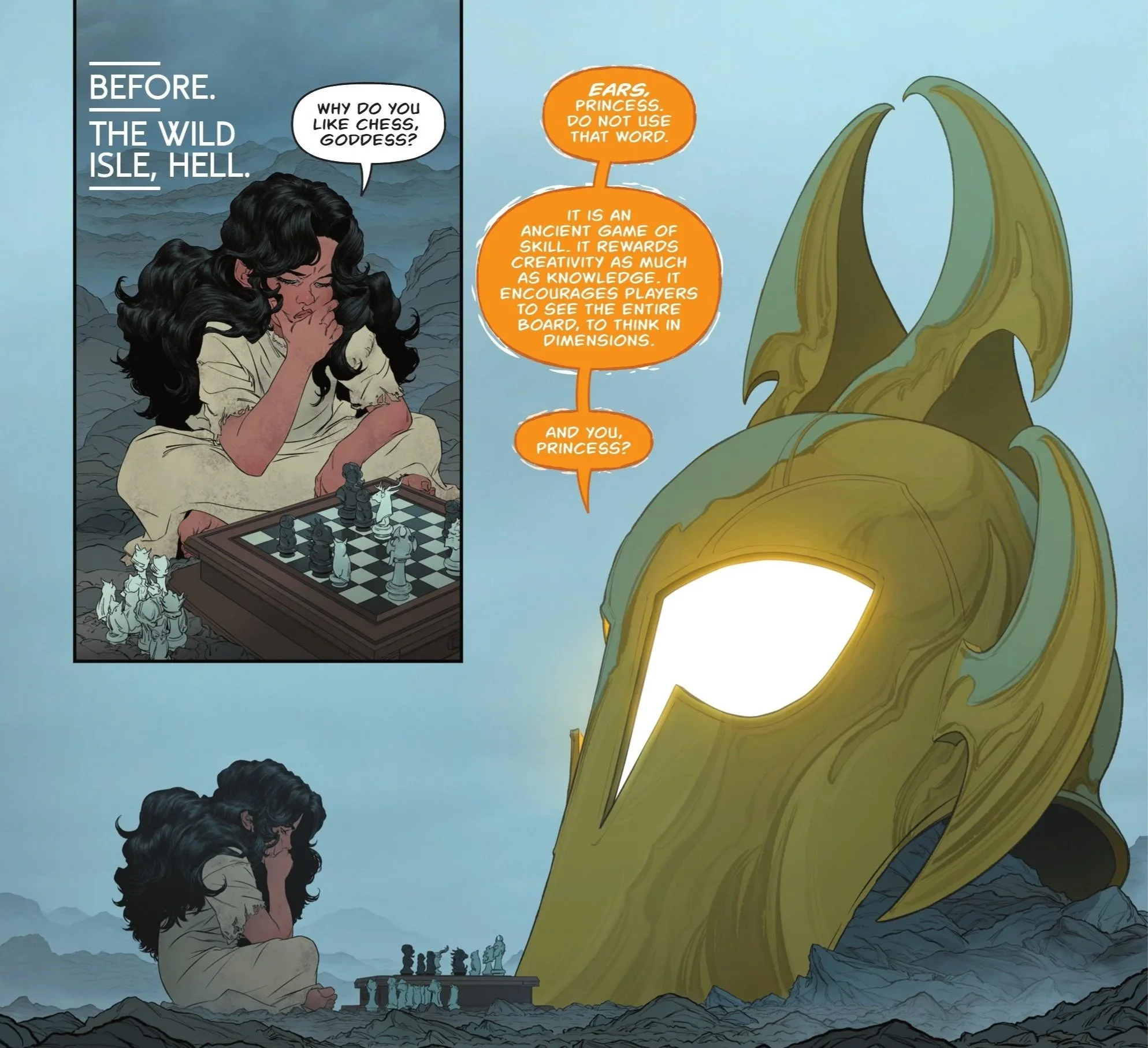
We’ve already become familiar with Diana’s place in this new Greek pantheon: created as a weapon, raised in Hell, patroned by the Gods, and determined to better the world. Athena’s addition to this story furthers that narrative through flashbacks of her training a young Diana in strategy and tactics, even as the young Amazon questions the Goddess’s methods. It’s a fun segment that frames their future interactions, especially as Athena feels slighted by Diana’s constant prayers. Like most of the Gods before her, Athena offers assistance with caveats—a great way to frame this modern myth in a 2026 setting.
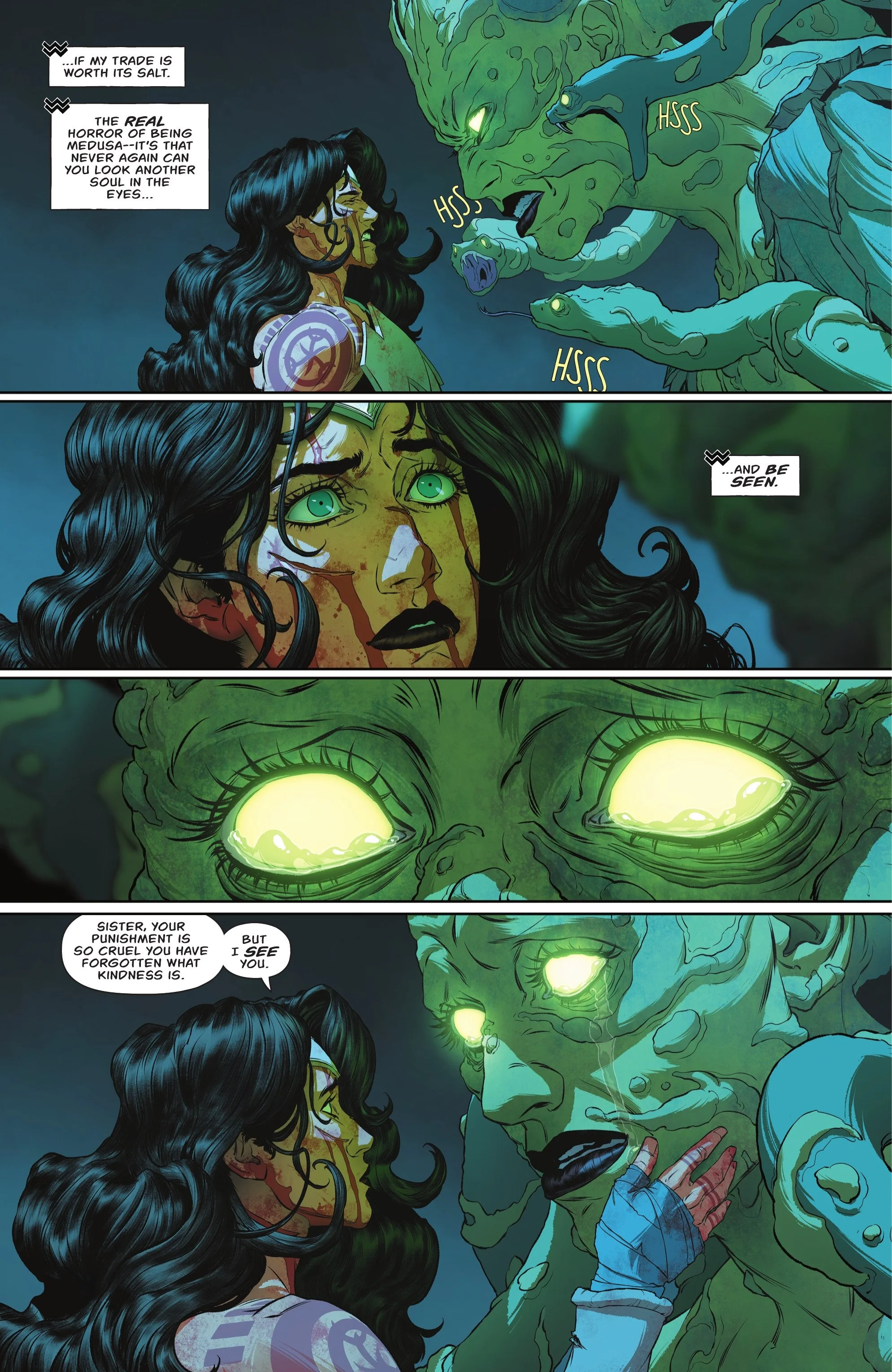
The genuinely best part is the encounter with Medusa herself, where the real themes come into play. Medusa, cursed to turn beings to stone if she locks eyes with them, is condemned to an unholy existence of spiritual and emotional solitude. Her sister Gorgons stay with her, but they can’t even look at her because of the curse—yet they endure out of love for their sibling.
When Diana arrives and is confronted by the Gorgons, she overcomes the first two sisters by using a sensory-deprivation helmet to block out their ear-shattering screams. Greek heroes and their "little toys" have always been a fun part of the mythology, so this homage was more than welcome. But when Medusa finally steps forward to take on Diana, we see the real fruits of her labors. To render herself immune to the stone-turning gaze, Diana temporarily sacrificed all her godly powers to Athena. With brawn no longer an option, Diana uses the only ability she has left—the sharpest blade in her arsenal: her heart.
I love the moment where Diana, now able to look at Medusa directly, uses that honest sense of emotional connection and empathy to achieve her goals. In sharp contrast to the violent outcome of Perseus and other heroes in the original myths, Diana achieves meaningful change for both herself and Medusa. Not through barbaric carnage, but by simply having seen through Medusa’s eyes, empathizing with her suffering, and choosing to reflect that back to her. It’s a beautiful moment that captures the most endearing aspects of both Greek myth and Diana’s current adventures, all wrapped up succinctly for readers to enjoy.
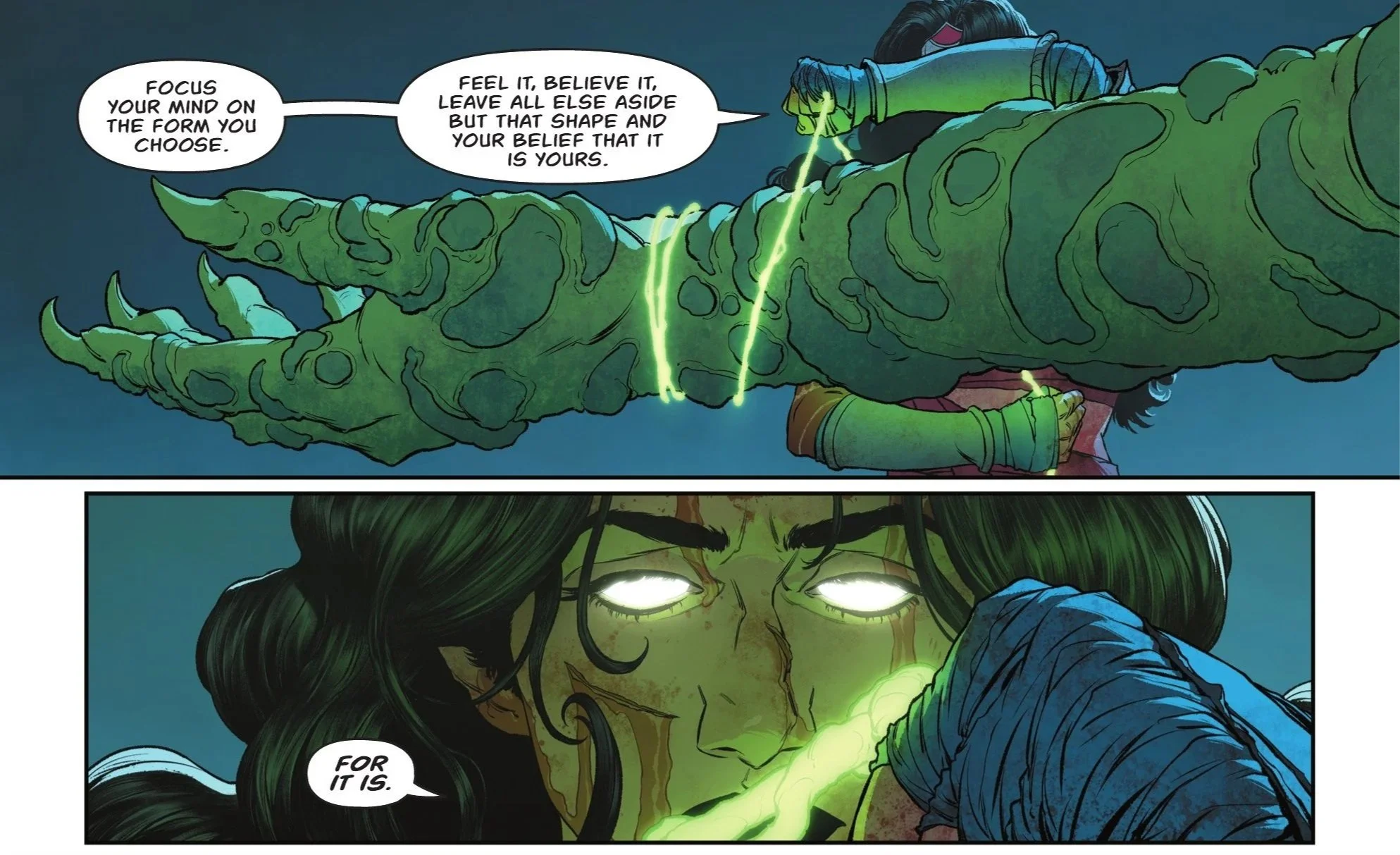
While there are so many positives deservedly heaped on this issue, there is a growing concern developing over the course of Kelly Thompson’s overall run—one I hope gets sorted eventually. It first became prevalent in Diana’s encounter with Gaia back in issue #14 and is markedly more pronounced here: the fact that Diana is honestly not being challenged enough. She consistently and conveniently solves massive conflicts with the metaphorical flick of a wrist.
At no point is her worldview on compassion or empathy ever questioned, reshaped, exploited, or even pushed back against in any real capacity. It feels jarring to see eons-old mythological deities suddenly acquiesce against their very nature simply because Diana says the equivalent of "no u." Instead of addressing the critique that everything is too easy or conveniently dealt with, Thompson seems to have pivoted in the opposite direction: “Okay, she’s physically overpowered? We’ll just have her get beaten up more.”
I’m genuinely wondering if there’s going to be a meaningful resolution to this persistent writing flaw. Perhaps there's an underlying motive for the Gods being so easily swayed that will eventually backfire in a spectacular or sinister fashion? Or maybe we need to see at least one attempt at reconciliation fail. Right now, it feels like Thompson is sacrificing narrative depth for the sake of pacing and convenience.
A Grand Mythology - Told in Line and Color
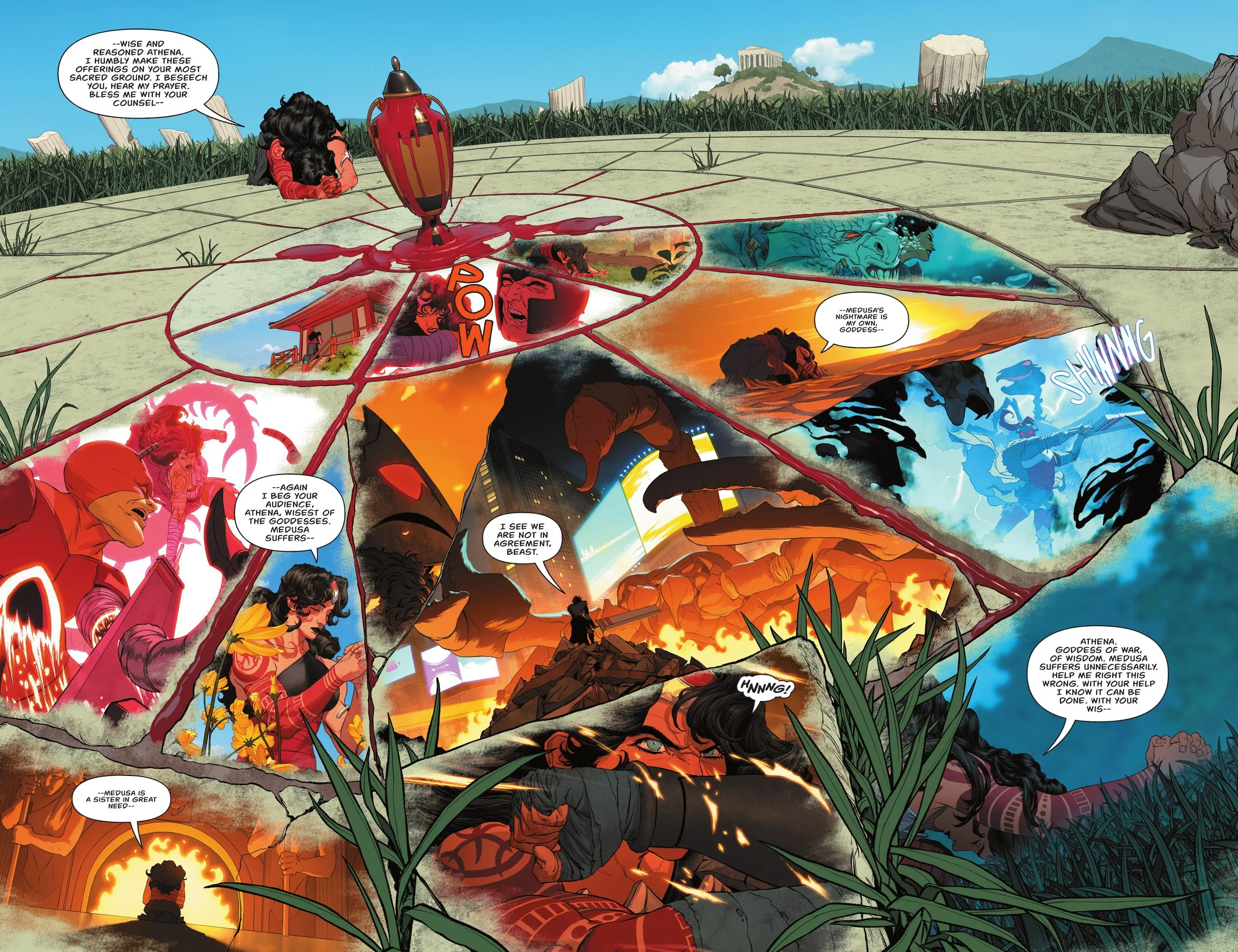
I think it’s safe to say that Mattia De Iulis has saved some of his best work for this annual. His previous work on the series always maintained a darker, more grounded aesthetic compared to his peers, but for this issue, his line and color work achieve new levels of grandeur. He masterfully showcases both the colorful highs of Diana’s heroics and the frightening majesty of Olympian splendor.
Athena’s design evokes the motifs we’ve always associated with her—namely, the helmet and owl-like symmetry. But as the rest of the Gods introduced throughout the book, there’s a definitive air of quiet mystery to her; her form radiates power on an unimaginable scale, yet her motivations remain elusive. Her face is also obscured, consistent with the designs of Artemis, Hecate, and Aphrodite from previous encounters.
The journey to meet Athena is also realized splendidly, featuring an almost claustrophobic walk through the underworld that eventually opens up into Mount Olympus itself. The transition from Hell to Heaven is done masterfully, matching Diana’s own discomfort and anticipation. There are also some truly lovely panels of Diana constantly praying for Athena’s aid—symmetrically organized and showcased in splendid detail and coloring.
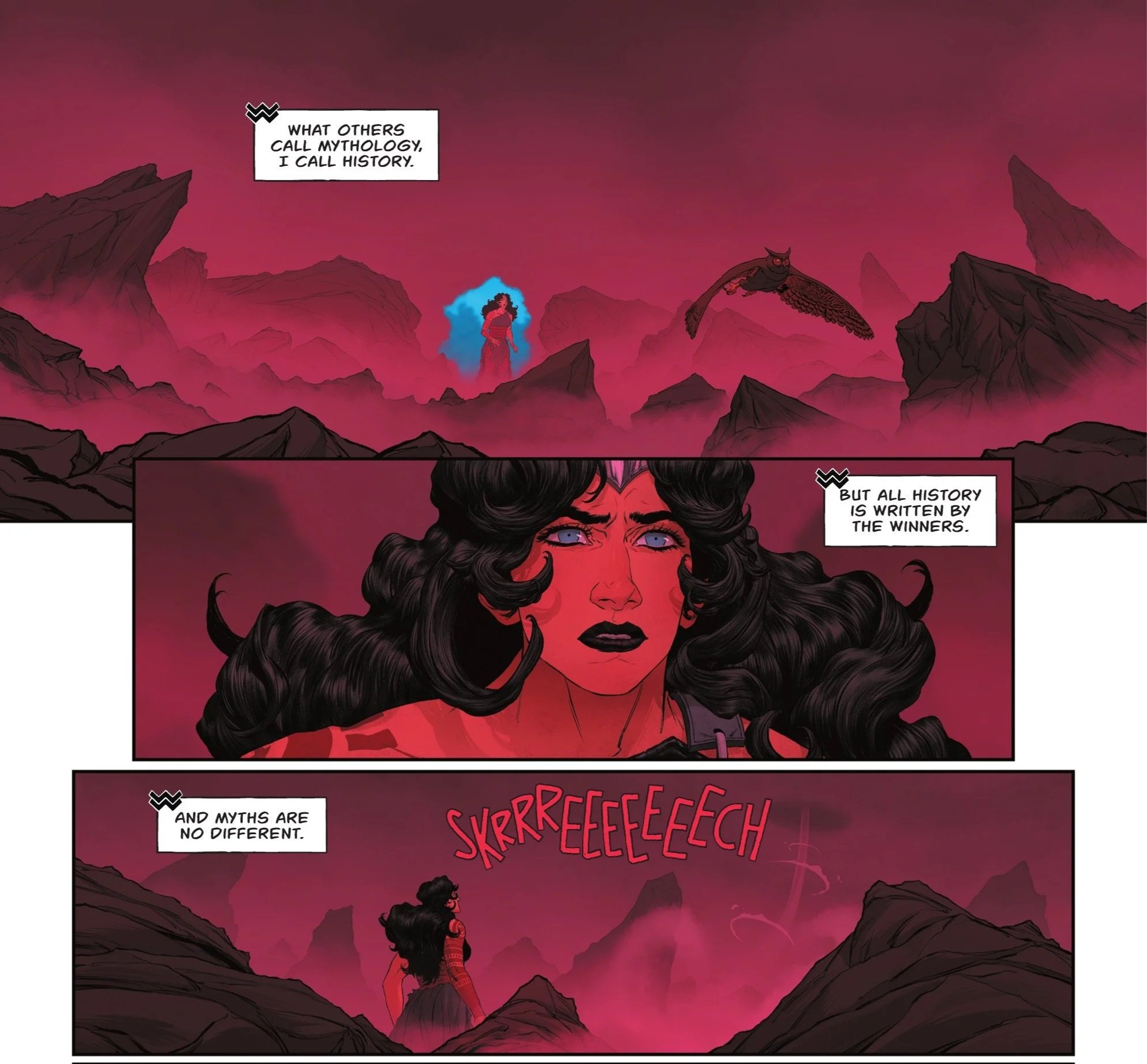
And of course, the main event of the story—Diana’s battle with Medusa—is visually realized as the emotionally heart-wrenching and gritty encounter that it is. Diana is initially decked out in her warlike armor, with lenses shutting down to cover her eyes and ears against the Gorgon’s assault.
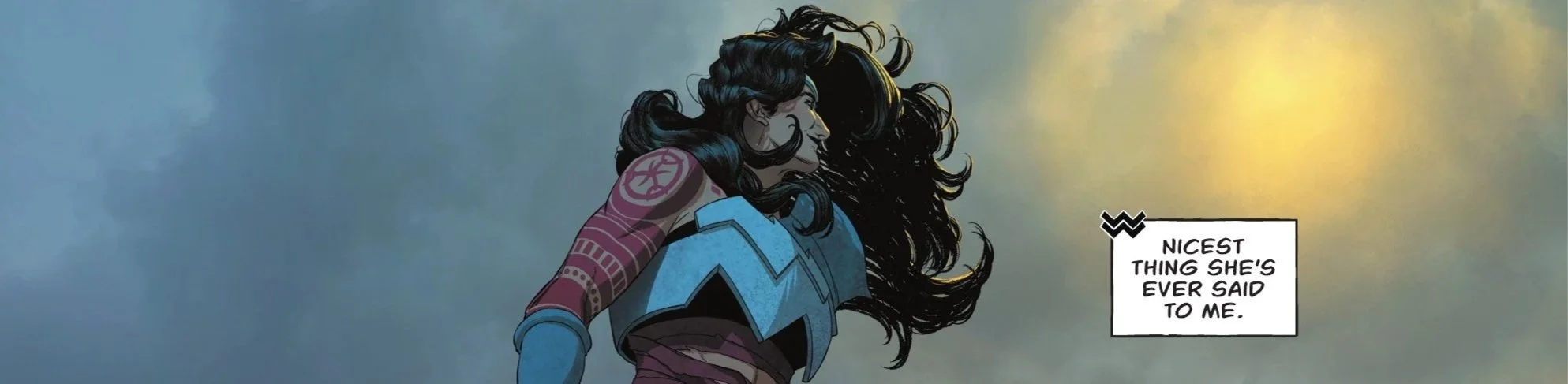
Transitioning from the warrior aspect of early Greek heroes to the compassionate paragon she is in her own story, this shift is marked visually by Diana confronting Medusa with her eyes and only her words. Emotion wells in both their expressions as the eerie colors of Diana’s armor and Medusa’s reptilian form meet against the backdrop of the lair. And when Medusa’s transformation is finally at hand, De Iulis pulls out even more awe-inspiring colors to empower his linework, showcasing the mythical majesty of the story in all its glory.
The World According to Wonder (Woman)
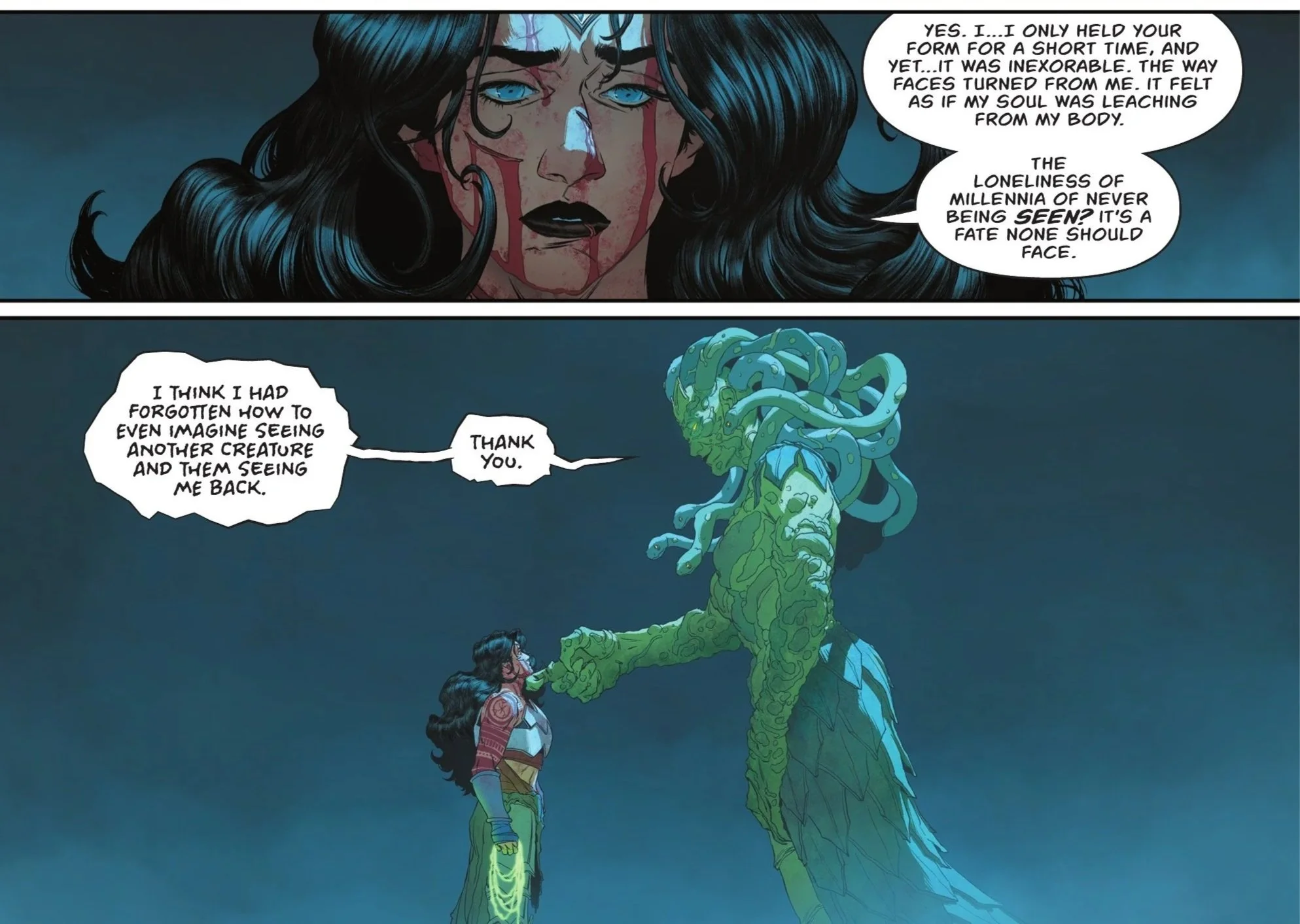
Absolute Wonder Woman Annual #1 is the perfect jumping-off point for new readers who want to immediately understand why this version of Diana has become an icon. Greek mythology has always endured in popular culture, and this story plays the "greatest hits" while placing Diana’s heart in direct opposition to the brutality of that world. The Medusa storyline structures every aspect of that conflict in order: Diana's rebuttal against the gods and her relentless will to change the fate of monsters wronged by the Olympians.
From Kelly Thompson’s endearing writing to Mattia De Iulis’ impeccable art, there’s more than enough to love here. And while the concern remains that Diana isn't being idealistically challenged enough in her dealings with the Immortals, it does nothing to detract from the core of the series. That is a concern for another day—which I’m hoping gets addressed in a meaningful way (hey, that rhymed!).
Final Verdict: Absolute Wonder Woman Annual #1 is fantastically heartfelt story that perfectly encapsulates everything that makes Diana truly divine through heart and hope, even if she does find success a little too frequently and conveniently.