
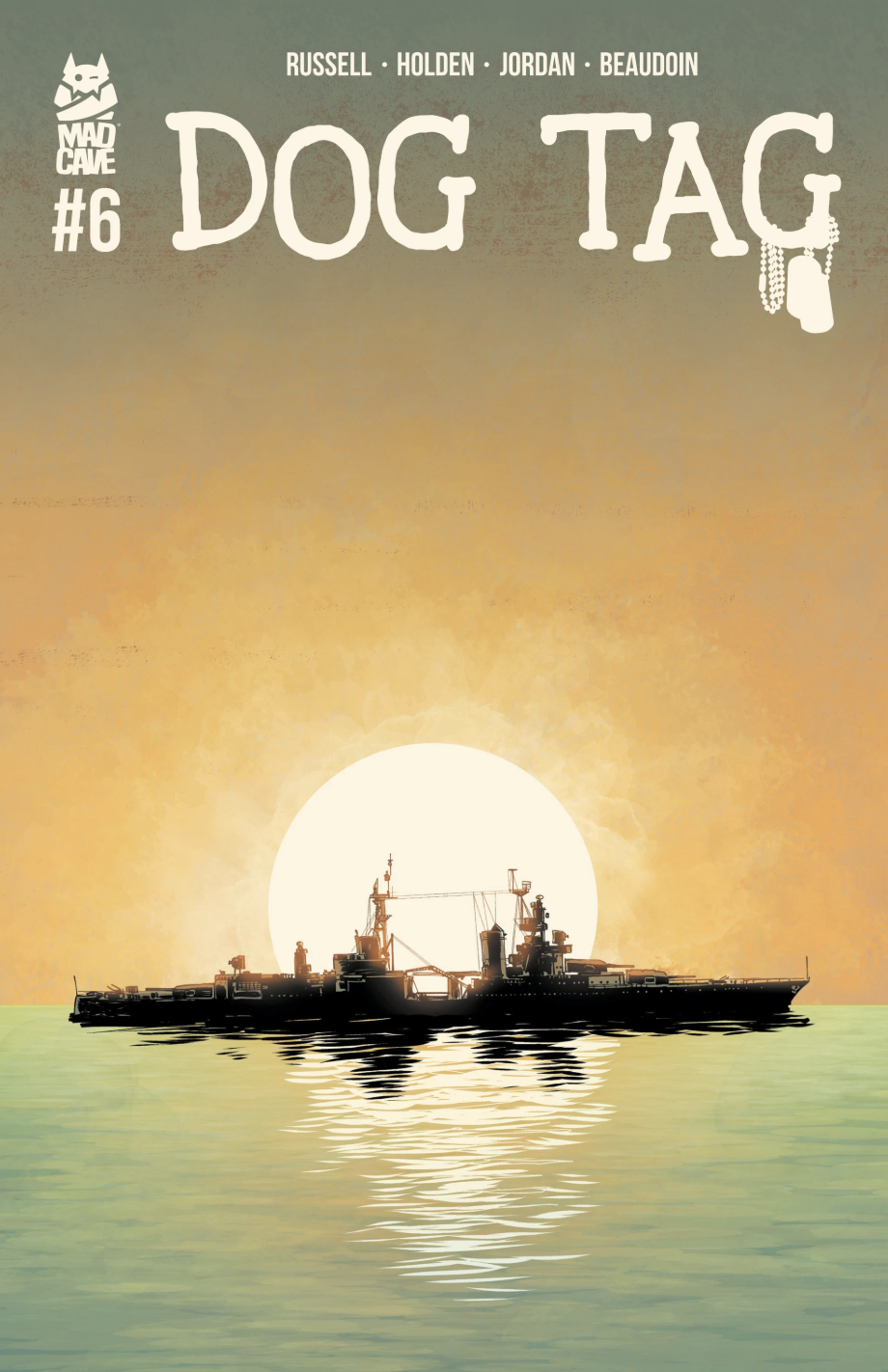
Dog Tag #6
Written by Mark Russell
Pencils and Inks by PJ Holden
Colors by JP Jordan
Letters by Buddy Beaudoin
Cover Art by PJ Holden and JP Jordan
“War has to be about more than the justification of cruelty. Because we’re simply too good at it.”
After six thought-provoking and powerful issues, Mark Russell’s Dog Tag has reached its impactful conclusion. Everyone who knows even a tiny bit about world history knew where this story was ultimately going to end, but this series wasn’t simply about racing towards a conclusion. This was a story about the journey. It was about what a journey through the worst conflict in the history of mankind can do to people and how they come to terms with the violence they experienced. A journey that began on the shores of Normandy comes to its conclusion, and Tom Fuller will never be the same again. This entire series was absolutely incredible, and I can’t wait to get into this one. Let’s do it. Spoiler Warning for Dog Tag #6 Now in Effect!
Tomorrow, the World Forever Changes
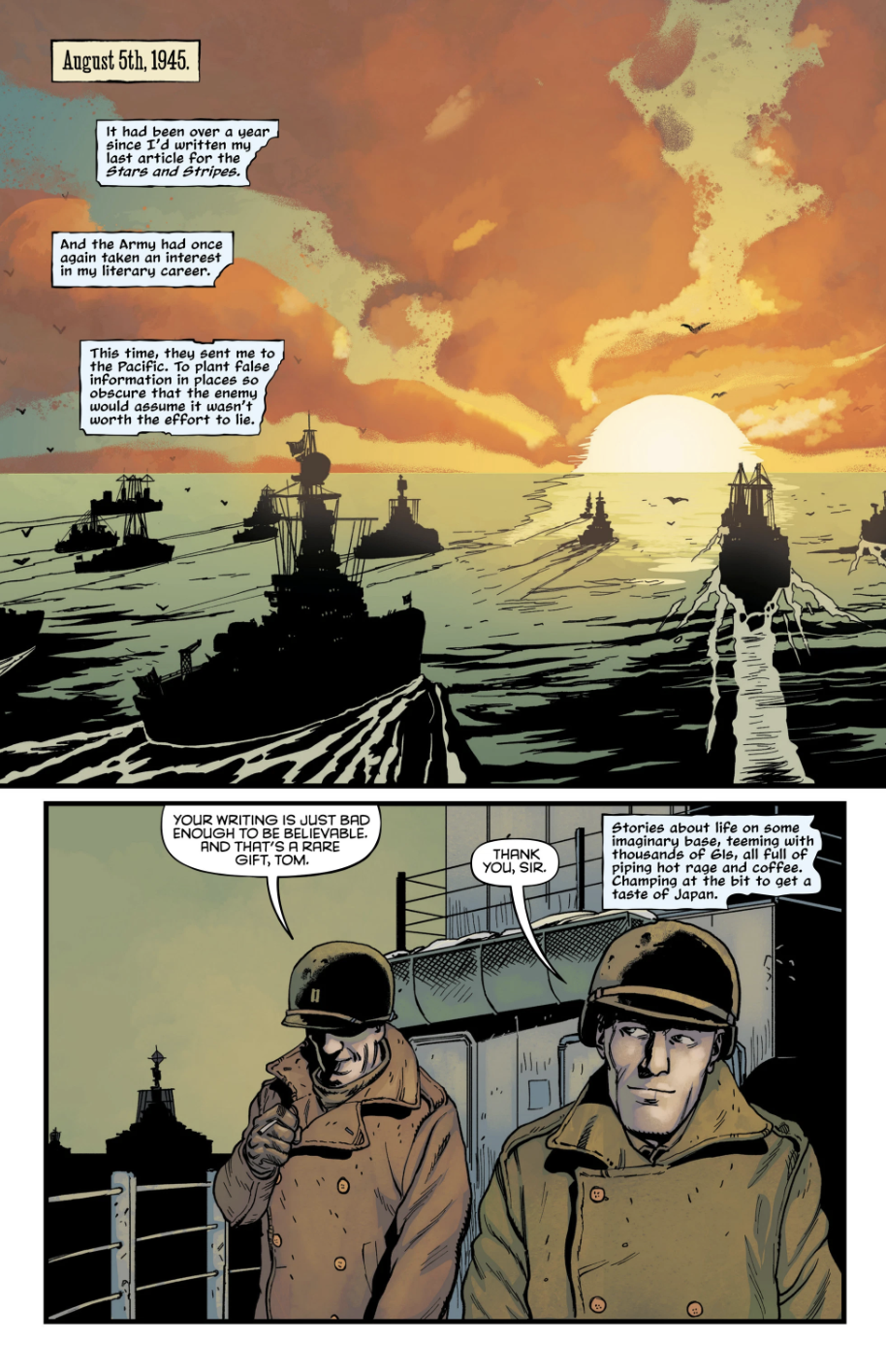
It’s August 5th, 1945, and we join Tom Fuller, who has been through just about everything a member of the army can be at this point, as he heads to Japan aboard the USS Alabama with legions of American troops. At this point in time, almost everyone believed a mainland invasion of Japan was coming and the loss of life, on both sides, was set to be staggering. They had no idea what horrors truly awaited the Japanese just as the sun would rise the next day. This early part of the issue deals with Fuller and some of his comrades coming to terms with the fact that they are most likely going to meet their end during this invasion, but also shows what they all think of the Japanese and their tactics of warfare.
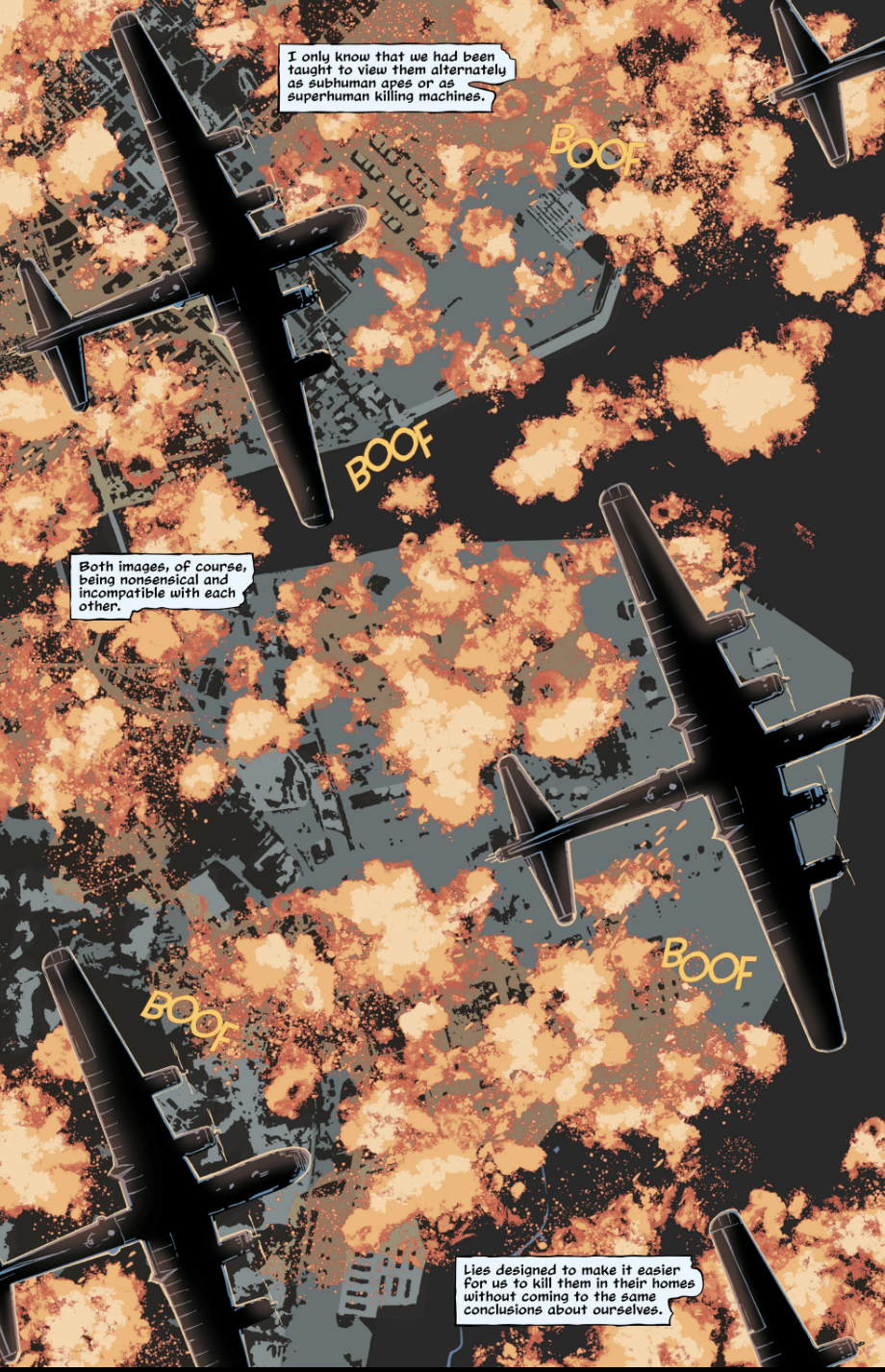
Scenes flash by of battles past with the Japanese forces including a splash page of what we can almost assuredly assume is Pearl Harbor. The men on board fully understand what kinds of tactics and just how far the Japanese soldiers will go to claim victory for their country, so it's pretty easy to understand the tension, anxiety, and flat-out terror some of the soldiers are feeling as their ship continues its advance towards the island of Japan. Once again, Tom’s inner monologue shines throughout this issue, and in this opening section he thinks about how the American troops have been trained to think of these people as nothing more than killing machines so that when they have to eventually kill them they hopefully “don’t come to the same conclusions about themselves.”
Part of the reason Dog Tag has shone since its first issue is that it isn’t afraid to speak on the harsh truths of what warfare is really like and what the people involved really go through. This isn’t a story told from the perspective of government officials or the 1%. This is a story told from the perspective of someone who has seen what the horrors of war look like from up front. Tom Fuller saw the carnage on the beaches of Normandy. Tom Fuller saw what it looks like when regular towns in the countryside are brought into the violence of conflict. Tom Fuller and his squad were almost all killed in the Battle of the Bulge in the Ardennes Forest, and to top things off, in the last issue they had to defend a massive castle being used as a German prison from falling back into the hands of the Luftwaffen.
My point with all this is, Dog Tag has been a revelation in how emotional and thought-provoking war comics can be. I’ve said it before in my reviews that this is a story I thought I wouldn’t vibe with simply based on its genre, but at the end of the day I couldn’t be happier that I was assigned this series to read and review. It was brilliant all the way through and does not just a good job but a great job at showing what the real horrors of war can look like. Wars aren’t just fought in some random faraway place where people aren’t affected. They’re fought in villages full of people, on beaches drenched with blood, in forests of hell, in prisons of misery, on the vast oceans and in the open skies. It’s all about perspective, and Dog Tag provided a perspective that I think every comic fan should check out.
Horrors Beyond Imagination
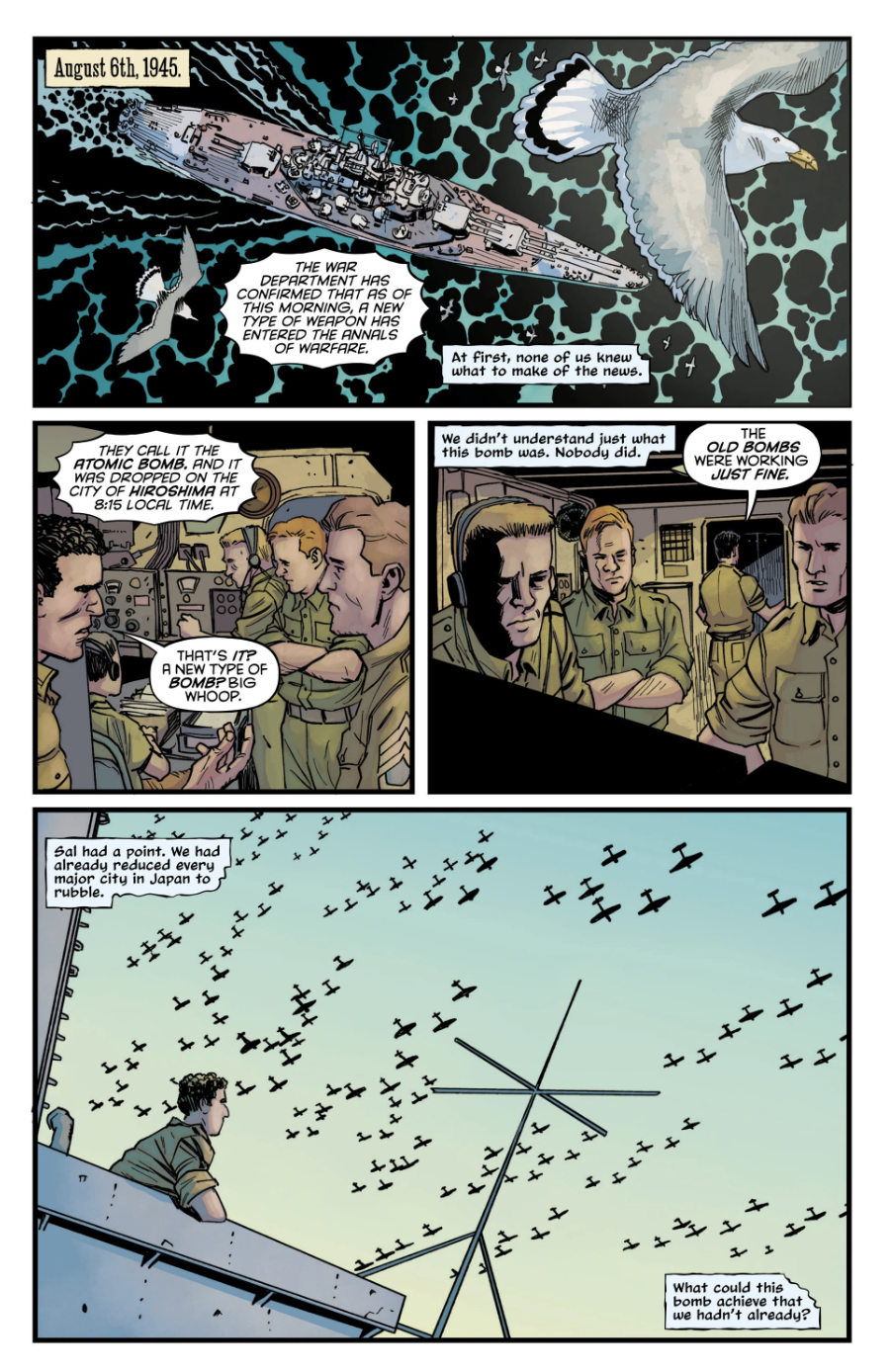
The calendar flips from August 5th, 1945 to August 6th, 1945. The sun has risen on a new day, and Tom Fuller and his squad are waking up to the news that the United States of America has dropped a new kind of bomb on the city of Hiroshima. I’ll let Tom’s quote take it from here: “We didn’t understand just what this bomb was. Nobody did. We had already reduced every major city in Japan to rubble. What could this bomb achieve that we hadn’t already?” Ten days after that “new kind of bomb” dropped, Japan finally surrendered.
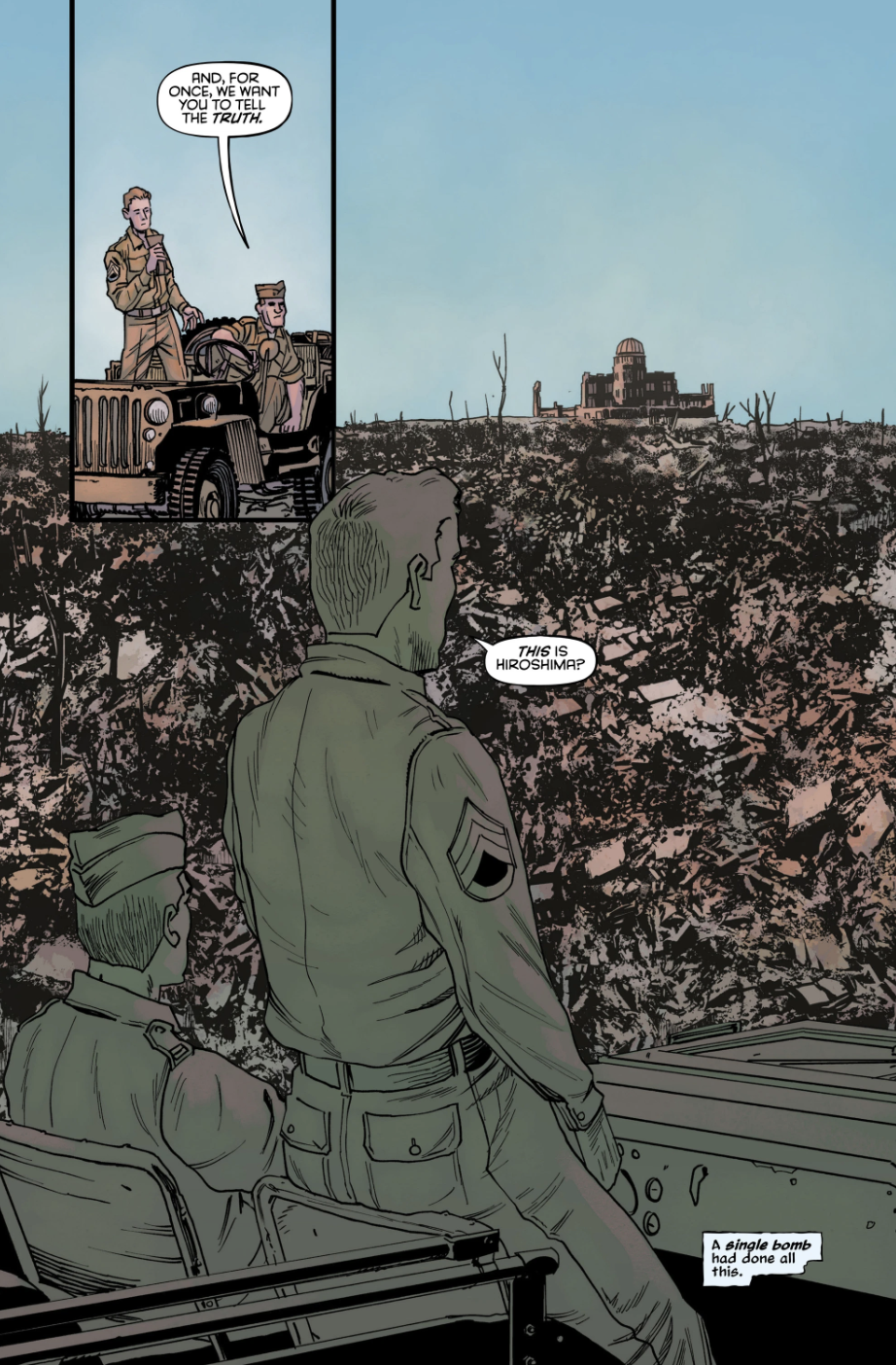
When Tom Fuller and his fellow soldiers hear the news of Japan’s surrender, they’re ecstatic. World War II had finally reached its end, and they were now all set to go home and rejoin friends and family as they all got to put their lives back together. The army isn’t quite ready to let Tom go yet, though, as he is assigned to cover the horrible and terrifying truth of how badly those bombs had wounded the island nation of Japan. The U.S. government needs to know just how powerful their bomb was. On August 16th, 1945, Tom Fuller is brought to Hiroshima and cannot believe the destruction his eyes behold. He quickly realizes these people had no chance in the world at survival. They didn’t have enough time to run and hide in any sort of shelter. They were ripped off the face of this Earth, and those that weren’t had injuries you wouldn’t wish on your worst enemy.
When we look at turning points in human society, what happened on the morning of August 6th, 1945 is one of the most impactful in the entirety of human existence. That morning, the United States of America rewrote the book on what was possible in warfare and used the power of the Atomic Bomb, known as Little Boy, to obliterate the city of Hiroshima. People close enough to the impact zone were turned to ash; disintegrated beyond measure. Those who weren’t as close suffered radiation burns so severe that in some cases all of their skin was burned off. To this day, it's one of the single most horrific acts ever committed in the history of humankind. You would think after something like that happened, one would be more than enough. If only the Japanese had surrendered. Another bomb was dropped just three days later on the city of Nagasaki. They did after that.
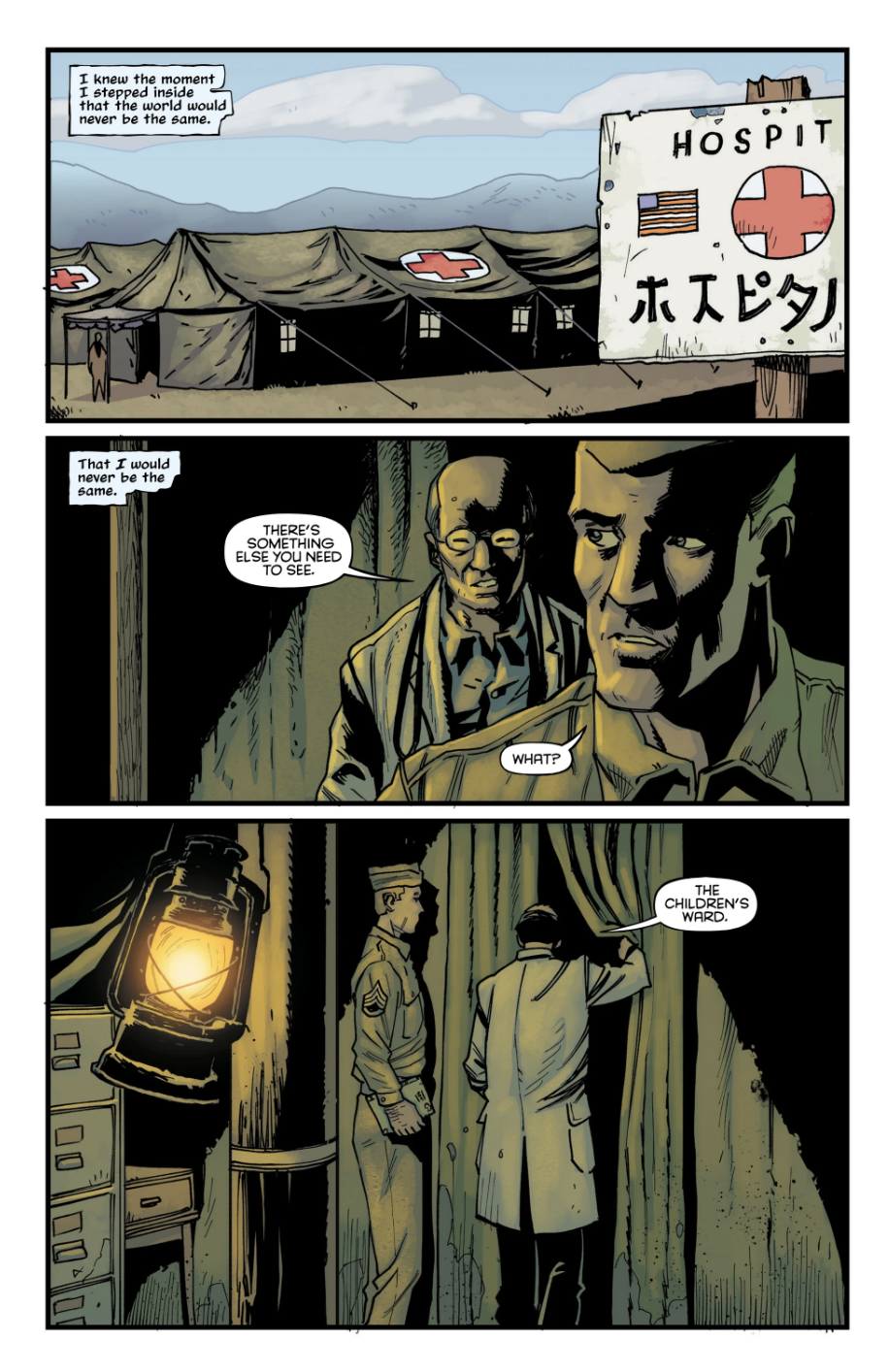
When Tom is brought to Hiroshima, not only does he survey the city and see the destruction there, but he also hears about people now known as “Hibakusha.” After the bomb fell and those with severe injuries and burns began to walk away from the main city limits, they would walk around the countryside seeking assistance. The Japanese thought they were ghosts, given how terrifying some of them looked. As Tom says, “no one knew anything about radiation back then.” These types of injuries were never witnessed by people before. It almost didn’t seem real that something man-made could cause this kind of destruction and pain. As a former history teacher, even I didn't know about the term “Hibakusha” and what it entailed about the survivors of the atomic bomb. Dog Tag not only provided an incredible narrative around Fuller and his squad but also provided background and knowledge on World War II that gave much-needed context to what it was like for the soldiers who experienced it. If you’re at all a World War enthusiast, this book needs to be on your radar. Even if you don’t happen to be, I think anyone who enjoys history would love this story.
Tom is eventually brought to a temporary field hospital that was set up to help survivors from Hiroshima. Inside, he finds people with all kinds of injuries and in all kinds of pain, but what really breaks him inside is what he finds in the children’s ward. Mark Russell and the art team of PJ Holden and JP Jordan leave what Tom sees in the children’s ward to our imagination, thankfully; we don’t get a visual of what Tom sees in there. All we get is his blank stare in the next part of the issue as he struggles to come to terms with seeing children without any of their skin left on their bodies. When Tom tells his squadmates of the horrors he witnessed in Hiroshima, he thinks they’ll be just as disturbed as he is and just as horrified by what his country is now capable of. He is sorely mistaken.
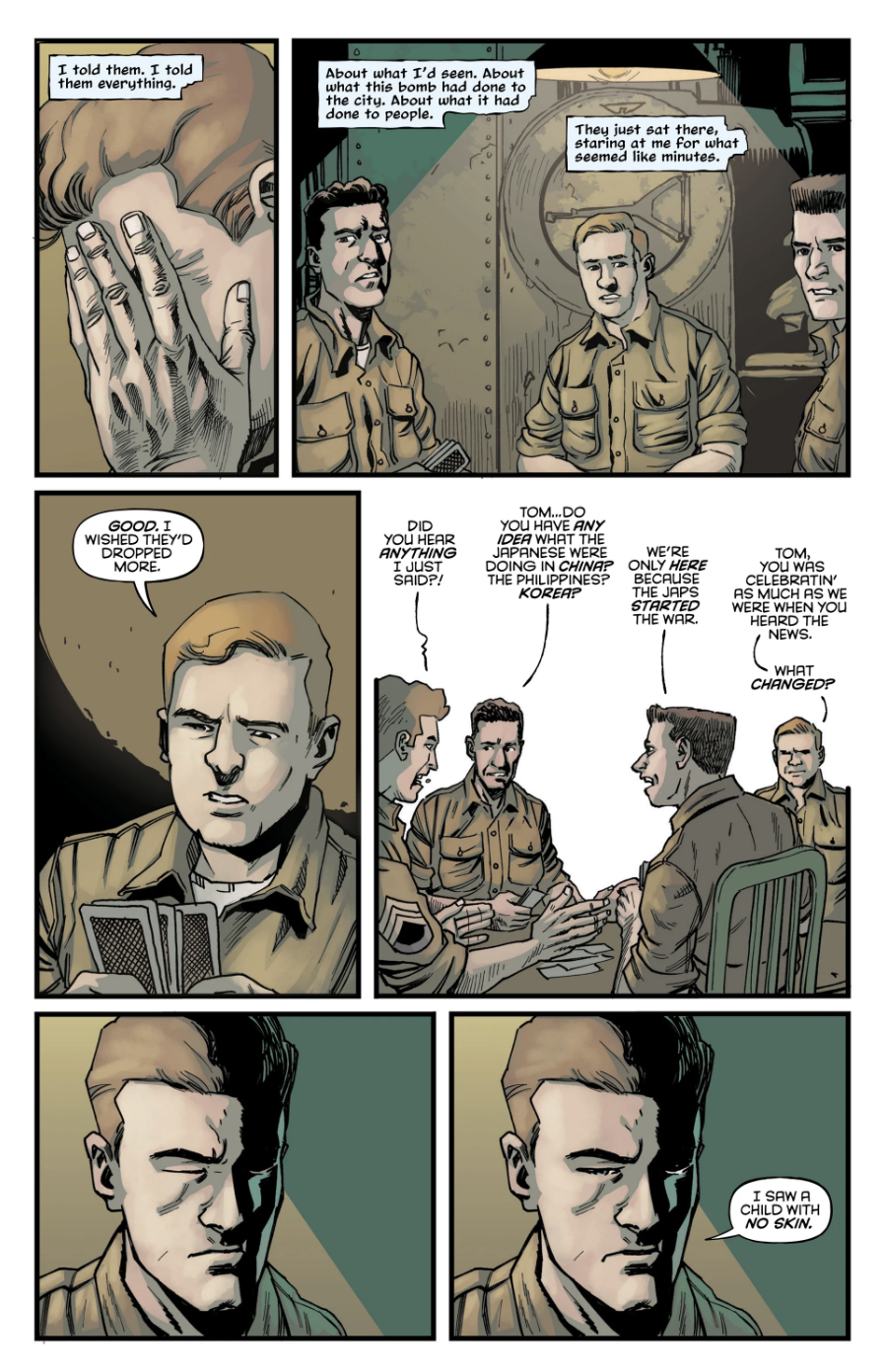
His squadmates have no remorse and claim that because of everything Japan did to the US, the Philippines, Korea, and China, they deserve what was coming to them. One of his squadmates says that they “wished they’d dropped more.” Tom knows how big of a tragedy this was; when it comes down to it, these children had just as much to do with the war as “kids in Kalamazoo, Michigan.” Another one of his squadmates replies that it's “someone else’s tragedy.” Tom can’t take it anymore and leaves their poker game without saying another word. “They weren't there,” Tom thinks to himself, “they don’t understand.” The guys were just happy to be going home, to have survived the biggest conflict in the history of mankind; they were no longer concerned with how that victory was achieved.
Dog Tag doesn’t sugarcoat its characters. It provides a real look at how people felt during this time, and you can be sure there were people in Tom’s camp and people in the other. As if Tom needed one final gut punch, his article on what happened in Hiroshima is never published, and he’s honorably discharged from active military service. In Tom’s eyes, it's as if everything that happened in Hiroshima and Nagasaki was seen as nothing more than a means to an end, and it doesn’t matter that the entire field of war just changed. Did the atomic bombs end WWII? Yes, and most likely saved tens of thousands of Allied lives if they had tried to storm mainland Japan. Was it still an unspeakable tragedy? Yes, it was. Both things can be true, and it’s why, to this day, it's still one of the most debated incidents in human history. Tom’s journey has reached its end, but Dog Tag isn’t over just yet.
A Near Perfect Art Team
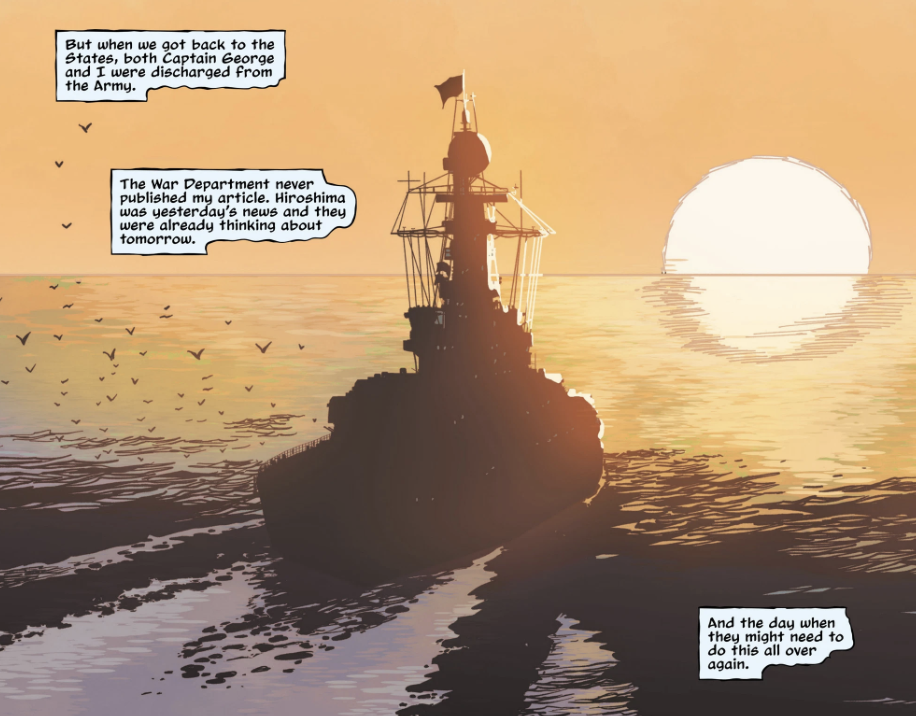
Before we get to the last section of this final issue, I want to make sure I give the art team of JP Jordan and PJ Holden their flowers for this run they just finished. Dog Tag isn’t just a book with a fantastic narrative; it's a book that has the perfect art to match. The classic feel of the art, the great use of colors in every issue, the battles that felt pulse-pounding, and the emotional moments that hit quite hard… I loved looking at this book just as much as I loved reading it. I was not familiar with the art styles of either of these two before I started reading Dog Tag, but when I see their names on a book from now on, I’ll be hard-pressed not to grab a copy on shelves.
I mean, just look at the cover on this issue alone. The silhouette of an American warship with the sun blazing in the background… almost like an atomic bomb lighting up the sky. I have nothing but great things to say about the work these two put in over the course of these six incredible issues, and I hope to see them in other new books going forward. Mark Russell’s tale of the Second World War just wouldn’t have hit as hard without the art stylings of PJ Holden and JP Jordan.
PJ’s pencils and inks brought out the emotions of these soldiers as they talked in their quiet moments and the horror of their experiences on the battlefield. JP Jordan’s colors, whether it was the blazing yellows and oranges of a sunset, the dark blood splatter after a gunshot, or the bright white blindness of an explosion… It all looked great. Hats off to these two. I won’t forget the art stylings in this one. Now, let’s wrap up issue #6 and the story of Mr. Tom Fuller.
War… War Never Changes.
Flash forward to 1955, and Tom is signing copies of a book he wrote in a small bookstore in Waukesha, Wisconsin. As he says, he just kept on writing even after the war came to a close. A surprise visit from Hank, one of the members of his old unit, stirs up memories and has Tom once again recalling that horrifying day back in August of 1945. When speaking to his friend Hank over a cup of coffee, Tom recalls the moment he lost his faith in humanity. I'll let him take it away:
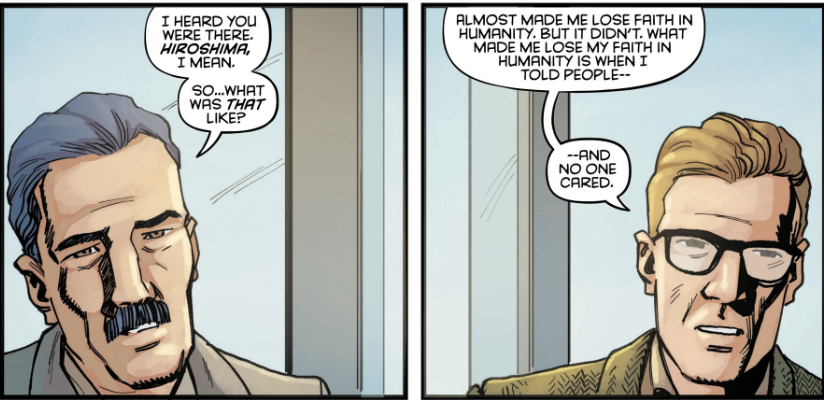
Tom feels extremely disheartened at the state of the world; it's hard to blame him for feeling that way. World War II showcased the depths of horror some of the dregs of humanity would go to inflict pain on others and showed that there is always going to be a bigger bomb. There's always going to be another threat. There’s always going to be someone in power who wants to abuse that power, and probably one of the worst truths: that the next war is never that far away.
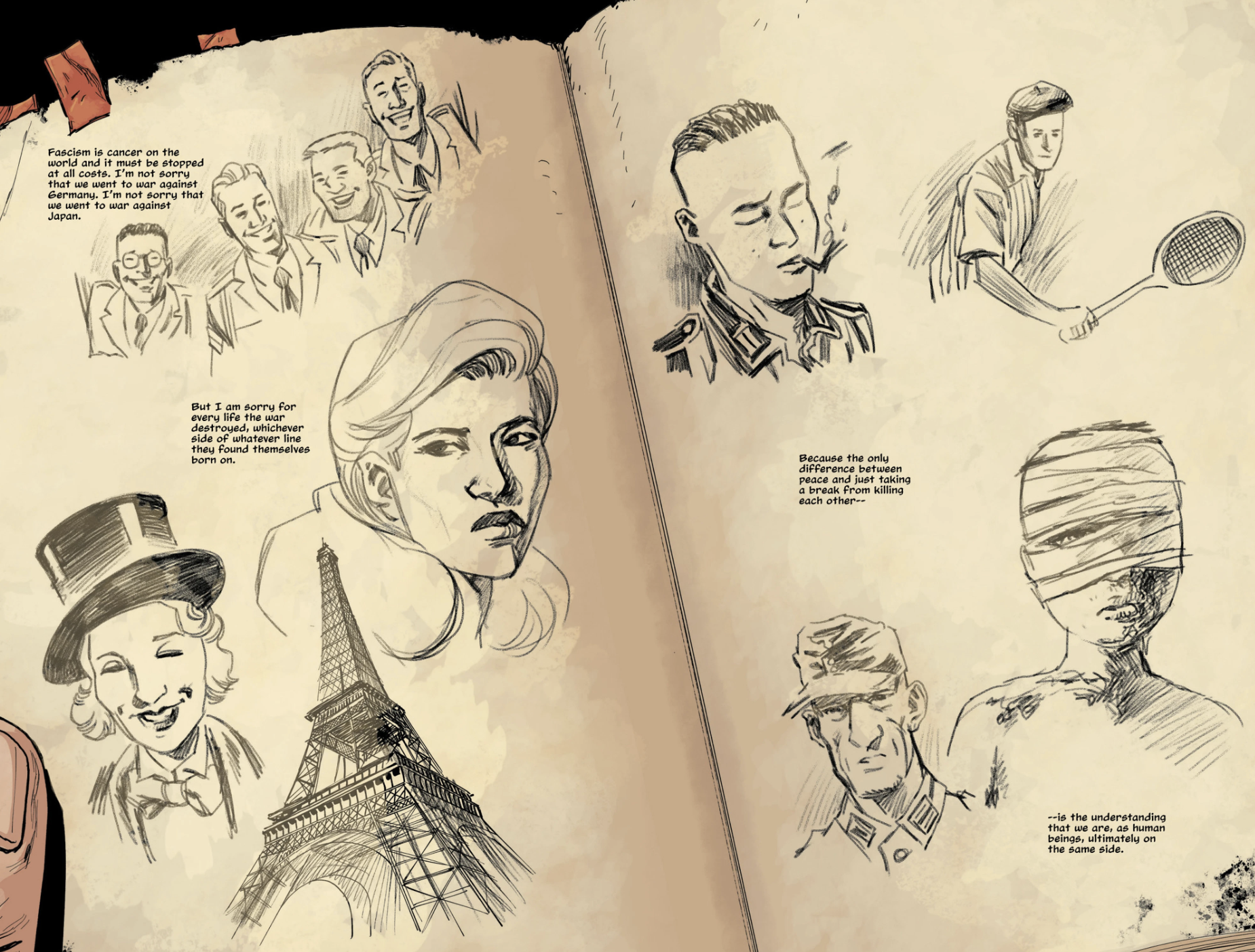
Dog Tag #6 wraps up one of the best limited series in modern comics history. Tom Fuller’s journey through World War II has come to an end, and with it, his faith in humanity has forever been shaken. Mark Russell’s war saga has been near perfect since issue one, and combined with the art styles of PJ Holden and JP Jordan, the bar for war comics has forever been raised. I loved Dog Tag from the first panel to the last. I won’t soon forget this book, and neither will you.
RATING: 10 out of 10
Very Highly Recommended
One of the Top Series of the Year