Comic Book Clique

dc comics

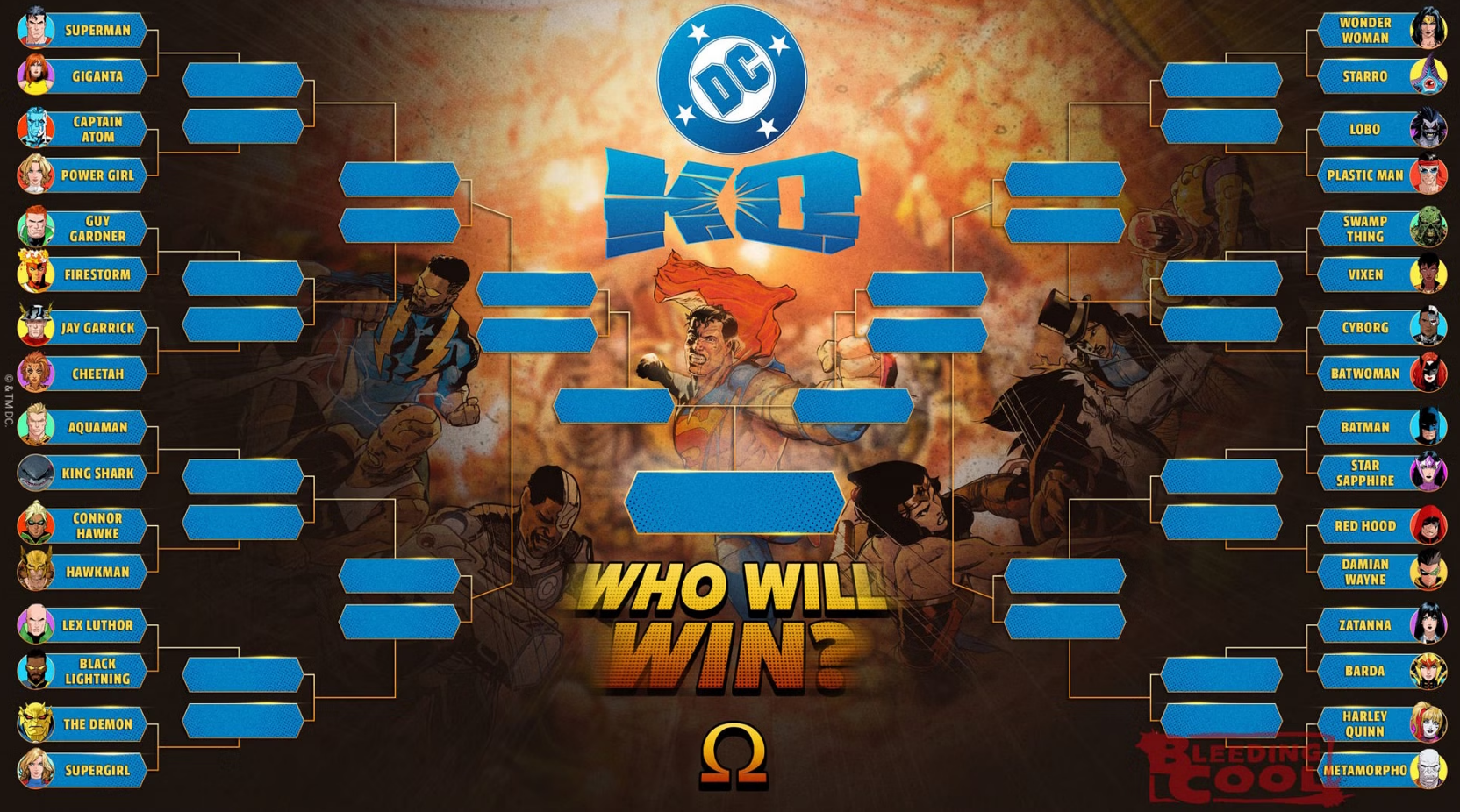
SPOILERS: Who Got the Goods? Check Out the World-Ending Weapons Claimed in DCKO!
George SerranoComment

The DC K.O. Tournament has just detonated! Sixteen of the multiverse's greatest heroes and most dangerous villains have survived the initial carnage, but the real spectacle began in the chaotic "Scramble Round" of DC K.O. #2. In that brutal free-for-all, these competitors didn't just win their bouts; they fought to claim legendary weapons, relics, and technologies from across the DC Multiverse. The tournament rules have forced them into dark territory, compelling them to fuse their unique fighting styles and moral codes with artifacts of unfathomable cosmic power. This isn't just a battle of strength, it's a test of whether these beings can control the raw power now coursing through their veins. Get ready to break down the most volatile and terrifying combinations in the bracket!


The Perfect Storm: Why These Items Are Deadly In These Hands

Red Hood & The Scarab

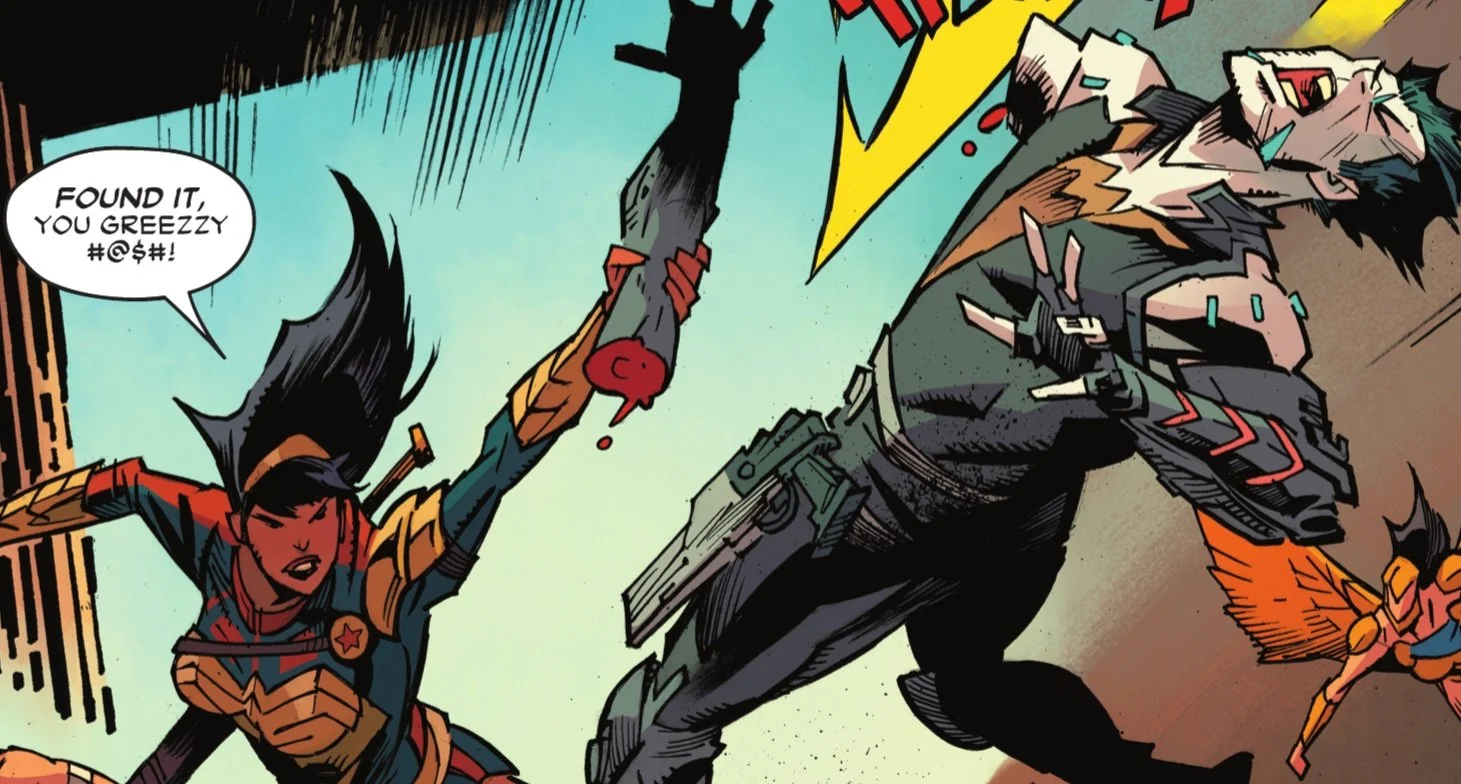
Jason Todd has bonded with a piece of alien technology so powerful, it threatens to turn the entire tournament into a military coup: the Scarab! This sentient, symbiotic battlesuit, known as Khaji Da, first appeared in its modern form in Infinite Crisis #3 (2006), courtesy of Geoff Johns, Phil Jimenez, and George Pérez. Historically, Red Hood has often used technology and firearms to level the playing field against meta-humans, often designing his own power-dampening suits or using Kryptonite-laced weapons. While previous Scarab wearers focused on defense, Red Hood's aggression turns this artifact into an unstoppable weapon platform. The Scarab can generate virtually any weapon he can imagine, but in Jason's hands, his lethal combat training and willingness to kill means the adaptable armor is now an instrument of total, military annihilation. He's no longer just a vigilante; he's an armored god of war.


Zatanna & The God Killer Sword

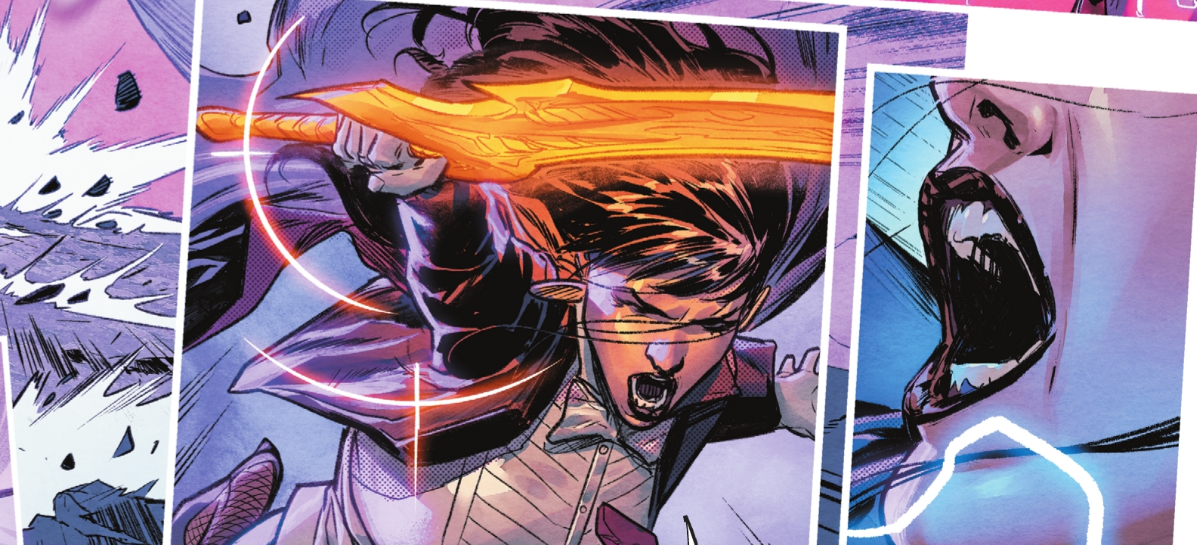
Magic meets mythic steel! Zatanna's greatest upgrade is the God Killer Sword, which first appeared in Wonder Woman #3 (2016) by Greg Rucka and Liam Sharp. This ancient Amazonian blade is capable of slicing through anything, even gods and powerful magical entities. Zatanna is DC's primary magical strategist, used to wielding powerful, often uncontrollable forces. However, her greatest weakness is often being silenced, cutting off her primary source of power. By acquiring a weapon capable of slaying deities that doesn't require a single spoken word, she has gained a physical, undeniable threat that complements her magical might.


Guy Gardner & The Worlogog

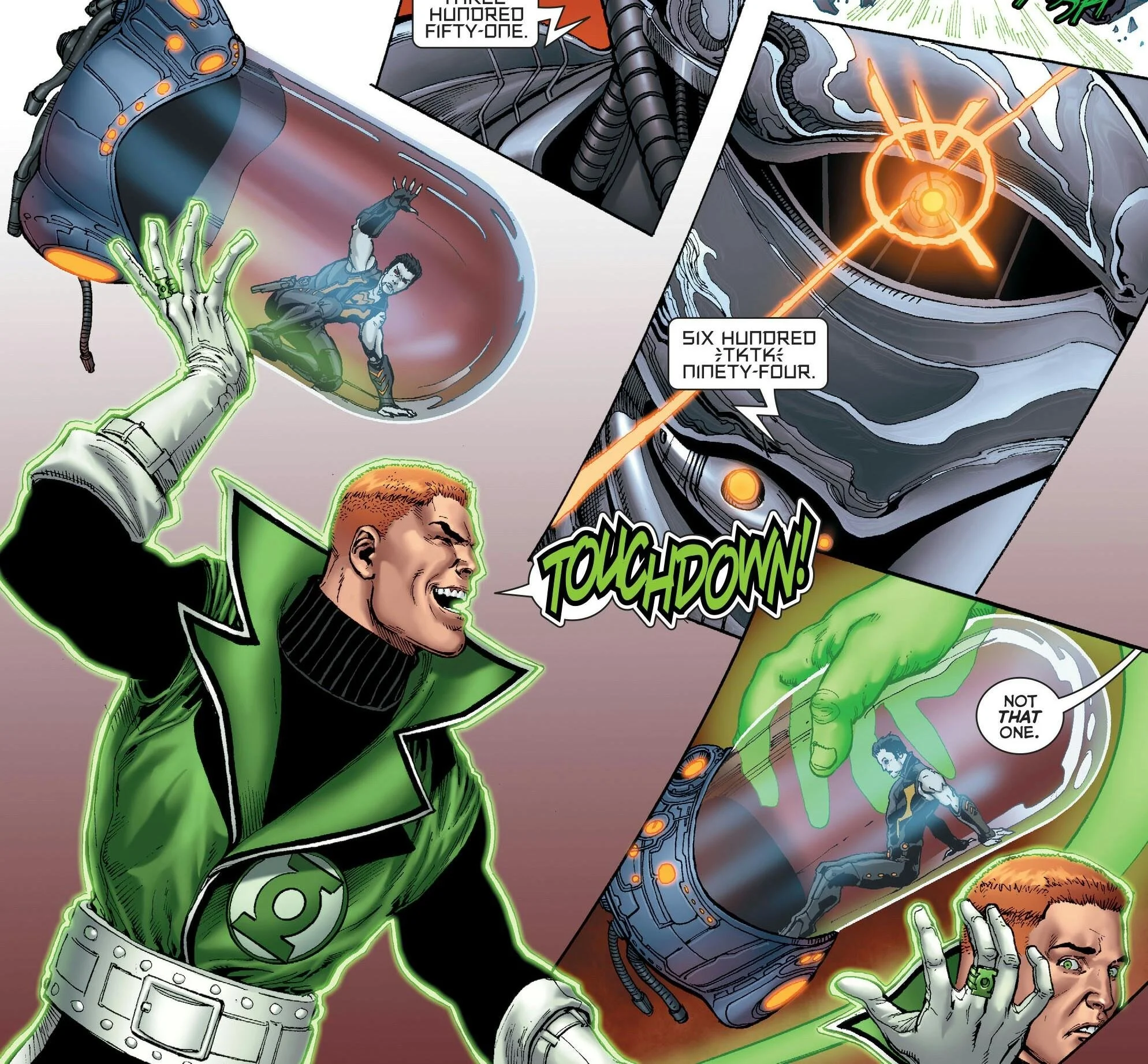
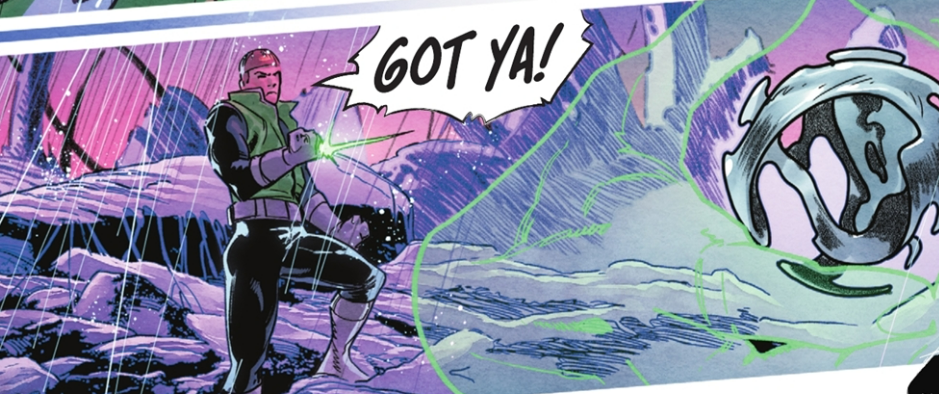
Guy Gardner is now the wielder of the Worlogog, an artifact that first appeared in Justice League #17 (1994) by Gerard Jones and Chuck Wojtkiewicz. This miniature model of the space-time continuum grants its holder near-omnipotence, allowing for manipulation of space, time, and reality on a cosmic scale. Guy has always been an explosive, unpredictable Green Lantern, often clashing with cosmic authority (even joining the Red Lantern Corps). Guy’s notoriously arrogant and aggressive temper, when coupled with an artifact capable of rewriting existence, means the entire flow of the tournament, and reality itself, is now subject to his legendary bad mood and lack of patience.


Joker & Atom's Belt

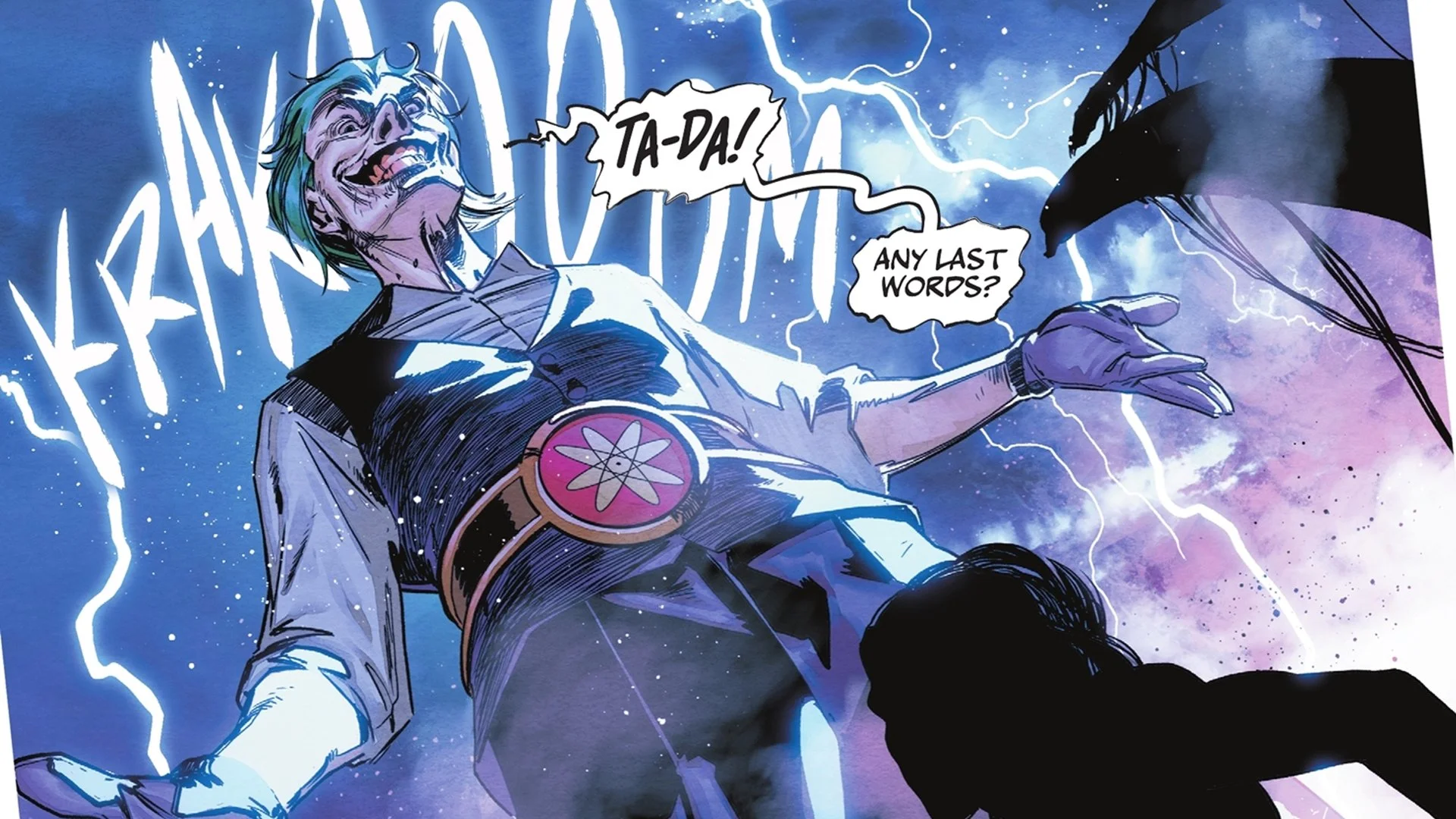
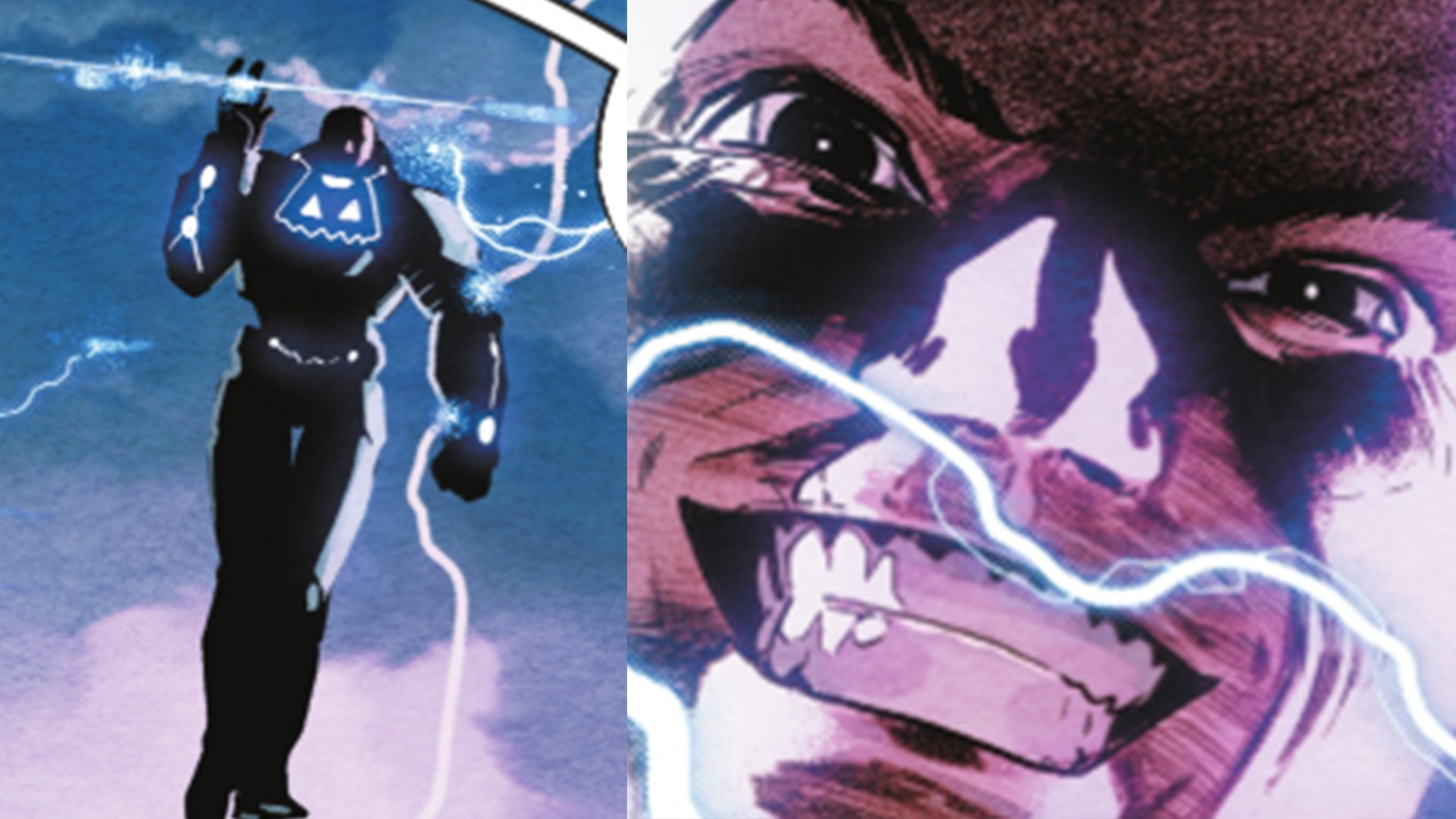
No one turns a scientific instrument into a punchline quite like the Joker. He claimed Atom's Belt, technology first seen with Ray Palmer in Showcase #34 (1961) by Gardner Fox and Gil Kane. Designed to allow wearers to shrink to subatomic levels, this tool of precision has become an instrument of grotesque, intimate murder in the Joker's hands. The Joker is historically defined by his use of personalized, chemical-based weapons (like Joker Venom) to cause specific, dramatic chaos. Now, as DC K.O. #2 grimly showed, the Clown Prince can inflict personalized pain from the inside out: the belt’s advanced science has been hijacked by boundless sadism.


Cyborg & Mother Box

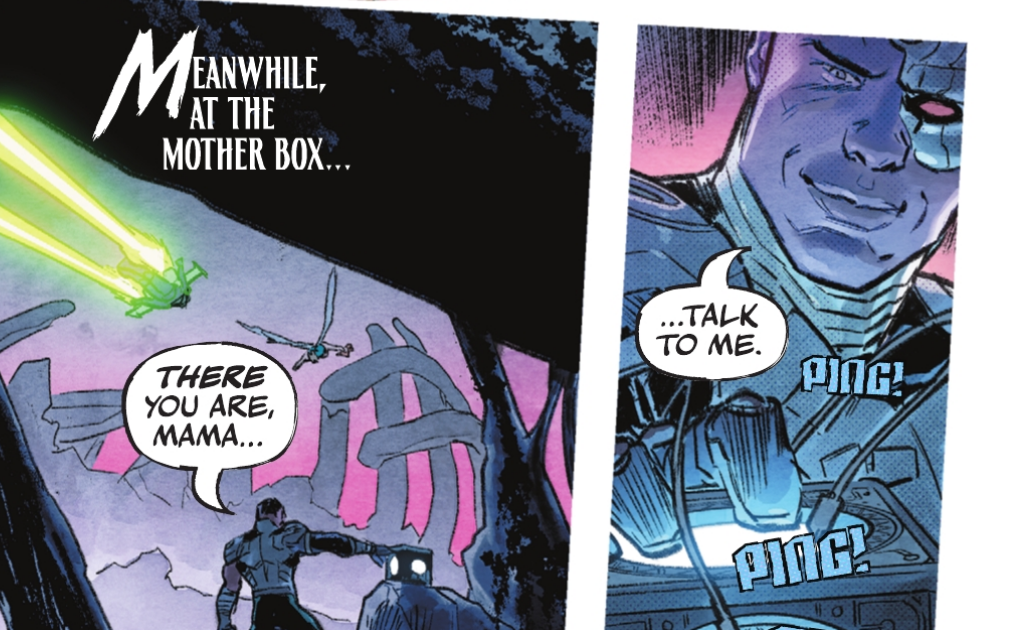
Victor Stone has integrated with a Mother Box, a sentient, New Gods' computer that first appeared in The Forever People #1 (1971), created by the legendary Jack Kirby. Capable of Boom Tube teleportation, advanced healing, and controlling all technology, this cosmic-level operating system gives Cyborg an unprecedented upgrade. Cyborg's history is defined by his struggle to integrate New Gods' technology into his very being; now, he has gained the master key. His already powerful cybernetics are now backed by a device that allows him to instantly teleport, rewrite the laws of technology, and turn any battlefield into his inescapable, personal fortress.


Captain Atom & Psycho Pirate's Mask

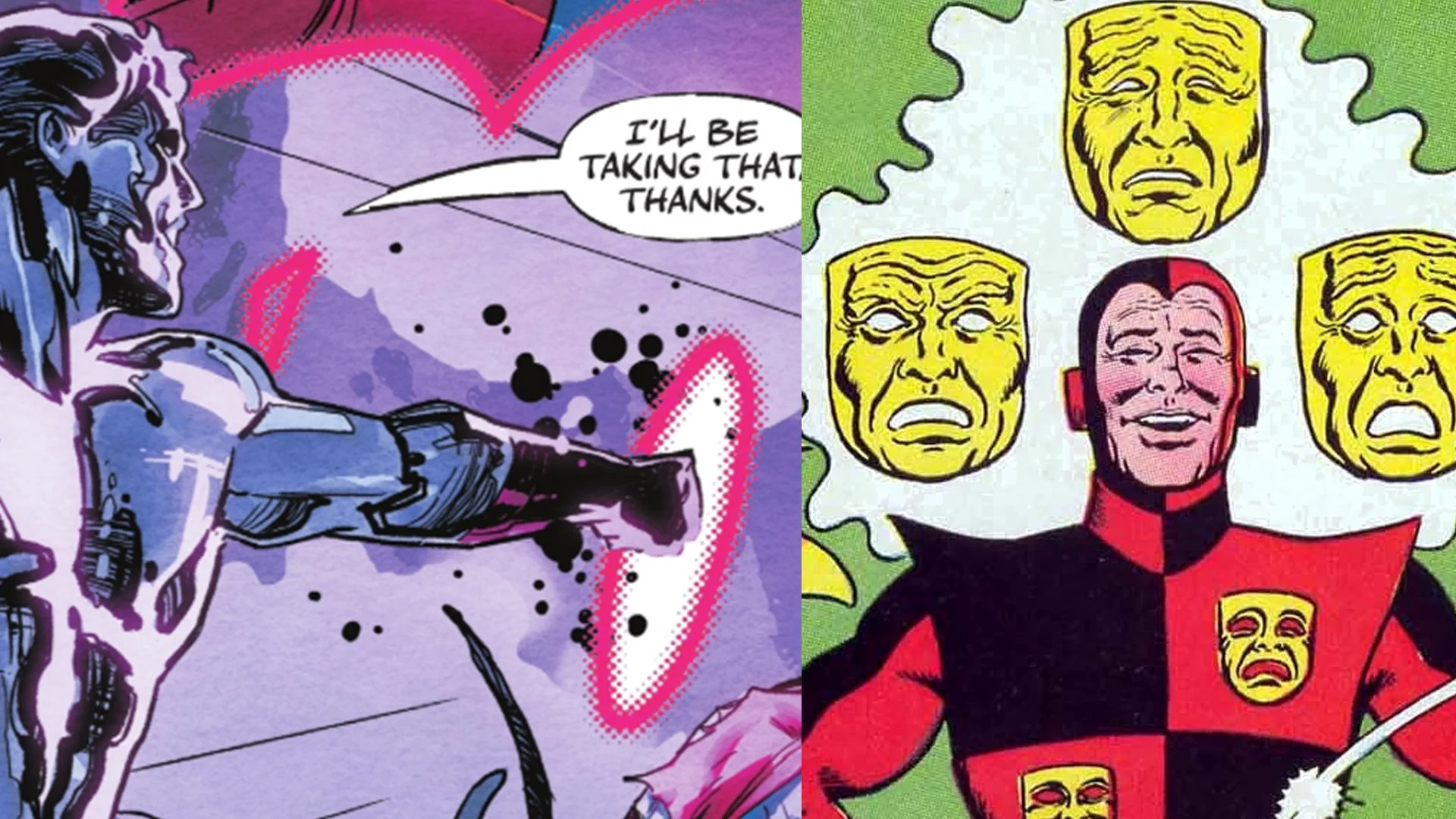
Captain Atom now possesses the Psycho Pirate’s Mask (The Medusa Mask), worn by Roger Hayden when he debuted in Showcase #56 (1965) by Gardner Fox and Mike Sekowsky. The Mask allows the wearer to manipulate the emotions of others on a massive scale. Captain Atom's history is one of volatile power struggles, often fearing his own power and the catastrophic damage it can inflict. Giving him a tool to control the emotions of his foes means he can induce paralyzing fear or mind-breaking despair in opponents before unleashing his nuclear might, turning an already unstable force into an emotional master manipulator.


Wonder Woman & Thor's Hammer (Mjolnir)

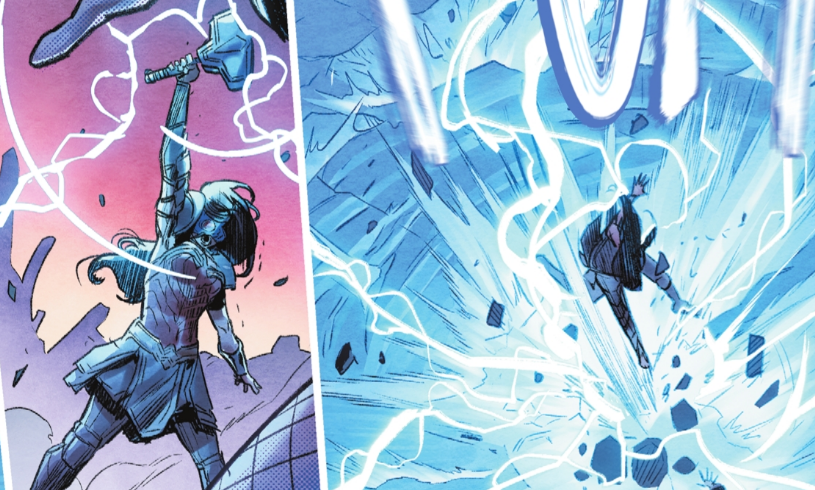
A truly worthy union! Diana has proven herself capable of wielding Thor's Hammer. This legendary Asgardian artifact grants the user the power of the Thunder God, including control over storms and flight. The hammer's mythological counterpart first appeared in a DC comic in Flash Comics #57 (1944). Wonder Woman is steeped in Greek mythology and often wields weapons of divine origin (like the Lasso of Truth or the Sword of Athena), which share similar origins to this hammer. Her Amazonian skill is now fused with the raw, cosmic fury of a thunder god, and her pure heart confirms she is always worthy of this mythological power, making this union of Greek and Norse myth an overwhelming, divine-level engine of destruction.


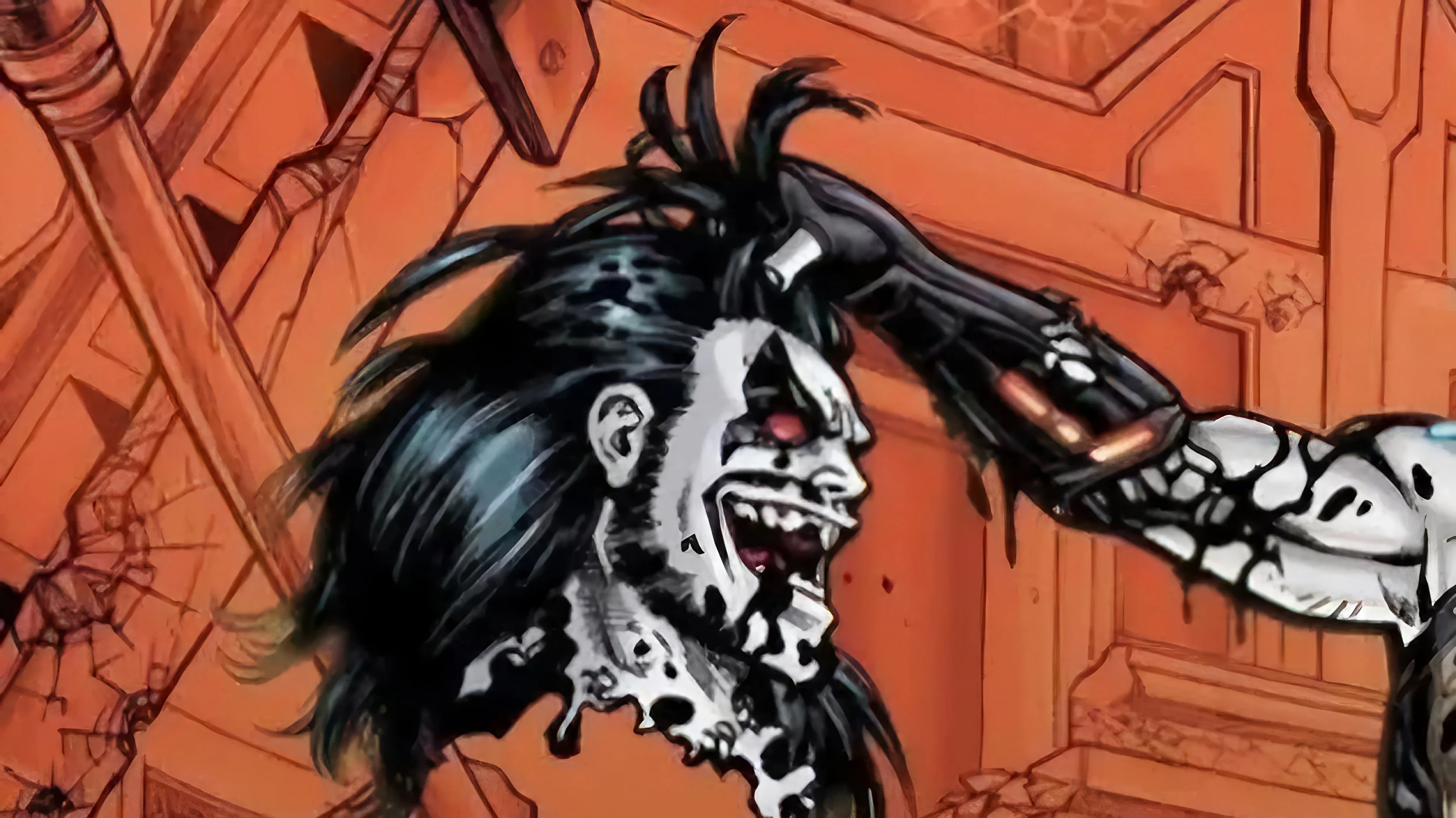
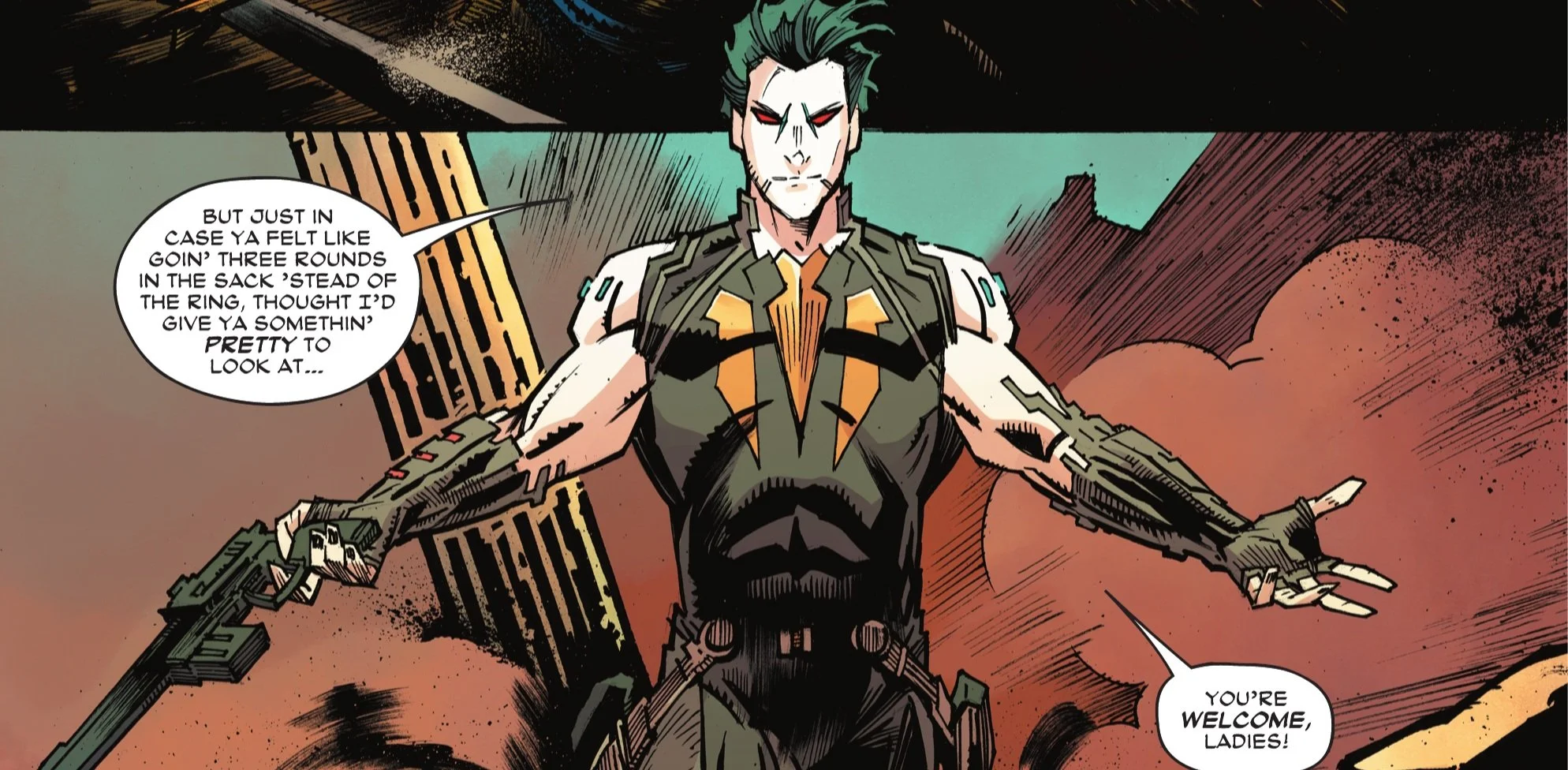
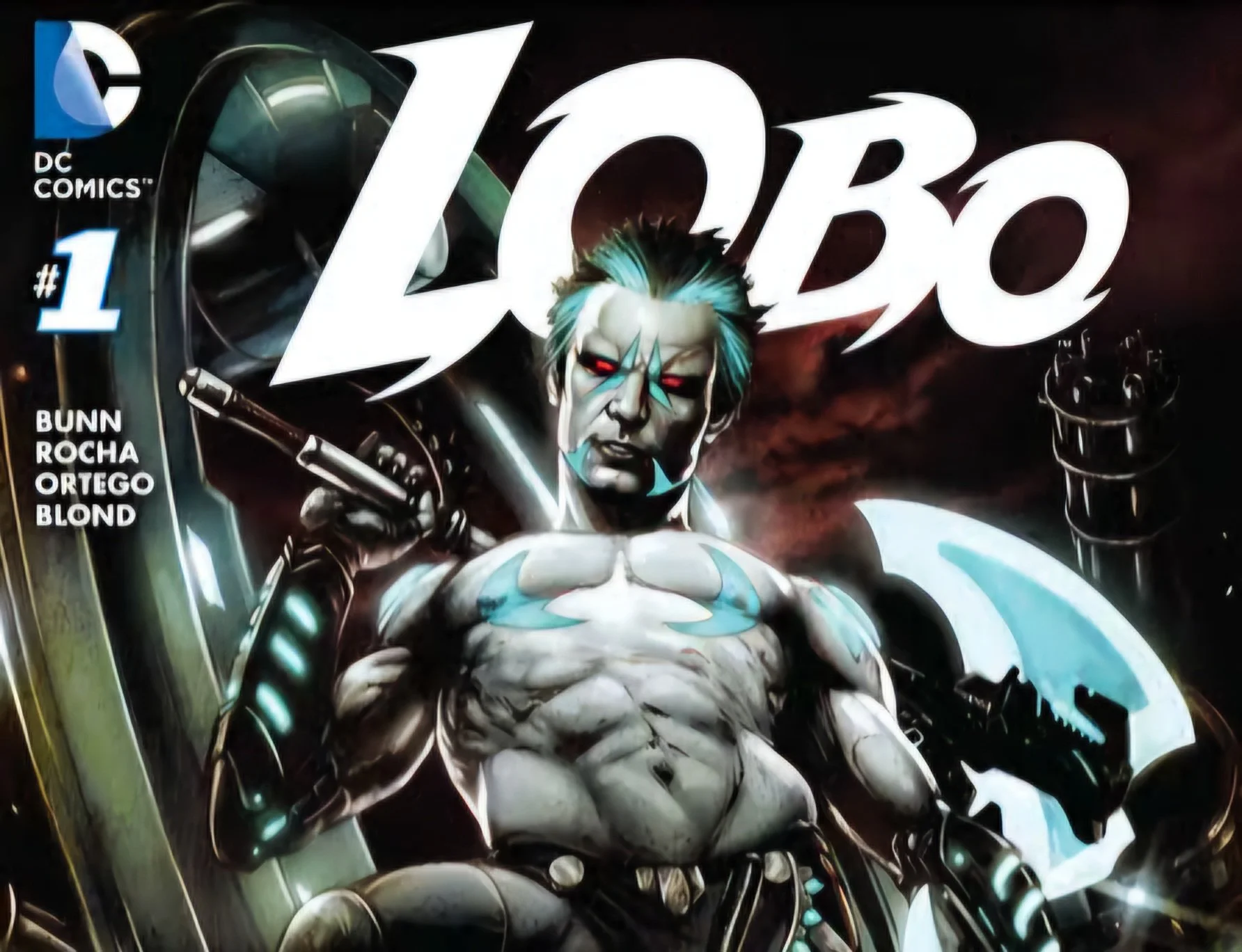
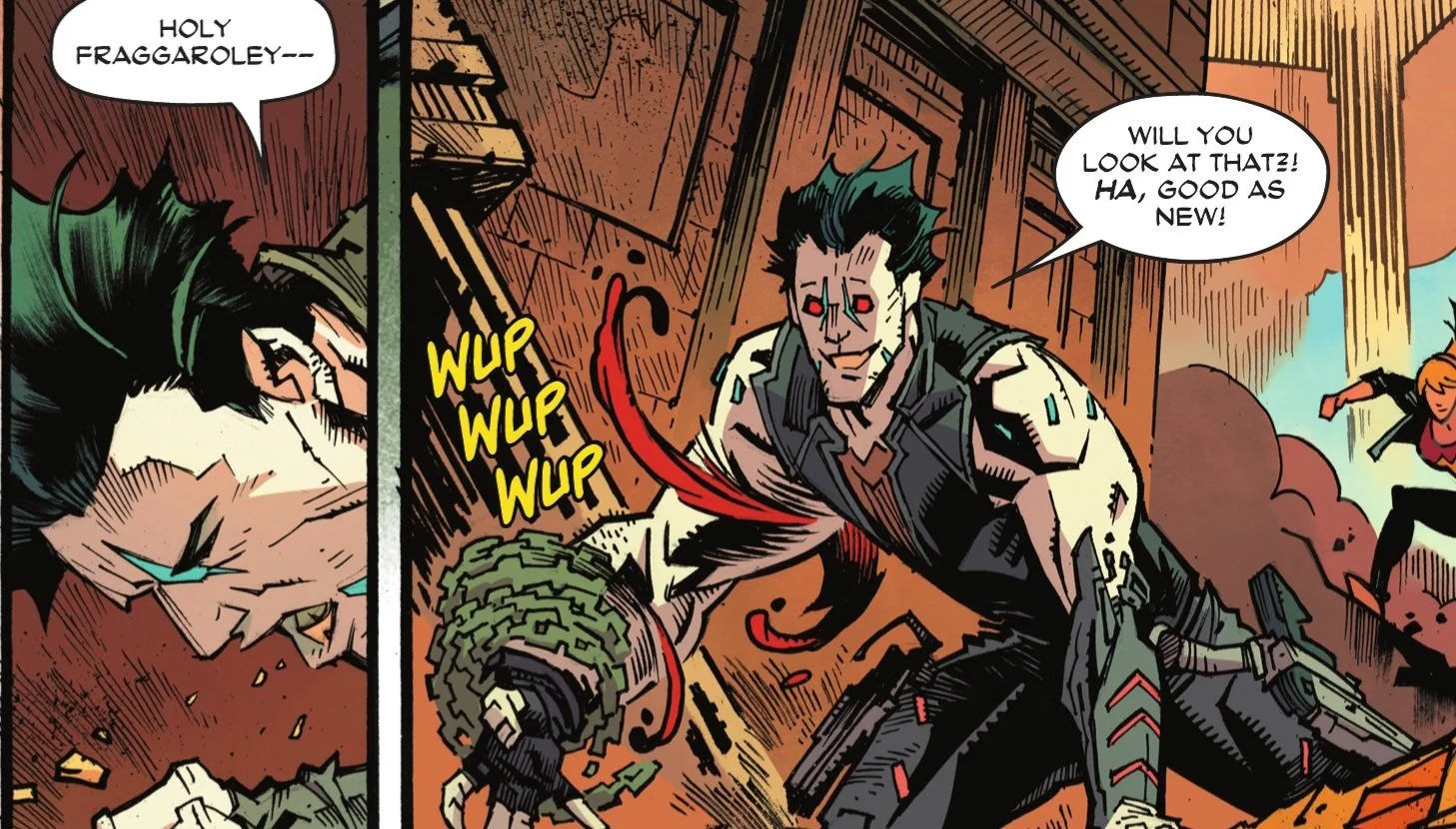
Lobo & Bane’s Venom

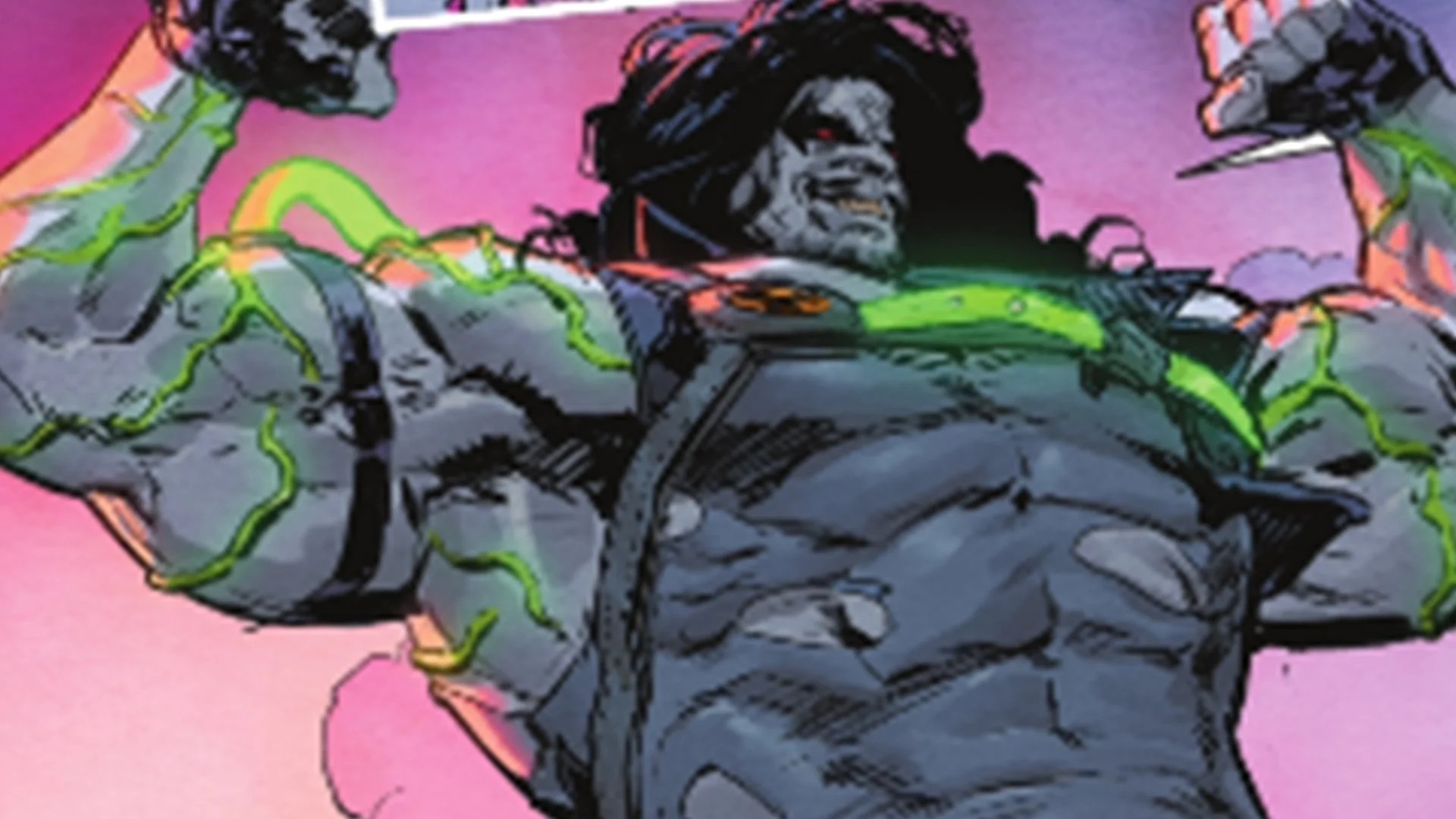
As if he wasn't tough enough! The Main Man’s power level just got dialed past infinity with Bane's Venom, a potent steroid that debuted in Batman: Vengeance of Bane #1 (1993) by Chuck Dixon, Doug Moench, and Graham Nolan. This drug grants massive, superhuman strength and stamina. Lobo has always relied on his inherent Czarnian physiology and ridiculous regenerative factor to overwhelm foes with sheer brute force. Venom doesn't just make him stronger; it takes his already insane power level and cranks it past twelve, compounding his signature berserker rage into an uncontrollable, hyper-charged engine of galactic violence.


Harley Quinn & Speed Force Ring

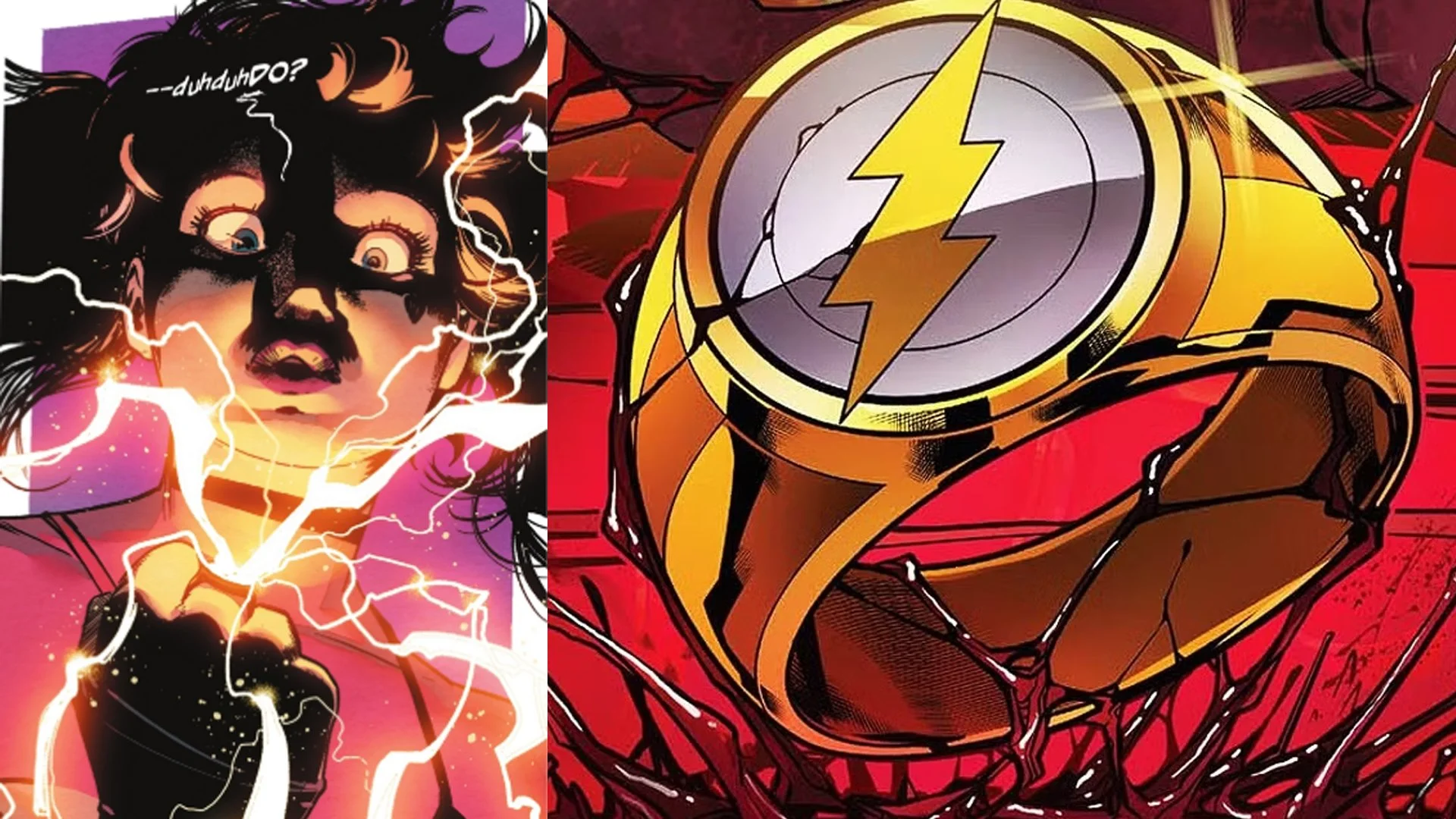
Harley is now tapping into the Speed Force, the energy source first detailed in Flash Vol 2 #91 (1994) by Mark Waid. This power grants the user super-speed and the ability to vibrate through matter. Harley's entire fighting style is based on gymnastic agility, unpredictability, and chaotic timing. Giving her chaotic, unhinged energy the power of near-instantaneous movement means her random, violent chaos can now be executed at the speed of light. She is an erratic, hypersonic hurricane of destruction that no one can track, let alone predict.


Lex Luthor & Power Rings

The universe's most brilliant mind just armed himself with the power of the cosmos! Lex Luthor has acquired multiple Power Rings, artifacts whose modern Corps concept began in Showcase #22 (1959) by John Broome and Gil Kane. These rings, fueled by different emotional spectrums, allow the wielder to create solid energy constructs and fly. Luthor has a long history of stealing or replicating Lantern technology, most notably the Orange Lantern Ring (Avarice) or his own Kryptonite-powered Green Lantern Ring. The real danger is that his sheer, cold intellect and will are now directing multiple cosmic emotional powers with a level of tactical genius that makes him an unparalleled, unified threat.


Etrigan & Genie Pen (Thunderbolt)

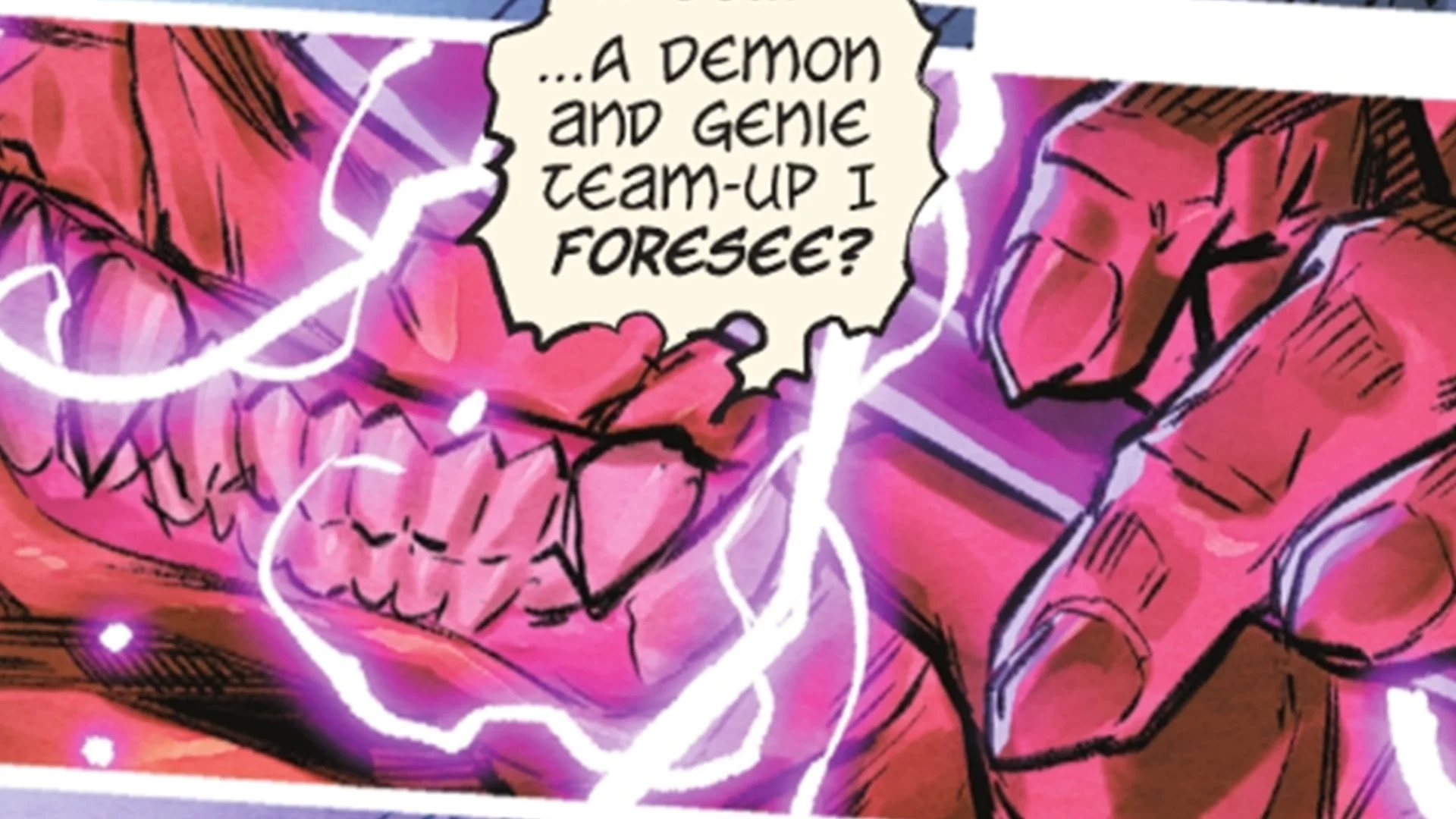
Etrigan the Demon now holds the Genie Pen, which contains the Fifth-Dimensional Imp Thunderbolt (Yz), dating back to Flash Comics #1 (1940) by John B. Wentworth and Stan Aschmeier. The pen grants wishes, resulting in chaotic, cosmic power. Etrigan's power is already rooted in chaotic, rhyming magic, making him a being of pure magical unpredictability. Combining his native hell-power with the chaotic, reality-bending wish-fulfillment means he can summon catastrophic, yet highly specific, magical effects with a single, rhymed decree: wishes for utterly demonic destruction.


Hawkman & Claw of Horus

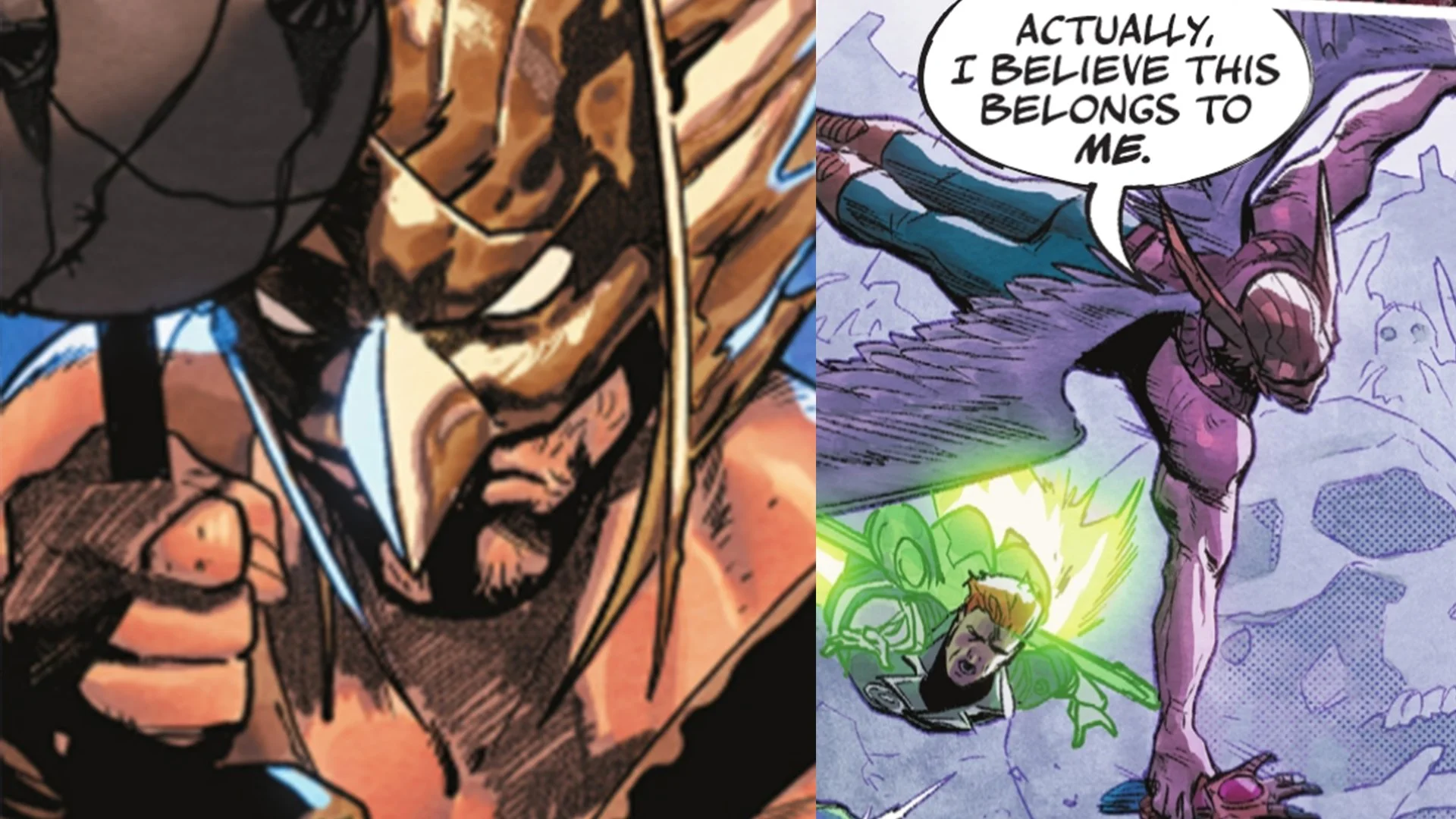
Hawkman carries the Claw of Horus, a specialized Nth Metal gauntlet that debuted in JSA #20 (2001) by David S. Goyer, Geoff Johns, and Stephen Sadowski. The Claw channels the Earth's gravitational field and uses it as a kinetic weapon. Hawkman's history is steeped in ancient Egyptian myth and he has wielded countless Nth Metal weapons and artifacts over his many reincarnations. The Claw gives this relentless, barbaric warrior the power to essentially "hit you with the planet," augmenting his melee assault with planet-scale gravity manipulation, crushing opponents with the weight of the Earth itself.


Swamp Thing & Soul Taker Sword

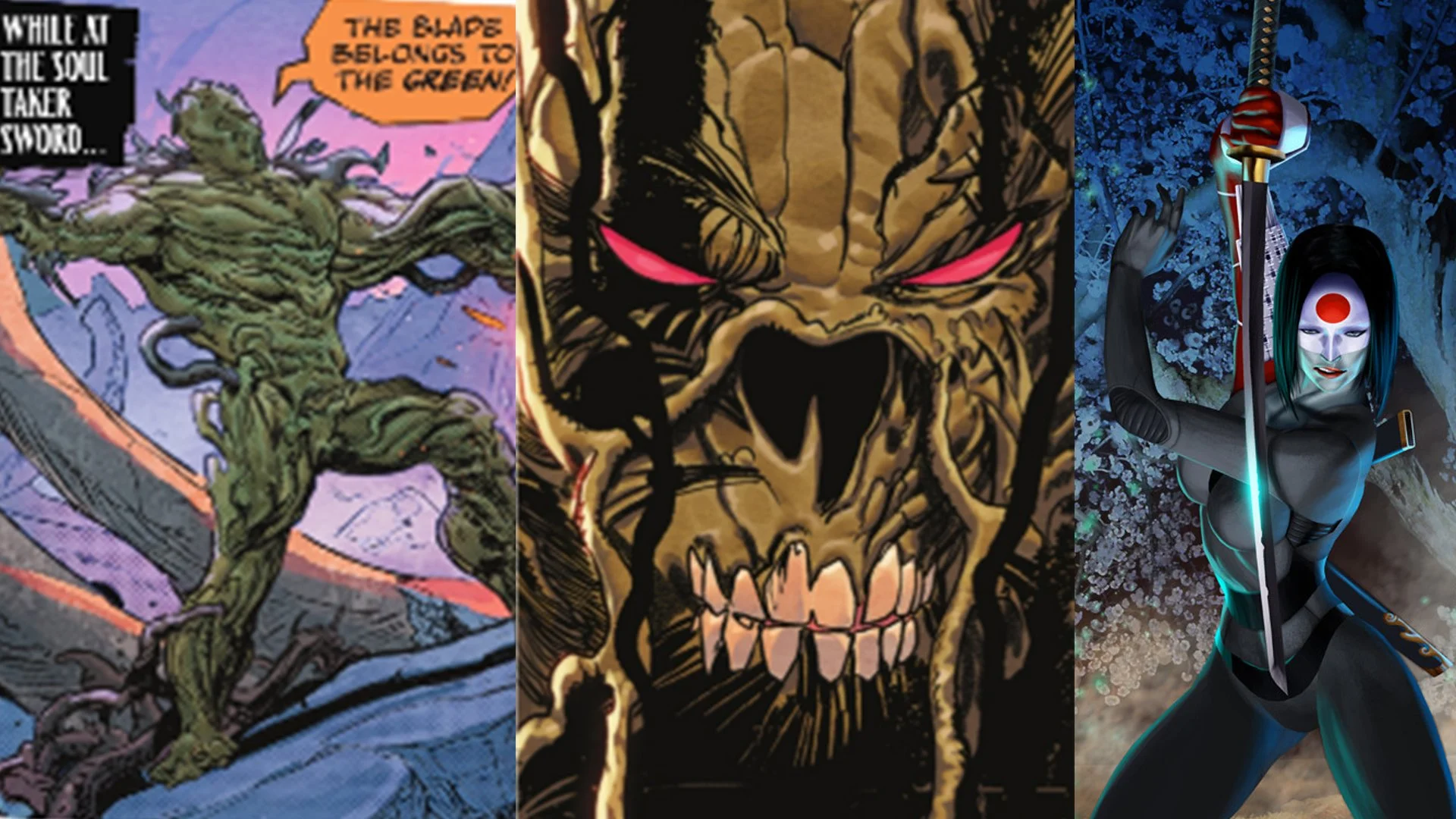
The Avatar of the Green is now armed with the Soul Taker Sword, most famously used by Katana and debuting in The Brave and the Bold #200 (1983) by Mike W. Barr and Jim Aparo. The sword captures the souls of those it kills within its blade. Swamp Thing is the champion of The Green, fundamentally defined by non-violence and the protection of natural life, rarely using conventional weapons. Giving him a weapon that traps the spiritual essence of his victims is a horrifying corruption of his nature, turning him into the reluctant warden of his defeated foes.


Jay Garrick & Lasso of Truth

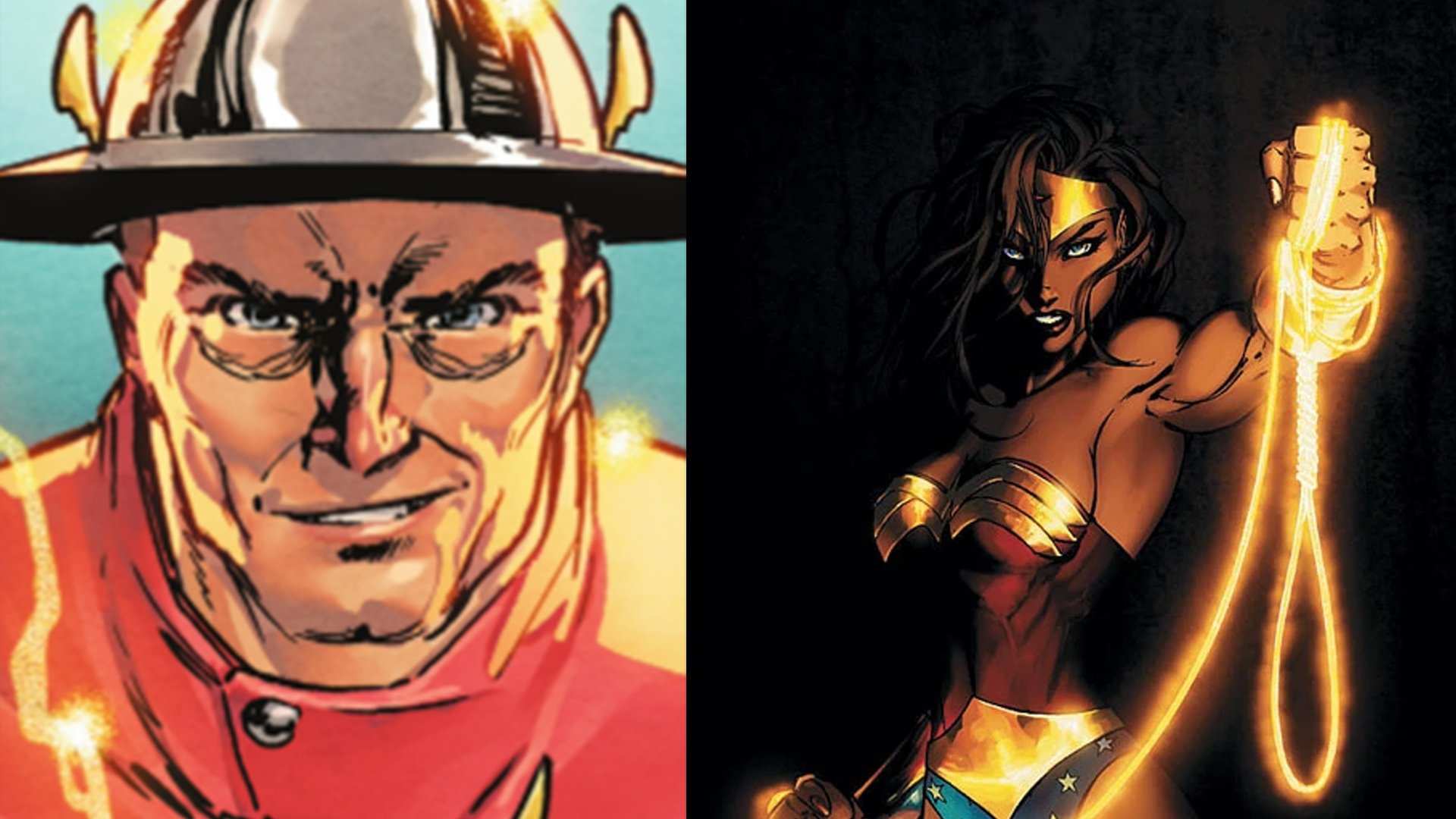
The original Flash, Jay Garrick, is wielding the Lasso of Truth, which first appeared in All-Star Comics #8 (1941) by William Moulton Marston and Harry G. Peter. The Lasso compels anyone wrapped in it to tell the absolute truth. Jay Garrick is known for his wisdom, moral center, and experience, often serving as a mentor for younger heroes. Fusing his wisdom and speed with this tool that cuts through all deception means he can instantly bind any opponent, forcing them to reveal their strategy, their weaknesses, or their hidden fears before they can react. He is a lightning-fast, inescapable inquisitor.


Aquaman & Cosmic Rod

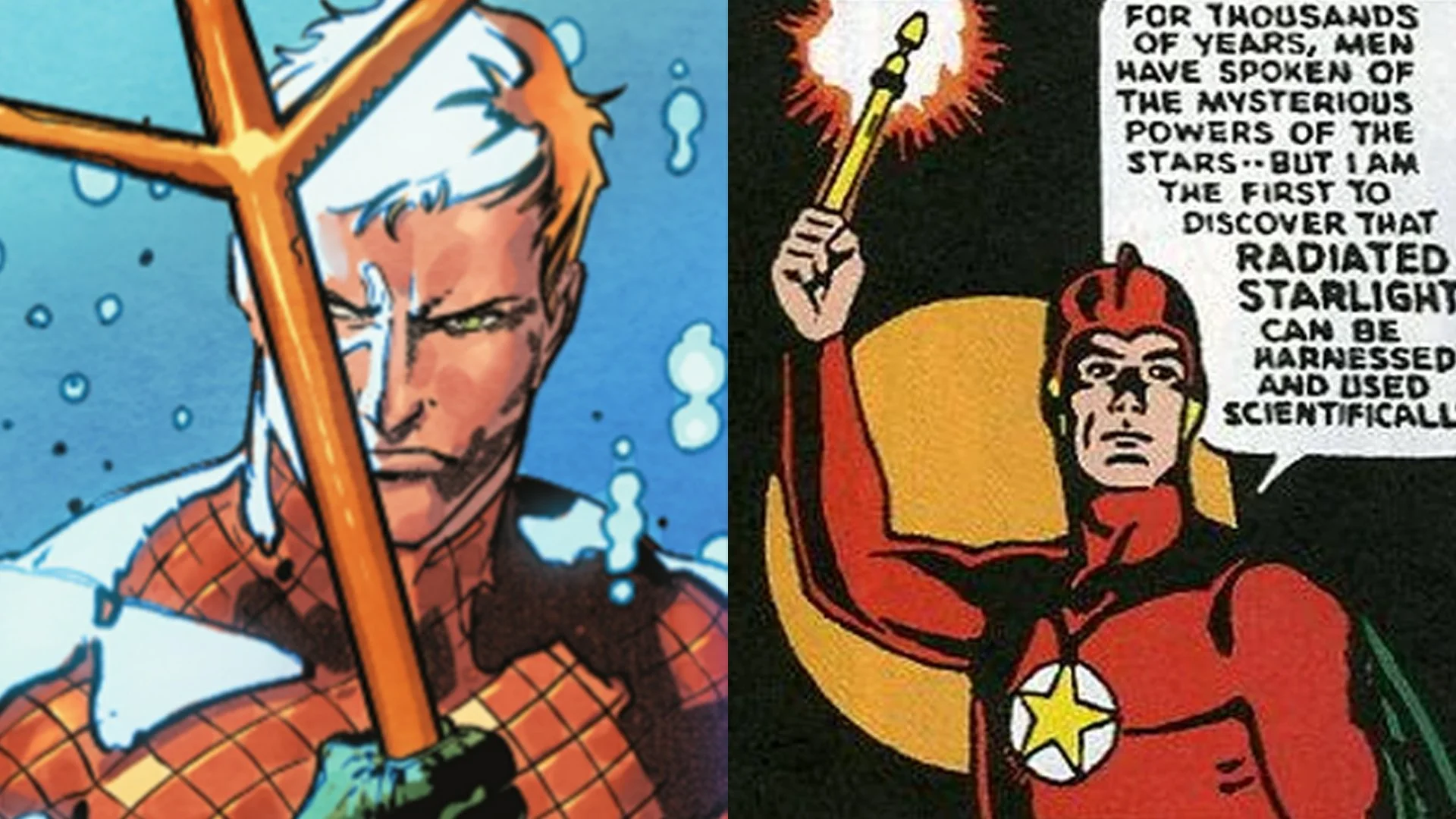
Aquaman, King of Atlantis, has claimed the Cosmic Rod, the stellar-powered device of the Golden Age Starman, which debuted in Adventure Comics #61 (1941) by Gardner Fox and Jack Burnley. The Rod absorbs and projects stellar energy and allows for the manipulation of gravity. Aquaman has always struggled with his reputation and reliance on the ocean, often seeking tools to augment his power on land. This artifact instantly negates his disadvantage on land, turning him into a cosmic-powered, gravity-defying artillery platform. He would best use the Cosmic Rod to instantly create crushing gravity wells, pinning his foe while simultaneously calling on his telepathic command of the ocean to attack. An opponent may draw him to a desert for an advantage, only to be instantly crushed by localized gravity and elemental manipulation.


Superman & Omega Sanction

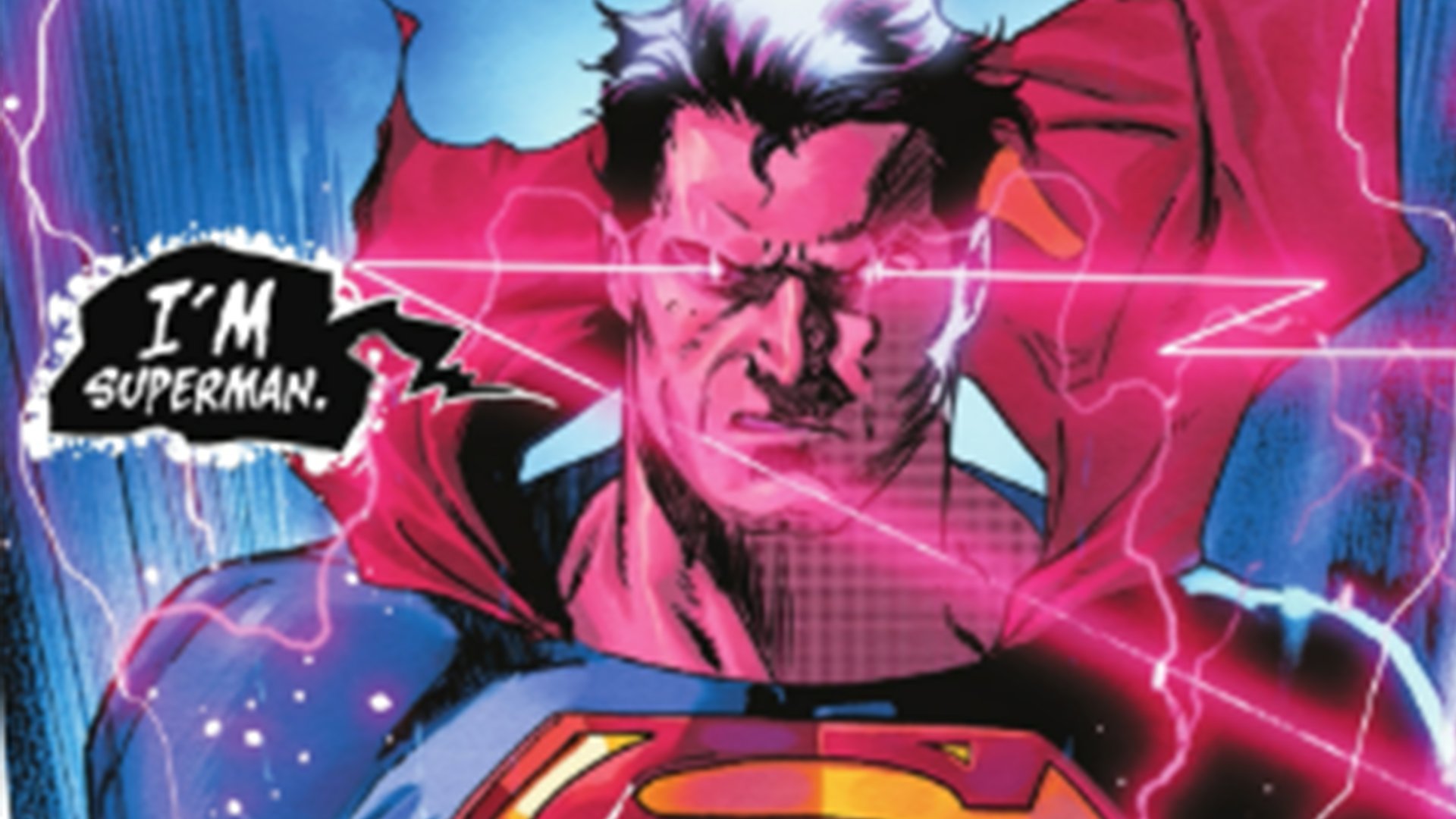
The most terrifying combination in the entire bracket: Superman has acquired the ultimate weapon of Darkseid: the Omega Sanction, an attack first detailed in Mister Miracle Vol 3 #6 (1998) by Walter Simonson. This power traps its victim in an endless cycle of alternate lives and horrific realities. Superman's character is built entirely on his adherence to a strict, non-lethal moral code. As the DC K.O. #2 reviews confirm, he acquired this power through a brutal, self-sacrificial act, showing he is willing to cross his own moral lines. This weapon gives the world's most powerful being the ultimate divine power, forcing him to engage in an act of finality and psychological annihilation. This is no longer the Superman we know; this is the Omega weaponized.


🏆 Conclusion: The King Omega Will Rise!

The final 16 are set, and the sheer power contained in this bracket is unprecedented. The tournament has done more than just pit the DC Universe’s heavy hitters against each other; it has armed them with the very instruments of cosmic chaos. Every hero and villain has been fundamentally changed by their new weapon, and the consequences of their choices in the Scramble Round will echo through the next stage. Who will survive? Who will break? And who has what it takes to stop Darkseid by becoming the new King Omega? Don't miss a single page of this epic event!

The Shape of Evil Has Changed: And the Absolute and Ultimate Universes Know It

George SerranoComment

Evil in comics isn’t what it used to be. No longer just a masked villain with a doomsday device or a color-coded costume, modern villainy is structural, insidious, and embedded into the systems that shape society. It doesn’t just strike—it manipulates, deceives, and traps people in networks they may never even see.

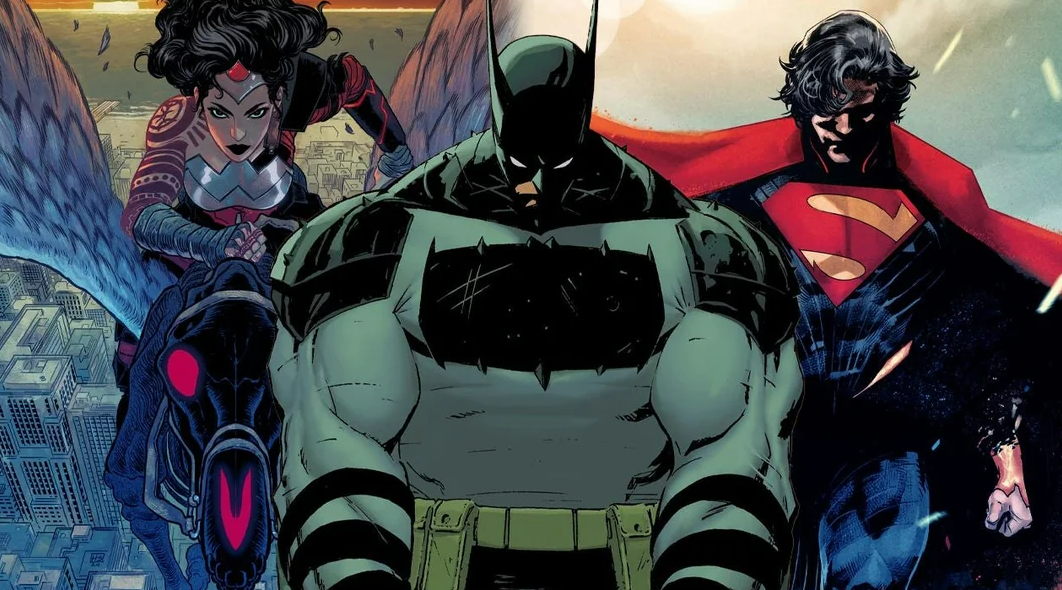
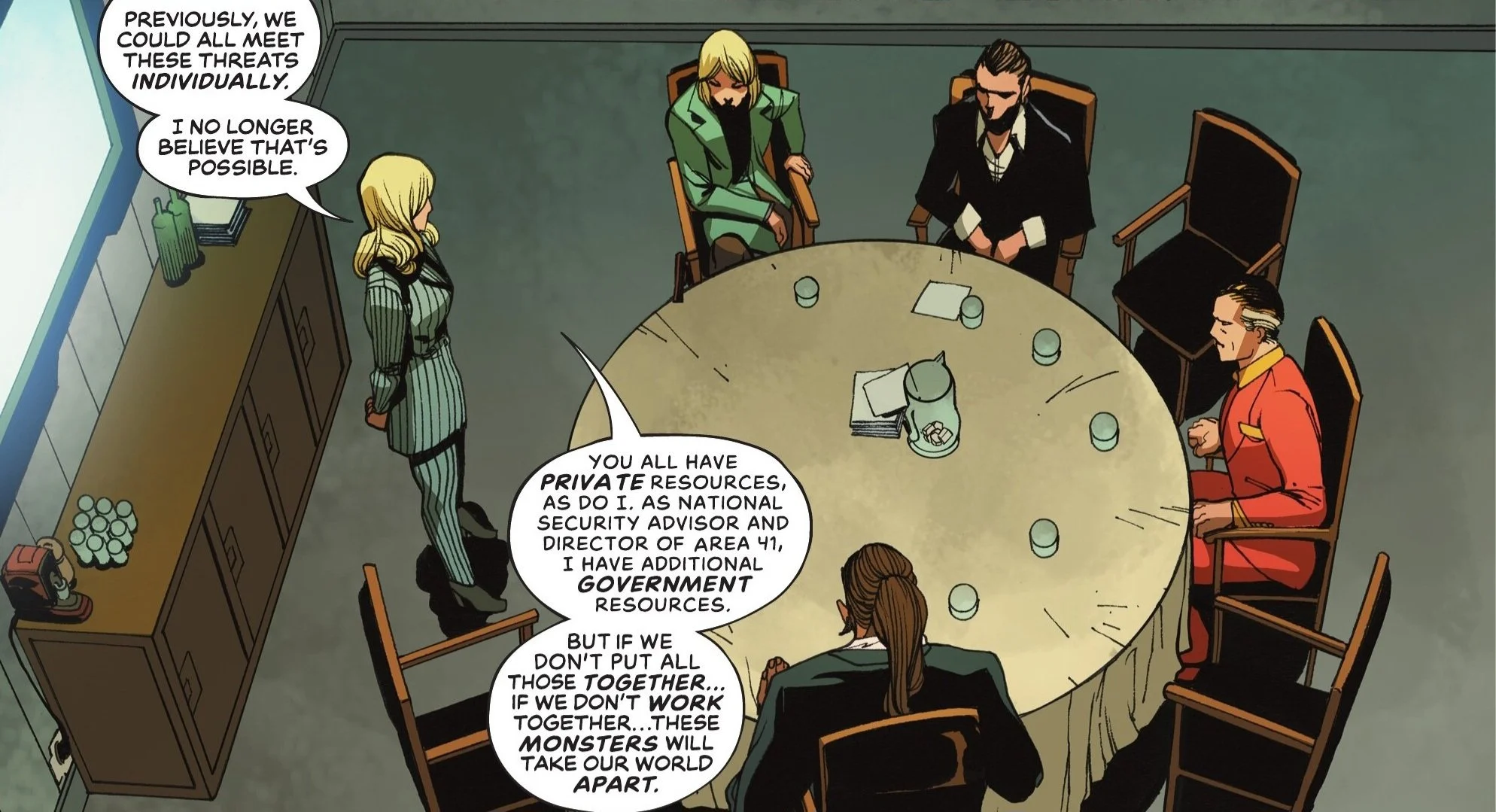
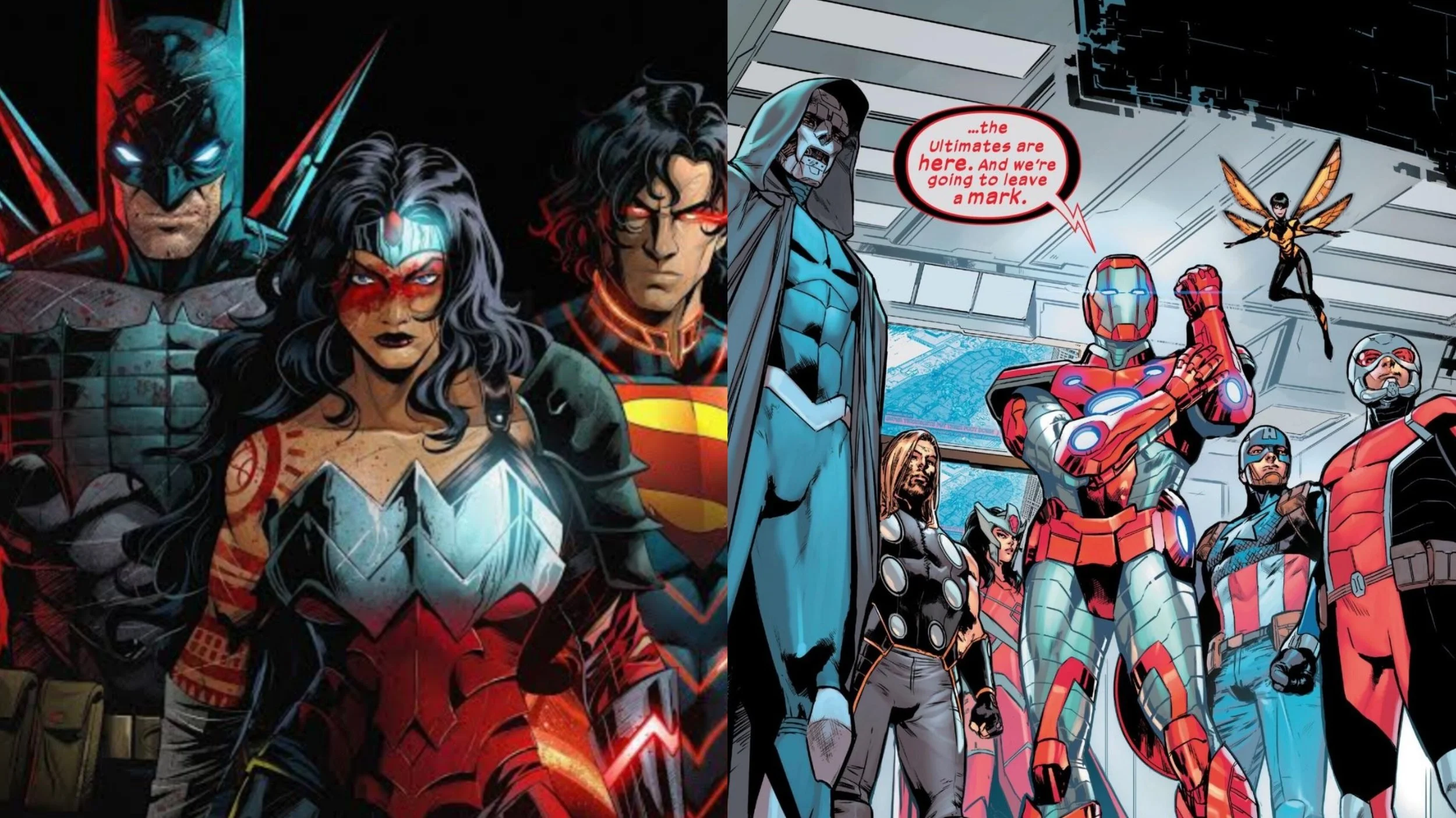
Propaganda, secret cabals, financial exploitation, militarized oversight, and ideological manipulation have all become forms of villainy in the Marvel Ultimate Universe (Earth-6160) and the DC Absolute Universe (Alpha-World). Writers like Jonathan Hickman and Scott Snyder use these universes to explore evil as a system, not just a person, giving readers a mirror to reflect on power, control, and the complexity of oppression.


Alternate Universes Break Free of the Status Quo

In the main continuities of Marvel and DC, heroes always reset to familiar roles. Stories entertain without destabilizing the world, favoring repetition over lasting consequences. Alternate universes, however, allow permanence and meaningful stakes. In Earth-6160 and the Absolute Universe, heroism must contend with systems of power, and villainy is procedural and systemic. Heroes cannot simply punch a villain into submission—they must dismantle networks, expose corruption, and survive environments designed to crush them.


Shared Themes: How Modern Villainy Works

Both universes tackle similar ideas, showing that the most dangerous evil is woven into the institutions we rely on. Propaganda shapes perception, convincing civilians to support policies and leaders they might otherwise question. Secret cabals and elite councils manipulate governments, corporations, and militaries from the shadows.

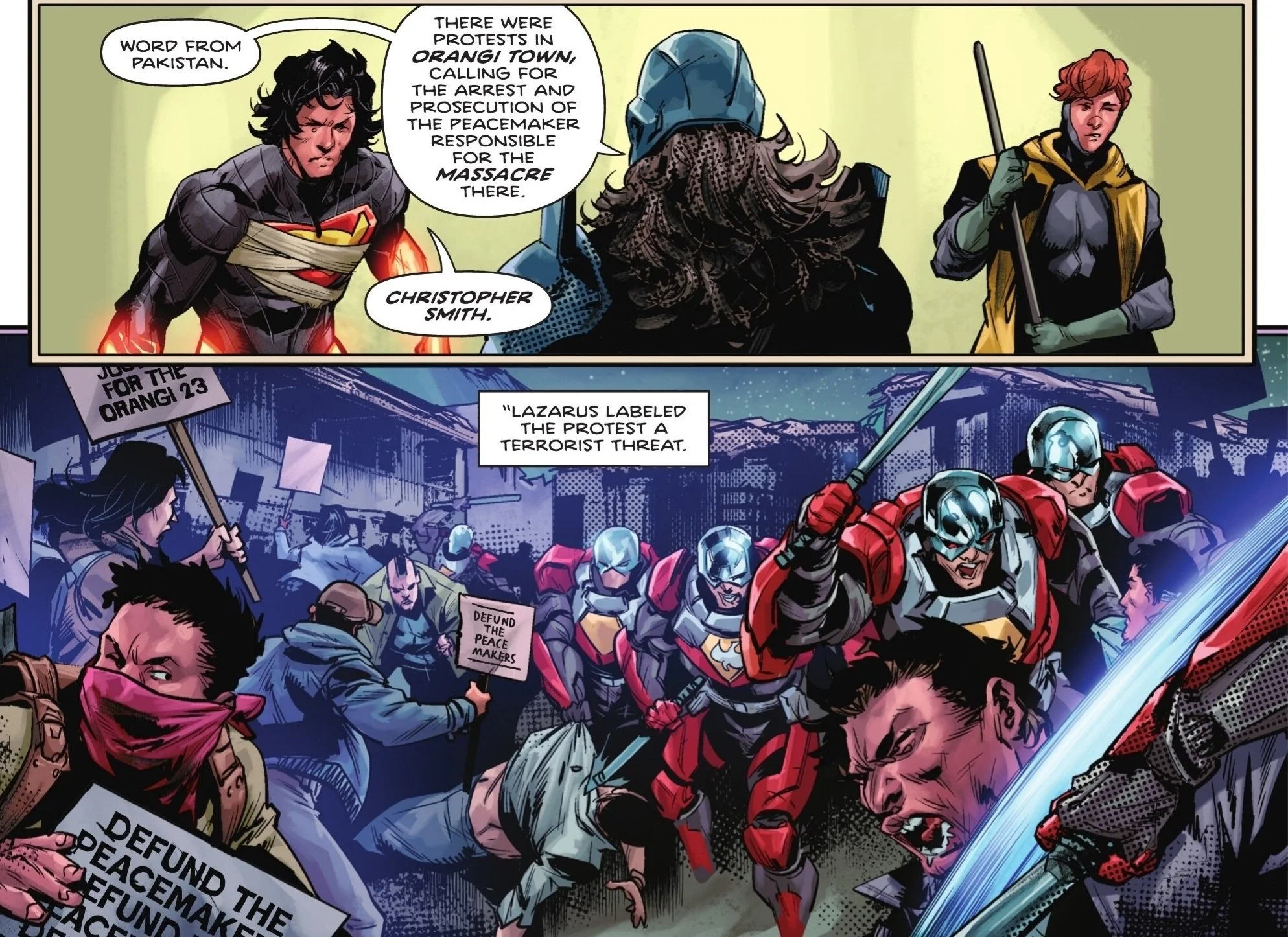
Capitalism and corporate power trap populations in cycles of dependency and exploitation. Militarized enforcement ensures obedience, punishing those who step out of line. Ideology and belief bind communities to destructive agendas, turning loyalty into a weapon. In both Earth-6160 and the Absolute Universe, villainy is systemic, omnipresent, and often invisible, forcing heroes to operate on multiple levels at once—tactical, strategic, and moral.


Ultimate Universe (Earth-6160): Evil as Control and Cabal

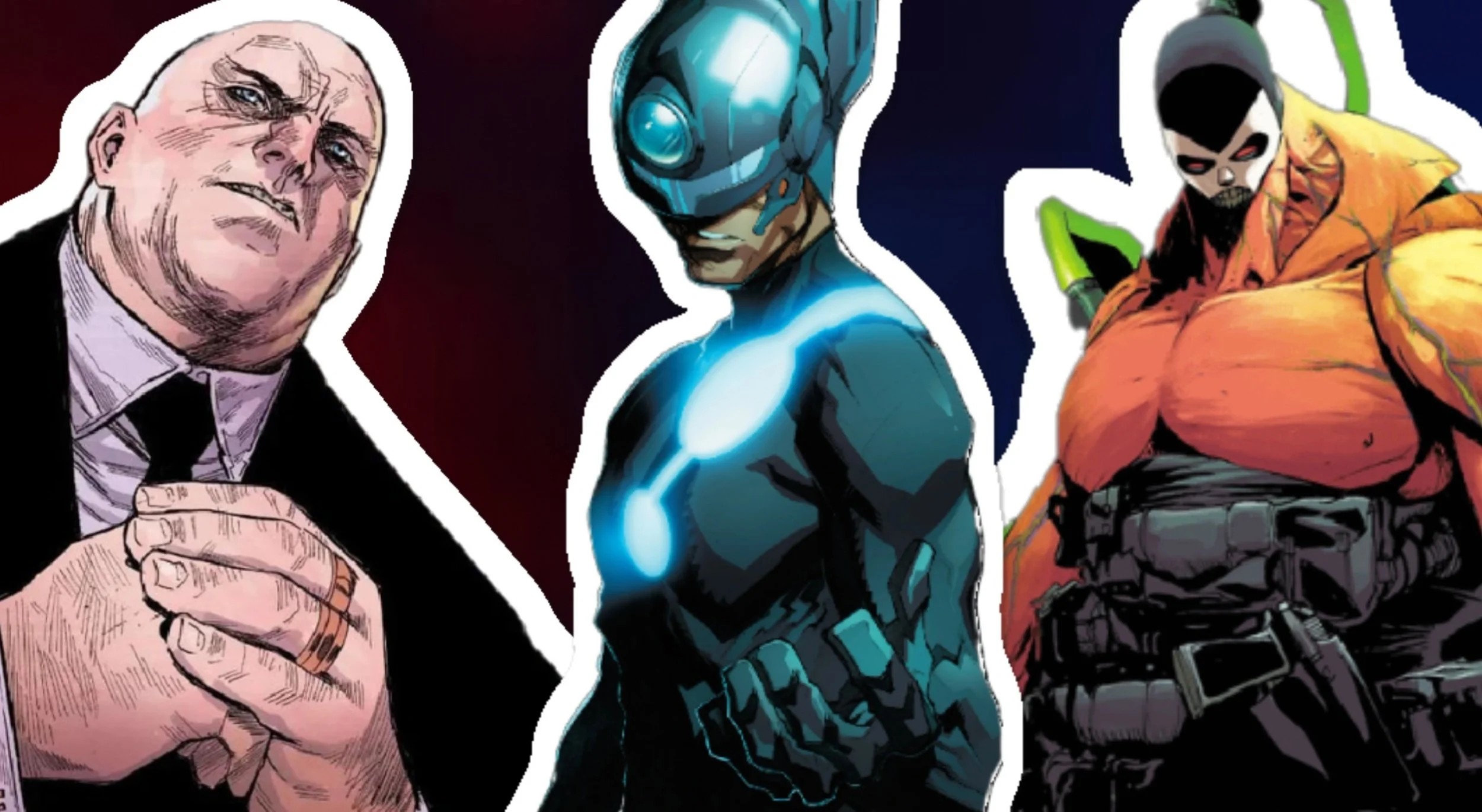
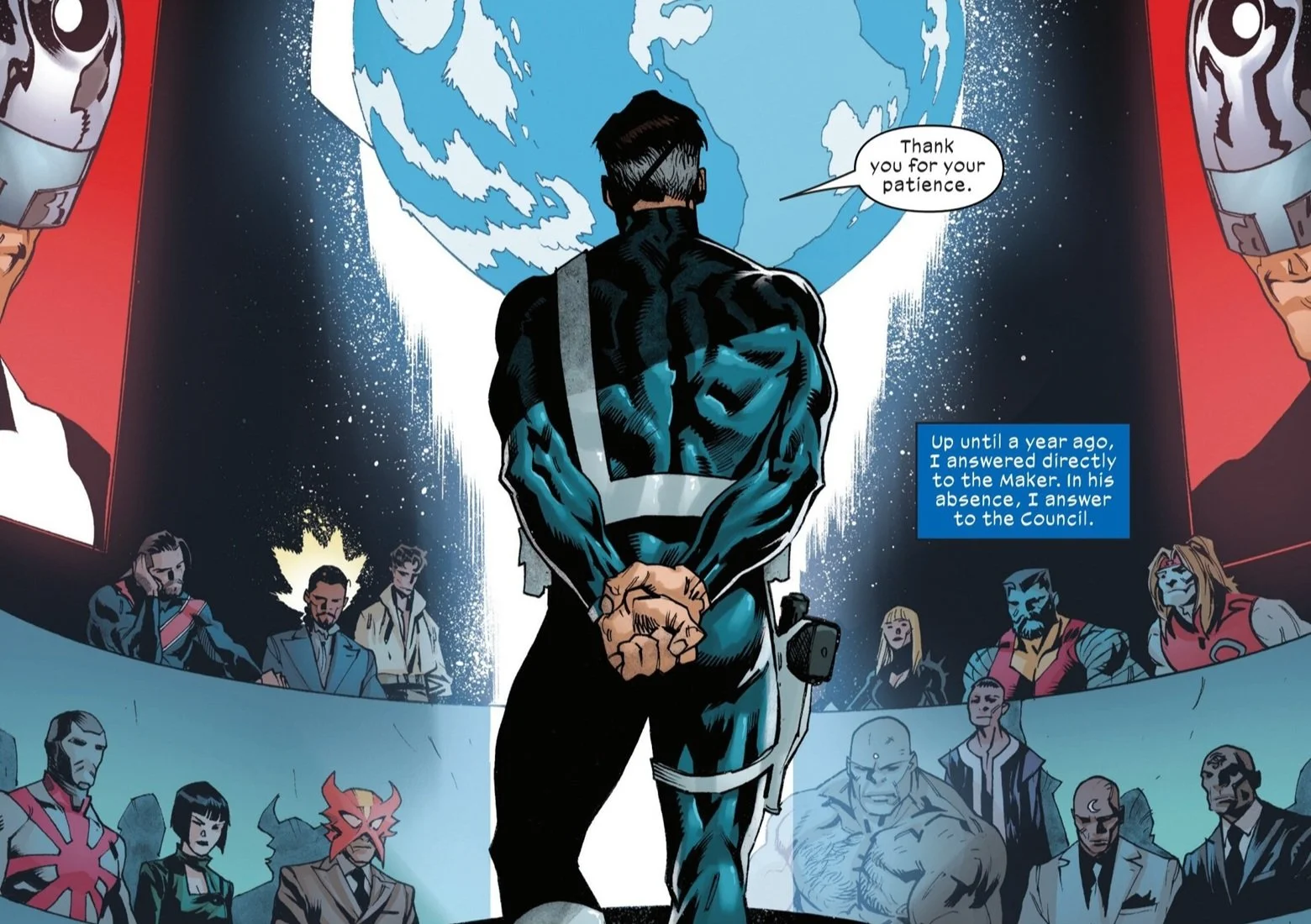
Jonathan Hickman’s Ultimate Universe presents a terrifying vision of society engineered for oppression. The Maker, an alternate Reed Richards obsessed with total control, has built a world where superheroes cannot rise without dismantling the systems themselves. His Cabal is a council of elites coordinating governments, corporations, and militaries to maintain dominance.

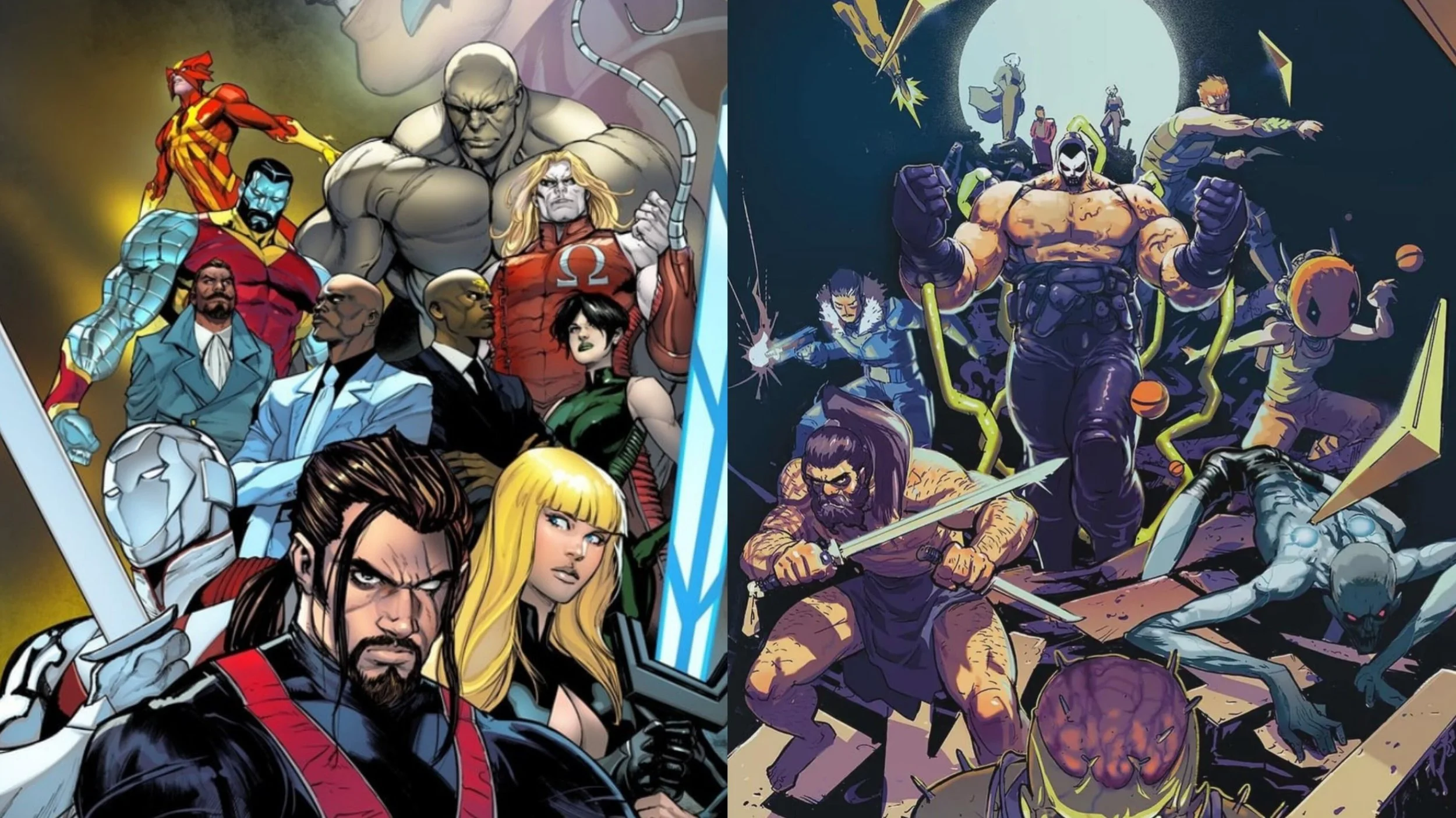
Wilson Fisk, running The Paper, manipulates information and perception, shaping public opinion to ensure compliance. Nick Fury acts as the enforcer, tasked with suppressing civilians who resist or question authority. Even resistance movements like the Omega Men can be illusions, designed to give people hope while keeping the status quo intact.

Other examples of systemic manipulation appear across the Ultimate Universe. In Ultimate X-Men, extremist cults exploit mutants, recruiting them through ideology and emotional manipulation. These groups demonstrate that loyalty and belief can be weaponized, showing that power can operate through social control rather than brute force. In Ultimate Black Panther, nationalist factions within Wakanda manipulate political and ideological structures to consolidate authority, turning patriotism into a tool of oppression. False flag attacks, such as those in Ultimate Universe #1, create crises that justify heightened enforcement and surveillance, illustrating how manufactured threats can cement power in place.

Heroes in Earth-6160 must navigate all of these layers, confronting evil not just as a person, but as an entire system.


The Absolute Universe: Evil as Chaos, Exploitation, and Sadism

The Absolute Universe approaches villainy differently, emphasizing instability, deprivation, and cruelty. Darkseid’s influence reshapes reality, stripping heroes of the foundations they would normally rely on. Absolute Batman grows up without inherited wealth, Absolute Superman loses the guidance of the Kents, and Absolute Wonder Woman is raised in conflict instead of peace. Survival itself becomes a measure of heroism.

Villainy in the Absolute Universe is both personal and systemic. Absolute Joker is not merely chaotic—he is wealthy, cunning, and sadistic, exploiting systems to perpetuate suffering while staying in the shadows. Absolute Ra’s al Ghul manipulates ideological networks, spreading destruction through institutions rather than brute force. Even the Omega Men in Absolute Superman appear to resist injustice while secretly preserving deeper systems of control, demonstrating how “resistance” itself can be weaponized. Bureaucratic failure, economic exploitation, and manipulated ideology act as villains in their own right, creating a society where citizens are trapped and heroes must navigate moral and structural complexity.


New Heroes for a New Kind of Villainy

This evolution of villainy demands heroes who are more than symbols—they must be strategists, insurgents, and analysts capable of navigating systems rather than confronting a single enemy. In Earth-6160, heroes like the alternate Spider-Man and his allies must dismantle the Maker’s Cabal, challenge Wilson Fisk’s media empire, and outmaneuver Nick Fury’s enforcement campaigns. These heroes confront propaganda, false crises, and ideological manipulation with intelligence, cunning, and moral clarity.

In the Absolute Universe, Absolute Superman, Batman, and Wonder Woman must survive not only supervillains but the very chaos of their world. Superman protects civilians from systemic and institutional exploitation, Batman operates with ingenuity despite the loss of resources, and Wonder Woman inspires hope in communities stripped of guidance and safety. Together, these heroes reflect the complexity of our world—they survive instability, confront pervasive systems of oppression, and redefine what heroism means when the enemy is woven into society itself.


Conclusion: Mirrors of Our World

The Ultimate and Absolute Universes confirm that modern evil is systemic, structural, and multi-layered. It operates through secret cabals, propaganda, economic and bureaucratic exploitation, militarized enforcement, and ideological manipulation. Heroes in these worlds must think strategically, navigate moral gray areas, and dismantle systems rather than just individuals.

The shape of evil has changed, and the heroes who confront it have changed with it. These stories are more than entertainment—they are mirrors reflecting the systems, structures, and crises that challenge not just characters on a page, but the imagination of readers who recognize the complexity of modern evil and the courage it takes to oppose it.

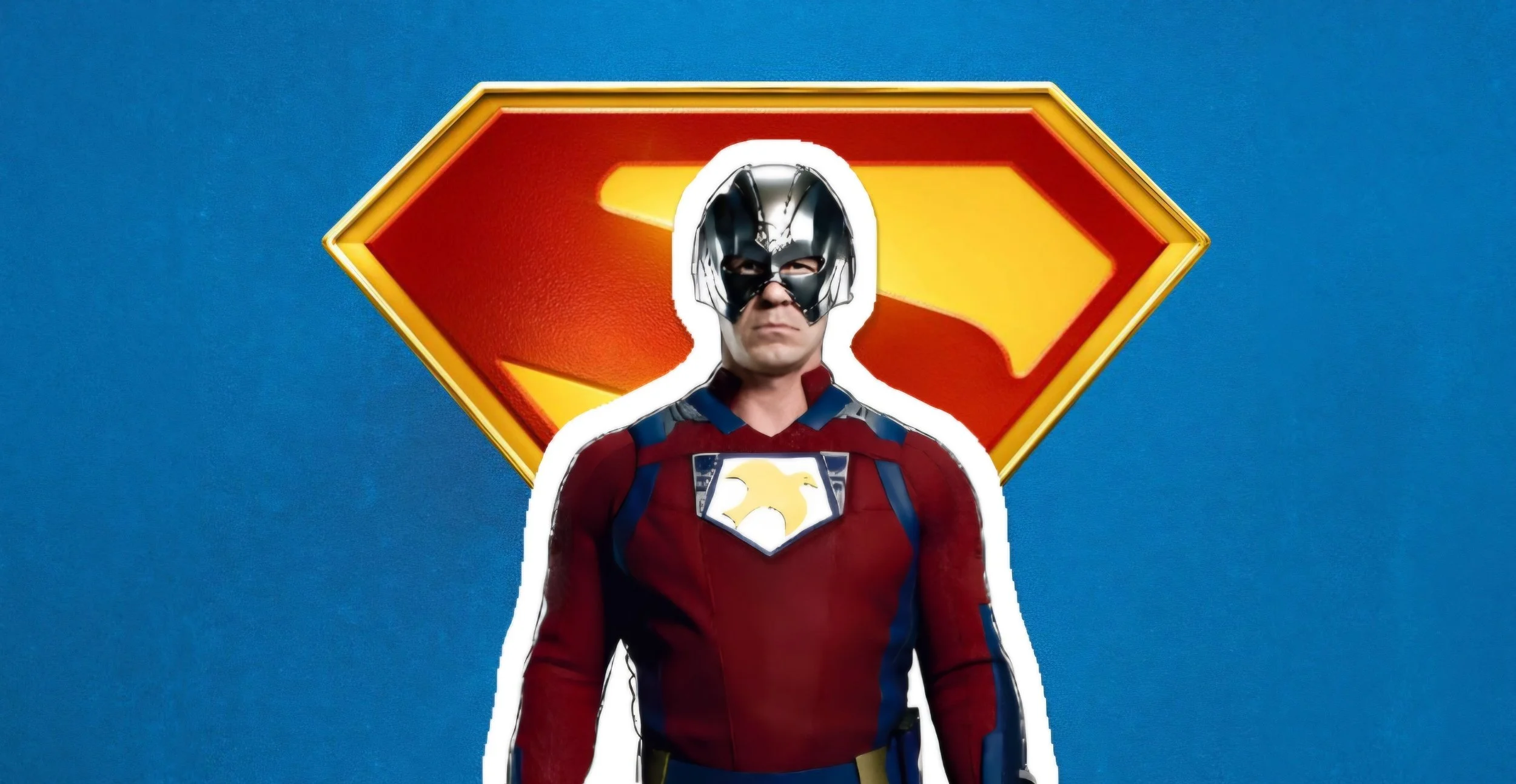
Peacemaker S2 Reveals Major Superman Character’s Fate and Sets Up Man of Tomorrow

George SerranoComment

So THAT’s why Superman went to streaming so fast.!

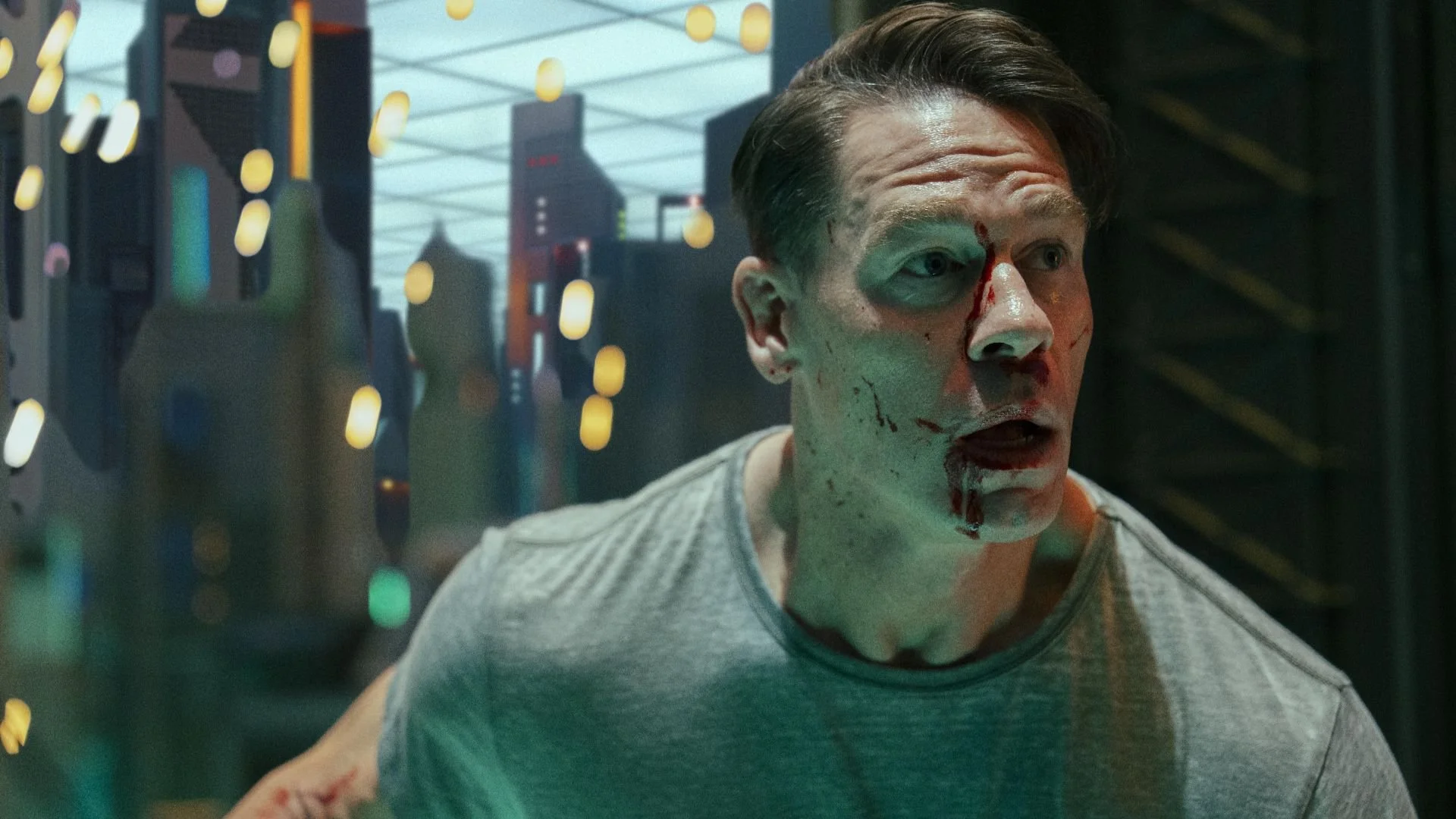
The incredible reveal in Peacemaker Season 2, Episode 6, titled "Ignorance Is Chris," has done exactly what James Gunn hinted it would: it clarified a major Superman character's post-Superman status and kick-started the plot for the next film, Man of Tomorrow. This isn't just a simple guest appearance. It’s a foundational piece of DC Universe lore, and it reveals why the Superman film was rushed onto digital platforms to beat the TV show's massive spoiler.

.

.

The Ultimate Spoiler: Luthor is Open for Business.

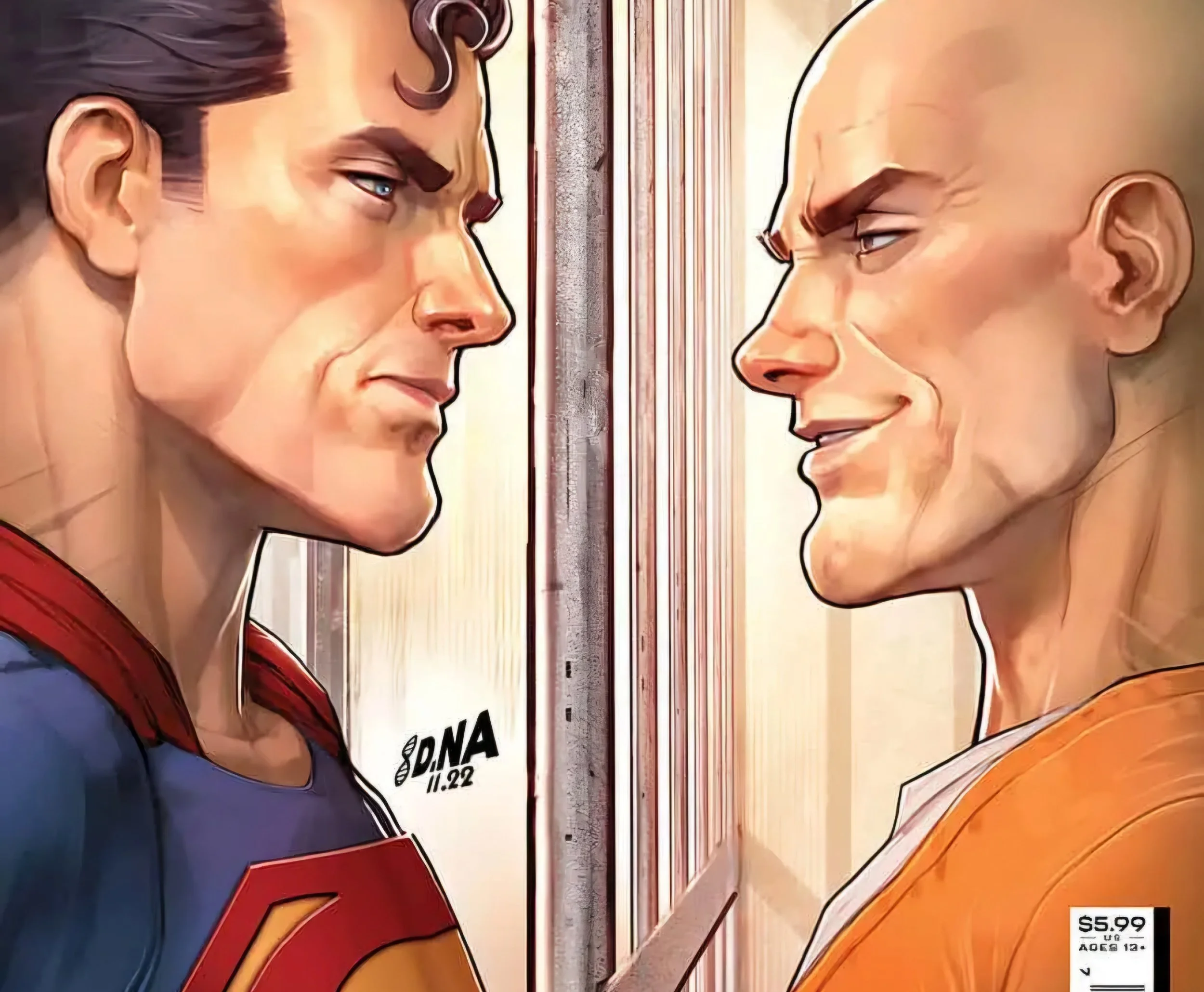
In the episode, we find a character whose fate was decided in the Superman climax. This character, whom we know to be Nicholas Hoult's Lex Luthor, is imprisoned at Belle Reve, confirming that his world-threatening actions involving his dimensional technology—the notorious "Luthor Incident"—led directly to his incarceration.

Now, A.R.G.U.S. Director Rick Flag Sr. (Frank Grillo) is desperate. Peacemaker has escaped to a Nazi-tinged alternate dimension, and Flag needs the world’s foremost and most dangerous expert on unstable dimensional portals. That expert is Lex.

Flag offers Luthor the ultimate prize for his help: a transfer out of Belle Reve and into the much softer, non-metahuman prison of Van Kull, calling it an "opportunity for redemption." The deal? Lex has to lend his genius to tracking down Peacemaker's dimensional portal technology, which is throwing dangerous energy readings across their universe.


The Multiversal Path to Man of Tomorrow

This scene is the trigger for the entire next phase of the DCU. As James Gunn has emphatically stated, Peacemaker Season 2 is a "prequel" to Man of Tomorrow.

The Luthor scene is the moment the villain gains crucial leverage to escape the metahuman prison system. By forcing him to "collaborate" with the government, Flag is unknowingly putting Luthor on the path to freedom, a path that will inevitably lead to him regaining his power and influence. It’s a classic supervillain move executed with modern DCU precision!

The dimensional chaos created by Peacemaker’s Quantum Unfolding Chamber inadvertently gives Lex Luthor the perfect excuse to re-enter the main stage. The multiversal threat that Peacemaker unleashed is exactly the kind of massive, shared foe that Gunn has teased will force an unlikely alliance between Superman and a newly "heroic" Lex Luthor in Man of Tomorrow.


Don't Miss the Finale Setup

There are still two high-stakes episodes left in Peacemaker Season 2, which James Gunn has kept under tight wraps because they contain major spoilers for the wider DCU!

The season finale, which airs October 9th, is expected to be the most crucial episode in setting up the Man of Tomorrow conflict. You won't want to miss a moment of the final push.

Catch all new episodes of Peacemaker Season 2 streaming exclusively on Max every Thursday! The fate of a major Superman villain—and the plot of the next big film—is being decided right now on your TV screen!

The DC KO Tournament: Round 1 Predictions & Power Scaling Breakdown!

George SerranoComment

Welcome, fight fans! The DC KO Tournament is here. This isn't friendly sparring; it's a knockdown, drag-out brawl for multiversal supremacy. Our team has gone deep into the archives, analyzing comic history and legendary feats to deliver a definitive, data-driven breakdown of each matchup. This is about raw power, cunning strategy, and psychological fortitude. The action is about to begin!


The Heavyweight Division

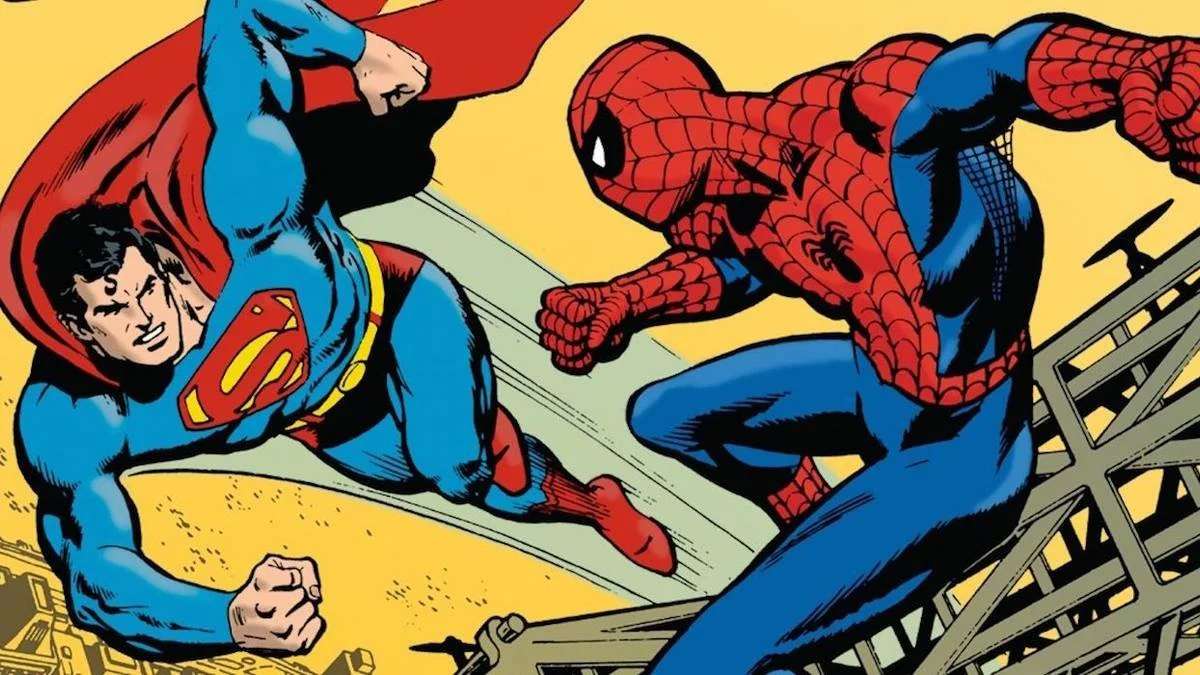
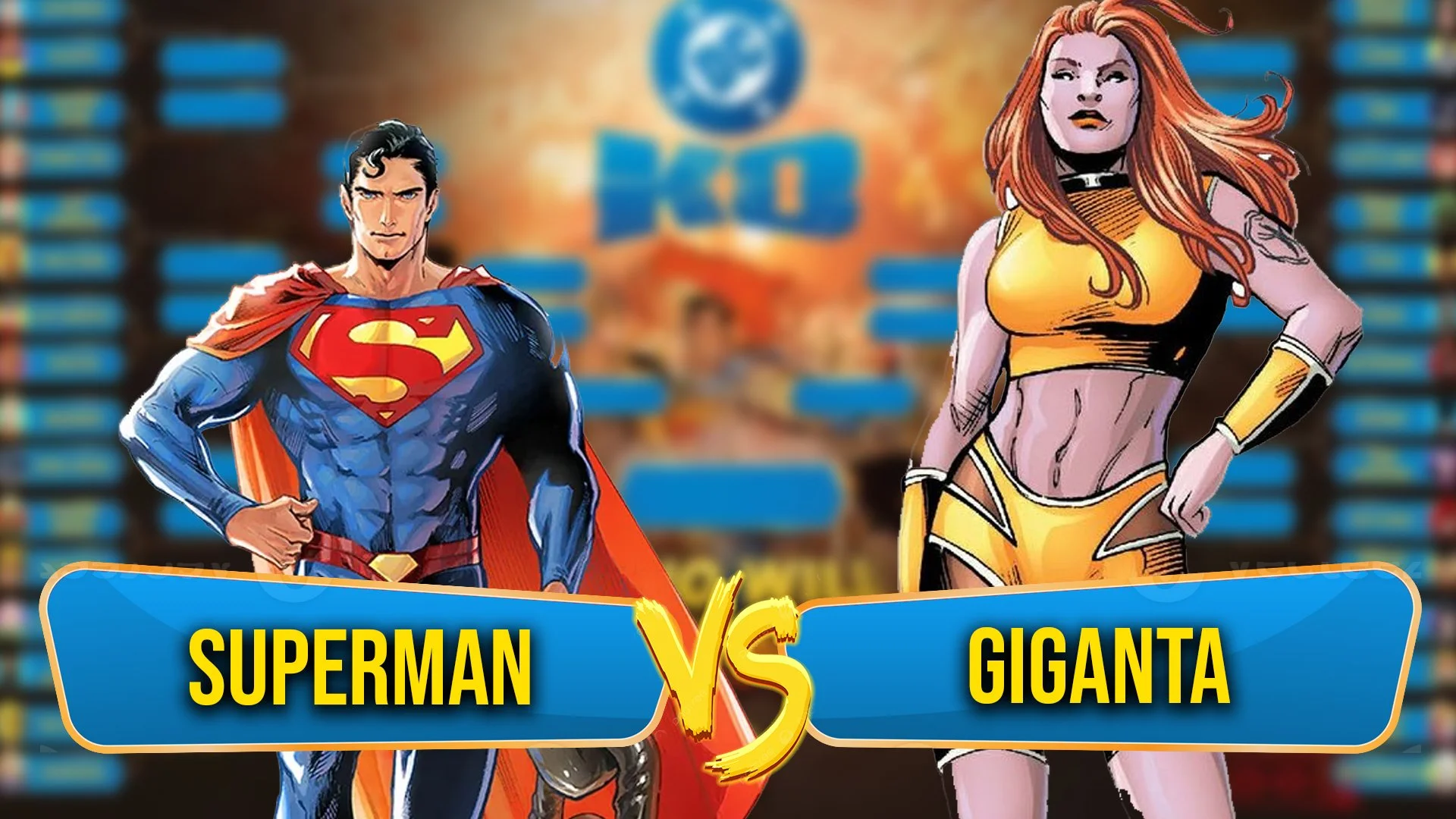
Matchup 1: Superman vs. Giganta

Tale of the Tape: Superman

In the blue corner, it's the Man of Steel, Superman. His solar-powered abilities grant him immense superhuman strength, faster-than-light flight, and invulnerability. His strength is depicted as having no upper limit, simply adapting to a given situation. He can lift planets and his tactical telekinesis protects large objects he lifts, and his body generates an invisible force field.  

Tale of the Tape: Giganta

In the red corner, with a genius intellect, we have Giganta. Her powers grant her superhuman strength and durability that are proportionate to her size. Her feats include smashing a stone ceiling, tossing helicopters, and even punching Wonder Woman into concrete. A legendary deep-cut feat saw her knock out Superman with a single clap in the DC Animated Universe, proving her power is no laughing matter. She has also taken hits from Wonder Woman and Black Adam, showing high durability.  

Feats, Fails, and the Final Bell

This is a classic power-scaling contradiction. Giganta knocked out Superman with a clap in a viral moment, a one-off feat that defines her power. But a comprehensive analysis must weigh this against Superman's consistent history. He's moved planets, flies faster than light, and endures planet-busting explosions. The DCAU knockout is an outlier against his canon. Based on consistent power scaling, Superman's superior speed would end the fight before it even begins. He could simply vibrate through her attacks or overwhelm her with blows of a planetary class.  

Predicted Winner: Superman


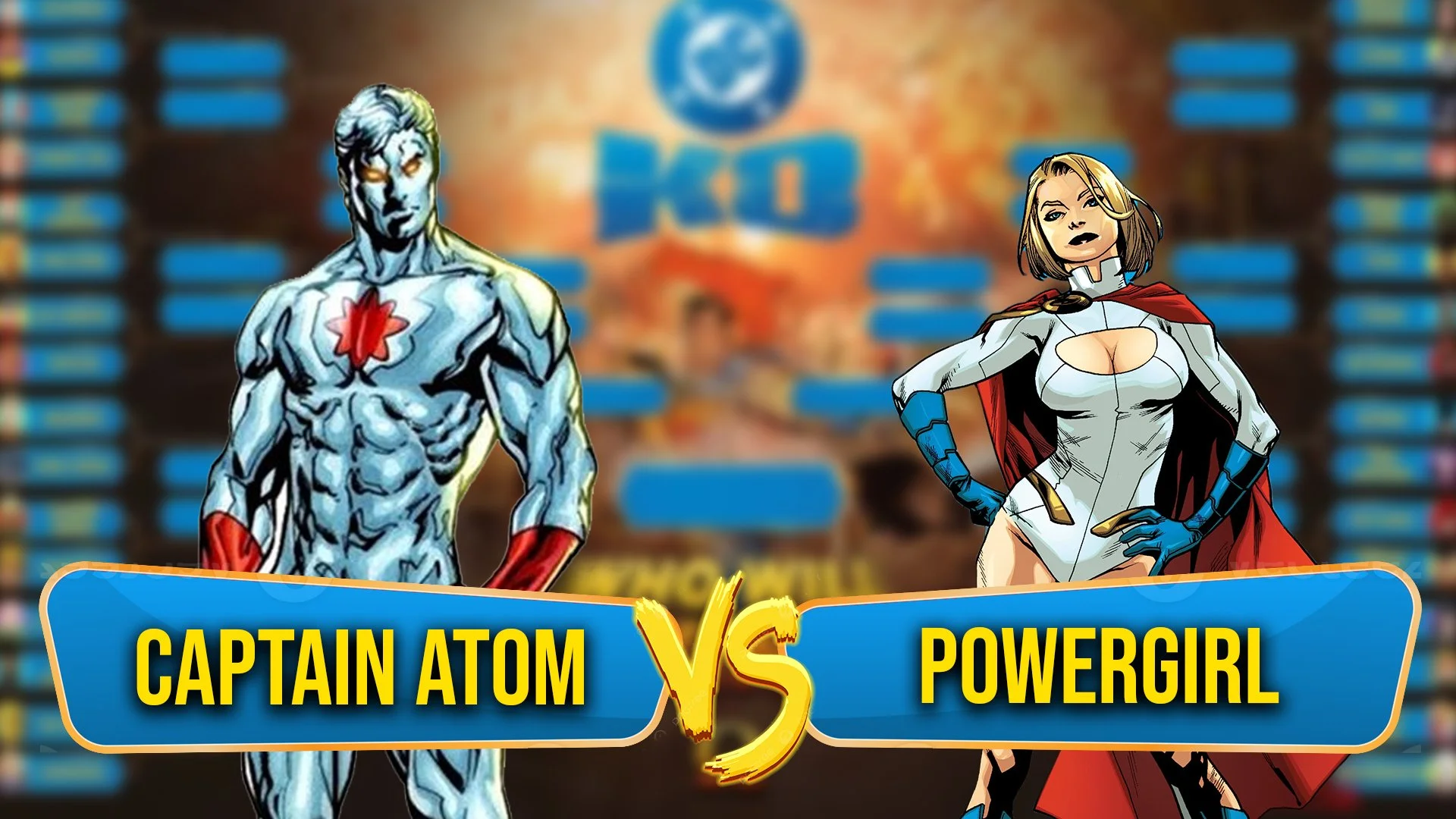
Matchup 2: Captain Atom vs. Power Girl

Tale of the Tape: Captain Atom

In the blue corner, he’s a walking nuclear reactor and a master of the Quantum Field, Captain Atom. His body is a conduit for a power source that grants him Quantum Powered Strength, matter manipulation, and staggering durability. He has absorbed Kryptonite radiation that was strong enough to kill other S-tier heroes and survived a planet-busting meteor explosion. When his mental limits are off, he can create and destroy universes, and he is a hard counter to anyone who uses energy, absorbing it simply by flying past.  

Tale of the Tape: Power Girl

In the red corner, she is the Maiden of Might of Earth-Two, Kara Zor-L. A refugee from Krypton, she possesses a power set identical to Superman's, including superhuman strength, flight, and invulnerability. She is a "punch first, ask questions later" brawler with a gung-ho attitude. She is highly resistant to Kryptonite, although some versions show it can affect her in a diminished form. Her strength is on par with Superman's, having punched him across the Great Wall of China.  

A War of Will and Wavelength

This is a battle of power sources. Power Girl’s abilities are solar-powered. Captain Atom's power is quantum-based, a higher-dimensional energy source that lets him absorb and manipulate other forms of energy. He has a documented history of absorbing Kryptonite radiation, proving his energy manipulation is effective even against Kryptonian-specific threats. In a fight, he would not need to beat her physically; he could simply drain her of her power. Power Girl is facing a metaphysical entity who, at his peak, can create and destroy realities. A simple punch is unlikely to affect a being who survived a planet-busting meteor explosion and is impervious to Kryptonian-level attacks. Captain Atom's power set represents a direct and absolute counter, giving him a clear path to victory.  

Predicted Winner: Captain Atom


The Magical & Cosmic Division

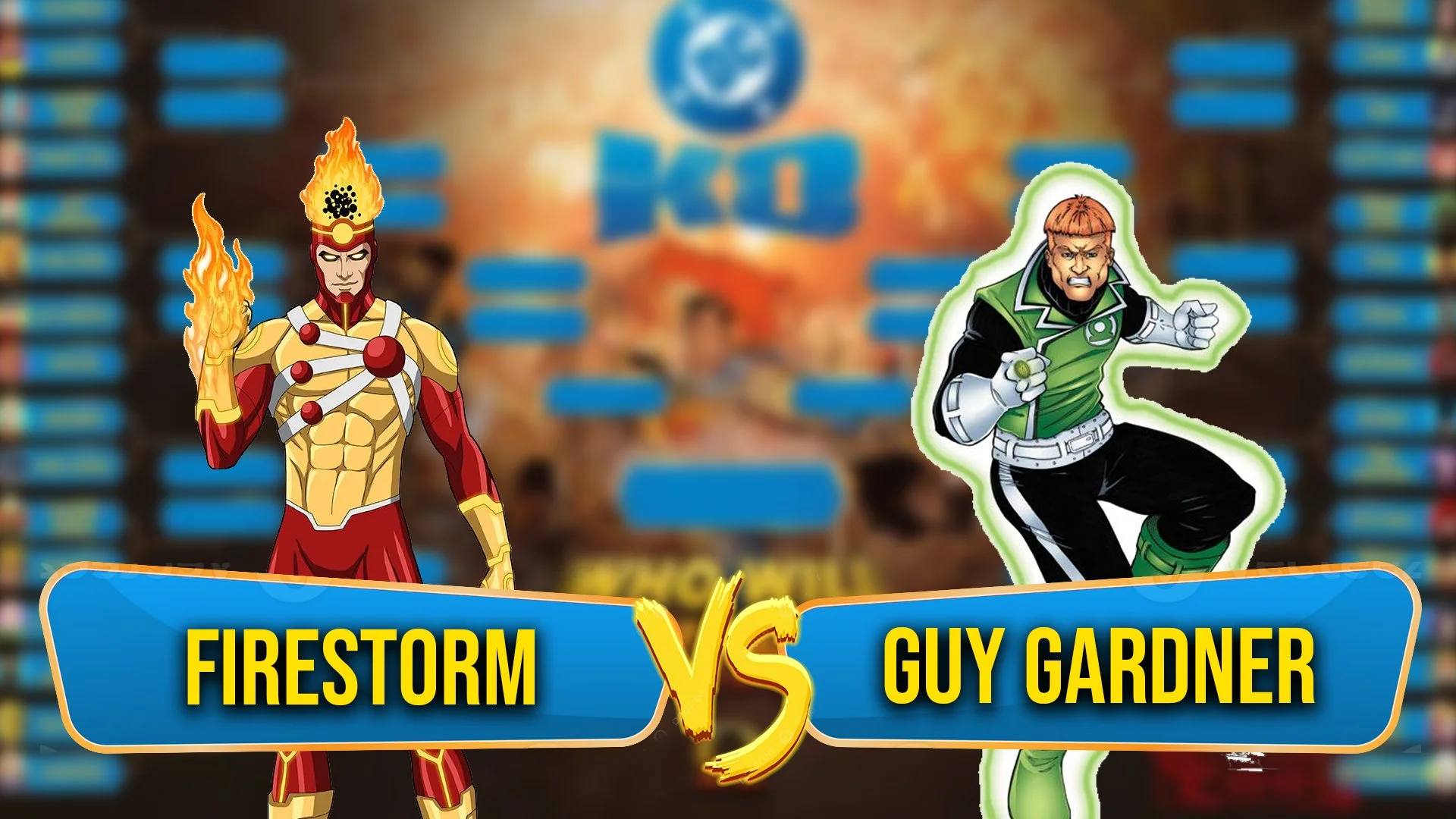
Matchup 3: Guy Gardner vs. Firestorm

Tale of the Tape: Guy Gardner

In the blue corner, he is the most abrasive member of the Green Lantern Corps, Guy Gardner. His power comes from his Green Lantern ring, limited only by his considerable willpower. What makes Guy unique is his emotional versatility; he has wielded not just the green ring of willpower but also the yellow ring of fear and the red ring of rage. His ego has been famously knocked out by a single punch from Batman, but his ability to wield a ring makes him one of the most powerful lanterns ever to exist.  

Tale of the Tape: Firestorm

In the red corner, he is the Nuclear Man, a gestalt being of two consciousnesses with the power of matter transmutation. The Firestorm Matrix allows him to rearrange matter on a sub-atomic level, a power he has used to turn guns into brooms and a fallen Eiffel Tower into rose petals. His power is incredibly versatile, but his durability is inconsistent, with feats ranging from tanking nuclear attacks to a stated fear of a simple 800-foot fall.  

From Fire to Fury

The fundamental difference in this fight is one of approach. Firestorm is a technician, who works on a complex, sub-atomic level and requires a mental process to rearrange matter. Guy Gardner is a brawler. His power ring is a precision-based weapon designed for combat, which he uses to generate high-energy blasts that can send a Martian Manhunter flying. The core of Firestorm's power is the Firestorm Matrix, a unified consciousness that is vulnerable to physical disruption. A focused, powerful strike from a Green Lantern-enhanced fist would be a decisive attack. Guy’s raw, unbridled willpower and tactical use of direct energy blasts would overwhelm Firestorm's more complex, alchemical-based powers.  

Predicted Winner: Guy Gardner


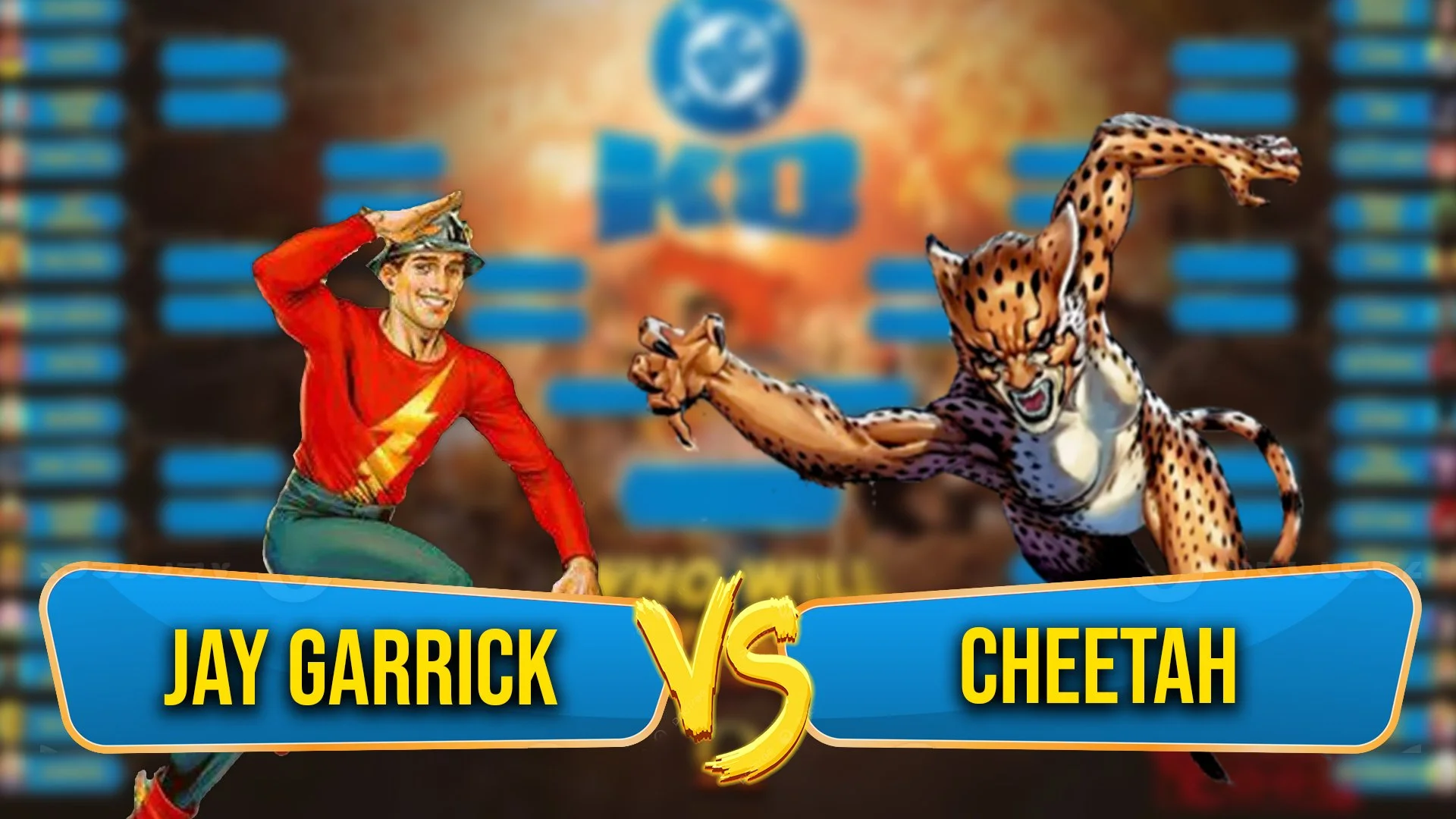
Matchup 4: Jay Garrick vs. Cheetah

Tale of the Tape: Jay Garrick

In the blue corner, the original Scarlet Speedster, the man who started it all, Jay Garrick. His powers come from his connection to the Speed Force, an extra-dimensional energy source. He has been documented running at Mach 1448.6, and he has a superior, intuitive understanding of the Speed Force. He is a master of his abilities and an invaluable mentor to the speedster legacy.  

Tale of the Tape: Cheetah

In the red corner, she is a demigod blessed with the strength and speed of a feline god, Cheetah. Her powers are magical in nature, which is a lethal advantage against those who rely on physical strength and speed. Her most devastating feat is a deep-cut classic: she has been shown to take down the entire Justice League, including Superman and the Flash, without any prep time. She has also used her magic to cast a curse on Superman, turning him into a cheetah-like creature, and has caused Wonder Woman to hallucinate.  

The Magic of Speed

This is a classic "speed versus magic" confrontation. While Jay Garrick has a legendary legacy and an unparalleled connection to the Speed Force, Cheetah's powers are mystical and fundamentally different. Her magical nature is a perfect counter to a speedster's physical abilities, as it allows her to bypass conventional durability and power scaling. Cheetah has a proven track record of defeating a full-powered Flash. This is the critical causal relationship in this matchup. Her abilities are a nightmare for any opponent who does not have a magical counter. Jay Garrick may be a master of the Speed Force, but his power is not mystical and offers no inherent resistance to Cheetah's magic. In a single, devastating strike, she could land a magical attack that would neutralize his Speed Force connection.  

Predicted Winner: Cheetah


The Demigod & Metahuman Brawler Division

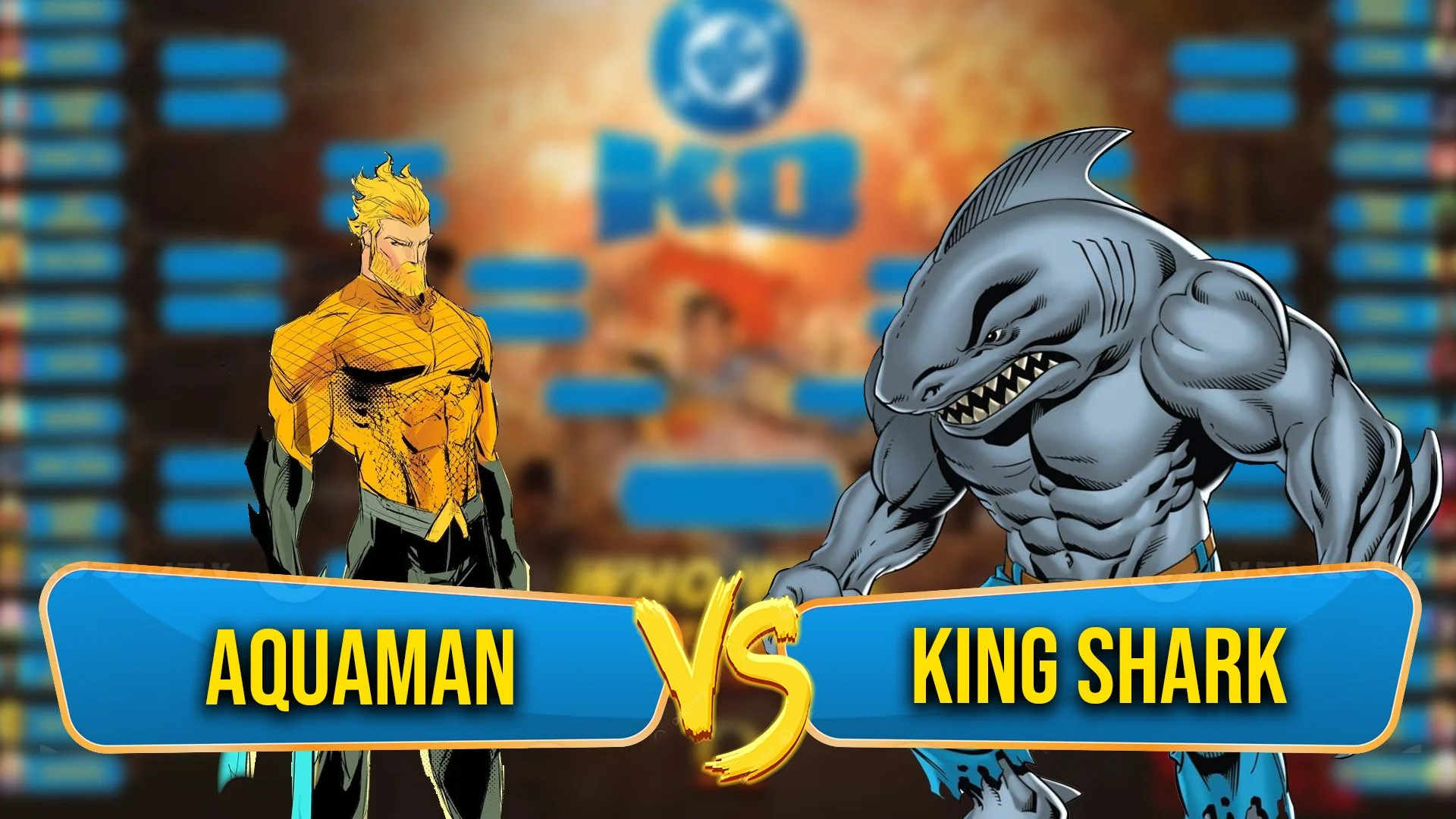
Matchup 5: Aquaman vs. King Shark

Tale of the Tape: Aquaman

In the blue corner, he is the King of Atlantis and a demigod of the seas, Aquaman. His Atlantean physiology grants him superhuman strength, with feats including lifting a cruise ship and uppercutting an evil version of himself. He is incredibly fast in the water, reaching speeds of over 6,700 mph. His most devastating and profound power is his cosmic-level telepathy, which allows him to communicate with and command not just marine life, but all sentient life in the cosmos through the "Life Force". He has used this power to give a White Martian a seizure and even mind-rape every being on Earth.  

Tale of the Tape: King Shark

In the red corner, he is the son of a shark god, Nanaue, also known as King Shark. He is a physical powerhouse with enhanced strength, durability, and a potent regenerative healing factor. His feats include biting Superman hard enough to break his own teeth and one-shotting Superboy. His physical strength is immense, but he is driven by primal instinct and hunger, and his vulnerability to dehydration is a known weakness.  

An Ocean of Difference

This matchup seems like a straight-up brawl, but a deeper look reveals a significant strategic mismatch. King Shark is a fearsome brawler, a one-dimensional threat driven by instinct. This makes him the perfect target for Aquaman’s most potent weapon: his mind. Aquaman is not just a brawler; he is a king and a master tactician. His cosmic-level telepathy is a trump card that King Shark has no defense against. Aquaman could use his telepathy to attack King Shark’s mind directly, an ability he has demonstrated against the likes of White Martians. King Shark's mind is a primitive one, susceptible to a sophisticated telepathic assault, which Arthur is more than capable of executing.  

Predicted Winner: Aquaman


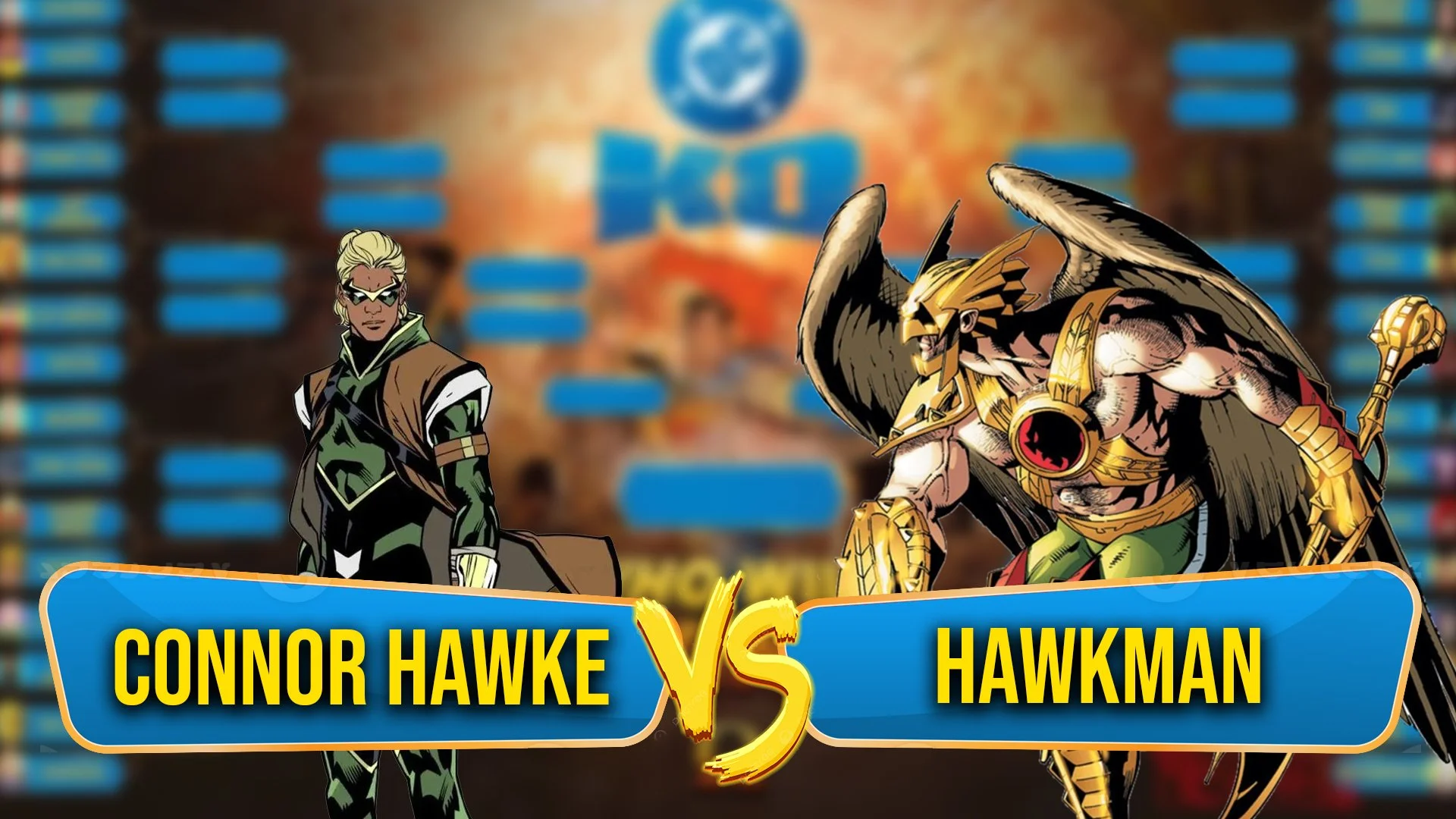
Matchup 6: Conner Hawke vs. Hawkman

Tale of the Tape: Conner Hawke

In the blue corner, he is a peerless martial artist and master archer, Conner Hawke. His abilities are far beyond a normal human's. He has bathed in dragon's blood, which gave him superhuman strength, speed, and a near-instant healing factor. He has trained in the ancient martial art of the "All Caste," which allows him to fight on the astral plane and predict the future. His feats include one-shotting Orm, kicking off an alien's head, and surviving a shot to the head.  

Tale of the Tape: Hawkman

In the red corner, he is the winged warrior of Thanagar, Carter Hall, also known as Hawkman. His powers are derived from his Nth Metal harness, which grants him flight, superhuman strength, and a potent healing factor. He prefers archaic weaponry as his reincarnated consciousness makes him a master of their use. His most devastating feat is using the Claw of Horus, an Nth Metal weapon, to hit Superman with the force of "the planet itself," a blow that cratered the ground.  

Nth Metal vs. Dragon's Blood

This fight is a clash of two similar power sets: enhanced strength, flight, and a healing factor. However, the difference in their feats and power scaling is immense. Hawkman’s Nth Metal technology is a quantum leap in power that Conner’s dragon’s blood abilities cannot match. The Claw of Horus feat is the critical deciding factor. Hitting Superman with the force of the planet itself is a feat of power on a different scale than anything Conner Hawke has ever demonstrated. While Conner’s "All Caste" training is impressive and his ability to predict the future is a powerful tool, it would be useless against a blow of such catastrophic force. Hawkman, with his millennia of experience and his devastating arsenal, operates on a scale that Conner simply cannot reach. The causal relationship is that technology provides an overwhelming advantage over physical skill.  

Predicted Winner: Hawkman


The Mastermind Division

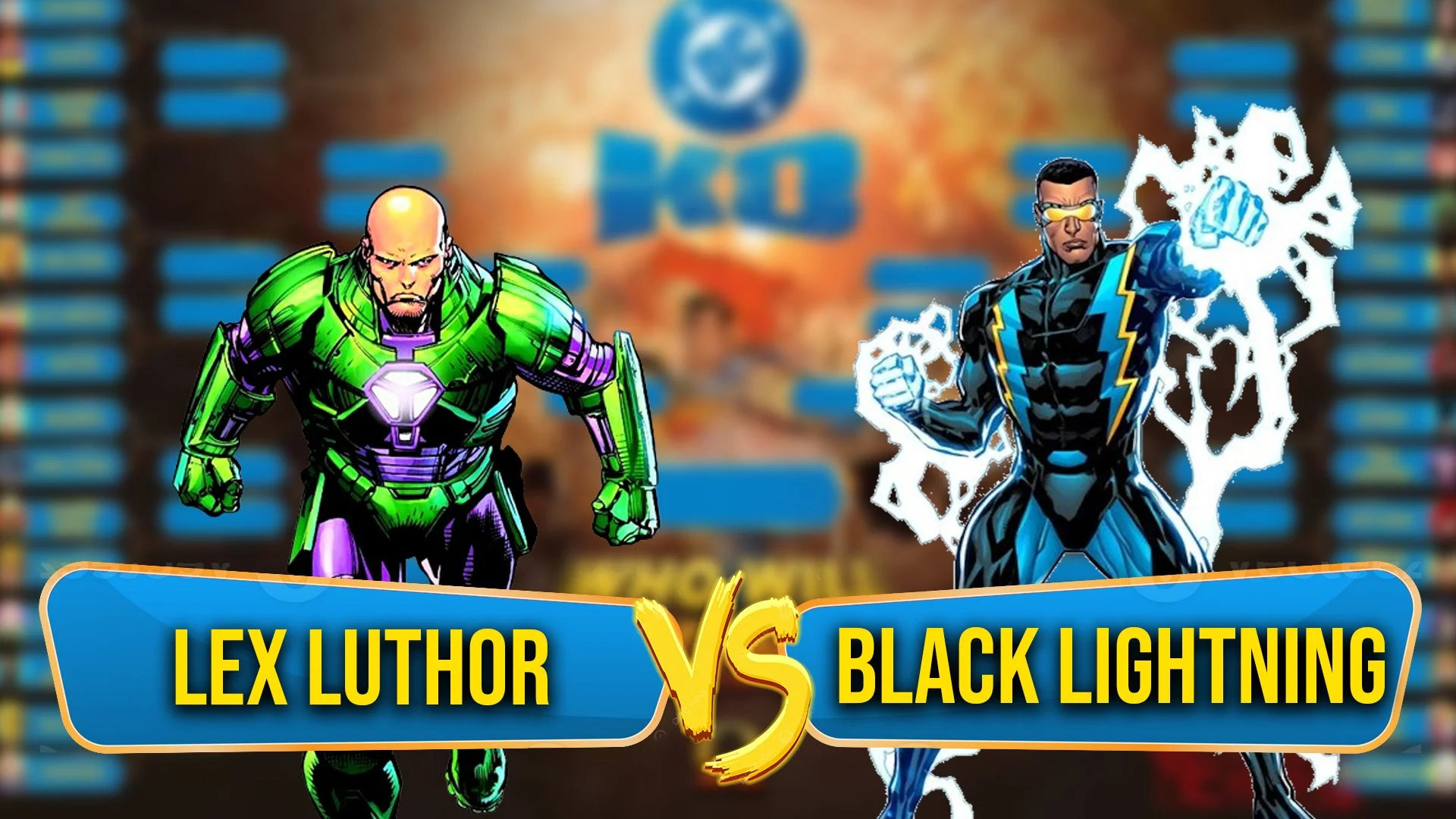
Matchup 7: Lex Luthor vs. Black Lightning

Tale of the Tape: Lex Luthor

In the blue corner, he is the archenemy of Superman, Lex Luthor. Luthor is a genius with an IQ of over 250, a polymath who has mastered countless scientific disciplines. While he has no inherent powers, his mind is his super-weapon, and his wealth and technology, including his Warsuit, allow him to contend with the most powerful beings on Earth. He is a genius on a multiversal scale, second only to Brainiac 5.  

Tale of the Tape: Black Lightning

In the red corner, he is Jefferson Pierce, a master martial artist and a metahuman with the innate ability to generate and control electricity. He is a highly skilled fighter who has used his powers to overpower Doctor Freeze's beams and clash with a mind-controlled Superman. He has a history of fighting technological opponents, overheating mech suits and restraining Luthor himself in his Warsuit.  

Tech and Tactics

This looks like a fight between a man with technology and a man with the power to counter that technology. Black Lightning’s electrical powers are a direct counter to Lex Luthor’s Warsuit and other creations. However, to assume this is a simple power-for-power battle would be to underestimate Luthor's defining trait: his unparalleled strategic genius. Luthor’s mind is a meta-power that exists on a higher plane than raw physical ability. He is a master tactician who has created contingency plans for every member of the Justice League. The fight would not begin with a head-on assault. Luthor's victory would come from a plan, a strategy, or a specific device designed to neutralize Black Lightning’s powers. He would have a non-conductive suit, a localized energy dampener, or some other piece of technology specifically designed to defeat an electrical manipulator.  


Predicted Winner: Lex Luthor


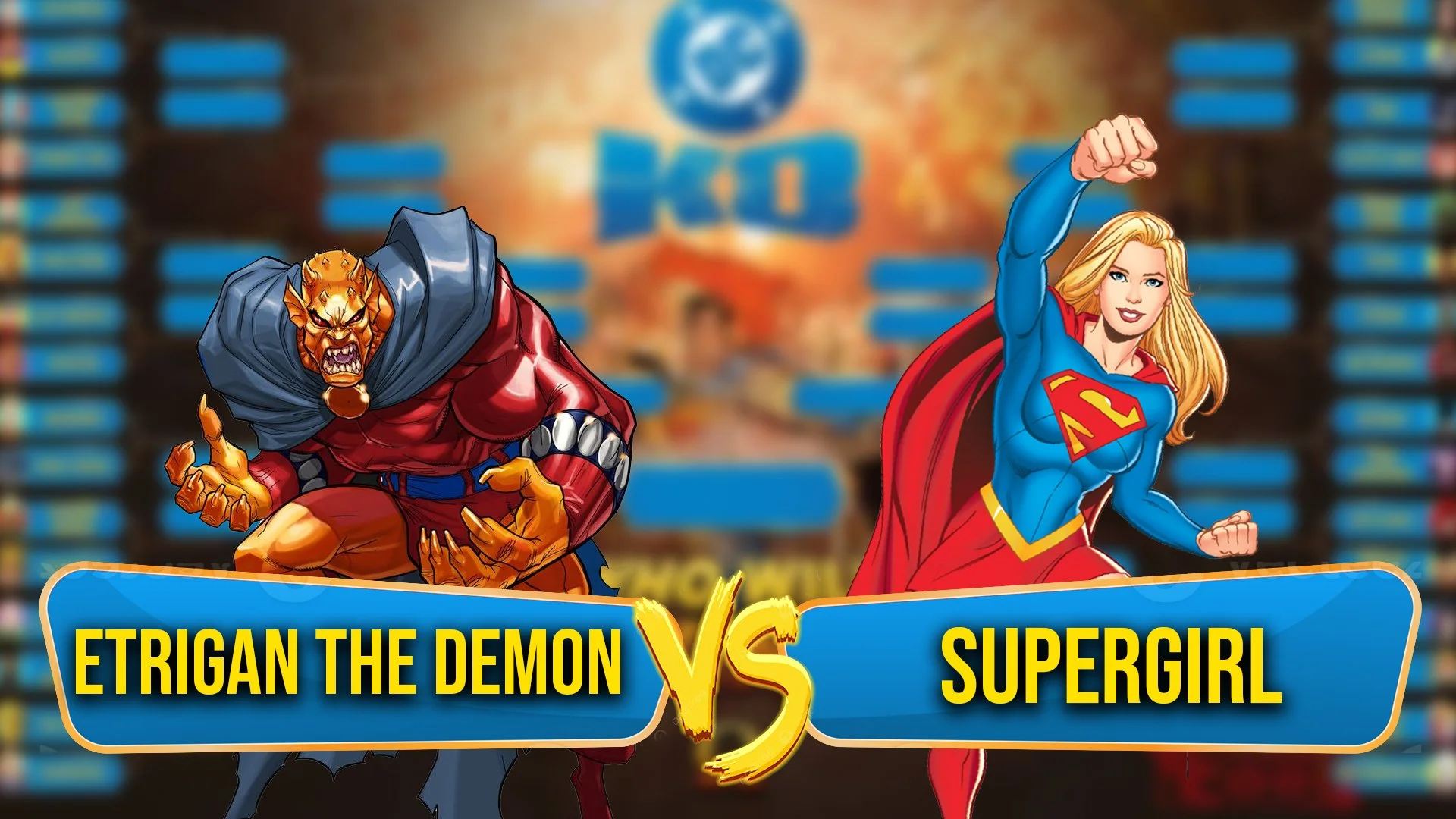
Matchup 8: The Demon vs. Supergirl

Tale of the Tape: The Demon

In the blue corner, he is the son of the demon Belial, the rhyming warrior of Hell, Etrigan the Demon. He is a high-ranking demon with mystically enhanced superhuman strength and durability, a power level that allows him to stand against powerhouses like Superman and Lobo. He is a master of hellfire, which he projects from his mouth, and he possesses an incredible regenerative healing factor. His sadomasochistic nature makes him fearless in a fight, as he enjoys pain.  

Tale of the Tape: Supergirl

In the red corner, she is the Maiden of Might, Kara Zor-El, the cousin of Superman. She is a Kryptonian with powers identical to her cousin's, including superhuman strength, speed, durability, and invulnerability. She has a long history of impressive feats, including punching Superman across the Great Wall of China and drawing blood from Wonder Woman.  

Unholy Hellfire vs. Solar Power

This fight is a brutal test of a classic power-scaling vulnerability. Supergirl is a being of immense solar-powered might, but her primary weakness is magic. Etrigan's powers are mystical and based on Hell itself, making every one of his attacks a direct counter to Supergirl's physical resilience. While Supergirl’s strength would make this a difficult fight for Etrigan, every blow she takes from him is a magical one, which she is far more vulnerable to. Furthermore, Etrigan's sadomasochistic nature gives him a decisive psychological advantage. He is a warrior who actively enjoys taking pain, which means he is not susceptible to the shock or physical punishment that would normally end a fight. He can sustain wounds that would incapacitate almost any other being and continue to fight. Supergirl has the raw power to land a knockout, but her vulnerability to magic and Etrigan’s healing factor and pain tolerance give him a clear advantage. He would simply outlast her until she succumbed to his mystical blows.  


Predicted Winner: The Demon


The Unkillable & Unpredictable Division

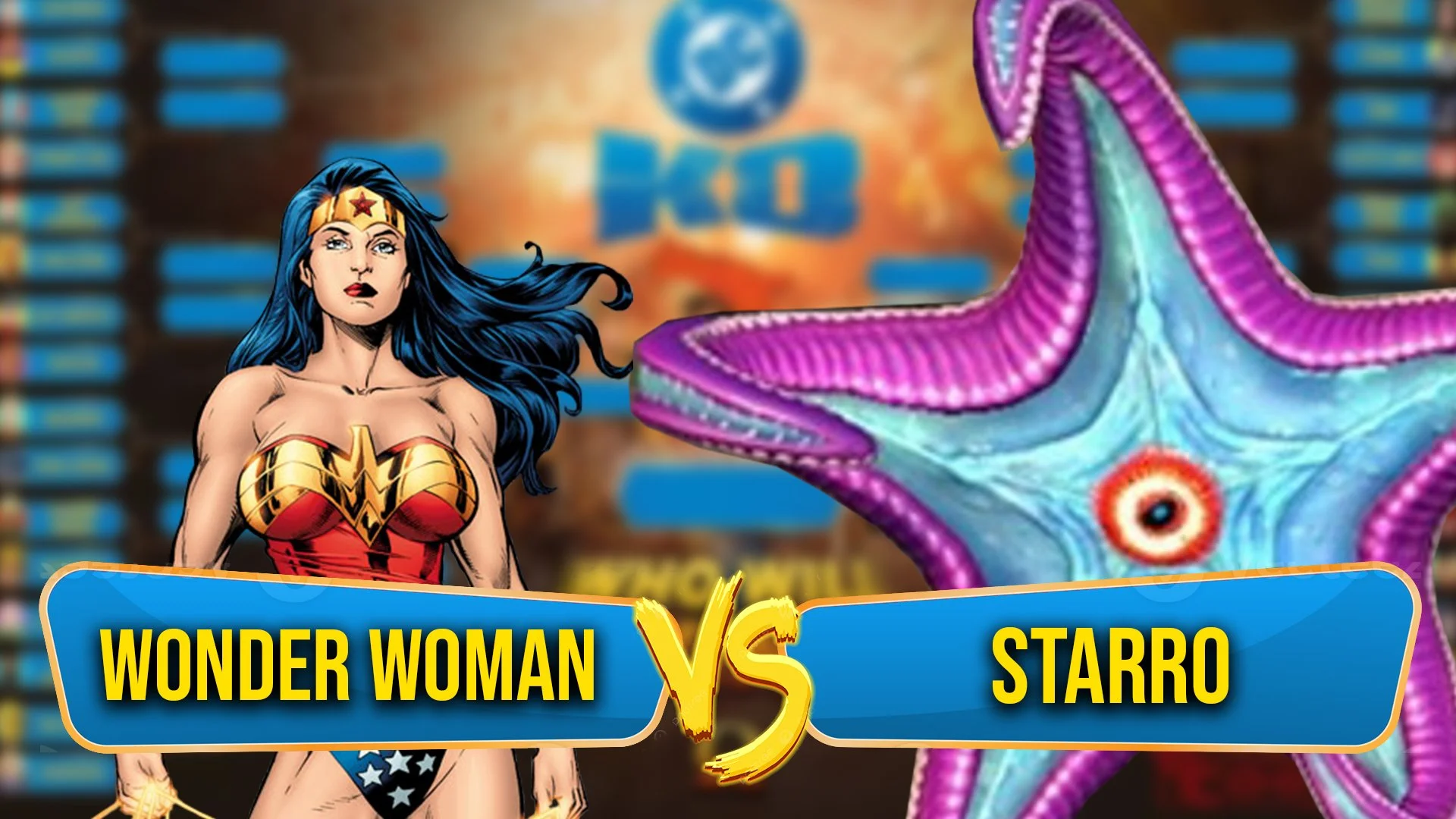
Matchup 9: Wonder Woman vs. Starro/Jarro

Tale of the Tape: Wonder Woman

In the blue corner, she is the Princess of Themyscira, the Amazon demigod Wonder Woman. Diana’s power comes from a blessing of the Greek gods, granting her superhuman strength on par with Superman, incredible durability, and a robust healing factor. She is a master of combat with her Lasso of Truth and her bullet-deflecting Bracelets of Submission. Her greatest weapon is her indomitable willpower, a mental fortitude that few can match.  

Tale of the Tape: Starro/Jarro

In the red corner, it is the Star Conqueror, a parasitic hive mind and alien conqueror. Starro's primary weapon is its ability to attach spores to the faces of humanoids, controlling their minds and bodies and giving it access to their powers and memories. Starro is a master of psychological warfare, and its telepathic abilities are so potent that they have been shown to infiltrate the minds of even Martian Manhunter and Aquaman.  

Willpower Beyond Measure

This is a battle of mind over matter, with the physical fight serving as a side show. Starro's entire strategy revolves around mind control, using its intelligence to force opponents to show restraint. However, Wonder Woman's legendary willpower and mental fortitude are the perfect counter. Her strength is not just physical; it is a mental and spiritual strength that is tied to her unwavering moral compass. The Lasso of Truth can also break mind control and force those in its grasp to reveal their true nature. While Starro's telepathy is superior to Aquaman's, Wonder Woman's mental resistance is a different kind of strength, honed by her Amazonian training. The causal relationship is that Starro's power is psychological manipulation, and Wonder Woman's entire character is built on a will that cannot be broken. She has the physical might to defeat a giant Starro probe, and the mental fortitude to resist its attempts at mind control.  

Predicted Winner: Wonder Woman


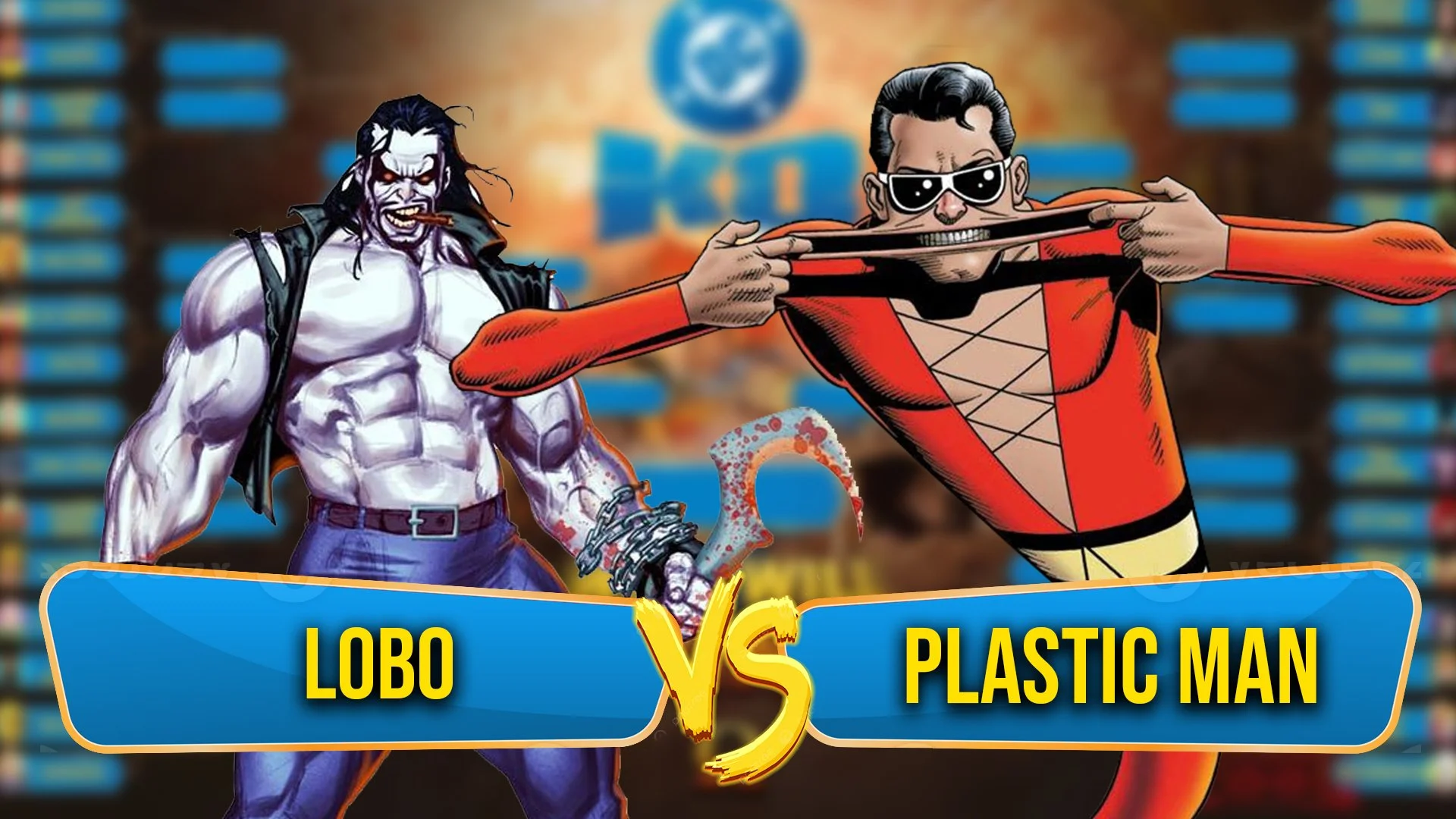
Matchup 10: Lobo vs. Plastic Man


Tale of the Tape: Lobo

In the blue corner, he is the last of the Czarnians, the Main Man, Lobo. Lobo is a cosmic-level powerhouse. His strength is staggering, with feats including crushing a city into a ball and destroying a planet by simply punching a guy. He possesses an absurd regenerative healing factor, able to regenerate from a single drop of blood or a pile of ash. He is a genius-level intellect who has used "math to hook the Flash," proving his mind is as deadly as his fists.  

Tale of the Tape: Plastic Man

In the red corner, he is the master of matter, the immortal, and virtually invulnerable Eel O'Brian, Plastic Man. His body is a fluid state of matter, allowing him to stretch, bounce, and mold himself into any shape. He is impervious to conventional attacks like bullets, fire, and blunt force. His most incredible feat is surviving for 3,000 years after being frozen and shattered into thousands of pieces and scattered across the ocean floor. He is also immune to telepathic attacks.

Who Folds First?

This is a battle of two seemingly unkillable forces. Lobo’s strength is on a cosmic scale, capable of annihilating planets with a punch. Plastic Man’s invulnerability is based on his ability to manipulate his molecular structure, making him impervious to physical harm. The key to victory lies not in brute force, but in a specific weakness. Lobo is not a mindless brawler; he is a genius. The research shows that Plastic Man's weakness is a sudden change in temperature, which can incapacitate him by turning him into a solid. Batman has a specific plan for Plastic Man: freeze him with liquid nitrogen and scatter him across the globe. Lobo, with his intellect, would likely deduce this weakness. While he cannot kill Plastic Man, he can defeat him by incapacitating him indefinitely.  

Predicted Winner: Lobo


The Wildcard Division

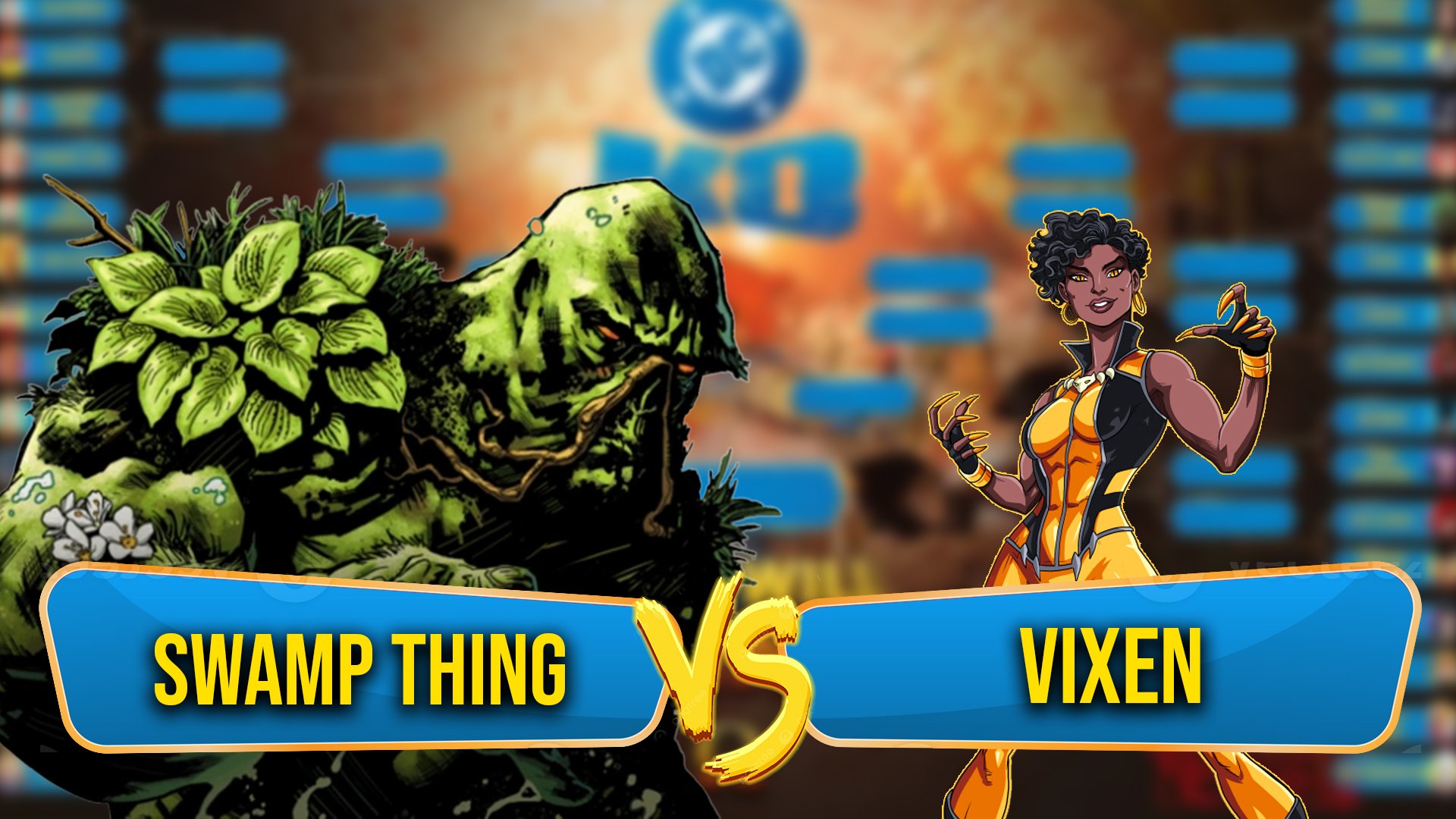
Matchup 11: Swamp Thing vs. Vixen

Tale of the Tape: Swamp Thing

In the blue corner, he is the Elemental of the Green, a living manifestation of all plant life in the universe, Swamp Thing. His power is metaphysical, granting him superhuman strength that is "nearly incalculable" and the ability to regenerate a new body anywhere there is plant life. He can control all vegetative matter, from a forest to the microscopic flora inside his enemies' bodies. His most devastating feats include overpowering Superman and defeating the Justice League.  

Tale of the Tape: Vixen

In the red corner, she is Mari McCabe, the champion of the animal kingdom who wields the Tantu Totem to channel the "Red" and mimic the abilities of any animal. She can have the strength of a bull, the ferocity of a tiger, or the flight of a hawk. She is a formidable hero and a skilled fighter.  

A Clash of Nature's Champions

This is a battle of two avatars of nature, but the scale of their powers is fundamentally different. Vixen’s power is a subset of the natural world, limited to the attributes of the animal kingdom. Swamp Thing’s power is the very essence of the natural world itself, as he is the avatar of all plant life in the cosmos. This is a casual relationship of overwhelming scale. Vixen is powerless against a being who can control her environment and even the biology within her body. Swamp Thing could simply overwhelm her by causing the flora in her vicinity to grow and entangle her, or he could use his most terrifying power and cause the microscopic flora in her body to grow and kill her from the inside. She has no counter to an attack of this nature. The fight would be over in a matter of moments.  

Predicted Winner: Swamp Thing


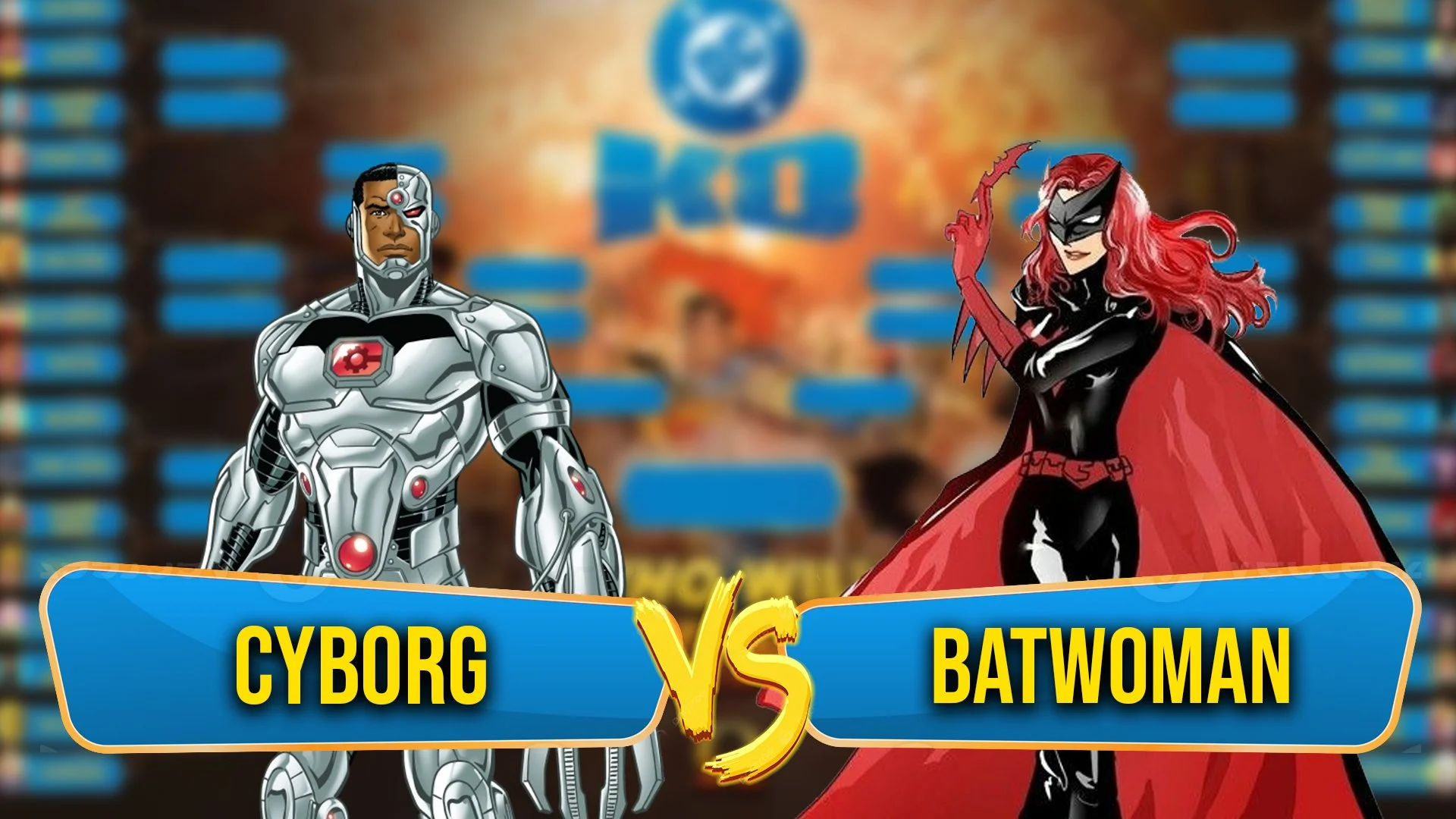
Matchup 12: Cyborg vs. Batwoman

Tale of the Tape: Cyborg

In the blue corner, he is the cybernetic powerhouse, Victor Stone, Cyborg. His body is fused with advanced technology from a Mother Box, granting him superhuman strength, durability, and a vast arsenal of weapons and systems. His sonic cannons have been shown to damage Red Tornado and one-shot a clone of Superboy. He has the ability to interface with computers and can hack into alien technology with ease.  

Tale of the Tape: Batwoman

In the red corner, she is the master martial artist and tactician, Kate Kane, Batwoman. She possesses no superhuman abilities and relies on her peak human conditioning, extensive firearms training, and a high-tech arsenal of non-lethal weapons. She is an expert martial artist whose skills have been honed by her time at West Point.  

Human Will vs. Machine

This is a battle of human skill versus technological superiority. While Batwoman is a formidable human fighter, she is up against an opponent with superhuman strength, speed, and durability. Her punches and kicks, no matter how precise, would be like hitting a brick wall. Her best hope would be a gadget that could exploit a weakness, but the research does not suggest she has anything in her arsenal that could neutralize Cyborg’s advanced technology and physical superiority. A sonic blast from his cannon, which has been shown to one-shot a Superboy clone, would end the fight in a matter of seconds. There is no plausible scenario in which a non-superhuman combatant can defeat a character with Cyborg's power level.  

Predicted Winner: Cyborg


The Gotham Division

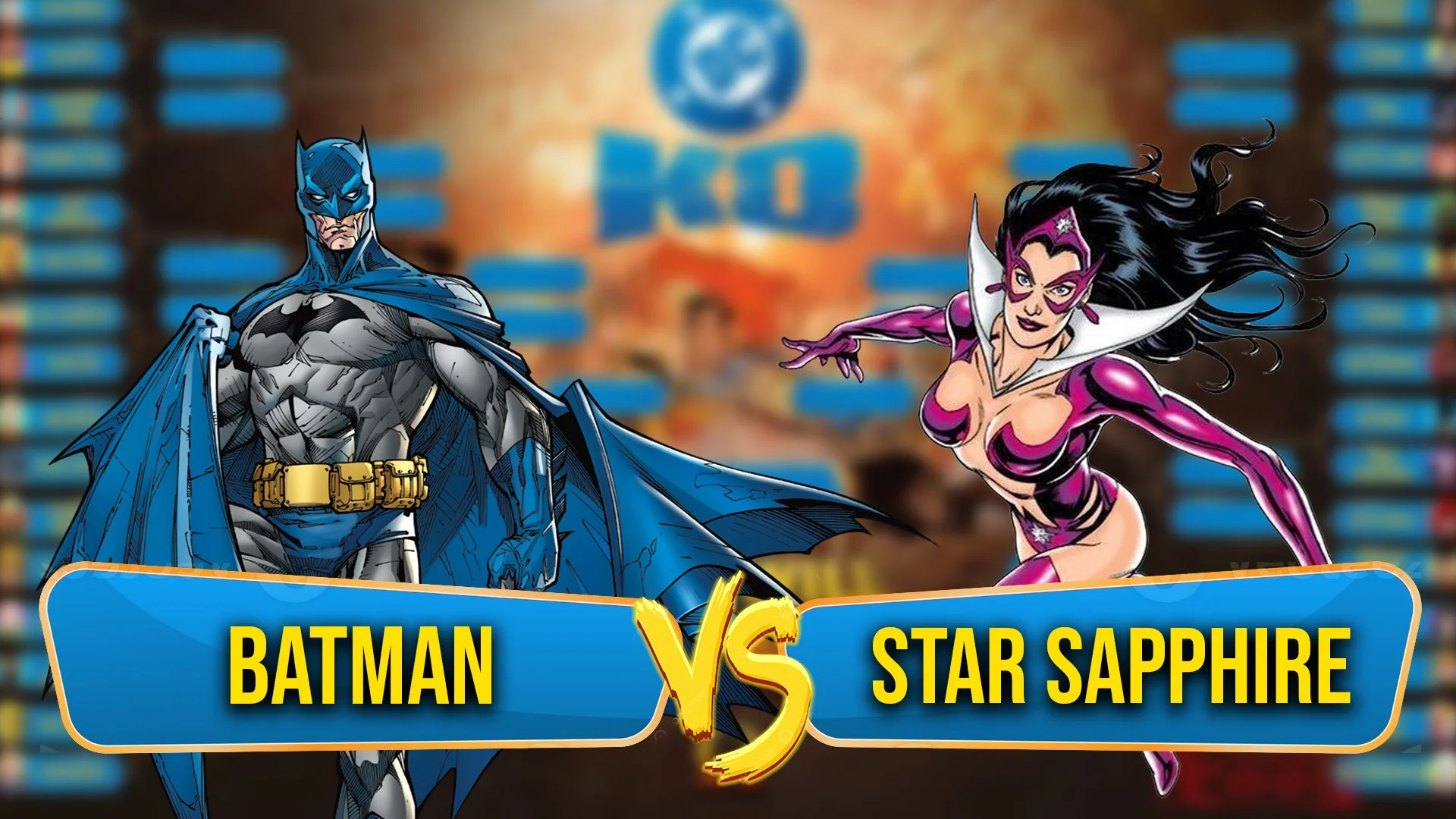
Matchup 13: Batman vs. Star Sapphire

Tale of the Tape: Batman

In the blue corner, he is the Dark Knight Detective, Batman. Bruce Wayne has no inherent powers but relies on his genius-level intellect, his mastery of 127 forms of martial arts, and his unparalleled strategic mind. He has a plan for everything and everyone, and has a specific contingency plan for every member of the Justice League. He is a master of psychological warfare and has a legendary mental fortitude that resists mind control.  

Tale of the Tape: Star Sapphire

In the red corner, she is Carol Ferris, who wields a violet power ring fueled by love, which grants her flight, force field generation, and constructs. Her power level is rated as equal to Green Lantern Guy Gardner. Her ring can also manipulate minds and has the ability to detect when a love is in jeopardy.  

Fear, Love, and a Dark Contingency

This is a battle of psychological manipulation. Star Sapphire’s ring is a weapon of the emotional spectrum, fueled by love, which can be volatile and unpredictable. A Green Lantern’s greatest weakness is fear. Batman is a potential Yellow Lantern, as his greatest weapon is inspiring fear in his enemies. He has a specific contingency plan for Green Lanterns, a post-hypnotic suggestion that makes them believe they are blind, forcing their ring to make that belief a reality. While Carol’s ring is fueled by love, the “emotional spectrum” is a core concept that links all Lanterns, and Batman would exploit the emotional nature of the ring's power. He is a master of psychological warfare and has a legendary mental fortitude that would be impervious to any mental manipulation from her ring. He would use a tactic, a word, or a psychological manipulation to exploit her emotional state and the ring’s vulnerabilities. He would not rely on a direct physical confrontation, but on his mind, which is his true super-weapon.  

Predicted Winner: Batman


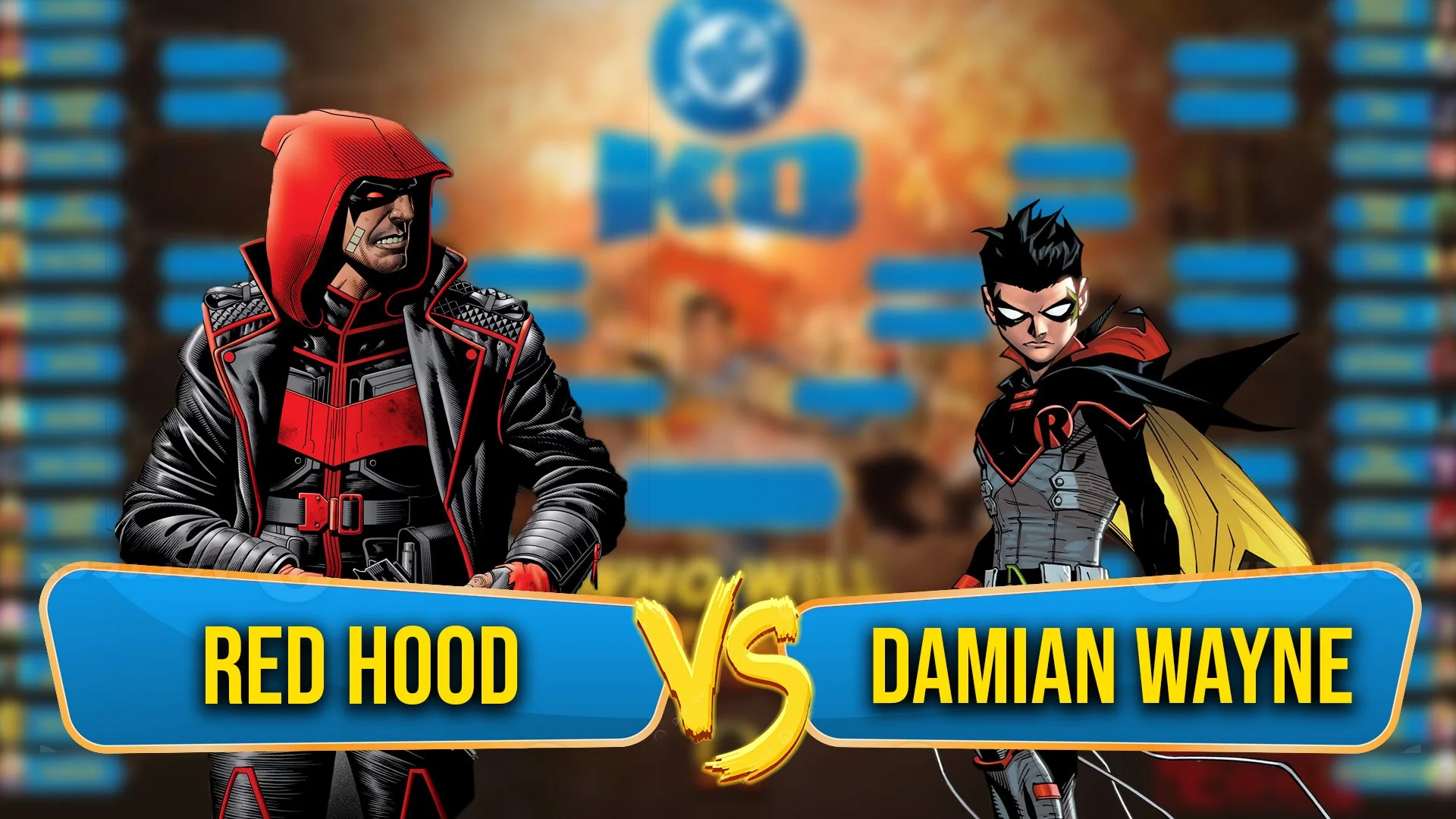
Matchup 14: Red Hood vs. Damian Wayne

Tale of the Tape: Red Hood

In the blue corner, he is the former Robin who came back from the dead, Jason Todd, the Red Hood. He is a master martial artist and a genius tactician, but his powers go beyond a simple peak human. He has magical training from the "All Caste," which gives him "superhuman feats," the ability to fight on the astral plane, and the power to predict the future. His arsenal includes guns, knives, and a pair of magical flaming swords known as the All Blades. He is a brutal and unpredictable fighter who is not afraid to use lethal force.  

Tale of the Tape: Damian Wayne

In the red corner, he is the biological son of Batman, the most recent Robin, Damian Wayne. He was genetically perfected and trained by the League of Assassins from birth to be the perfect warrior, learning 1,000 ways to kill a man. He is a prodigious talent, a master swordsman and a formidable detective. He has impressive durability for a child, having been thrown through a wall by Deathstroke and getting back up to fight.  

A Family Feud

This is a fight between two of Batman's proteges. While Damian is a prodigy with incredible potential, he is still a child, and his small, fragile body is a tactical weakness. Red Hood has already defeated him once, albeit with psychological tactics and a refusal from Damian to fight back. The primary difference is one of experience and arsenal. Red Hood’s "All Caste" training elevates him beyond a simple peak human and gives him the ability to predict the future. Jason Todd’s unpredictable fighting style and willingness to use lethal force would give him a definitive edge against Damian's more conventional, non-lethal approach. In a straight-up fight, Red Hood’s superior physical strength, his mastery of guns, and his magical swords would simply overwhelm a 13-year-old child, no matter how skilled.  

Predicted Winner: Red Hood


The Magic & Might Division

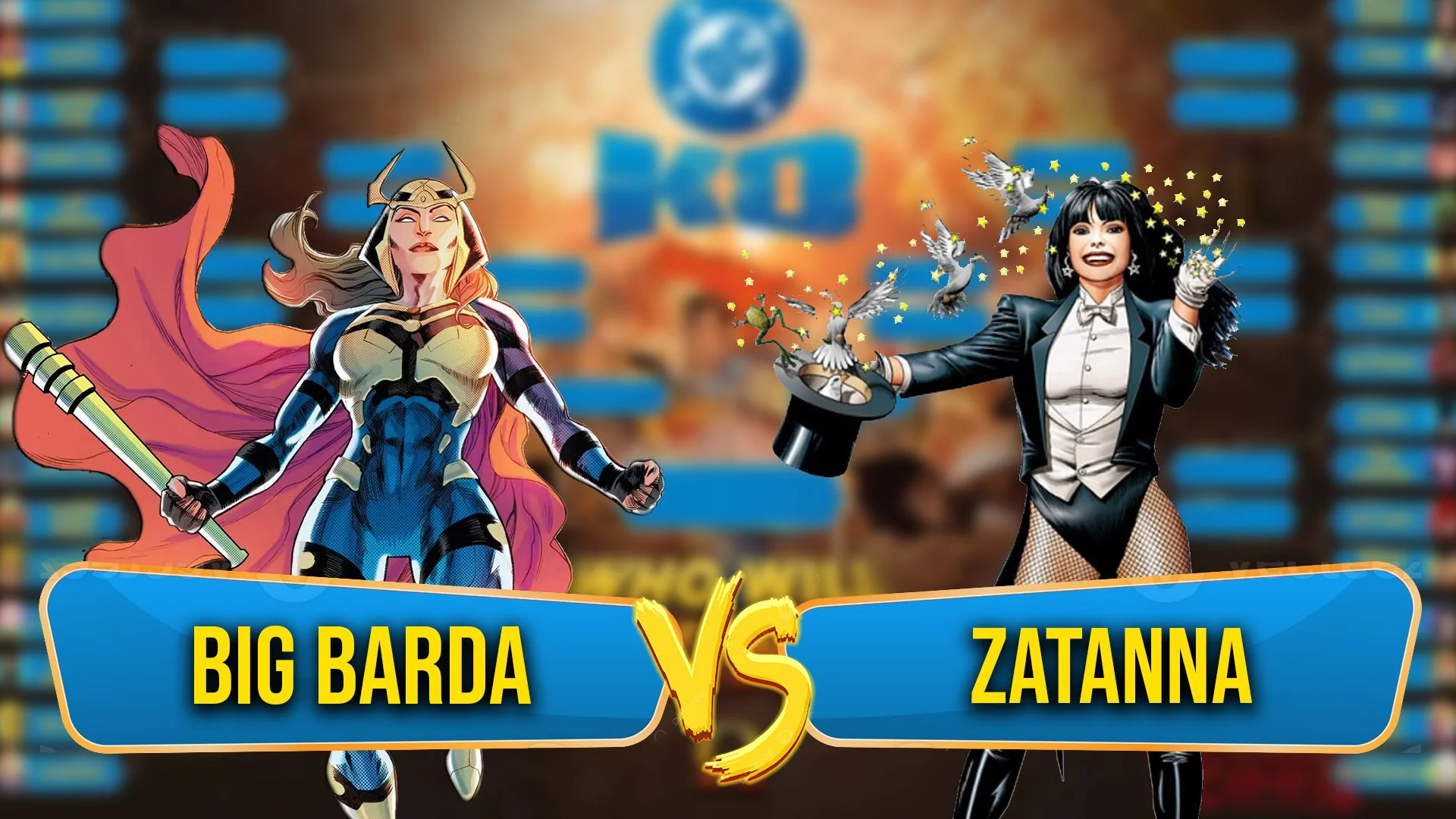
Matchup 15: Zatanna vs. Big Barda

Tale of the Tape: Zatanna

In the blue corner, she is the Sorceress Supreme, a Homo Magi, and one of the most powerful magic users in the DC Universe, Zatanna. Her power is the manipulation of reality itself, which she commands by speaking backwards. Her feats are legendary: she has depowered the fifth-dimensional imp Mxyzptlk, healed grievous injuries instantly, and warped reality itself. She can turn a person into a dove or a chair into a prison, proving that physical strength is irrelevant to her power.  

Tale of the Tape: Big Barda

In the red corner, she is a New God warrior from Apokolips, a master brawler with strength and durability on par with Wonder Woman. Barda’s physiology grants her immense superhuman strength, speed, and invulnerability. Her weapon, the Mega-Rod, is a high-tech artifact that can "level mountains," fire concussive bolts, and teleport herself and others great distances.  

Reality's Rule

This is a classic battle of brawn versus magic. Big Barda's power is physical, albeit immense. Her strength and her "mountain-leveling" Mega-Rod are rendered useless against an opponent who can change the fundamental laws of physics with a spoken word. Zatanna's power operates on a level that Big Barda cannot comprehend or defend against. There is no physical defense against a spell that can turn a person into a dove or a chair into a prison. Big Barda is a physical force, but Zatanna is an elemental one. She could defeat Barda in a number of ways without ever needing to touch her. The causal relationship is one of overwhelming power: the absolute power of magic negates even the most formidable physical might. Zatanna wins, easily.  

Predicted Winner: Zatanna


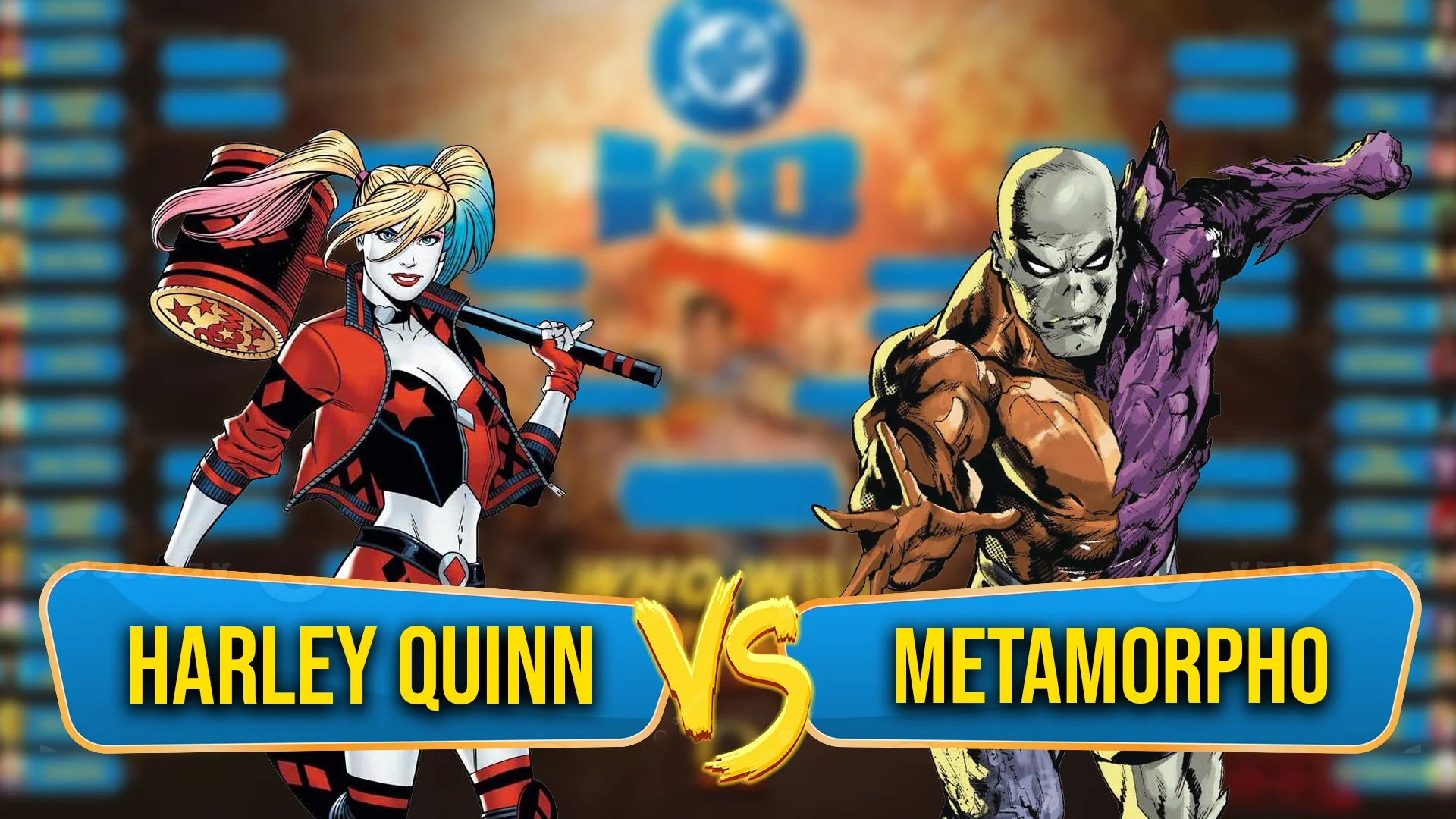
Matchup 16: Harley Quinn vs. Metamorpho

Tale of the Tape: Harley Quinn

In the blue corner, she is the Queen of Chaos, a former psychiatrist who has been enhanced with superhuman strength, agility, and durability. Her greatest weapon is her complete unpredictability and her arsenal of gag weaponry, most notably her oversized mallet. She is a formidable fighter who has outclassed Batman and Joker in terms of strength, and she has complete immunity to most toxins. She is a wild card, and her chaotic nature is a powerful weapon in a fight.  

Tale of the Tape: Metamorpho

In the red corner, he is the Elemental Man, Rex Mason, a man who was exposed to a radioactive meteorite, giving him the ability to transmute his body into any element, liquid, or gas. He is "virtually invulnerable" and resistant to fire, electricity, and radiation. His shapeshifting allows him to change his body into any form or shape he wants, and he has a genius-level knowledge of chemistry that allows him to instinctively understand what elements to use for any given scenario.  

The Unpredictable Force

Harley Quinn’s greatest strength is her ability to use her unpredictability to defeat a conventional opponent. However, Metamorpho is not a conventional opponent. His ability to transmute his body into a gas or a liquid makes him impossible to hit with a physical attack. He is an elemental force, and a sledgehammer, no matter how big, cannot defeat a cloud of gas or a puddle of acid. The causal relationship here is a simple one of an absolute counter. Metamorpho’s power set is a direct and absolute counter to everything Harley Quinn has in her arsenal. The fight would be a one-sided defeat, with Metamorpho’s superior power and tactical versatility winning the day.  

Predicted Winner: Metamorpho


The Winners' Circle

The first round of the DC KO Tournament has delivered. We have analyzed the matchups and have a clear picture of who would emerge victorious. We have our sixteen possible winners, but the tournament is just beginning! The next round will see these victors face off in even more devastating matchups. Who will emerge as the last hero or villain standing? Stay tuned for our next report!

The Thin Blue Line Is Broken: A Review of Batman #1

George SerranoComment

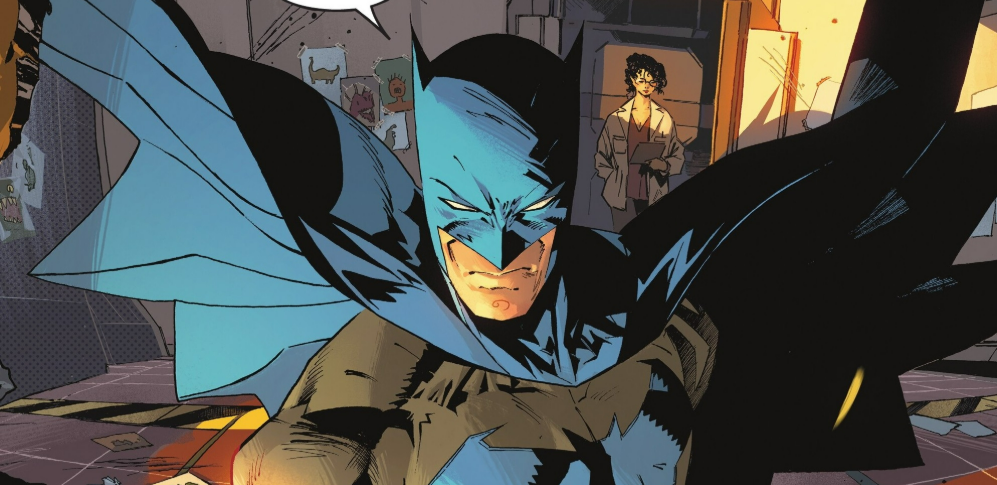
A new era for the Caped Crusader begins with the release of Batman #1, and writer Matt Fraction and artist Jorge Jimenez are pulling no punches. The creative duo immediately strips away years of cooperation, throwing the World's Greatest Detective back into the gritty heart of Gotham where he finds himself once again at odds with the city's finest. Fraction and Jimenez place the hero back in his classic blue-and-grey and reignite a fundamental feud: the Dark Knight vs. the GCPD. Given the current national climate, the choice to return Batman to his roots of not trusting law enforcement feels less like a new story and more like a necessary confrontation. (Spoilers for Batman #1)


The Setup: A City in Crisis

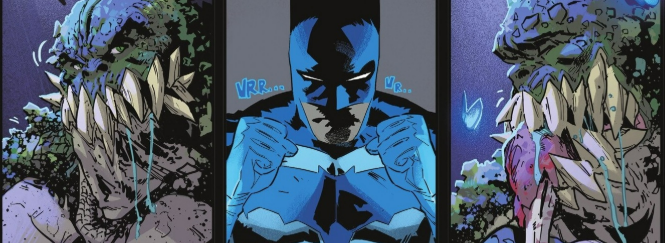
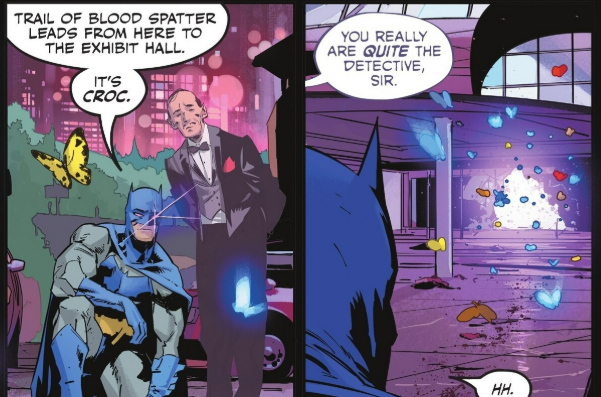
Fraction and Jimenez's debut issue follows a familiar A-story: Waylon Jones, better known as Killer Croc, escapes a mental health facility. But the writers immediately subvert expectations. Instead of a brutal brawl, Batman finds the villain in a moment of childlike calm at the Natural History Museum. The ensuing confrontation is a masterclass in psychological tension, with Batman choosing a compassionate dialogue over violent vigilantism. He succeeds in getting Croc to willingly return to the facility, all but proving that his approach works.

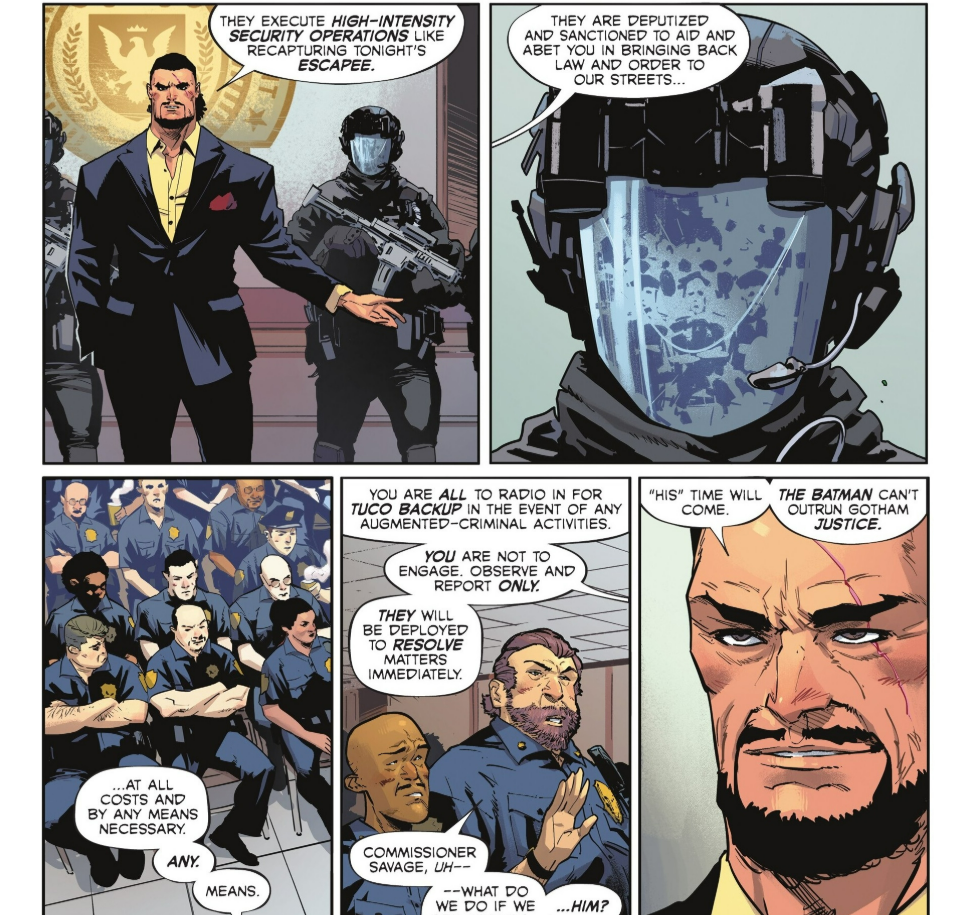
Meanwhile, the comic introduces the core conflict for this new run: the militarization of the GCPD. We meet Gotham's new Commissioner, the power-hungry Vandal Savage, who debuts a team of masked, riot-gear-clad operatives called the Tactical Urban Combat Officers (TUCO). Savage makes his intentions clear, declaring his new force will handle threats like Croc and that Batman's time will come. "The Batman can't outrun Gotham Justice," he states, a warning that foreshadows a direct war between the hero and the police.

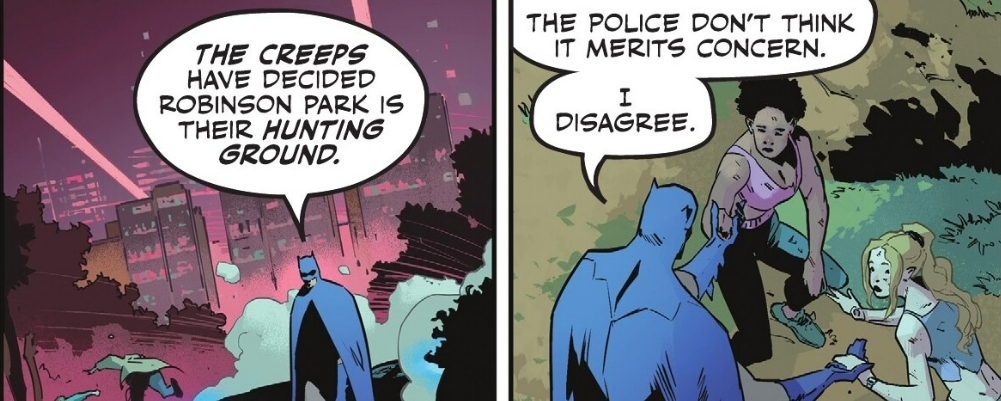
This ideological clash is further cemented by Batman’s own observations. While saving two young women from the Creepers, a gang who have taken over a public park, Batman criticizes the GCPD for failing to address the gang and letting the situation fester. This feels like a radical departure from the Batman who worked hand-in-hand with Commissioner Gordon. The issue closes with a chilling moment: Robin, Tim Drake, is stopped at gunpoint by GCPD officers and asks over comms, "Is there anyone on the police force we're friendly with these days?" This cements the comic's theme that not even Batman's trusted allies are safe from a police force that has completely lost its way.


The Heart of the Review: A System in Crisis

Fraction's writing, masterfully complemented by Jimenez's art, doesn't merely tell a story; it holds a mirror to systemic failures. The treatment of Waylon Jones/Killer Croc serves as the issue's most poignant example. In a society quick to label and fear, Croc is often depicted as a monstrous, irredeemable brute, an enemy to be subdued with force. Yet, Fraction presents him as a man struggling with profound mental health challenges, seeking solace in the primal comfort of the museum's T-Rex display. Batman, in a startling departure from his usual modus operandi, opts for empathy and dialogue over violence. This choice is crucial: it not only de-escalates a potentially devastating situation but also implicitly critiques a system that defaults to force, punishment, and incarceration for individuals who may desperately need understanding and care. The implication is clear: if the GCPD, or society at large, had adopted Batman's approach, perhaps Croc's "escape" wouldn't have been an emergency, but a cry for help.

This critique of systemic failure extends directly to Vandal Savage's new Tactical Urban Combat Officers (TUCO). These masked, militarized units are explicitly designed to address "threats" like Croc, yet their very existence embodies the problem. They represent a clear shift from community-oriented policing to an authoritarian, us-vs.-them approach. The eerie resemblance you noted to real-world masked federal agents speaks volumes, highlighting how the comic intentionally draws parallels to current events where heavily armed, anonymous forces are deployed against a city's own citizens. Their mandate is not to serve or protect, but to control and enforce through intimidation, irrespective of the underlying causes of societal unrest or individual distress.

Fraction further underscores the GCPD's abandonment of its core duties through Batman's pointed observations about the Creepers gang. The fact that a known criminal element can openly harass citizens in a public park, with Batman remarking that the GCPD "does not take the Creepers seriously," showcases a policing structure that either cannot or will not protect its most vulnerable citizens from everyday threats. Instead, resources are diverted to a militarized force focused on "bigger" (and arguably, more politically charged) targets. This leaves marginalized communities, often the ones most impacted by petty crime and harassment, further exposed and unsupported.

The concluding scene with Tim Drake being stopped at gunpoint by GCPD officers is the grim culmination of this narrative. It demonstrates that the police force, now under Savage's iron fist, is not only failing to protect its citizens but has become a direct threat, even to those who embody justice and safety. This militarization of police, the story argues, has utterly failed Gotham, creating a climate of fear and distrust where even the city's heroes are no longer safe from the very institutions meant to uphold order.

Finally, Fraction introduces a fascinating new layer to Bruce's psyche with the presence of an AI Alfred. This digital version of his beloved mentor acts as a witty, a backseat driver, and an unwilling conscience, reminiscent of the Iron Man/JARVIS dynamic. Alfred's presence, whether real or a digital ghost, is a poignant commentary on Bruce's inability to let go. Just as he refuses to move past his parents' death, his war on crime, he now chooses to keep those he's lost in his life in this digital form. It speaks to a deep psychological need to maintain a connection to his past, and another compelling reason why his war on crime is a constant struggle.


The Visuals and Art

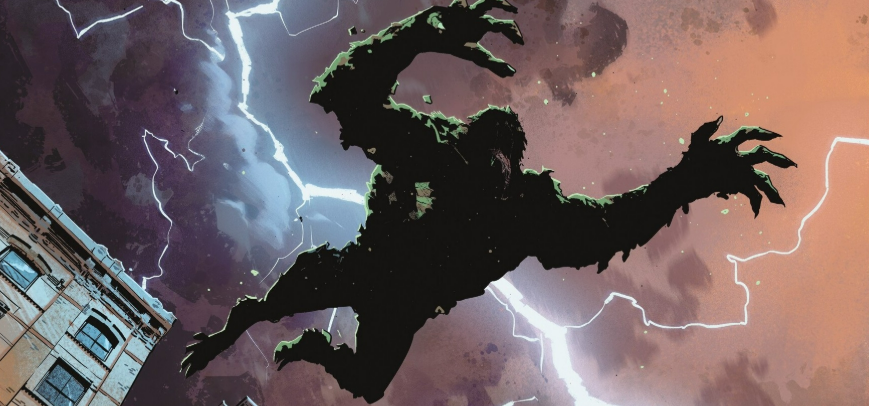
While Fraction's script provides the thematic backbone, it's Jorge Jimenez's art that makes this issue a must-read. Jimenez is a master of kinetic energy, and his work here is a new benchmark for the character. The action sequences are stunning, from a blur of motion as Batman glides through the city, to a dynamic splash page that captures the raw power of Killer Croc in a moment of sheer chaos. Yet, Jimenez knows when to pull back. The issue's most impactful visual is not one of violence, but of vulnerability, with Croc's massive, scaly form hunched over in a state of quiet despair. It’s a moment that perfectly captures the humanity beneath the monster.

Jimenez's Batman is a standout. He gets what makes the Dark Knight visually dynamic. His character models are sharp and angular, giving the hero a lean, almost predatory silhouette against the sprawling darkness of Gotham. The use of light and shadow is central to the mood, with a heavy contrast that allows the new blue-and-grey suit to pop. The blue hue of the cape isn't just a color; it's a glowing beacon in the oppressive night, symbolizing a different kind of justice in a city consumed by shadow. This meticulous attention to detail and expressive style cements Jimenez's place as one of the definitive artists of this era.


The Verdict

On the surface, this first issue of Batman #1 might feel like a simple story of a hero tracking down a rogue villain. However, Matt Fraction and Jorge Jimenez are doing something far more substantial than that. They've used this familiar setup to lay the groundwork for a run that could offer some of the most monumental social commentary the character has seen in years.

By presenting a compassionate resolution to a situation with Killer Croc, the creative team builds a powerful argument against our society’s reliance on force and incarceration for those dealing with mental health issues. At the same time, the introduction of Vandal Savage's militarized TUCO force and Batman's pointed criticism of the GCPD's failings is a direct and courageous commentary on contemporary policing. This issue feels less like a simple superhero comic and more like a carefully crafted thesis, using Gotham's broken systems as a grim reflection of our own.

Ultimately, this debut issue is a masterclass in controlled storytelling. It's a testament to the fact that Batman is at his best when he is a force for change in a city that refuses to be saved. If Fraction and Jimenez continue to build on this foundation, this run has the potential to become a definitive statement on the Dark Knight's legacy. This comic is highly recommended for readers who want more than just a fight scene—it’s for those who appreciate a story that holds a mirror up to the world and asks difficult questions.

An Armored Genius: The Evolution and Legacy of Lex Luthor's Warsuit

George SerranoComment

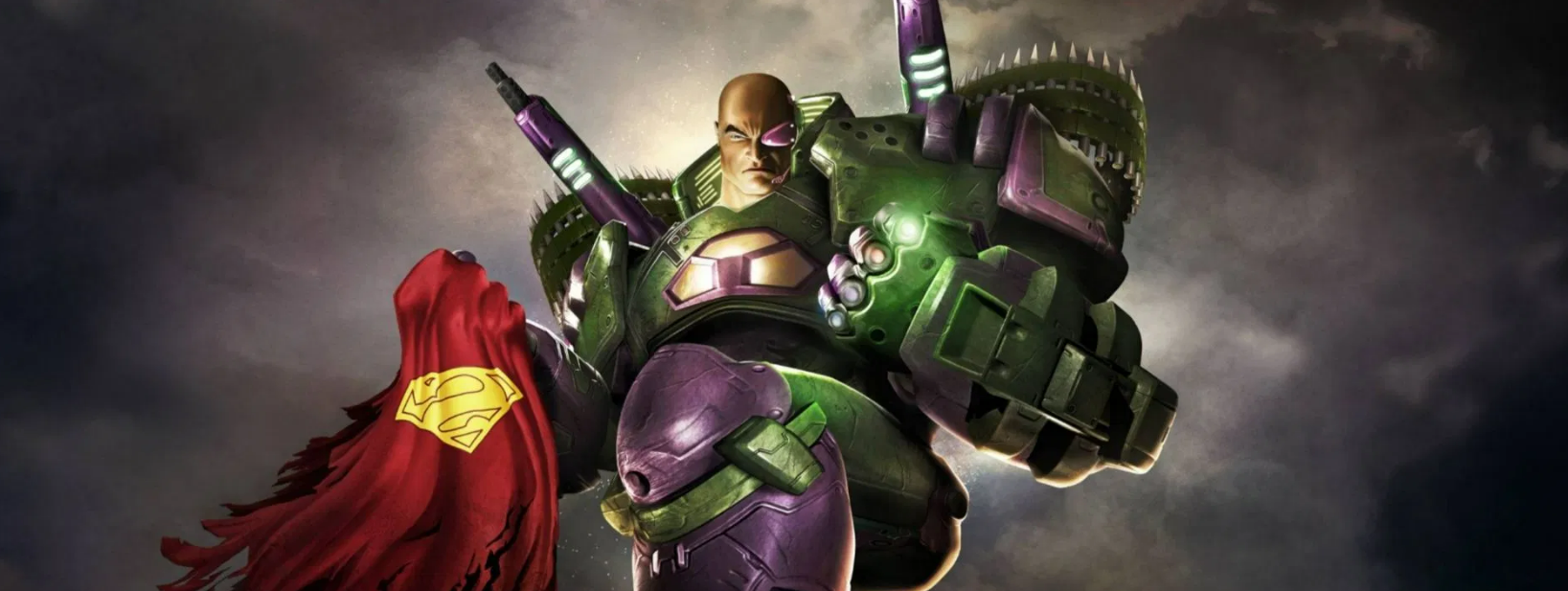
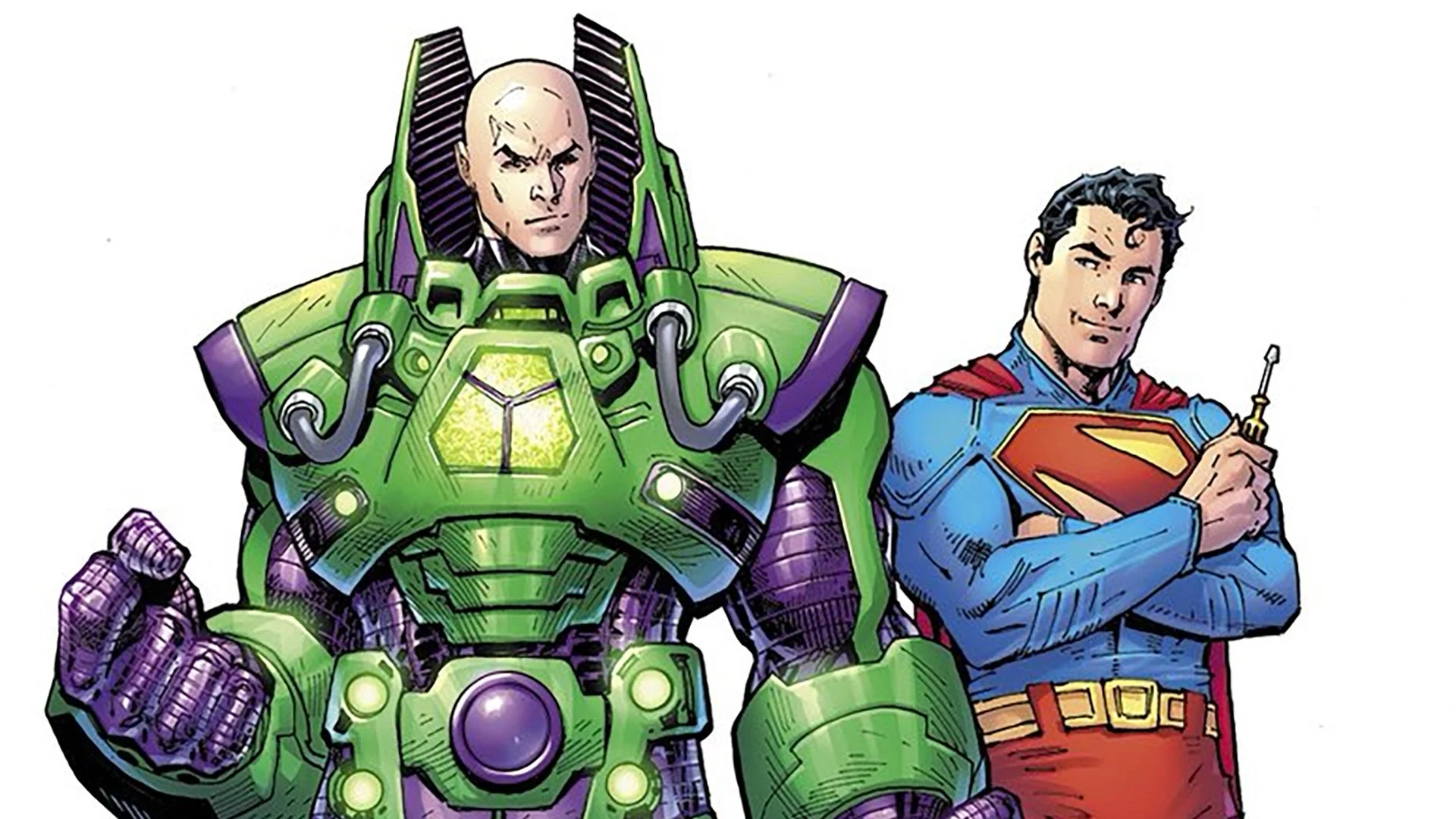
The recently released image by James Gunn, promoting the next installment in his Superman saga, Man of Tomorrow, is more than just a promotional piece; it is a profound declaration for the future of the DC cinematic universe. The artwork by Jim Lee depicts Nicholas Hoult's Lex Luthor clad in his iconic green warsuit, standing next to David Corenswet's Superman. This visual is a signal to fans that the upcoming film will feature a fundamental shift in the live-action portrayal of the legendary rivalry.

While previous cinematic versions have positioned Luthor as a purely psychological or business-oriented threat, this image promises a direct, physical confrontation, a dynamic long-established in the comic books but never before fully realized on the big screen. This report serves as a comprehensive guide to understanding the history, evolution, and deep-seated symbolism of the battlesuit, explaining precisely why its live-action debut is such a monumental moment for the DCU and its fanbase.  


Part One: The Bronze Age Blueprint

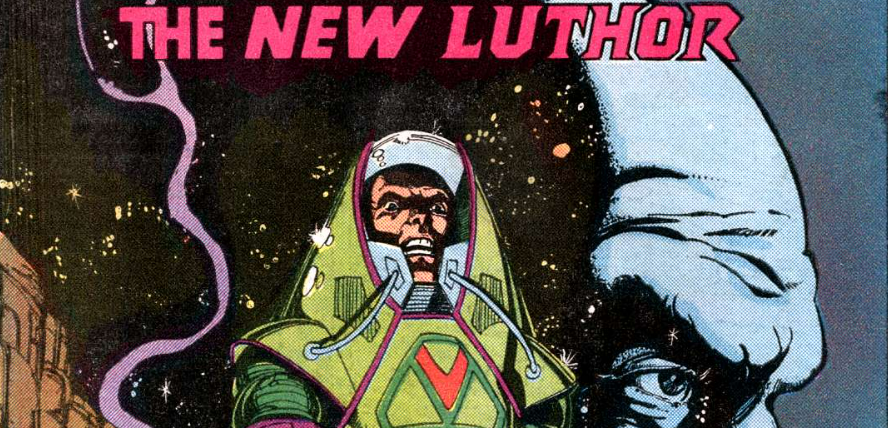
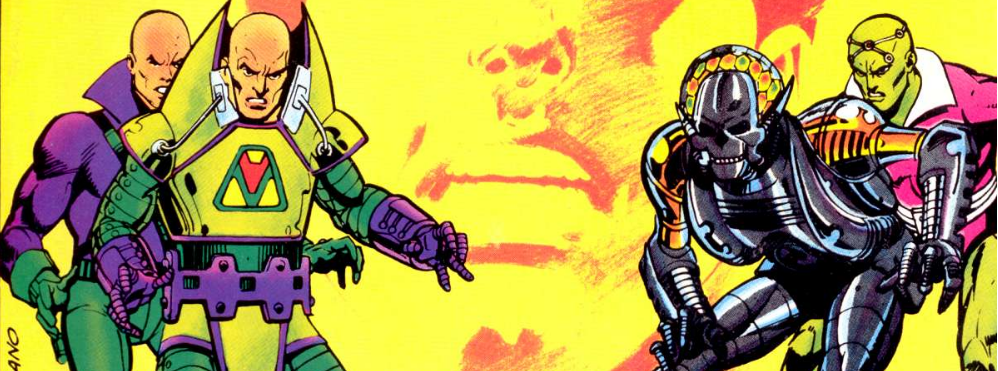
The Lex Luthor battlesuit made its explosive debut in Action Comics #544, a landmark issue released in June 1983. This comic was a 45th-anniversary special for Superman, a testament to the character's enduring legacy. In this issue, DC Comics sought to revitalize its two most prominent villains, giving new, more dynamic looks to both Luthor and his frequent cohort, Brainiac. The story, titled "Luthor Unleashed!", was crafted by writer Cary Bates with art by penciler Curt Swan and artist George Pérez. The introduction of the suit was a pivotal event in the Bronze Age of comics, moving Luthor beyond his traditional role as a mad scientist who relied solely on cunning and intellect to a tangible physical threat capable of going "toe-to-toe" with the Man of Steel.  

The Lexorian Legacy and Its Controversial Genesis

The original origin of the warsuit is deeply intertwined with one of the most tragic and bizarre storylines of the Pre-Crisis era: the tale of Planet Lexor. Luthor, at this time a fugitive from Earth, landed on a distant planet orbiting a red sun, where Kryptonians are stripped of their powers, putting him on an even playing field with Superman. By using his genius to help the planet's primitive, stone-age inhabitants, he became a revered hero and savior in their eyes. The grateful natives renamed their world "Lexor" in his honor, and he even married a local woman, Ardora, and fathered a son, Lex Jr..  

His peaceful life on Lexor was short-lived, as he eventually discovered and modified an ancient, powerful battle-armor from a long-lost lab on the planet. The temptation to use the suit to finally defeat his nemesis was too strong for his ego to resist. This led to a final, brutal battle with Superman, during which a blast from the battlesuit accidentally destabilized the planet's core, causing it to be vaporized and killing Luthor's wife, son, and all of the planet's inhabitants. The emotional and psychological trauma of this event drove Luthor to a new, more intense level of madness, transforming his resentment into an all-consuming, personal hatred for Superman. This narrative choice provided a visceral, devastating motivation for his villainy.  

The introduction of the battlesuit was not universally loved at the time. Many long-time fans criticized it as a betrayal of the core philosophical dynamic between Superman's physical might and Luthor's intellectual genius. There was a palpable sense that the suit's existence was primarily a commercial decision, a cynical move to make Luthor more "toyetic" for the popular DC Super Powers action figure line. The irony of this criticism, however, is that the very thing that made the suit controversial is what cemented its iconic status. The simple, bold, and visually striking design, crafted by legendary artist George Pérez, made it a perfect fit for a toy line and merchandise. This commercial success ensured the suit became the most recognizable visual representation of a physically-threatening Luthor, cementing its place in the public imagination and ensuring its survival in the character's mythology long after the original Planet Lexor storyline was retconned away.  

Design for Destruction

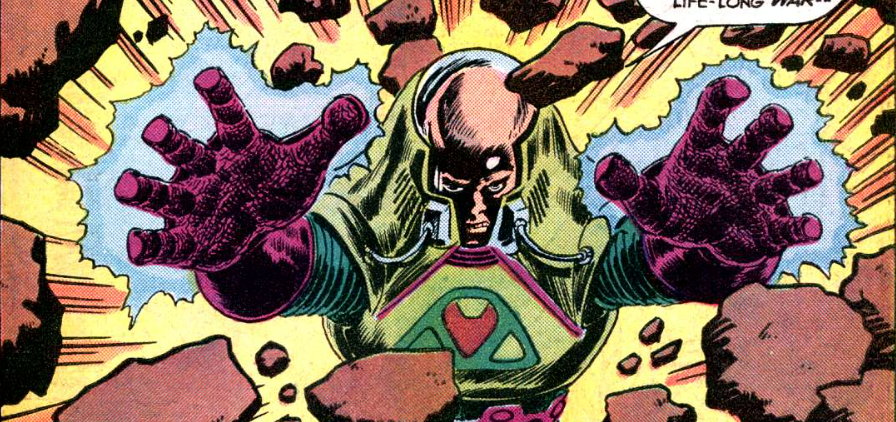
The original battlesuit was a marvel of fictional engineering. It functioned as an advanced, mechanized exoskeleton, designed to level the playing field against a Kryptonian. Its core capabilities included superhuman strength and durability, allowing Luthor to withstand blows that would instantly kill a normal human. It also granted him the power of flight through a system of rocket thrusters. To counter Superman's powers, the suit was armed with advanced weaponry, most notably energy projection systems that were often infused with Kryptonite to weaken his opponent.  


Part Two: An Evolution in Armor

The Post-Crisis Resurrection


After its initial run, the Lexor storyline and the battlesuit were wiped from continuity by the cataclysmic events of Crisis on Infinite Earths and the subsequent Man of Steel reboot in the mid-1980s. For nearly two decades, the warsuit existed only as a relic of a bygone era. Its triumphant return in 2003, during the Superman/Batman: Public Enemies story arc, was a deliberate and calculated move by DC Comics.  

The revival of the battlesuit was not a simple act of fan service; it served as a powerful narrative bridge. The Post-Crisis era had established a more grounded, ruthless corporate Luthor, a seemingly legitimate businessman who rarely resorted to physical violence against Superman. By reintroducing the outlandish, fantastical battlesuit, DC was explicitly celebrating its Pre-Crisis, more classic, and openly megalomaniacal history. The re-emergence of the suit effectively told longtime readers that the "new" DC universe was not completely abandoning its past but was instead integrating its most beloved elements. The suit, therefore, became a powerful symbol of DC's ongoing effort to reconcile its legacy with its modern direction, acting as a powerful narrative bridge between different comic book eras.  

Technological Escalation

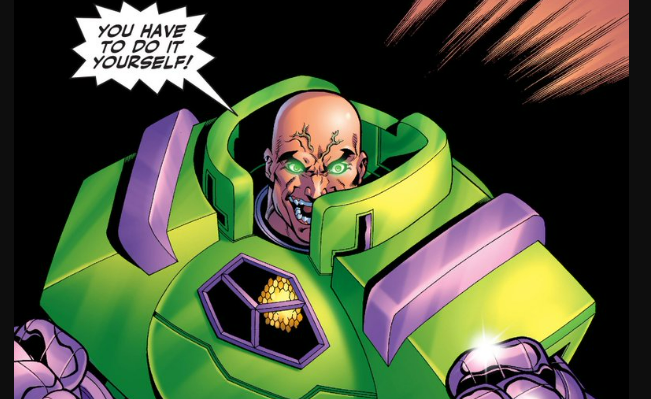
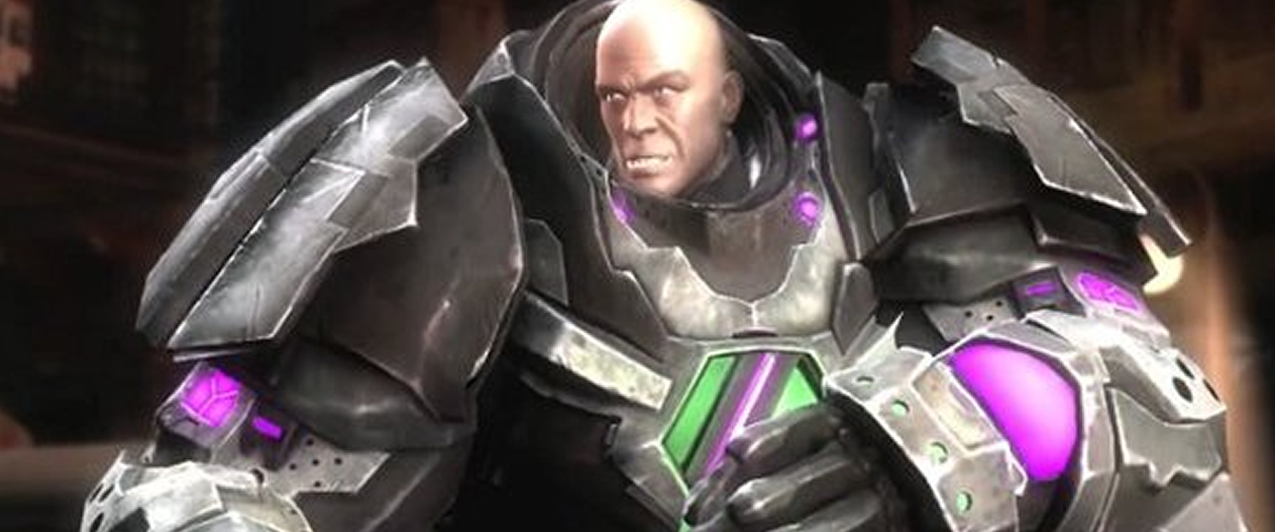
The Post-Crisis battlesuit was given a new origin, a fresh creation by President Luthor himself. This new version was not found technology from another planet but a bespoke weapon, powered by a volatile mix of Apokolips' technology, Kryptonite, and Bane's Venom serum. This technological escalation set the stage for subsequent versions of the suit, which have included an array of increasingly sophisticated and dangerous capabilities. Many modern incarnations include a protective force field, short-distance teleportation for tactical escapes, and a wide variety of weaponry. This progression from a single "battlesuit" to a "multiversal arsenal" reflects the growing complexity of the DC Universe.  

The battlesuit has also transcended its comic book origins, appearing in numerous forms of media. In animated series, it has been a frequent feature, notably in the DC Animated Universe where it was used in Superman: The Animated Series and Justice League Unlimited. The suit has also appeared in shows like   Young Justice, where Luthor employs multiple, technologically advanced variants, including one with nanotechnology. In video games, the battlesuit is a staple, serving as a frequent boss battle and character power-up in titles like the  Injustice series and the LEGO Batman games.  

The Superman of Metropolis

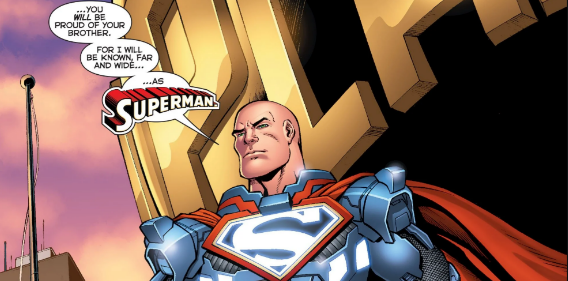
After the death of the New 52 version of Superman, Lex Luthor had a temporary heroic phase that included wearing a suit with Superman's iconic "S" symbol on it. In the Justice League: The Darkseid War storyline, Luthor absorbs the tyrannical ruler's power, leaves Metropolis for Apokolips, and becomes the new "God of Apokolips". It was during this time that he created a new blue power suit. The suit was built with a built-in Mother Box, a highly advanced computer, which gave it flight and energy weapons. This heroic turn was a genuine one, as he worked with the new Rebirth Superman, eventually realizing that the symbol stood for something beyond himself. This temporary shift from villain to hero was a new, complex development for the character, though he would eventually revert to his villainous ways.


Part Three: More Than a Mech Suit

The battlesuit is more than just a weapon; it is a profound symbolic paradox that speaks to the heart of Lex Luthor’s character. He is the self-proclaimed pinnacle of human intellect, a man who despises the very notion of physical superiority. Yet, he willingly dons an armored exoskeleton to fight Superman on his terms. This is a powerful paradox and a symbolic admission of Luthor’s ultimate inadequacy. For a man who believes his mind alone should be able to defeat any foe, the act of donning a battlesuit is an explicit acknowledgment that his intellect has failed to achieve the one victory he craves most. The suit is not a simple weapon; it is a physical manifestation of his emotional desperation. It is a visual sign that his hatred and ego have driven him to abandon his own philosophical ground to get the victory he so desperately desires. The suit itself, therefore, becomes a symbol of his hubris that consistently leads to his downfall, as it proves he cannot win on his own terms.  

This paradox is perfectly encapsulated in one of the suit's most iconic and seemingly absurd design choices: the open-faced helmet. A logical, pragmatic scientist would prioritize protecting his most vital organ, but Luthor's psyche is defined by his narcissism. The force field is powerful enough to protect him , allowing his face to remain exposed to his opponent and to the world. Luthor does not just want to defeat Superman; he wants the world to see him—Alexander Luthor, the genius—do it. The battlesuit is his instrument, but the victory must be his alone, witnessed and celebrated by all. This visual choice perfectly captures the essence of his character: his massive ego is both his greatest strength and his most vulnerable weakness.

A recent comic book story from Superman #9 provides a distilled analysis of this philosophical dynamic. When Luthor, now in prison, provides Superman with a battlesuit he designed, he is infuriated when Superman makes adjustments to the technology. Luthor, a man defined by greed and a desire to impose his will on the world, built a tool of aggression, a "tank" designed to destroy his enemies. Superman, defined by generosity and his love for humanity, immediately refits it to be a tool of protection, an "ambulance" to save lives. Luthor’s perfect insult, "I built you a tank, and you turned it into an ambulance," perfectly encapsulates their core philosophical difference. It demonstrates that the battlesuit is not a neutral piece of technology; its very design and use are expressions of its user’s moral and ethical worldview, highlighting the fundamental divide between Luthor's destructive ambition and Superman's selfless heroism.  


Part Four: The Legacy on Screen

The history of live-action Lex Luthor has been conspicuously devoid of the battlesuit. From Gene Hackman's brilliant but pre-suit portrayal to Jesse Eisenberg's more recent turn, who used a proxy in the form of Doomsday, the physical manifestation of Luthor’s power has been absent. This has long been a point of contention and a source of desire among comic book fans. The battlesuit represents the ultimate confrontation, a physical showdown between the world’s most powerful alien and its most intelligent human.  

James Gunn's image, therefore, is a powerful statement. The use of the classic comic book design signals a deliberate move toward a more traditional, confrontational rivalry. It promises to allow Nicholas Hoult's Luthor to step out from the shadows of his corporate facade and meet David Corenswet's Superman on his own, albeit manufactured, terms. The warsuit’s long-awaited arrival on the big screen is poised to finally bring the full, unvarnished rivalry of two giants to life, a dynamic that has been a hallmark of the comics for decades

5 Things You Might Have Missed In The Birds of Prey Trailer

MoviesGeorge Serrano1 Comment

The film Birds of Prey is flying into theaters in a month, and Harley and her crew seem poised to make an impact when it does. The film, originally green-lit after fans enjoyed Margot Robbie’s portrayal of Harley Quinn in Suicide Squad, seems to be a female-centric action comedy with a bit of an edge to it. Set to the tunes of Björk’s It's Oh So Quiet, a new trailer has arrived, and it gives us more of a hint of what’s to come when Birds of Prey hits the big screen.

Although it's less than three minutes, the trailer shows more of the film than we have seen before, giving us motivations, teasing set pieces, and hinting at enough comic book related Easter eggs for us to get excited. DC’s latest entry into the comic book movie genre looks to be more adult than previous entries, but what will Birds of Prey be about? How close to the comics will this adaptation be?

All these questions and more will be answered as we do a deep dive into the latest Birds of Prey Trailer and point out five things you might have missed!

The Proof is in the (lack of) Puddin’

Puddin.jpg

The last time we saw Harley Quinn, she was being broken out of prison by her enigmatic boyfriend The Joker at the end of Suicide Squad. While many believed the devilish duo would get away and live happily ever after, there seems to be trouble in paradise. Harley and “Mistah J” are on the outs at the beginning of BOP, as explained by Ms. Quinzel. Although Harley claims the split was amicable, odds are Joker tossed her aside as he has done many times in other incarnations of the couple. Free from that ever-toxic relationship, Harley doesn’t seem to take it well, opting to stuff her face on the couch before trying to venture out on her own (and killing her boo?).

Conspicuous by his absence is the man who brought Joker to life in Suicide Squad, Jared Leto. Leto’s take on the Clown Prince of Crime was mostly panned by critics, although the actor went to great lengths (supposedly) to bring something original to the character. When a Harley Quinn spinoff film was announced after Suicide Squad, it seemed like an easy guess that the former Oscar winner would be returning alongside Margot Robbie to reprise their roles of Joker and Harley respectively. For good or ill, it seems Leto is not going to be in this film. They even go so far as to hint at his death.

Birds of a Feather

So, why have the women in this film decided to team up? At first glance, the team of Cassie Cain, Huntress, Black Canary, Renee Montoya, and the ever-unpredictable Harley Quinn seems hobbled together, but the women are on the same side for a reason. From what we can gather all these women have drawn the ire of Roman Sionis the crime boss known as Black Mask. 

According to the narration, Cassie stole something from Sionis, Renee who is a cop, is trying to put him behind bars. Rumor has it Harley is protecting the young Cassie from harm and Huntress gets on Roman’s radar by killing an associate of his. Black Canary who is shown in the trailer singing in Black Mask’s nightclub, seemingly betrays him at some point in the film (for reasons that are unclear) making her a target as well.

Harley and her cohorts are seemingly the Birds of Prey in name only. The group who debuted in 1996 originally consisted of Barbara Gordon aka Batgirl/Oracle and Dinah Drake aka Black Canary. The two urban crime fighters were joined by Helena Bertinelli, The Huntress, when Gail Simone took over the series in 2003 and that’s the trio most associate with the Birds of Prey moniker, meaning Harley Quinn and her crew have some big shoes to fill.

(M)Ask and You Shall Receive

Mask.jpg

Roman Sionis, who goes by the supervillain name Black Mask, is set to make his live-action debut as the big baddie in Birds of Prey. The mobster and crime lord, played by Ewan McGregor in the film, has been a menace since his debut in 1985. Once it was announced that McGregor was bringing Sionis to life, speculation started to run rampant about whether McGregor would don his trademark black mask. Fans waited with bated breath, but sadly most Birds of Prey’s promotional material had Ewan sans-mask.

Fortunately for us die-hards, we finally see Black Mask in all his glory when Ewan McGregor dons the disguise for the first time in cinematic history, completing his classic comic book look in the trailer. What’s the story behind the mask you ask? In the comics, Roman was a wealthy and spoiled child who eventually falls in love with a woman his parents didn’t approve of.

When he realizes they will never approve of this woman, a young Sionis sets the family mansion on fire killing both his parents. Lacking the business acumen of his parents, Roman runs his parent’s company into the ground before he is removed from the board. Sionis, having nowhere else to go, chooses a life of crime. The mask he wears is sculpted from broken pieces of his father’s black casket and serves as a morbid reminder of the past he destroyed.

Sex, Drugs, and Rock and Roller Derby

After the success of Joker in the fall of 2019, Warner Bros was said to want to make more R rated comic book films in the future. Birds of Prey looks to earn its R rating with some adult material scattered throughout its 120-minute runtime. Having been described by the MPAA as having strong violence and language throughout, with some sexual and drug material, we wondered what form these more adult scenes would take.

These grittier elements are all apparent in the trailer as we explicitly see a scene where Harley inhales pure cocaine, causing the anti-heroine to plunge herself into a drug-fueled fight scene. Not only is this one of the first instances of a real-life drug existing in a DC film, but the idea that the protagonist of this film would be on cocaine while engaging in copious amounts of violence proves this isn’t your grandma’s superhero movie. As far as the sex is concerned, Black Mask is long-rumored to be homosexual in this movie, a first for Roman Sionis, and Renee Montoya is canonically a lesbian, both issues to be addressed in the film presumably.

The film also seems to be going for a bit of fun, as showcased by a scene in which Harley seems to be in some sort of Roller Derby. We sure were surprised when some merchandise was shown of Harley wearing the skates and helmet, but we’ve yet to see how the Roller Derby fits into the plot.

A Declaration of Emancipation

Harley Quinn, as a character, has always been someone tethered to her more popular beau Joker. Their poisonous connection is an integral part of Harley’s backstory, but Birds Of Prey proves it isn’t her defining one. The name of the game is emancipation (the act or process of being set free), which seems to be a motif that will be apparent throughout the movie. Not only does Harley wish to be “free” of her ties to the Clown Prince of Crime but hopes to be freed from the image she created for herself while dating the madman.

Ms. Quinzell, who since leaving her main profession as a psychiatrist, hasn’t experienced life without Mistah J, making this a huge deal. Fortunately, Harley will not be alone in her quest for freedom. Renee Montoya feels shackled by her limitations as a detective, while Huntress who grew up in a life of crime, is also looking for a way out. Black Canary and Cassie both seem to have ties to Black Mask, and hope to release themselves of his company.

The villain himself could be hiding his true self behind the Black Mask moniker for all we know. We also see a hyena being kept as a pet. What are the chances Harley felt the hyena deserved a new lease on life too? Here’s hoping for a Bruce Wayne the Hyena prequel in 2021.