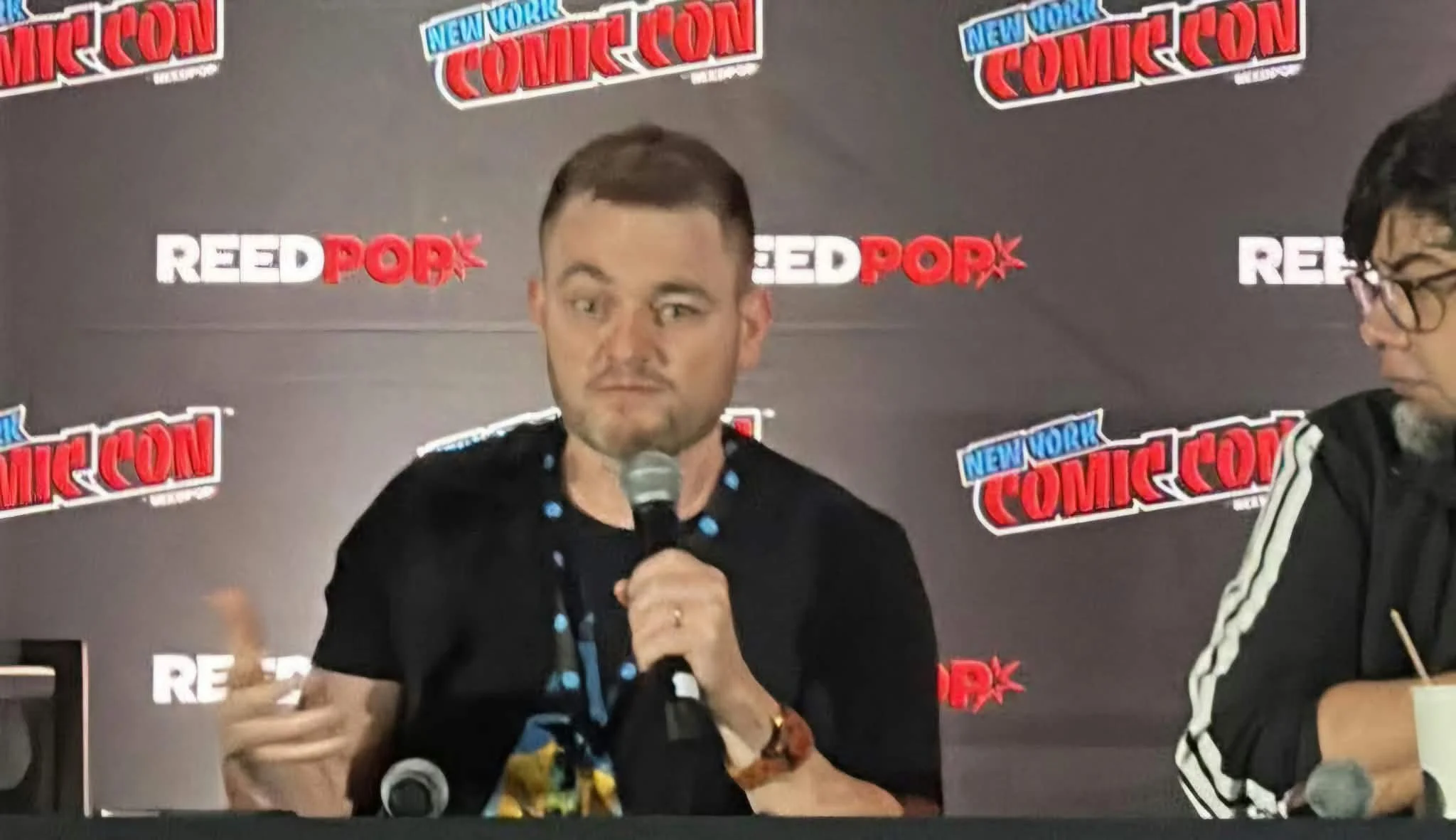
DC Comics brought house-shaking news to New York Comic Con 2026 during the dedicated Absolute Universe panel. Fans have spent months dissecting the brutal, systemic obstacles confronting these reimagined heroes, and DC delivered massive updates across the entire publishing line.
From the long-awaited announcement of the first official Absolute superhero team to pivotal milestone issues for Batman and Superman, here is the complete breakdown of everything announced during the panel, organized by the biggest reveals.
Absolute Justice: Jason Aaron and Juan Ferreyra Assemble the Team in April 2027
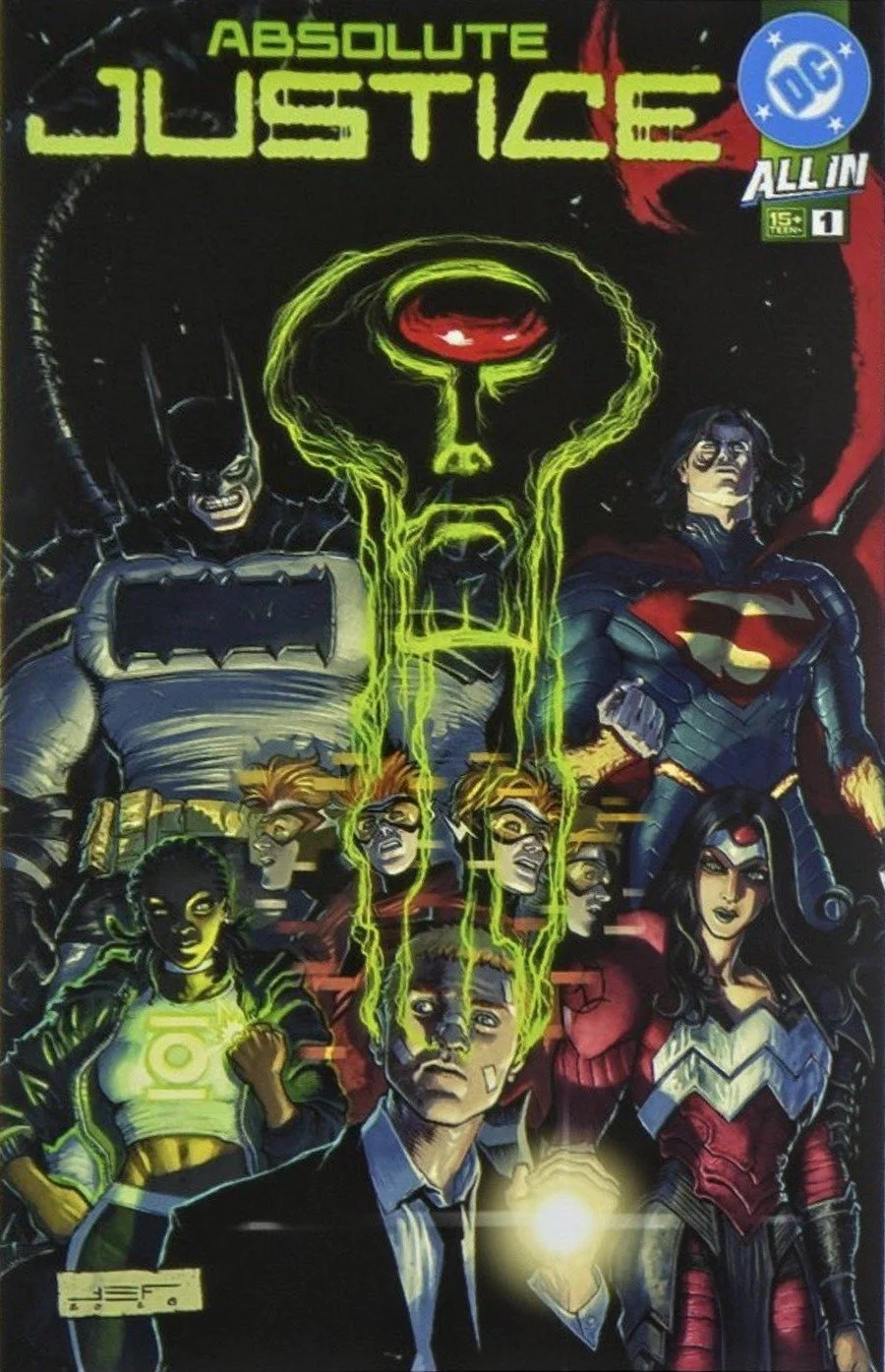
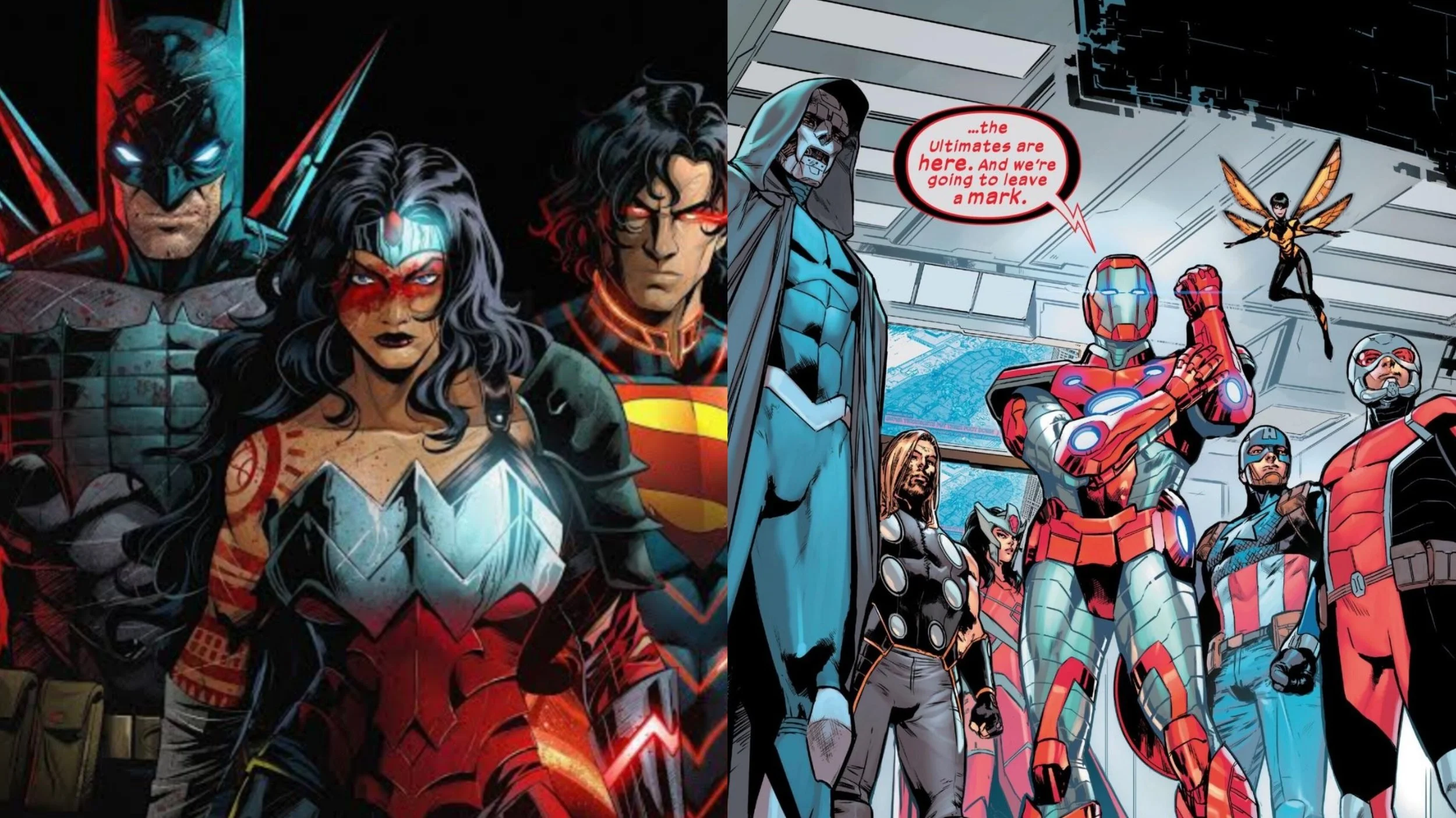
The biggest reveal of the panel answered the question readers have asked since the imprint debuted: when do these heroes finally cross paths?
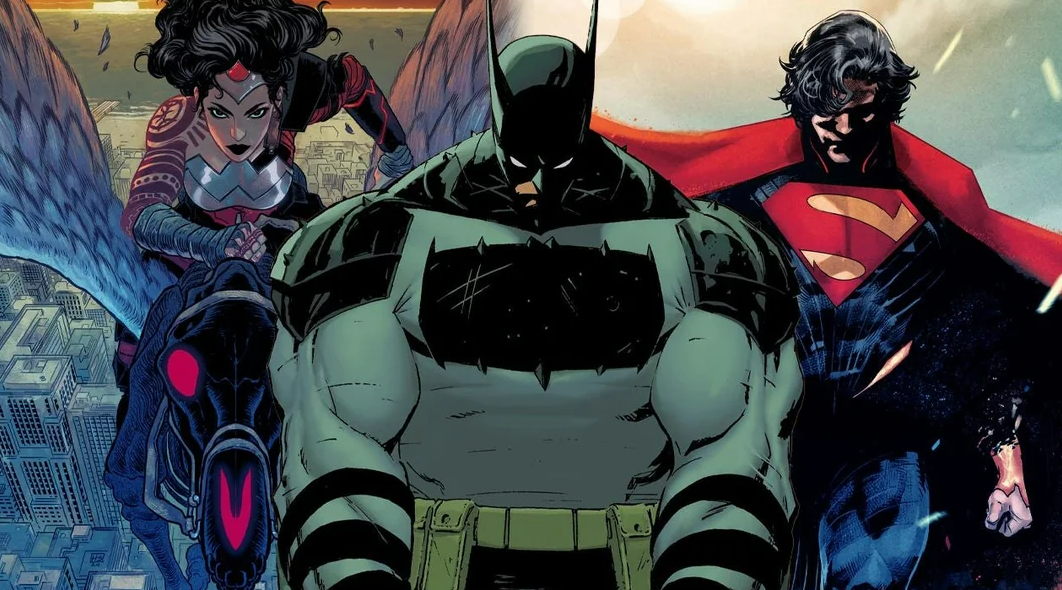
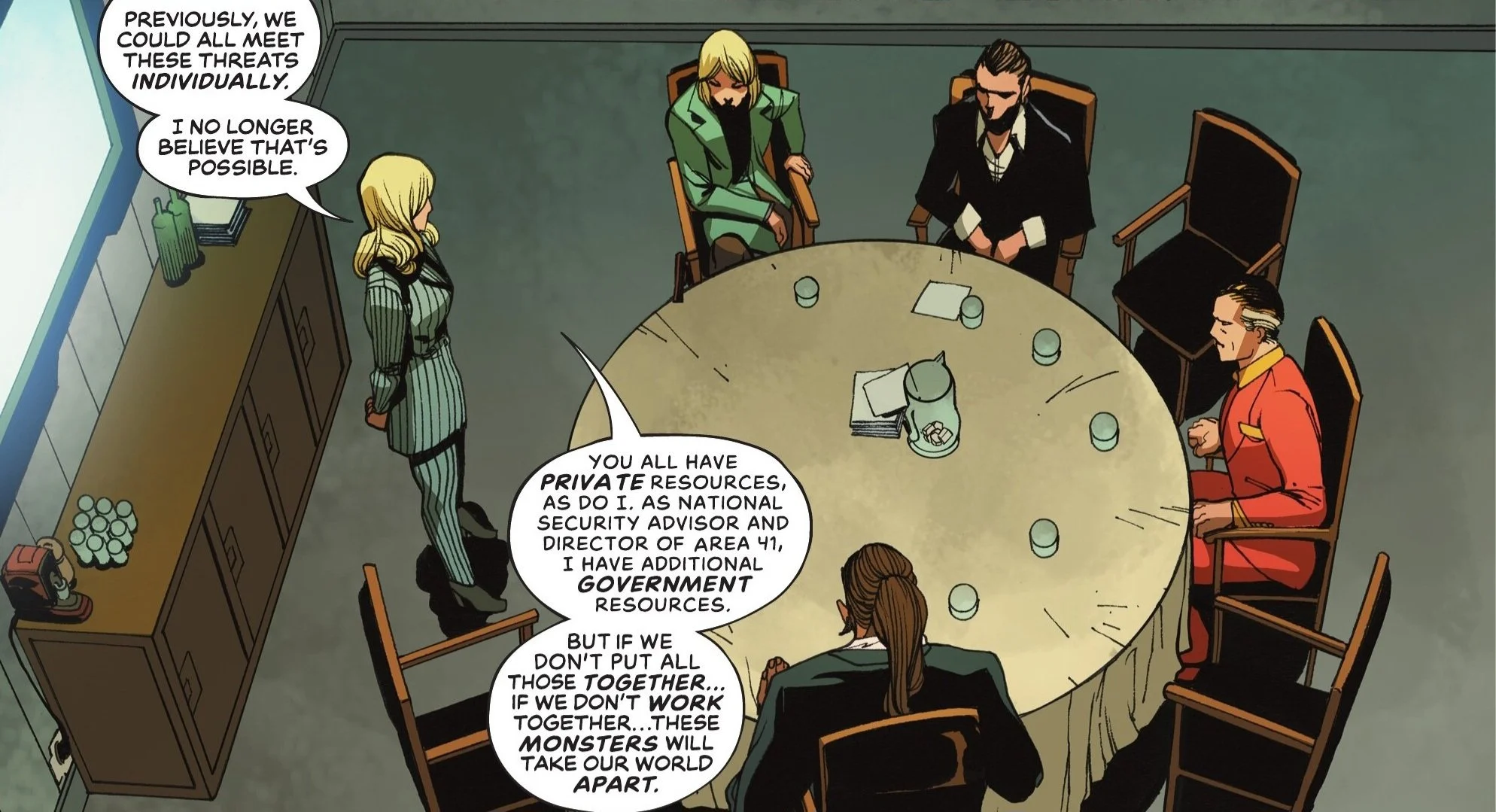
Launching in April 2027, Absolute Justice is an official five-issue event miniseries written by Jason Aaron with art by Juan Ferreyra. The series unites the heavy hitters of the Absolute Universe under one roof for the very first time.
Despite bringing the line together, DC editorial emphasized that Absolute Justice will not derail ongoing monthly titles with disruptive mandatory tie-ins. Instead, it will function as a self-contained clash of titans. When asked about uniting the roster, the DC Absolute Group Editor offered a clear caution: "Be careful what you wish for." In a universe built on personal tragedy and raw survival, assembling these figures will bring massive consequences. .
Absolute Batman #25: Grim Manor Confrontation and Beyond Ark M Teases
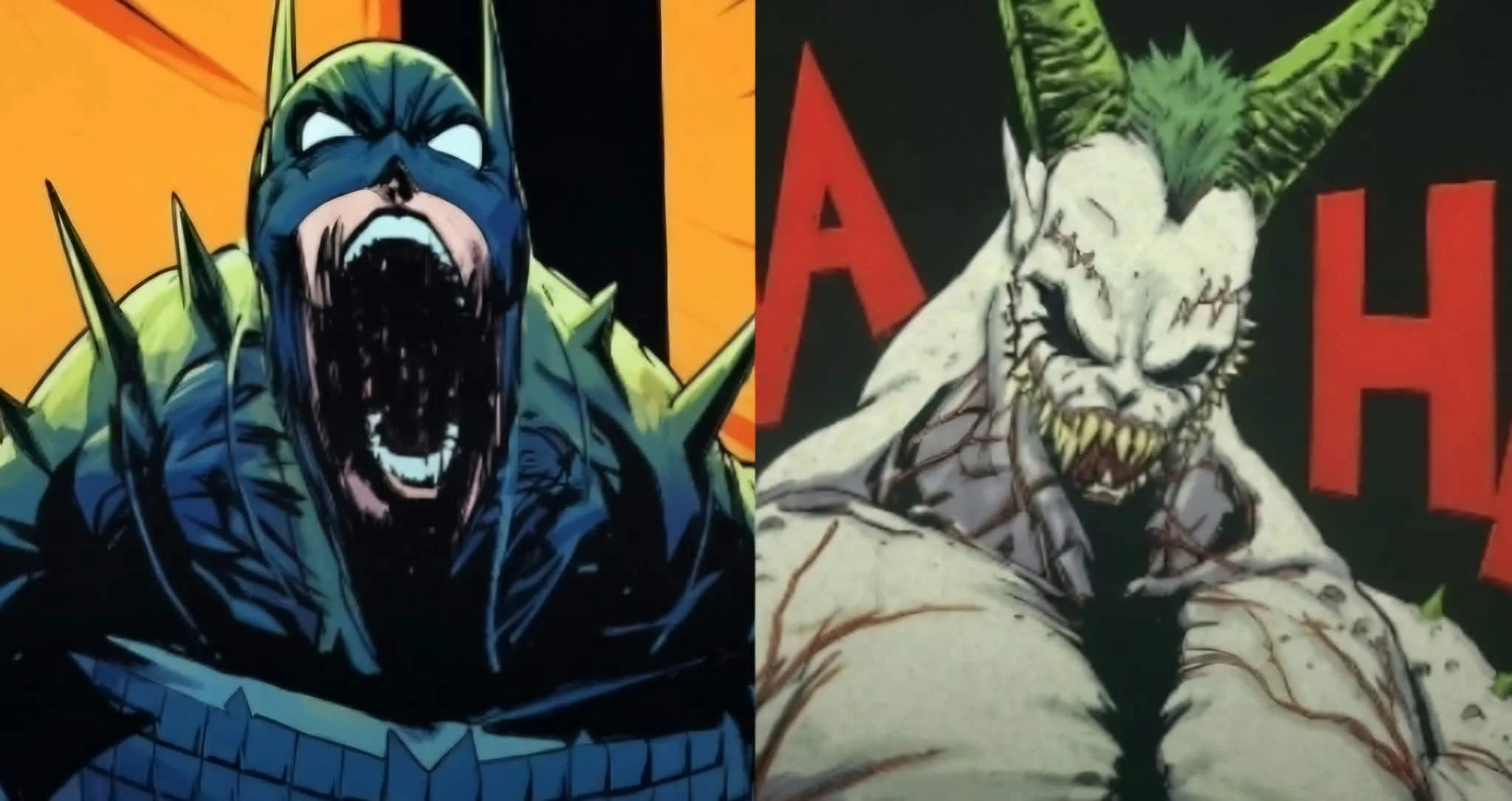
Scott Snyder took the stage to outline high-stakes turning points ahead for Bruce Wayne, zeroing in on Absolute Batman #25.
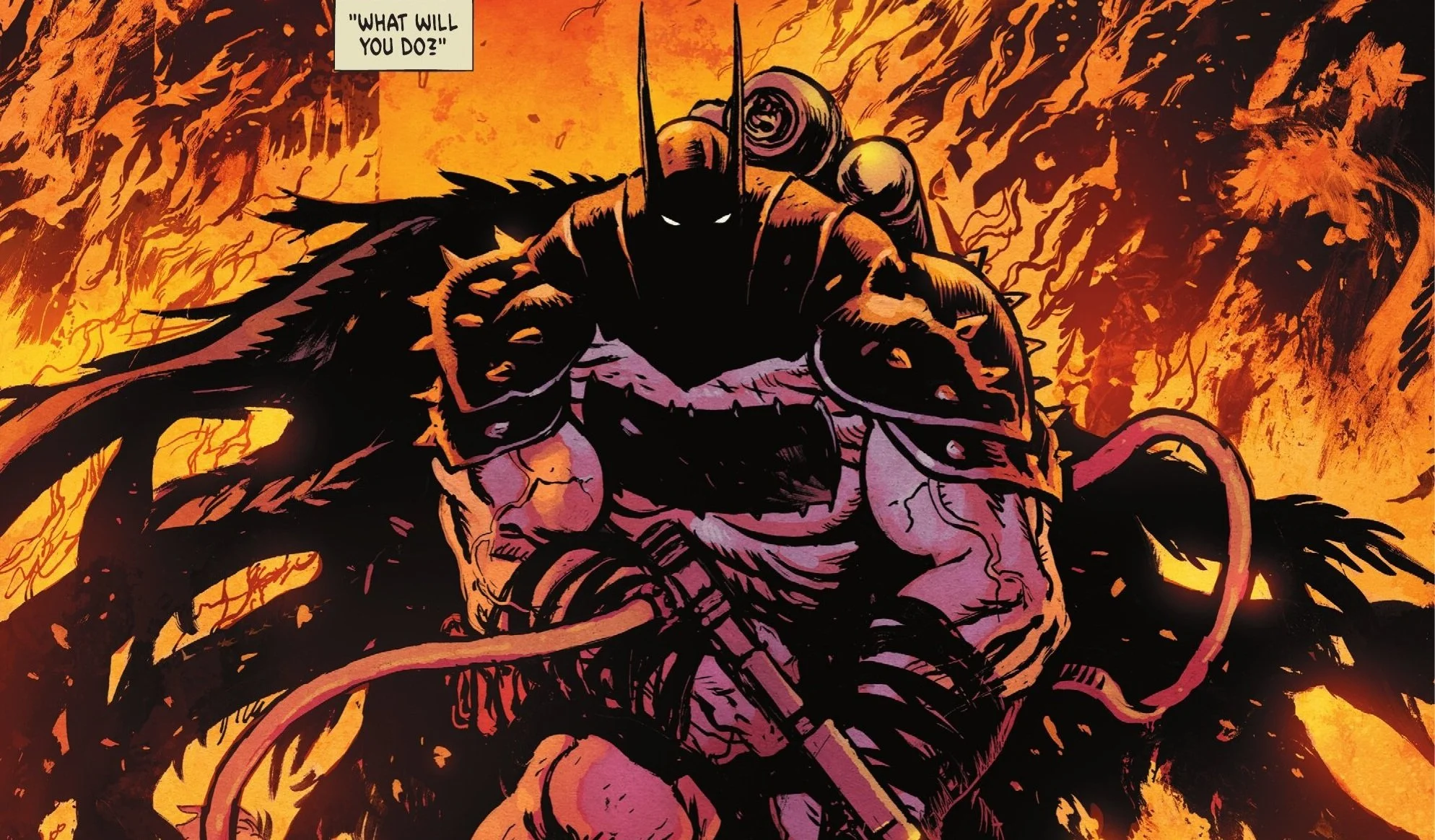
After dismantling Scarecrow, Bruce Wayne stops playing defense. He heads straight to Grim Manor for an unavoidable collision with the Joker. Upon arriving, Batman discovers the Joker wearing his infamous baby coat, cementing one of the most chilling visual signatures of this iteration. Snyder noted that this battle will permanently pivot the series into a brand-new direction.
Issue #26 features guest art by Cliff Chiang, exploring the immediate fallout of the Grim Manor war as the Dark Knight is forced to step up his tactics. Snyder also teased developments in the upcoming Beyond Ark M one-shot. The story expands Professor Pyg's role and the Joker's network of Ark facilities, while opening a door to dark magic that ripples across the entire Absolute line. Snyder teased an explosive final-page event for an undisclosed character before panel moderators cut him off to avoid spoilers.
Absolute Superman #25: Brainiac Finale and a Leap into Deep Space
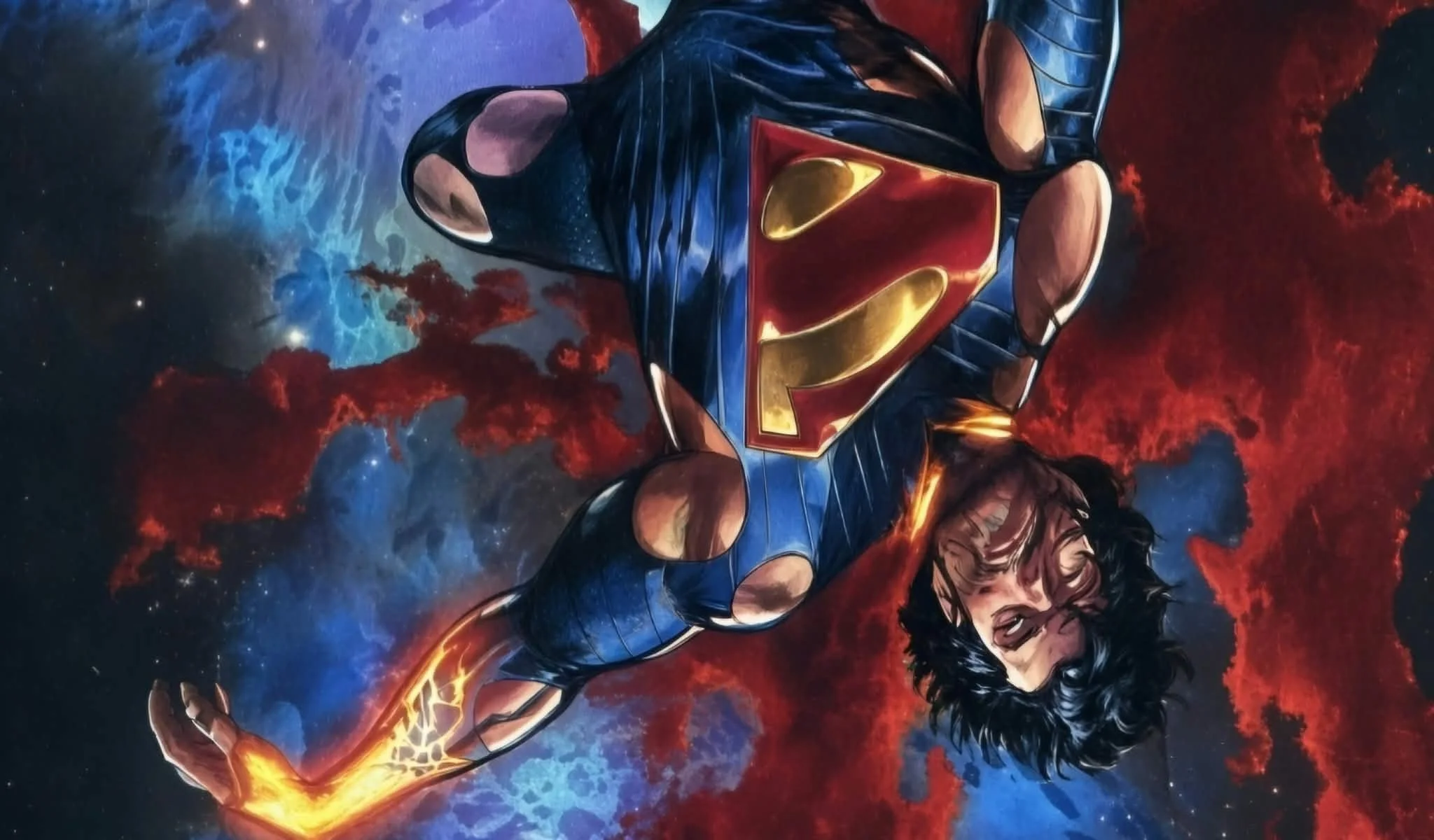
Jason Aaron's Absolute Superman is marching toward its own landmark 25th issue, designed as a pivotal turning point for Kal-El.
The issue alternates between the historical collapse of Krypton and Clark's ultimate battle with Brainiac. Once the dust settles against Brainiac, Kal-El heads directly into deep space, jumping forward several months into the future.
Issue #25 sets up a dual-timeline mystery, jumping back and forth across different points in time to explain how Superman left Earth behind, what drove him into the cosmos, and where his mission takes him next.
Absolute Wonder Woman: Cheetah Dynamics and Silver Swan Debut
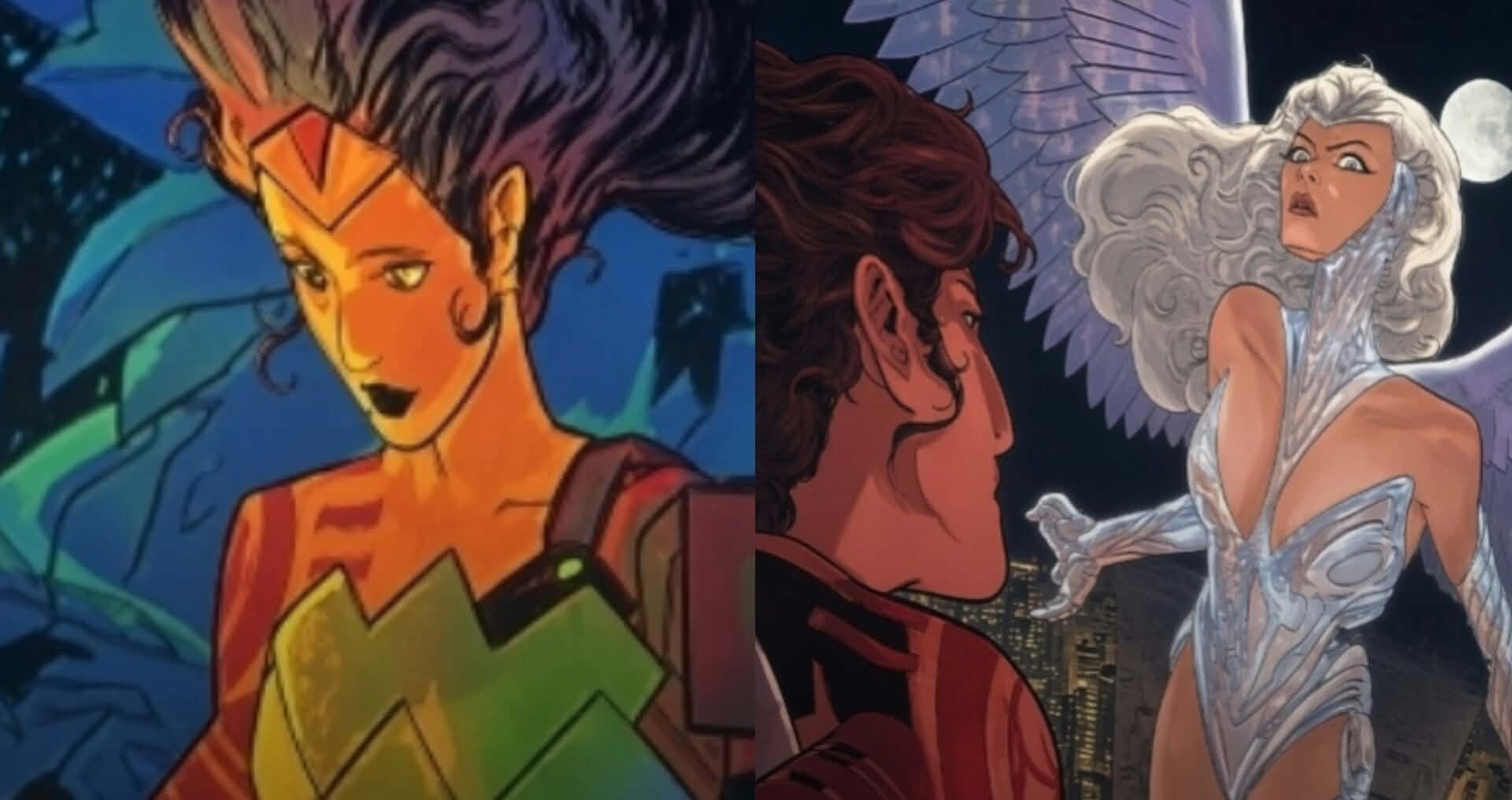
The creative team behind Absolute Wonder Woman shared insight into Diana's upcoming arcs, spotlighting complex relationships and mythological friction.
Diana's relationship with Cheetah will take an unconventional, distinctly Wonder Woman approach, focusing on emotional depth rather than simple hero-villain antagonism. The pantheon is asserting its power across the mortal realm in unprecedented ways, leaving Diana struggling to balance their unchecked interference.
Absolute Silver Swan is officially arriving in upcoming issues. The design represents an uncanny synthesis of cutting-edge technology and ancient sorcery. Steve Trevor and Diana's supporting cast will receive significant narrative expansion over the next arc.
Absolute Flash: Nick Robles Infuses Anime Body Horror into Cyborg
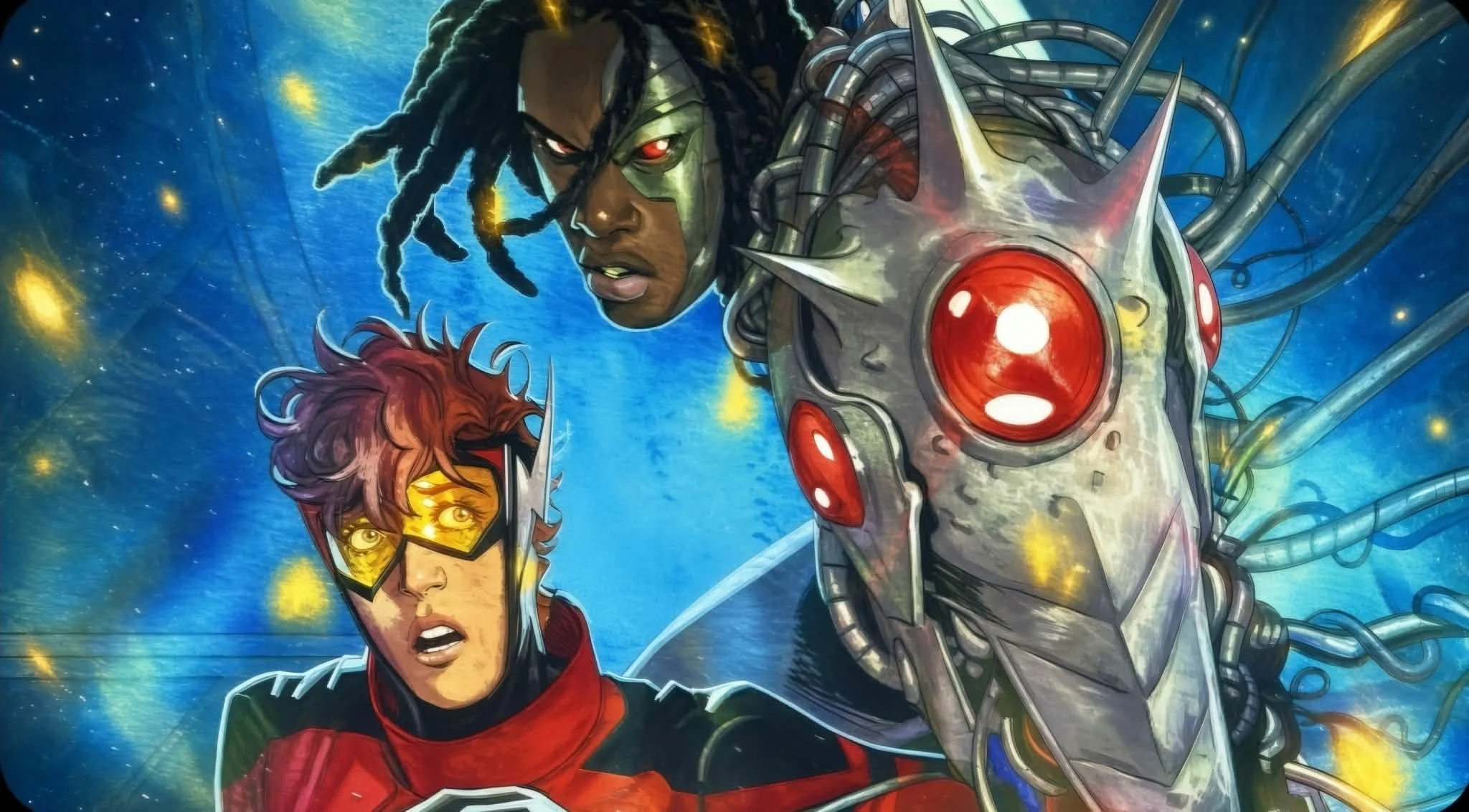
Absolute Flash artist Nick Robles revealed his approach to Victor Stone, focusing on the terrible toll cybernetics inflict on a human body.
Taking inspiration from intense, visceral imagery found in anime, Robles wants to emphasize organic horror over clean superhero mechanics. Cyborg's physical enhancements in this universe highlight the disturbing reality of biological tissue welded directly to cold metal. Robles aims to push Victor Stone's physical distress to extremes that conventional superhero comic art rarely touches.
Absolute Green Lantern: Al Ewing Reveals the Emotional Color Spectrum
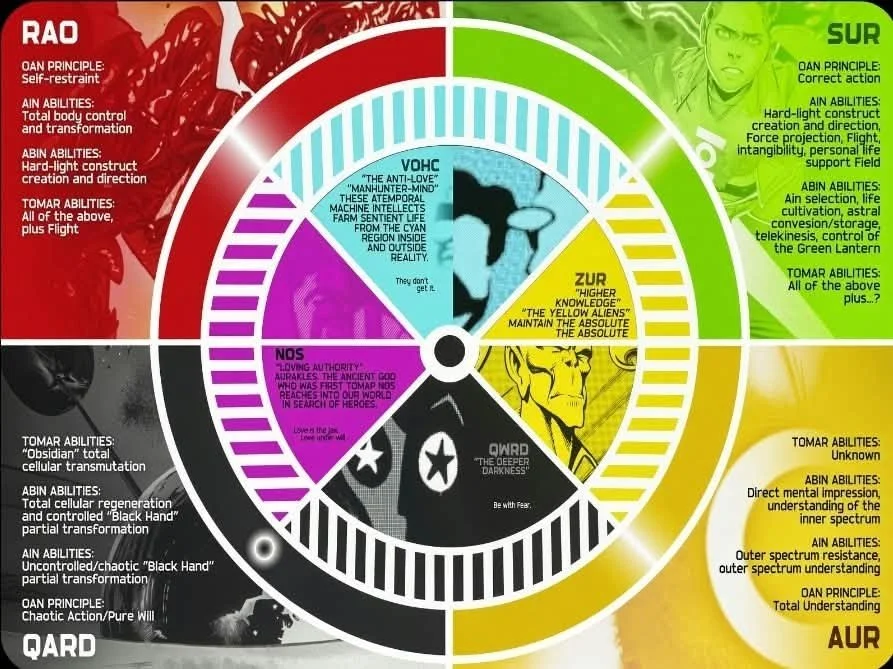
Writer Al Ewing revealed an all-new color spectrum chart for Absolute Green Lantern, giving readers a look at how emotional energy works in this universe.
Ewing explained that he is breaking down how the various colors connect, what each specific frequency represents, and how these contrasting emotional forces will collide. On the chart, we see four colors, three ranks each. Red is self-restraint. Green is correct action. Yellow is total understanding. Black is pure will. L
The middle rank is called Abin, and its powers are picking who gets the ring and controlling the Lantern. That's exactly what Abin Sur did in issue one. His name was his job title the whole time. Ewing confirmed that Absolute Kyle Rayner will arrive soon, but warned that the fan-favorite Lantern will appear in a form completely different from expectations.
Absolute Catwoman #4: The Calicos vs. The Shadows
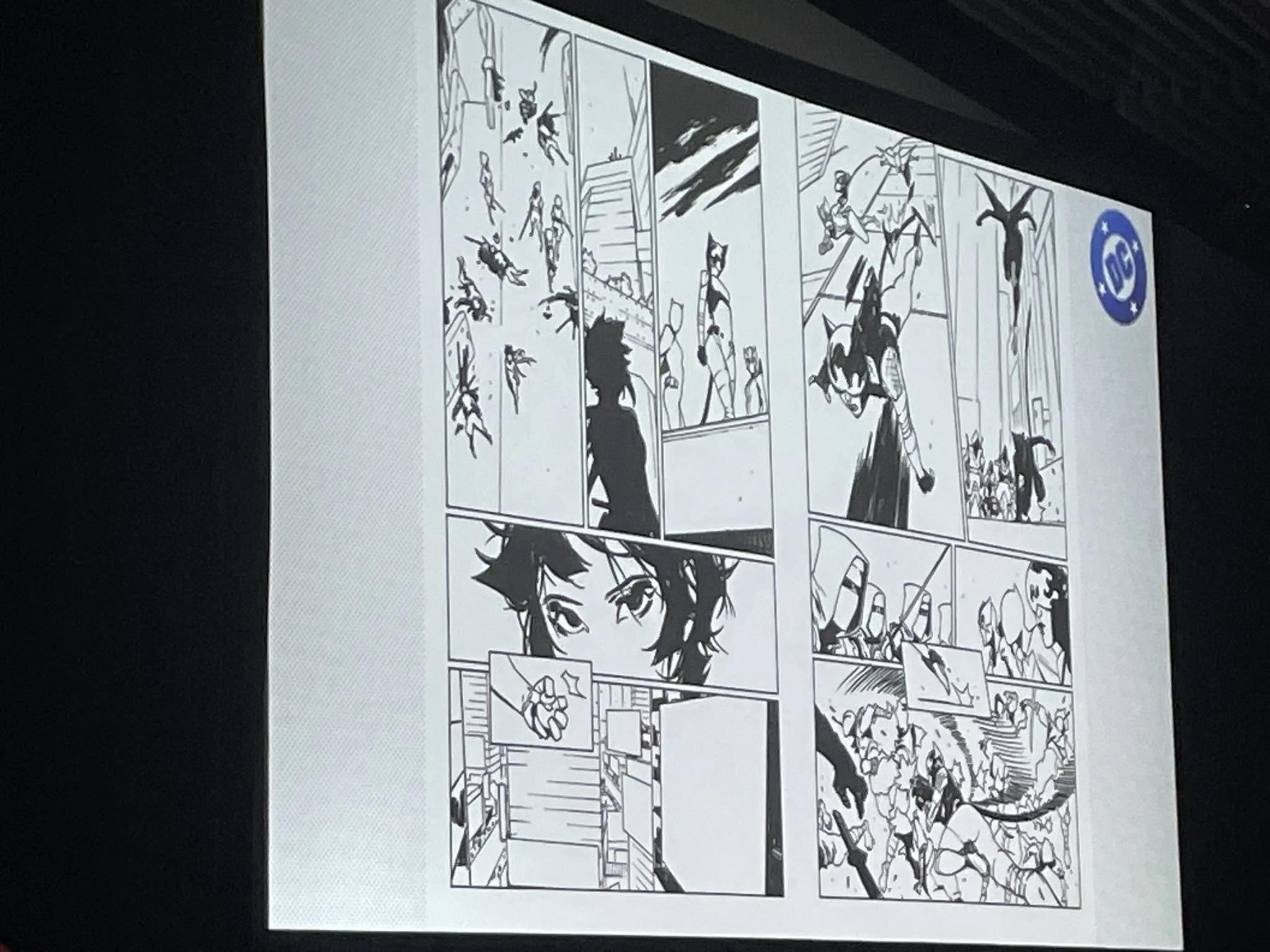
Writer Che Grayson broke down issue #4, highlighting an all-out street war pitting Selina Kyle's Calicos against Cassandra Cain's Shadows. The issue also marks the return of Black Mask.
Grayson stressed that Selina is neither hero nor villain; she operates purely in survival mode. The central theme of her arc centers on "The Yarn," a concept coined by Scott Snyder representing the metaphorical and literal threads Selina constantly tries to cut in order to escape her circumstances. Snyder praised Grayson's work, stating it is a joy to watch Selina thrive in an epic story beyond what he could have penned himself.
Absolute Black Canary One-Shot Arrives in January 2027
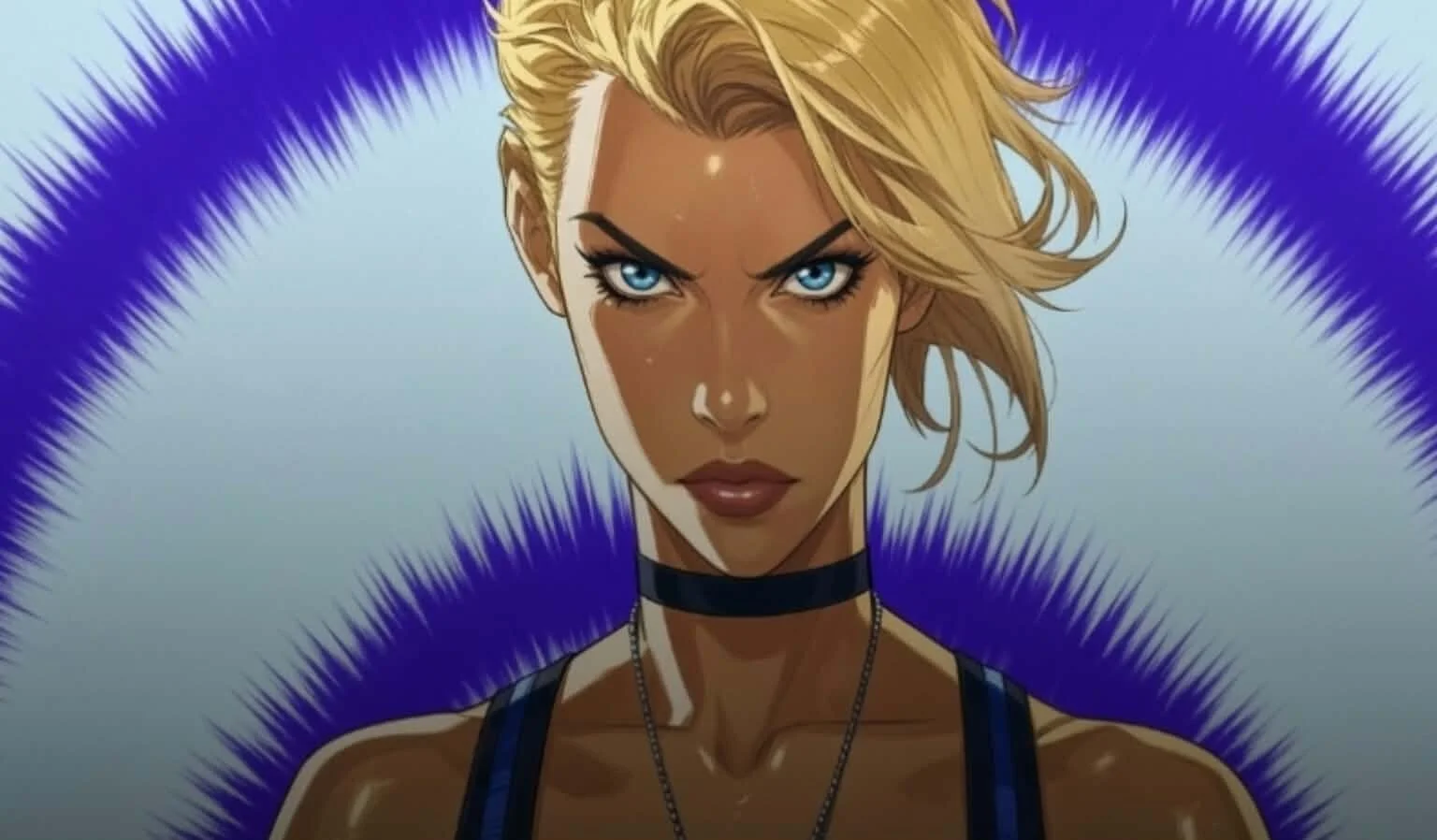
Writer Pornsak Pichetshote and artist Belén Ortega bring Absolute Black Canary to comic shops in January 2027. Directly spinning out of Absolute Green Arrow, the one-shot continues Dinah Lance's role in the murder mystery surrounding Oliver Queen. The book will also feature Wildcat III, deepening the political corruption and billionaire conspiracy tightening around Star City.
Rafael Albuquerque says he can’t spoil too much regarding Absolute Green Arrow but that the book will shift from the POV of Black Canary to Green Arrow himself
The New York Comic Con 2026 reveals made one thing clear: the Absolute Universe is moving far beyond initial setup into major, permanent consequences. With new character debuts, milestone confrontations, and the upcoming five-issue Absolute Justice event on the horizon, DC is giving readers plenty of reasons to keep their pull lists locked in through 2027.