
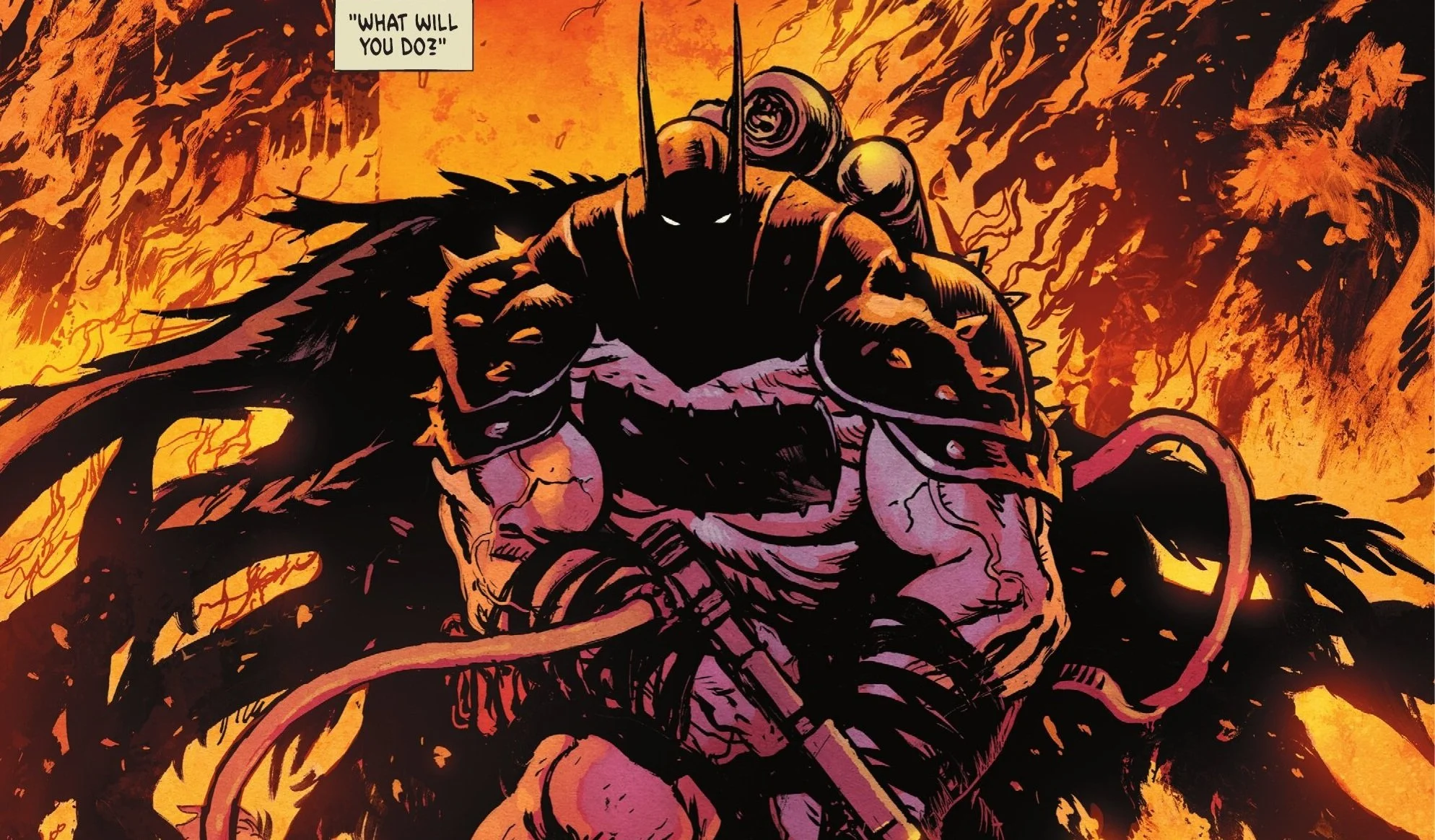
Comic books have always been our modern fables, teaching us lessons and morality through the heroes we cheer for. In a world where any marginalized group can be scapegoated by political movements, writer and artist Daniel Warren Johnson (DWJ) uses the Absolute Batman Annual to tackle true evil head-on.
This extra-sized issue is a visceral, must-read exploration of righteous violence that forces the ultimate question: What are the consequences of war, and how much of his own soul must Batman sacrifice to save others? This annual is a powerful, uncompromising look at the extreme cost of justice.
THE CRITICAL JUNCTURE: Bruce Abandons Protocol
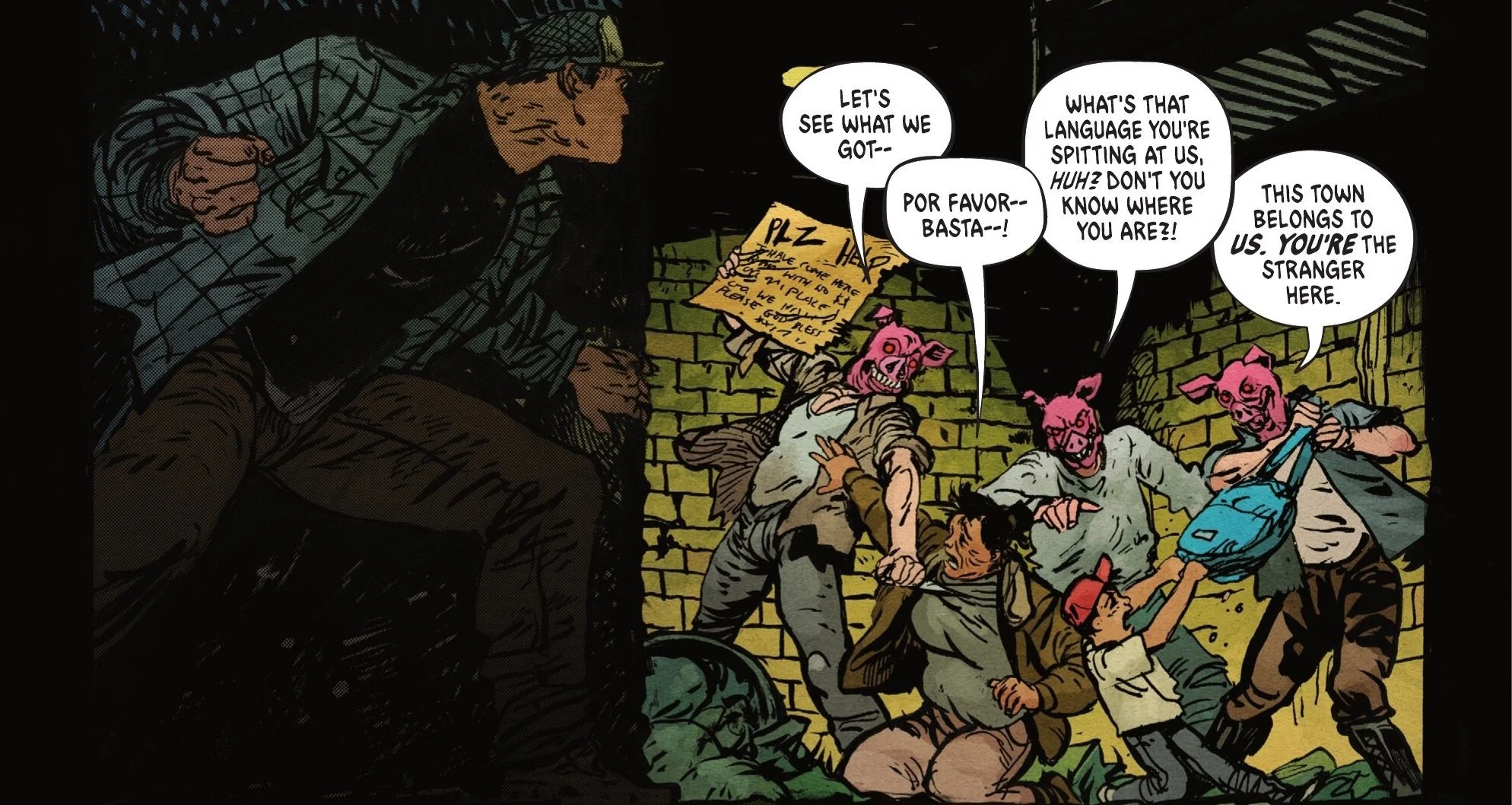
DWJ’s primary story is an early adventure from the life of this working-class Bruce Wayne. The plot finds a young Bruce undercover, but his mission immediately goes sideways when he stumbles upon white nationalist gangs preparing to attack a nearby refugee camp. These thugs are openly backed by corrupt local police. When Bruce sees a Latina woman under attack, he makes a split-second decision.
He ditches his careful plan and steps in to protect her, earning himself a brutal beating. After he gets back on his feet, Batman roars in for the final confrontation. Crucially, it’s during this chaotic incident that Bruce finds the earth mover he’ll eventually adapt into his Batmobile. This simple plot—saving a refugee camp and finding his iconic vehicle in the process—is the perfect setup for the issue’s huge moral statement.
THE SOUL'S PRICE: Violence and Paternal Legacy
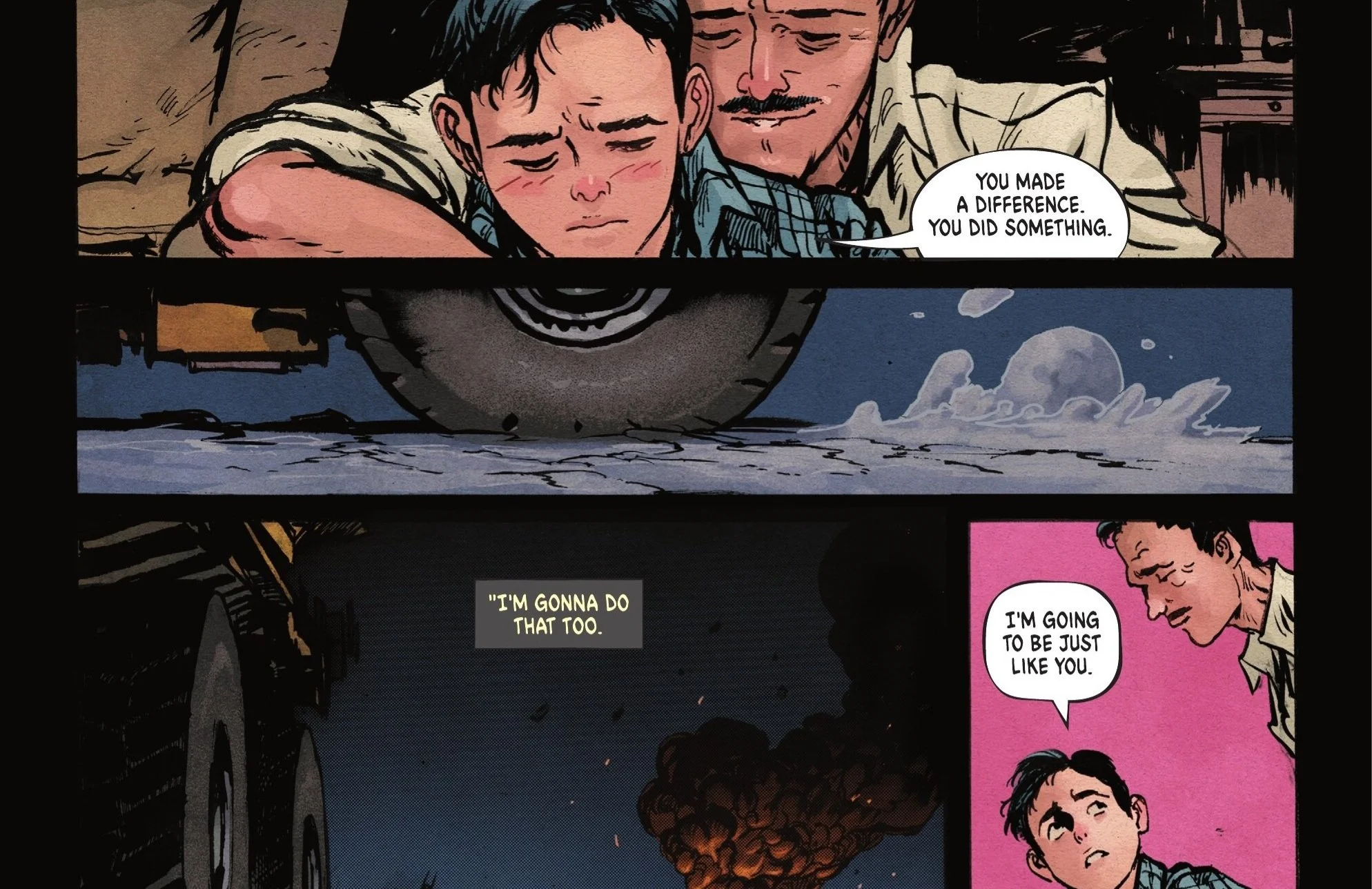
Daniel Warren Johnson's story is a masterclass in thematic clarity. It completely rejects nuance in favor of righteous fury, functioning as a necessary fable for our volatile times.
The comic’s political commentary is a hammer blow. By pitting Batman against white nationalist gangs and a police force that actively enables their violence, DWJ draws a chilling, direct parallel to current events. This comic argues that the true "Absolute Evil" is any movement that seeks to dehumanize others.
Batman's choice of unsubtle justice is the story's core thesis. His brutal beatdowns feel less like a failure of morality and more like a visceral necessity. However, this is where the title, Absolute Consequences, truly resonates. The fighting may be over, but the moral conflict isn't.
The final image of the main story is not one of triumph. Instead, Batman is balled up and bawling, left wondering if he has gone too far in his intense violence. This single panel is the emotional climax that lays bare the consequence of his actions. By embracing this raw violence, he risks betraying the legacy of compassion his parents represented, proving that his greatest enemy is always the darkness within himself.
ART OF THE VISCERAL: Johnson's Kinetic Impact
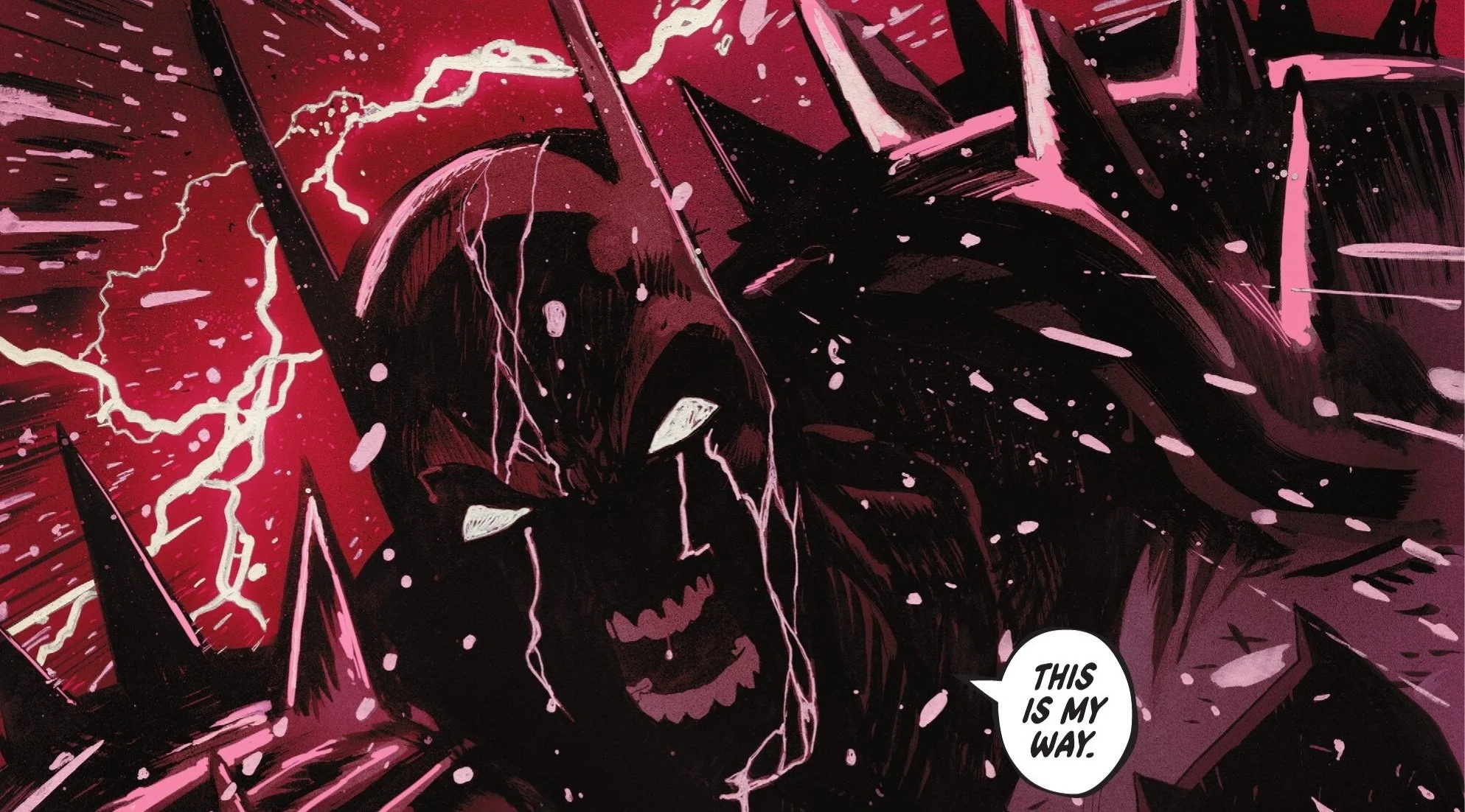
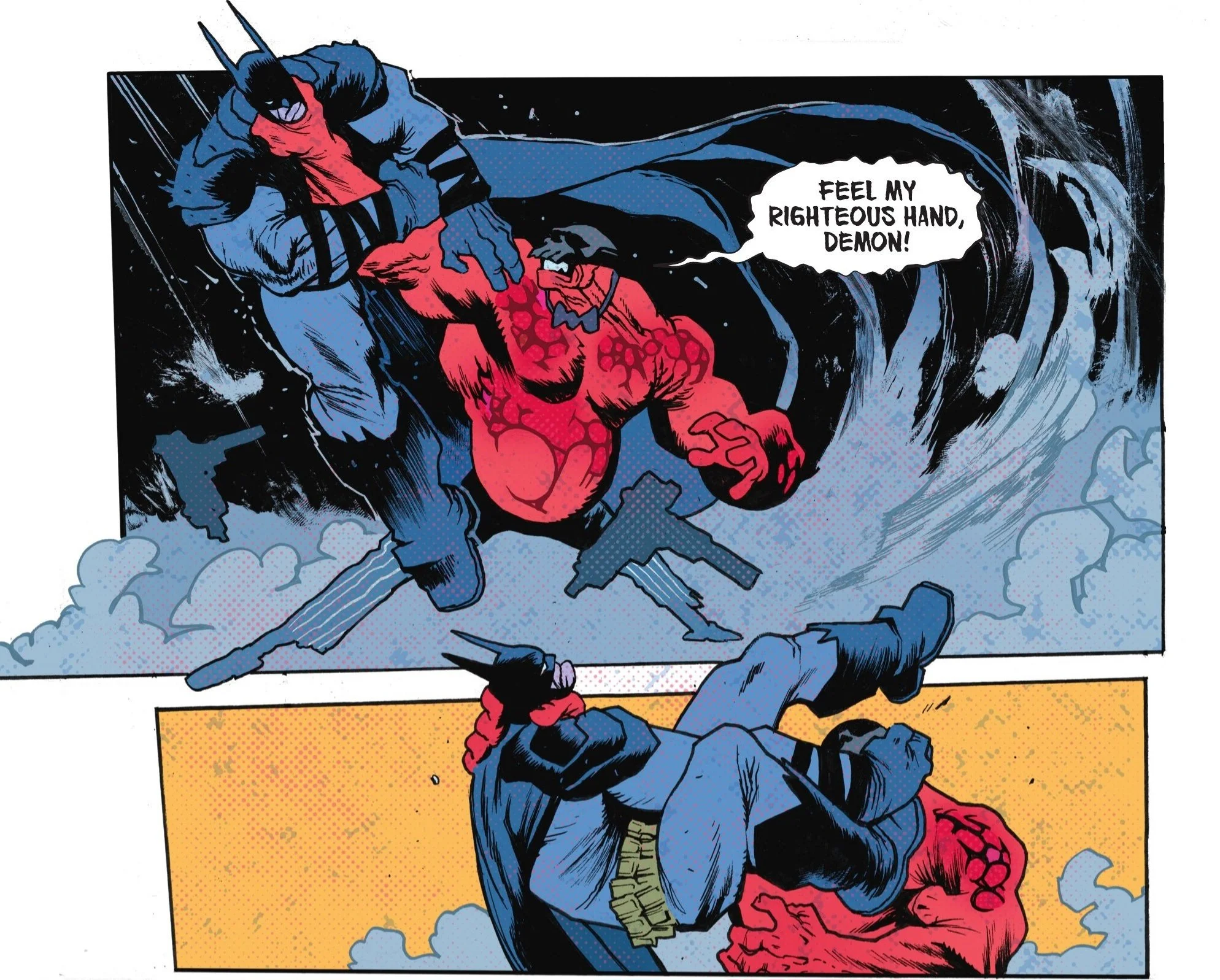
The political message lands with such force because of Daniel Warren Johnson's raw, intense art. His style is kinetic, bombastic, gritty, and messy in the best possible ways. This isn't the clean, surgically precise Batman art we often see. This is pure rage and energy translated onto the page.
DWJ's storytelling is based on action and motion. He makes every punch count. When Batman beats down the white nationalists, the art is a showcase of extreme punishment. The rough, messy quality of the art is perfect for this early-days, working-class Batman. His early Bat-suit lacks polish, and his fighting style is all about brute force over finesse. The whole issue is a visually arresting, fully visceral experience that confirms DWJ is the perfect artist to illustrate a story about fighting back against pure, ugly extremism.
Absolute Backup Stories
This oversized annual isn't finished after DWJ's main feature. It includes two excellent backup tales that further flesh out the brutal Absolute Universe.
Sanctuary by James Harren
James Harren (writer and artist) delivers a phenomenal, visceral piece called "Sanctuary" that plays out like a desperate horror film. The core of this grim tale is the human tragedy at its center: Victor, a young gang member, brings his crew to the church where his estranged father lives. While Victor hurls insults, Batman is silently infiltrating the church, dispatching the gang members one by one. The climax is pure Harren: the gang realizes they are trapped, knocks out Victor's father, and one member takes experimental drugs to become a hulking monster. Even that isn't enough. The story ends on a surprisingly tender, emotional beat with Victor's dad holding his son. It's a powerful story about lost family and how crime destroys its own connections.
The Meredith McClaren Story
Finally, Meredith McClaren contributes a brilliant, thoughtful conclusion to the annual. Her two-page ending is a necessary shift in tone, providing a moment of contemplation after all the violence. It features a series of panels giving facts about bats while showing sightings of the Absolute Batman. The idea is to illustrate the traits the hero shares with the mammal. McClaren's piece ends on a surprisingly hopeful note: the concept that we can be a community of bats, helping one another.
Conclusion and Verdict
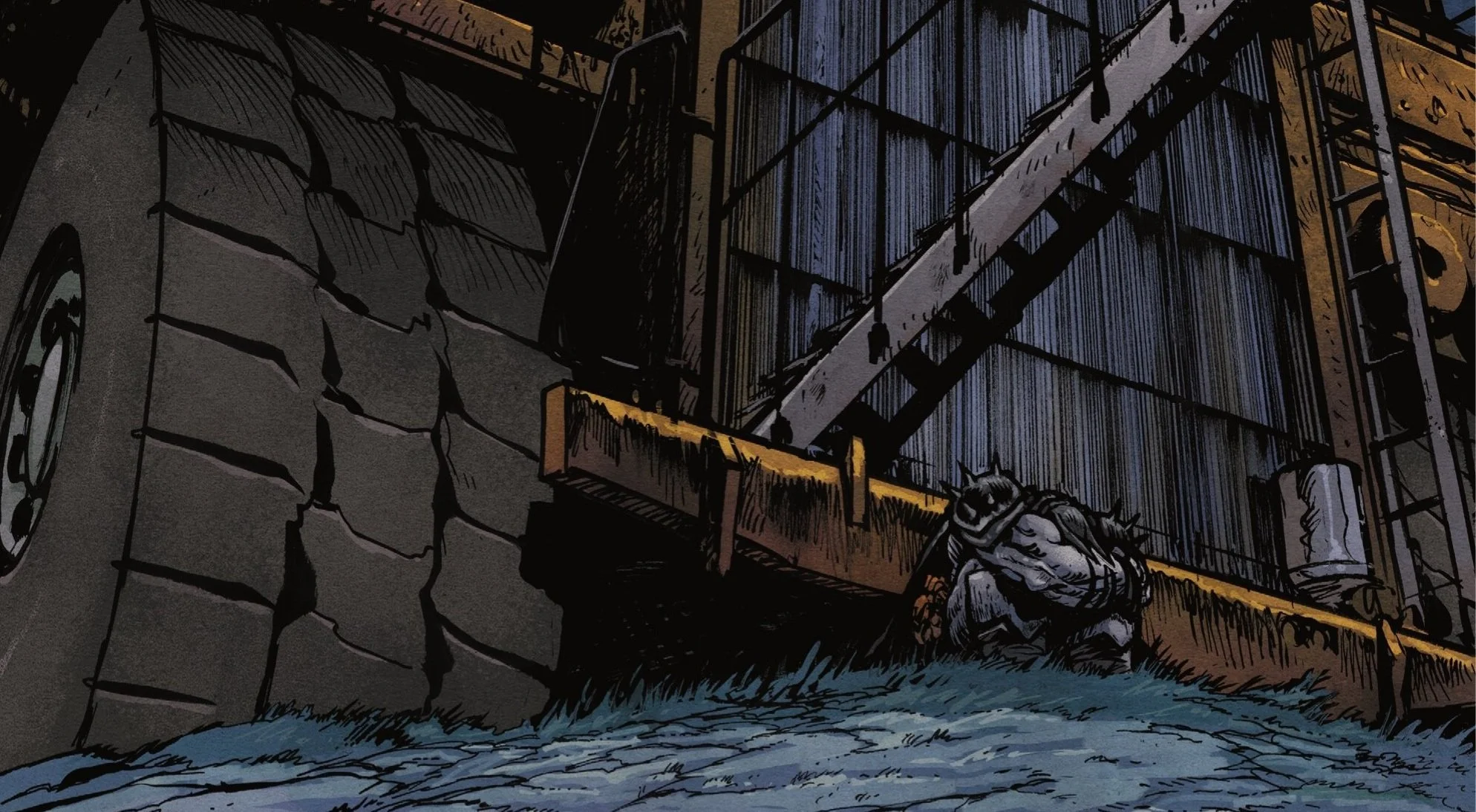
This Absolute Batman Annual is exactly the kind of comic book we need right now. It takes the familiar mythology of Batman and uses it as a platform for catharsis and a call to moral clarity. DWJ gives us a raw, raging hero who understands that some threats cannot be dealt with subtlety. The final image of Batman weeping confirms that the consequences of his mission remain his greatest struggle. This issue is a beautifully drawn exploration of extremism and righteous fury. It truly feels like a mirror held up to our own world's rage.
Verdict: Essential Reading. This is Daniel Warren Johnson at his absolute best.