
In November 2025, JCW revealed Vince Russo as the company’s new mystery investor on Episode 59 after weeks of buildup. Since then, Russo has worked on-screen and on the creative team. His arrival signaled a push toward consistent serialized television, complete with cliffhangers, recurring segments, and stories that regularly spanned episodes and promos. This was Russo’s first BloodyMania.
True, JCW doesn't officially divide its weekly show, Lunacy, into seasons, but this year’s BloodyMania sure felt like a season finale. The annual event, held during the Gathering of the Juggalos, brought months of stories to a payoff.
JCW leaves BloodyMania with more weekly viewers, recognizable characters, and growing attention from beyond the Juggalo universe. The roster is more defined than it was a year ago, and wrestling media is increasingly treating Lunacy like a show to follow rather than an ICP adjacent curiosity.
It’s not perfect. Obviously. Some elements remained uneven, with too many interference finishes, referee bumps, and stipulations that unnecessarily complicated matches-matches that still sometimes unfold as if they don’t have the physical talent they now do. Still, overall, the company should be counting this year as a win.
JCW and the Gathering
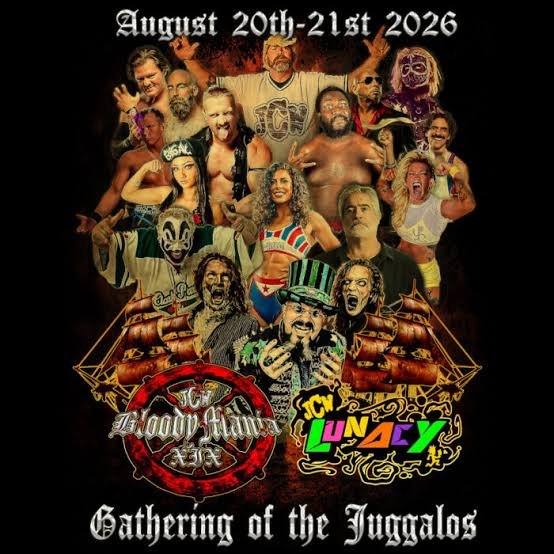
JCW and Insane Clown Posse are inexorably bound, but they’re becoming increasingly less interchangeable. For those who are totally uninitiated into the glorious, odd, and sometimes disgusting world of Juggalo culture, The Gathering is Juggalo Mecca. This year’s 26th Gathering ran Aug. 19-22 in Macks Creek, Missouri. Wrestling, specifically JCW, is part of a much larger four-day reverie that includes musical guests, sideshows, contests, pageants, seminars, camping, and, no doubt, lots of not-so-wholesome activities not fit to print.
BloodyMania has been JCW’s flagship Gathering show since 2007. JCW is, first and foremost, a Juggalo wrestling promotion. Its owners are ICP. Its identity, humor, references, and audience are closely connected to Juggalo culture. As such, BloodyMania and the Gathering remain cornerstones. But Violent J has spent the last two years making JCW into something wrestling fans, in general, love, even if they have no connection to ICP. Before this year’s BloodyMania, he described the goal to PWTorch: “Our goal is to be a respected independent.”
More people are watching.
Vince Russo’s arrival signaled a change in identity, but he didn’t single-handedly propel JCW’s growth. Lunacy began its current weekly run before he joined the company. Violent J says its live YouTube audience has increased from roughly 100 viewers when the project began to around 3,000 now. Viewership may have increased fairly steadily since Lunacy launched, but there was a sizable spike around Russo’s arrival. Episode 54, released in October before Russo’s reveal, sits at about 20,000 YouTube views. Episode 60, the first full post-Russo-as-investor episode, has more than 55,000.
In December of 25, Sports Illustrated reported that Russo’s arrival coincided with Lunacy’s highest week-to-week YouTube viewership to that point. Violent J told SI that the promotion had become “very heavily involved in storytelling,” pointing to long-form stories, reveals, and cliffhangers.
Beyond advancement in episodic storytelling, driven by both Russo and Violent J, production value for the weekly has become more polished and more TV-like overall. That polish shows in weekly recap packages, edited backstage segments, and character vignettes, along with a more established broadcast team led by Joe Dombrowski and a rotating group of commentators. Technical execution is leaps and bounds more refined today than in episode one, though it still has occasional missed camera shots and low-quality backstage audio; the show consistently looks intentionally produced as weekly wrestling television.
Caleb Konley, Russo-era character
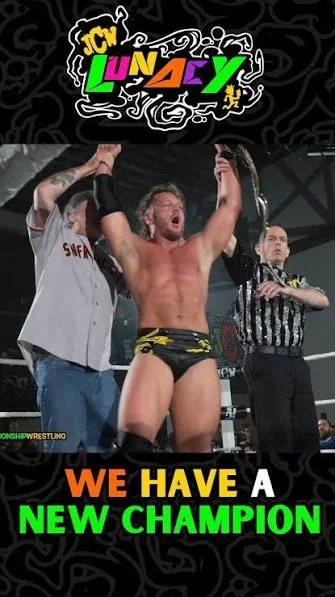
Konley has been a Lunacy staple since the beginning. He’s an industry veteran and came to JCW as a talented technical wrestler. His skill level didn’t necessarily change with JCW’s Russo-era storylines. What changed was how the company used him and how much airtime he got.
Over the last year, he's fully transformed into ‘The Chosen One,’ a Russo darling increasingly protected and clearly favored by the person with power over the show. Lunacy put an exclamation point on that in February on Episode 69 when Konley betrayed man-servant Jeeves and backhanded the Ring Rat to a hail of jeers from the audience, only for Russo to appear and applaud him.
Konley’s bro-mantic allegiance to Russo became a weekly staple; he eventually took the Lunacy World Championship, and with it a Russo-ordered custom belt engraved with his own face, which he seems to love gazing longingly into. From there, Russo’s favoritism became part of Konley’s title run, with protection, interference, and rule-bending repeatedly helping keep the championship on him, earning both men considerable heat.
Enter Kerry Morton
A second-generation wrestler and established NWA talent who continually earns his spot, Kerry Morton invested months developing and complicating his own identity on Lunacy. Morton called himself “Mr. JCW” on Episode 62 and kept using the moniker, with commentators and announcers following suit, spotlighting his growing role in the production. Still, JCW gave him space to become more confrontational and increasingly fixated on those he believed were working against him. In an SI interview this spring, Morton said JCW allows him to be “loud and creative and be my own self.”
The growing allegiance between “The Chosen One” and Russo left plenty of room for Morton to shake off the spoiled nepo-baby energy he initially brought to JCW and become a surprise favorite that fans can align with against the Konley/Russo dominion.
Their match on the Gathering edition of Lunacy brought that to a point.
Konley attacked Morton before he could enter the battle royal, leaving him unable to beat the referee’s 10-count and costing him the match. Morton later confronted Konley and got an immediate title defense. He hit a superplex, survived a belt shot and, with the referee down, got hold of the championship himself—but chose not to use it. Konley eventually used the referee as a shield, landed a low blow, and finished Morton with the Burning Hammer to retain. The Chairshot gave it the highest match rating of the Gathering episode and called Morton “a star.”
Morton lost, but the match made him look like an obvious future challenger.
The Supporting Roster
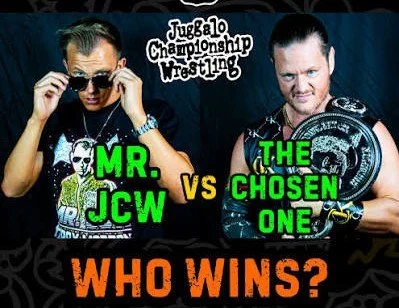
JCW now also has a recognizable group of recurring characters who don't depend on being in the main event.
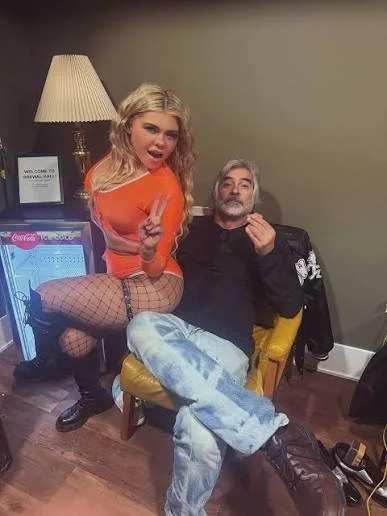
Paige Collett’s Ring Rat is, perhaps, my favorite, and she’s become one of the most immediately recognizable recurring roles on Lunacy. The name comes from a historically derogatory slice of wrestling slang, but Collett has leaned into the stereotype, creating a deliberately exaggerated groupie-type character. According to Collett, another wrestler turned the role down (thankfully) before it was offered to Collett, who told WrestleZone, “There’s no small role, only small performers.”
“The Boss & the Ring Rat”
posted and captioned by Collett Feb 202g
Lunacy has let her prove that. She’s been tied to stories with Jeeves, Konley, Disco Ray and Steven Flowe, appeared in numerous backstage segments, and eventually moved from ringside character to in-ring participant. By the Gathering, her return in the battle royal got an immediate reaction.
CoKane has a similarly precise relationship with audiences. When he entered the same battle royal, fans threw drinking straws into the ring as part of his cocaine-dealer gimmick. Ring Rat and CoKane are good examples of JCW getting supporting characters over on their own terms. Neither needs to be in the main event to get an immediate reaction.
That depth extends well beyond Ring Rat and CoKane. The Outbreak, Barnabas, Steven Flowe, Brothers of Funstruction, and 2 Tuff Tony have all become familiar parts of the weekly show, while JCW has rotated in higher-profile guests including James Storm, Matt Cardona, Nic Nemeth, RVD, KENTA, and Matt Riddle.
Those big, outside names may bring people to the show, but the regular roster has to give them a reason to come back.
The Gathering Lunacy Episode and BloodyMania.
The final Lunacy before BloodyMania did a lot more than fill out the card.
GCW’s promoter, Brett Lauderdale, was seated in the crowd along with Nick Gage, Vipress, and Parrow. The camera panned to the group repeatedly throughout the show, rousing plenty of fan speculation.
Their presence wasn’t entirely new. JCW and GCW have worked together before, including at last year's Gathering and during The Collective over WrestleMania weekend in Vegas. What changed was the focus on GCW and how they were presented; by the end of the episode, it was clear GCW was no longer purely another independent promotion working with JCW. Lauderdale and his wrestlers had entered the Lunacy universe and storyline, a development that would be made explicit during BloodyMania.
BloodyMania wasn’t the strongest wrestling card JCW has produced this year. And that’s ok. It functioned as the payoff to stories the promotion had invested months developing.
Twisted Snow vs. Steven Flowe and Shane Mercer
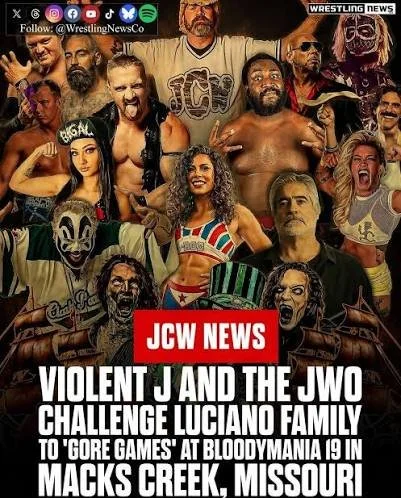
James Storm and CoKane, paired as Twisted Snow, opened against Steven Flowe and Shane Mercer. Flowe was originally scheduled to team with Mr. Anderson, but JCW announced on the previous night’s Lunacy that Anderson couldn’t make the show. Flowe recruited Mercer by offering him the Golden Guitar. The match gave the crowd a mix of Storm's veteran offense and the more physical exchanges between CoKane and Mercer. One of the bigger moments came when CoKane launched himself over the barricade with a tope con hilo, carrying him into the second row.
The finish saw the Ring Rat come out to distract Storm, giving Flowe a chance to swing his guitar. Storm moved, and Flowe accidentally hit Ring Rat instead. Storm followed with the Last Call superkick, and CoKane hit the Tombstone to give Twisted Snow the win.
A straightforward opener, but the finish served the larger storyline, with Flowe and Ring Rat’s history on Lunacy giving the interference weight.
Alice Crowley Gets the Next Shot
Alice Crowley defeated J-Rod and Hollyhood Haley J to become No. 1 contender for the JCW Women’s Championship. AEW veteran Nyla Rose served as special enforcer. When J-Rod charged Haley J and Haley moved, J-Rod collided with the referee. Rose then revealed referee stripes under her gear and took over the match. J-Rod later swung at Rose, who answered with a neckbreaker. Crowley followed with a lariat for the pin.
The win establishes a clear path for Crowley as Dani Mo’s next challenger and gives JCW an immediate direction for the women’s championship after the Gathering.
Josh Bishop Remains Champion
Josh Bishop’s three-way title defense against Façade and Father Bronson gave BloodyMania some of its most ambitious in-ring action, with high-flyer Façade absorbing most of the risk. Façade used Bronson as a platform to attack Bishop, then climbed part of the lighting structure before diving onto both men.
Bishop retained with Exit 187, continuing a run that has established him as one of JCW’s more credible champions.
Dani Mo
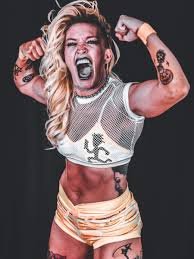
It’s been a rough year for Dani Mo, who has been embroiled in multiple tense storylines. Earlier in the show, HoKane’s interference helped cost The Outbreak their tag-title match against Choppa City, and by the time HoKane faced off against Dani, the women’s championship was not the only issue between them. Control of Jacksyn and Abel was also on the line.
HoKane controlled much of the match with heavier offense, including a second-rope senton, while Dani answered with a Code Red and worked toward the Moonmist Twist. Barnabas’ interference backfired when special referee Gail Kim hit him with Eat Defeat, allowing Dani Mo to recover and finish HoKane with the Moonmist Twist. The win kept the title on Dani and, more importantly, gave her control of The Outbreak. HoKane then turned on Barnabas, closing one of Lunacy’s longer-running stories while immediately giving Dani a new direction with Jacksyn and Abel—and Alice Crowley waiting as her next challenger.
Konley Retains the Lunacy Championship
Violent J forced Konley into another title defense at BloodyMania, yet again overriding Russo’s “Jack Tunney Rule,” which is meant to limit his “Chosen One” to one defense per month. Mr. Happy emerged as the surprise challenger with unfinished business against Konley. Unlike Konley’s earlier demolition of Jeeves, Mr. Happy was presented as a legitimate threat. But outside interference in the form of Jasmin St. Claire once again handed the champion another escape. St. Claire appeared with fake labor contractions, distracting Happy long enough for Konley to evade with a roll-up, allowing Konley to leave the Gathering with the championship intact after surviving both Morton on Lunacy and Mr. Happy at BloodyMania.
GCW Gets Physical in GoreGames
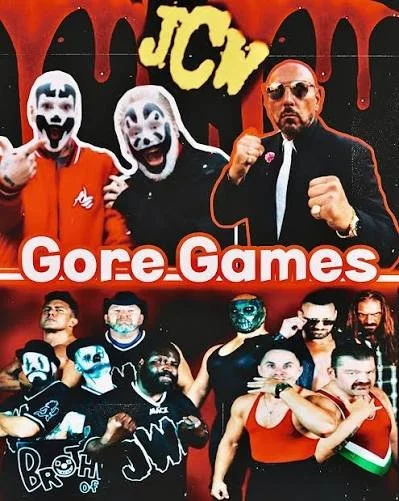
BloodyMania closed with GoreGames, the five-on-five elimination match billed as the payoff to the months-long JWO-Luciano Family feud, with Mad Man Pondo serving as special ref. After plenty of fan speculation, GCW’s presence turned physical during GoreGames between the JWO and the Luciano Family. Nick Gage brawled with 2 Tuff Tony. Vipress tangled with Willie Mack. Painful Paul delivered the event's biggest turn after looking ready to help finish EC3; Paul turned on his own teammate, hitting Dijak with multiple chokeslams. Afterward, he stripped off his Luciano Family gear to reveal a JWO shirt underneath.
Violent J and Shaggy 2 Dope abandoned the commentary desk to join the brawl before the JWO closed the show, standing tall.
GoreGames was a little crowded and difficult to follow as a match, but it worked as a storyline payoff. The JWO–Luciano Family feud concluded, Painful Paul switched sides, and GCW went from a presence in the crowd to an active part of the conflict. What JCW does with that GCW involvement now is a giant question mark coming out of BloodyMania.
What BloodyMania Showed About the Russo Run (so far)
Russo deserves a lot of credit for JCW’s increased emphasis on character development and continuity. Konley has become a reviled, television-worthy heel, Morton has shifted to become one of Lunacy’s principal characters, and Ring Rat is a recognizable, and more importantly, useful part of the show. Dani Mo, HoKane, Barnabas and The Outbreak carried one of Lunacy’s longer-running stories into a BloodyMania payoff that actually felt earned.
That isn’t Russo’s achievement alone. Violent J still sets JCW’s broader direction, and the wrestlers have had to make some pretty absurd material work. By and large, they have done just that.
Yes, there's still plenty of unnecessary padding around some pretty great wrestling. JCW continues to lean a little too heavily on interference, outside interruptions, and ref bumps. Sure, those devices can support a story, but when the wrestlers are already carrying the match, they’re filler at best and a distraction at worst. Morton and Konley showed us what a better balance can look like at JCW. The match still had a ref bump and cheating, but those elements served the characters instead of replacing the actual wrestling. The characters set the stakes, the wrestling carried the match, and the finish followed naturally: Morton refused to cheat; Konley used every shortcut available. The story and the match were pulling in the same direction.
What Comes Next — and Why It Matters
BloodyMania closed several stories. Now the question is whether JCW’s momentum can carry beyond Lunacy.
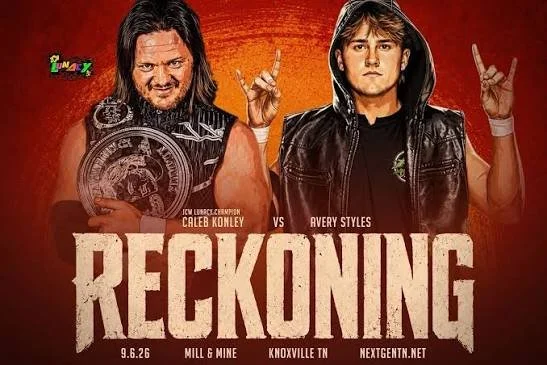
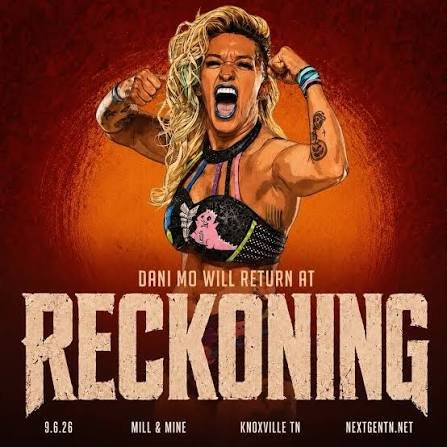
So far, it looks like it. The harder question may be whether the outside interest pays off. Case in point: On Sept. 6, Caleb Konley is scheduled to defend the Lunacy Championship against Avery Styles at Next Generation Wrestling’s Reckoning in Knoxville. Styles, the 19-year-old son of AJ Styles, announced at TNA Lockdown the day after BloodyMania that he’d signed with the company.
That puts a JCW championship on another promotion’s card against a wrestler who just signed with TNA, exposing both Konley and the title to fans that may not follow Lunacy. For a promotion looking to establish itself beyond the Juggalo world, cross-promotional visibility matters—especially with a veteran champion facing a heavily scrutinized second-generation prospect.
And, of course, Konley still has unfinished business at home. Morton’s loss at the Gathering didn’t close their story. Far from it. JCW has an established feud to return to while Konley takes the title elsewhere.
Dani Mo is another example of JCW talent gaining traction beyond Lunacy. Crowley is next in line for her title at home, while the win over HoKane gave Dani control of The Outbreak, so there’s plenty left to build on leaving the Gathering. But outside JCW, she holds the IWC Women’s Championship, challenged STARDOM’s Hazuki for the SPARK Joshi World Championship, and appeared on Busted Open in August. JCW is developing her as a weekly television character while her profile grows elsewhere. If that continues, it’s evidence that Lunacy can help raise the value of the wrestlers it features—not just its own viewership.
That pattern continues down the roster. Bishop and J-Rod have both drawn outside interest, including WWE tryouts and reported TNA attention. That visibility matters for a promotion still trying to prove it belongs in the broader wrestling conversation. Konley, Morton, Dani Mo, Bishop, J-Rod, etc.: These folks can wrestle.
GCW is another part of that broader reach. Brett Lauderdale, Nick Gage, Vipress, and Parrow moved from lurking around Lunacy to being part of the story at BloodyMania, building on an existing working relationship between the two promotions. Whether that turns into another interpromotional feud, more crossover appearances, or something involving Russo and Lauderdale is still unresolved, but what matters is that there is room to develop it.
These developments may be a better measure of JCW’s progress than any single BloodyMania result. The promotion is getting more wrestling-media coverage, its talent is drawing interest from larger companies, and one of its championships is about to be defended outside JCW. That doesn’t make JCW a major promotion, but it does show the company becoming more connected to the broader independent wrestling business. The next test is whether that attention can translate into sustained growth beyond Lunacy.
Jenny Catlin is a writer and pop culture enthusiast based in the square states. She’s a contributing writer to The Athletic, a Lighthouse Writers Book Project Fellow, and an award-winning essayist obsessed with obsession. You can find her on Instagram or Substack.