
Photo credit: A24.
There were a number of new releases this week, and it represents a bit of a variety. We had a new Jane Austen adaptation, a Street Fighter remake, and yet, the biggest story of the weekend box office? A three-hour documentary.
Street Fighter saw the biggest opening by a significant margin, doubling that of You Can See Everything. However, even with its openings, one can’t help but imagine they’re on entirely different box office trajectories. Street Fighter earned less than Mortal Kombat II, both domestically and globally. The $31M domestic, $51M global cume is not just below tracking, but significantly below the profitability point in excess of $200M.
DSR/CBC has discussed the current financial distress of Skydance for months, which has gotten extremely worse since the merger has been approved, but seeing as Skydance are only on the hook for the distribution costs, this isn’t dire for them. That said, it does feel very underwhelming that they have begun the new company with an immediate bomb, especailly with their stock price being less than half of what the combined value had been at the time of the merger less than two weeks ago. Legendary, however, has a lot of questions to answer. The biggest problem with Street Fighter, beyond the fact it doesn’t have a single actor people care about (though we at DSR adore Hirooki Goto, and everybody from CHAOS), is that it looks like an SNL sketch. If the film looks bad, and the cast is the cheapest you can find on the market, how is the break even point $200M? Where did this money go? Is it that expensive to secure the rights? It shouldn’t be too surprising that it underperformed expectations, just like the previous film attempt did in the 1990s, because we’ve seen what the ceiling for a Mortal Kombat movie is, and that franchise is more popular amongst non-gamers than Street Fighter.
Cody Rhodes, weirdly enough, is likely the biggest benefactor of Street Figher because being a primary character in the marketing of a tentpole project where you aren’t expecting to be the person bringing folks to the theatres adds legitimacy to your brand.
Expect this to see a significant drop in the second weekend. Mortal Kombat 2 saw a substantial, higher-than-average drop of 65% in its second weekend, and we’d imagine a similar drop here. The majority of the gaming community generally support these films in its opening weekend, inflating the initial box office, and its word-of-mouth isn’t exactly remarkable. The most damning indictment on this film isn’t something like a Letterboxd score (which is not particularly strong sitting at 2.8 at time of this writing and continually decreasing) or its Rotten Tomatoes score, as the ‘film’ audience was never going to line up around the corner for a Street Fighter picture, but it making less overseas than Mortal Kombat, which is the one demographic it actually likely has on it. The word-of-mouth is a bit underwhelming, though it isn’t terrible, but seems to be ‘eh, it’s not the worst way to pass two hours,’ and that’s not going to get those who don’t enjoy the games to come out to theatres. Maybe next time they should cast real actors, instead of casting somebody like Roman Reigns who is a bad actor by pro wrestling standards, which is a step below the worst acting you’ll see on daytime soap operas. Let’s just say there’s a reason we’re on year ten of ‘he’s going to Hollywood soon!’ We do have a review from CBC’s Andre Porter that will be published soon.
One film that did see an absolutely atrocious drop thanks to its brutal word-of-mouth, as we anticipated last week, was the #3 finishing film Other Mommy with Academy Award winner Jessica Chastain. A 70% drop for a horror film in the current market is far beyond putrid, it’s more horrifying than the film is. With its strong opening weekend, it’s already made $80M on a ~$20M budget, allowing for an easy profit for Blumhouse. But after its incredible marketing blitz, one can’t help but feel like this could have been a massive breakout hit that never materialized. We discussed this film in depth in last weeks report.
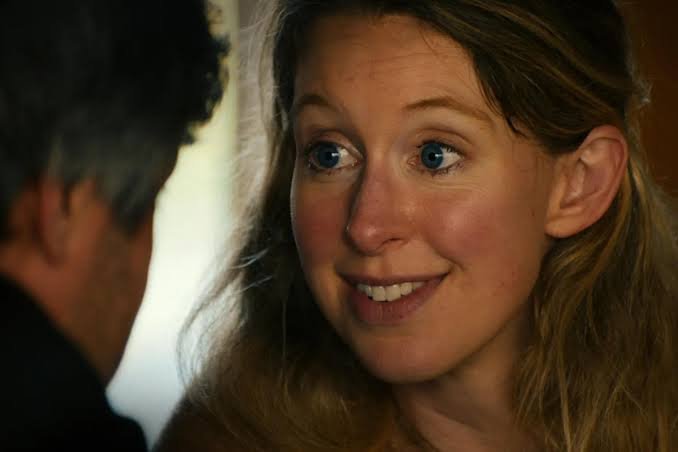
The box office has seen a massive resurgence in 2026, and it’s been led by Gen Z. While films like Backrooms and Obsession are great indicators of a strong box office, the biggest sign of the full post-COVID recovery is here, and it’s a three-hour Nathan Fielder documentary on Elizabeth Holmes that doesn’t take a real stance. A three-hour documentary from an experimental, inherently niche, and extremely arthouse filmmaker has made $15M in its opening weekend, with an average-per-theatre gross more than double the average ofStreet Fighter, having opened in nearly 3,000 fewer theatres. The viral marketing has been on another level and it’s made it a clear hit, to the point where there’s discussion that this will be the first documentary to ever be nominated for Best Picture at the Academy Awards.
It does bring up a larger consideration in box office: this opened in less than 900 theatres. For as viral as this went, A24 is utilizing its traditional awards season release blueprint of a rolling release. This has screwed over the hype for films in recent years such as Sing Sing, The Brutalist, If I Had Legs I’d Kick You, et. al. We’re also seeing a number of NEON films lose steam with this strategy. While it’s more cost-efficient for studios to expand alongside earnings for films that aren’t guaranteed hits, there’s so much money left on the table when it does breakthrough into the mainstream because general audiences don’t take long to become apathetic. You have the proverbial fifteen minutes until the next viral hit. For every person not in Los Angeles or New York, that shelf life ticks away quickly, and it taking months to go wide, most people will look for the film, see it’s not playing in their area, and assume they’re not getting the film. If it ever does come to their city, they’ve already made peace with not seeing it, and if they haven’t, its steam has diminished so much that it’ll be there for a week with limited showtimes that tend to be during working hours or late at night. This film is doing extraordinarily well now, and A24’s one-foot-in-one-foot-out release strategy for smaller films once again leaves money on the table.
Two other newcomers round out the top five. At #4, Whalefall isn’t a whale, rather the krill being eaten. Austin Abrams is great in the film, and maybe it’s a bit too sentimental for the kind of film it is, but it’s a solid watch. But at an $8M open on a $60M budget, this is going to be yet another financial disaster in the October box office. The films they’re making are films that make sense to greenlight, but outside of Alien: Romulus, Avatar: Fire and Ash and The Devil Wears Prada 2, what was the last film at 20th Century that was a major success story? Steve Asbell does terrific work with the franchises, and the projects that they greenlight are unique a majority of the time. But The Dog Stars is amongst the biggest bombs of the year, Ella McCay was a mess, the Bruce Springsteen biopic was found dead in ‘The River.’ Send Help made a small profit, but it took a long time to get there, and even the massive hits like the recent Avatar saw diminishing returns. Asbell is a great executive, but one has to wonder how many more of these are sustainable until the pressure heats up, especially with the turnover at Disney amidst a new CEO.
Finishing fifth, Sense and Sensibility is one of the harder films to gauge. It’s a very well-made film, and while Daisy Edgar-Jones doesn’t quite bring the Emma Thompson charm in this installment, Esme Creed-Miles becomes Marianne. It’s phenomenally made with, no pun intended, the perfect sensibilities. At $25M, it’ll need around $60M, and with its global open, it’s about a third of the way there. But it’s hard to imagine that Focus Features anticipates this being a box office hit when it’s entirely an awards play, though one that feels like it’s been usurped by the emergence of Inde Navarrette and her Oscar chances nobody could have predicted at the beginning of the year becoming their campaign priority. All of their award play intentions, this, The Uprising, Elsinore, and Werwulf, are part of a ‘see them all, get a gift card’ deal with AMC, clearly not invoking much confidence, and after how The Uprising performed, it’s hard to imagine they weren’t right. But they did the same thing last year with their awards plays, with the four being Bugonia, Anemone, Hamnet, Downton Abbey and Song Sung Blue, with Bugonia becoming a small box office profit and Hamnet becoming a sneaky breakout hit, with the other three underperforming. The precedent had been set, and Focus releases tend to be the smaller arthouse films that NBC distributes anyway. Werwulf has had confidence, but that’s about it to this point, though Elsinore is likely landing Andrew Scott into Best Actor. But the film has very strong word-of-mouth in cinephile circles, with a 4.0 Letterboxd score, a 90% Popcorn Meter, and an A- CinemaScore. This could have a sneaky good hold and eek out a profit.
Your Mother Your Mother Your Mother, which features a remarkable performance from Mahershala Ali, saw a 283% increase in its box office, but it’s still in the rolling release phase we mentioned earlier. That said, it made over $1M and finished fourteenth at the box office. There were fourteen films that made at least $1M this weekend, including possession horror, a three-hour documentary, multiple video game adaptations, a Jane Austen adaptation, a remaster of a cult classic from 55 years ago, an animated film that focused on a Filipino culture, a Chris Hansen biopic that’s reminiscent of Nightcrawler, a survival film inside of a whale, and Sorkin political drama. Digger just missed the $1M weekend if projections hold. Rounding out the top fifteen beyond the top five were: Verity, Resident Evil, Heart of the Beast, Jailer 2, Forgotten Island, Primetime, The Devils, The Social Reckoning, Your Mother Your Mother Your Mother, and Digger. This is the most diverse slate we’ve seen in a long time.
Looking ahead, there’s another loaded weekend of releases. The most notable is Clayface, which promises to deliver something more Raimi Darkman than anything like we’ve seen in the genre in the past few generations. The decision to introduce a Batman villain before Batman into your universe is a risk, but it’s currently projected to become the highest-grossing body horror film ever by the end of its run, and at a $30M pricetag, should be the kind of mid-budget hit that superhero studios should be doing but aren’t. There’s Wildwood, which won’t make money but looks very good. Travis Knight and LAIKA continue their current trend, seemingly. There’s Klara and the Sun, which, by the looks of things, the less said the better. But Amy Adams, Jenna Ortega, and Taika Waititi all desperately need a win, even if it doesn’t look like they’re about to get one. As usual, we’ll explore all of that in next weeks report.
Jameus Mooney is an entertainment writer for Comicbook Clique, having covered the entertainment industry for years. You can follow him on Twitter here, and Letterboxd here. You can also listen to his horror podcast, The 2:17 Horror Podcast, at the DeathArts XIII YouTube channel.