
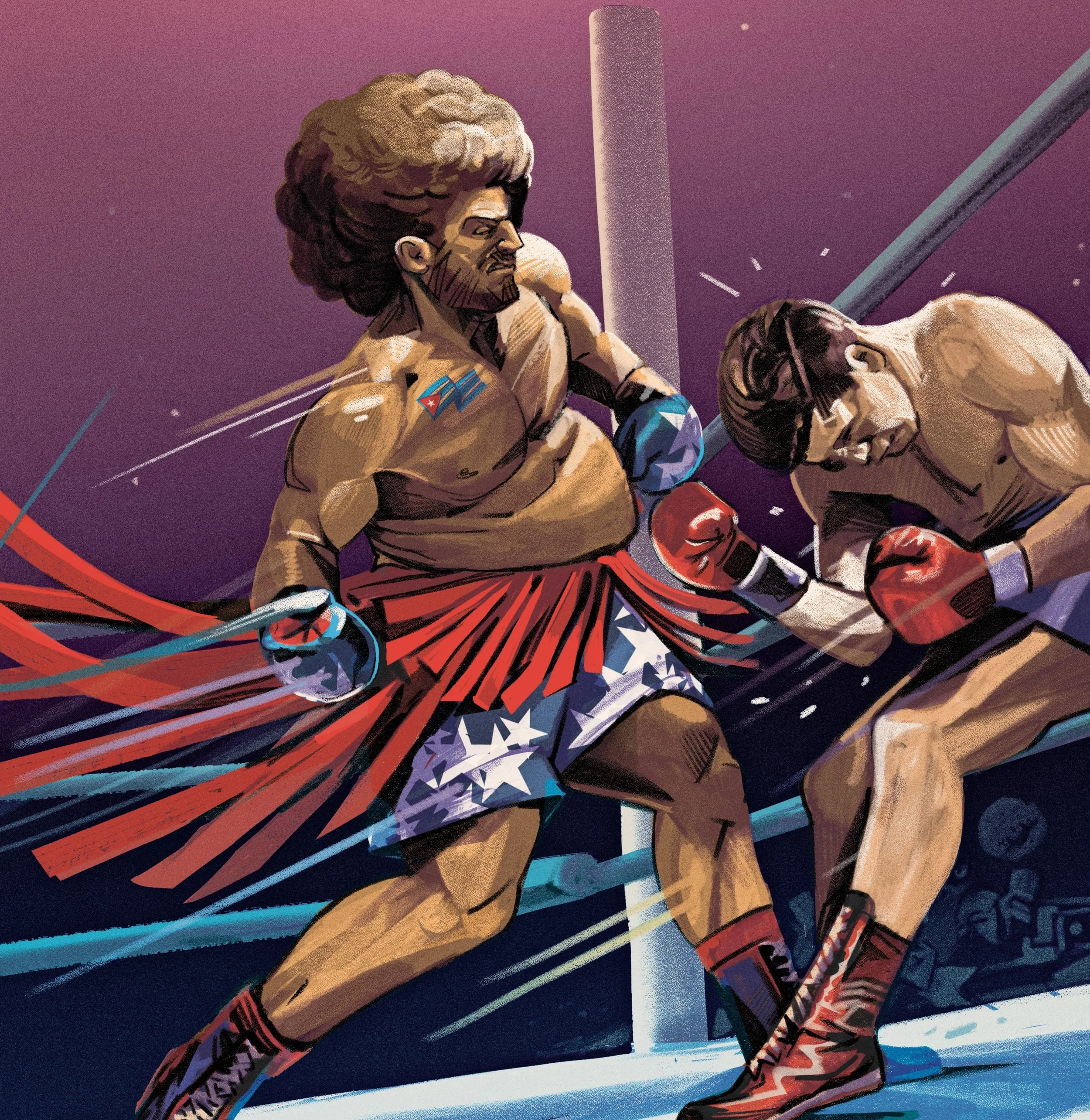
The Ring: The Man Who Beat the Man #2
Writer: Gail Simone
Artist: Elisa Romboli
Cover Artist: Oliver Barrett
Colorist & Letterer: Iolanda Zanfardino
The Ring: The Man Who Beat the Man #2 is a noticeable improvement over the first issue, with breakout character Adrien Moreau quickly becoming the most compelling character I've encountered this early into the series.
Rumble, Young Man, Rumble
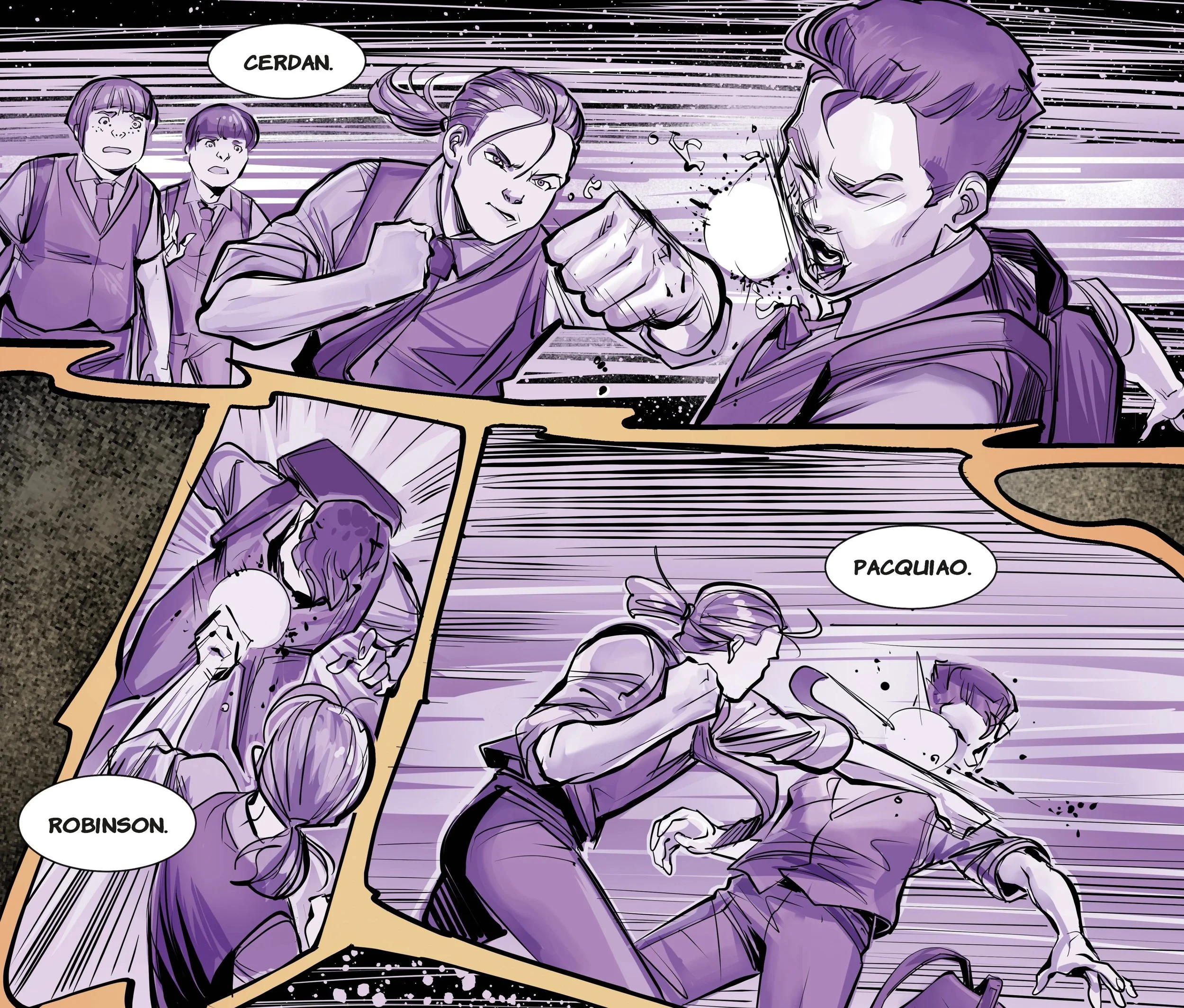
Professional boxers from every walk of life fight for one thing, and one thing only: The Ring championship, the most prestigious prize the sport has to offer. Every top contender has endured tremendous hardship to reach that level, whether it's alcoholism, depression, adapting to a new culture, the fear of falling short of expectations, or simply struggling to discover who they are as a person.
Despite their different journeys, they all ask themselves the same question: Do I have what it takes to become the lineal world champion? And perhaps an even bigger one: What price am I willing to pay to make that dream a reality?
Can't Be Touched, Can't Be Stopped
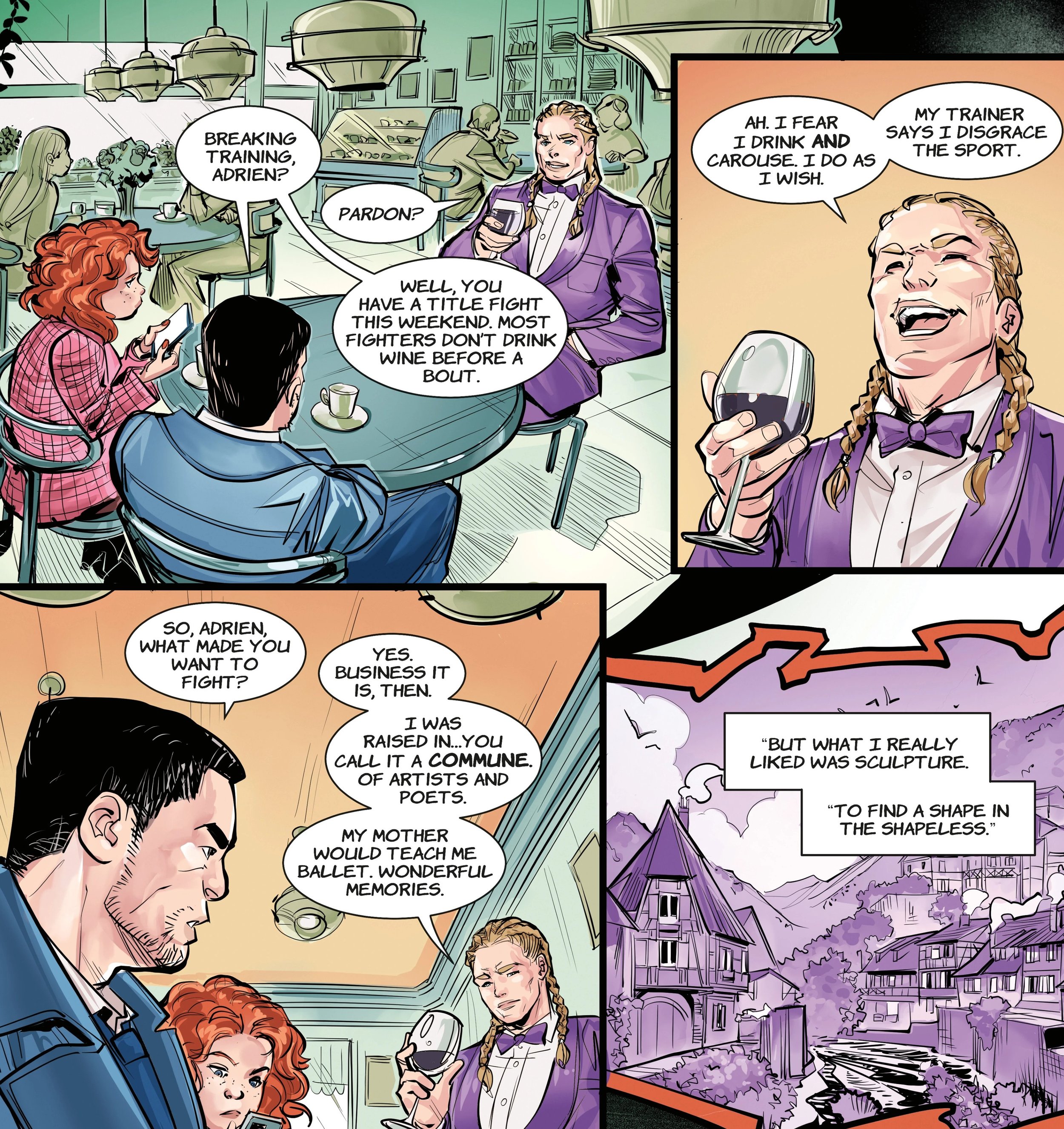
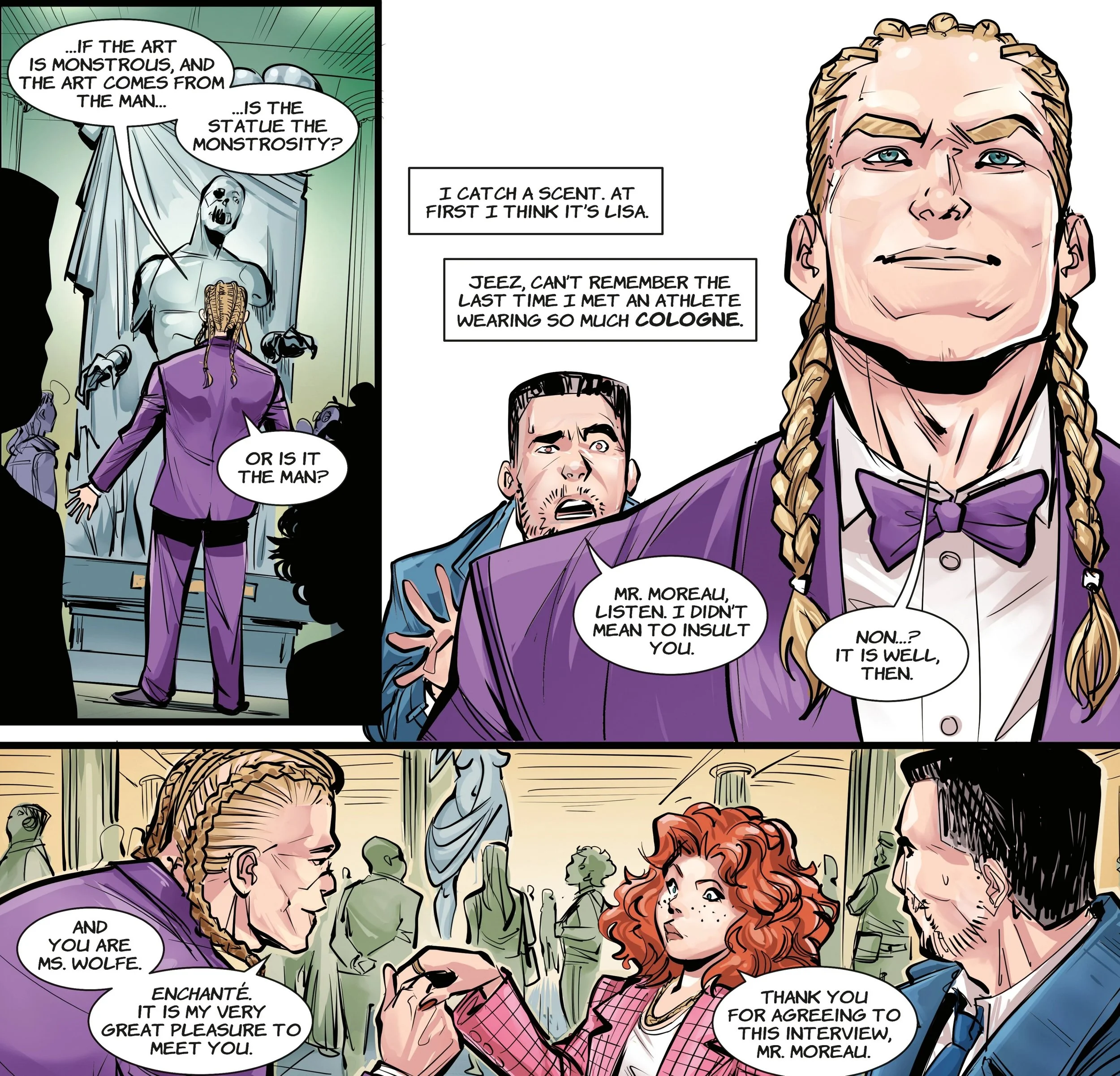
The standout of this issue is Adrien Moreau, a dignified French aristocrat who bears a striking resemblance to Vega from Street Fighter, minus the homicidal serial killer tendencies. Instead, Adrien comes across as humble and surprisingly gracious toward the two Ring magazine columnists introduced in the first issue, Cameron Duggan and Lisa Wolfe. Through their interview, we explore Adrien's upbringing in Paris, his passion for sculpture, his disciplined training as a classical ballet dancer, and the brutal schoolyard beating that forever changed the course of his life.
Although initially reluctant to revisit those memories, Lisa gradually persuades him to open up. We learn that the assault left Adrien both emotionally scarred and severely bruised. Worst of all, Adrien’s childhood crush, Amélie, was the one who found him lying in a pool of his own blood. Horrified by his injuries, she fled the scene, unable to bear the sight.
This sends Adrien down a Daniel LaRusso-esque path, where he finds his own Mr. Miyagi in the form of a police officer who promises that, once he recovers from his injuries, he'll teach him a different art form than sculpting: the sweet science of boxing.
Years of classical ballet, combined with relentless boxing training, transform Adrien into a walking weapon. Armed with lightning-fast hands and footwork that would make Roy Jones Jr. jealous, he waits outside his school for Guillaume, the ringleader responsible for the attack, and delivers an ass-kicking of epic proportions. Sadly, Adrien's revenge costs him more than he anticipated. When Amélie learns what he has done, she condemns him as a savage and disappears from his life forever.
The Balancing Act in the Ring
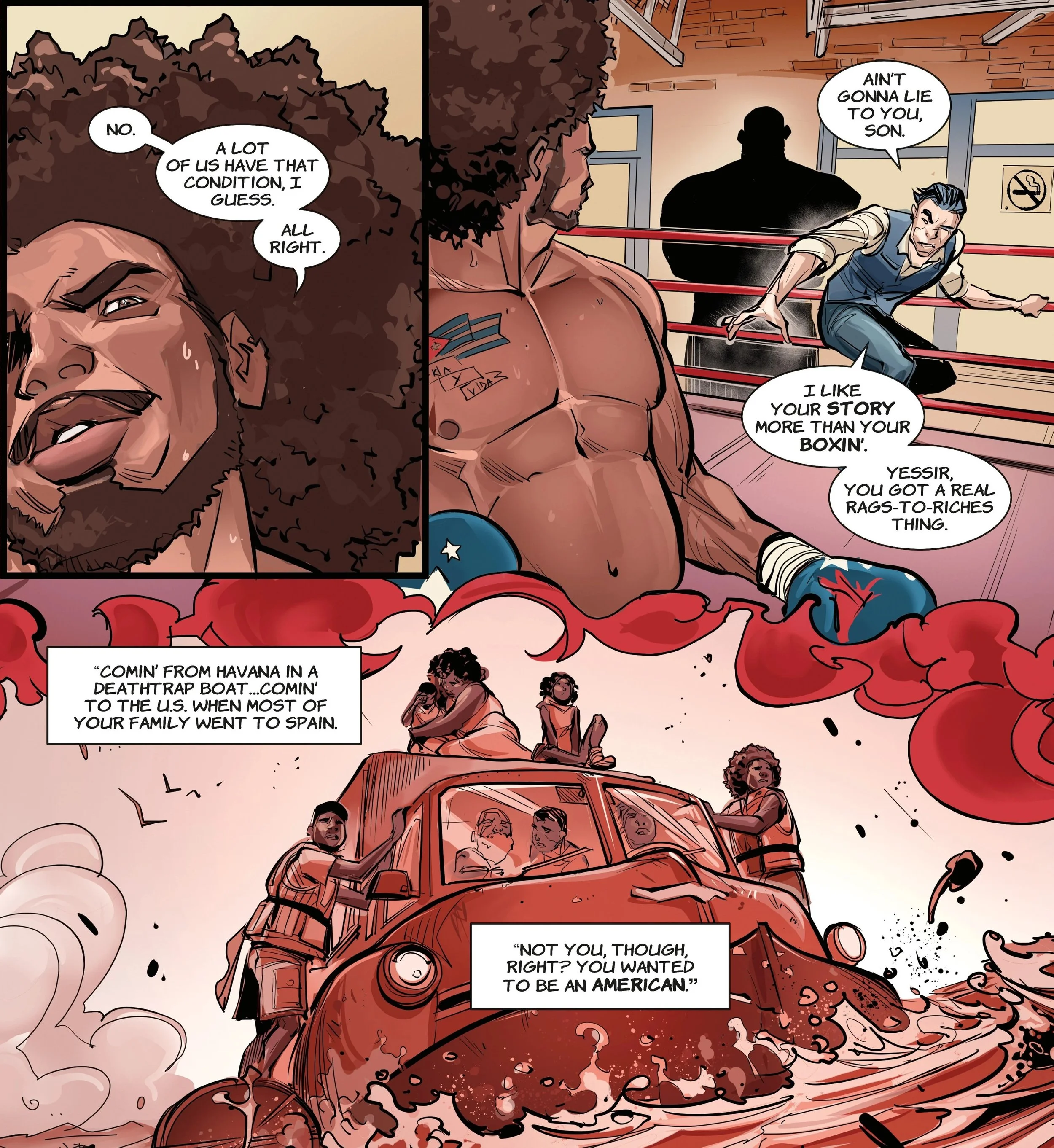
Like the first issue, this one also juggles two separate stories. We're introduced to another contender training under grueling conditions in a sweltering Miami boxing gym known only as Ramon. Ramon immigrated to America from Havana as a child in search of the American dream. His career seemed destined for superstardom until a devastating car accident left his wife confined to a wheelchair.
Corrupt promoter Victor Moretti, alongside Ivan Valkov, exploits Ramon's guilt and insecurities, making it clear that he'll either reinvent himself as boxing's next great comeback story or be remembered as the fighter who disappeared into irrelevance. On paper, that premise is excellent. The problem is that we simply don't spend enough time with Ramon for his story to carry the same emotional weight as Adrien's.
Through Cameron and Lisa's interviews, we experience Adrien's personality, childhood, motivations, and everything that shaped him into the man he becomes. Ramon, meanwhile, receives a far more condensed treatment. We're told he immigrated from Cuba, suffered a life-changing tragedy, and is now training in a rundown gym to reclaim his career.
I wanted considerably more time with Ramon because there's clear potential there. Unfortunately, Simone is once again trying to balance two major character arcs within a single issue. Naturally, one ends up receiving more attention than the other, and Adrien's journey is far more compelling.
Pretty in Purple
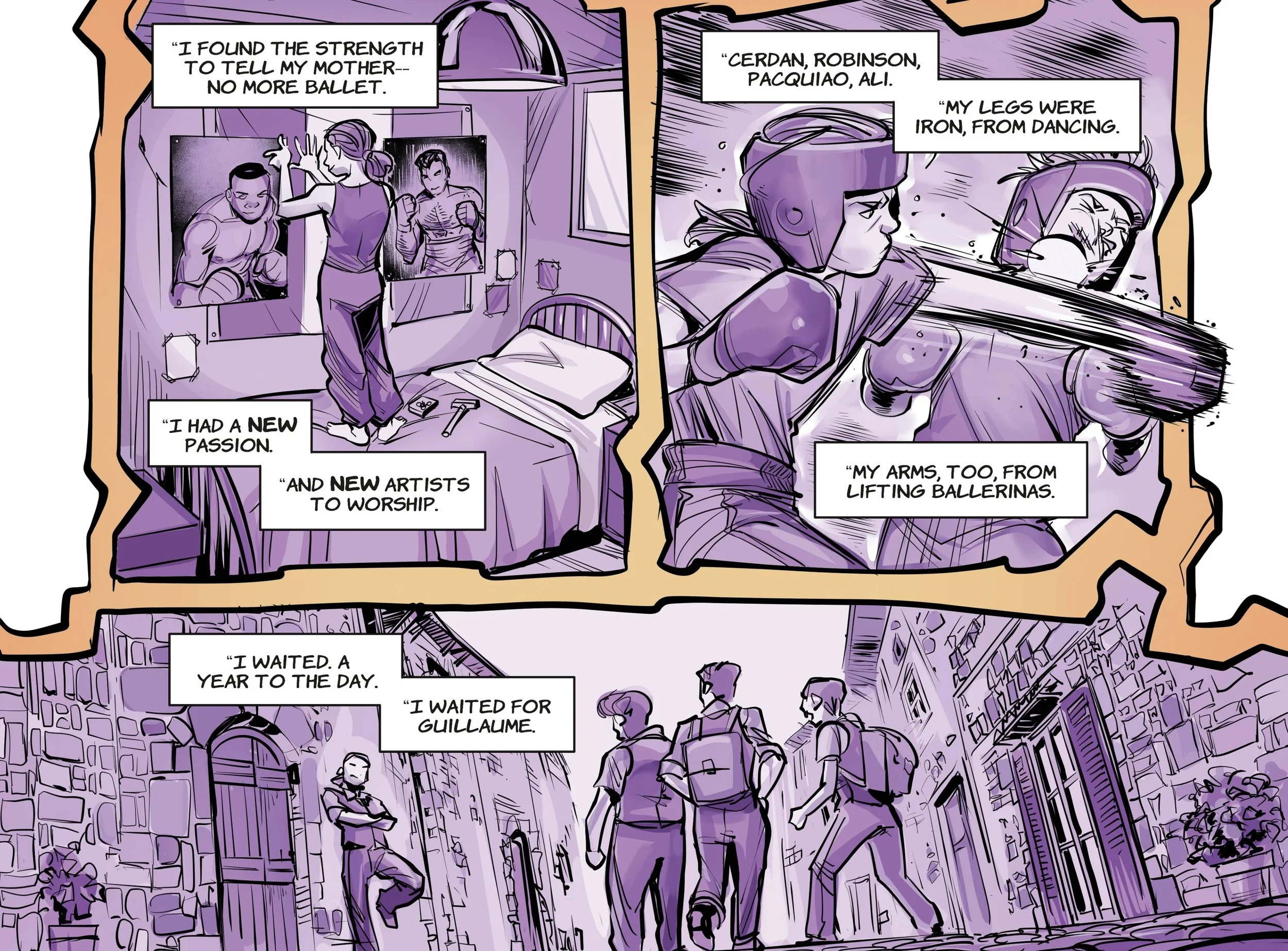
For a comic marketed as a collaboration with The Ring magazine, Elisa Romboli doesn't draw much boxing in this issue. Nonetheless, she makes good use of environmental storytelling, illustrating elegant locations such as an art museum and a quaint little café where Adrien sits down with Cameron and Lisa for his interview. Both settings complement his refined personality perfectly.
Where Romboli truly shines, however, is during Adrien's flashback sequences. Alongside colorist and letterer Iolanda Zanfardino, she brings Adrien's childhood to life with beautiful French architecture and expressive scenery. Iolanda's consistent use of a rich purple palette throughout these scenes adds another layer to Adrien's characterization. Purple has long been associated with royalty and nobility, and she cleverly uses that symbolism to reinforce Adrien's regal, aristocratic presence. The result is a flashback that feels both visually distinct and perfectly suited to the character it's exploring.
One-Two, One-Two, Come Through, Run Through
While The Ring: The Man Who Beat the Man #2 takes noticeable strides in the right direction with its character development, the overall narrative still feels somewhat unfocused from having to alternate between Adrien and Ramon's stories.
Gail Simone proves she can craft a story I can really sink my teeth into, as evidenced by the incredible amount of care and detail poured into Adrien's journey. What surprised me, however, is that boxing itself rarely feels like the centerpiece. After two issues, it feels as though Simone is far more interested in exploring the lives of the fighters and the journalists covering the sport than the technical side of boxing. That's not inherently a bad thing, Adrien's story is proof that she's an excellent character writer, but it's a surprising direction for a series promoted as a deep dive into the strategy and psychology behind the sweet science.
As someone who follows boxing closely, I kept waiting for the comic to explore that strategic side of the sport. Whether it's a trainer breaking down an opponent's tendencies, discussing footwork and ring positioning, or putting together a game plan before a fight, those moments never materialize. For a comic carrying The Ring name, I expected far more insight into what happens between the ropes. Instead, the focus remains firmly on the fighters' personal lives and the journalists documenting them. It's an engaging approach, but one that left me wanting a deeper appreciation for the sweet science itself.
I'm also not convinced Simone can effectively balance two equally important narratives within the constraints of a standard-length comic. Adrien's story flourishes because it's given the room to breathe, while Ramon's promising character arc feels compressed by comparison. Perhaps moving the series to a 48-page prestige format would better serve Simone's ambitions if she intends to develop two protagonists side by side in every issue. With more pages to work with, both fighters could receive the attention they deserve without one inevitably overshadowing the other.
The Final Scorecard: 6/10
A Split Decision (Improving, but Not Quite There)