
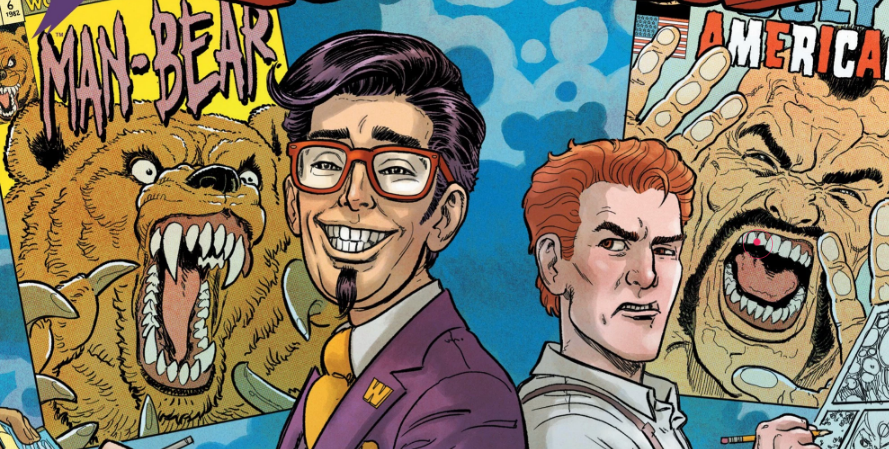
Writer: Steve Skroce
Artist: Steve Skroce
Colorist: Ian Herring
Publisher: Image Comics
Steve Skroce and Ian Herring deliver a mind-bending masterclass in deconstructing superhero lore. Tales of Wonder #3 turns a cosmic rescue mission into an insightful look at creator anxiety, artistic vanity, and the weight of legacy. Trapped inside the digestive dreamscape of an interdimensional beast that secretes a reality-distorting neurotoxin, our heroes navigate waking nightmares and seductive wish-fulfillments while fighting to break free before being fully consumed.
What If…?
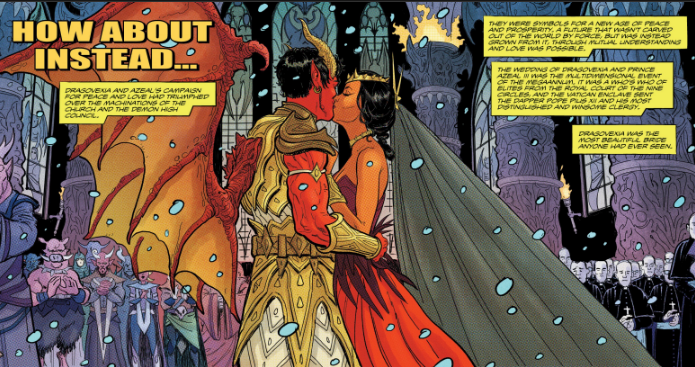
The issue wastes no time setting the stakes: the team has not simply fallen into a void, they have been swallowed whole by an entity that preys on multiversal travelers. Dragovexia, wife of the devil, is the first to spot the fracture in the illusion. Her history is rooted in sacrifice; she once saved her demonic partner, only for him to perish later while saving her. The creature presents an idyllic world where they are happily married and thriving, but Dragovexia immediately senses the false floor beneath her feet. Partnering with a captive mage who can cut through the psychic static, she resolves to wake her comrades from their digestive slumber.
Origin Stories and Inverted Lives
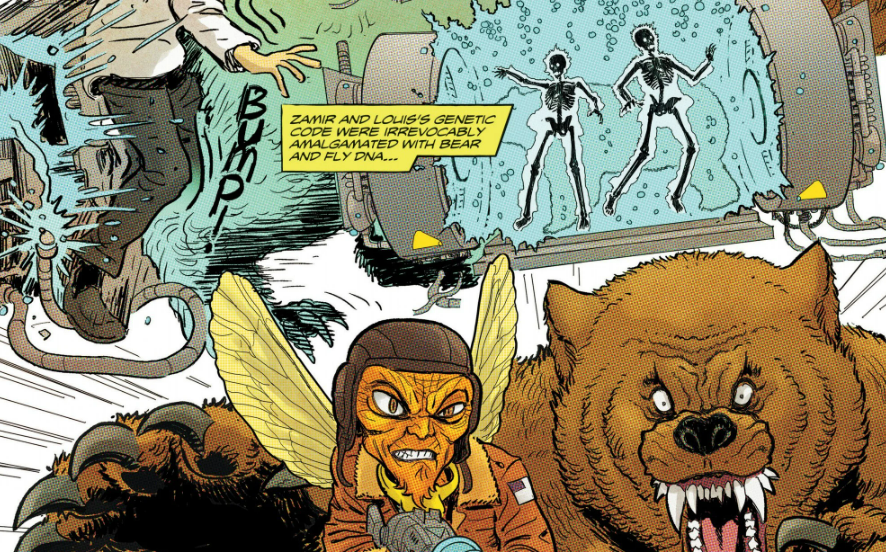
The journey through the rest of the team highlights how pain and compromise shape a hero's true desires. Laramie Woodcock, the Ugly American, sacrificed his physical humanity during World War II when he swallowed the A-1 Patriot Pill, gaining immense strength, resilience, and intellect at the expense of severe facial disfigurement. In his neurotoxin-fed paradise, Woodcock is completely unblemished, leaving wartime heroics behind to campaign as an immaculate, celebrated politician.
Zamir Sharma and Lewis Winthrop share a similarly radical shift. In their waking reality, a lab accident with a runaway fly, a bear specimen, and a bio-axion emitter fused their genetic material into the tactical agent duo Flyboy and Man-Bear. Within the beast's psychic snare, the grotesque horror vanishes. The two live peacefully as partners running a dark botany florist shop, openly and tenderly sharing the quiet, domestic life that their mutated service to America permanently denied them.
Creator Clashes
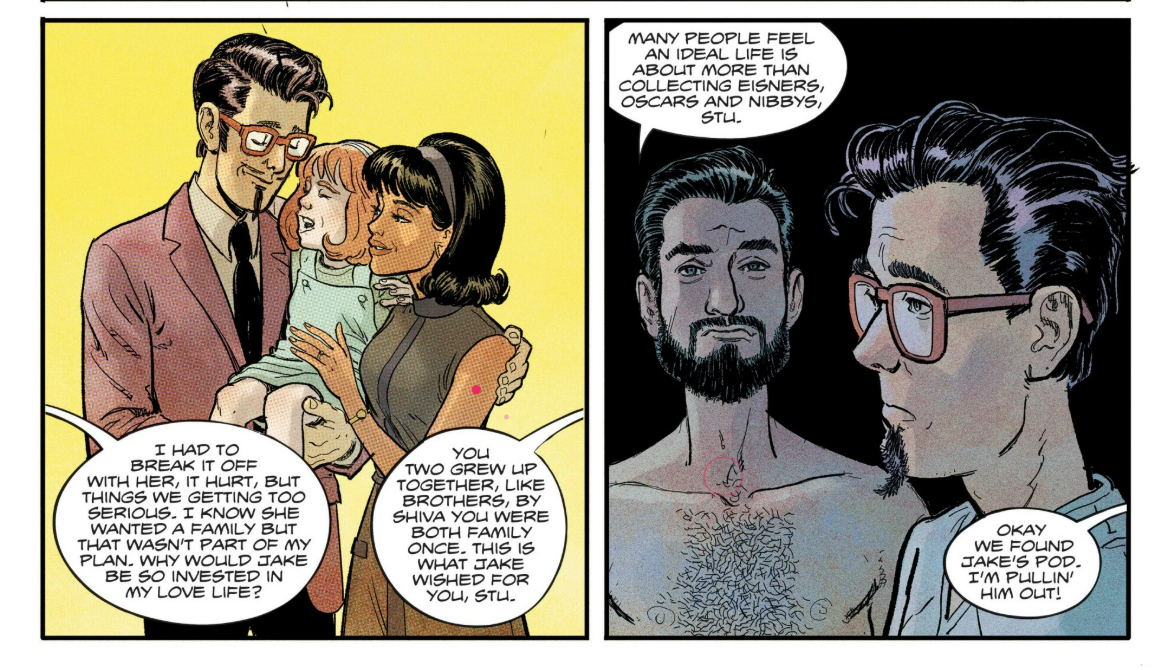
The starkest divide in the book belongs to the creative architects, Stu and Jake, whose contrasting dreams lay bare two opposing philosophies of art and ambition.
Stu lives on the surface. His dream state is an unchecked, ego-driven fantasy of rapturous applause, red carpets, starring action movie roles, arm-in-arm models, and every prestigious trophy imaginable, culminating in Peabody, Will Eisner, and Academy Award sweeps. It is pure celebrity indulgence without introspection.
Jake's mind requires wading through raw creative panic: a literal labyrinth of ticking alarm clocks, unfinished panels, scattered pencils, empty liquor bottles, and suffocating deadline dread. When they finally pierce his inner world, his dream state is shockingly unselfish. Set at the twenty-year anniversary of Wonder Comics, Jake celebrates the company reaching number one off the back of American Fighting Force, the book he and Stu built from scratch. Even more telling, Jake’s dream gives Stu a devoted wife and child. While Stu is confused by the domestic simplicity, the revelation cuts deep: Jake views Stu as a brother and dreams of providing him with genuine love rather than fleeting industry trophies.
Alan Moore Knows The Score
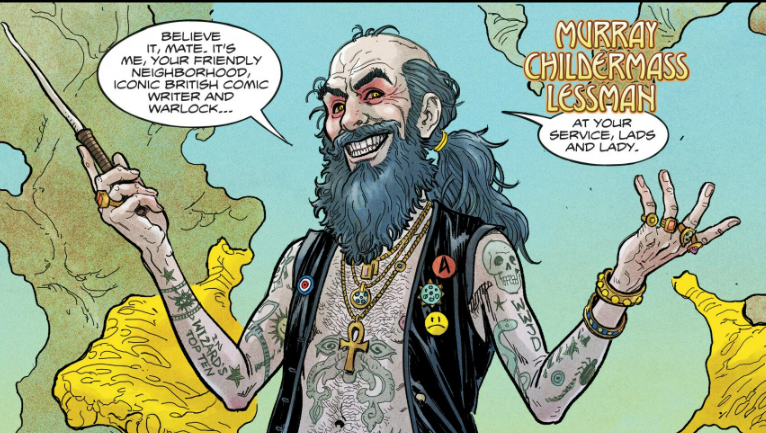
The psychological puzzle finishes with the liberation of the trapped wizard, Murray Childermass Lessman. Introduced as a friendly neighborhood iconic British comic writer and practicing warlock, Lessman is a transparent, lovingly crafted analogue for Alan Moore. Fresh off an occult rite involving a benevolent beaver sex god that tore open a dimensional rift, Lessman survived the beast's digestion through sheer magical preservation. Reunited and focused, the full crew pools their might with Lessman's sorcery, blasting free from the leviathan's entrails in a blinding streak of energy.
Blurred Lines
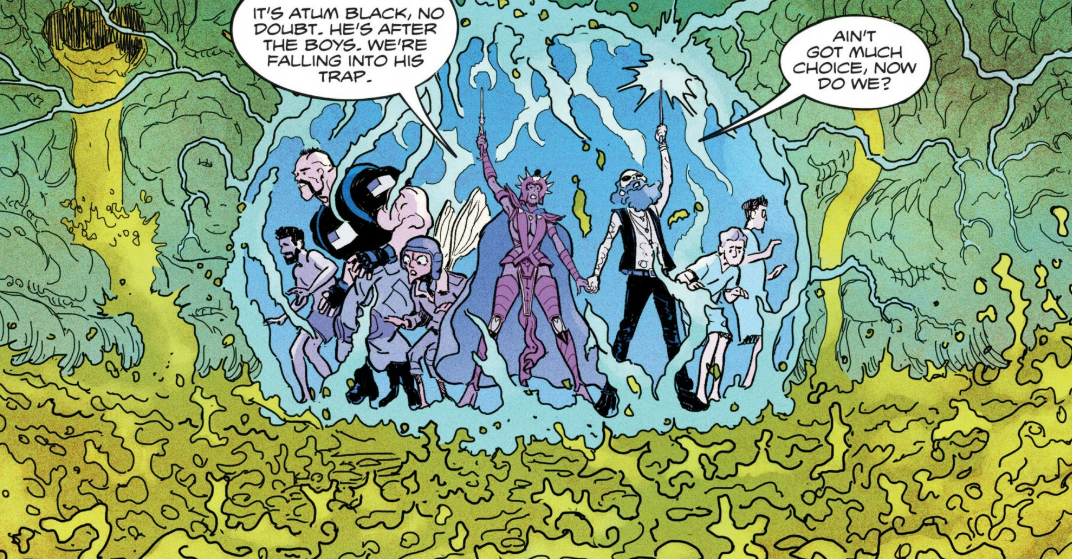
Visually, Skroce operates at the absolute peak of his cartooning ability. The pulpy aesthetic balances biomechanical grime and visceral digestive gunk with genuine tenderness during quiet character moments, from Dragovexia's wedding to the subtle affection in the botany shop. The retro Ben-Day dots used during the flashback sequences give every origin sequence distinct historical weight, while Ian Herring’s rich palette ensures the neon glamour of Stu’s ego trip clashes brilliantly with the ink-stained claustrophobia of Jake’s drafting board.
Skroce uses multiversal body horror not just for cheap spectacle, but to conduct an open-heart autopsy on the people behind comic books and the archetypes they birth. Pairing grotesque pulp thrills with genuine emotional vulnerability, this chapter stands as the run's most inventive outing yet.
Conclusion and Verdict
By using high-concept multiversal horror as a backdrop for sharp industry satire, Tales of Wonder #3 transcends standard indie superhero fare. Skroce pulls off a rare balancing act, offering readers grotesque cosmic spectacle on the surface while quietly excavating the emotional wounds and artistic insecurities that define creative partnerships. The result is a funny, tender, and visually kinetic installment that cements this series as an essential love letter to sequential art and the flawed human beings who make it.
Verdict: 8 / 10
A sharp, visually stellar deconstruction of comic book lore that pits unchecked creative ego against quiet, personal truth.