
Spoilers Ahead
Initial Thoughts
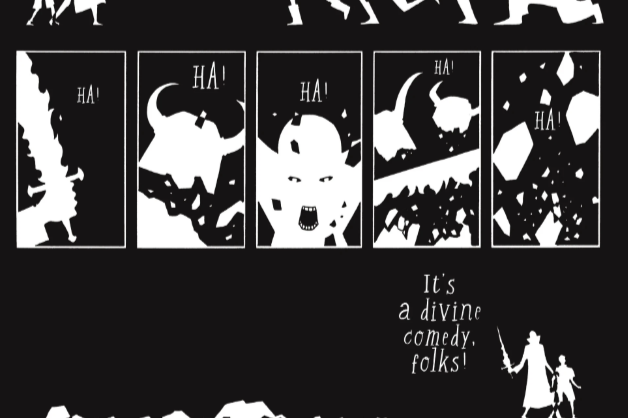
Deadman #3 took us to hell as Boston Brand and his— I guess we’ll call him a sidekick—the ghost of Bobby descended into the underworld seeking answers about the Rakshasa, or spirit-eating demons, from Lucifer Morningstar themselves. To do that, Deadman and Bobby must pass through the seven rings before they can get any answers. Getting there, however, will not be the hardest part, as Brand learns truths about his post-life mission that he might not like. Deadman #3 was an adventure of epic proportions and one of the better, smaller-scale iterations of Dante’s Inferno I've read.
This issue of The Deadman has been the best so far in this short run, as writer W. Maxwell Prince, artist Martin Morazzo, and colorist Chris O’Halloran take on Dante’s Divine Comedy in just 28 pages successfully. While I would have personally liked to keep exploring the seven rings of Hell, I understand the brevity for the sake of time and story. For me, it is always interesting when the DC universe explores Hell and the spiritual beings who might make some folks uncomfortable. The transition of art between each later of art is phenomenal; the story is just as good, as we find out a little bit more about our main villain and Brand’s purpose.
The Devil Is In The Details
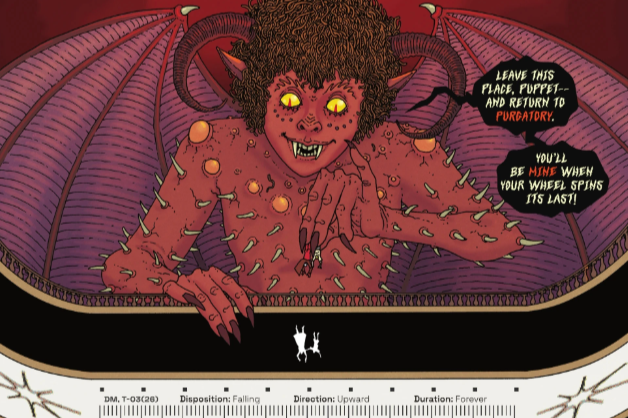
Deadman and Bobby's journey through the seven rings of hell was magnificent. It culminated in their meeting with Lucifer, the Devil, the Morningstar themself. While the trip through the seven rings of Hell was incredibly satisfying, the destination and the answers we got from Lucifer will push the series forward. Boston is believed to have saved the life of the man we met in the opening scene of issue #1. However, because of the lack of souls reaching Hell, directly affected by the soul eaters, Deadman is searching for—Lucifer will not listen to those who thought they were saved.
Goddess Kusha knew and didn't tell Brand, who now feels lied to. So now, feeling betrayed by the God he's been working with, Brand still has to get to the bottom of who is sending these soul-eating demons and stop them, all while having a post-life existential crisis—great layered storytelling. Or a Divine Comedy, if you will.
The only nitpick I have with how this was done is that I would have LOVED to stay here a little longer and explore Morazzo's and Prince's versions of purgatory and Hell. I guess that is why I have the original story to go back to and visit, but I thoroughly enjoyed this version.
Demon or Nazi? What’s the Difference
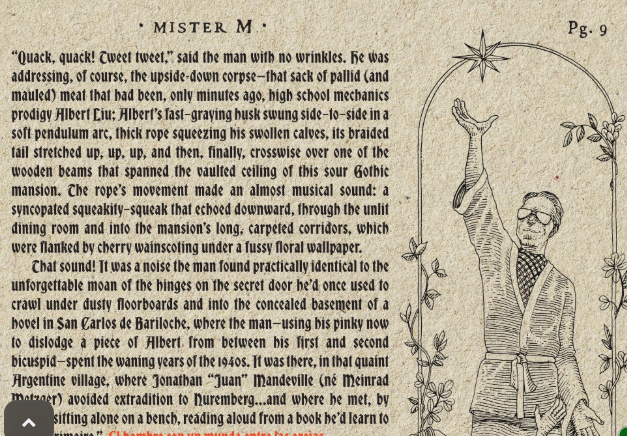
The entire issue was an incredible ride through Hell, and it brought us some very memorable moments that will affect the rest of the series, which was recently announced to run for 12 issues. That said, the biggest takeaways of this issue, at least for me, were twofold: we find out how deep the Rakshasa problem runs—as we talked about in the last section—and we finally get a glimpse of who our leisure-suit-wearing, silver-haired demon friend is. Of course, our demon is a Nazi. Nazis have always been a popular enemy in pop culture; however, they seem more prevalent than ever. Must be something happening in real life?
Even with only a page to himself, our antagonist was not forgotten, which I really enjoyed. Prince’s writing style, as I mentioned in my review of the first book, is heavily influenced by skit-like sudden flashback timing, and the demon’s backstory was presented on a single page. Slapped right in the middle of the story, it reminds us why we are in Hell in the first place. I am a huge proponent of “show me, don't tell me”; however, this type of storytelling fits perfectly within this story structure. I know we will get more details on our antagonist before the end of the series.
Who Knew Hell Was So Diverse?
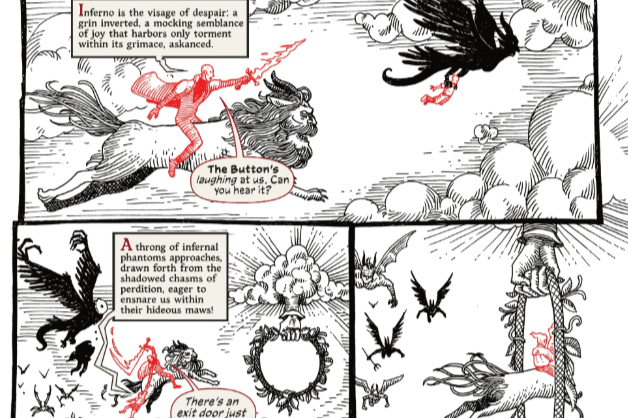
Martin Morazzo’s art is the issue’s strength, especially as Prince pushes him out of his comfort zone and into the different rings of Hell. The “Button” realm was eye-popping in its simplicity, especially in an issue that had so much going on. Each layer of Hell had a different element to it, separating itself from the rest of the book. Whether it was the subway, which represented the “Coin” circle, or the “Clock,” which let the art do all of the talking, you knew exactly in which part of Hell you were in and why.
Morazzo’s art carries every level, with different styles and coloring shaping each ring. It could have been easy for this issue to be a team effort with four or five different artists taking over a couple of pages, each representing a different ring. Instead, Morazzo worked his magic and brought Hell to life, as each ring had its own different aesthetic. The highlight for me was the “Button” ring of Hell. It was very minimalist; however, the color choice (red as the only color) was extraordinary. It highlights Deadman and Buddy’s palace in this area and makes no mistake about whose story this really is—phenomenal art from Morazzo.
Final Verdict
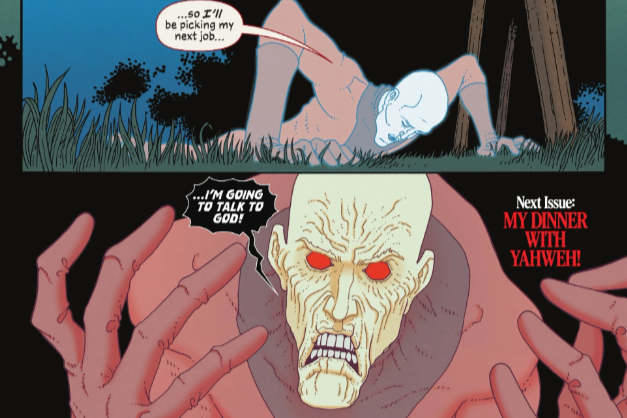
The Deadman #3 was the best issue thus far in a very good series. Writer W. Maxwell Prince took us on a road trip down the seven rings of Hell, presenting his take on the Divine Comedy, where Biston Brand had to meet Lucifer themselves. Prince, artist Martin Morazzo, and colorist Chris O’Holloran give us a diverse look at Hell and all of its rings in a very successful take. No ring looks or feels the same, and it offers insight into how spirituality and the afterlife work in the DC universe. DC is always at its best when they take unconventional shots at different genres and topics, and The Deadman #3 is the best example of that.