
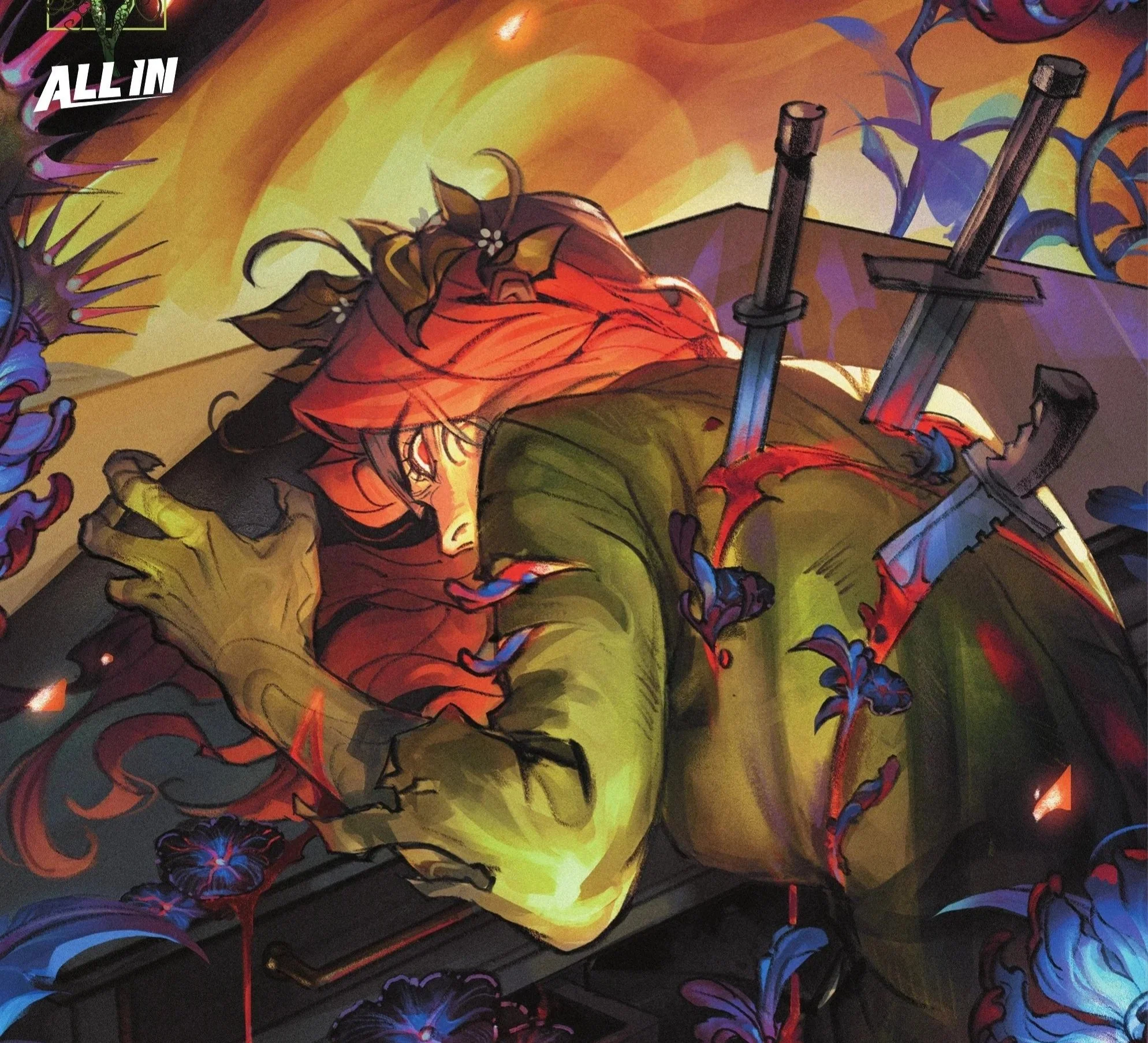
Writer: G. Willow Wilson
Artist: Leandro Fernandez
Colorist: Arif Prianto
Cover Artist: Jessica Fong
After several issues documenting Pamela Isley's increasingly unstable tenure as Gotham's mayor, Poison Ivy #47 finally brings her downward spiral to a breaking point. G. Willow Wilson has spent months showing Ivy lose the trust of her allies, alienate the people closest to her, and become increasingly convinced that anyone questioning her is an enemy.
The result is one of the most exciting issues of the recent run. Poison Ivy #47 serves as a prelude to Batman: Bad Seeds, but the crossover never feels forced onto the series. Instead, the coming conflict feels like the natural consequence of everything Ivy has done since becoming mayor. With Gotham turning against her, her relationships falling apart, and the Parliament of Trees entering the picture, the issue leaves Ivy at what could be a major turning point for the character.
Ivy Is Finally Forced to Confront Herself
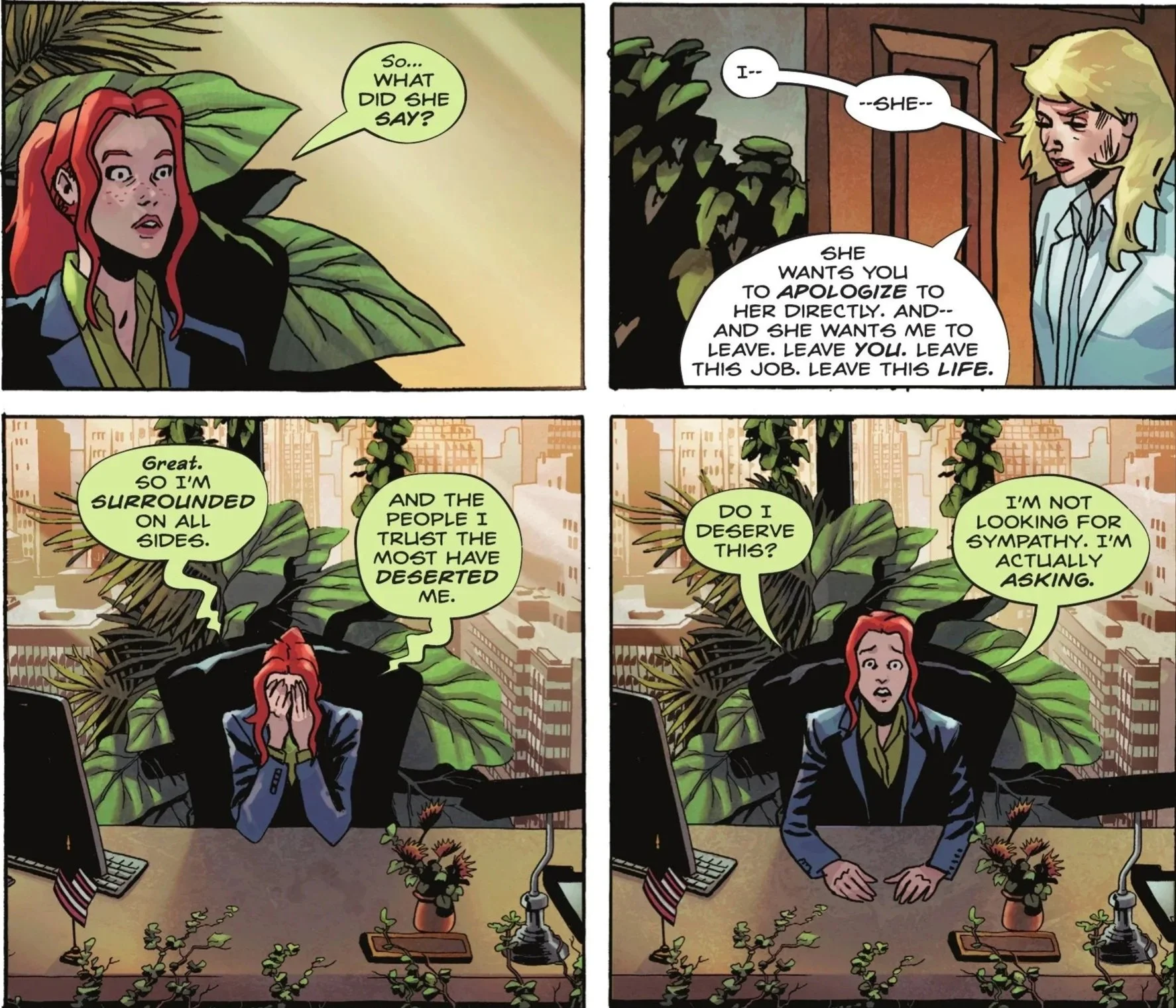
One of the strongest aspects of Poison Ivy #47 is how directly it confronts Ivy with the person she has become. The opening dream sequence involving Harley immediately establishes that Ivy is in an increasingly fragile emotional state, while also reminding readers how much guilt she still carries over ending their relationship.
Harley's question about whether Ivy truly loves her or simply loves an idealized version of her connects to Ivy's larger problems as mayor. Throughout this storyline, Ivy has increasingly convinced herself that she knows what is best for everyone around her, whether that means Gotham, Janet, or her other allies. The problem is that she has gradually stopped listening to what those people actually want.
What makes Ivy compelling right now is that she is not entirely incapable of recognizing her mistakes. She questions whether she deserves forgiveness and considers apologizing to Harley, suggesting that there is still some awareness of how much she has changed. However, recognizing that you have made mistakes and actually changing are two very different things, and Ivy remains caught somewhere between those two things.
Gotham No Longer Believes in Ivy
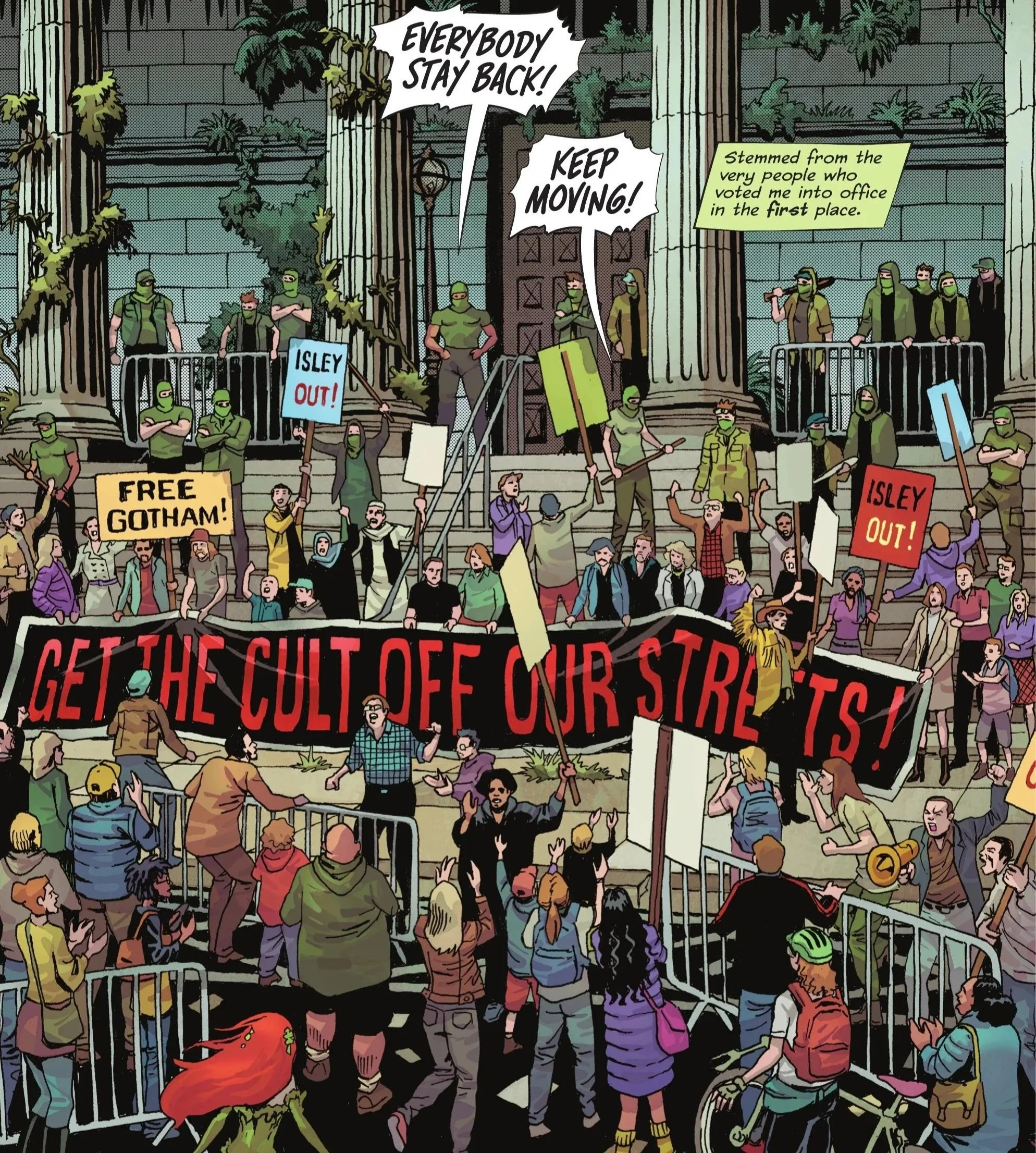
The protests outside City Hall provide one of the clearest demonstrations yet of how far Ivy has fallen from the ideals that originally brought her into office. She came to power promising major change, but many of the same people who once supported her are now demanding that she leave.
The scene is particularly effective because Ivy still cannot fully understand why Gotham has turned against her. From her perspective, she is trying to save the city, and she sees the people protesting her as standing in the way of that goal. The tragedy is that Ivy is not entirely wrong about the dangers surrounding Gotham, but she is incapable of recognizing how much of the current situation she has created herself.
Wilson has avoided portraying Ivy as suddenly becoming evil simply because she gained political power. Instead, this storyline has shown how someone with genuinely good intentions can become increasingly disconnected from the people they originally wanted to help. Ivy still believes she is fighting for Gotham, but Gotham no longer believes in her.
Isolation Pushes Ivy Toward the Edge
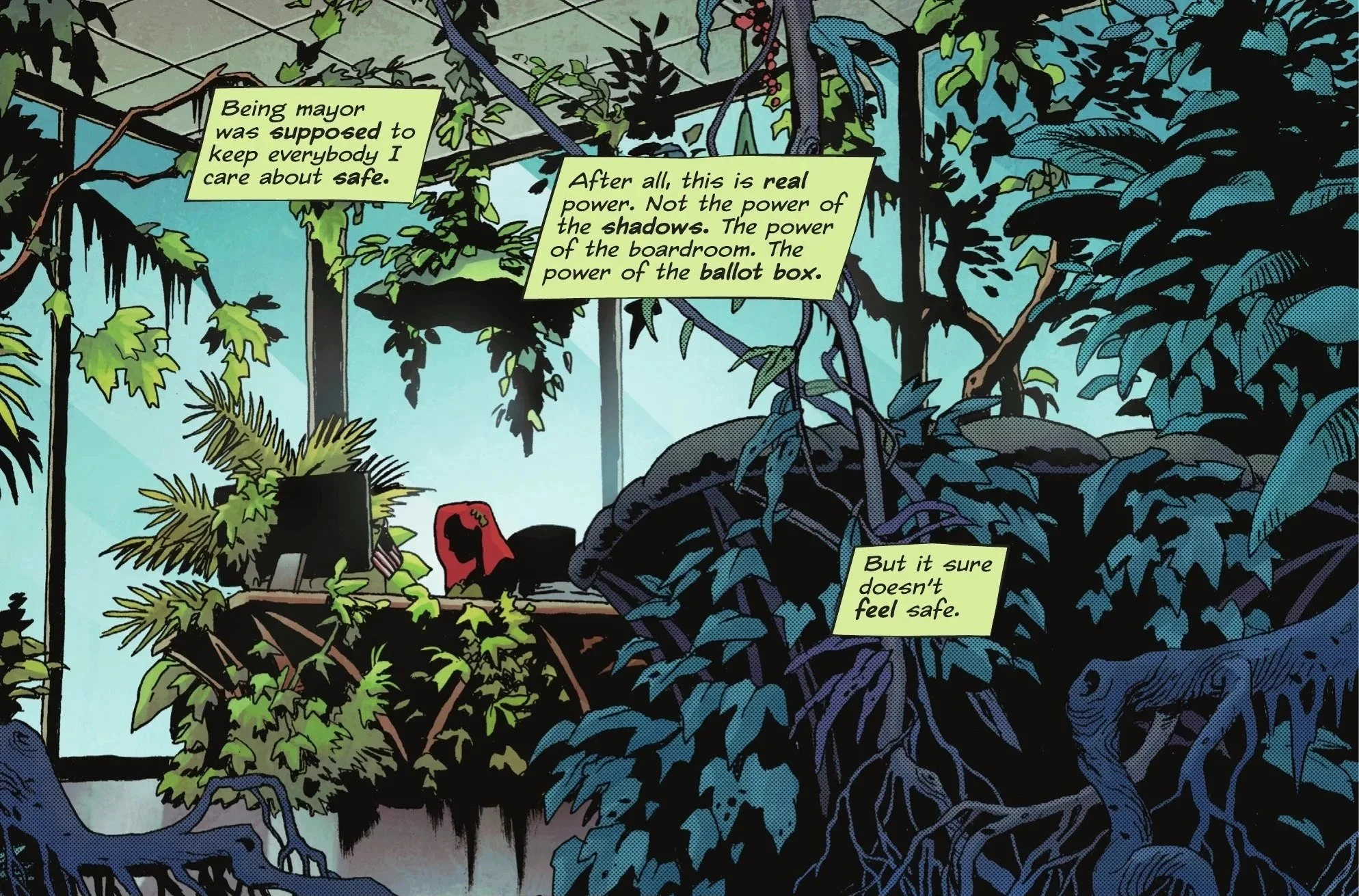
Everything in this issue reinforces just how isolated Ivy has become. Janet and Juhi are absent, Vandal Savage refuses to support her, the Order of the Green Knight is questioning her leadership, and even Sprout begins wondering whether they have become the same kind of people they once opposed.
That isolation makes Ivy's desperation understandable without making her decisions excusable. Wilson has spent several issues gradually building toward this point, allowing Ivy's anger, fear, and obsession with holding onto power to develop rather than suddenly appear.
The scenes involving Janet are particularly important because Janet remains one of the few people capable of being honest with Ivy. When Ivy questions whether she deserves everything happening to her, Janet identifies the central problem of the storyline: power has changed Ivy, and her attempts to hold onto that power have turned the people who love her into enemies.
At this point, I genuinely cannot tell which direction Ivy is going to go. She could eventually accept responsibility and find her way back toward the person she wanted to become, or she could continue interpreting every disagreement as betrayal and push herself even further into villainy. Poison Ivy #47 makes either possibility feel believable.
The Parliament of Trees Raises the Stakes
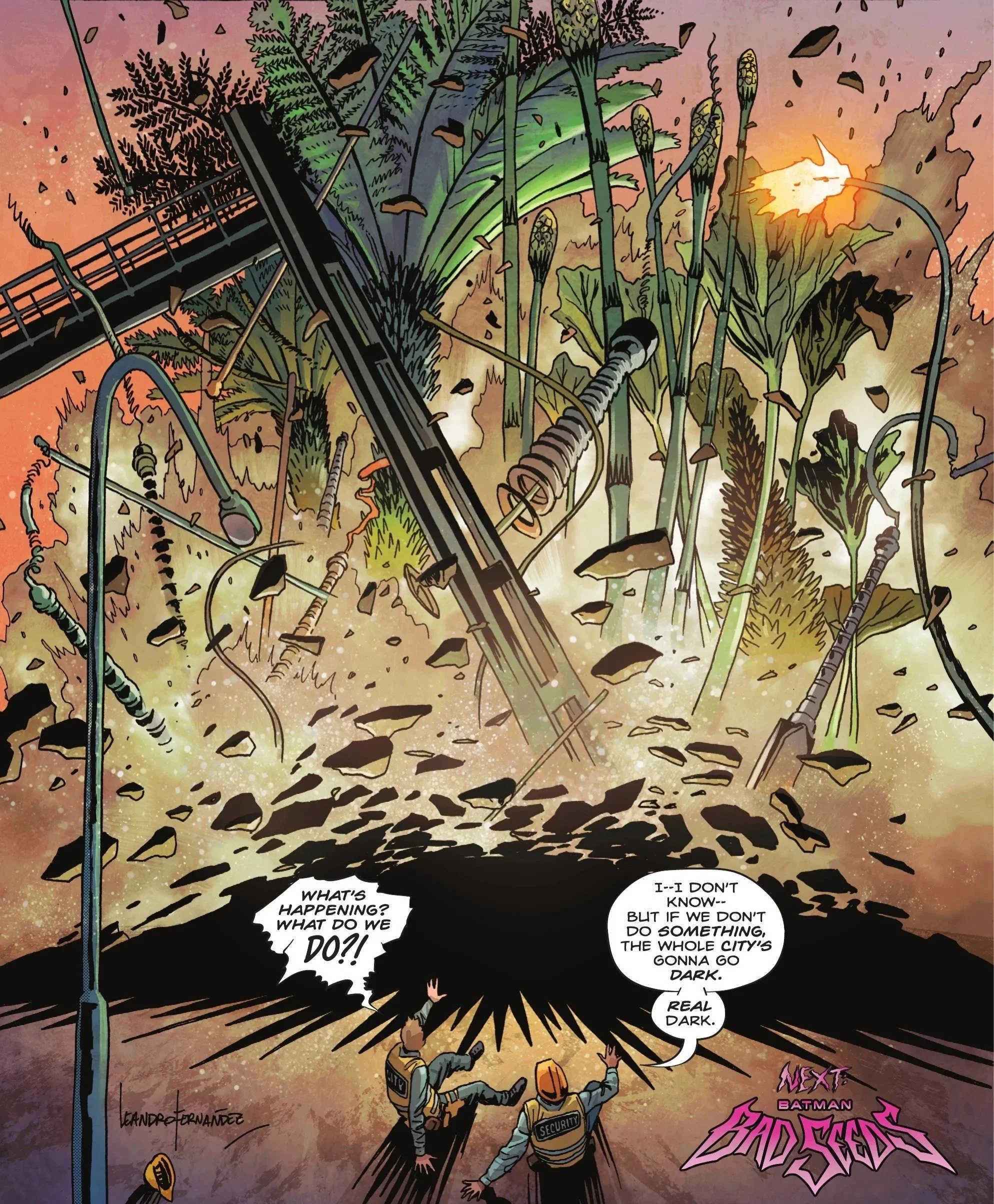
I have always loved anything involving the Parliament of Trees, so seeing them positioned as a major force in a crossover event is honestly a dream come true for me. Their involvement immediately makes Bad Seeds more exciting because they bring some of the stranger and more supernatural parts of Ivy's mythology into a much larger Gotham story.
The Parliament's arrival also feels earned. Their desire to avenge Bog Venus brings consequences from earlier in the series back into the story, making them feel like a natural continuation of Poison Ivy rather than a threat introduced solely to make the crossover feel bigger.
Ivy's decision to turn toward the Parliament is also a perfect representation of how desperate she has become. She is no longer making carefully considered decisions based on what is best for Gotham. She feels completely alone and is willing to gamble with the city rather than face the threats surrounding her without protection.
That is why the crossover setup works so well. Bad Seeds feels like the direct result of Ivy's choices and not an event that the series has been forced to pause and promote.
Harley's Absence Works Better Than an Appearance Would
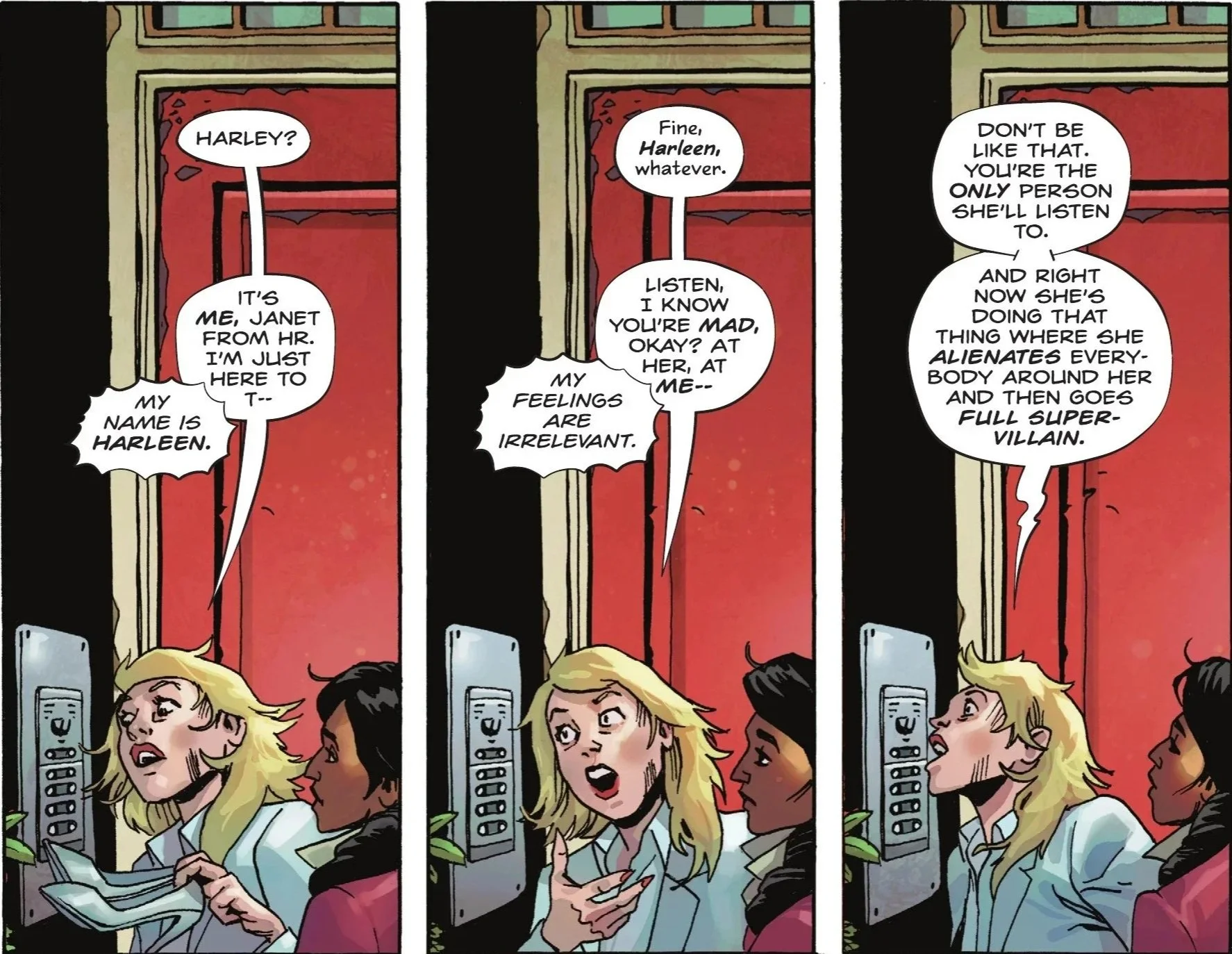
One criticism I have seen of the issue is that Harley does not fully appear, instead speaking to Janet and Juhi through the intercom at her apartment. Personally, I think withholding Harley is the better choice.
Harley is emotionally present throughout the entire issue despite barely appearing directly. Ivy dreams about her, considers calling her, and wonders whether she deserves Harley's forgiveness. Actually bringing the two characters face-to-face here would have risked resolving that tension too early.
Harley demanding an apology directly from Ivy also feels completely appropriate. Janet and Juhi cannot repair Ivy's relationship for her, and allowing someone else to arrange their reconciliation would undermine the exact character development Ivy needs to experience.
There is something fitting about Ivy spending the issue wanting to reconnect with Harley while Harley remains just beyond her reach. Ivy has spent much of this storyline pushing people away while expecting them to remain available whenever she needs them. For once, she has to sit with the consequences, and I think their eventual confrontation will be much stronger because the series is allowing that tension to continue.
The Artwork Remains a Mixed Bag
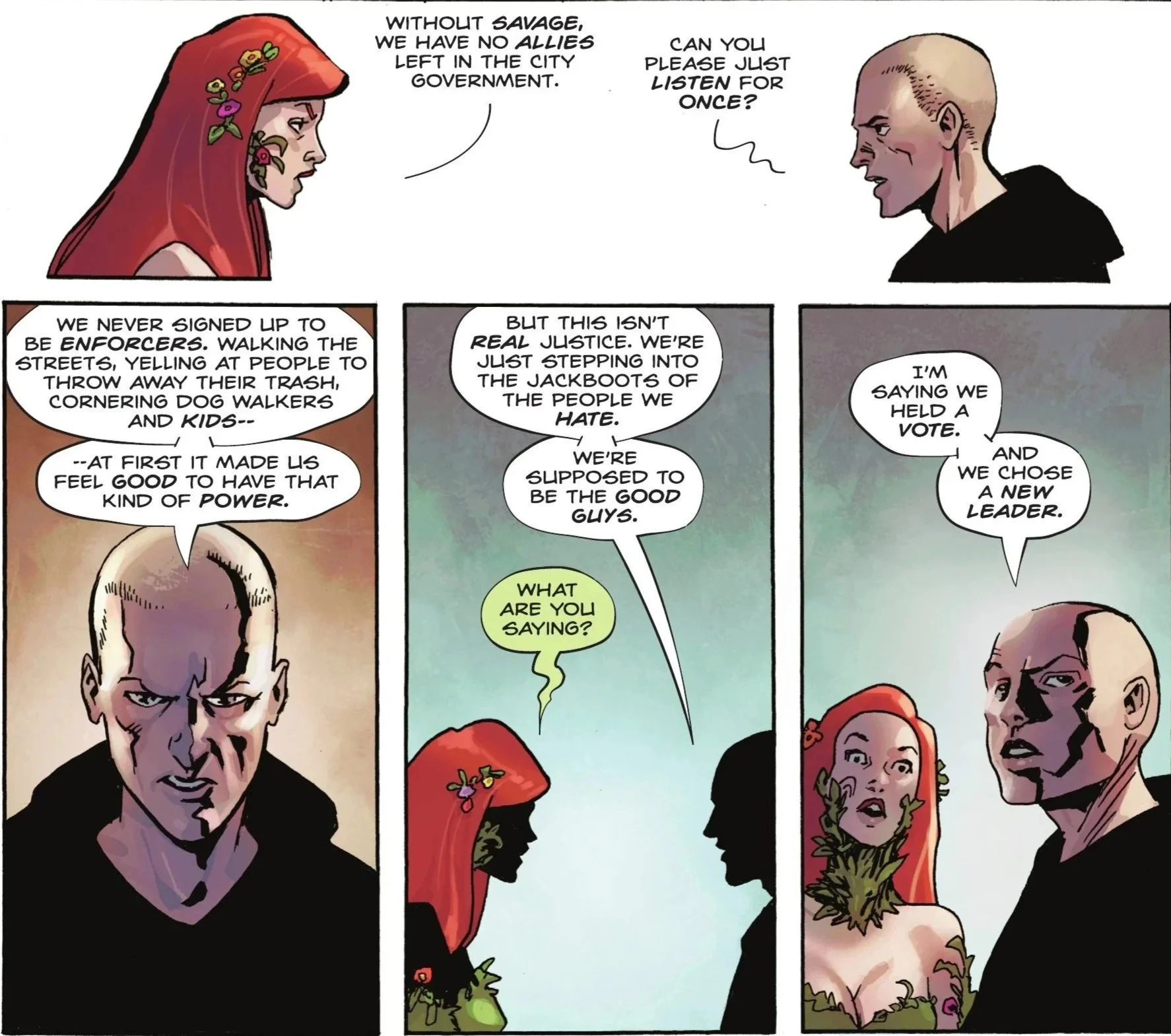
Leandro Fernandez's artwork remains the issue's most inconsistent element, particularly when it comes to human characters. Some figures still appear oddly proportioned, and facial expressions do not always have the nuance necessary for scenes so dependent on Ivy's emotional deterioration.
Fortunately, those weaknesses never distracted me from the story. The issue gives Fernandez plenty of opportunities to lean into his strengths, particularly whenever the story involves the Green, the Parliament of Trees, or the stranger and more supernatural parts of Ivy's world.
The plant life looks fantastic. Fernandez's style gives the organic imagery a strange and occasionally unsettling quality that fits Poison Ivy extremely well. At this point, that is honestly what I care most about visually in a Poison Ivy book, and the issue delivers whenever it focuses on the plants and supernatural elements.
The artwork is still a mixed bag, but its strengths are strong enough that I never found myself pulled out of the story. With the Parliament of Trees taking on such an important role, the issue gives Fernandez plenty of material that plays directly to what he does best.
Final Thoughts: An Exciting Turning Point for Ivy
Poison Ivy #47 is an excellent payoff to Ivy's long-running descent into isolation and desperation. Wilson finally pushes her to a point where she can no longer avoid the consequences of her actions, leaving her separated from nearly every person and force she once believed she could rely on.
The most interesting thing about the issue is that Ivy still does not feel completely beyond saving. She recognizes that she has changed, misses Harley, and questions whether she deserves forgiveness. However, by the end of the issue, she is still angry and desperate enough to make a decision that could put Gotham in even greater danger.
Whether Bad Seeds becomes a story of Ivy's redemption or the next step in her transformation into something much darker remains unclear. That uncertainty, combined with the involvement of the Parliament of Trees, has me extremely excited to see where the crossover takes her.
Poison Ivy #47 is an exciting and emotionally important issue that brings Ivy's increasingly unstable mayoral storyline to a breaking point. It sets up Batman: Bad Seeds naturally, leaves Ivy's future uncertain, and makes excellent use of the Parliament of Trees while continuing to build anticipation for Ivy's eventual confrontation with Harley.
Thumbs Up
A strong payoff to Poison Ivy's recent storyline and an exciting launch point for Batman: Bad Seeds that has me more interested than ever in seeing where Ivy goes next.