
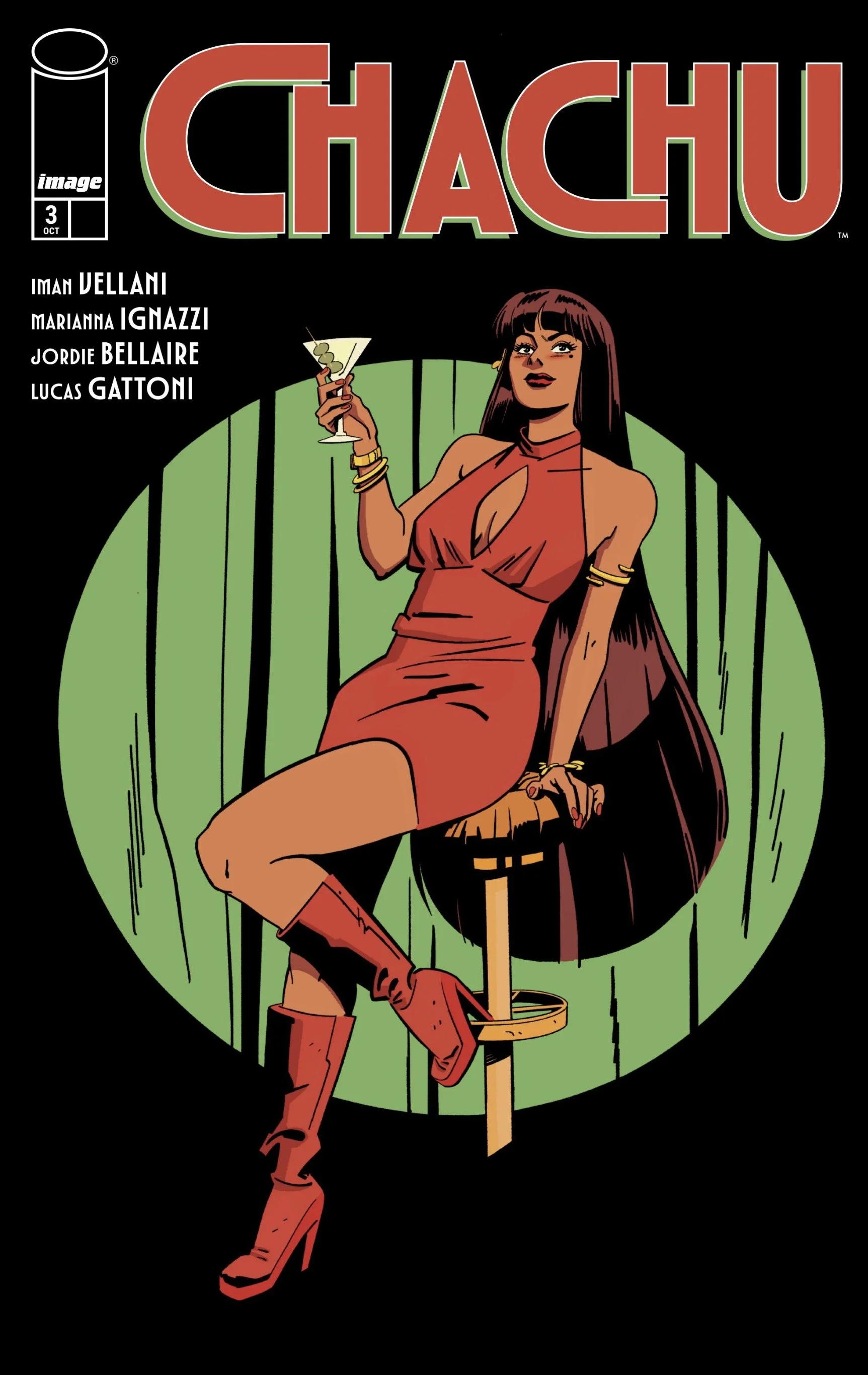
Chachu #3
Writer: Iman Vellani
Artist: Marianna Ignazzi
Colorist: Jordie Bellaire
Publisher: Image Comics
Young would-be detective Leila set out to find her long-lost uncle and found herself helping him on a missing persons case: his wife. But the real person she's finding is herself…
Jazzy Saxophone
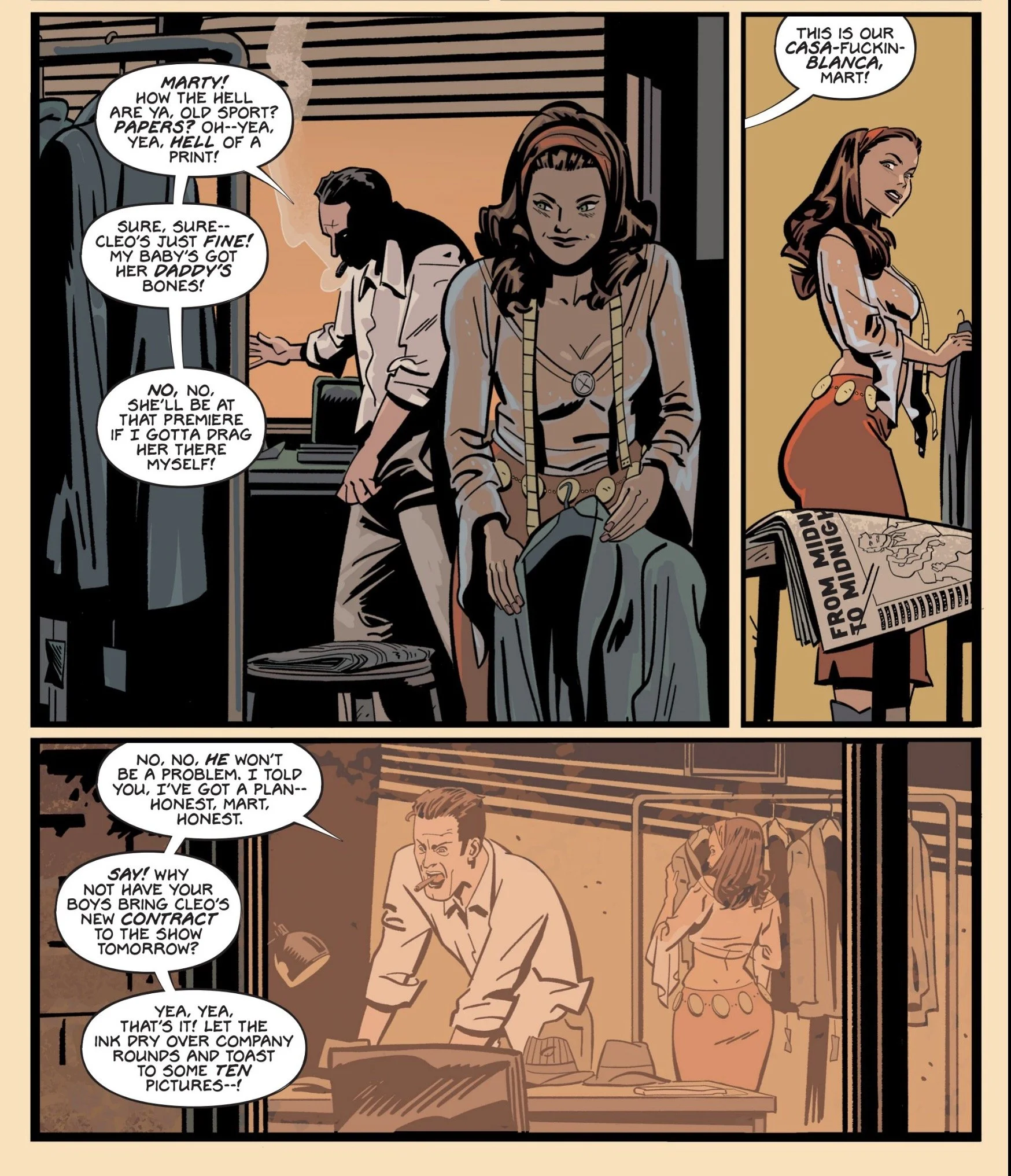
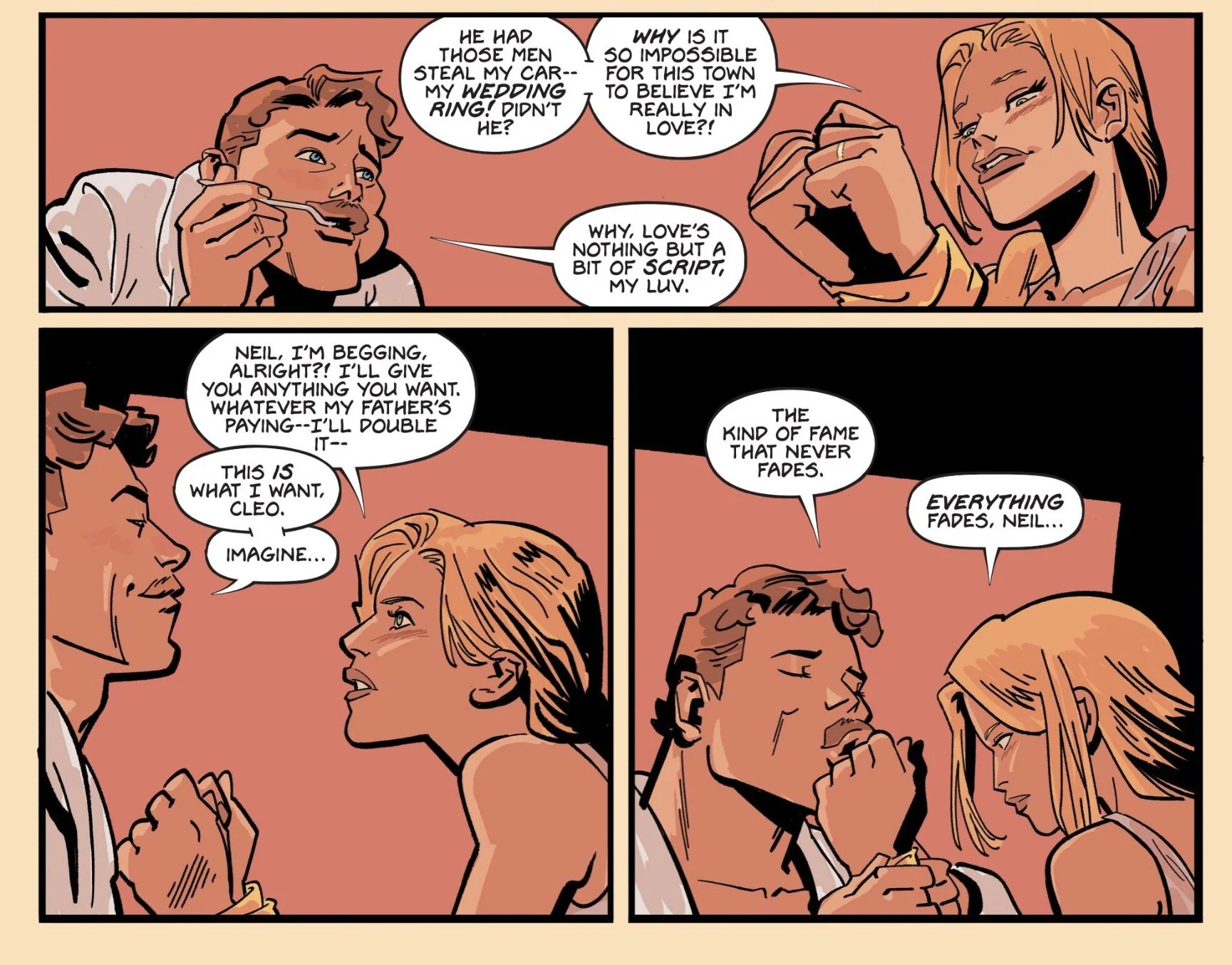
Multiple men seem to think they know what's best for Cleo. Her father wants to get her away from Chachu and get her movie career "back on track." Her costar, Neil, needs her to get his own career back on track. And what does Cleo want? These men don't know, nor do they care.
The man who does care, Cleo's husband, is working with his niece Leila to find her. They visit a club where Cleo has friends (and everyone likes to call him "Uncle Dick" and make fun of his hair), and Leila finds out she's a lightweight when it comes to drinking…
Do You Remember A Band Called Letters to Cleo?
I wish this book had a recap page.
It took me several minutes to figure out that the man getting his suit fitted (and his "plumbing" checked) at the beginning of the issue was Cleo's father. At first I thought he was Neil, the costar who kidnapped Cleo, and he was just fooling around with other women when not professing his love for her. Once the man zipped up and answered the phone, I realized who he was and things became clear.
Something else that became clear to me with this issue is that Chachu is not really about the search for Cleo. The whole time, we've been one step ahead of our detectives (who frankly are not very good at their jobs), and this issue cemented for me why that is. It's obvious to me now that Cleo's father orchestrated the whole thing in order to get her away from Chachu (or "Uncle Dick" if you prefer) and get her movie career moving again. Sending Chachu and Leila out to find her was just his way of keeping them busy while he and Neil orchestrated their plan.
No, the real mystery of this book is Chachu himself. Who he really is, why he really left the family, and what role he's going to end up playing in Leila's coming of age.
Speaking of Leila, of course this is ultimately her story. Or is it? Even in her own mind, she gets upstaged by Chachu regularly. Through her time with him, she is learning a lot about herself, though. She’s at that awkward place between teenager and adult, and is starting to question just what she wants in life. She wanted to be a private investigator, but it seems like she’s questioning that choice now. I don’t think it’s as exciting or romantic as she thought it would be.
So back to “Uncle Dick.” Now that he’s back in Cleo’s world, it’s immediately apparent that he doesn’t belong there. The way everyone seems to be sizing him up at all times, wondering what she sees in him. That’s got to be horrible. Especially when we get the story of how he met Cleo, how they were two lonely souls that needed to find freedom and happened to find each other at just the right moment. And apparently one of her movies, The Midnight Bride, is based on their story? Major ouch.
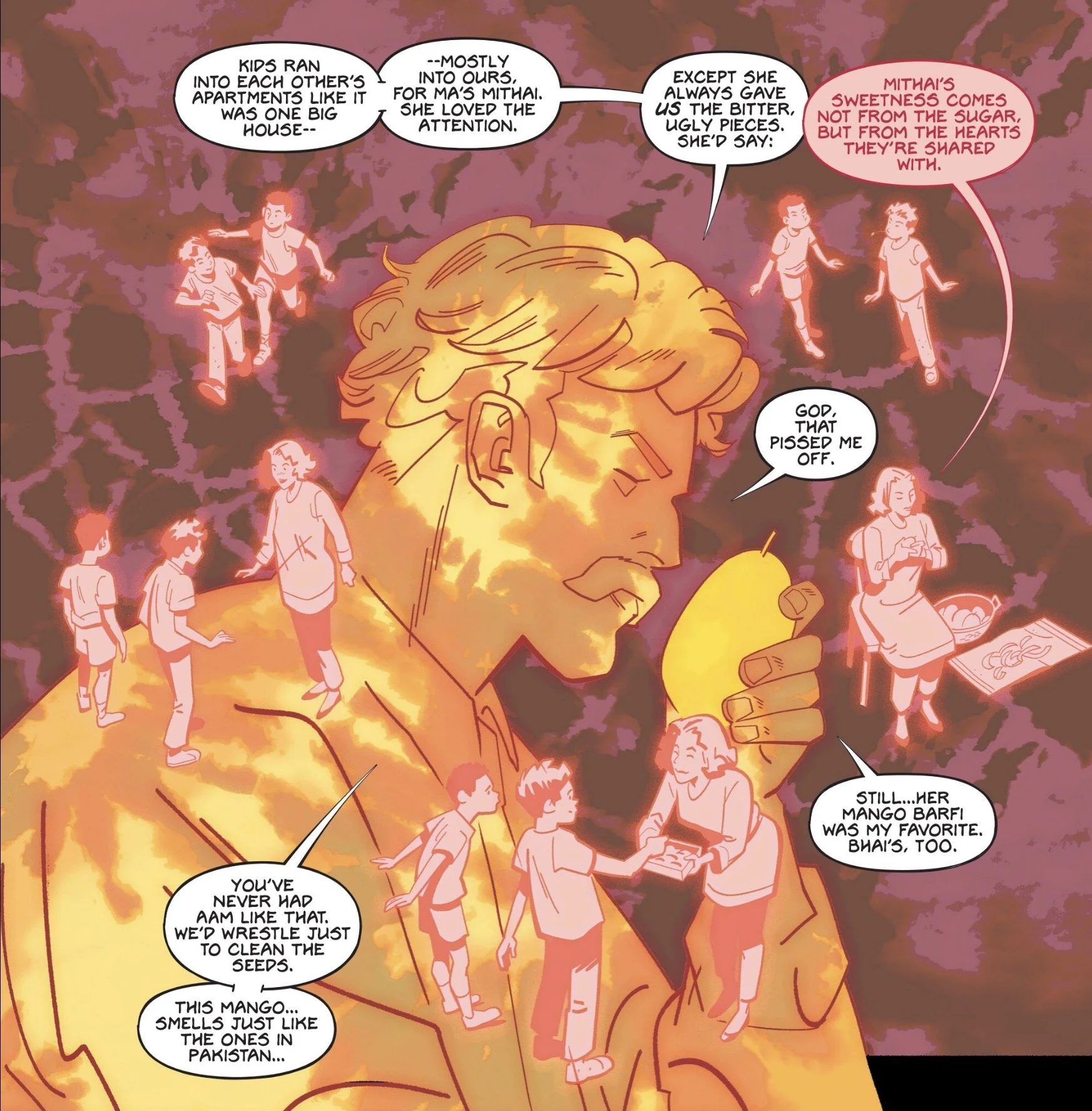
Leila gets drunk, which is funny in a way but also sad. Again, it’s part of her journey to figure out what kind of adult she wants to be. In this case, one who drinks in extreme moderation. When she and Chachu are back at the hotel, she catches him smelling a mango. When she questions him on it, he says it smells like home—Pakistan, not Canada. The way he reminisces about his childhood just based on the smell of that fruit, I really want to know what ultimately made him leave the family behind and not maintain any contact.
All in all, very little happens plot-wise—but the characters and the noir atmosphere make the issue anything but boring.
That Has Nothing to Do With Anything, But It Just Popped in My Head
It can be hard to remember that Iman Vellani is so young, because she really does nail the noir atmosphere here. And her characters are incredibly rounded—I wonder how much of herself and her own journey to adulthood she placed in Leila? Chachu is likable, but a bit of an enigma at the same time. I keep expecting another shoe to drop with him—not that he’s a bad guy, but that whatever the reason he left isn’t as innocent as Leila might be hoping. Pacing-wise, this is a slow story that gives the characters plenty of time to do their thing, and it works very well.
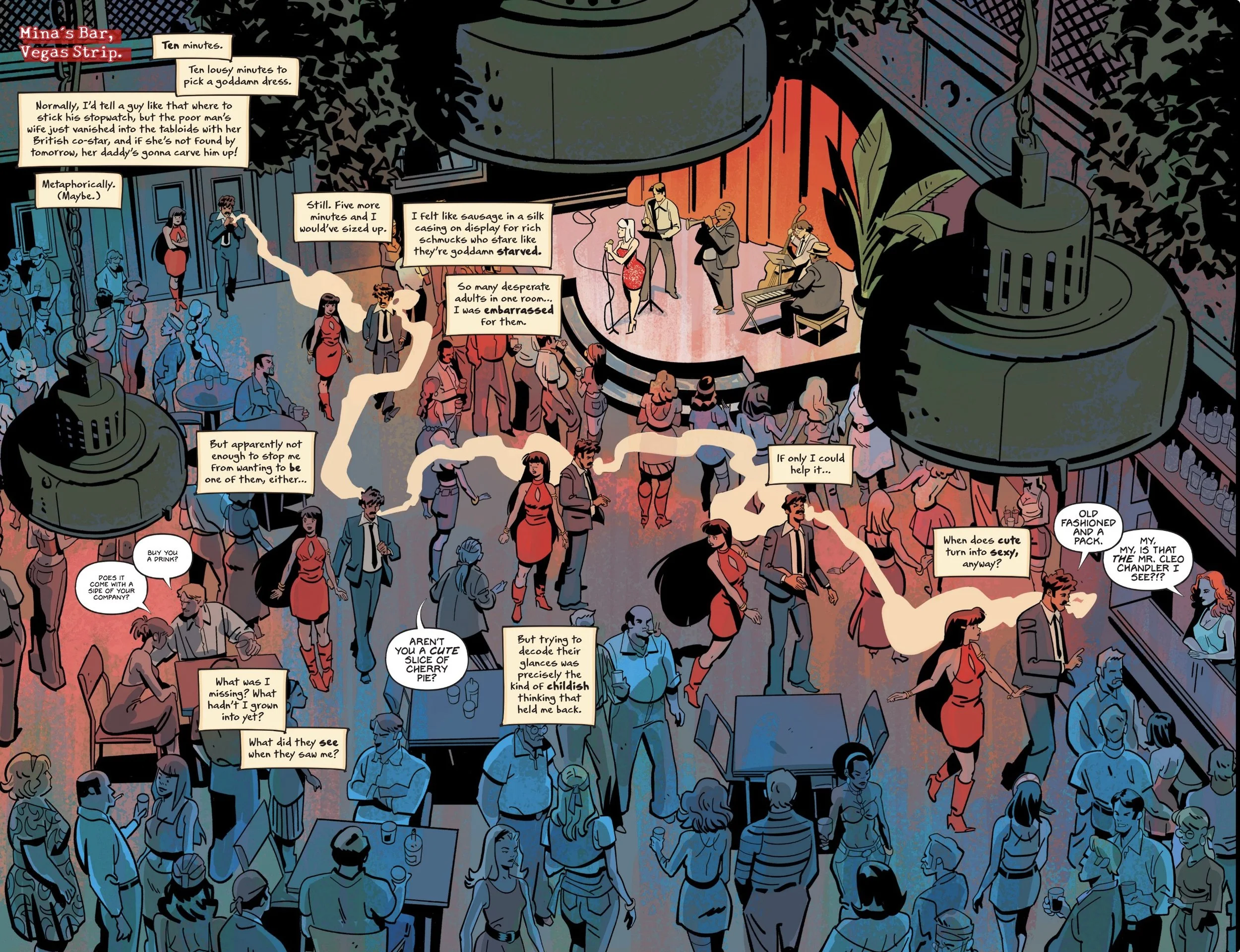
Marianna Ignazzi brings the 70s look and the noir atmosphere in her art. There’s a two-page spread of Leila and Chachu making their way through the club that is incredibly detailed, with so much going on in it. I lost a few minutes just observing the fine details on those pages. The rest of the issue looks great as well, with plenty of interesting staging for the issue’s many conversations and some great facial expressions.
Jordie Bellaire’s colors complete the sun-soaked 70s look, and mix in the shadows of noir at the same time. The two-page spread of the club is colorful and inviting, making it look like the kind of place you could lose yourself in. Which is exactly what Leila does. Bellaire is one of the best colorists in the business today, and her work here perfectly encapsulates why that is.
Bluesy Piano
Chachu #3 slows the pace down and gives the characters plenty of time to shine. The main mystery doesn't seem very mysterious, but it’s also not the real focus of the story. That would be the enigma that is Chachu himself, and what role he’s going to play in Leila deciding what kind of adult she wants to be. That’s a much more interesting story than a standard missing persons case anyway.