
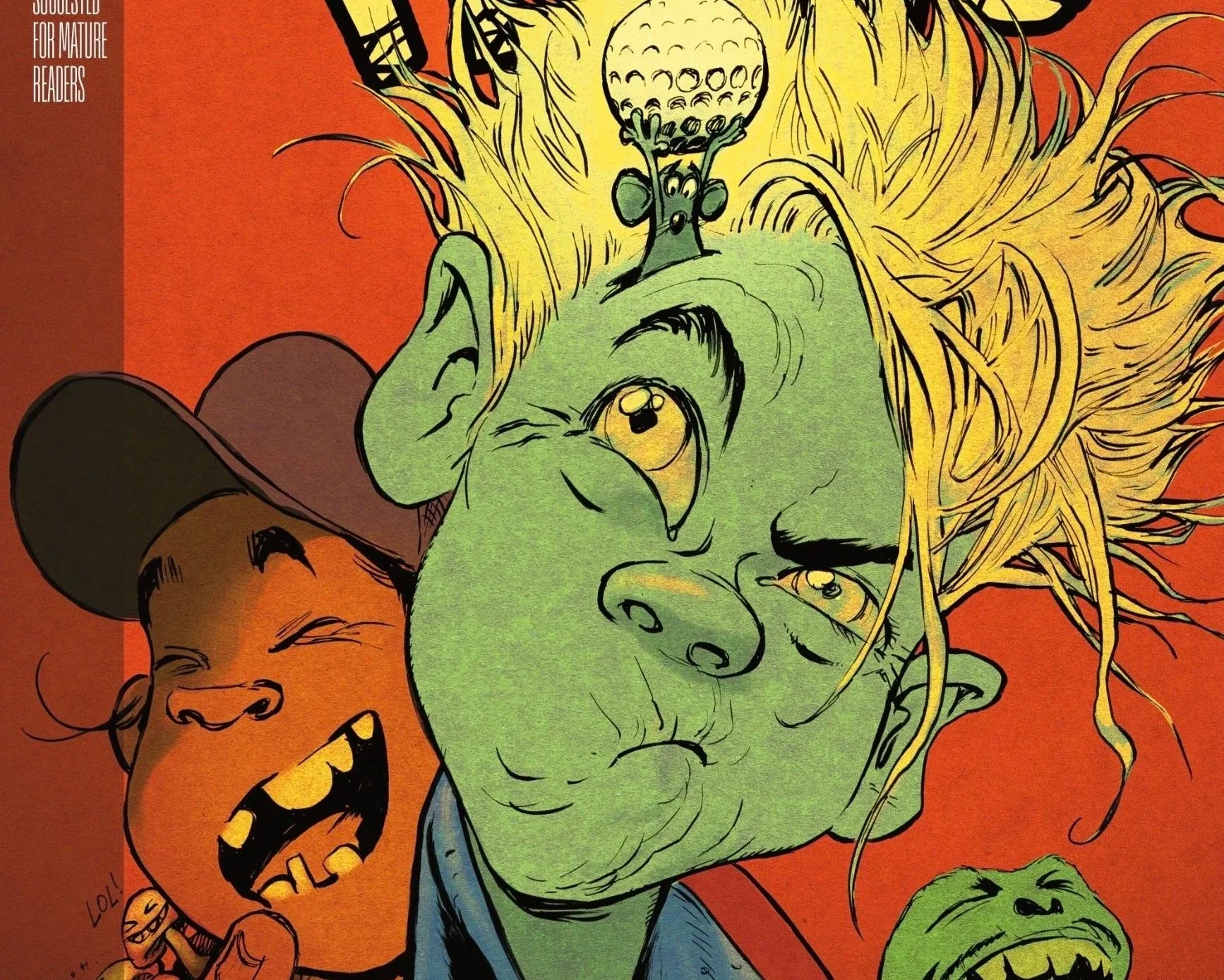
Bleeding Hearts #7
Writer: Deniz Camp
Artist: Stipan Morian
Colorist: Stef Bartolic
Publisher: DC Comics (Vertigo Imprint)
Poke may be the zombie with a heart, but mine is the one that Bleeding Hearts #7 made skip a beat.
Dead Man Walking
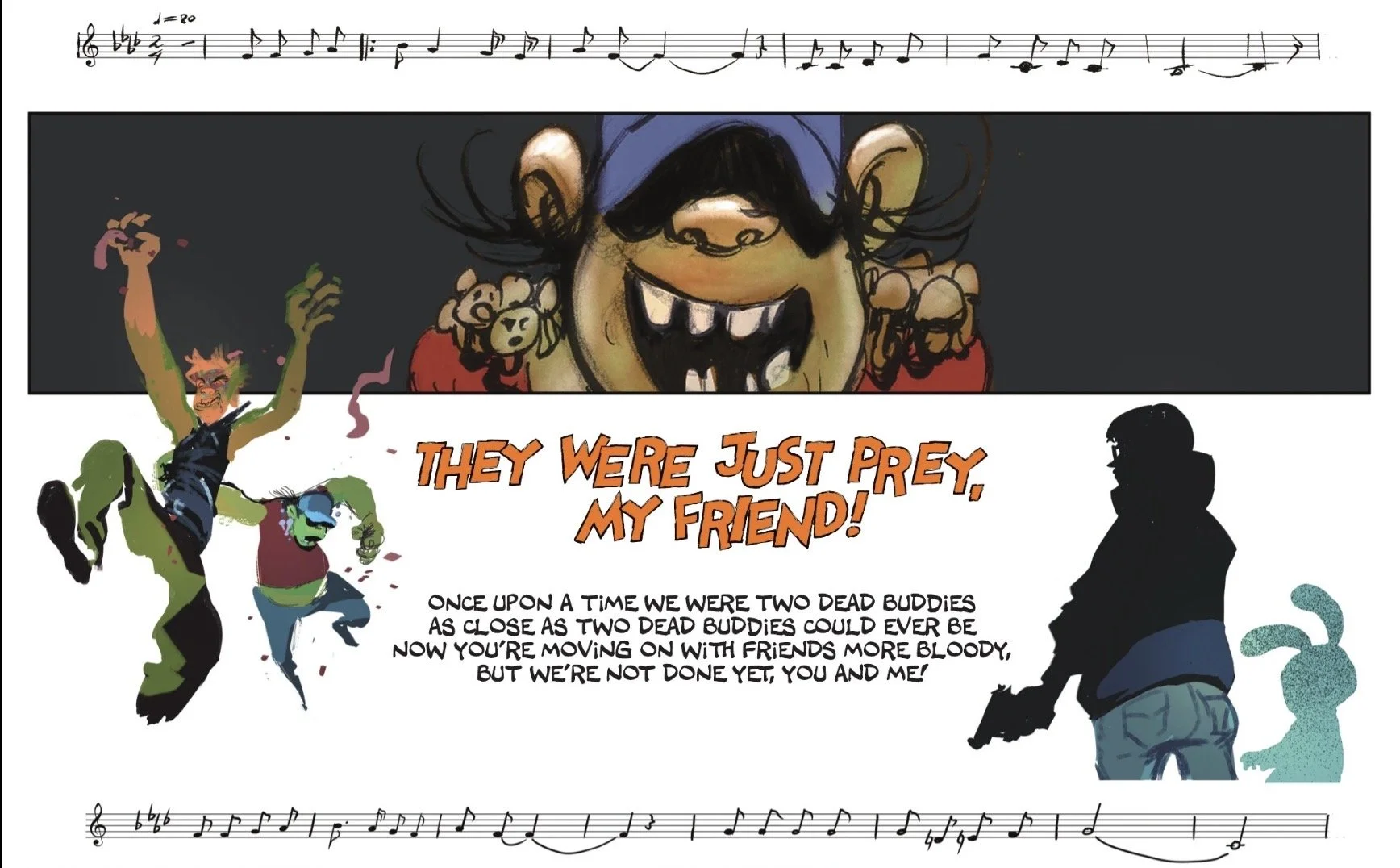
We open with a musical number.
Seriously.
As this issue is the start of a new story arc, the first two pages are our recap of the previous issues—and it is indeed in the form of a musical number, told from the perspective of Poke's late friend Mush.
As the issue proper begins, we learn that there has been a time jump since the end of issue #6. Poke, Cara, and Rabbit have moved north in the aftermath of the mall fire on Out-Break Day. They've been hiding out in an old church, where Cara has noticed her daughter pulling away from her more and more. The girl hasn't forgiven or forgotten how they left Ruby behind to die, even after all the woman had done to help Rabbit.
Poke has aligned with the Flesh-Freezes-and-Thaws-and-Never Stops Horde, the dominant zombie group in this neck of the woods. He's been trying to pass as one of the group, while at the same time keeping them from finding Cara and Rabbit. Add to that the feelings of guilt for what happened to his friend Mush, and you've got a zombie with a heart that is going through some stuff. Maybe that's why he makes what turns out to be a really bad decision.
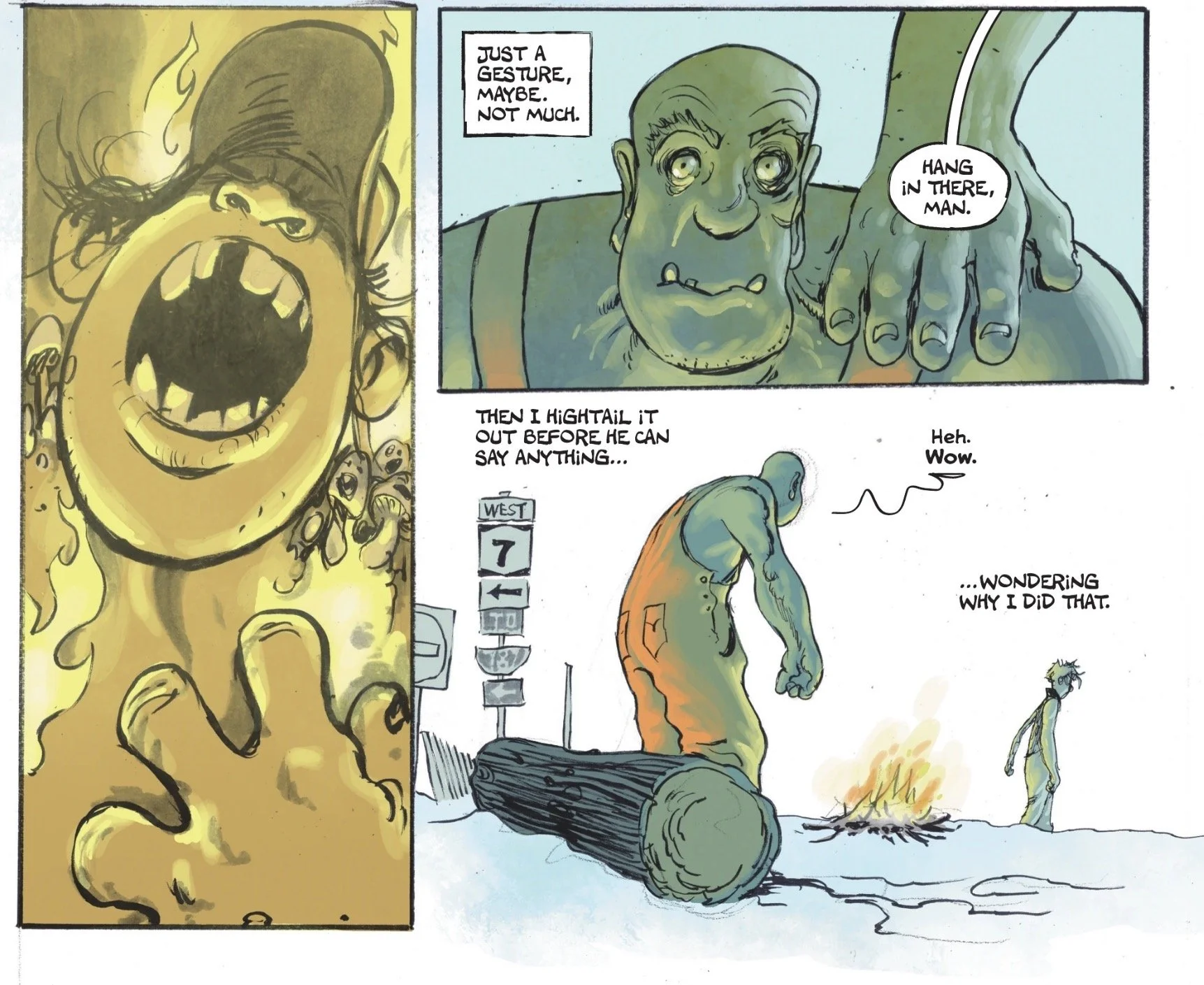
After a conversation with some of his horde-mates in town, Poke passes a zombie called Finds-Whole-Family. He's an outcast, having been rejected by no less than four tribes. He sits sullenly alone by a small fire when Poke puts a hand on his shoulder and tells him, "Hang in there, man." Unfortunately, that small act of kindness gives the outcast zombie a whole new lease on life, which in turn leads to tragedy...
Dead Inside and Out
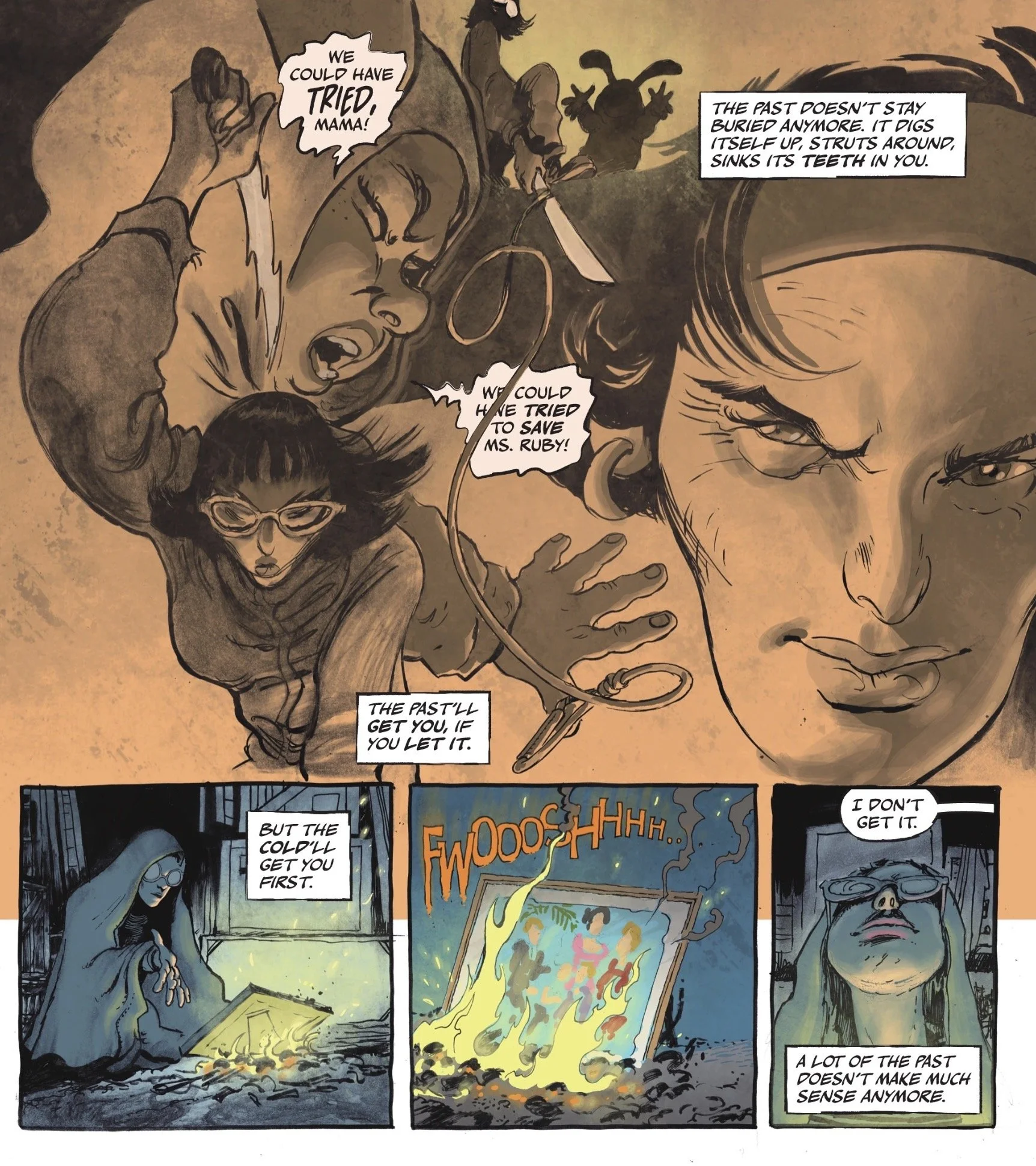
One of the things that this book does so well is balancing the humorous or the absurd with the serious and scary. Take this issue. It starts off with a musical number recapping the events of the first six issues, then by the end I found myself holding back tears. Not a lot of comics can tickle the funny bone and punch you in the gut at the same time.
The beginning of this issue finds all three of our leads going through something. Cara is dealing with guilt for leaving Ruby behind and the effect it's had on her relationship with her daughter. Rabbit has seen a side of her mother that she didn't know was there, and it's shaken her faith in her family and in their mission. This, in turn, has driven her closer to Poke, even though they can't communicate with each other. As for Poke, he's carrying around guilt for what he did to Mush, confusion as to where all these new feelings came from and what they mean, and fear that the rest of the tribe is going to find his human friends and kill them all. So yeah, everyone's dealing with some stuff. It's how they all choose to deal with it that drives the story forward.
Cara is retreating further into herself, getting lost in her own head. Outwardly, she's getting colder and more direct. It's not helping close the gulf widening between her and Rabbit, that's for sure. Rabbit is finding herself drawn more towards this strange dead boy that keeps helping them, this shambling corpse with a flower sticking out of his head. The closer she gets to Poke, the further she grows from her mother, although I'm not sure she realizes it.
As for Poke, he knows that everything that's happening is his fault. Ever since his heart started beating, he's been doing strange and un-zombie-like things. Things like helping these humans over and over again, or killing his best friend Mush. Now that he's spending more time with the humans and less with other zombies, he's embracing these bizarre new feelings more, but that's not always a good thing. When he can't understand why he shows that moment of kindness to Finds-Whole-Family, it seems like an odd moment but nothing major. Then the outcast zombie gets a fresh burst of confidence, and ends up finding where Cara and Rabbit are hiding...
I don't want to directly spoil what happens as a result of Poke's actions, but I do want to talk about it a little. I'm myself a parent; I have two boys. One of my boys is an adult now, but obviously he was a child of Rabbit's age once. My other son is seven years old, so that puts him in a similar age range, I think. I tell you this so that you understand: one of the things that I really have a hard time with is violence towards children in books, shows, or movies. Even though I know it's fiction, I can't help but take it too hard. Bleeding Hearts #7's final scenes affected me in that way. There's part of me that hopes we start off next issue by finding out it's a fakeout, but there's another part of me that thinks that would be cheap on the part of the creators and would lessen the impact of what this issue made me feel. So although it's hard for me to read, I actually hope it's for real, and it sticks.
When this title was first announced, I read the preview pages and wasn't interested at all. Another zombie book, and it's got an odd art style and silly names for the zombies to boot? No thank you. But it kept getting tons of buzz, and I heard about how good it had turned out to be. So I gave it a chance. It took a little bit for me to warm up to it—the first issue still didn't grab me, but the second showed me that it had a lot more to offer than it appeared at first glance—and now I'm along for the ride. This issue perfectly sums up everything that the series brings to the table—strong characters, emotional stakes, flashes of humor, and bursts of horrible violence (and the consequences that follow). I know this phrase gets used a lot, but there's nothing else like it on the shelves right now.
Raising the Dead
It feels like Deniz Camp is everywhere right now, fresh from the Eisner win for Absolute Martian Manhunter. Given that in the pages of this book, he's been able to make me care about a zombie with a flower growing out of his head, I think all the praise he's getting is well-deserved. He's built a world here that feels lived-in (no pun intended), with lead characters that are all rounded and compelling in their own ways. Even the supporting characters—living and dead—have enough depth to them that when something bad inevitably happens to them, you feel it. That's the biggest thing Camp does here—he makes you feel.
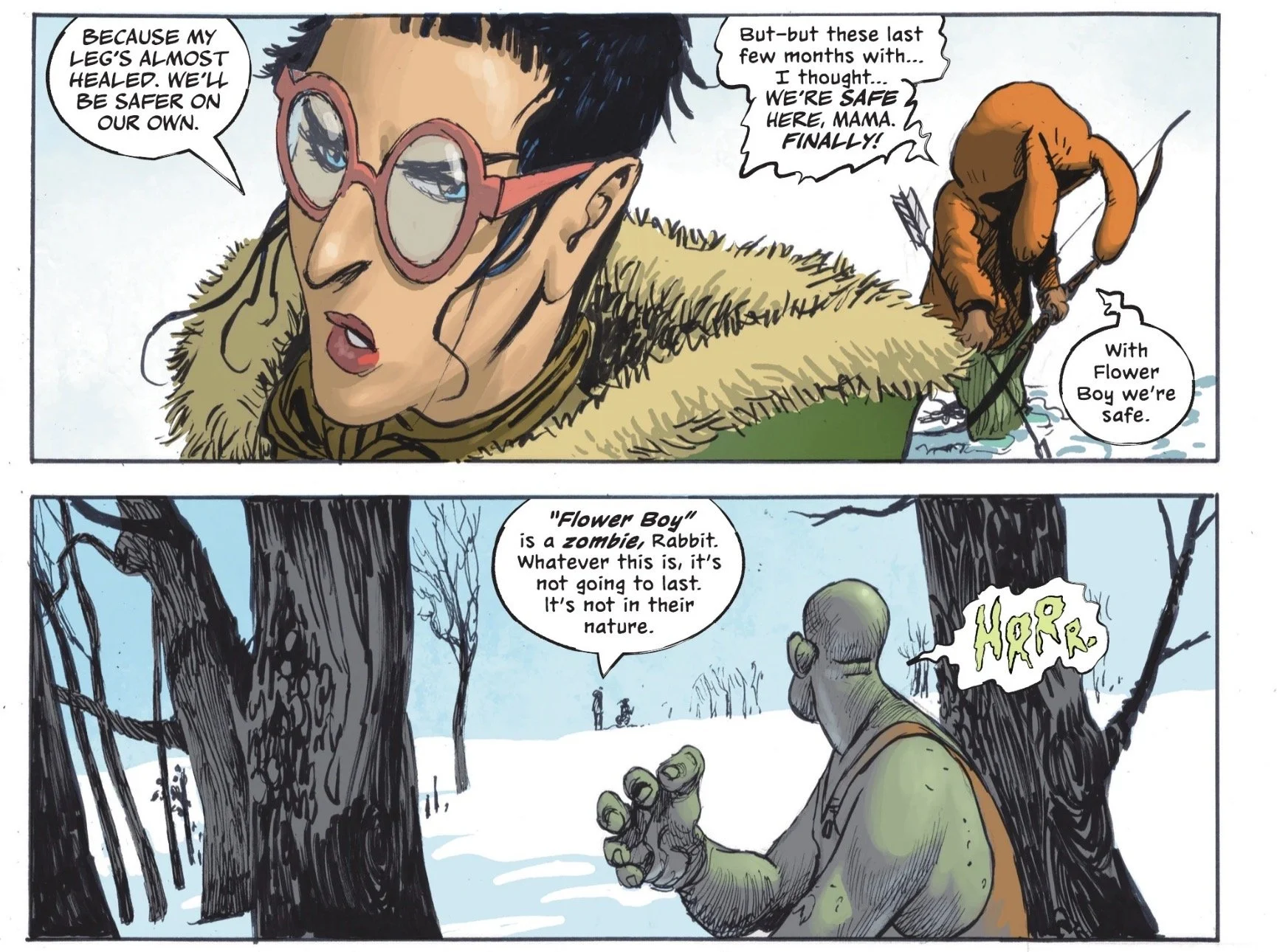
Stipan Morian's art style is one that wouldn't normally grab my attention, but it's actually perfect for this book. Because of the exaggerated way he depicts his characters, we end up with an incredibly varied assortment of zombies. They come in all sorts of shapes and sizes, each with their own bizarre or disturbing physical quirk. The human characters are also done in a less-than-realistic style, but it's different from the zombies. Take Cara, for example. She's depicted so tall, with such exaggerated proportions (especially her legs) that she almost looks like something out of Aeon Flux. Rabbit is drawn the closest to a "normal" look, but it can be hard enough to draw a believable child without getting too creative there. Here she actually looks like a kid and not like a tiny adult, which makes the late-issue events all the more painful and tragic.
The colors of Stef Bartolic complete the trifecta of brilliant creators on this title. They use an incredibly varied color palette where all of the zombies are different colors and shades, and I don't think any two come across exactly the same. Many scenes cast everything in the glow of a certain color, such as a bluish tone when Poke is moving through the snow or a sickly yellow-green as the horde gathers around a fire. When the scene switches back to Cara and Rabbit practicing with a bow and arrow in the field, the colors revert back to more traditional shades and tones, giving everything a brighter look that contrasts with the violence and horror to come.
Dead Reckoning
Bleeding Hearts #7 kicks off the second story arc with a laugh, and by the end will have you on the verge of tears. Deniz Camp and Stipan Morian have put together a book that defies expectation with each issue—one where, just like Poke himself, there is a real beating heart beneath all its undead exterior. If you passed on this book because you were "all zombied out," pick up issue #7 and give it a shot. I wouldn't be surprised if you find yourself going back to pick up the first six.