This is something I haven't done before.
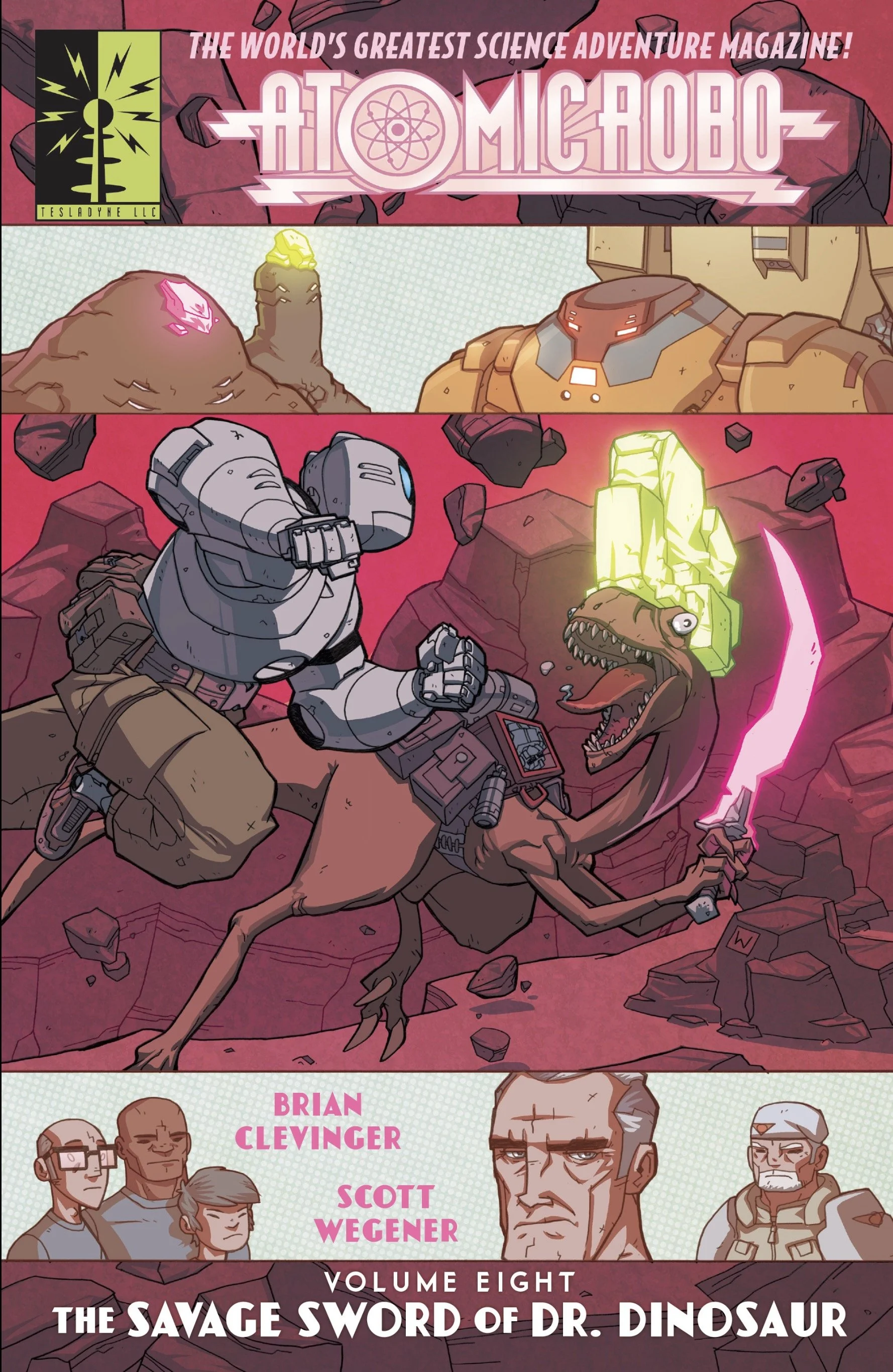
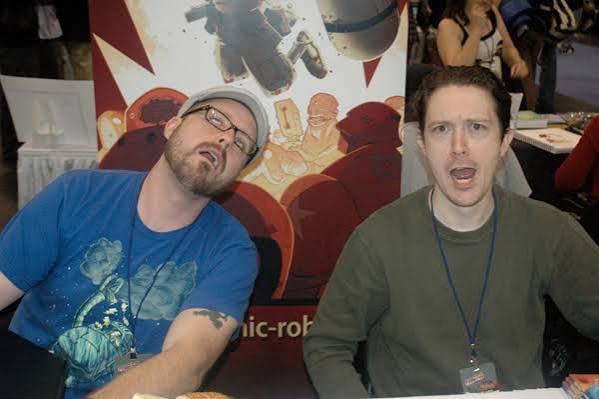
As a companion piece to my Frank's Favorites issue on Atomic Robo (you can check it out here if you haven't already), I was fortunate enough to interview the creators of Robo—Brian Clevinger and Scott Wegener. Because Robo is such a hidden gem in the comics world, I thought a little more background on his creators and their process might be in order.
Let me get out of the way now, and we can hear from them:
Building Robo
One of the things I love about Atomic Robo is that someone can discover the entire series online without having to track down 20 years’ worth of comics. Was making the comic freely available always part of the vision when you moved to the web, or did you figure out how that model was going to work as you went along?
Oh, yeah. Accessibility was the primary concern when we were figuring out what the series should look like. Arguably, it’s even why Robo is a robot. Y’know, think about it. A reader who has never even heard of this series, they can pick up any volume, flip to any page, see the robot main character in any panel, and immediately accept that he’s super strong, super tough, probably very smart, and ageless. Even if he’s just sitting at a desk and answering the phone, all of those elements are immediately and unconsciously obvious from our shared ideas of a sci-fi robot. We never have to explain these things and no one would ever doubt that they're true. It's all self-evident.
What’s interesting about this, to me anyway, is that it’s almost a magic trick. Atomic Robo, our main character, is the most impossible thing in Atomic Robo comics — no one could have single-handedly built an intelligent nuclear powered robot in 1923, not even within the exaggerated sci-fi possibilities of our setting. But readers accept that Robo exists without a second thought. And that sort of unconsciously primes them to expand the suspension of their disbelief to accept any sci-fi idea we present to them that feels coherent with the robot main character.
Has publishing Atomic Robo as a webcomic changed the way you actually make the comic? Does knowing that readers are experiencing it online rather than through individual issues affect how you structure stories or volumes?
I’m gonna namedrop here but it’s central to the answer. Superstar comic book writer Greg Rucka once pointed out to me that Atomic Robo comics were written like a webcomic wherein every page stood on its own as a distinct narrative beat. I had never noticed this but of course he was correct.
Before Atomic Robo I wrote a webcomic, 8-bit Theater, from 2001 - 2009. About 90% or more of webcomics back then were one, or three, or four panel gag strips in the tradition of newspaper comics. 8BT was a full page in the tradition of comic books. But comic books give you 20 or more pages to read at a time while a webcomic only gives you one. So, I naturally gravitated toward constructing webcomic pages almost like short stories that just happened to follow from one to the next.
After doing that for so long, it didn’t occur to me to approach print comics any differently so Atomic Robo inherited that same rhythm without me ever noticing it. Not until Greg pointed it out, anyway. So, in a sense, Atomic Robo was always waiting to become a webcomic.
Readers experiencing only one page every other day can create some problems that simply don’t exist when they’re going to read 20 or more pages in a sitting. A particular page, in isolation, can leave a reader a little confused or annoyed if they can’t immediately turn the page where the problem is easily resolved. So, which experience should we prioritize, the page in isolation or the whole story? The instinct is to avoid those situations or to address any potential confusion on the page itself. But the former strategy severely limits what you can put on the page and the latter strategy would read as unnecessarily repetitive in print.
Here’s how we think about it: new pages are only new for one day while the print collections and online archives are forever. If something might read a little oddly for one day, I’m just going to let that happen rather than risk making it read oddly forever.
The Kickstarter hardcovers have also become a pretty important part of the Atomic Robo experience. They’re much more than simply putting the webcomic on paper, with bonus material, artwork, and other extras. When did you start thinking of the physical editions as their own thing rather than just collections of the comic?
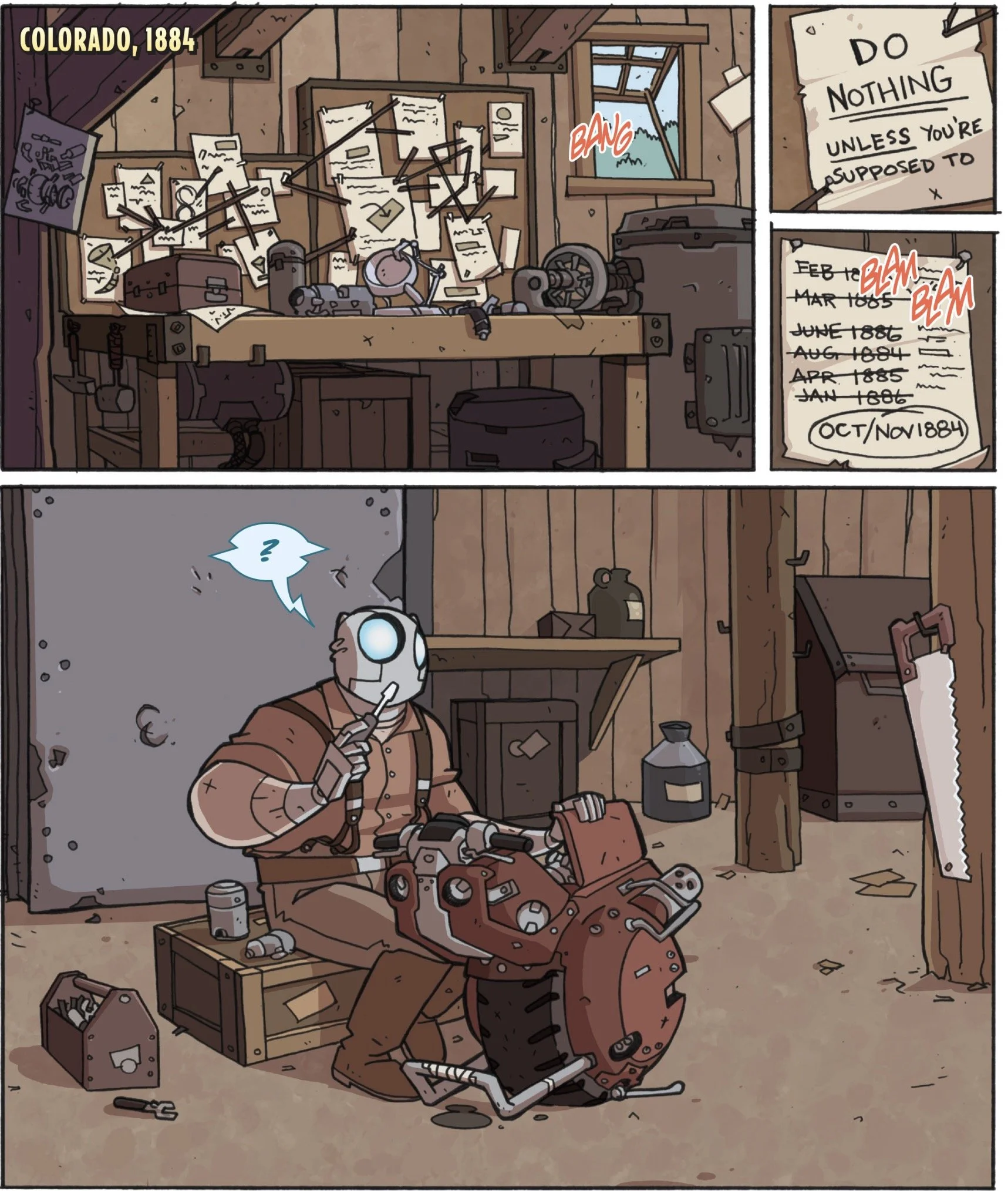
Oh, from the start. Atomic Robo was a print comic for years before we put it online. We knew that most people would be reading Atomic Robo online once we started publishing the webcomic version, so we wanted to make the hardcover copies something special. Bonus pages, more Doctor Dinosaur stuff, high quality paper and covers. As an actual physical object these are some of the best collections in the industry. The stuff that's printed on the pages ain't half bad either.
For the Long Haul
You’ve now spent years dealing directly with the people who support Atomic Robo through Kickstarter, Patreon, and buying the physical books. Has that direct relationship with your readers changed the way you think about the audience for the book?
No. It’s a fool’s errand to create something for the approval of an audience. Even if you think that’s a good strategy, you can only react to the feedback you receive. Ultimately, this will always represent a very small percentage of the total readership. These are probably the most engaged and excited people in that readership, so it might seem like a good idea to indulge in their interests, but the more you do that the more you risk losing everyone else. And in the meantime you’ve lost control of your own work. It’s an easy trap to fall into and it happens all the time in webcomics which are particularly susceptible to that feedback loop.
It’s been my experience that it's better not to worry about an audience and to instead produce the kind of work you want to see in the world. That makes it specific, that makes it intentional, that makes it genuine. And people out there who want something like that will find you. People are already endlessly pandered to by the endless sludge of a dozen multi-billion dollar conglomerates. And they hate it. Give them something real instead.
You’ve recently moved to a Tuesday/Thursday schedule for the webcomic, specifically to avoid those long gaps between volumes. Was that something you were consciously trying to solve, and how do you think the new schedule will affect the way readers experience the story?
We’ve always had brief hiatuses between volumes. In the past these breaks would be, like, two or three months long while we worked up a buffer for the next volume. But the last couple of these breaks went over six months. Our production timelines have gotten longer as Scott and I have gotten older and we have more responsibilities pulling on our time and attention. Everyone is very understanding about these facts, but no one wants to go over six months without a new page of Atomic Robo, especially us.
How do we solve that?
We did the math and realized that updating two pages per week instead of three could allow us to get back to the more reasonable hiatus period of our earlier career. It also gives us the option to speed up a sequence here and there if we feel like we get ahead of schedule. We’ll see how it pans out!
Two Decades Strong
For someone who has never read Atomic Robo, there’s now a pretty intimidating amount of material to choose from. You used to say that readers could pretty much start anywhere. Do you still feel that way, and if someone came to you today and said, “I’ve never read Atomic Robo—where should I start?” what would you tell them?
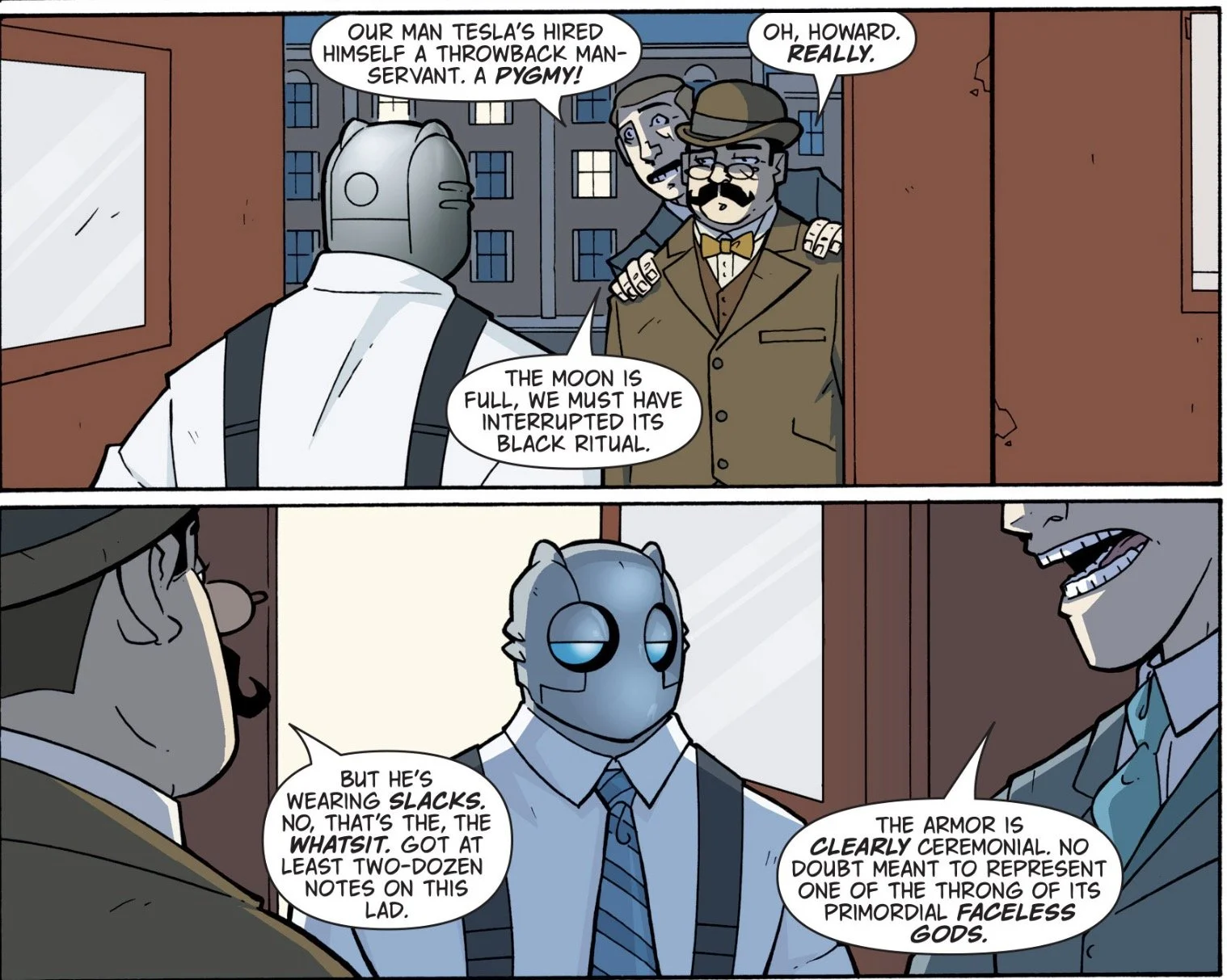
I think it’s still true enough. Someone can come into the series from any individual volume without being lost and they'll have enough context to follow along. This hypothetical reader will miss out on some of the larger continuity, or what else makes certain decisions matter or certain actions more interesting than what's apparent on the surface level. But that’s fine. It just means this hypothetical reader will get more out of Atomic Robo when they re-read it. Which they should be doing anyway. The series as a whole has been engineered to reward re-reading. Every volume reveals something about the world that shines new light on something from a prior volume. People who have been reading the series from day one always discover new details and connections when they re-read the series. It’s a real treat to experience and fairly unique to our series. There just aren’t many comics out there being produced by the same team for decades, so they don't have the opportunity to plan far ahead or to play around with presenting the chronology of these events like we do.
The current era, Volumes 12 - 17, are strongly connected and benefit from being read in the correct order. Even so, I wouldn’t say it’s the end of the world if you come into the middle of that stretch or read them in the wrong order. Atomic Robo is always an exciting adventure.
Once you’ve convinced that new reader to give it a shot, would you recommend experiencing Atomic Robo primarily as a webcomic, or is there something different about reading it in one of the hardcover editions?
Oh, we publish in both formats so the reader can choose the one that’s best for them. The hardcovers are some of the highest quality books in the industry, but if you don’t have the shelf space then the webcomic is right there! Enjoy.
Ironically, even though I was a webcomics pioneer, I never really read them. If I’m looking at a screen I’m in work mode. I need a book to get me away from the screen so I can properly enjoy what I’m reading.
After nearly 20 years of making Atomic Robo, is there anything about the character, the world, or the way the two of you work together that you appreciate more now than you did when you started?
In general, I’ve come to appreciate that every single comic that gets made is a miracle.
With respect to our own work, I love everything that Scott brings to each page. He makes choices and changes throughout every issue that I never could have imagined or anticipated. Sometimes it’s something as small as a single line in a face that adds a whole dimension to the character’s expression, and sometimes it’s a whole fight scene going differently. And each of these inventions gives me an opportunity to alter the script (before it gets to our letterer, of course) to lean into whatever he’s given me to enhance the effect even further for our readers. It’s a collaborative alchemy I haven’t found anywhere else and it’s become my favorite part of the entire process.