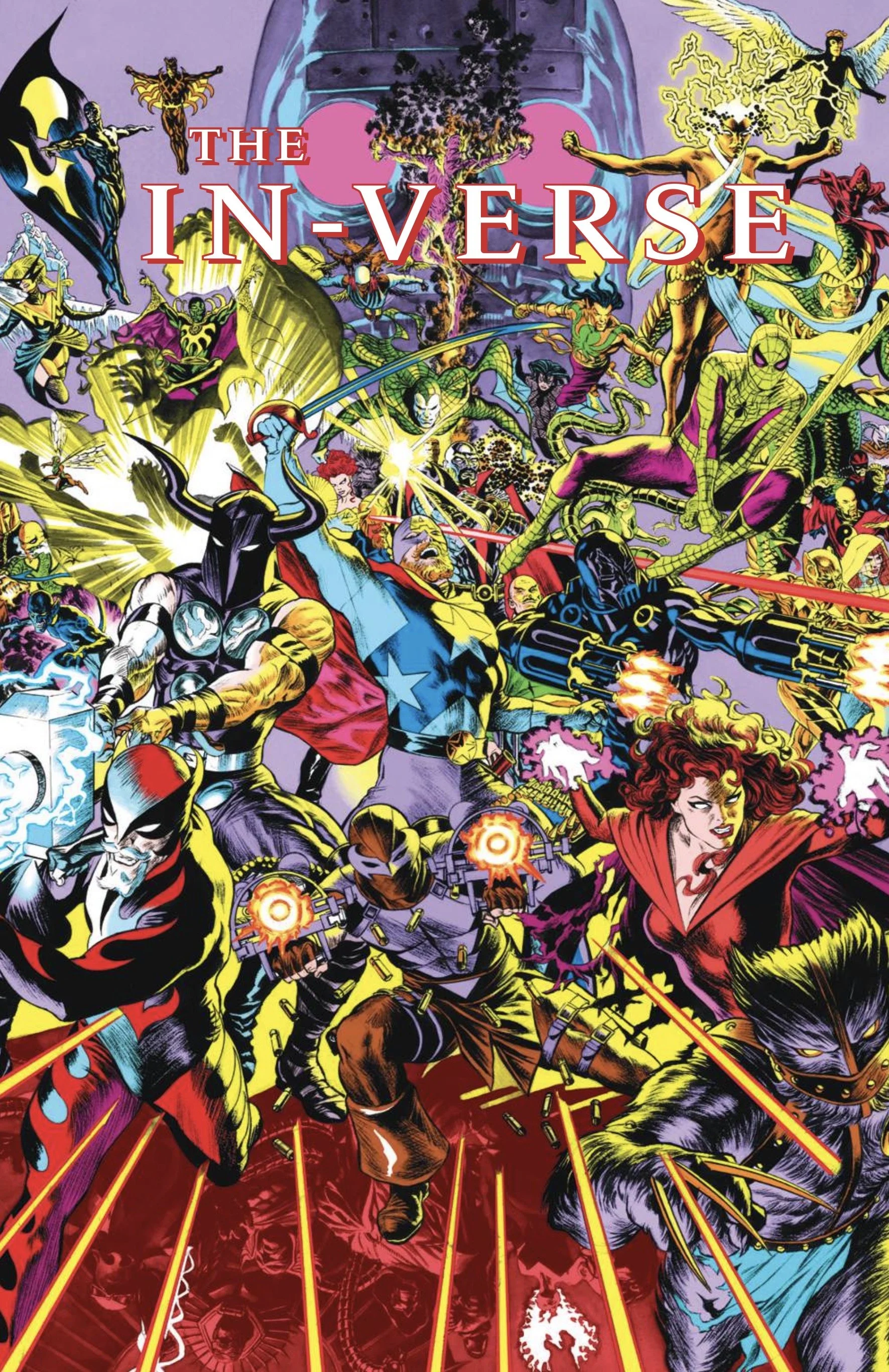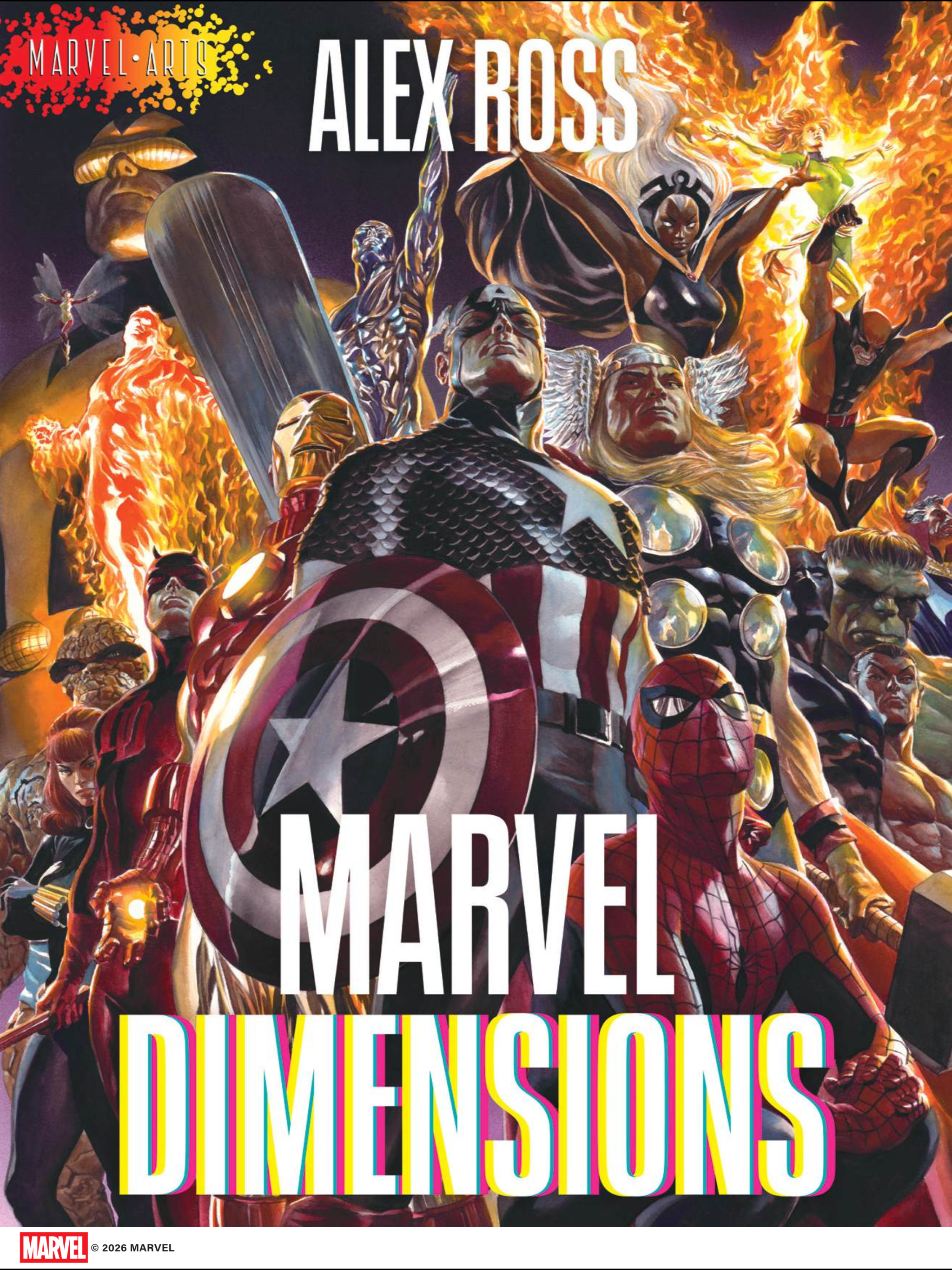
Marvel Dimensions original graphic novel
Writer/Artist: Alex Ross
Publisher: Abrams Comicarts, Marvel Arts imprint
Alex Ross is a legendary name in comics.
Marvels. Kingdom Come.
Works that will be remembered forever.
Marvel Dimensions is his attempt to make a new work, wholly his own, to stand among that pantheon.
Does he succeed? Let’s find out.
Somebody’s Watching Me
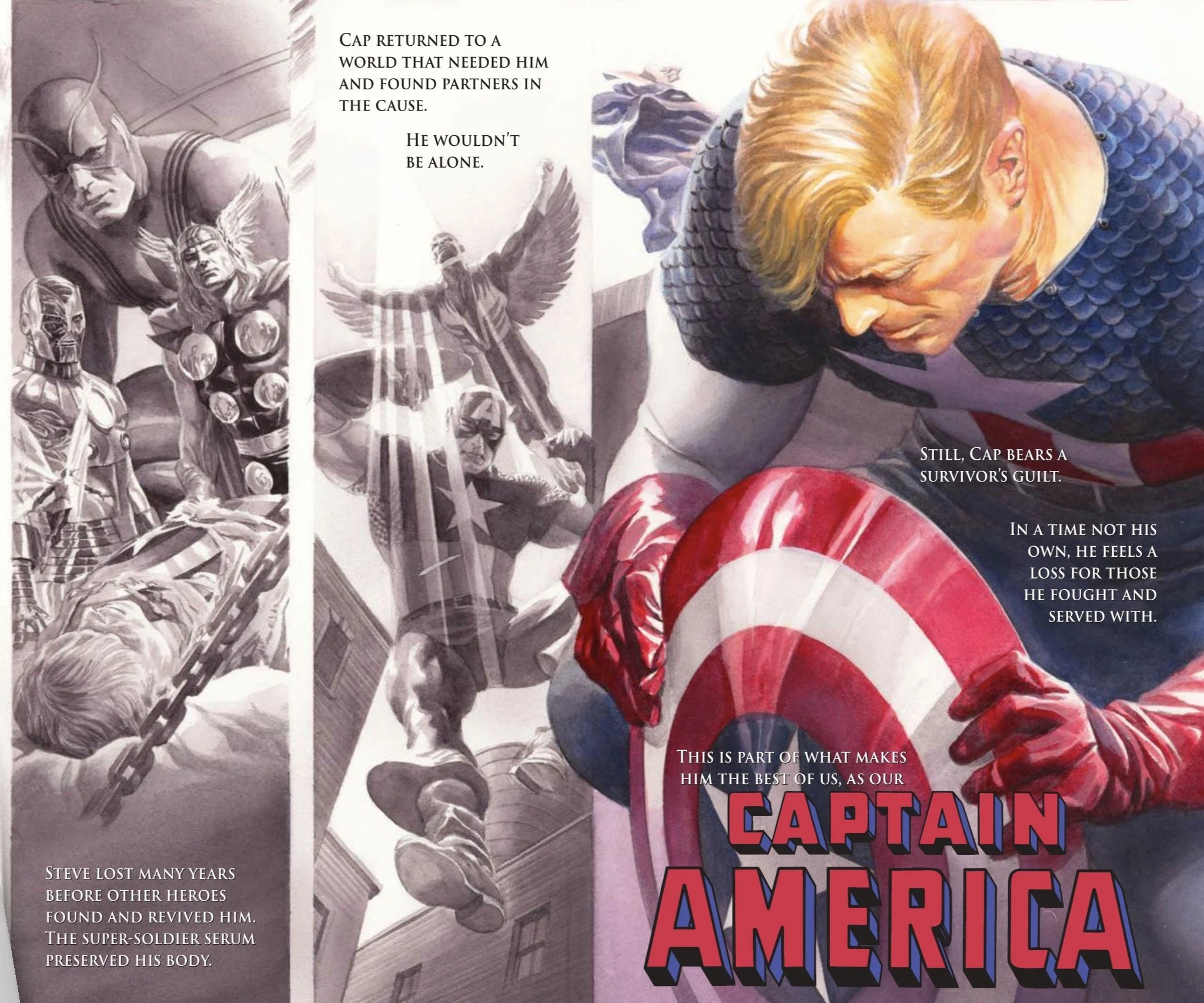
Marvel Dimensions is really two stories in one. For the first half, we appear to be spoken to by an unseen narrator—a watcher, if you will—who muses about the differences between our worlds. What follows is a series of two-page spreads revealing the history of the Marvel universe and the origins of its greatest heroes.
It is after this portion that things take a shift. Normally I wouldn’t spoil this here, but the publisher already did on release day so I don’t feel bad doing so. We learn that the unseen narrator is not Uatu, the Watcher, but rather Aaron Stack, the Machine Man. And the person he’s talking to is not us, but rather a counterpart of himself from another world. The In-Verse.
Here, familiar heroes are dark reflections of themselves, and villains fight for the side of the light. How does this world connect to the main Marvel universe, and what other secrets does it hold?
Canone Inverso
I went into this not knowing much about it, other than Alex Ross was writing it and the art was his normal painted style. I figured it would be a tour through the history of the Marvel universe, and would be a nice coffee table book.
I was right, but I was also wrong.
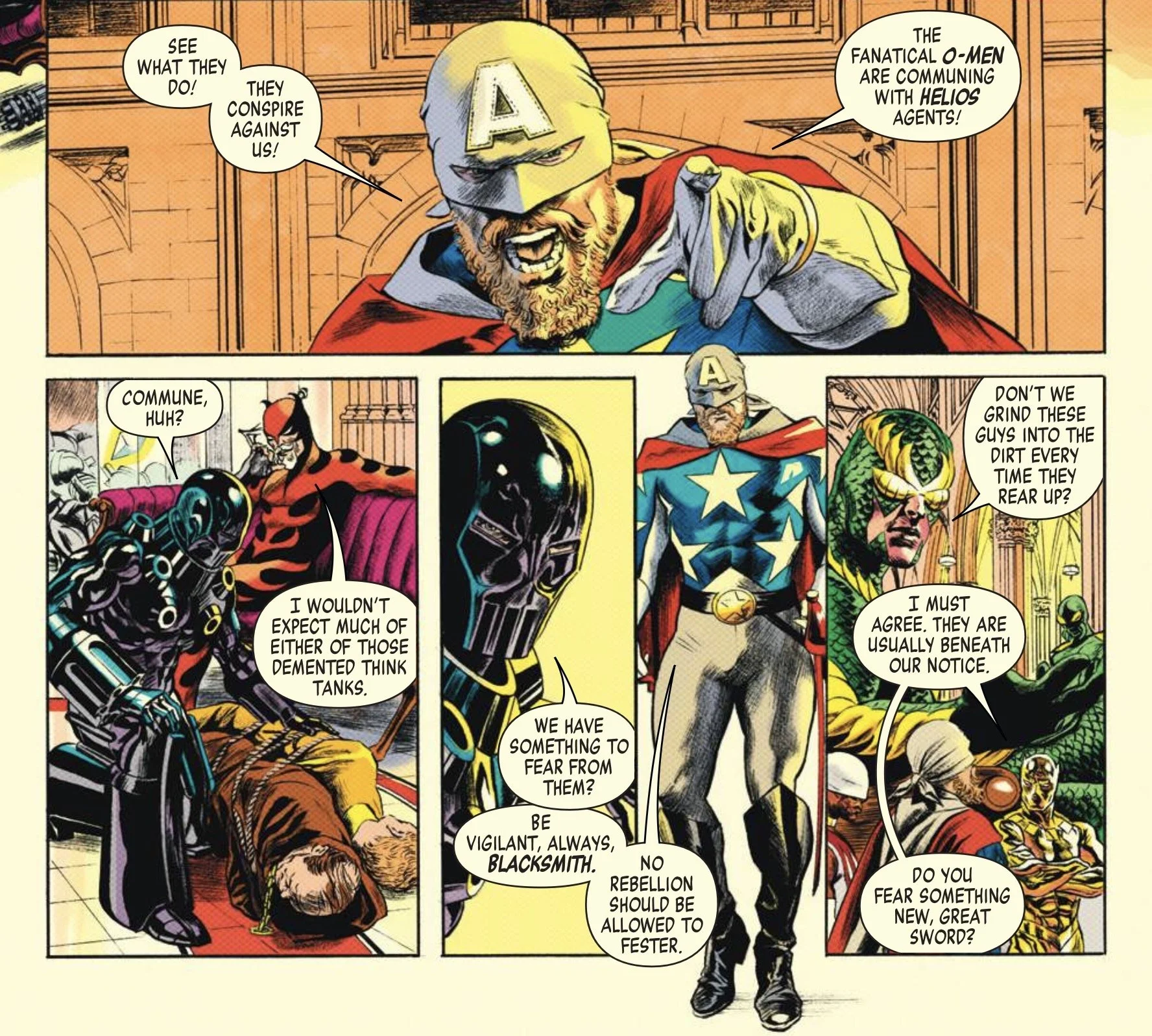
The way the title is put together is itself very interesting. It’s an 80-page original graphic novel, but around page 50 it packs a little surprise. Bound into the book is a 32-page comic that still features writing and art by Ross, but here the artwork is in a more traditional pencil and ink style rather than the painting of the rest of the book. So in total, we get 112 pages of story and art here.
The first 49 pages are, as I said above, largely 2-page spreads showing the origins of basically all the major Marvel characters. These are all awesome. They’re largely stories we know by heart, so there are no surprises here. But they’re well-written and simply gorgeous to look at.
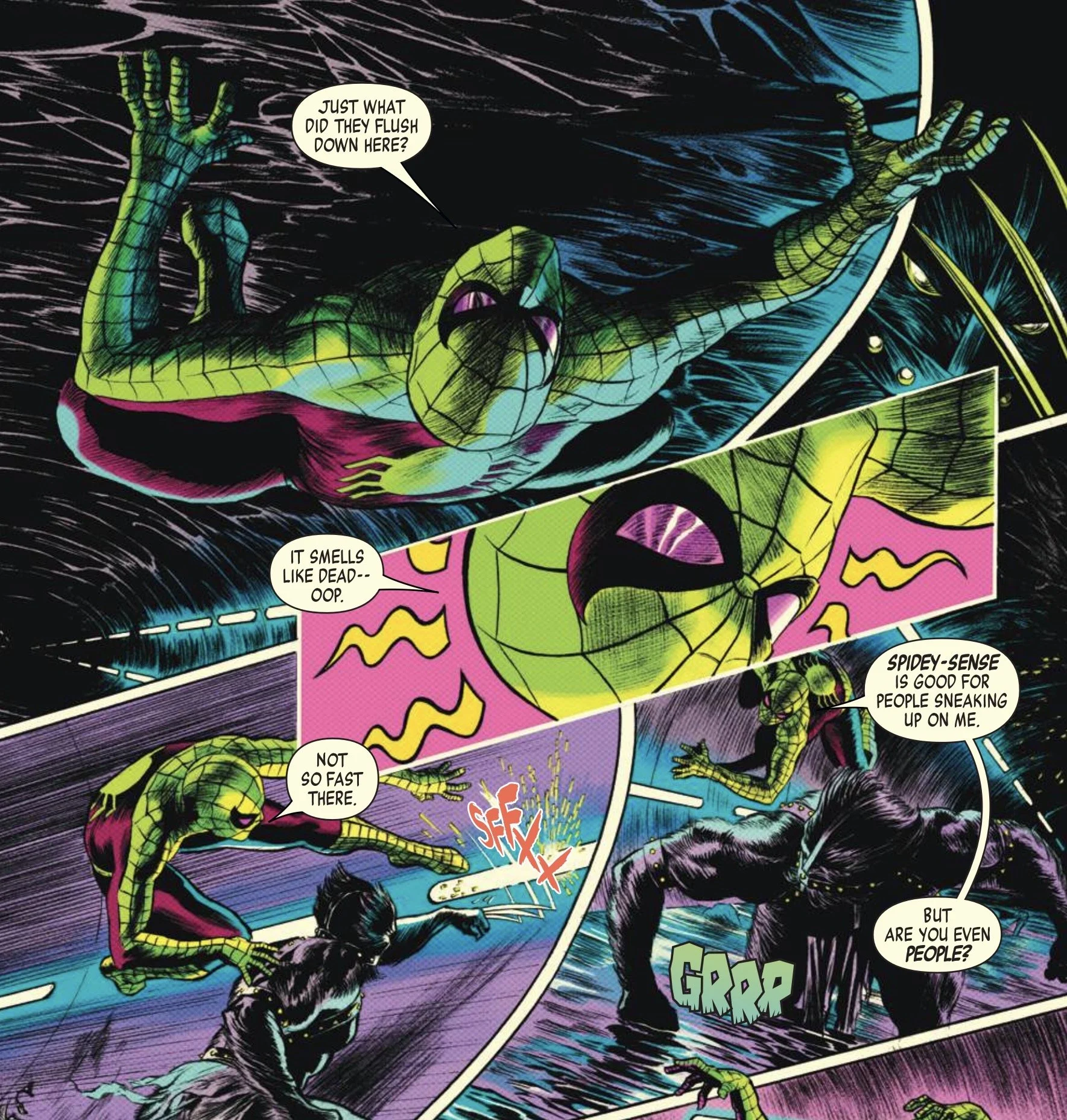
Once we hit the inserted In-Verse comic, that’s where things get interesting. Here we find a world with inverted versions of the same characters we just got refreshers on. Some of them are cool, some are less so. The Hulk is called the Reactor here, and Bruce Banner likes turning into the monster. Steve Rogers is called the American Sword, and most of the supers in this world answer to him. Tony Stark is the Blacksmith, who hides his scarred face behind an ebony suit of armor. And so on.
Ross keeps it from becoming your standard “the heroes are the villains, oh and they rule the world” by spending just enough time introducing us to the characters, then giving them a conflict. The quest for the Ultimate Nullifier, a thing that will give them power over their foes. By the time we transition back to the graphic novel itself, the two inverted groups of Avengers and X-Men are on a collision course.
For the remainder of the book, as the two teams face off—and we’re reminded that the villains of our own Marvel universe are inverted here too—the pace of the story quickens. For this section of the book, Ross mixes his painted style of the first half with the pencil style of the comic insert, sometimes on the same page. The result is an incredibly unique look.
I would be lying if I said that I “got” who every inverted character was supposed to be, or if I said that they were all interesting ideas. But more of them hit than missed. The Vision’s inverse is Nightmare? I don’t get that one at all, other than he’s paired with the Scarlet Witch. And is the guy with the chainguns supposed to be Hawkeye? That’s really boring if so. The story itself isn’t really anything special, but it’s entertaining. And let’s be honest, the art is probably 75% of why I bought the book anyway.
One quick note: I saw a quote from Ross that said he was worried about this book coming out so close to the Marvel Midnight titles. For most of the book, I couldn’t understand why. Then we see his version of the inverted Fantastic Four, and it all made sense to me. Personally, I think it’s funny that he and Benjamin Percy hit on such similar ideas for those characters. Great minds think alike, I guess.
Painter Man
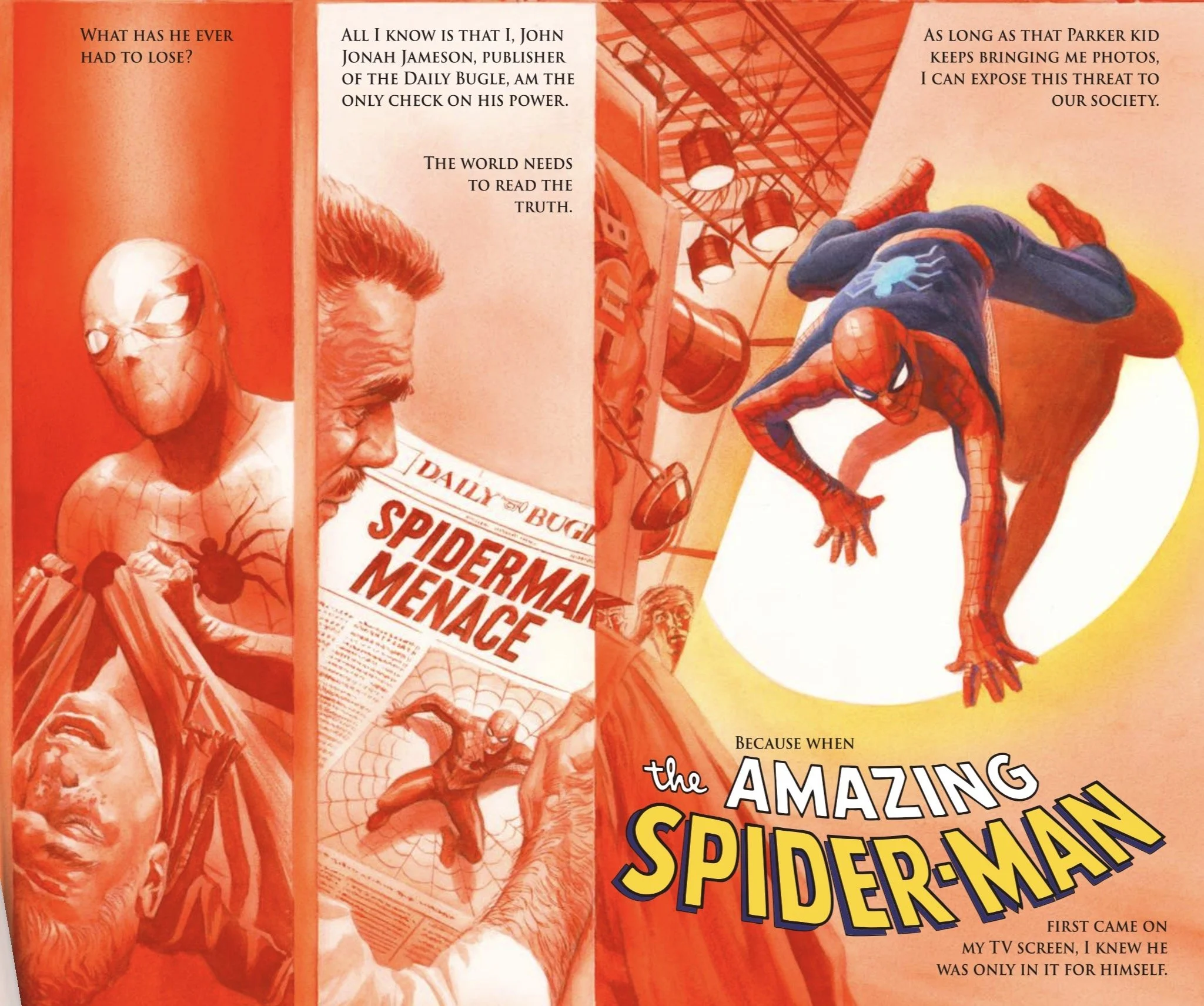
As I mentioned earlier, Alex Ross both writes and draws this title. I have to admit that his writing has never set my world on fire, so my expectations there weren’t too high. That said, the story is well done here. It flows well and there are a lot of interesting ideas here, even if they don’t all land. His art has always been the draw, and that is no different here. His painted art is as good as ever, and the pencil and ink pages are unmistakably his style while still being a completely different presentation. Some of his inverted character designs are inspired, like Doctor Doom, while others like Spider-Man are mostly just a color swap and therefore less exciting. What’s most important is that, for what turns out to be a rather large cast, everything is rendered cleanly and you’re able to follow what is going on.
High Hopes
Marvel Dimensions is not going to land on the “legends” shelf next to the likes of Marvels or Kingdom Come, but it’s still a good story with some spectacular artwork. The comic inserted at the midway point is something I don’t think I’ve seen before, and it works well here. There’s more than enough to like here to get your money’s worth, and it’s clear that Ross has more he wants to tell and so he’ll likely be returning to this universe again.