
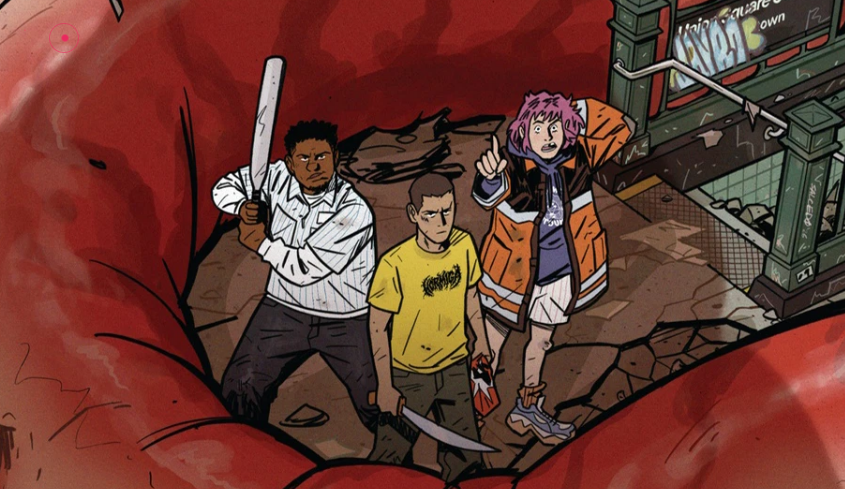
No Gods, No Masters #1
Writer: Julio Anta
Artist: Jacoby Salcedo
Publisher: DSTLRY
One thing is for sure: Julio Anta does not tell stories simply to fill page counts. In an industry often satisfied with surface-level spectacle, Anta approaches comics with the heart of an activist, dedicated to illuminating the real-world resilience of communities that fall through the cracks of the American experiment. With No Gods, No Masters #1, he and artist Jacoby Salcedo take that mission into high-octane genre territory. Blending gritty urban survival with towering creature feature horror, the debut crafts an urgent, deeply empathetic allegory where the literal monsters rampaging across the city reflect the inescapable traumas haunting the migrant journey.
Deliveries, Detention, and Darién Gaps
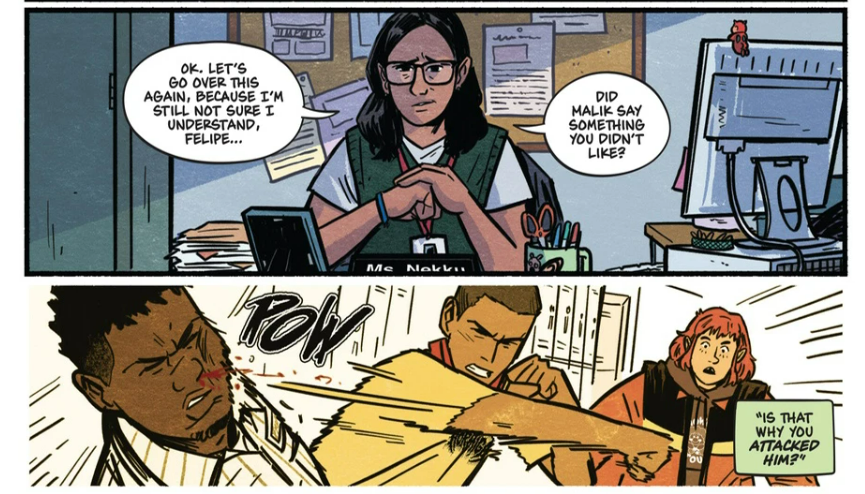
The series opens with an immediate gut-punch rooted in the Venezuelan migrant experience. Before reaching the United States, Felipe and his family are shattered when a catastrophic Kaiju surfaces without warning, brutally taking his father’s life. Months later in New York, the promised sanctuary proves to be its own grinding battle. Felipe scratches out a living as an e-bike delivery courier, running the relentless gig-economy gauntlet alongside his mother just to keep a roof over their heads.
When his bike is seized by police and an explosive, context-heavy fight with classmate Malik lands him in detention, the emotional weight on Felipe is palpable. The mysterious dispute, paired with the presence of Jeanie, a teenager who intentionally gets herself locked in detention just to escape her foster home, frames a trio defined by institutional neglect and personal exhaustion long before the sirens start wailing.
Bedlam in the Five Boroughs
The comic pivots violently from social realism to cinematic nightmare when a familiar horror breaches the city. A new Kaiju emerges, bringing sheer Bedlam to New York and shattering the fragile routine the kids have cobbled together. In one of the book's most shocking, drama-soaked beats, flying debris violently claims their teacher's life, snapping the story out of a high school drama into pure apocalyptic terror.
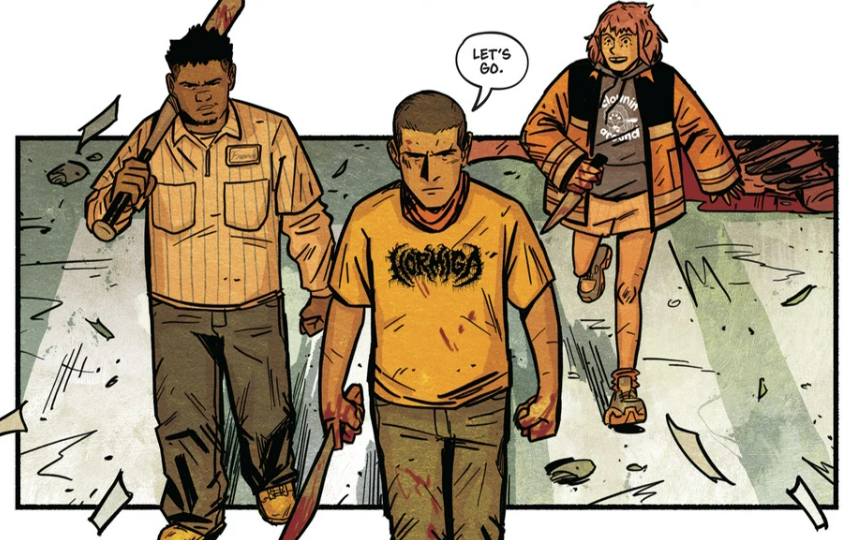
Facing total devastation and desperate to find his mother, whose phone was last pinged near 14th Street, Felipe leads the charge across a hostile concrete wasteland. Echoing the desperate urban trek of The Warriors, the kids are forced into an uneasy alliance, transforming from alienated students into a tight-knit unit braving a gauntlet of towering beasts.
Systemic Horrors Don’t Need Passports
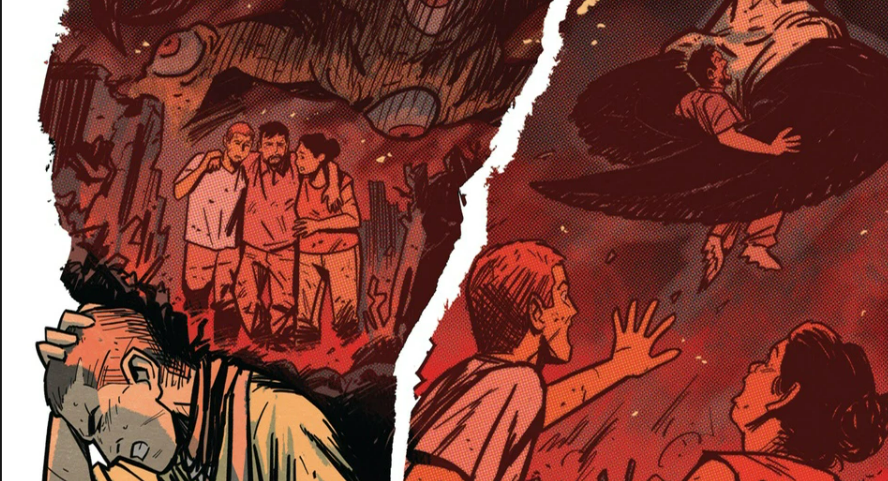
At its core, Anta's story functions as an insightful thesis on how trauma refuses to stay behind borders. The sudden appearance of the monster is not an isolated disaster; it is a manifestation of the systemic violence, grief, and hardship that follow marginalized people no matter how far they run.
Escaping an oppressive homeland does not erase the trauma of the trek, nor does it dissolve the suffocating weight of poverty once you arrive on American soil. The physical monsters serve as a visceral reflection of that reality, illustrating that for families like Felipe's, survival is a continuous, exhausting battle against forces far larger than themselves.
Burnt Siennas and Bleed Lines
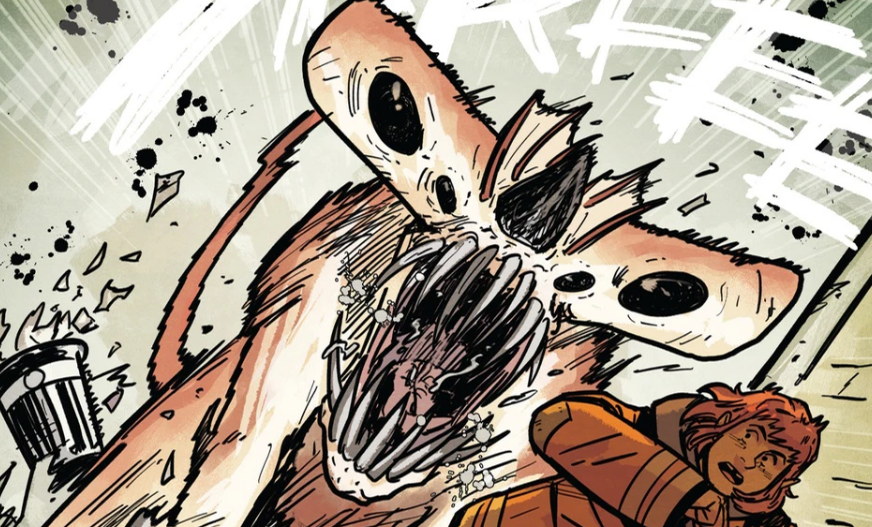
Jacoby Salcedo’s visuals anchor the narrative with grit and emotional precision. The apocalyptic shift is captured through a desolate palette of murky browns, burnt siennas, and hazy oranges, stripping away modern urban comfort in favor of suffocating dust and ruin. The Kaiju and Cryptids are rendered with genuinely gnarly, terrifying scale, contrasting against the expressive, grounded vulnerability of the young cast.
Felipe’s character design stands out: donning a makeshift starred mask reminiscent of Captain America alongside a metal shirt that seems like a subtle nod to Batman, his look suggests a young man raised on the folklore of four-color American heroes, drawing upon those very legends of perseverance to brave a world devoid of easy answers.
Conclusion & Verdict
No Gods, No Masters #1 delivers a balanced first issue that respects the reader's appetite for suspense while delivering a punchy thematic core. It never preaches or lectures, letting the sheer kinetic energy of the survival journey carry Anta's vital reflections on perseverance, family, and the heavy price of starting over.
Verdict: 8.5/10. A thrilling, gut-wrenching debut that fuses urban Kaiju bedlam with an authentic, empathetic look at the migrant struggle.